Key highlights from Ultralytics at CES 2026 in Las Vegas
Join us as we recap Ultralytics’ experience at the Consumer Electronics Show (CES) 2026 in Las Vegas, highlighting key moments shaping the future of AI.
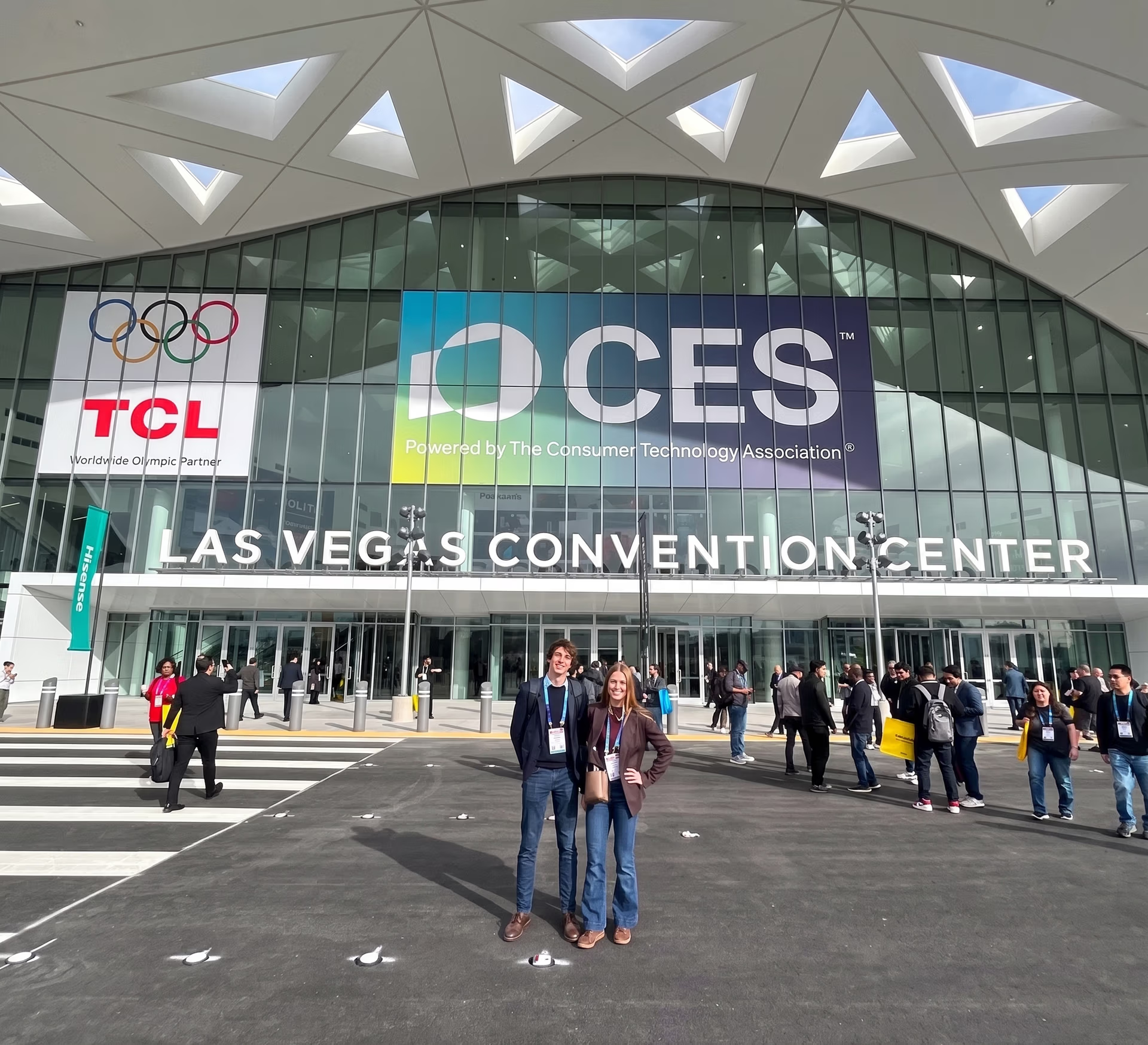
From January 6 to 9, the Ultralytics team had the chance to take part in CES 2026 in Las Vegas, where next-gen technologies took center stage. Organized by the Consumer Technology Association (CTA), CES brings together companies, developers, and industry leaders to explore emerging trends and see how cutting-edge innovations are being applied across industries.
CES 2026 marked the biggest edition of the event since the pandemic, with thousands of exhibitors and attendees from across the global tech ecosystem. This year, most of the focus was on artificial intelligence, robotics, and edge computing, with many demos highlighting practical use cases rather than early-stage concepts.
For Ultralytics, it was a great opportunity to connect with partners, engage with the vision AI community, and showcase how Ultralytics YOLO models can be applied across a range of use cases. Our Lead Partnership Engineer, Francesco Mattioli, and our Account Executive and Partnerships Associate, Hannah Streif, had the chance to see how computer vision is being used in real-world applications across the show floor.
Fig 1. Francesco Mattioli and Hannah Streif at CES 2026 in Las Vegas, Nevada.
In this article, we’ll revisit some of the key moments from each day at CES 2026 and highlight conversations, demos, and takeaways from the week. Let’s get started!
An overview of CES 2026#
With more than 4,100 exhibitors spread across 2.6 million square feet of exhibit space, CES 2026 brought together a wide range of companies from across the global tech ecosystem. Around 148,000 attendees took part in the event, including international visitors, media, and senior industry leaders. Startups were also well represented, with approximately 1,200 early-stage companies exhibiting.
Beyond the show floor, CES featured an extensive conference program with more than 400 sessions and over 1,300 speakers. Topics ranged from enterprise technology and mobility to artificial intelligence, robotics, digital health, accessibility, manufacturing, and policy. Dedicated spaces like CES Foundry and C Space provided more focused settings for live demos, discussions, and networking.
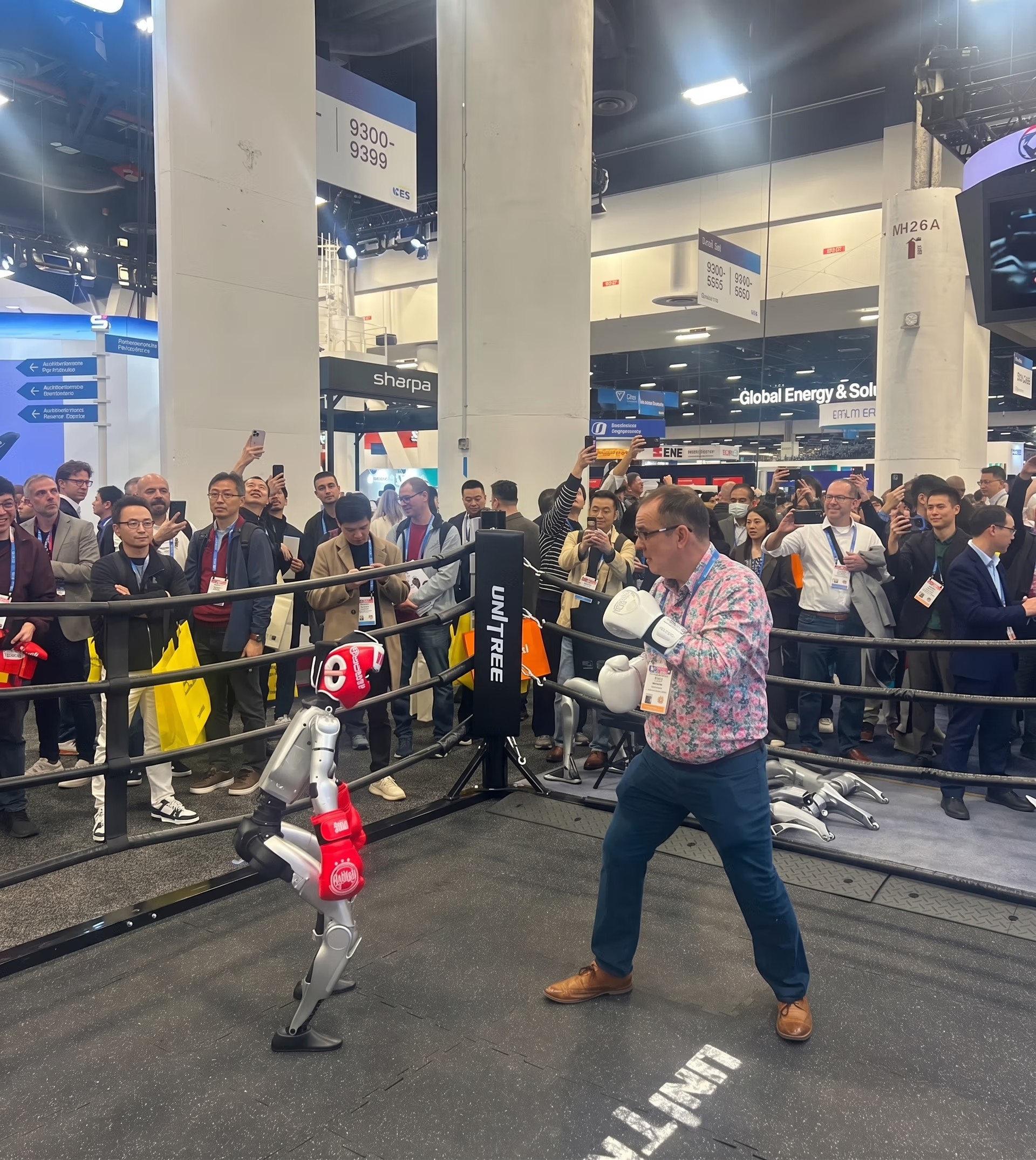
Fig 2. AI and robotics were a central theme at CES.
Day one: Networking at the Sphere#
The first day of CES 2026 kicked off with a networking event hosted by Lenovo at the iconic Sphere in Las Vegas. The event brought together leaders from across the technology industry for an evening that blended technology, culture, and entertainment.
During the event, Lenovo shared updates on new technology developments and offered a look at upcoming innovations across AI, hardware, and computing. The presentations focused on Lenovo’s broader vision for AI-powered devices and connected ecosystems, setting the tone for the days ahead at CES.
The evening also featured a strong leadership presence, with speakers and attendees including Yuanqing Yang, Chairman and CEO of Lenovo; Jensen Huang, Founder, President, and CEO of NVIDIA; Cristiano Amon, President and CEO of Qualcomm; Dr. Lisa Su, Chair and CEO of AMD; and Maurice Lévy, President of Viva Technology (VivaTech). Their presence highlighted the collaborative nature of CES, where conversations around AI, computing, and the future of technology extend well beyond the show floor.
To round out the evening, attendees were treated to a surprise guest performance by Gwen Stefani. Overall, the Lenovo event at the Sphere set an energetic and engaging tone for the rest of CES 2026, combining industry insights with meaningful networking opportunities.
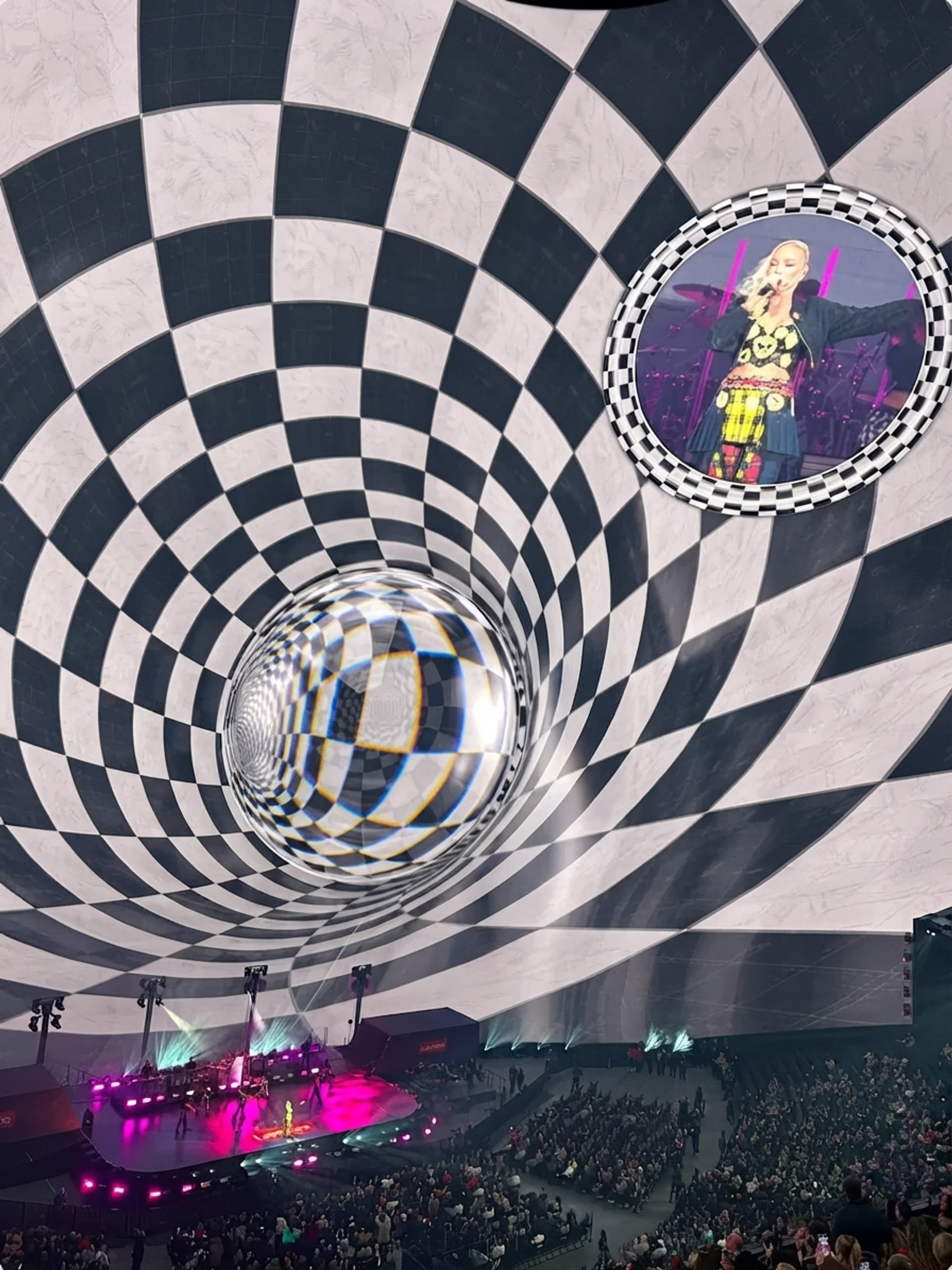
Fig 3. There was a surprise guest performance by Gwen Stefani.
Day two: Showcasing Ultralytics YOLO models#
The next day, we joined DEEPX at their booth in the Las Vegas Convention Center to demonstrate how Ultralytics YOLO models run on edge AI hardware. Working alongside the DEEPX team, we set up live demos that showed YOLO models in action across real-world use cases, from smart healthcare to retail.
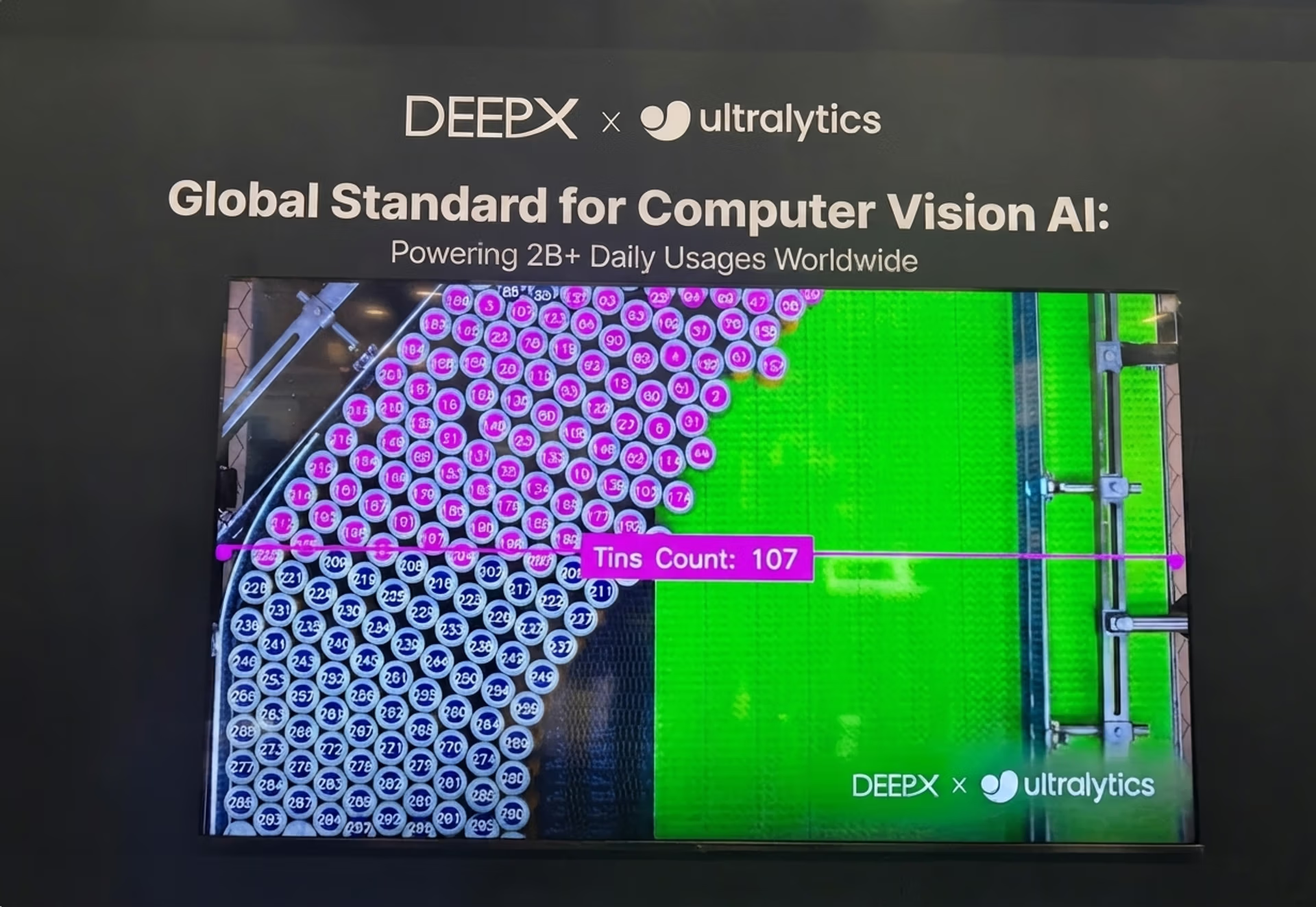
Fig 4. Exhibiting the Ultralytics YOLO models at the DEEPX booth.
Throughout the day, attendees stopped by the booth to see the models running in real time and to discuss how computer vision solutions are being deployed in production. We spoke with teams about topics such as edge inference, hardware acceleration, and scaling vision AI across different industries.
The day wrapped up with an evening event hosted by Axelera AI at the Venetian Tower Exhibit Suites. During the event, live demos featured Metis and Europa AI Processing Units, Axelera AI’s edge AI accelerators designed to run computer vision workloads efficiently at the edge. The demos highlighted real-world applications powered by Ultralytics YOLO models, showing how vision AI can be deployed on specialized hardware outside of cloud environments.
Day three: Connecting with the vision AI community#
Day three focused on engaging with the vision AI community through panels, discussions, and in-person conversations. We took part in a CES Foundry session titled “The Unstoppable Rise of Physical AI,” presented by DEEPX at the Breakthrough Stage in the Azure Ballroom at Fontainebleau Las Vegas. The session focused on the challenges of building Physical AI systems, how companies are addressing them today, and what the roadmap looks like moving forward.
The session was hosted by Danny Johnson of DIGITIMES and moderated by Edge AI Foundation CEO Pete Bernard. Speakers included Lokwon Kim, CEO of DEEPX; Sandeep Modhvadia, Chief Product Officer at Wind River; and our Lead Partnership Engineer, Francesco Mattioli.
Reflecting on the day, Francesco noted, “I had a great time speaking at the CES Foundry session. I got to share what we’ve been working on with Ultralytics YOLO models - basically making them run even faster on edge devices. DEEPX was there too, showing off their AI accelerator plans and some really impressive edge computing demos. Another key highlight was talking with the audience afterward, getting solid feedback, and kicking off conversations with a few people who could become partners or customers down the line. It was a really productive session overall.”
Day four: Seeing the impact of Ultralytics YOLO models#
After several days of demos, sessions, and meetings, day four offered time to look more closely at how Ultralytics YOLO models are being used across different real-world applications. We spoke with teams working on edge AI and computer vision across a range of industries, including manufacturing, robotics, and enterprise technology.
We also connected with MountainAI, a France-based edge AI company. MountainAI showcased Ultralytics YOLOv8 running on ultra-low-power hardware, demonstrating full-scale vision AI on a microcontroller while keeping energy consumption extremely low.
Their setup combined YOLO models with optimized middleware to bridge cloud-trained models and energy-efficient edge hardware, enabling real-time performance on constrained devices. Examples like this pointed to the growing adoption of vision AI across the ecosystem and the role Ultralytics YOLO models play in deployment-focused, edge-based applications.
The future of technology at CES 2026#
CES 2026 provided interesting insights into how new technologies are evolving toward real-world deployment. Across sessions, demos, and conversations, there was a common focus on performance, efficiency, and operating within real constraints, especially as AI systems continue to move closer to the edge.
When it comes to vision AI, this shift was particularly clear. Discussions frequently centered on edge inference, hardware acceleration, and the role of optimized software pipelines in making computer vision systems more reliable and scalable. Rather than focusing on theoretical capability, many teams highlighted how they are balancing accuracy, latency, and power consumption in production environments.
Overall, the week reinforced the importance of building YOLO models that perform well outside controlled settings and support deployment across a wide range of devices. The conversations throughout CES 2026 helped clarify where the ecosystem is headed and how collaboration between software and hardware teams will continue to shape the next phase of vision AI.
Key takeaways#
CES 2026 was a great chance to see how vision AI is evolving, with a strong focus on edge performance, efficiency, and practical collaboration across the ecosystem. From live demos and technical sessions to one-on-one conversations, the event highlighted how computer vision is being applied in production environments across a growing range of industries.
We’d also like to thank everyone who stopped by to talk with us, shared their work, or joined discussions throughout the week. These conversations, whether at booths, sessions, or networking events, provided valuable insights and feedback that help guide how we continue to build and improve Ultralytics YOLO models.
Join our community and explore AI advancements on our GitHub repository. Discover the impact of AI in manufacturing and computer vision in healthcare on our solutions pages. Explore our licensing plans and begin your vision AI journey today!








