Automating traffic incident management with Ultralytics YOLO26
Discover how Ultralytics YOLO models can transform traffic incident management by enabling early detection, faster response, and safer roadway operations.
Every day, minor road incidents affect traffic flow in small ways that can quickly ripple into larger consequences. A stalled vehicle or debris on a highway, for example, can easily turn into long delays, unsafe traffic flow, and secondary crashes.
For first responders like the fire department, this creates constant pressure. Every minute spent assessing an incident in-person can increase exposure to moving vehicles and compromise roadway safety.
Public road safety, along with responder safety, is key in such situations. Transportation, public works, and emergency management systems that rely on manual monitoring can fall short during busy hours or during incidents involving hazardous materials.
Many traffic incident management (TIM) teams are now adopting computer vision to analyze roadway conditions and flag incidents early. Computer vision is a branch of artificial intelligence (AI) that makes it possible for machines to see and interpret visual data from cameras and videos.
Vision systems can monitor roadways, detect crashes, and provide real-time visual context. This early visibility can help emergency medical services (EMS), law enforcement, and traffic teams understand the on-the-ground situation and respond more quickly.
These capabilities are driven by trained vision models, such as Ultralytics YOLO26. By automatically extracting actionable insights from live video feeds, these models reduce reliance on manual monitoring and enable faster, more informed decision-making. This results in faster incident awareness and better coordination for emergency response.

In this article, we’ll explore how vision AI is changing traffic incident management and how computer vision models like Ultralytics YOLO26 can help emergency responders detect and clear incidents faster. Let’s get started!
Here are some of the key challenges traffic incident management teams face on the ground:
Most traffic incident management systems already consist of a network of devices deployed across highways and urban roads. Traffic signal cameras, CCTV systems, and portable cameras mounted on poles, trailers, or emergency vehicles are now increasingly common.
Computer vision can be easily integrated into these systems because it builds on existing camera infrastructure and processes video feeds directly to extract actionable insights. Video streams from traffic cameras can be paired with roadway sensors, such as speed and volume detectors, to provide a more complete picture of traffic conditions.
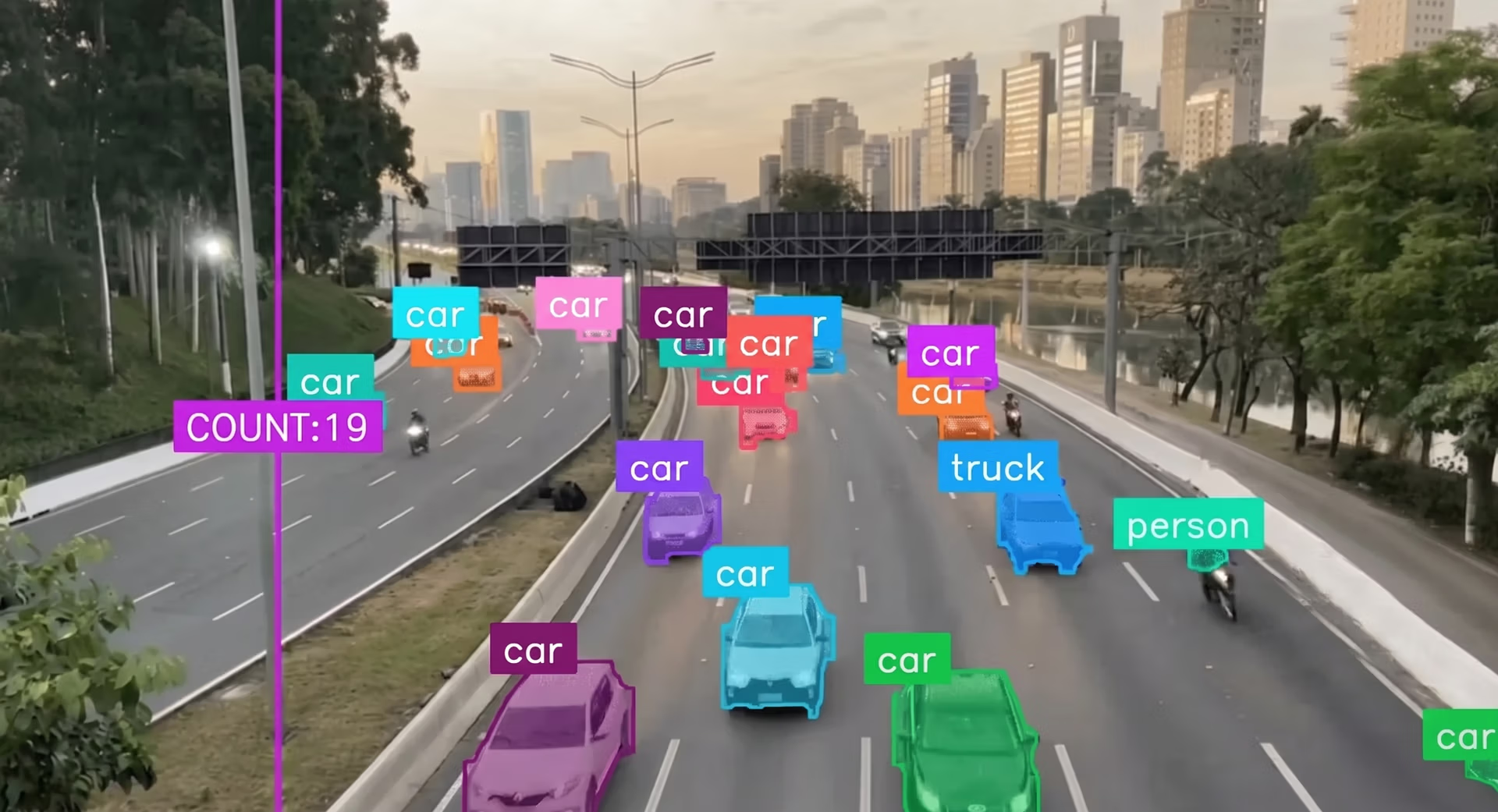
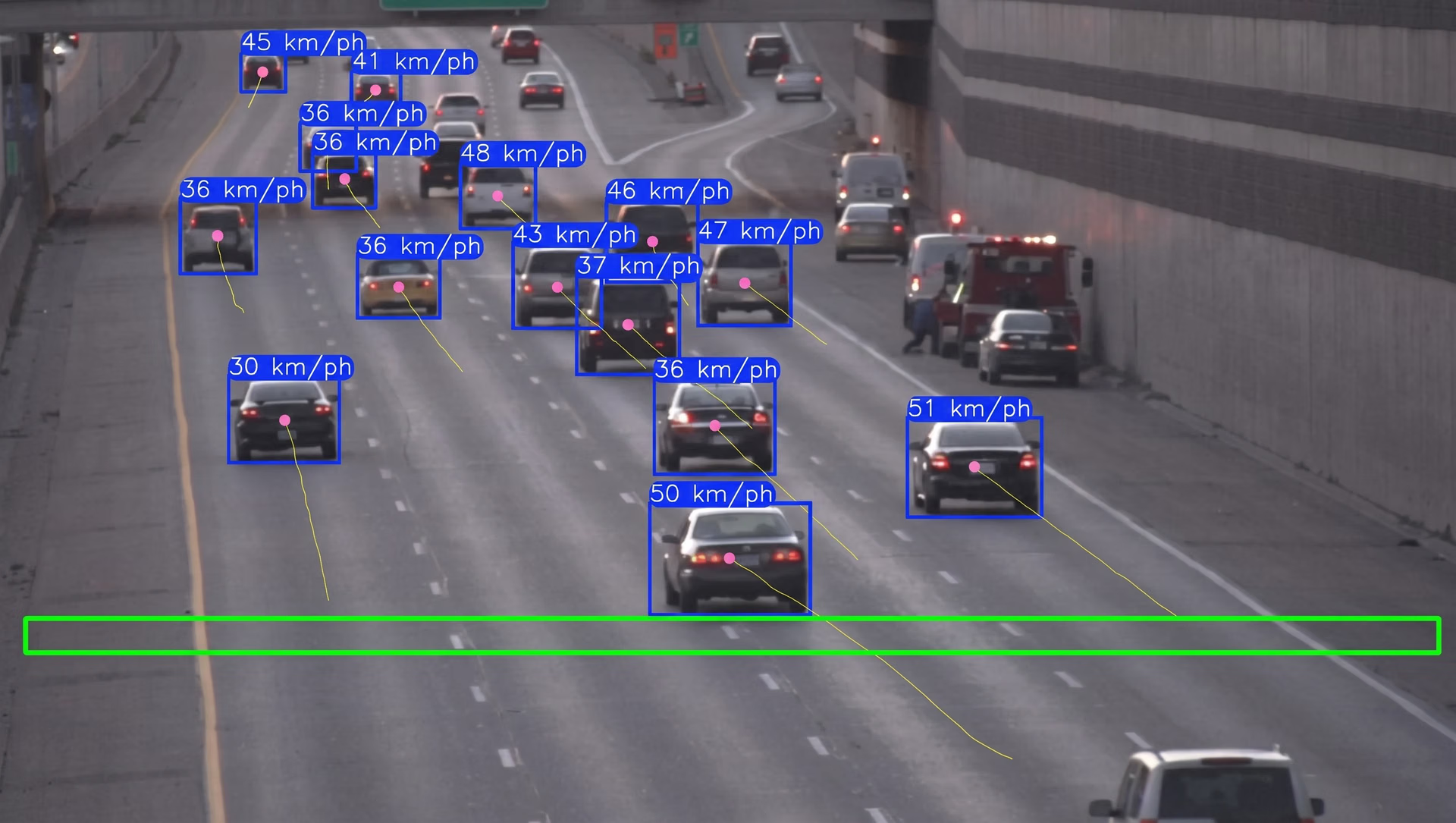
In particular, vision models like Ultralytics YOLO26 can be used to process video feeds. YOLO26 supports various core computer vision tasks that help detect incidents, interpret roadway conditions, and provide actionable insights for traffic operations.

Here’s a simple breakdown of a few vision tasks that can be used to monitor and manage traffic incidents:
Ultralytics YOLO models, such as YOLO26, are available out of the box as pre-trained models. This means they are already trained on large-scale, widely used datasets such as the COCO dataset.
Because of this pre-training, YOLO26 can immediately be used to detect common, real-world objects such as cars, bicycles, pedestrians, motorcycles, and other everyday items. This creates a strong baseline for understanding roadway scenes and enables teams to build more cohesive applications, such as vehicle counting, traffic flow analysis, and speed estimation, without training a model from scratch.

For more specific traffic incident management applications, these pre-trained models can be easily custom-trained using labeled, domain-specific image and video data to detect particular objects of interest.
For example, a model can be trained to reliably identify red fire trucks in roadway camera footage, helping traffic teams recognize active emergency response scenes more quickly. The resulting video insights can also be used for responder training, allowing teams to review real incident scenarios and improve preparation for similar events in the future.
Next, we’ll walk through examples of how computer vision can be applied in real-world traffic incident management systems.
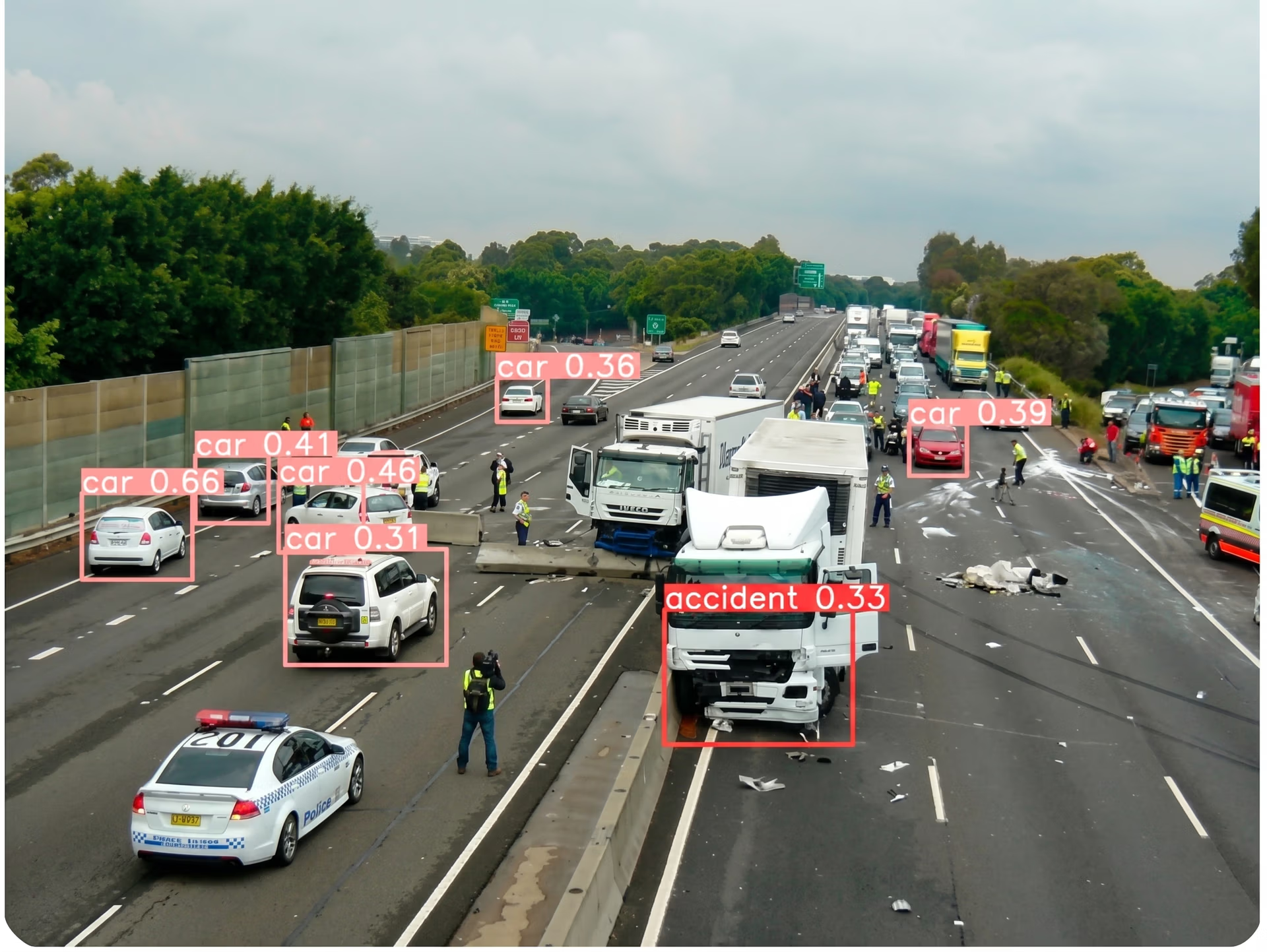
One of the biggest challenges in traffic incident management is identifying incidents and roadway obstructions as early as possible so teams can clear traffic incidents quickly and safely. In the past, detection relied heavily on driver reports, patrol vehicles, or staff manually monitoring camera feeds.
While these methods are still used today, they can result in delayed awareness or missed details, especially on busy highways or during low-visibility conditions. Vision AI improves this process by continuously monitoring roadways in real time using models such as Ultralytics YOLO26.
For example, YOLO26’s object detection and tracking capabilities can be used to identify a vehicle stopped in a live lane and to detect that traffic is slowing or backing up behind it.
When this unusual activity is detected, the system can alert traffic teams early, giving responders more time to plan traffic control, warn motorists, and coordinate an effective response. Earlier detection also supports quick clearance, reduces congestion, and lowers the risk of secondary crashes.
Traffic incident management isn’t just about responding after something goes wrong. It also involves spotting roadway issues early, before they turn into accidents.
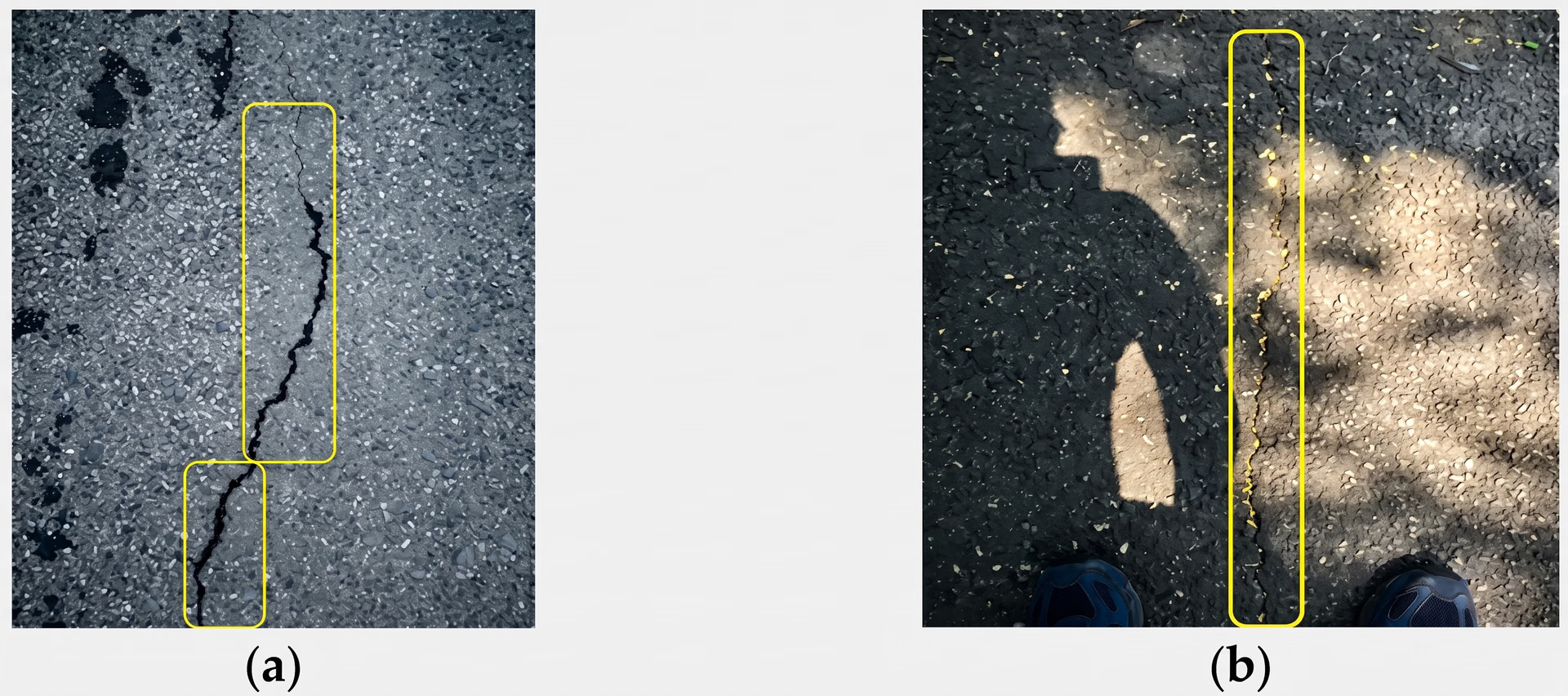
With computer vision, gov authorities like the Federal Highway Administration (FHWA) and the Department of Transportation can continuously monitor roads and identify problems such as damaged pavement, debris, or other hazards.

Using techniques like instance segmentation, vision models like YOLO26 can precisely outline cracks, potholes, or damaged sections of pavement in roadway footage. This makes it easier to understand the size and location of the damage rather than simply detecting that a problem exists.
Identifying these issues early makes it possible to take action sooner, whether by scheduling maintenance, adjusting traffic control, or warning drivers. This proactive approach keeps roads safer, reduces the risk of incidents, and improves everyday driving conditions for everyone.
Here are some key benefits of using Vision AI to support traffic incident management and roadway safety:
Despite these benefits, there are also limitations to consider. Here are some factors to keep in mind:
Traffic incident management works best when teams can see problems early and understand what’s happening on the road in real time. Vision AI makes that possible by turning everyday traffic camera footage into useful insights that support quicker responses and safer decisions. When used thoughtfully, it can make roads safer for drivers and reduce risk for the people who work on them every day.
Want to bring Vision AI into your projects? Join our active community and learn about Vision AI in manufacturing and computer vision in robotics. Explore our GitHub repository to find out more. Check out our licensing options to get started!
.webp)