Using pose estimation to perfect your running technique
Explore how you can analyze an athlete’s running technique using Ultralytics YOLO models, such as Ultralytics YOLO11, which support tasks like pose estimation.
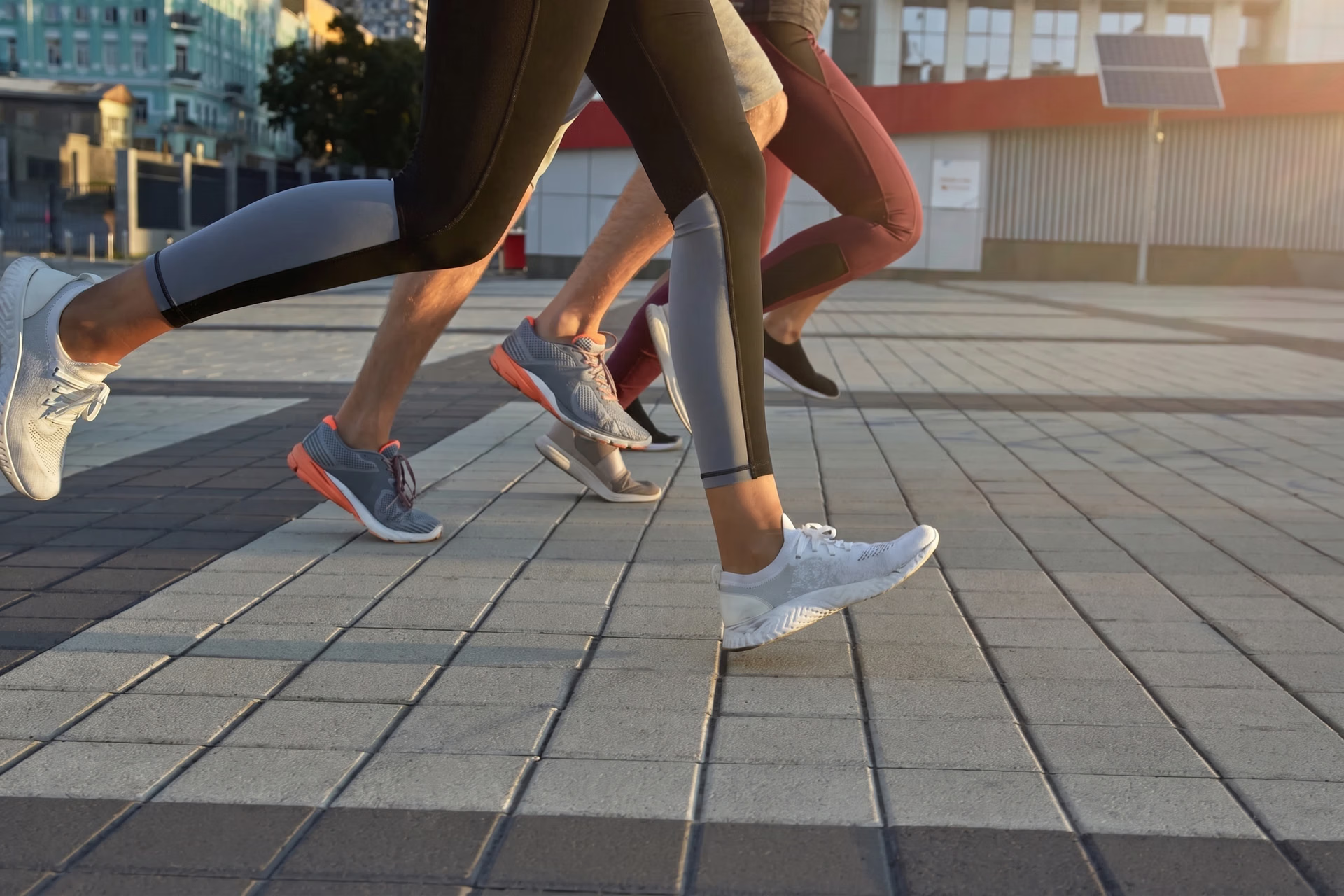
Running is a popular form of exercise around the world. In the United States, around 50 million people run or jog regularly, and in Japan, running was the most popular sport in 2024.
You can see runners everywhere, especially early in the morning or later in the evening. Parks, streets, and beaches fill up with people moving at different speeds and for various reasons.
Some follow training plans, while others run casually to stay active or clear their heads. For a lot of people, running is just an easy way to get moving every day. But even so, it’s not as simple as it seems.
Small changes in posture or stride can affect performance, comfort, and injury risk, including issues like back pain. Paying attention to how the body moves can help runners stay healthier and get more from their training, whether that means better endurance, strength, or overall fitness.
However, these details are hard to catch while running. A lot happens in just a few minutes, with hundreds of steps that are easy to miss. This is where computer vision comes in. It is a branch of AI that can analyze images and videos to break movement down frame by frame and reveal patterns that are hard to spot in real time.
Pose estimation is a key part of this approach. It is a computer vision task that can be used to track body joints and how they move over time. Models like Ultralytics YOLO11 and the upcoming Ultralytics YOLO26 support pose estimation and can follow a runner’s movement consistently across frames, making real-time analysis much more practical.
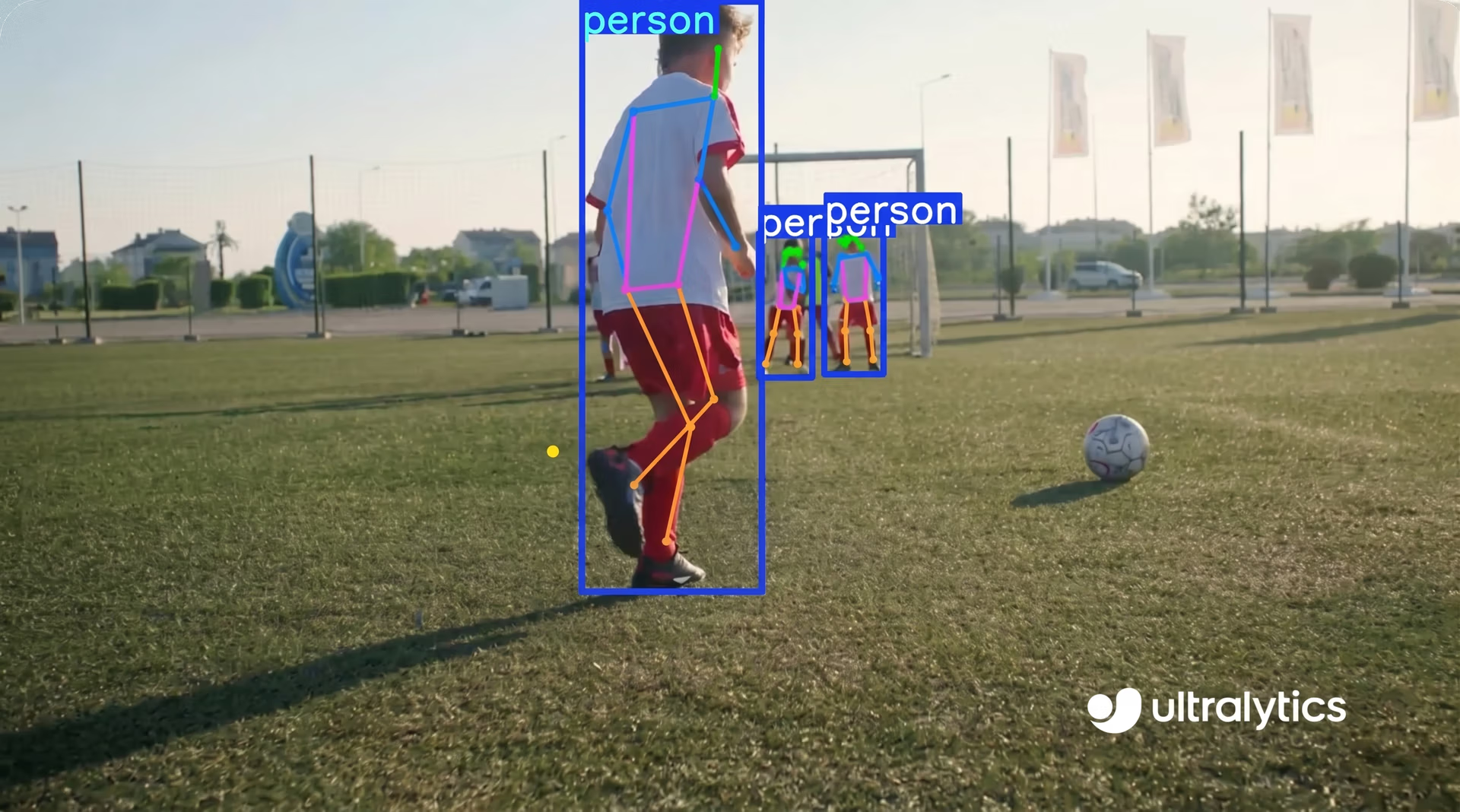
Fig 1. Analyzing an athlete running and training using YOLO11 and pose estimation. (Source)
In this article, we’ll explore what a proper running form looks like and how Ultralytics YOLO models can be used to analyze and improve running techniques. Let’s get started!
Why a proper running form matters#
Before we dive into the different elements of running, let’s take a closer look at why running form matters in everyday training.
Every runner, whether heading out for an easy jog or working toward specific goals, wants their effort to count. But minor issues in posture, overstriding, or timing can quietly add up, making runs feel harder than necessary and placing extra stress on the lower body and joints.
Paying attention to body mechanics helps runners stay safer, reduce the risk of running injuries, and gain benefits such as improved heart health, stronger muscles, and overall fitness. Good running form starts with the body moving as a coordinated system.
When the torso stays aligned with a slight forward lean and the arms and legs work in balance, energy is used more efficiently, motion feels smoother, and the risk of injury is reduced. Over time, form also shapes how muscles work together.
Balanced movement supports stability, posture, endurance, and better alignment during strength training and running. For beginners, this creates a strong foundation to build on. In elite runners, it enhances performance while reducing fatigue-related issues and the risk of long-term discomfort.
Identifying signs of having the proper running form#
When runners start paying closer attention to how they move, certain patterns show up across running styles. While everyone runs a bit differently, these shared elements provide a general idea of what efficient running tends to look like.
Running form refers to how posture, balance, and movement work together during a run. It describes how the body stays aligned and coordinated while moving forward. Looking at these details helps runners spot movements that feel smooth and controlled, as well as habits that may lead to extra effort or discomfort.
Here are some common elements often seen in a proper running form:
- Leg movement and stride: Good running form usually comes from a relaxed knee lift and a steady stride that feels natural. Stride length and stride rate matter, and reaching too far forward with each step can throw off balance. A smooth push-off keeps the run feeling light and efficient.
- Foot strike and center of mass: Runners land on their feet in different ways, whether on the heel, midfoot, or forefoot. What matters more than the exact landing or heel strike is how smoothly the body moves over each step. Staying centered reduces extra movement and keeps things more stable.
- Muscle coordination: Running engages multiple muscle groups, including the glutes, quads, hamstrings, and hip flexors. When these muscles work together in a balanced way, movement stays more stable, and the risk of injury is reduced.
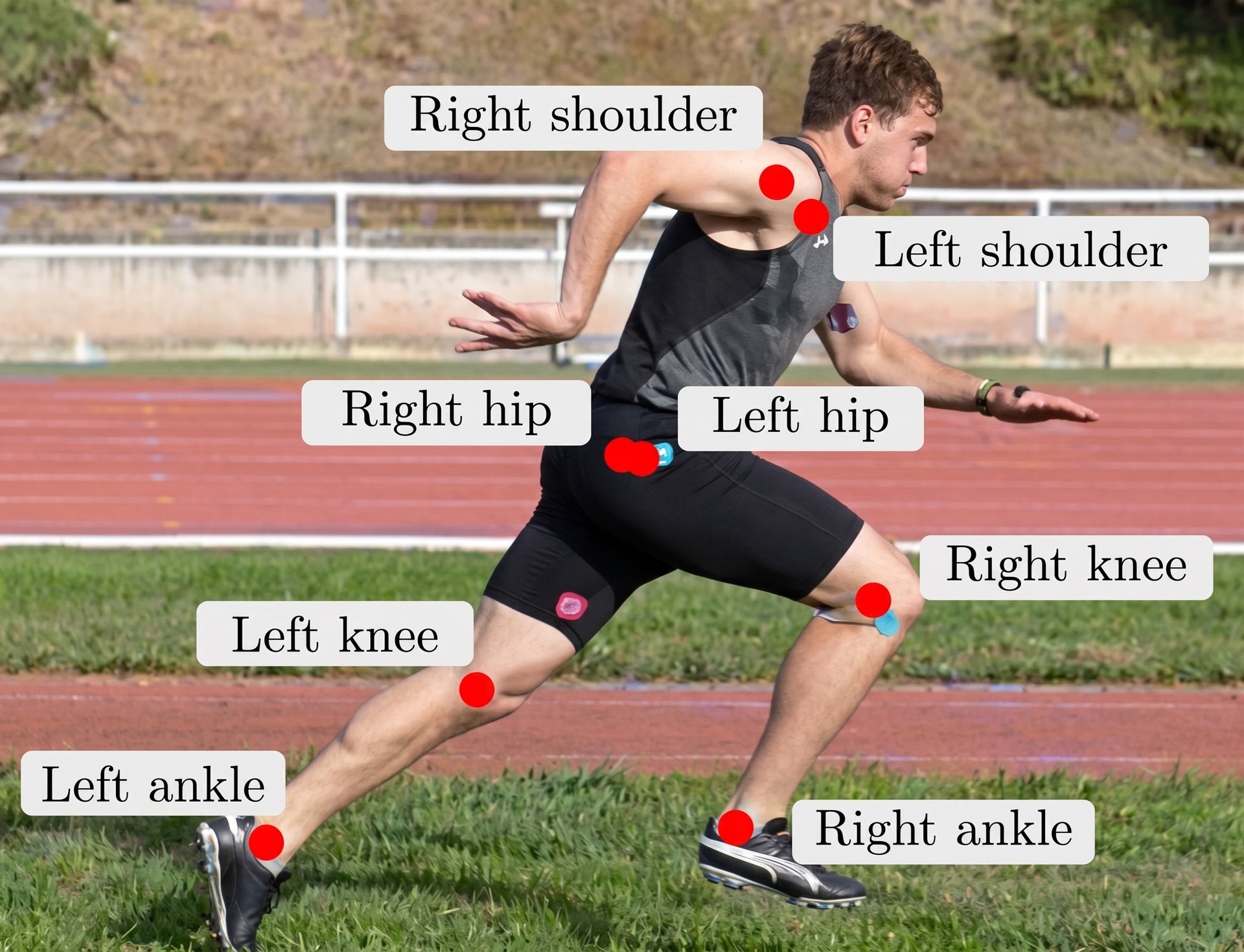
Fig 2. Key body points for understanding running gait and becoming a better runner. (Source)
Many runners also rely on running shoes, coaching, and form guidance to improve how they run. The right running shoes can support comfort and reduce stress on joints, especially for new runners who are still building strength and consistency.
Also, working with a running coach or following form-focused training plans can help runners understand proper running form, correct inefficient habits, and lower the risk of injury over time. For beginners in particular, learning the correct running form early can make running feel easier, safer, and more enjoyable as they progress.
Understanding how pose estimation can be used to analyze running#
Pose estimation is a computer vision task that identifies and tracks key points on a person or object to determine their position and movement in an image or video. In particular, human pose estimation makes it possible to track how the human body moves frame by frame.
Instead of simply detecting a runner in a frame, it follows how different body parts move over time, supporting detailed gait and running biomechanics analysis. One of the main advantages of pose estimation is that it works with standard cameras, making it accessible in many real-world settings.
Models like YOLO11 that support pose estimation can track a runner frame by frame, whether on a treadmill or outdoors. By identifying key points such as the shoulders, glutes, knees, ankles, and elbows, the model connects body movements over time to reveal overall motion and joint flexion patterns.
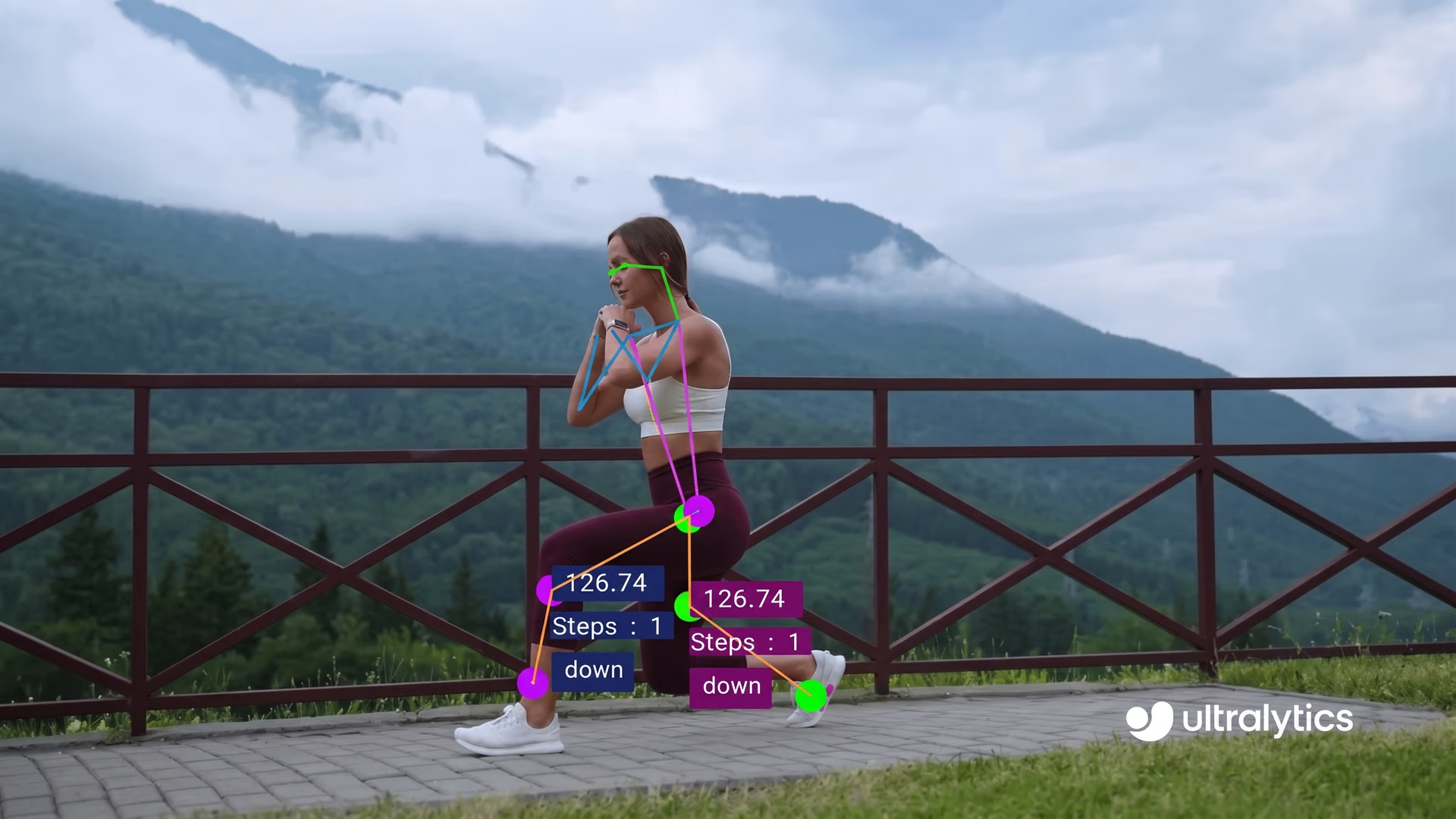
Fig 3. Pose estimation can be used to track key body points during warm-up exercises. (Source)
For example, during common workout movements like squats or lunges, timing and coordination strongly influence how the body moves. Small changes in stride, body alignment, or foot placement can affect speed, balance, control, and injury risk.
Catching these small changes consistently isn’t easy. Pose estimation doesn’t replace a running coach, but it can act as a visual aid that makes posture, timing, and coordination easier to see across runs. Over time, it also makes it more streamlined to compare techniques and notice small adjustments.
How Ultralytics YOLO models can support running technique analysis#
Next, let’s look at how Ultralytics YOLO models support tasks like pose estimation.
Ultralytics YOLO pose models like YOLO11 are available out of the box and come pre-trained on large labeled datasets such as COCO-Pose. This allows them to detect and track common human body keypoints and apply that knowledge across a range of applications.
The insights gathered from tracking body keypoints across video frames can be used to study how people move over time. This makes it possible to analyze posture, stride patterns, joint movement, and coordination, which are key aspects of running techniques.
When more specific insights are required, these models can be custom-trained. Rather than training a model from the beginning, a pre-trained YOLO pose model can be fine-tuned using additional labeled data.
For example, if the goal is to build a solution to analyze how dogs run, the model can be trained on labeled pose data specific to dogs so it learns their body structure and movement patterns while retaining the general pose estimation capabilities from its original training.
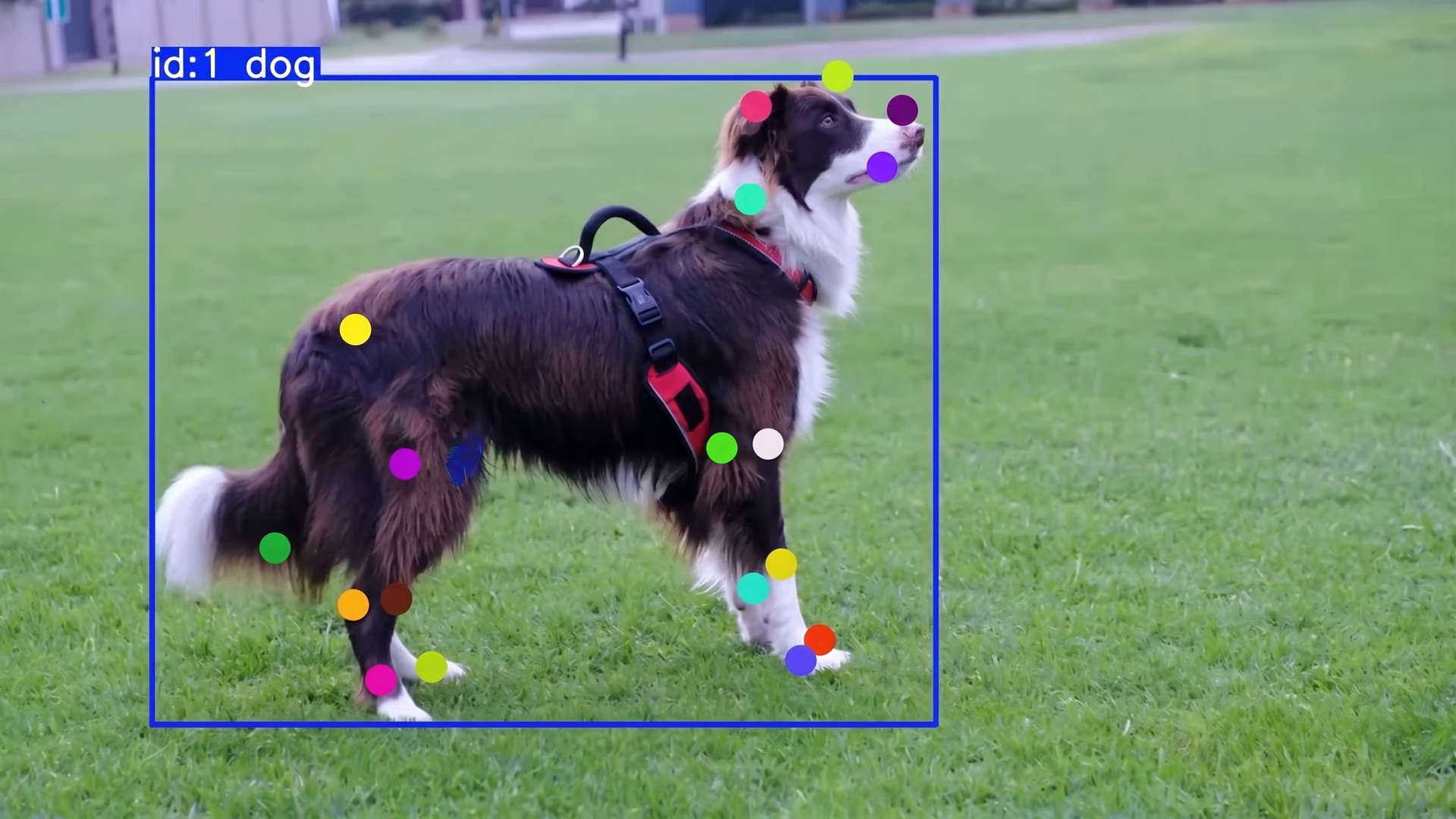
Fig 4. Key body points detected on a dog for pose estimation. (Source)
A look at using pose estimation to analyze hurdling techniques#
Now that we have a better understanding of how pose estimation works, let’s walk through an example of how it can be applied to analyze hurdling technique.
Hurdling is a fast and technically demanding sport. During a single run, foot contact, take off, and landing happen in fractions of a second.
Because these actions occur so quickly, it can be difficult to observe important details with the naked eye or through manual video review. As a result, small but meaningful differences in stride rhythm, timing, or ground contact are often overlooked.
Computer vision–based pose estimation tackles this by converting standard video footage into structured data. For instance, in a recent study, researchers used an Ultralytics YOLOv8-based model to track lower-body keypoints. YOLOv8, an earlier generation of Ultralytics YOLO models, supports pose estimation and provides the foundation for newer models such as YOLO11.
The study focused on key points such as the ankle, heel, and big toe to analyze step timing, stride patterns, and ground contact during sprint hurdling. By following these key points over time, researchers were able to closely monitor step progression, timing, and movement patterns under real training conditions.
Pros and cons of using computer vision for gait analysis#
Here are some of the key benefits of using pose estimation for analyzing running techniques:
- Objective feedback: Pose estimation provides consistent visual data based on measured body keypoints rather than personal judgment. This helps reduce subjectivity when evaluating a range of motion.
- Self-review: Runners can analyze their own movement patterns without needing constant coaching support, making it useful for recreational and independent training.
- Group scalability: The same workflow can be applied to multiple runners, which works well for teams, training groups, or research studies where manual observation is impractical.
While pose estimation offers several advantages, here are some limitations to consider:
- Camera setup: Incorrect camera angles or inconsistent framing can reduce how accurately joint angles, stride patterns, and the number of steps are captured.
- Occlusion: Accuracy decreases if parts of the body are blocked or if multiple runners overlap in the frame.
- Environmental factors: Outdoor conditions, including shadows, uneven surfaces, or moving backgrounds, can affect measurement consistency.
Key takeaways#
Ultralytics YOLO models and pose estimation are making running analysis more accessible. They can be used to track body movement, joint angles, and stride patterns from regular video, giving clear insights into running form. These tools help runners and coaches spot inefficiencies, track improvements, and manage risk of injury in real time.
Explore more about AI by visiting our GitHub repository and joining our community. Check out our solution pages to learn about AI in robotics and computer vision in automotive. Discover our licensing options to get started with vision AI today!








