Stride turns a simple smartphone video into fast, on-device equine movement analysis with Ultralytics YOLO, without internet access or special hardware.
As AI continues to support veterinary assessment and clinical decision-making, the demand for objective, accessible tools that can run in real-world field conditions is growing.
Dr Quentin Pleyers developed Stride, an iOS app that uses computer vision to deliver objective gait analysis for horses, helping veterinarians and equine professionals assess movement asymmetries directly from a video recording. By integrating Ultralytics YOLO models, Stride makes it possible to gather objective movement data on horses anywhere, in under a minute, without relying on cloud connectivity or specialized hardware.
Bringing science and technology together to support equine professionals#
Dr. Quentin Pleyers is an equine veterinarian based in southern Sweden, with a strong focus on sports medicine, biomechanics, and objective movement analysis. Combining his clinical background with a long-standing passion for software engineering, he built Stride to solve a problem he encountered every day in the field.
Stride was developed independently by Dr Quentin Pleyers. The project now benefits from academic and clinical collaborations with institutions and partners, including the University of Liège, the European Center for Horse Studies, the University of Tennessee, and partners across Italy and Estonia. These collaborations are focused on validation studies, clinical research, and future applications, while the app itself was created and developed by Dr Quentin Pleyers.
The challenge of objective lameness assessment in the field#
Lameness is one of the most common and most difficult issues equine vets face. Traditionally, lameness assessment has relied on a vet's trained eye, with results varying between practitioners and proving especially challenging in cases of subtle or multi-leg lameness.
Objective tools do exist, including pressure plates and IMU sensors, but they often require dedicated hardware, controlled environments, and time-consuming data processing. Many computer vision-based systems require uploading large 4K video files to remote servers, a process that can take 10 to 15 minutes in the field, where bandwidth is often limited.
The missing piece was a tool that could deliver objective movement data quickly, on a device many veterinarians and equine professionals already carry in their pocket: a smartphone.
Fast on-device pose detection on iOS with Ultralytics YOLO#
To make this possible, Dr Quentin Pleyers built Stride, leveraging Ultralytics YOLO26 models trained for pose estimation, exported to Core ML, and deployed natively on iOS. The app records video of a horse trotting, extracts key anatomical landmarks frame-by-frame, and analyzes the vertical displacement of points like the head, withers, and pelvis to quantify movement asymmetries.
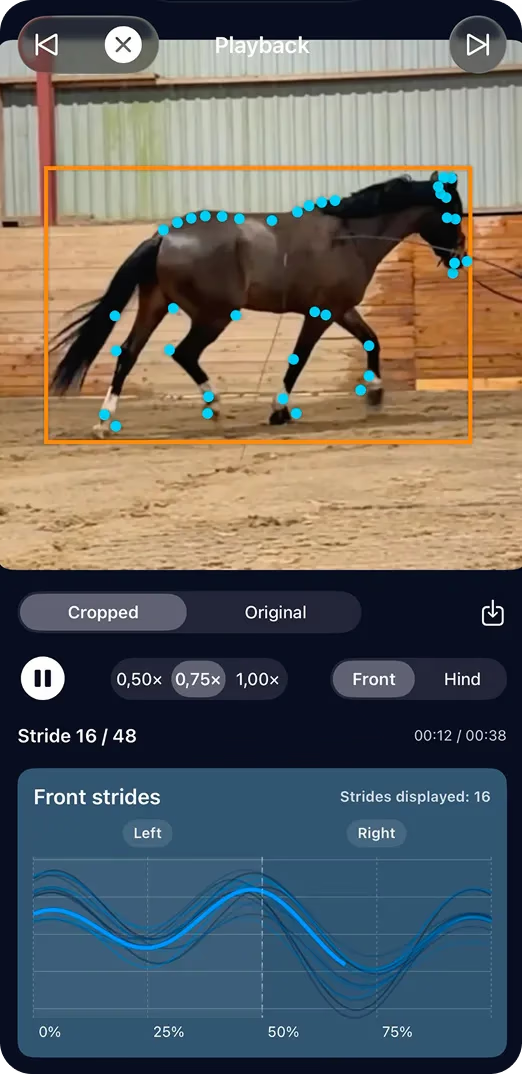
Fig 1. A screenshot from the Stride app showcasing a horse trotting.
Crucially, the entire pipeline, from video capture to pose detection to signal processing, runs locally on the device. On an iPhone 17 Pro, Stride processes a full gait analysis in around one minute, with inference times of approximately 10 milliseconds per frame using an Ultralytics YOLO26 medium model.
Stride was trained using thousands of manually annotated images of horses, captured across a wide range of breeds, coat colors, lighting conditions, and backgrounds. The training process was streamlined using Ultralytics Platform, which Dr Quentin Pleyers used to develop, iterate, and refine the model that powers the app today.
Why choose Ultralytics YOLO models?#
For Dr Quentin Pleyers, Ultralytics YOLO offered the right balance of performance, flexibility, and ease of use needed to bring an idea from prototype to production.
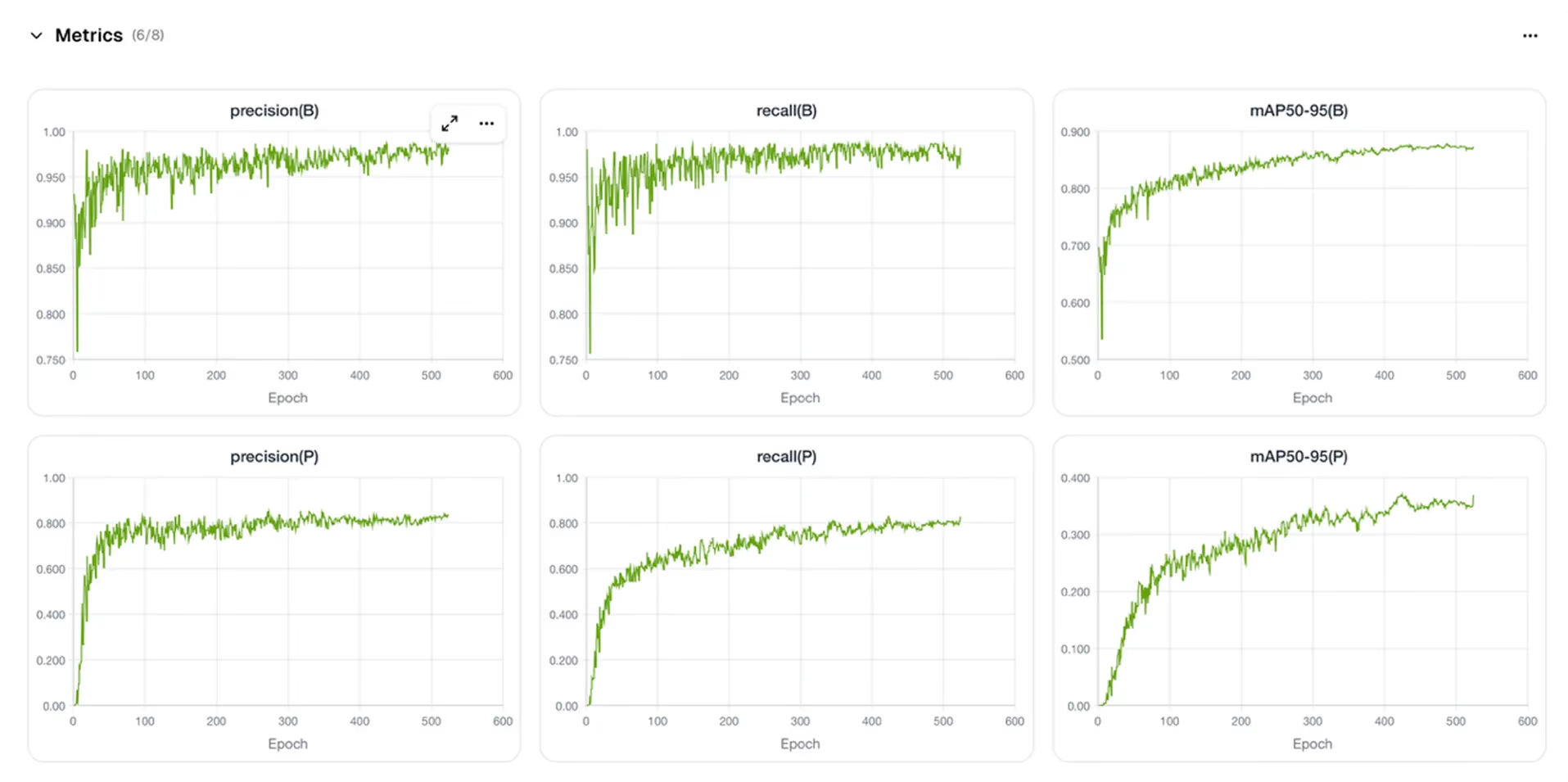
Fig 2. Performance metrics from Stride with Ultralytics YOLO.
After exploring multiple computer vision frameworks, Dr Quentin Pleyers found that Ultralytics YOLO models offered both the accuracy required for biomechanical analysis and the lightweight efficiency needed to run smoothly on mobile devices. The ability to easily export to Core ML and deploy natively on iOS was a key factor in making Stride a fully offline, field-ready tool.
Supporting more objective, consistent equine veterinary care#
Stride is not designed to replace a vet's clinical judgment, and that distinction is important to note. The app does not diagnose lameness; it provides an objective measurement of asymmetry in a horse's vertical movement, giving veterinarians and equine professionals one more reliable data point to support their overall assessment.
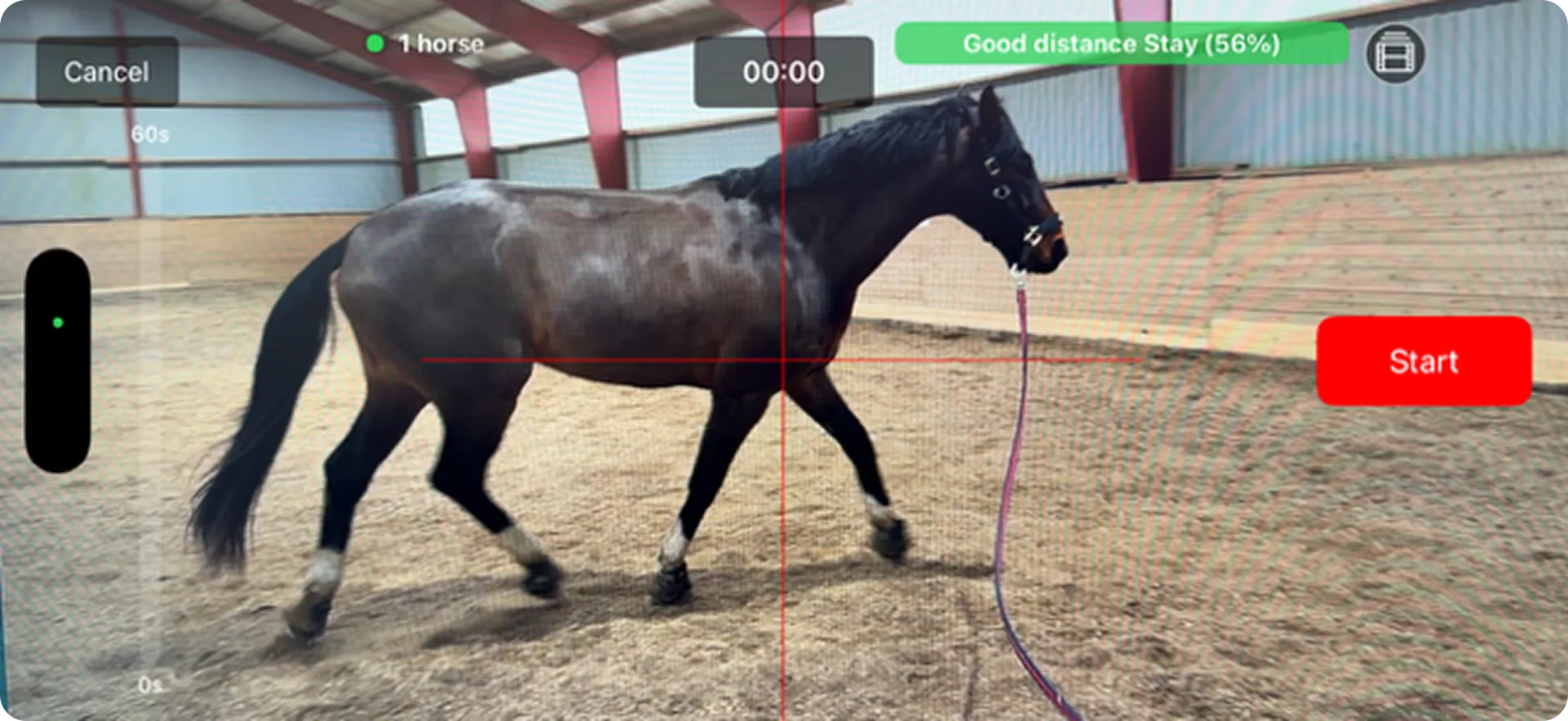
Fig 3. A screenshot from the Stride iPhone app showcasing a horse trotting.
This approach is helping Stride gain traction across the equine veterinary community, particularly among newer generations of vets who are comfortable integrating digital tools into their workflows. By delivering objective data in real time, on a familiar device, Stride helps reduce variability in assessments and supports more confident, evidence-based clinical decisions.
The future of equine gait analysis#
Dr Quentin Pleyers is now expanding Stride to Android, with the goal of making objective equine movement analysis accessible to veterinarians, equine professionals, trainers, therapists, farriers, and horse owners worldwide. By helping users identify movement asymmetries as early as possible, Stride aims to support earlier intervention, better follow-up, and the highest possible standards of equine welfare. Continued collaboration with academic and clinical partners will further validate Stride's role in practice and explore new applications for objective movement analysis in equine medicine.
By combining decades of clinical expertise with cutting-edge computer vision, Stride represents a new chapter in how technology can support, rather than replace, the trained eye of a skilled veterinarian.
Interested in building Vision AI solutions of your own? Visit our GitHub repository to explore Ultralytics YOLO models, learn how YOLO is driving innovations across industries like AI in healthcare, and check out our licensing options to get started.








