Deploy computer vision models across 42 global regions
Take trained models from browser testing to production endpoints in a few clicks, with auto-scaling, deployment monitoring, and 20 export formats.
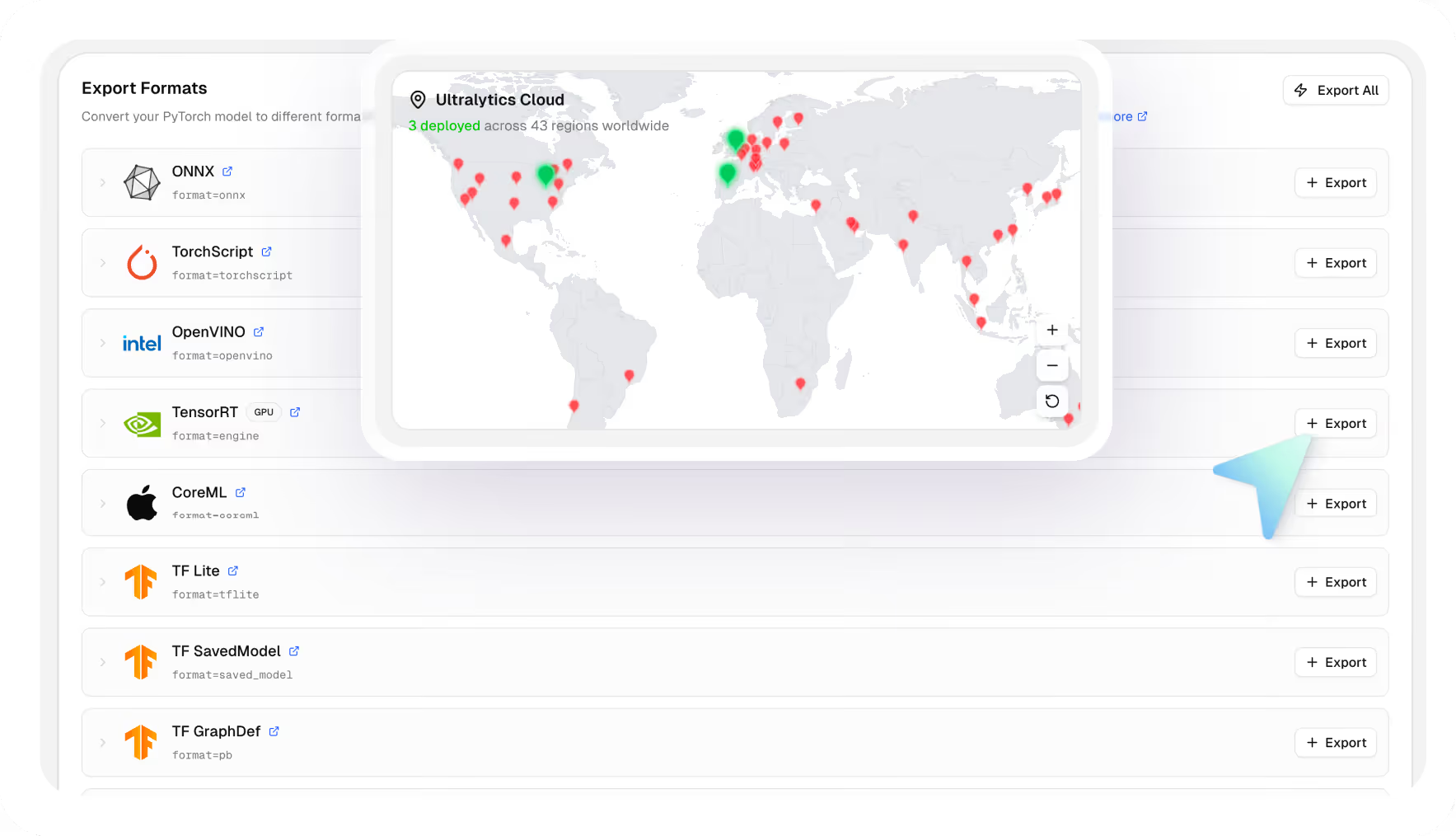
Deploy at global production scale
Move trained models into production with worldwide availability, broad export support, and the usage volume proven by the Ultralytics ecosystem.
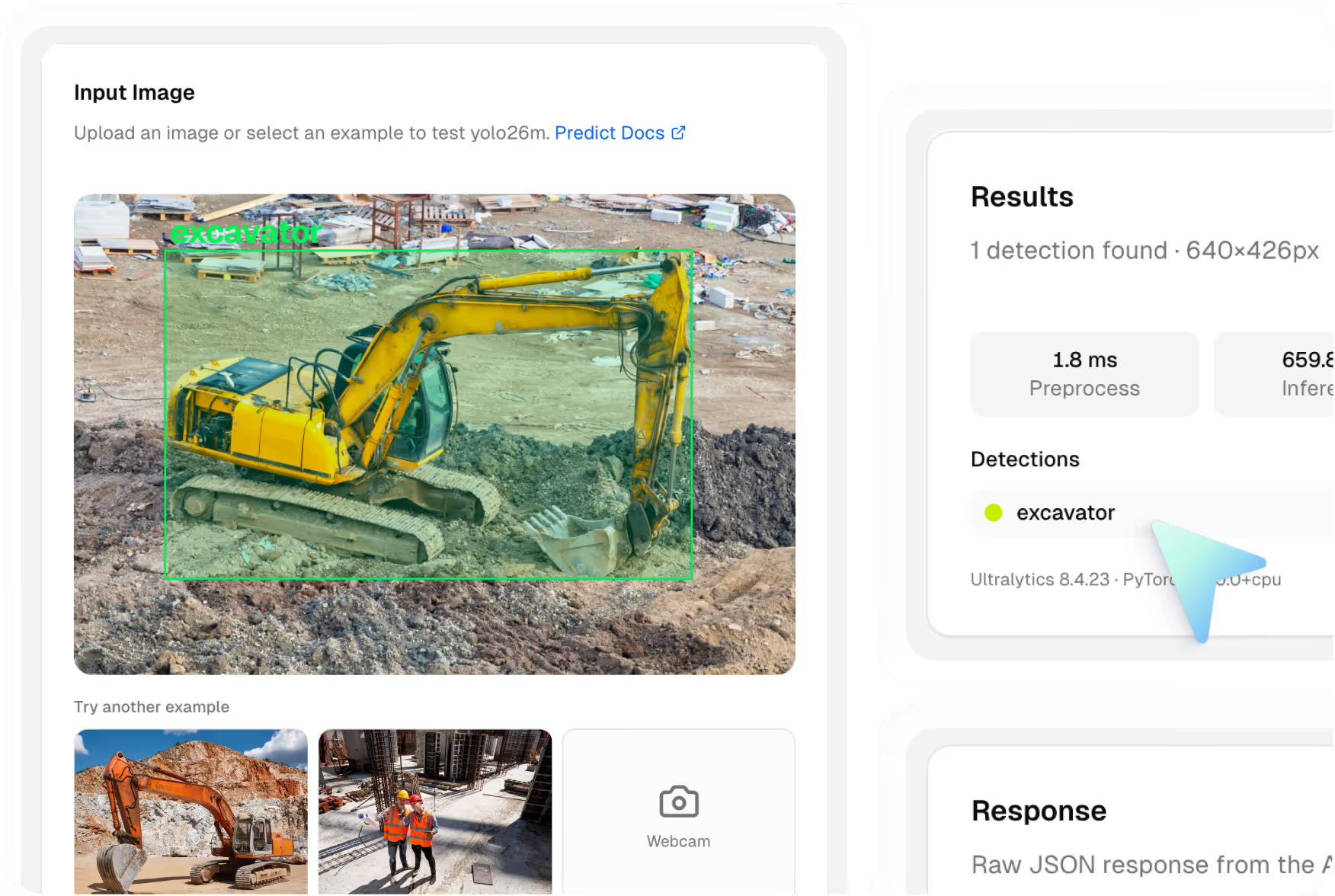
Test your model in the browser
Every trained model includes a built-in Predict tab functionality. Upload an image, or open your camera; the bounding boxes appear instantly.
Deploy to 42 regions worldwide
Deploy your models to dedicated endpoints across the Americas, Europe, Asia-Pacific, and the Middle East. Each endpoint has its own URL, auto-scaling, and monitoring for requests, latency, errors, and logs.
Auto-scaling that matches your traffic
Dedicated endpoints scale up for traffic spikes and down to zero when idle.
- Scale to zero by default: No cost when your endpoint isn't receiving requests.
- No rate limits: Dedicated endpoints have no throughput caps.
- Configurable resources: Choose CPU (1-8 cores) and memory (1-32 GB) to match your workload.
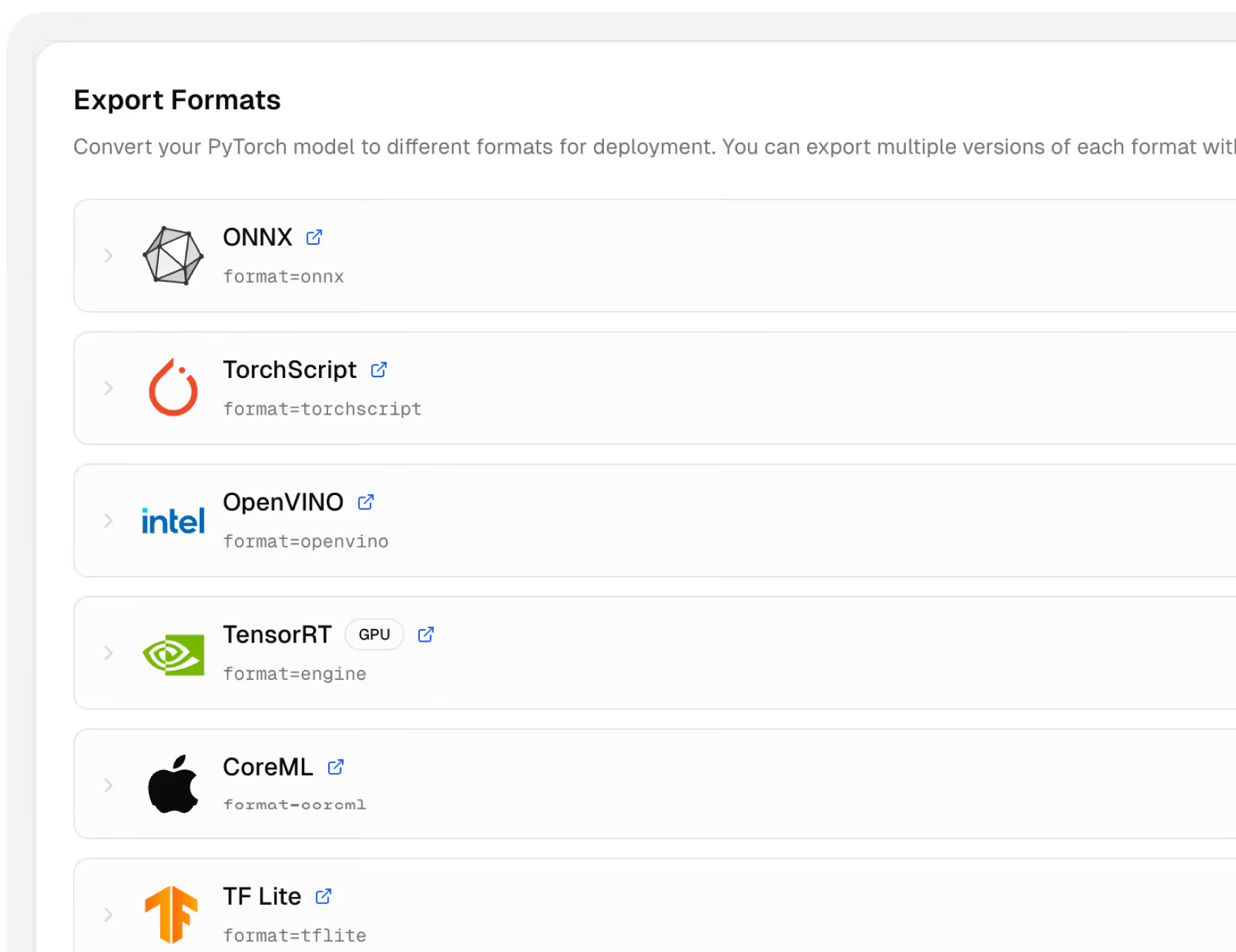
20 export formats. Your model. Any environment.
Ultralytics Platform supports cloud and edge deployment for high-performance. All Ultralytics YOLO models are natively optimized to run efficiently across environments, delivering high accuracy, reliable performance, and compatibility even on edge devices with limited compute resources.
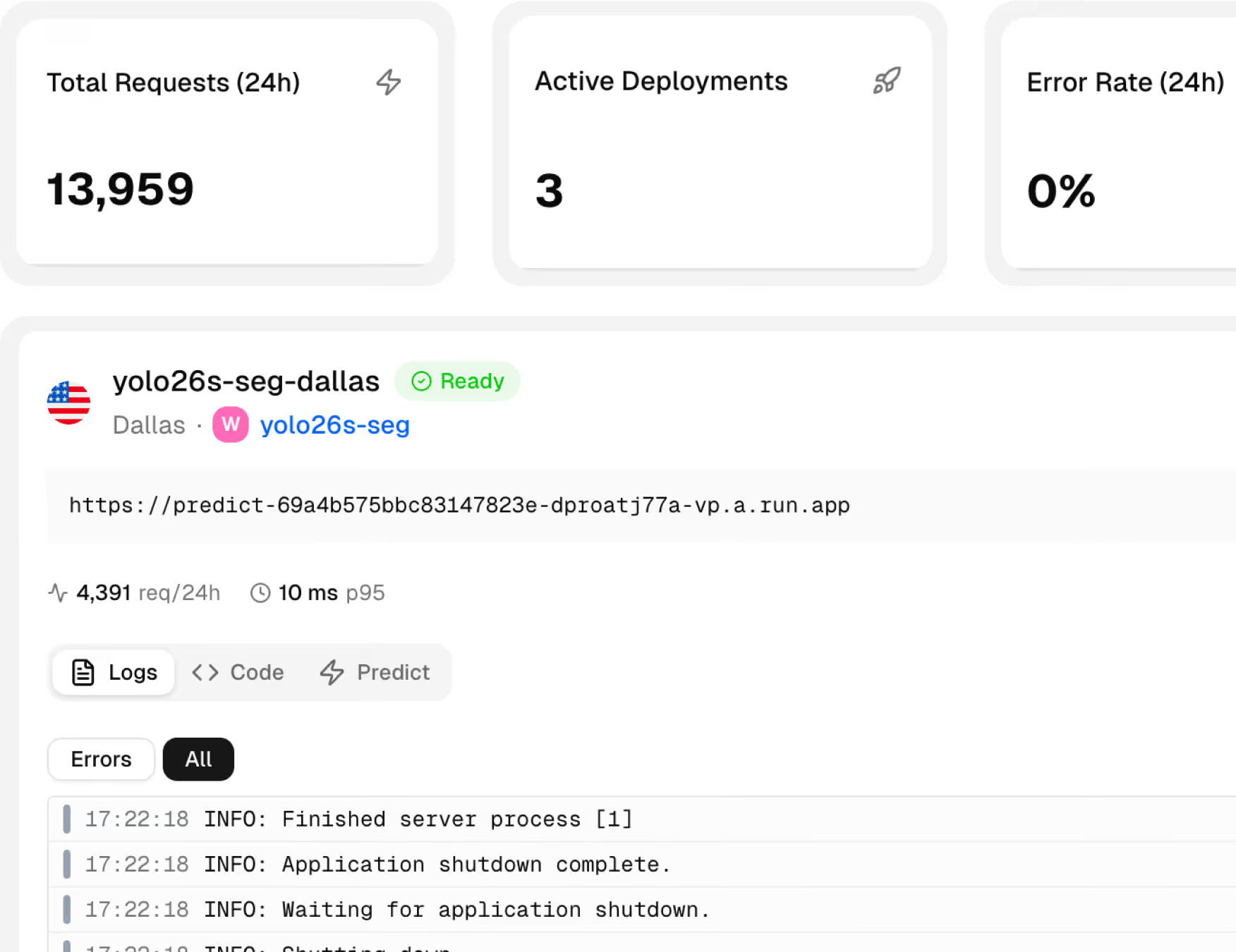
Monitor everything in production
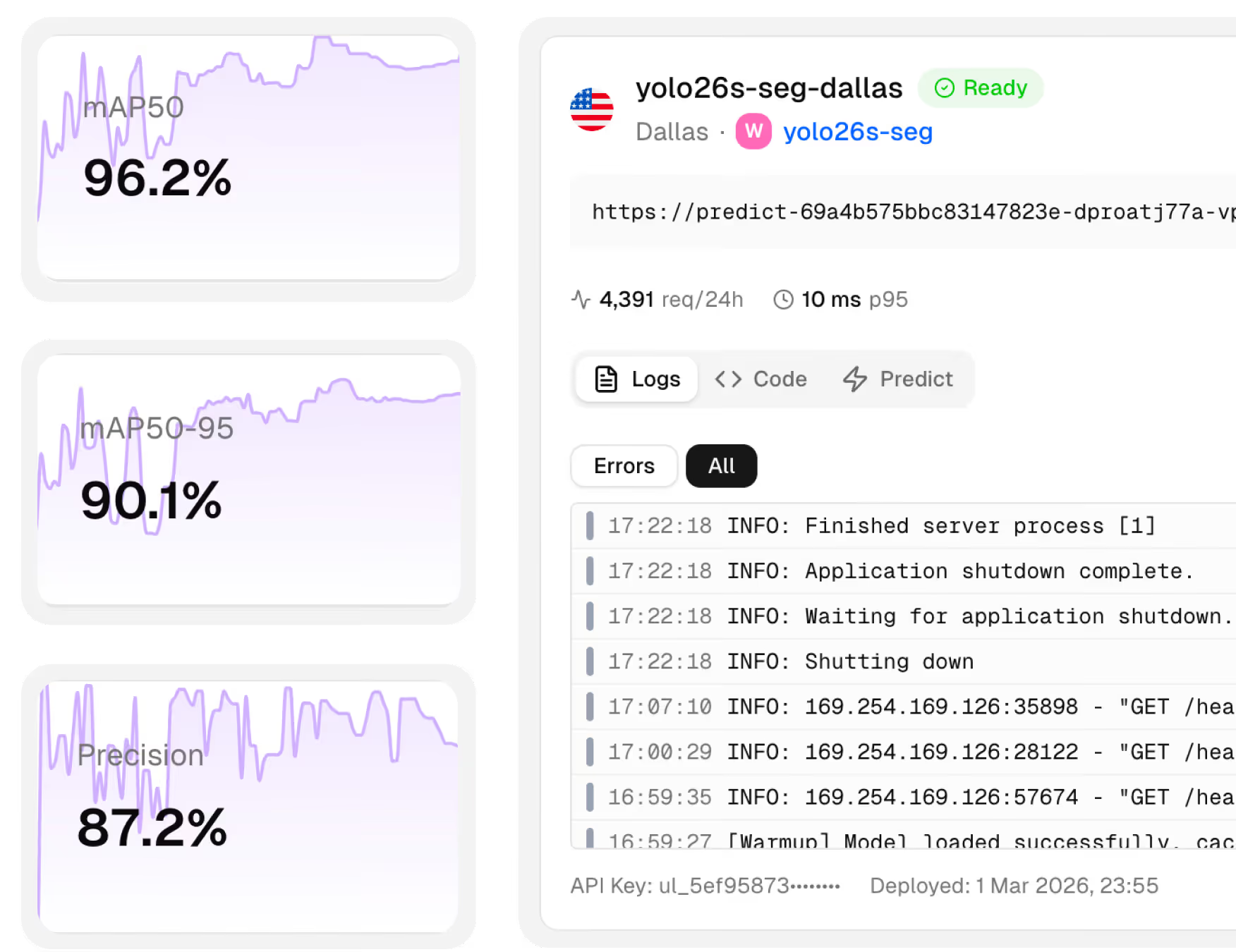
Track endpoint requests, latency, errors, and logs from the deployments dashboard. Paid dedicated endpoints also provide live prediction statistics and temporary examples you can inspect and save to a dataset.
- Requests, latency, and errors: 24-hour HTTP volume, volume-weighted P95 latency, and error-rate alerts above 5%.
- Health checks and logs: Live endpoint health with auto-retry, plus severity-filtered logs to diagnose issues fast.
- Temporary examples: Inspect sampled predictions on paid dedicated endpoints. Examples are held in endpoint memory; save useful images to a dataset to keep them.
- Prediction statistics: Class counts, confidence, inference time, and spatial heatmaps, where supported by the model task. Statistics reset when the serving instance is replaced.
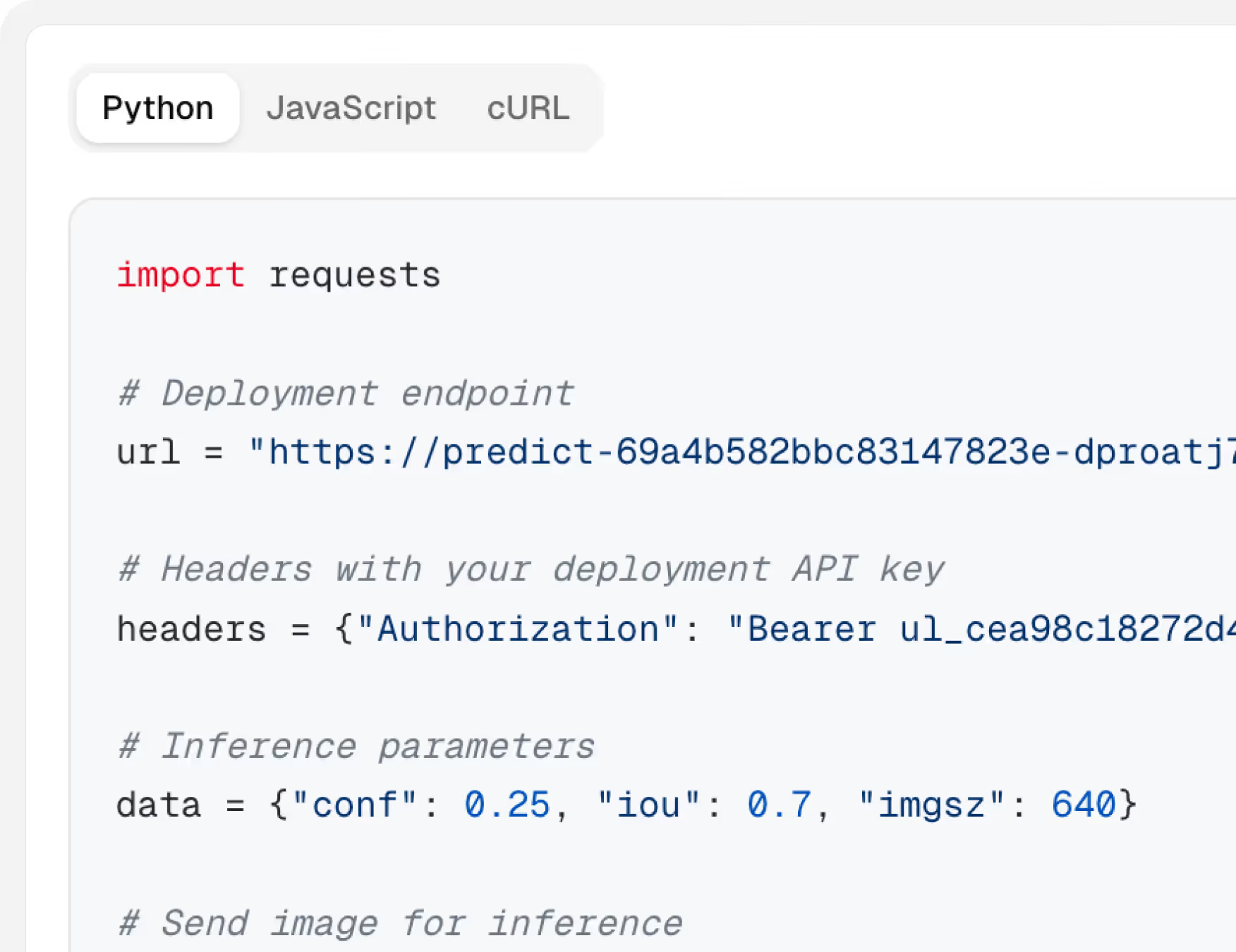
Integrate in minutes
Every deployed endpoint comes with auto-generated code examples in Python, JavaScript, and cURL, pre-populated with your actual endpoint URL and API key. Copy, paste, and start sending inference requests from any application.
Try YOLO26 Inference
Drag and drop an image to see real-time object detection
Learn how to deploy!
Watch how to test a trained model, deploy it to a global endpoint, and monitor requests, latency, and live predictions.
Need to train a model first?
Ultralytics Platform connects annotation, training, and deployment in a single platform.
Explore industry solutions
See how teams apply Ultralytics computer vision across production environments.

Computer vision for aerial imagery

Computer vision in aerospace

Computer vision in security

Computer vision in robotics

Computer vision in logistics

Computer vision in retail

Computer vision in healthcare

Computer vision in manufacturing

Computer vision in automotive

Computer vision in agriculture
Computer vision for aerial imagery
Computer vision in aerospace
Computer vision in security
Computer vision in robotics
Computer vision in logistics
Computer vision in retail
Computer vision in healthcare
Computer vision in manufacturing
Computer vision in automotive
Computer vision in agriculture
Computer vision for aerial imagery
Computer vision in aerospace
Computer vision in security
Computer vision in robotics
Computer vision in logistics
Computer vision in retail
Computer vision in healthcare
Computer vision in manufacturing
Computer vision in automotive
Computer vision in agriculture
Enterprise-grade security, certified
Independently certified and audited, so your data stays protected in transit and at rest.

SOC 2 Type I

ISO 27001:2022

GDPR & CCPA
Frequently asked questions
Yes. Each model can be deployed to multiple regions simultaneously. Your plan determines the total number of endpoints available: 3 for Free, 10 for Pro, and unlimited for Enterprise. This allows you to serve users globally with low-latency endpoints in each region.
Dedicated endpoints are billed based on CPU, memory, and request volume. With scale-to-zero enabled by default, you only pay for active inference time. There is no cost when your endpoint isn't receiving requests. Shared inference is included with your platform plan.
Shared inference runs on a multi-tenant service across 3 regions and is rate-limited to 20 requests per minute. It's best for development and quick testing. Dedicated endpoints are single-tenant services deployed to any of 43 regions with no rate limits, consistent latency, and configurable resources, built for scalable production workloads.
Dedicated endpoint deployment typically takes one to two minutes. This includes container provisioning, startup, and an initial health check to validate the service is ready. Once the endpoint is ready, it begins accepting inference requests immediately.
Model deployment is the process of making a trained computer vision model available to receive and process real-world data. Once deployed, computer vision applications can send images and video frames to the model via API and receive predictions, enabling everything from automated quality inspection to real-time object detection in production systems. On Ultralytics Platform, deployment is integrated directly into the end-to-end training workflow. Once your model is trained, you can test it in the browser, deploy it to a dedicated endpoint in any of 43 global regions, and monitor its performance, all from the same workspace.
Start deploying today!
Take your trained models to production across 42 global regions with auto-scaling and deployment monitoring.