How vision AI enhances defect detection on production lines
Learn how computer vision systems enable real-time defect detection, improve quality control, and reduce manufacturing errors on fast-moving assembly lines.
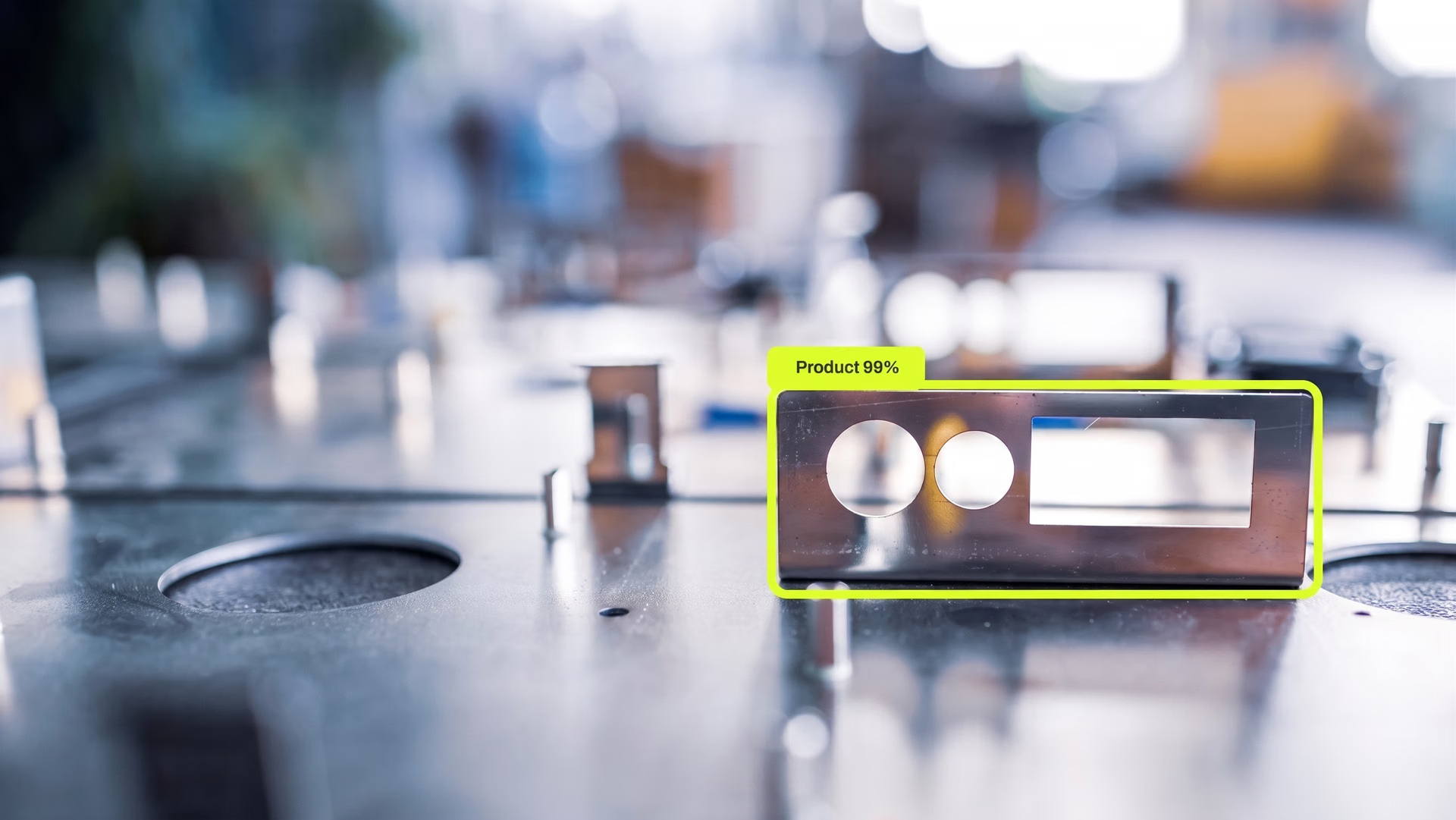
A tiny flaw or anomaly might not seem like much at first, yet over time it can grow under pressure, leading to costly repairs, recalls, and loss of consumer trust. Relying only on manual inspection increases this risk, and this is true across various industries.
Small cracks, dents, slight misalignments, and surface imperfections on products can be difficult to spot, especially in fast-moving, high-volume production environments. While manual inspection worked well when manufacturing was slower and less complex, production lines nowadays operate at a completely different scale.
Processes are faster, more automated, and more demanding than ever before. Traditional quality control methods simply can’t keep up.
To meet these challenges, manufacturers are adopting computer vision systems. Computer vision is a branch of artificial intelligence (AI) that allows machines to analyze and interpret visual data. These systems can continuously monitor products on the line and automatically identify irregular patterns or defects.
For instance, computer vision models, such as Ultralytics YOLO26, support various real-time vision tasks like object detection, instance segmentation, and image classification. Specifically for defect detection, these models can scan product surfaces as they move along production lines, identify irregular patterns, detect small cracks or dents, and flag defects in real time.
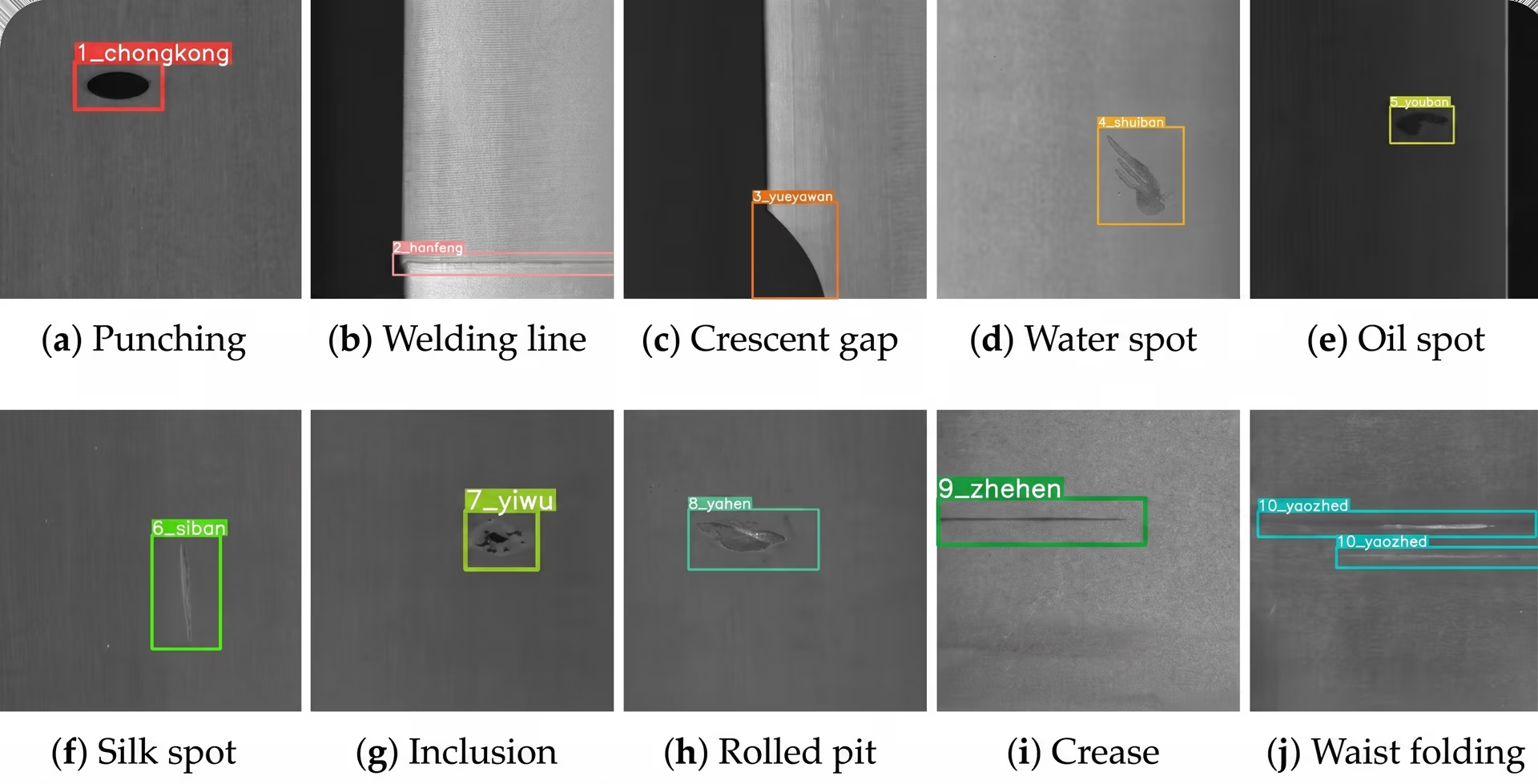
Fig 1. Examples of metal surface defect detection (Source)
In this article, we’ll explore using computer vision for defect detection and see how it helps manufacturers maintain product quality across smart production lines. Let’s get started!
The need for defect detection in manufacturing automation#
Here’s a look at some of the main factors that make AI-driven detection so essential in smart manufacturing environments:
- Harsh production environments: Manufacturing facilities often operate in conditions such as dust, heat, vibration, and variable lighting. Reliable defect detection has to perform consistently despite these environmental factors.
- Workforce dependency: Traditional inspection relies on human operators. As production scales, maintaining consistent accuracy across shifts and long working hours becomes increasingly difficult.
- Operational challenges: Assembly lines run at high speed. Inspection systems have to keep up with this pace and evaluate every product without interrupting workflow.
- The cost of defects: The earlier a defect is detected, the lower the cost of correction. Late-stage detection, especially after shipment, can result in rework, waste, and recalls.
- Consistency and traceability requirements: Many companies focus on maintaining their quality standards. Automated systems record inspection data, making it easier to track results, ensure transparency, and maintain accountability.
What is vision-driven defect detection?#
Vision-enabled defect detection relies on cameras and computer vision systems to identify product defects during manufacturing. These systems scan goods as they move along the production line and verify that they meet quality standards.
Many companies are already using this in their manufacturing facilities. In fact, the global AI industrial defect detection market is set to reach $6.07 billion by 2035.
A key driver behind this growth is the ability of computer vision models to detect even rare defects. By training on labeled example images, models such as Ultralytics YOLO26 can learn to recognize a wide range of issues.
Various types of defects#
In real-world production environments, defects can appear in many forms. Here are some common issues that can be identified using computer vision and image processing technologies:
- Surface defects: These include scratches, dents, cracks, discoloration, and other surface flaws.
- Dimensional defects: These defects occur when a product is the wrong size, misaligned, or has shape issues.
- Assembly defects: When parts are missing, incorrectly placed, or misaligned on the assembly line, it results in assembly defects that can affect product performance and overall quality.
- Manufacturing defects: These occur during the production process due to errors in materials, equipment, or process control. For example, in the manufacturing of printed circuit boards (PCBs) or semiconductors, issues such as misaligned layers, incomplete solder joints, or contamination can result from process variations and lead to defective components.
- Printing or labeling defects: These occur when text is blurred, printing is uneven, information is missing, or labels are incorrectly placed on the product or packaging.
How vision-powered defect detection works#
Next, let’s take a closer look at how a defect detection system works using camera systems and vision AI models.
In a typical setup, cameras are positioned along the assembly line to capture clear visual data as products move through different production stages. These high-resolution images are collected and organized into datasets for a computer vision model.
The images serve as training data. A computer vision model can be trained on examples of both good and defective products, so it can learn to distinguish between them accurately.
For instance, in bottle cap inspection, caps may vary in size, color, and shape. A vision system can be used to identify surface defects, misalignments, or structural flaws as they move along the production line. When an issue is detected, it is flagged immediately.
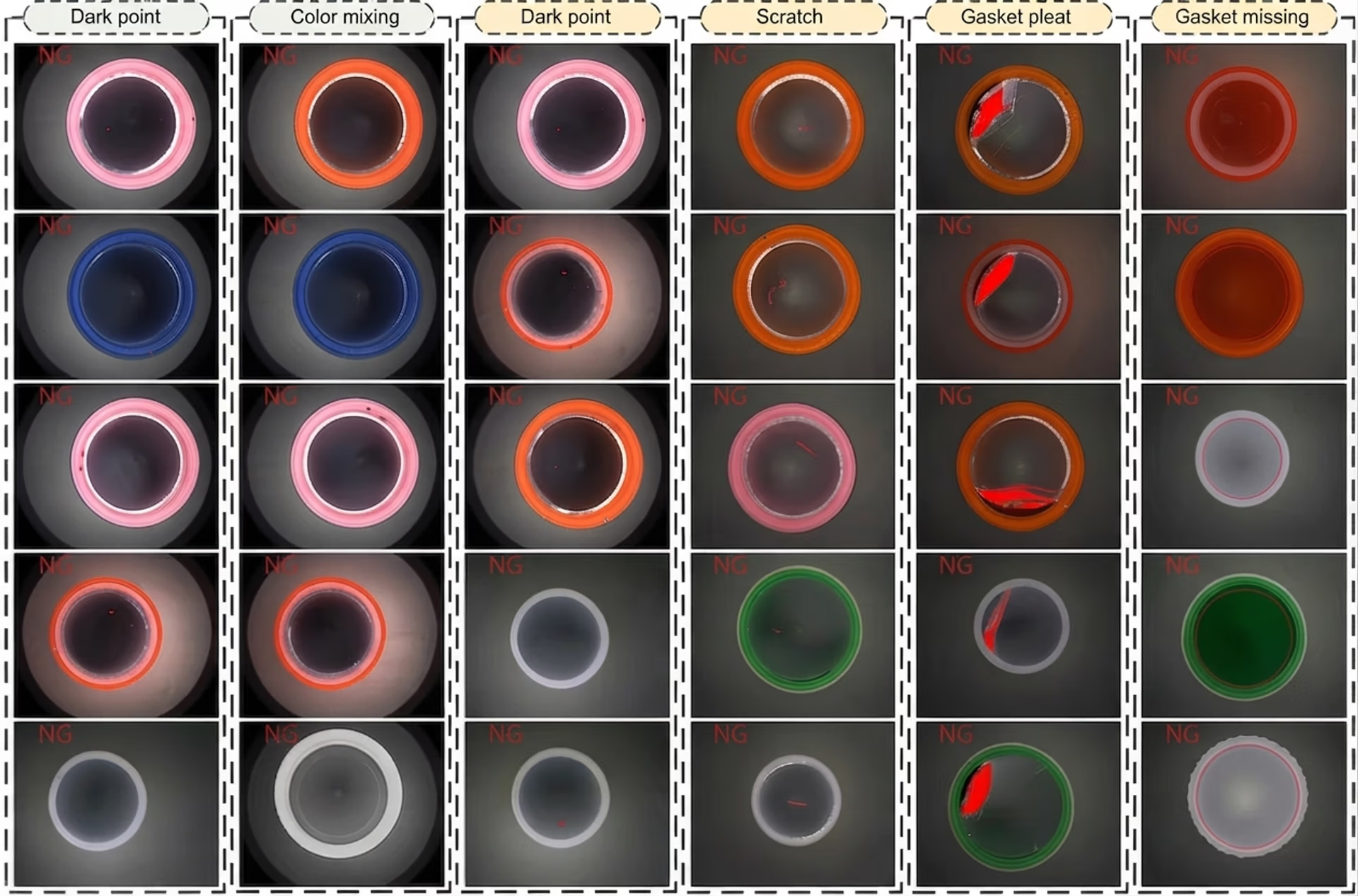
Fig 2. Detecting various defects in bottle caps of different sizes and colors (Source)
Depending on the setup, AI-powered inspection systems can operate directly on assembly lines and support fast decision-making. In real-world manufacturing environments, such an automated system improves consistency, strengthens quality inspection, and makes large-scale defect detection more reliable.
Key computer vision tasks used for defect detection#
Typically, vision AI-based defect detection systems rely on a set of computer vision tasks. Each of these tasks plays an important role in the quality inspection process.
State-of-the-art vision AI models, such as Ultralytics YOLO26, support these tasks, making them reliable for real-world production environments. Here’s a glimpse at some of these tasks:
- Image classification: Classification is the simplest computer vision task. It analyzes an image and classifies it into categories such as “defect” or “no defect”.
- Object detection: It enables models to identify and locate defects within an image. It can draw bounding boxes around issues such as cracks, dents, stains, or missing parts, making the inspection process more precise and easier to interpret.
- Object tracking: This task is used to track a product or a detected defect across frames. It helps maintain continuity in inspection and prevents defects from being counted more than once.
- Instance segmentation: Image segmentation outlines the exact shape and area of a defect at the pixel level. This level of detail is useful when measuring the size, spread, or severity of a flaw.
- Oriented bounding box (OBB) detection: OBB detection is used to draw rotated boxes aligned with the defect’s direction. This improves accuracy, especially when dealing with narrow or tilted flaws.
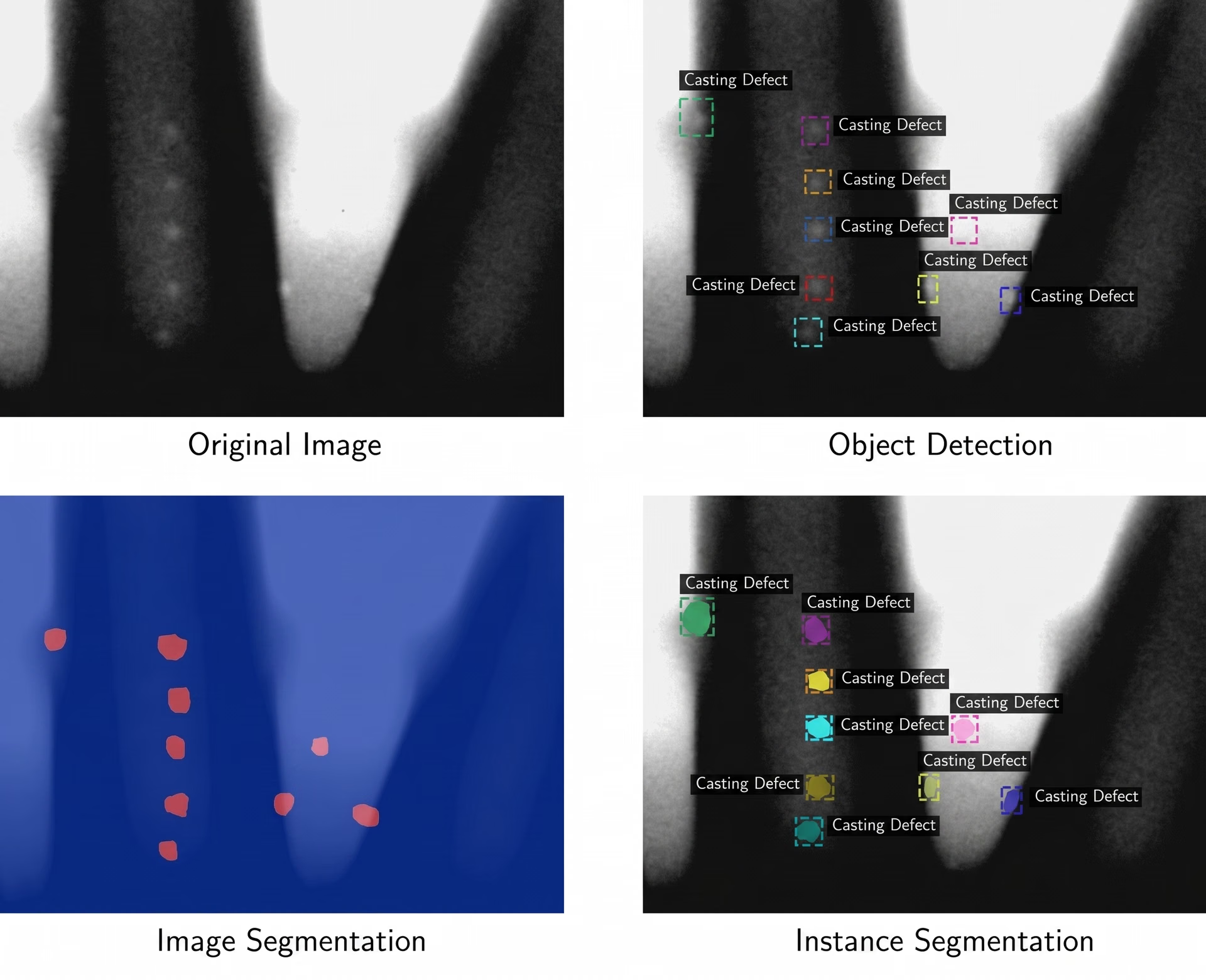
Fig 3. Using different computer vision tasks for casting defect detection (Source)
Machine vision applications for production process improvement#
Machine vision involves using cameras, sensors, and image-processing software to automatically inspect, analyze, and guide production processes in real time, and it is widely used across industries such as automotive, electronics, pharmaceuticals, food and beverage, and consumer goods manufacturing.
Next, let’s walk through some real-world examples that showcase how machine vision can improve quality, efficiency, and consistency throughout the production process.
Visual inspection in steel manufacturing#
When it comes to metal steel sheet manufacturing, defects are often subtle. For instance, a sheet may appear smooth at first glance while hiding a fine scratch or surface flaw caused during rolling or heat treatment. With thousands of sheets moving through production lines every hour, relying on manual inspection becomes increasingly challenging.
To improve accuracy, manufacturers are deploying computer vision systems directly on production lines. These systems analyze surface texture, alignment, and structural patterns in real time. If any irregularity is detected, it is flagged immediately for further action.
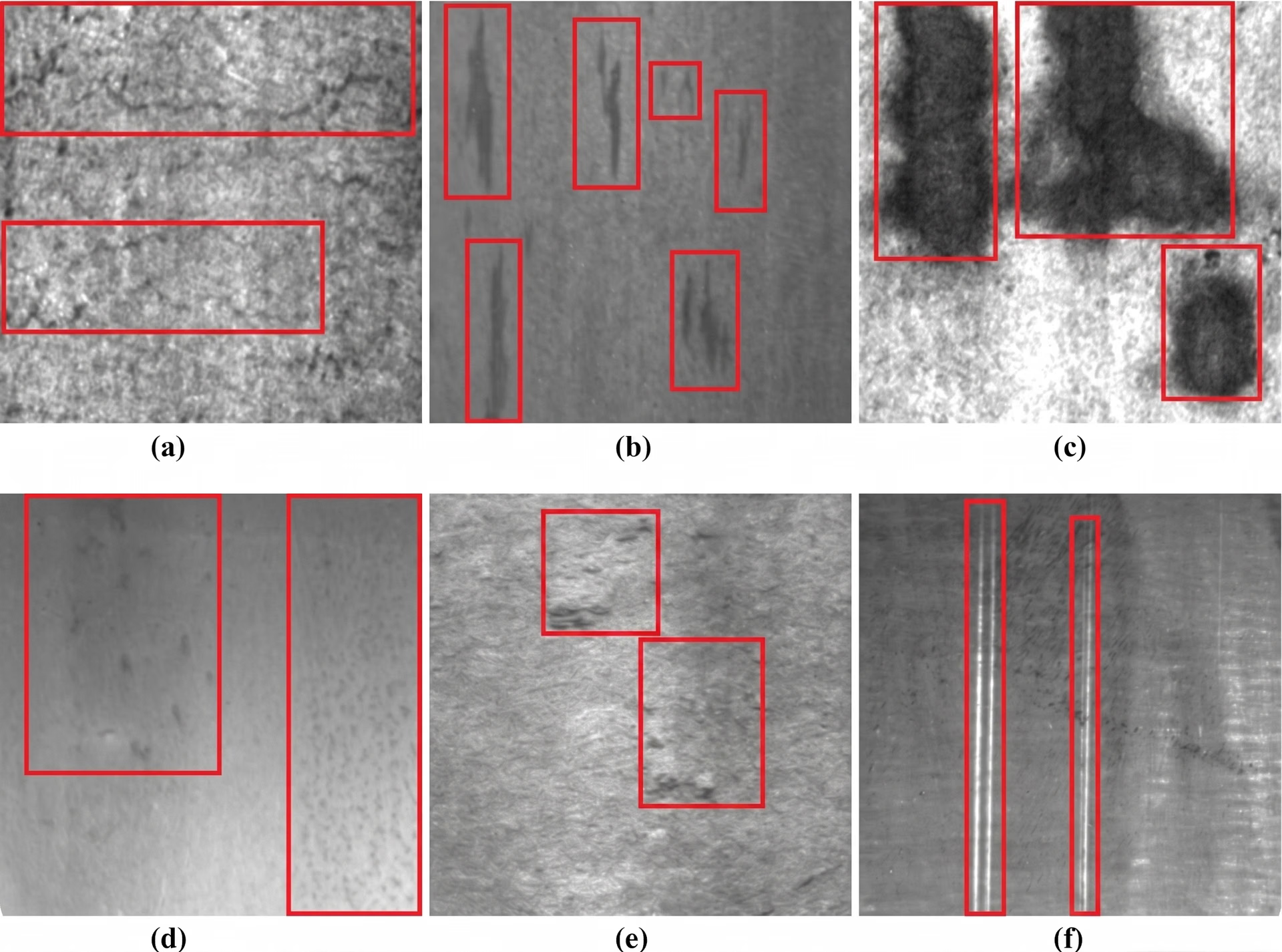
Fig 4. A look at defects on steel sheets (Source)
Smarter food packaging quality control with computer vision#
Food manufacturers pay close attention to what goes inside each package. However, packaging errors such as missing sachets, incorrect counts, or poor sealing can still occur.
These issues may seem minor, but they qualify as product defects and often lead to customer complaints. To reduce risk, manufacturers are leveraging computer vision systems for in-line quality inspection.
These systems monitor item count, layout, and visibility as products move along the production line. Each pack is evaluated carefully by computer vision models, and anything out of place is flagged immediately.
By reviewing every unit in real time, these inspection systems help remove faulty products before they leave the facility. This improves consistency, strengthens quality control, and supports large-scale defect detection without interrupting operations.
Optimization of defect detection in the wood manufacturing process#
Wood is a natural material, and every wooden board has unique characteristics. For instance, knots, cracks, uneven grain, and surface splits are common.
While some are cosmetic, others reduce structural strength and lower product value. On fast-moving production lines, manually inspecting every wooden board can result in inconsistent quality control.
To improve this process, facilities are using computer vision systems for automated defect detection. As boards move through the production line, detailed surface images of the wooden board are captured. Then, a vision model can analyze texture variations and grain patterns in real time, identifying potential product defects.
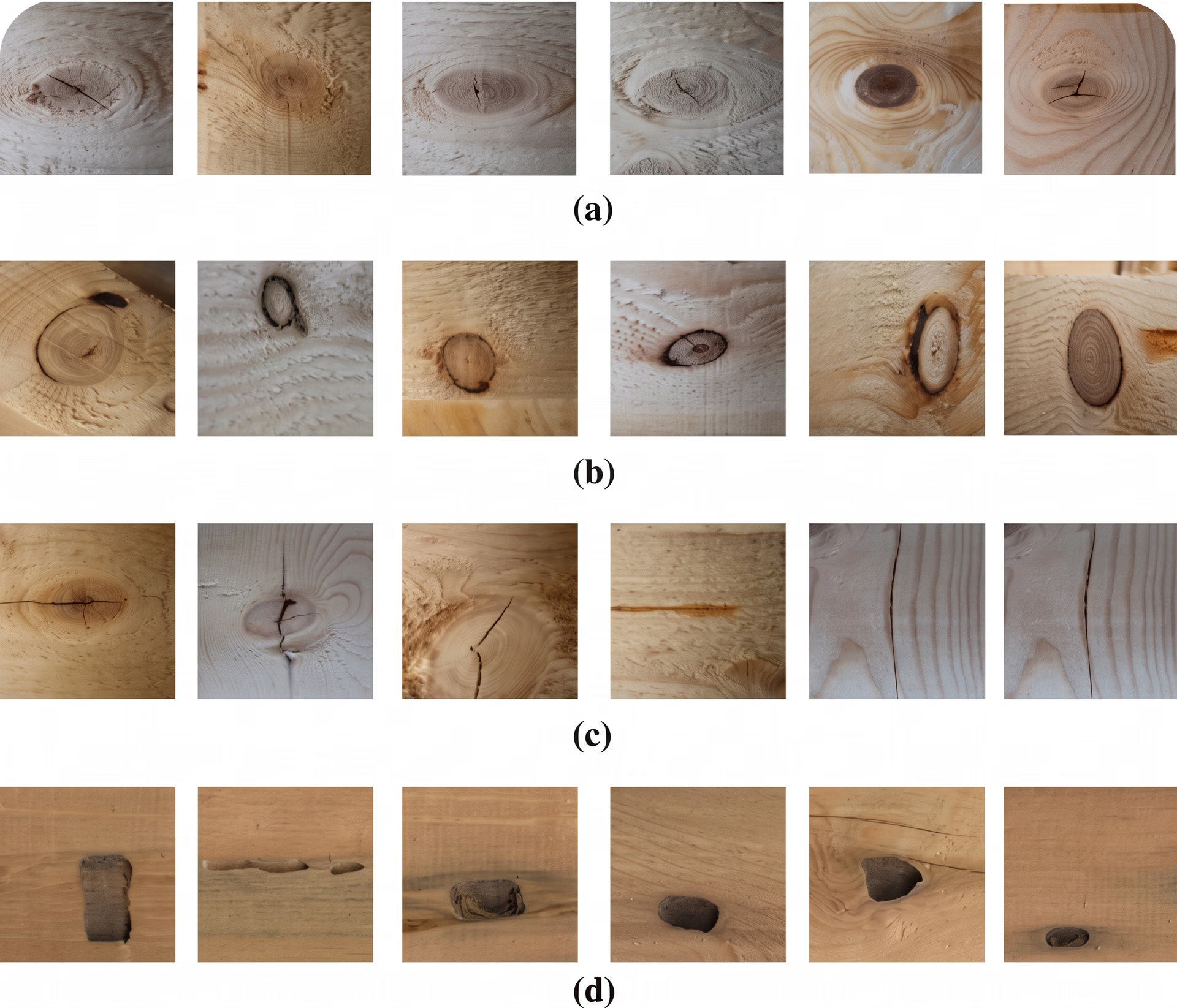
Fig 5. Wood defects like sound knots, unsound knots, cracks, and grub holes (Source)
Key takeaways#
Vision AI is helping manufacturers improve quality inspection with real-time monitoring across the production line. As items move through each stage of the production process, computer vision models analyze images and immediately flag irregularities with high precision.
This continuous inspection ensures consistent standards and supports the delivery of high-quality products. By operating in real time and integrating seamlessly with existing manufacturing workflows, machine vision systems make quality control more efficient, accurate, and scalable.
Want to bring vision AI into your operations? Join our growing community and explore our GitHub repository to learn more. Discover more about applications like AI in manufacturing and computer vision in healthcare. To get started with computer vision, check out our licensing options.