Exploring computer vision in water quality monitoring
Learn how computer vision in water quality monitoring enables real-time detection, AI-driven insights, and smarter water management solutions.

Clean water is essential for public health and daily life. Yet nearly 4 billion people worldwide lack access to safe drinking water or doubt its safety without additional treatment.
At the same time, only 56% of global domestic wastewater is safely treated. These numbers point to the need for better water quality monitoring.
Simply put, monitoring is essential for safe water management. When contamination, water pollution, or rising turbidity levels aren’t detected early, many people can end up exposed to unsafe drinking water, industries can face disruptions, and aquatic ecosystems may suffer damage.
However, many current water quality monitoring methods are still disconnected. Most systems depend on periodic manual sampling, lab analysis, or fixed sensors that measure conditions at only one point. In large rivers, reservoirs, and other water bodies, this lowers visibility and limits real-time insights.
In recent years, advancements in artificial intelligence (AI) have opened new possibilities. For instance, computer vision, a field of AI that enables machines to interpret and analyze images and video data, is now being used to analyze visuals from surface water, wastewater systems, and remote sensing platforms.
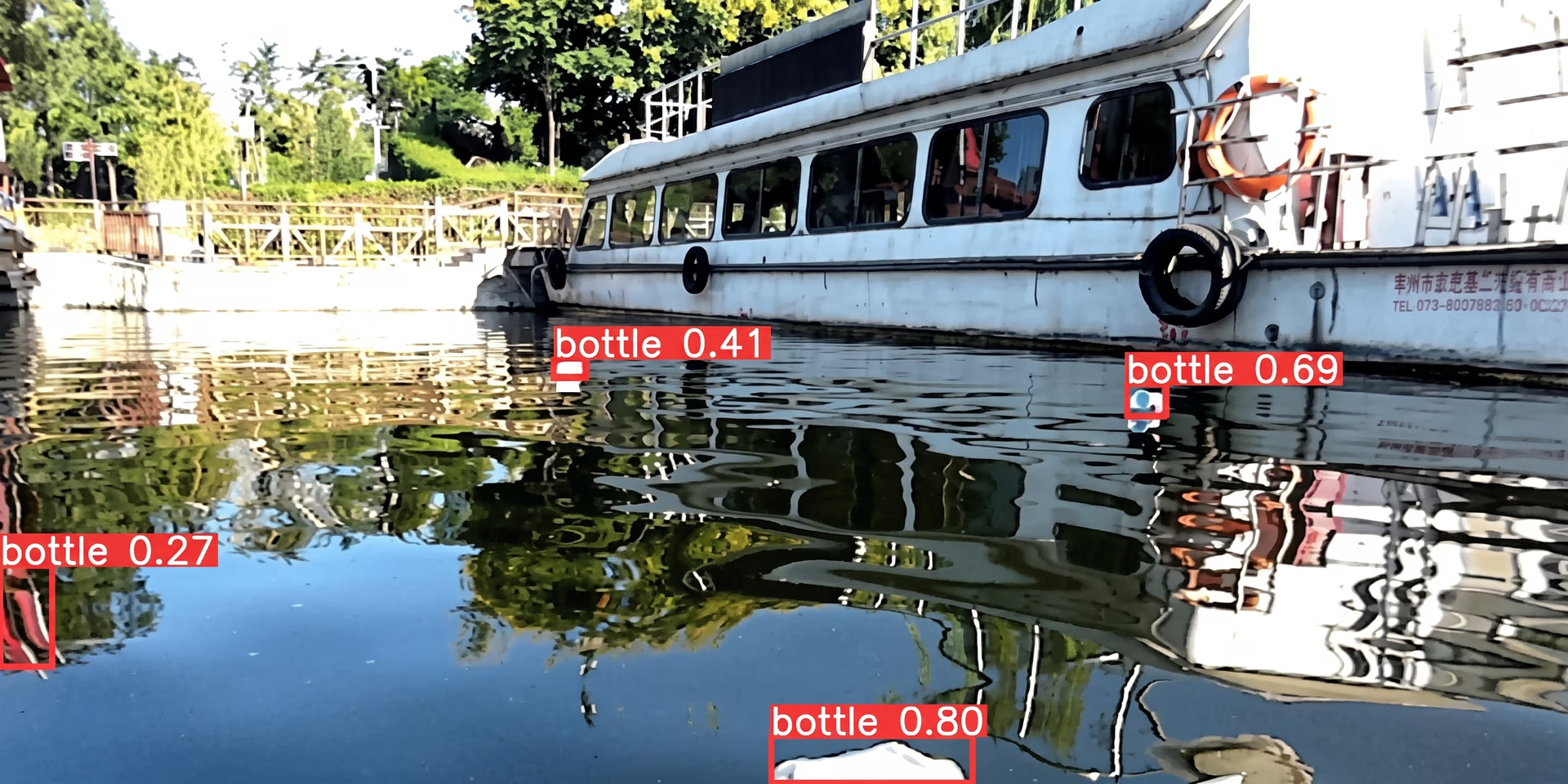
Fig 1. An example of using vision AI to detect floating plastic waste (Source)
In fact, the AI in water management market is projected to reach $53.85 billion by 2032, reflecting growing momentum around intelligent, adaptive monitoring systems. In this article, we’ll explore how computer vision is reshaping water quality monitoring.
The limits of traditional water quality monitoring#
For decades, water quality and environmental monitoring have relied on traditional monitoring methodologies based on manual sampling and fixed instruments. Typically, field teams collect samples from rivers, lakes, and wastewater facilities, then send them to laboratories for analysis.
While this method can produce accurate results, it is labor-intensive and requires periodic updates. Between sampling intervals, changes in water quality can go unnoticed.
Sensor-based monitoring systems help fill some of these gaps. They measure metrics such as turbidity, pH, dissolved oxygen, and water level.
However, these systems often have limited spatial coverage. For example, a single sensor represents only one point within a much larger body of surface water. In large-scale water bodies or distributed water resources, this creates blind spots.
Maintenance is another challenge. Sensors require calibration, cleaning, and validation to maintain accuracy.
Mud, debris, algae buildup, or harsh weather can affect readings over time. As a result, many systems end up reacting to problems instead of predicting them and giving early warnings. By the time contamination or water pollution is detected, it may have already spread downstream.
Environmental variability adds further complexity. Factors like climate change, flooding, and seasonal shifts can rapidly alter aquatic ecosystems. Static monitoring methods struggle to adapt to these dynamic conditions. This makes real-time monitoring difficult across rivers, reservoirs, and coastal regions.
The role of computer vision in water quality monitoring#
Computer vision brings together cameras and AI models to analyze images and video, often in real time. These systems interpret visual patterns. They use deep learning models, such as convolutional neural networks (CNNs) and other artificial neural networks, to understand what those visuals represent.
Specifically, through image processing and computer vision tasks such as object detection and instance segmentation, these models can identify visible changes in water conditions.
They can detect unusual color variations, shifts in clarity, floating debris, algal blooms, foam formation, or overflow events. In some cases, subtle pixel-level changes can indicate early visible signs of contamination or pollution.
Integrating vision AI into water infrastructure#
Vision-based systems offer broader coverage, can monitor large surface water areas without physical contact, and often leverage existing camera infrastructure. State-of-the-art vision AI models such as Ultralytics YOLO26 are designed for fast, real-time detection, making them suitable for adaptive water quality monitoring systems.
YOLO models support a range of computer vision tasks, including object detection, instance segmentation, and image classification. This enables systems to identify floating debris, foam formation, algal blooms, surface discoloration, or other visible anomalies in water bodies.
Such computer vision solutions can also be integrated with drones, satellite remote sensing platforms, IoT networks, and wastewater treatment facilities. It helps in continuous monitoring, automated alerts, and actionable insights that make faster mitigation across diverse water bodies possible.
Use cases of vision AI in water monitoring#
Now that we’ve explored how computer vision works in water quality monitoring, let’s look at the main research areas driving its development.
Real-time flood and surface water monitoring#
Flooding is one of the most immediate threats to surface water systems and urban infrastructure. Rivers can rise rapidly, drainage networks can overflow, and debris can block critical channels.
Conventional approaches typically rely on fixed water-level gauges and telemetry systems that report data at intervals, providing limited coverage across large or distributed water bodies. During extreme weather events linked to climate change, even short delays in detection can increase the risk of infrastructure damage and water pollution.
Water quality specialists are exploring how to address these gaps using computer vision. By applying deep learning algorithms and object detection models like Ultralytics YOLO26 to live camera feeds, they are building systems that continuously analyze surface water conditions.
One good example is the use of existing CCTV infrastructure to monitor rising water levels, detect overflow events, and identify debris accumulation in real time without requiring additional hardware.
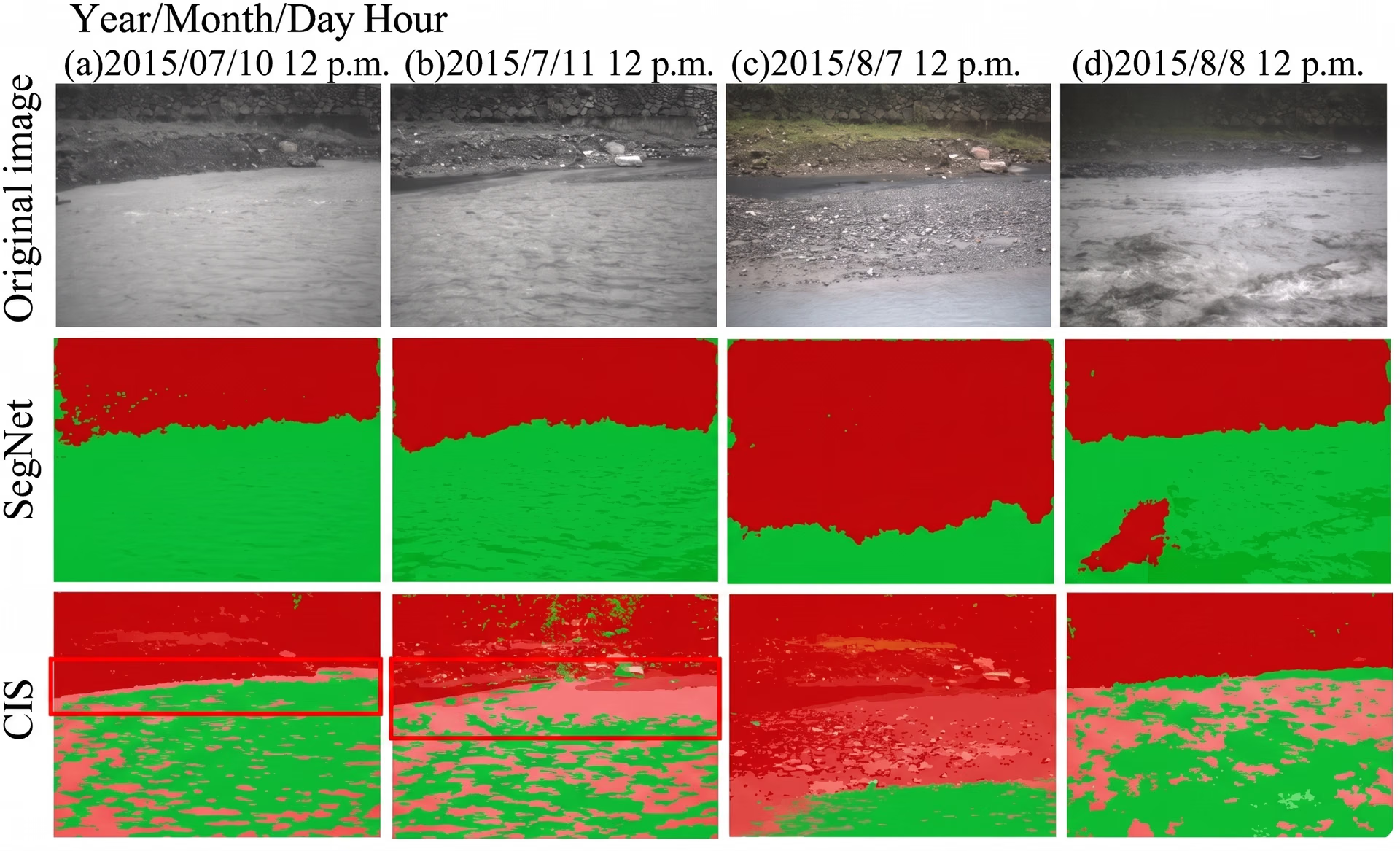
Fig 2. Computer vision can help measure river water levels. (Source)
Underwater vehicles and drones for reservoir and river monitoring#
Monitoring large reservoirs and river systems presents a unique set of challenges. In these dynamic water bodies, contamination, changes in clarity, or algal growth can vary widely from one location to another, making fixed monitoring stations less effective for a complete assessment.
To handle this, researchers and environmental conservation teams are developing networked drones and autonomous underwater vehicles that combine mobility with intelligent sensing. These hybrid systems operate both above and below the surface, collecting real-time data on dissolved oxygen, pH, turbidity, temperature, and algae concentration.
Integrated computer vision models and guidance systems, often powered by deep learning and adaptive algorithms, can run directly on board drones or autonomous vehicles. For example, an autonomous monitoring vehicle equipped with a camera and a vision AI model can identify clusters of floating plastic waste in real time as it moves across a reservoir.
Based on this visual analysis, the vehicle can adjust its route autonomously to survey the affected area more closely or transmit alerts to operators. By combining robotics, AI, and large-scale spatial data collection, this approach enables faster corrective action and more informed water management decisions.
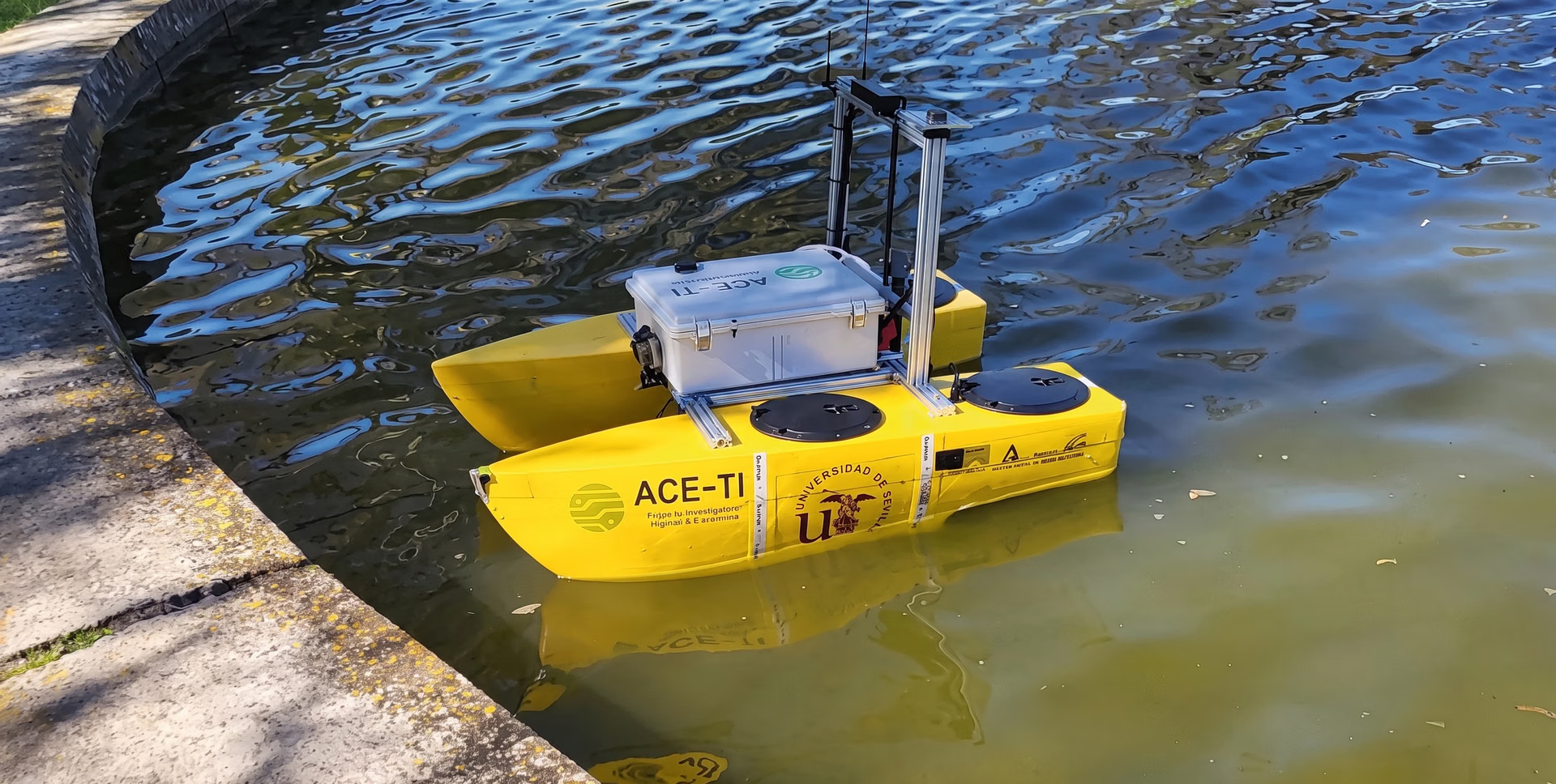
Fig 3. An autonomous surface vehicle monitoring a body of water using vision AI (Source)
Smart wastewater treatment plant monitoring#
While rivers and reservoirs require broad environmental monitoring, wastewater treatment plants face operational efficiency issues. These facilities have to process large volumes of wastewater every day while maintaining strict regulatory standards for water quality.
Traditional monitoring methods in wastewater treatment rely heavily on chemical sensors and periodic inspections, which can’t always capture visible process irregularities such as foam buildup, sludge settling issues, scum accumulation, abnormal coloration, or mechanical blockages. Computer vision can add an additional layer of oversight.
Consider an aeration tank where foam begins to build up on the surface. Sensor readings may still appear normal, but the foam can indicate an imbalance in the treatment process. A vision system can continuously monitor the tank, detect unusual foam growth, and alert operators early.
Also, plastics, solid waste, and floating debris can disrupt wastewater treatment processes and reduce overall system efficiency. When waste builds up in channels or basins, it can block flow, damage equipment, and affect water quality compliance.
Here, vision AI provides added visibility by detecting floating plastics, debris, and other solid waste within treatment channels and basins. By continuously monitoring these areas, camera systems can help operators identify blockages early and understand where waste is accumulating.
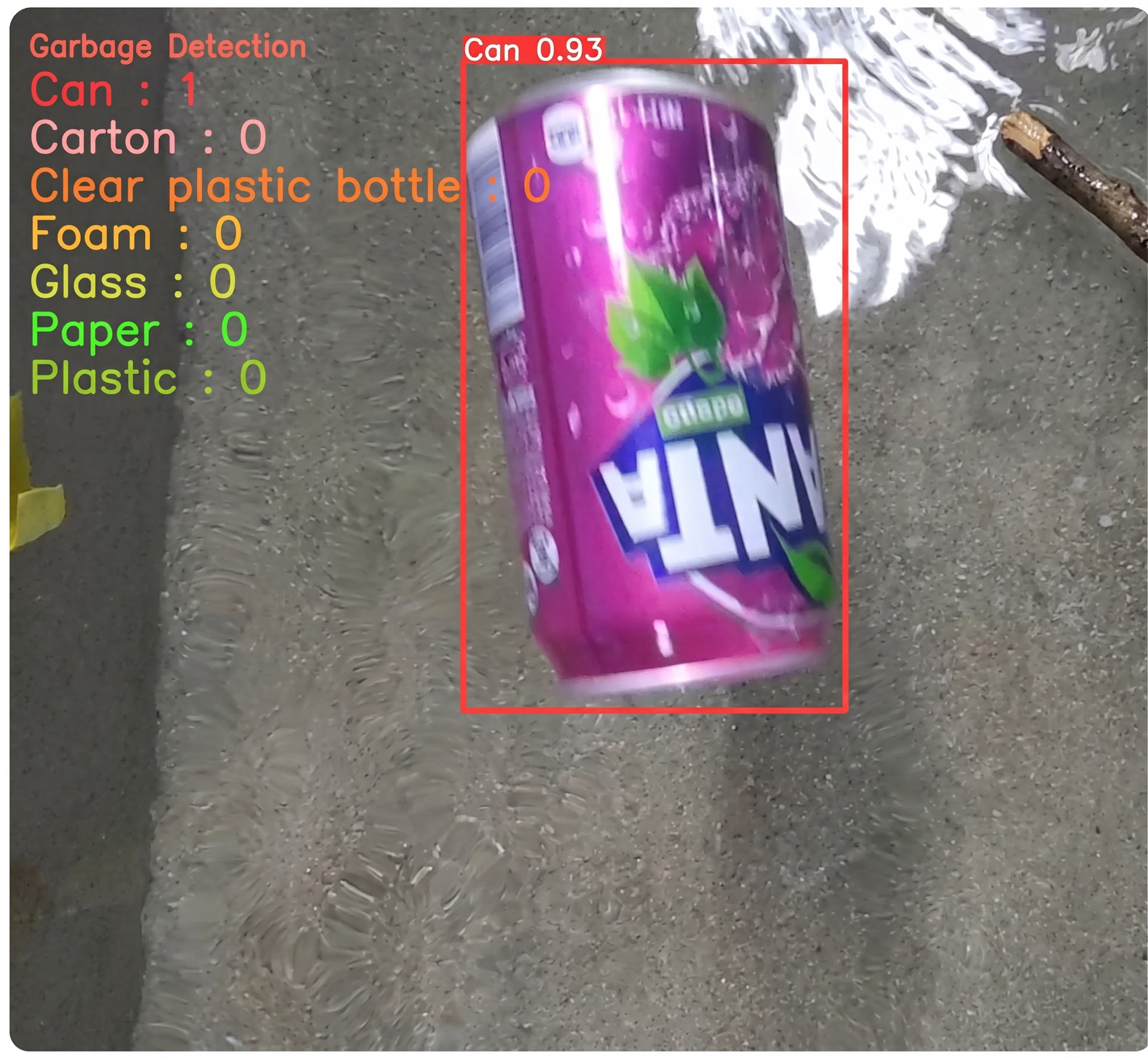
Fig 4. A look at detecting and tracking floating waste (Source)
When combined with chemical sensor data, visual monitoring offers a more complete view of plant conditions, supporting timely maintenance, more targeted interventions, and more stable wastewater operations.
Pros and cons of computer vision in water quality monitoring#
Here are some of the main benefits of using vision AI in water quality monitoring systems:
- Non-contact monitoring: Vision systems assess surface conditions without direct contact with water, reducing maintenance needs and equipment wear in certain applications.
- Operational optimization: In treatment plants, vision systems provide a cost-effective way to detect foam buildup, blockages, or sludge issues early, helping reduce downtime and reliance on manual inspections.
- Data integration and analytics: When combined with machine learning models and existing information systems, visual data can support trend analysis, anomaly detection, and more adaptive monitoring strategies.
Despite these advantages, computer vision in water quality monitoring also comes with some limitations to keep in mind. Here are a few factors to consider:
- Environmental variability: Lighting changes, reflections, and weather conditions can affect image processing accuracy and system robustness.
- Integration complexity: Connecting vision systems with legacy infrastructure, supervisory control and data acquisition (SCADA) systems, or data platforms can be technically challenging.
- Maintenance and calibration: Cameras require cleaning, positioning adjustments, and periodic recalibration to maintain reliable performance.
Key takeaways#
Water quality monitoring is vital for public health and sustainable water resources, but traditional methods alone can’t scale to today’s global challenges. Computer vision enables continuous, real-time insight across water bodies, supporting faster detection and smarter water management. As environmental pressures grow, vision AI will likely play a central role in building adaptive water monitoring systems.
Want to bring vision AI into your projects? Join our active community and learn about vision AI in manufacturing and computer vision in robotics. Explore our GitHub repository to find out more. Check out our licensing options to get started!