How does AI affect the environment and drive sustainability?
Discover how computer vision supports sustainability and answers the question, how does AI affect the environment, through monitoring and efficiency gains.
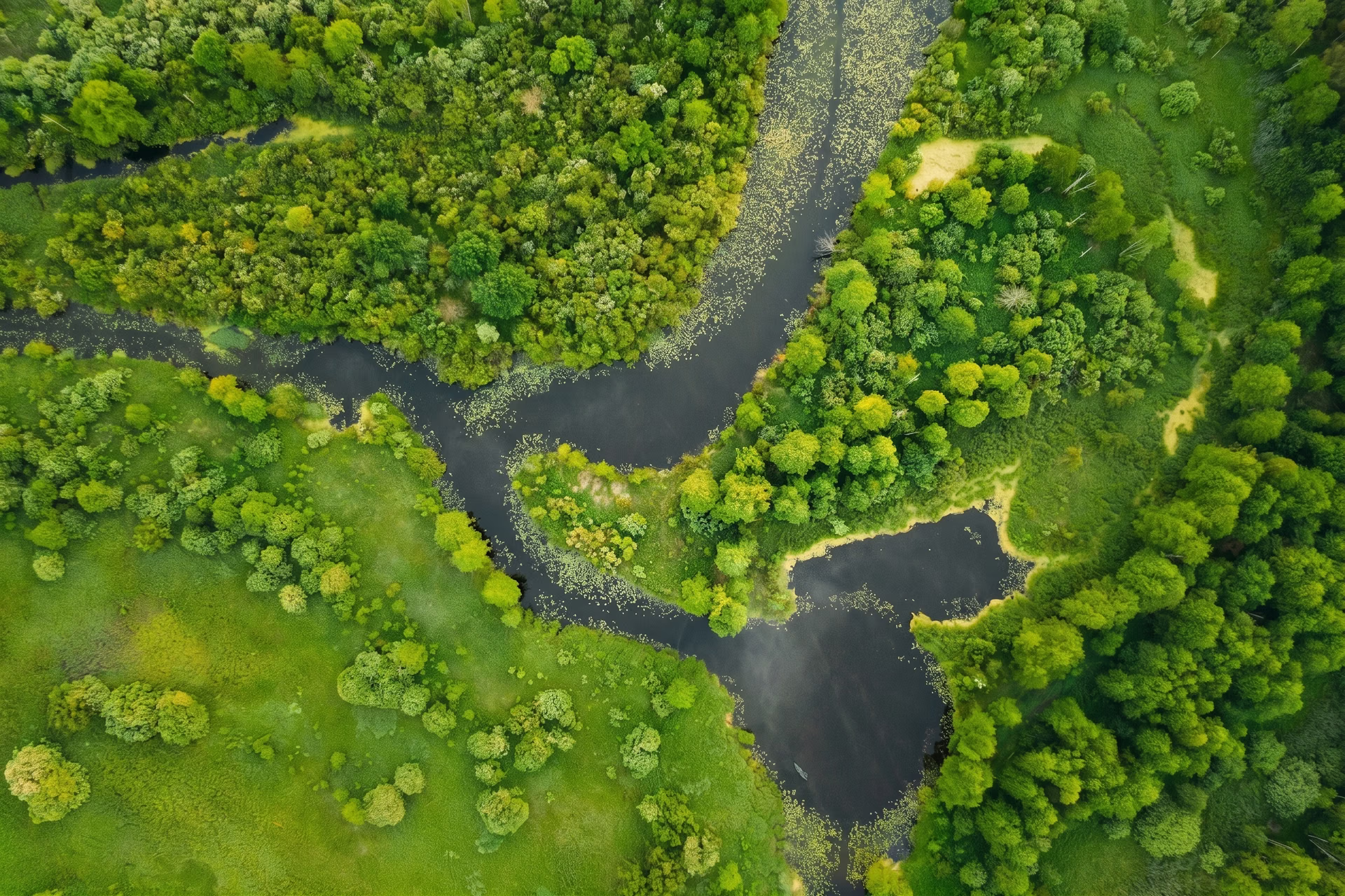
Many of our everyday actions have a significant impact on the environment. In fact, about 75% of our planet’s land has already been altered by human activity. This contributes to issues like global warming, loss of biodiversity, and pollution.
A major factor behind this impact is our growing need for energy. As populations increase and demand for homes, transportation, and goods grows, energy demands also rise.
Ultimately, it leads to a larger carbon footprint, putting more pressure on air, water, and other natural resources and making environmental sustainability a key priority for businesses and policymakers. To better understand and manage this impact, industries and governments are increasingly turning to cutting-edge technologies like artificial intelligence.
For instance, computer vision, a branch of AI that enables machines to interpret visual information from images and videos, is being used to monitor ecosystems and assess the environmental footprint of large-scale operations.
In particular, computer vision models such as Ultralytics YOLO11 and the upcoming Ultralytics YOLO26 support tasks like object detection and instance segmentation. These capabilities make it easy for teams to identify and track changes in natural environments, such as pollution, waste buildup, or alterations in vegetation. By spotting problems early, they can take action to prevent environmental consequences.
Fig 1. Detecting plastic waste using YOLO11 (Source)
In this article, we'll explore how vision AI and other AI technologies are helping monitor and protect the environment. Let's get started!
The importance of efficient and responsible AI solutions#
Before we dive into how AI can be used to create green solutions, let's take a closer look at how responsible AI development impacts the environment.
While AI systems have the potential to improve sustainability and address challenges like climate change, training AI models and running AI-powered applications also require significant computing power and energy. By managing this balance carefully, it is possible to reduce carbon emissions, limit energy use, and minimize electronic waste.
For example, consider a computer vision system used to monitor forests and track changes in vegetation. Operating a system like this usually depends on data center servers, adding to electricity consumption through both running and cooling the equipment.
Fig 2. An example of using YOLO11 to detect and count trees (Source)
Responsible AI development focuses on making these systems more efficient. Optimized AI models, workload management, and renewable energy-powered data centers can reduce the environmental footprint of AI while still delivering vital insights.
The role of computer vision algorithms in environmental sustainability#
Various organizations are already seeing results from using AI to support sustainability. A recent survey found that nearly two-thirds of organizations using AI for sustainability achieved energy savings of around 23%. They also reported clear reductions in greenhouse gas emissions.
So, how does this actually work? Let’s walk through how computer vision is applied in real-world sustainability efforts to see how AI can make a tangible difference.
Managing energy and resources can be complex, especially in large-scale systems like factories, office buildings, and data centers. In these environments, cameras and sensors can be used to monitor activity and collect visual data. This data can then be annotated to build datasets that train vision AI models for various tasks.
An interesting example comes from solar power plants. These facilities have large arrays of solar panels, and keeping them working efficiently is important for producing renewable energy and reducing carbon emissions. Manually checking all the panels across such a large area can be slow and error-prone.
Fig 3. A look at solar power grids in need of maintenance (Source)
This is where artificial intelligence, especially vision AI, can help. Using models like Ultralytics YOLO11 that support object detection and instance segmentation, a vision system can monitor each panel, spotting issues like dirt buildup, shading, cracks, or misalignment.
Vision AI applications that support environmental sustainability#
Now that we have a better understanding of how AI can support sustainability, let’s discuss a few applications that showcase computer vision in action.
Monitoring ecosystems using cameras and drones#
Tracking large ecosystems has always been tricky. Forests, coastlines, and offshore areas are vast, and traditional monitoring depends on scheduled visits. Since these checks occur only periodically, short-term changes in wildlife activity or habitat conditions are often missed.
vision AI can change how this monitoring happens. When cameras and drones are integrated with computer vision solutions, they can monitor ecosystems continuously rather than checking in occasionally.
Many of these systems can also run directly on cameras or drones, enabling on-site analysis of images and video. This reduces energy use and avoids sending large amounts of data to distant servers.
A good example is the Kaskasi offshore wind farm in Europe. Here, drones with high-resolution cameras track birds and marine mammals around the wind farm.
Meanwhile, fixed cameras and underwater vehicles watch marine life below the surface. This enables teams to gain insights into animal movements and environmental changes, and make informed decisions while keeping the ecosystem’s natural balance intact.
Detecting and tracking emission sources visually#
Sometimes emission sources can be hard to spot from the ground. Gas leaks, industrial smoke, and heat buildup can spread over large areas and go unnoticed during routine inspections. This makes early detection challenging and limits our understanding of how emissions change over time.
With computer vision, emissions can be tracked more accurately and at a larger scale. vision AI models like Ultralytics YOLO11 can be used to analyze satellite or aerial imagery to detect visual signs such as smoke, gas plumes, or unusual heat patterns.
Fig 4. Segmenting smoke with the help of YOLO11 (Source)
This approach is being adopted by climate scientists and teams working in climate technology. They combine satellite imagery with vision-based analysis to monitor methane and other greenhouse gases across large regions. Regular visual tracking supports the shift to clean energy and AI development, making it easier to reduce fossil fuel use and global emissions.
Using satellite and aerial imagery to track environmental change#
Not all changes in nature are noticeable. Some of them occur over time, such as fewer trees along a road or dry land spreading across farms. These details are easy to overlook when they happen gradually and across large areas.
Computer vision makes these changes easier to detect. Vision models can be used to analyze large datasets of satellite and aerial imagery and compare how different locations appear at different times. Instead of relying on reports or manual checks, it uses visual cues to show where land, vegetation, or water patterns are beginning to change.
For example, vision models can map tree cover across cities or forests using image segmentation, which helps outline where vegetation exists and how dense it is. By focusing on what is visible, computer vision enables researchers to understand patterns that provide information on renewable energy, water consumption, and power plants.
Pros and cons of vision AI in sustainability#
Here are some key benefits of the use of AI, specifically vision AI, to support sustainability:
- Data-driven insights: Continuous analysis of visual data allows organizations to make informed decisions about energy sources and sustainability strategies.
- Reduced environmental impact of AI itself: By using optimized models and energy-efficient data centers, AI systems can minimize their own carbon footprint, lower energy usage, and reduce overall environmental costs.
- Enhanced compliance: Automated monitoring can help organizations meet environmental regulations and sustainability goals more easily.
While vision AI provides various advantages, here are a few practical limits to consider:
-
Data quality: vision AI relies on clear images and video to work effectively. Poor lighting, bad weather, or blocked camera views can make it harder for the system to detect changes accurately.
-
Skill requirements: Implementing and managing vision AI effectively requires trained personnel with technical expertise in AI, computer vision, and data management.
-
Maintenance: Hardware such as cameras, drones, and sensors requires regular checks and upkeep to ensure continuous and accurate monitoring.
How different AI tools contribute to sustainability#
Beyond vision AI, other AI technologies can also drive sustainability. Here’s how they help reduce environmental impact and boost efficiency:
-
Large language models (LLMs): LLMs focus on text rather than images. Tools like ChatGPT and GPT-3 can quickly read and analyze large volumes of information. With respect to sustainability, they can be used to review climate reports, policies, and data on energy and resource use, helping teams make better decisions.
-
Generative AI: This AI technology enables teams to explore ideas before building anything in the real world. It can be used to generate designs for buildings, infrastructure, or processes, highlighting options that use fewer resources and produce less waste and emissions.
-
Optimization-based systems: These systems improve efficiency in operations, from energy management to logistics planning. Even small improvements can lower energy consumption, reduce emissions, and ease the strain on power plants.
Key takeaways#
The environmental impact of AI is becoming an important consideration for sustainability. vision AI, in particular, allows us to monitor changes in the environment, detect inefficiencies, and make smarter decisions about energy use. This reduces waste, optimizes energy consumption, and helps industries move toward a more sustainable future with a lower environmental footprint.
Interested in AI? Join our community and learn about computer vision in agriculture and vision AI in automotive. Check out our licensing options to get started with computer vision. Visit our GitHub repository to keep exploring.








