How AI in renewable energy supports sustainability
A deep dive into how AI and computer vision are helping the renewable energy sector by enhancing efficiency, reducing costs, and promoting sustainable practices.

As a society, we have relied on fossil fuels for quite some time now. Last year, global energy-related carbon dioxide emissions reached a new high of 34.4 billion metric tons. Even though the Paris Agreement from 2015 aims to keep global warming well below 2 degrees Celsius by cutting carbon emissions, we're still having trouble meeting these goals. Given these facts, the energy industry is focusing on renewable energy.
Renewable energy is generated from natural sources that are continuously replenished and sustainable over the long term. Unlike fossil fuels such as coal, oil, and natural gas, which can take millions of years to form and are depleted once used, renewable energy sources can be constantly replenished. For example, sunlight, wind, and geothermal are renewable energy sources.
Fig 1. Sources of renewable energy.
Switching to renewable energy, however, isn't easy. There are challenges like picking the right locations, integrating systems, and keeping everything running efficiently. The energy industry is turning to artificial intelligence (AI) and computer vision to tackle these challenges. The worldwide AI market for clean energy is set up to exceed $75.82 billion by 2030. In this article, we’ll see how AI and computer vision are changing the renewable energy sector and supporting sustainability.
AI and renewable energy: Making green energy smarter#
AI technologies, such as computer vision, are transforming the renewable energy sector by analyzing and extracting valuable information from images and videos. Computer vision uses algorithms and deep learning models to help machines interpret and understand visual data. These advancements make renewable energy operations more efficient, reliable, and cost-effective.
Here are some key benefits of using computer vision in renewable energy:
- Automated Equipment Inspection: Automated inspection of equipment to detect faults early, schedule timely maintenance, and prevent costly breakdowns.
- Energy Generation Prediction: Predicting energy generation from sources like the sun and wind to manage the power grid better.
- Optimization and Identification: Optimizing energy use in buildings, identifying damaged solar panels, and more.
However, there are also drawbacks to consider:
- High Initial Costs: Implementing AI and computer vision technologies can require significant upfront investment in both hardware and software.
- Dependence on Data Quality: The effectiveness of computer vision systems heavily depends on the quality and quantity of the data they are trained on, which can sometimes be a limiting factor.
- Difficulty Integrating with Legacy Systems: Oftentimes, machines in an industrial setting can prove challenging to integrate with AI.
Keeping the benefits and drawbacks in mind, let’s explore a few practical applications of computer vision in the renewable energy sector.
Managing solar farms with the help of computer vision#
A solar farm is a large area of land where multiple solar panels are installed to generate electricity from sunlight. Solar farms can be monitored and managed using computer vision throughout the entire 25-year life cycle of a solar panel. For example, during the construction phase, drones and satellites can capture high-resolution images of the site. These images can be analyzed using computer vision to ensure everything is installed correctly. Detecting errors like misaligned panels or incorrect wiring early on saves time and money by preventing costly mistakes.
Fig 2. Monitoring installation of solar panels and comparison with design plans using computer vision.
Once the solar farm is operational, computer vision can play a vital role in maintaining its efficiency. High-definition cameras can monitor the solar panels for issues like cracks, dust accumulation, weed growth, and safety hazards. Detailed reports on the specific problems and their locations can be put together quickly by an AI system. It helps maintenance workers address issues promptly and accurately. Downtimes are minimized, and the solar farm runs more smoothly.
Computer vision systems can also use real-time images to check the amount of cloud cover over a solar farm. AI combines this cloud data with other information, like temperature and humidity, to predict how much energy the solar farm will produce. It helps in planning and managing energy supply to make the solar farm more efficient and reliable.
Detecting wind turbine faults#
Another great source of renewable energy is wind. Wind turbines leverage wind power and convert it to electricity. These turbines are prone to wear and tear like any other machinery. Detecting surface damage on wind turbine blades ensures optimal performance and prevents costly downtime. Traditional inspection methods often involve sending someone up the tower for manual inspection, which can be very dangerous, time-consuming, and expensive. AI simplifies the whole process.
Computer vision models such as Ultralytics YOLOv8 can analyze images and videos of turbine blades captured using drones or high-definition ground-based cameras. These AI models use tasks like object detection, instance segmentation, and image classification to identify various types of damages and faults on the blades, such as leading-edge erosion, cracks, lightning strike damage, delamination, and surface staining. Other than this, AI systems can monitor local bird populations and integrate with other systems to repel them, preventing further damage to the blades and protecting the birds.
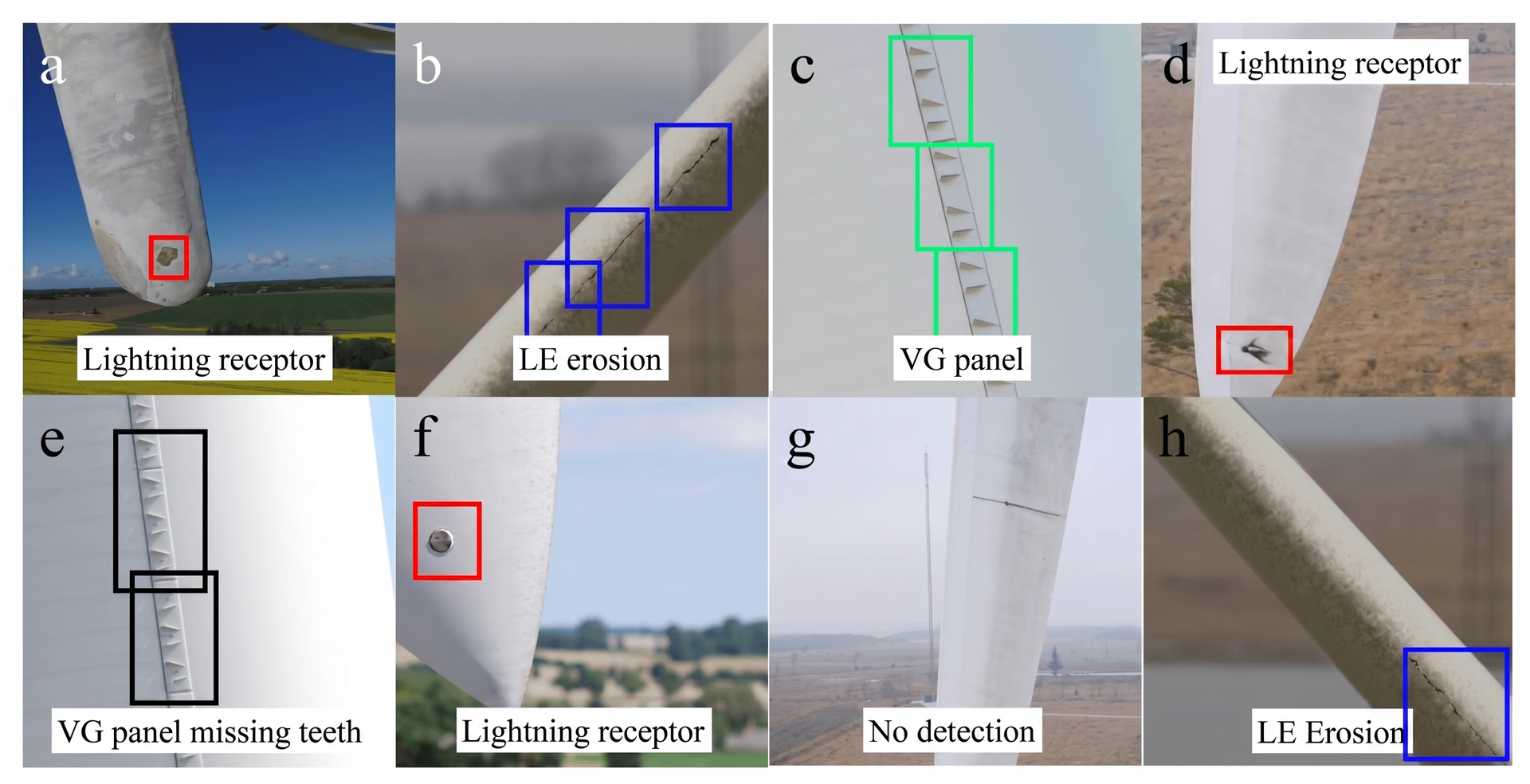
Fig 3. Example of surface damage detection on wind turbines using computer vision (Source: labellerr.com).
Tidal turbines and marine ecosystems#
Tidal waves are also a good source of renewable energy, but it comes with some points to keep in mind. Tidal turbines take a toll on the surrounding marine ecosystem. They interfere with the movement of sea creatures and can also trap them within their blades. The underwater noise these turbines produce can also interfere with the communication of some marine creatures. Various AI technologies can be used to avoid these hurdles.
We know very little about these marine ecosystems. So, it’s important to use advanced technology to research and study these environments in detail before we extract energy from them. With funding from the United States Department of Energy, companies like Plainsight and MarineSitu are collaborating to create AI-based environment monitoring systems for tidal turbines and wave energy converters. These systems use state-of-the-art vision models and underwater cameras.
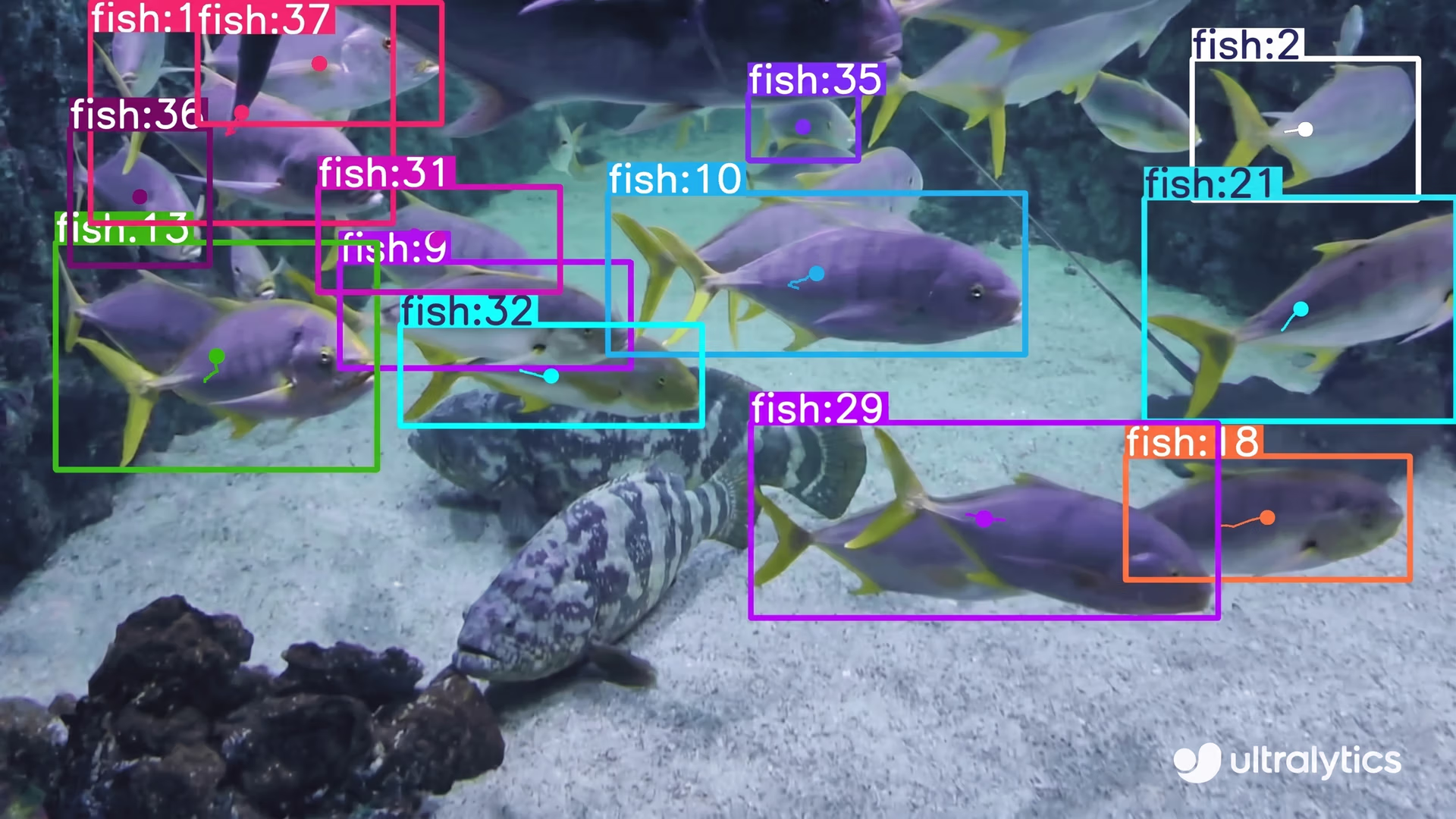
Fig 4. Example of using the Ultralytics YOLOv8 computer vision model to detect fish.
We can understand marine ecosystems using AI. It also helps researchers answer questions when looking for a site to build turbines. For example, a researcher may want to know about the population of fish and other aquatic life in the area or if there are any endangered species in the area. Even after site selection and construction, these systems can be used to monitor the environment as well as the turbines.
Selecting sites for geothermal plants using AI#
Another source of renewable energy may be found in geothermal plants. These use the Earth's natural heat to generate electricity. Traditionally, these plants face challenges like unexpected equipment failures, costly repairs, and inefficient site selection. AI systems can improve geothermal plant operations by analyzing large amounts of data, spotting patterns, and predicting problems before they occur. Being proactive with the assistance of AI keeps the plant running smoothly and helps avoid expensive repairs.
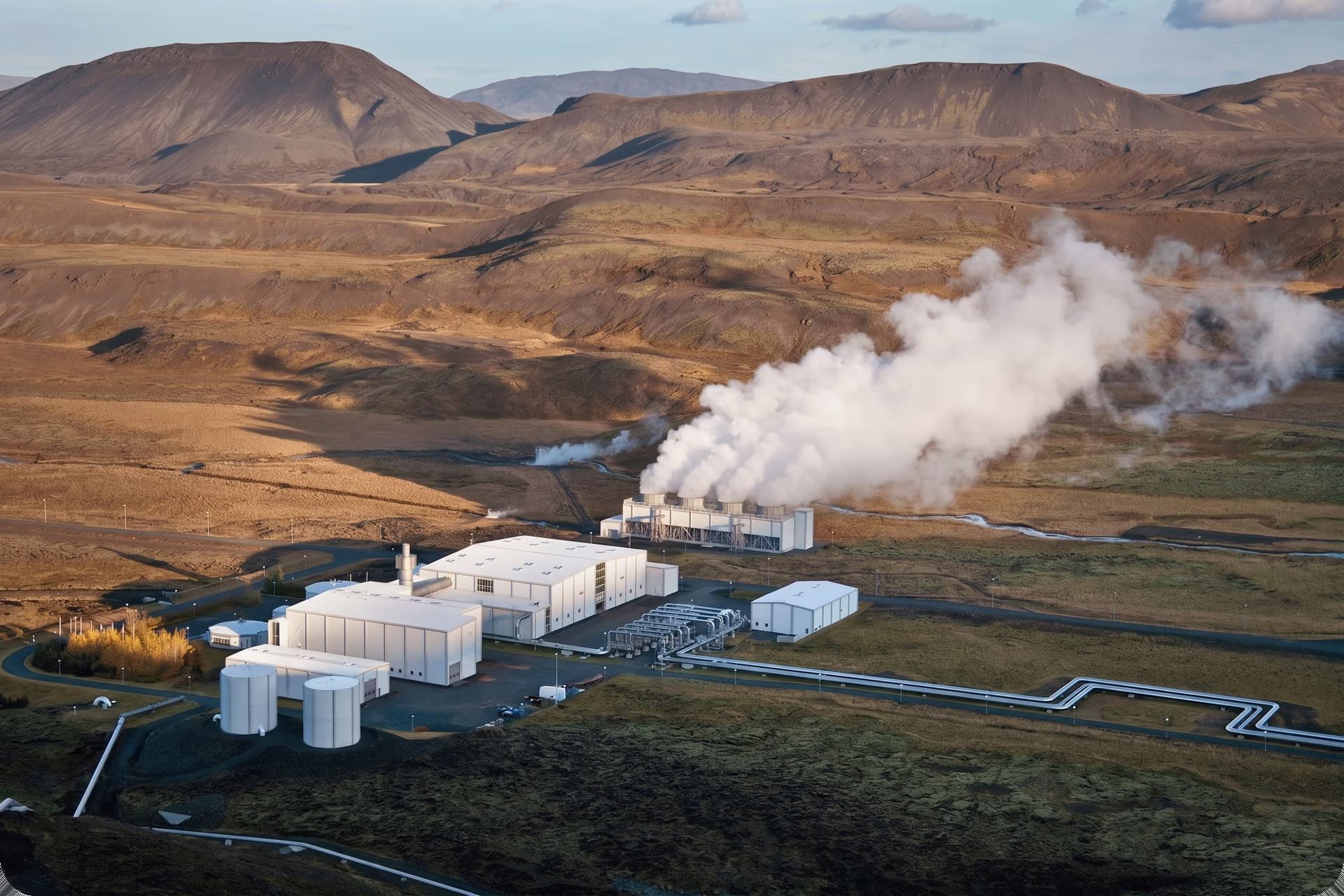
Fig 5. A geothermal power station. Image Source: Envato Elements.
One of the most interesting applications of AI with respect to geothermal plants comes into the picture when we are trying to identify where to build a plant. Selecting sites for geothermal plants using AI involves using satellite images and geographic data to find the ideal location. AI can analyze various factors such as geological features, heat flow, and surface temperatures to identify the most promising sites for energy extraction. Ideally, a new plant should be built to harness the maximum geothermal energy. Also, AI can help evaluate environmental impact, access to infrastructure, and potential risks, making the site selection process more comprehensive and accurate.
Startups using AI to reduce carbon footprints#
The importance of AI in addressing environmental challenges is becoming increasingly evident. A survey conducted by the Boston Consulting Group (BCG) revealed that 87% of global climate and AI leaders from both the public and private sectors recognize the value of advanced analytics and AI in combating climate change. Also, 67% of private sector leaders believe that governments should take more proactive measures to support the integration of AI in environmental initiatives.
Let’s take a look at some startups using AI and computer vision to transform the renewable energy sector and empower sustainable development:
-
SmartHelio: A Swiss startup that remotely diagnoses solar farm issues, predicts faults, and provides real-time solutions using AI to enhance solar system performance and lifespan.
-
Enfor: This Danish startup uses AI to forecast and optimize renewable energy production and consumption based on weather, terrain, and plant data, reducing energy waste and carbon footprint.
-
Nova Innovation: Leading a European consortium, Nova Innovation uses AI to improve tidal turbine performance and accelerate tidal energy commercialization, offering a low-carbon alternative.
-
Solavio: An Indian startup providing autonomous AI-driven cleaning solutions for solar panels, optimizing cleaning schedules, and improving efficiency to lower the carbon footprint of solar energy production.
Wrapping up#
AI technologies are redefining the renewable energy sector by predicting maintenance needs, spotting problems early, monitoring environmental conditions, and finding the best sites for new solar farms and wind turbines. Cutting-edge AI applications make renewable energy more efficient, reliable, and sustainable. As the industry progresses, AI will likely drive more clean energy and contribute to a healthier planet.
Want to learn more about AI? Connect with our community! Explore our GitHub repository to learn more about how we are using AI to create innovative solutions in various industries like healthcare and agriculture. Collaborate, innovate, and learn with us! 🚀








