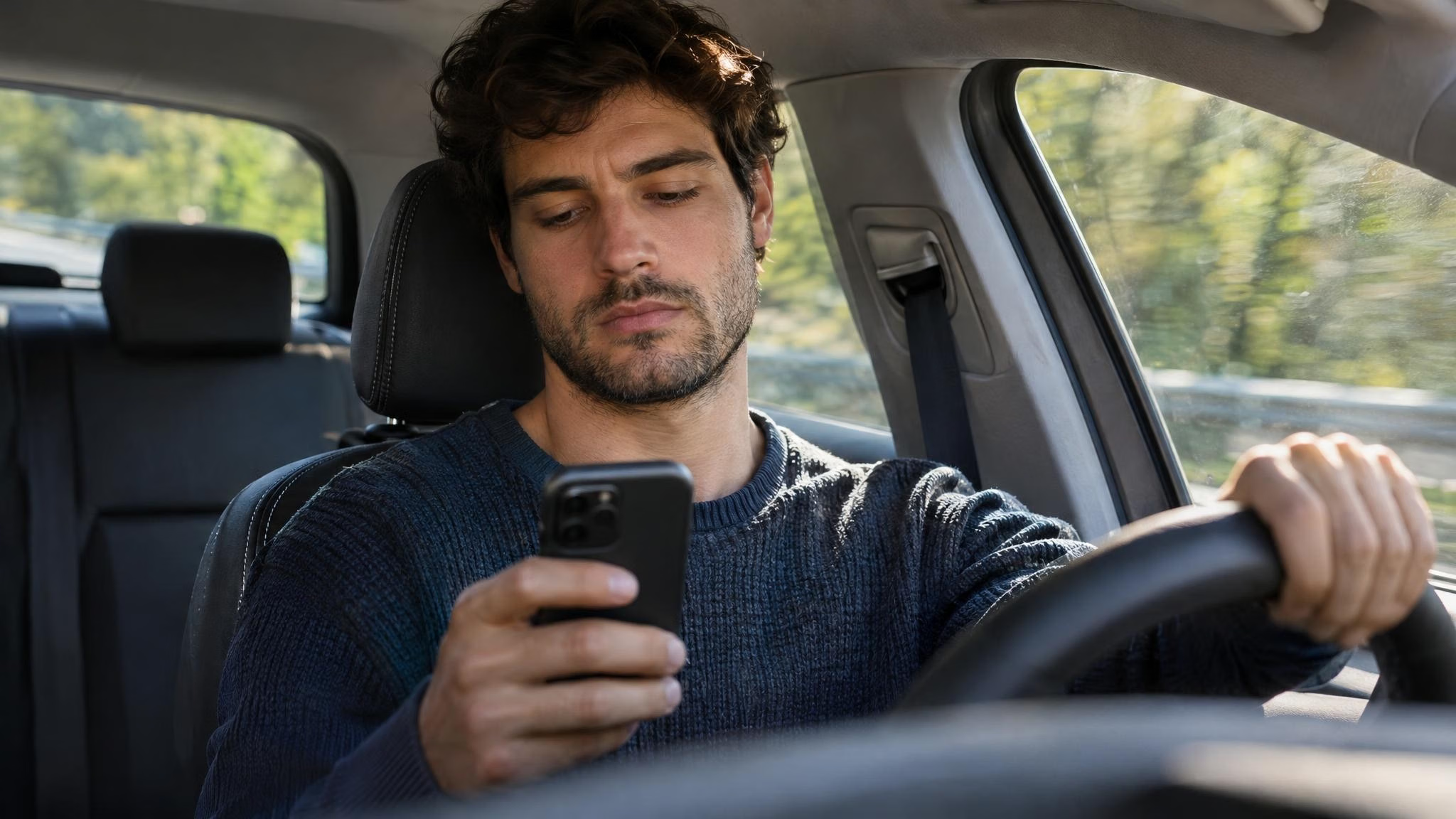
Driver monitoring on the camera you ship
Detect closed eyes, phones in hand, and unfastened seatbelts in real time with Ultralytics YOLO, trained on your own cabin footage in Ultralytics Platform and licensed for your product.
Trusted by the world's leading organizations










Built for teams that ship in-cabin monitoring
Ultralytics provides the models, tools, and license. You build and own the product, from alert logic to certification.
Dashcam and video-telematics makers
Add phone-use, drowsiness, and seatbelt alerts to the camera you already sell, running on its own chip.
Automotive in-cabin teams
Build driver and occupant monitoring for OEM programs designed to EU ADDW and Euro NCAP 2026, on the SoC you choose.
Fleet-safety, bus, and off-road builders
Fit monitoring to your own cabs, from fleet-safety software and transit vendors to truck, mining, and machinery makers.
What published research shows
Peer-reviewed results from models built on Ultralytics YOLO.


How it works
From your cabin camera to a warning in the cab.
Record your own cabin
Capture RGB or near-infrared footage from your camera position, by day and night, across drivers, eyewear, and lighting.
Label and train
Label phones, seatbelts, eye states, and head keypoints with AI-assisted annotation in Ultralytics Platform, then train YOLO.
Export to your chip
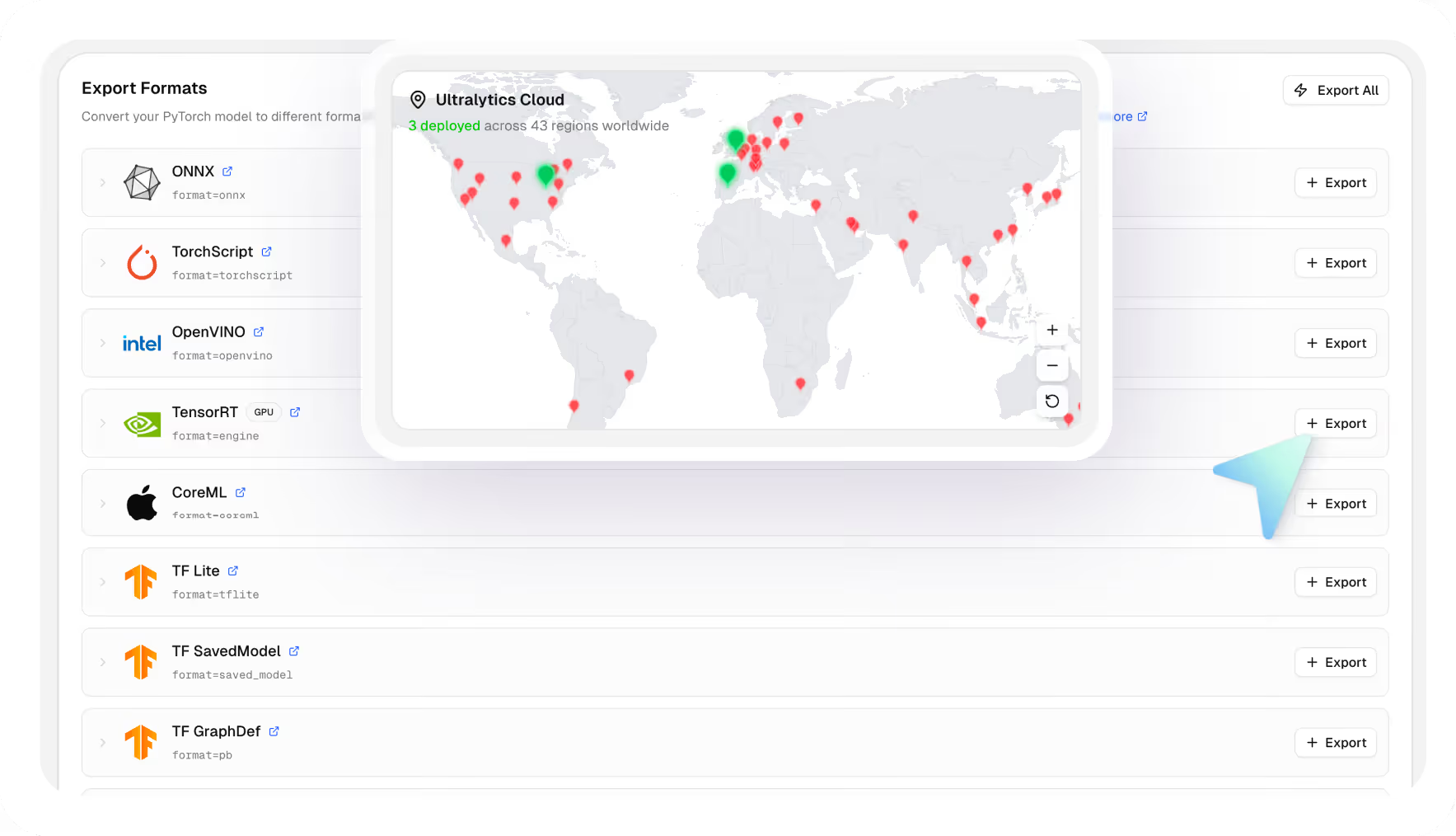
Export INT8 to TensorRT, ONNX, TFLite, OpenVINO, and more for the SoC in your dashcam or ECU, and check accuracy on it.
Warn in the cab
Run every frame on the device, warn the driver in real time, and decide which events, if any, leave the vehicle.
Everything a cabin camera can detect
Five YOLO tasks in one model family, trained on your cabin footage and run on the same chip.
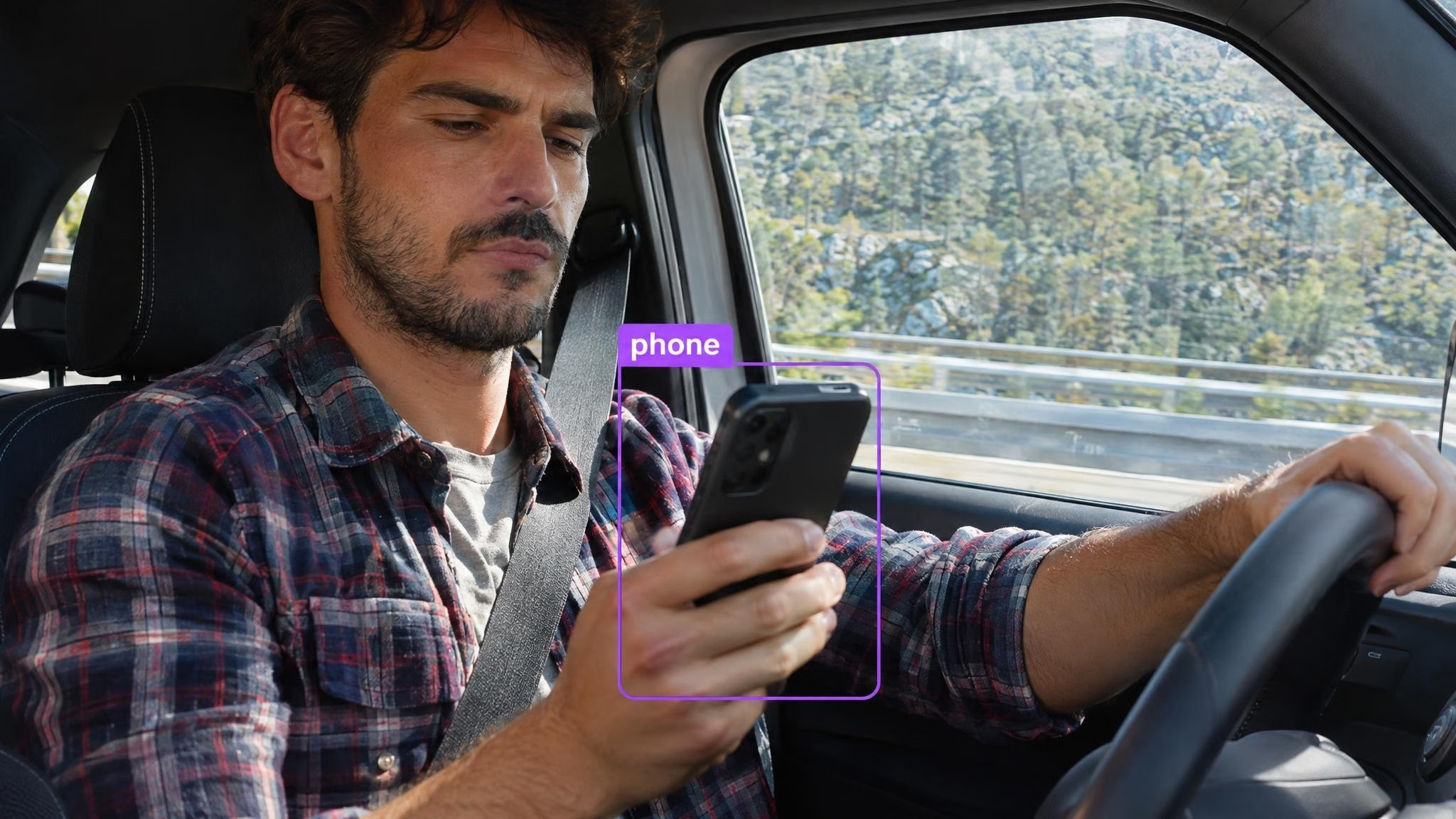
Try YOLO26 inference
Drag and drop an image to see real-time object detection
Why teams build on Ultralytics YOLO
Real-time monitoring on the chip in your vehicle at a fixed cost, with no per-call API fees.
Runs on your SoC
Export nano and small models to TensorRT, ONNX, TFLite, OpenVINO, RKNN, and more, and run them on the dashcam or cabin ECU you build.
Private by design
Frames are processed on the device in a closed loop. The model detects states such as eyes closed or a phone in hand, never who the driver is.
One model family for the cabin
Detection, segmentation, pose, and classification cover the driver, passengers, and left-behind items, and the same tools serve road-facing features.
Two ways to start
Train and deploy on Ultralytics Platform, or add YOLO to your own pipeline.
Ultralytics Platform
Upload day and night cabin footage, label phones, seatbelts, and eye states with AI-assisted annotation, train a custom YOLO model, and export it for your in-vehicle chip, all in one place.
Python
Pretrained YOLO26 already detects phones, so a few lines track a cabin camera stream and flag phone use. License YOLO to ship it in your own product.
from ultralytics import YOLO

model = YOLO("yolo26n.pt")  # COCO classes include phones

for result in model.track("rtsp://cabin-camera", stream=True):
    names = [result.names[int(c)] for c in result.boxes.cls]
    if "cell phone" in names:
print("Phone in use") # raise a distraction alertEnterprise-grade security and compliance
Build and deploy with confidence. ISO 27001 certified, SOC 2 attested, with support for HIPAA compliance.
SOC 2 Type I

ISO 27001:2022
HIPAA

GDPR & CCPA
Frequently asked questions
You build and own the system. Ultralytics provides the YOLO models, Ultralytics Platform to train on your cabin footage, export tools, and the commercial license. Your team owns the alert logic, the hardware, and any type approval or certification.
Pretrained YOLO26 detects people and cell phones out of the box. Eye state, yawning, smoking, and seatbelt use are custom classes you fine-tune on footage from your own camera. Accuracy depends on camera position, lighting, and drivers, so measure it on your target device.
Compliance belongs to the vehicle, not the model. Since 7 July 2026, every new car, van, bus, and truck registered in the EU needs ADDW, which warns after 3.5 s of looking away at 50 km/h or more, and Euro NCAP 2026 gives driver monitoring 25 points. Build your dataset and validation to both tests.
Yes at night, with near-infrared illumination and IR footage in your training set. Many sunglasses let near-infrared through, but some block it, so train a class for hidden eyes and tell the driver, as ADDW requires and Euro NCAP allows for dark lenses.
No. The models detect physical states such as eyes closed, a phone in hand, or a head turned away, not who the driver is or how they feel. The EU AI Act's Recital 18 treats driver fatigue as a physical state, while Article 5(1)(f) bans inferring emotions at work, so leave out mood or stress classes.
Nano and small YOLO models export to TensorRT, ONNX, TFLite, OpenVINO, RKNN, and more, with INT8 quantization. YOLO26 is NMS-free, which helps on NPUs without NMS support. Check accuracy on your target after export, since quantization can cost some.
Only if you design it to. Inference runs on the device, and built-in EU systems must keep data in a closed loop and delete it after processing under GSR Article 6(3). Fleet products that upload event clips need their own retention and consent design.
Ultralytics YOLO is open source under AGPL-3.0, so you can prototype freely. To ship it in a closed-source dashcam, cabin system, or fleet service, an Enterprise License removes the AGPL obligations. Enter your work email above to get a quote.
More use cases

Retail loss prevention
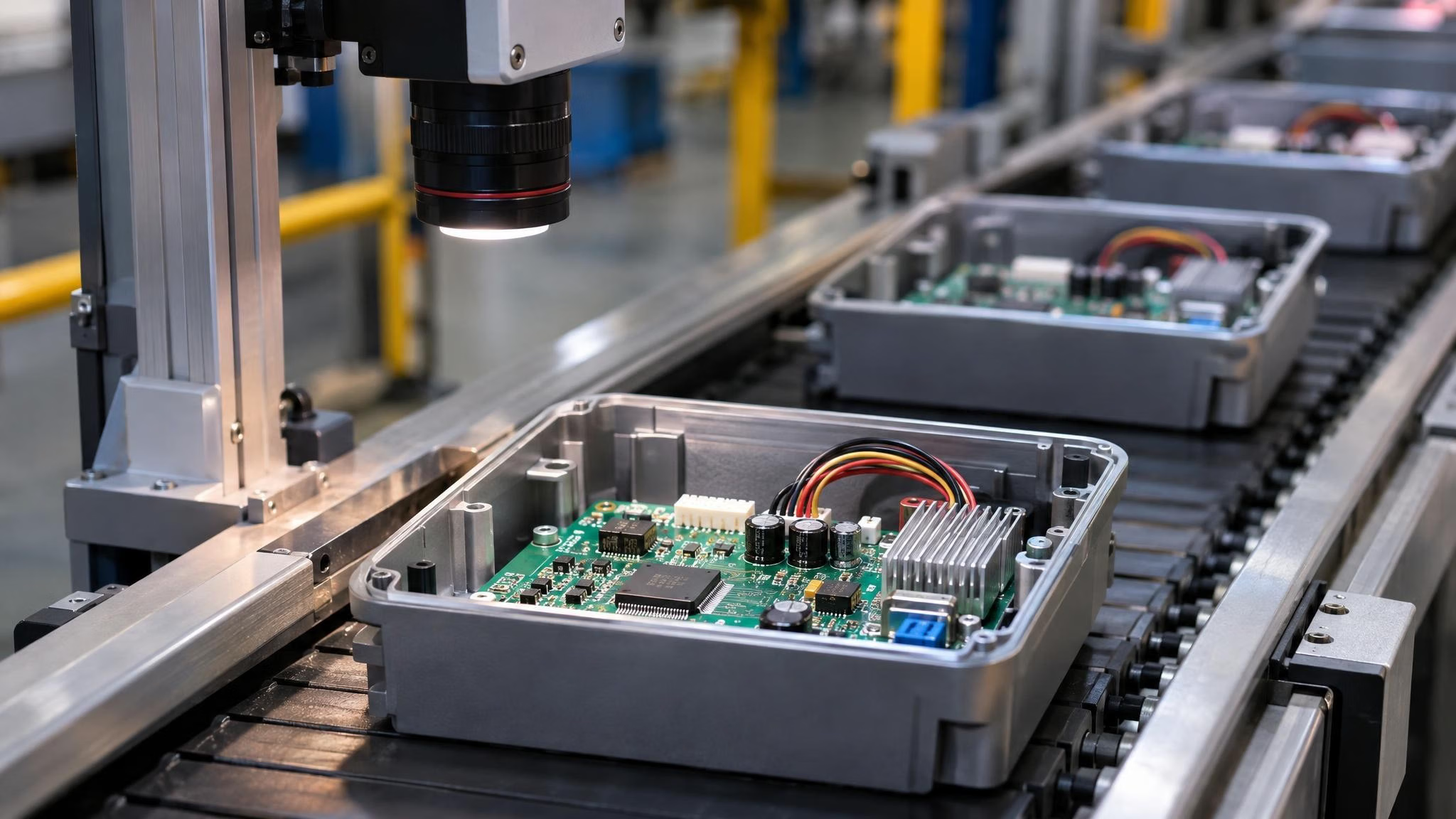
Visual inspection

Document processing
Inventory management
Defect detection

Queue management
Your vision, realized
Join millions of developers building scalable solutions for smart use cases across industries. Annotate, train, and deploy — all from Ultralytics platform.