Ultralytics YOLO26 models
Built from the ground up for edge and low-power devices, Ultralytics YOLO26 sets a new standard for real-time vision AI, delivering up to 43% faster CPU inference with a cleaner, simpler architecture.
Trusted by industry leaders












Try YOLO26 Inference
Drag and drop an image to see real-time object detection
Key Ultralytics YOLO26 improvements
Up to 43% faster CPU inference

NMS-free, end-to-end inference

No DFL, broader hardware compatibility

MuSGD: A smarter optimizer
Ultralytics YOLO models at a glance
Compare recent Ultralytics YOLO model families across speed, accuracy, and supported vision tasks.





Enterprise-grade security, certified
Independently certified and audited, so your data stays protected in transit and at rest.

SOC 2 Type I

ISO 27001:2022

GDPR & CCPA
Why choose Ultralytics YOLO26?
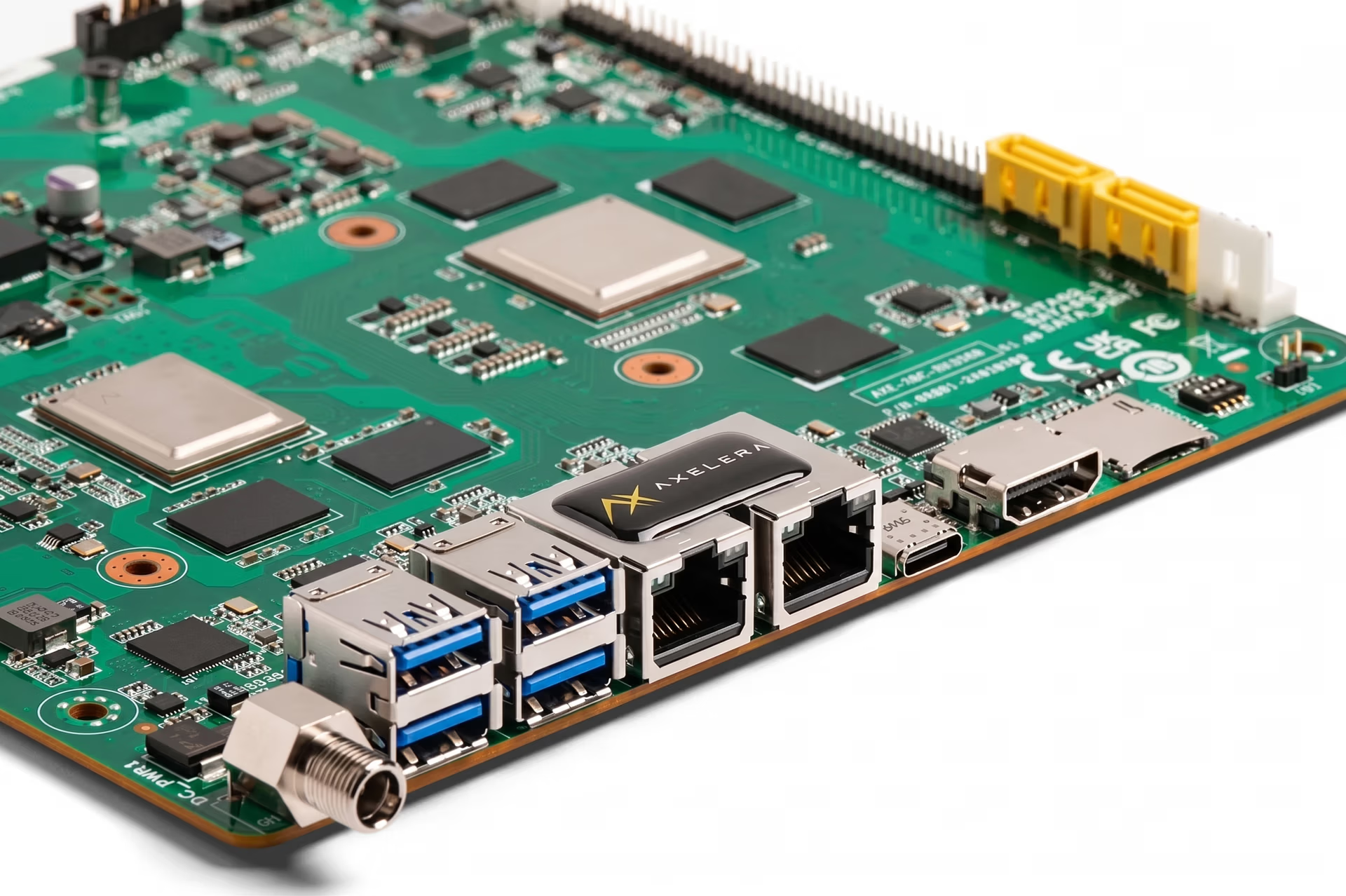
Built for edge and cloud
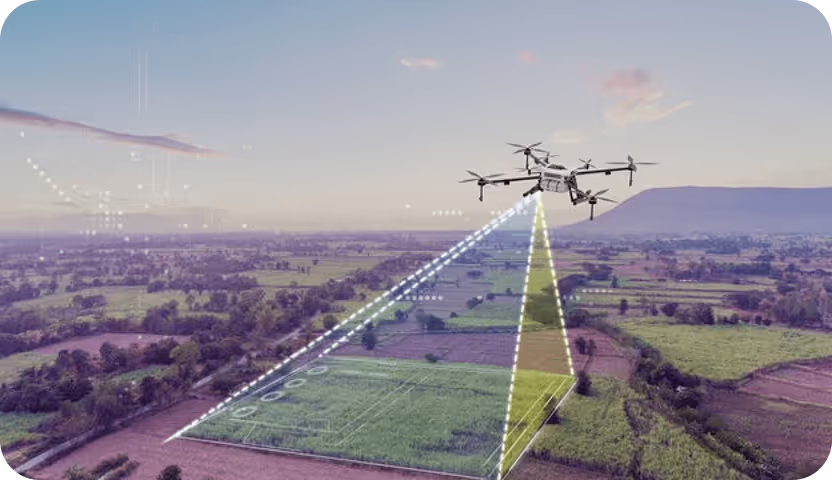
Up to 43% faster CPU inference
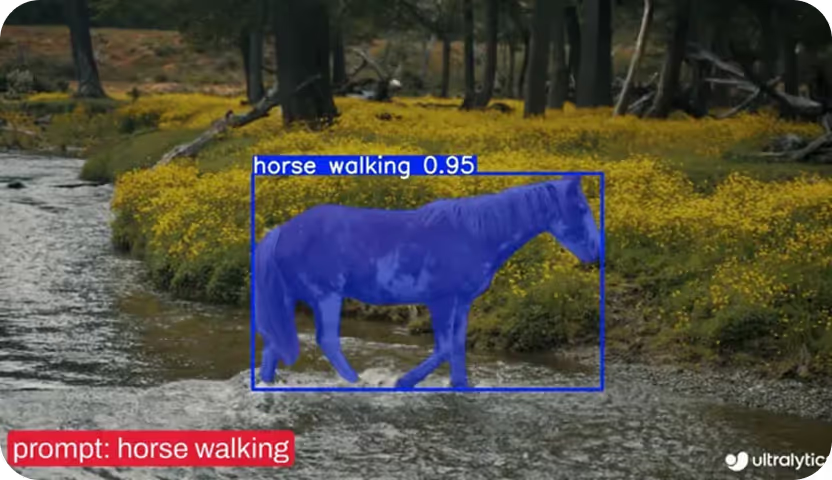
Open-world detection with YOLOE-26
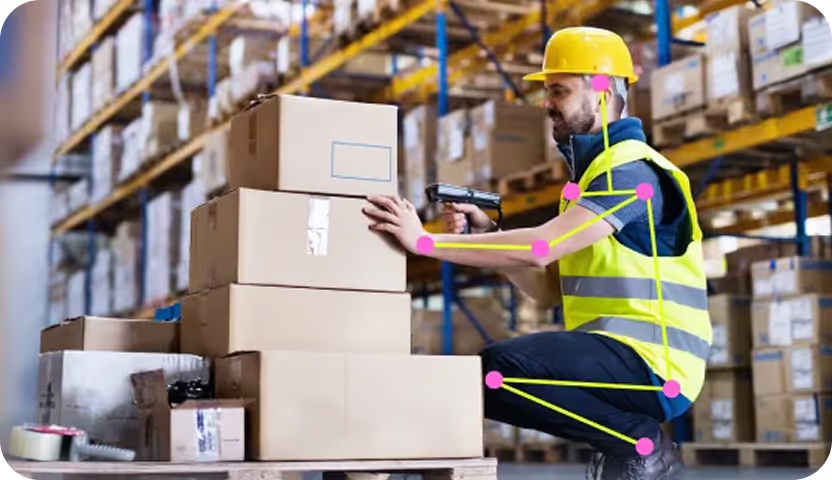
Seamless integration
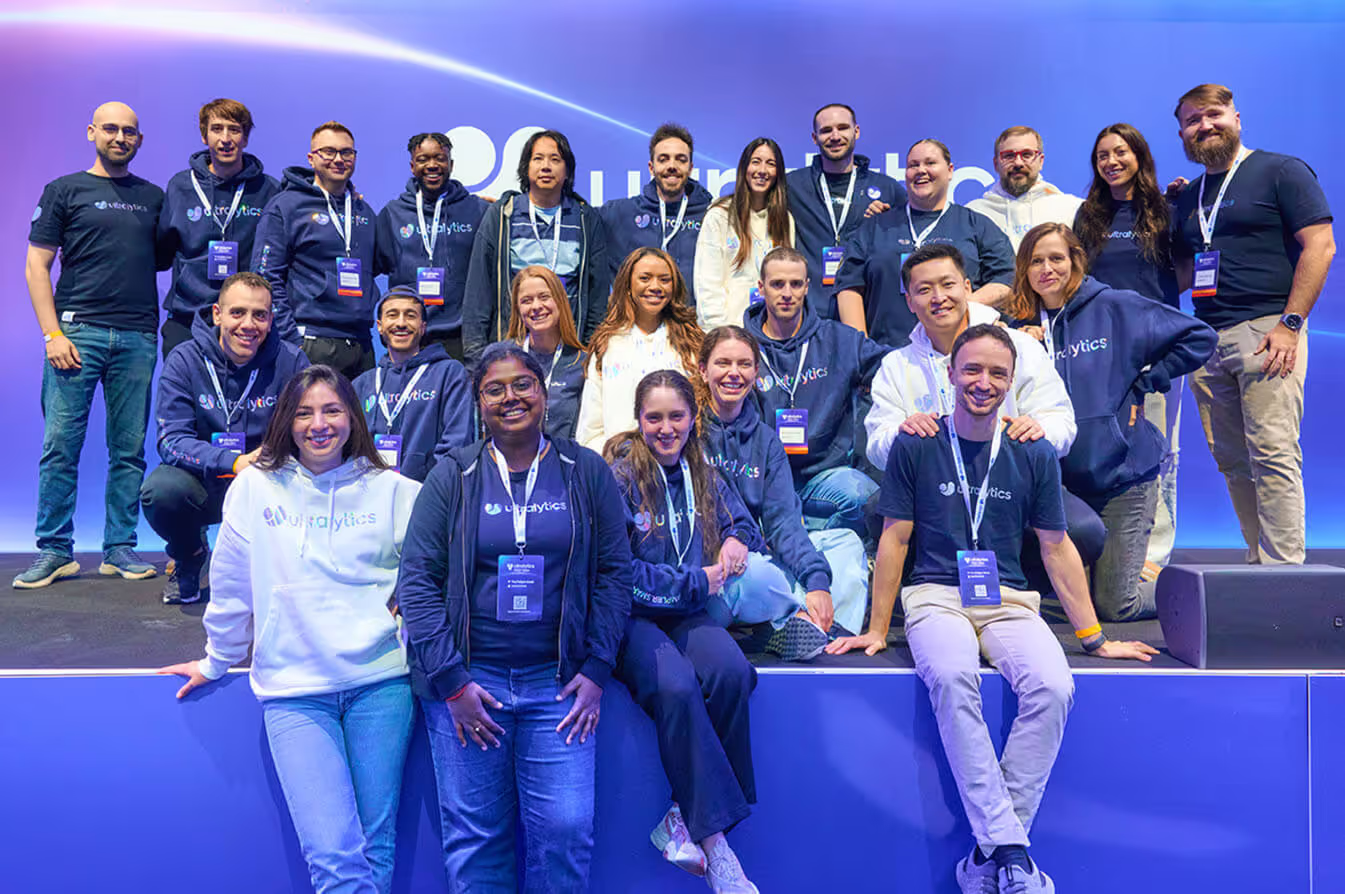
Backed by a global community
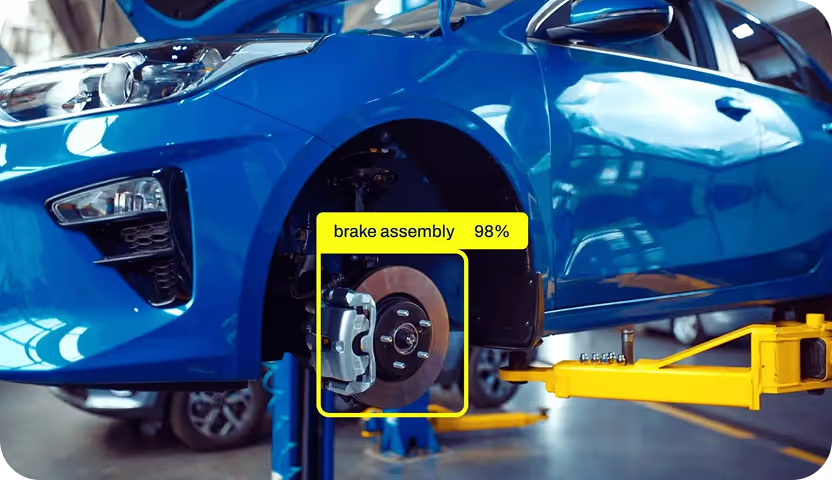
Clear licensing
See our models in action
SK Godelius detects 3,400 defects on mining conveyors with Ultralytics YOLO

Camerite cuts development time 25.2% with Ultralytics YOLO

OnsiteIQ reduces project delays by 20% with Ultralytics YOLO11
mtrail's TrainVision cuts rail data collection time by close to 100%

Glacier Robotics reduced PET leakage by 70% across US recycling facilities
SOHGA cuts parking monitoring time by 30% with Ultralytics YOLO

Scaleout cuts model updates from weeks to hours with Ultralytics YOLO
RapiD Engineering deploys seafood quality control 1 week faster with Ultralytics YOLO
Project Ocean Oasis advances reef conservation with Ultralytics YOLO

Volley powers 250+ on-court AI trainers with Ultralytics YOLO

WG Tech Solutions cuts safety violations by 28% with Ultralytics YOLO and Axelera’s AI Accelerator
Stride delivers 1-minute equine gait analysis with Ultralytics YOLO

Pixelabs achieves 95% recall with Ultralytics YOLO-driven automation

SiteAssist improves site safety by processing 770K+ images with Ultralytics YOLO
Chef Robotics uses Ultralytics YOLO to cut food giveaway by 67%
Cali Intelligence shortens checkout queues by 43% with Ultralytics YOLO
MarineSitu hits 96%+ uptime in underwater monitoring using Ultralytics YOLO
Theia Scientific speeds up microscopy analysis 43× with Ultralytics YOLO
eSmart Systems halves power line inspection time with Ultralytics YOLO

Axelera AI delivers 34 FPS edge AI inference using Ultralytics YOLO
STMicroelectronics runs Ultralytics YOLO on an MCU at just 9.4 mJ per inference
Specialvideo reaches 99% food inspection accuracy with Ultralytics YOLO

Vivity AI saves $5M+ a year in industrial operations with Ultralytics YOLO
Videologic Analytics scales to 10K AI camera licenses with Ultralytics YOLO

Prezent boosts slide detection accuracy by 34% with Ultralytics YOLO

ALYCE accelerates traffic AI inference by 20% with Ultralytics YOLO
Kiwitron uses Ultralytics YOLO to detect industrial hazards 30m away
SK Godelius detects 3,400 defects on mining conveyors with Ultralytics YOLO
Camerite cuts development time 25.2% with Ultralytics YOLO
OnsiteIQ reduces project delays by 20% with Ultralytics YOLO11
mtrail's TrainVision cuts rail data collection time by close to 100%
Glacier Robotics reduced PET leakage by 70% across US recycling facilities
SOHGA cuts parking monitoring time by 30% with Ultralytics YOLO
Scaleout cuts model updates from weeks to hours with Ultralytics YOLO
RapiD Engineering deploys seafood quality control 1 week faster with Ultralytics YOLO
Project Ocean Oasis advances reef conservation with Ultralytics YOLO
Volley powers 250+ on-court AI trainers with Ultralytics YOLO
WG Tech Solutions cuts safety violations by 28% with Ultralytics YOLO and Axelera’s AI Accelerator
Stride delivers 1-minute equine gait analysis with Ultralytics YOLO
Pixelabs achieves 95% recall with Ultralytics YOLO-driven automation
SiteAssist improves site safety by processing 770K+ images with Ultralytics YOLO
Chef Robotics uses Ultralytics YOLO to cut food giveaway by 67%
Cali Intelligence shortens checkout queues by 43% with Ultralytics YOLO
MarineSitu hits 96%+ uptime in underwater monitoring using Ultralytics YOLO
Theia Scientific speeds up microscopy analysis 43× with Ultralytics YOLO
eSmart Systems halves power line inspection time with Ultralytics YOLO
Axelera AI delivers 34 FPS edge AI inference using Ultralytics YOLO
STMicroelectronics runs Ultralytics YOLO on an MCU at just 9.4 mJ per inference
Specialvideo reaches 99% food inspection accuracy with Ultralytics YOLO
Vivity AI saves $5M+ a year in industrial operations with Ultralytics YOLO
Videologic Analytics scales to 10K AI camera licenses with Ultralytics YOLO
Prezent boosts slide detection accuracy by 34% with Ultralytics YOLO
ALYCE accelerates traffic AI inference by 20% with Ultralytics YOLO
Kiwitron uses Ultralytics YOLO to detect industrial hazards 30m away
SK Godelius detects 3,400 defects on mining conveyors with Ultralytics YOLO
Camerite cuts development time 25.2% with Ultralytics YOLO
OnsiteIQ reduces project delays by 20% with Ultralytics YOLO11
mtrail's TrainVision cuts rail data collection time by close to 100%
Glacier Robotics reduced PET leakage by 70% across US recycling facilities
SOHGA cuts parking monitoring time by 30% with Ultralytics YOLO
Scaleout cuts model updates from weeks to hours with Ultralytics YOLO
RapiD Engineering deploys seafood quality control 1 week faster with Ultralytics YOLO
Project Ocean Oasis advances reef conservation with Ultralytics YOLO
Volley powers 250+ on-court AI trainers with Ultralytics YOLO
WG Tech Solutions cuts safety violations by 28% with Ultralytics YOLO and Axelera’s AI Accelerator
Stride delivers 1-minute equine gait analysis with Ultralytics YOLO
Pixelabs achieves 95% recall with Ultralytics YOLO-driven automation
SiteAssist improves site safety by processing 770K+ images with Ultralytics YOLO
Chef Robotics uses Ultralytics YOLO to cut food giveaway by 67%
Cali Intelligence shortens checkout queues by 43% with Ultralytics YOLO
MarineSitu hits 96%+ uptime in underwater monitoring using Ultralytics YOLO
Theia Scientific speeds up microscopy analysis 43× with Ultralytics YOLO
eSmart Systems halves power line inspection time with Ultralytics YOLO
Axelera AI delivers 34 FPS edge AI inference using Ultralytics YOLO
STMicroelectronics runs Ultralytics YOLO on an MCU at just 9.4 mJ per inference
Specialvideo reaches 99% food inspection accuracy with Ultralytics YOLO
Vivity AI saves $5M+ a year in industrial operations with Ultralytics YOLO
Videologic Analytics scales to 10K AI camera licenses with Ultralytics YOLO
Prezent boosts slide detection accuracy by 34% with Ultralytics YOLO
ALYCE accelerates traffic AI inference by 20% with Ultralytics YOLO
Kiwitron uses Ultralytics YOLO to detect industrial hazards 30m away
Frequently asked questions
YOLO26 supports export to TensorRT, ONNX, CoreML, TFLite, and OpenVINO, covering the most common edge deployment targets. The NMS-free architecture means fewer integration headaches and lower latency out of the box.
Yes. YOLO26 follows the same interface as previous Ultralytics YOLO releases, so migrating is straightforward. Simply swap in your YOLO26 model weights.
Object detection, instance segmentation, semantic segmentation, image classification, pose estimation, and oriented object detection, all in a single unified model family.
The nano (n) variant is ideal for edge and CPU-constrained devices. The small (s) and medium (m) variants offer a strong balance of speed and accuracy for most applications. The large (l) and extra-large (x) variants deliver maximum accuracy for demanding workloads.
YOLO26 removes DFL for simpler export, eliminates NMS for faster end-to-end inference, improves small-object accuracy with ProgLoss + STAL, introduces the MuSGD optimizer for more stable training, and delivers up to 43% faster CPU inference.
Get started with Ultralytics YOLO!
From annotation to deployment, build vision AI solutions that scale with you.