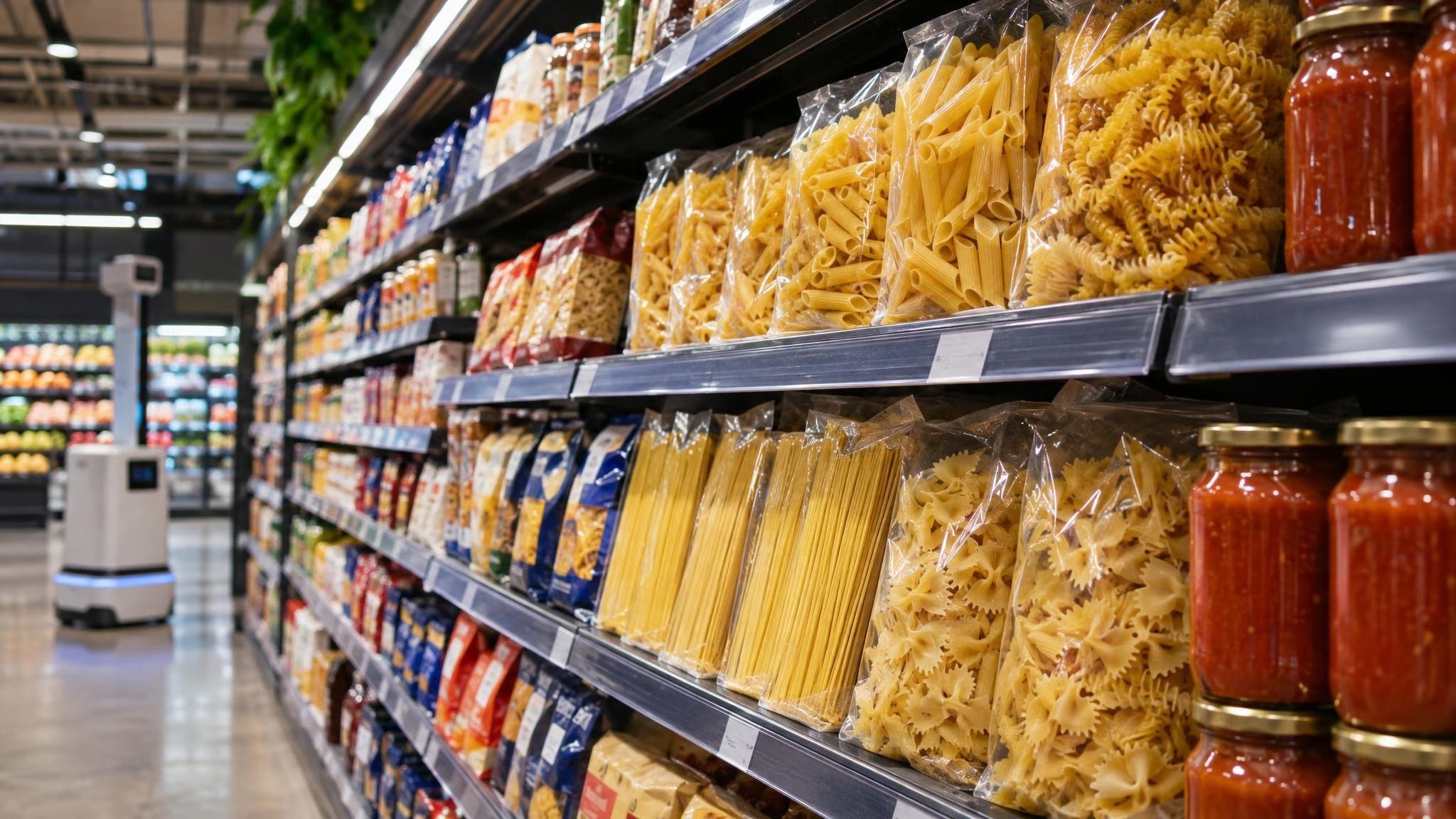
Fuller shelves from every photo, camera, and robot
Detect products, gaps, and price tags and count stock with Ultralytics YOLO, trained on your own SKUs in Ultralytics Platform and licensed for your product.
Trusted by the world's leading organizations












Built for teams that ship shelf and stock analytics
Ultralytics provides the models, tools, and license. You build and own the product, from shelf audits to stock counts.
Retail-execution and shelf-analytics vendors
Add planogram, out-of-stock, share-of-shelf, and price-tag checks to your app, running offline on the phones field teams already carry.
Shelf-camera, robot, and drone makers
Embed one model family in fixed shelf cameras, store robots, and warehouse drones, and own the vision layer you ship.
Warehouse, WMS, and in-house teams
Count pallets, cases, and bins for cycle counts and outbound checks, or build shelf monitoring for your own stores.
What published research shows
Peer-reviewed results from models built on Ultralytics YOLO.
How it works
From a shelf photo or camera frame to a task your team can act on.
Capture shelves and stock
Use field reps' phone photos, fixed shelf cameras, store robots, or drones and forklift cameras in the warehouse.
Detect on the device
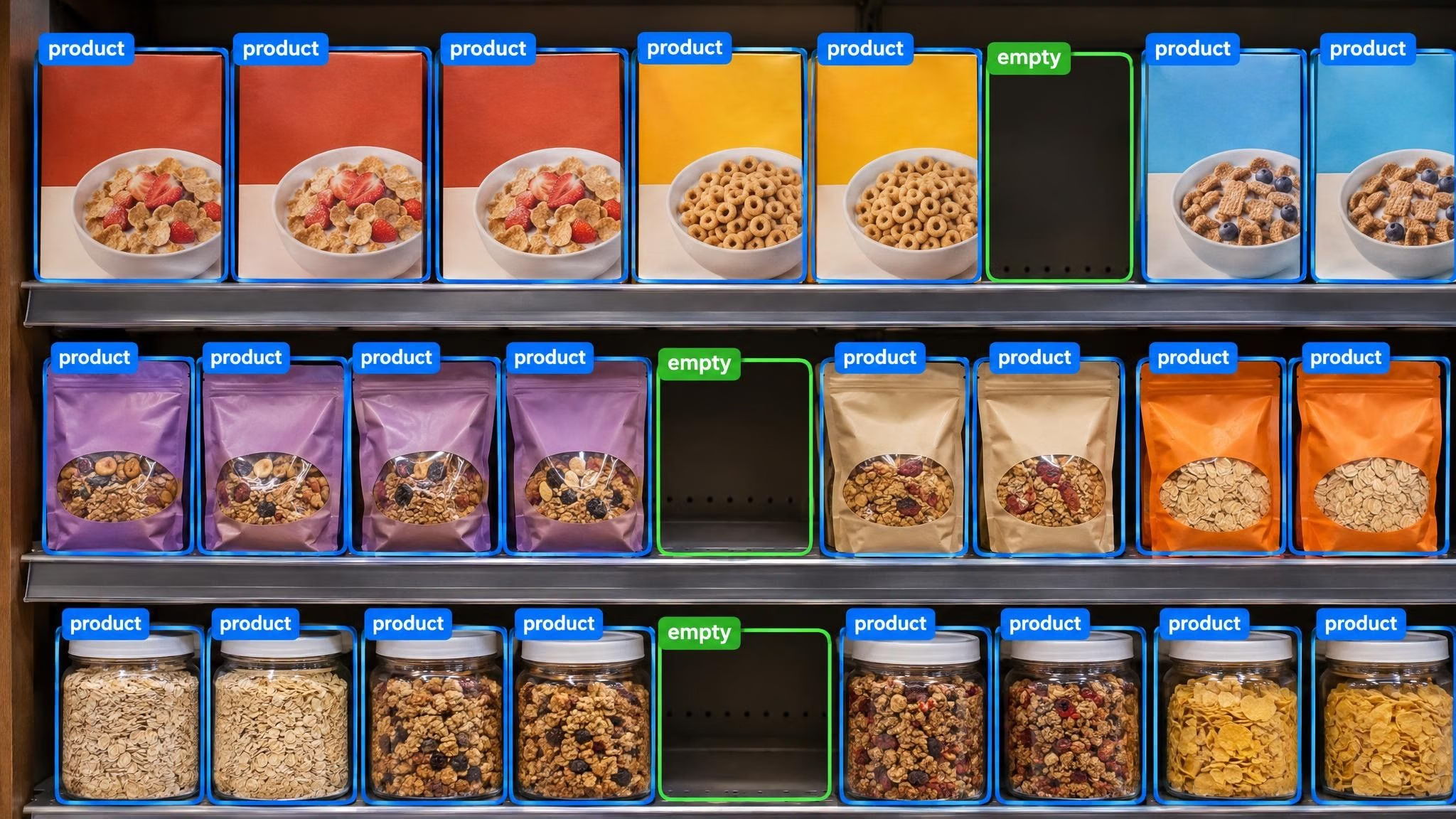
YOLO finds every product, empty facing, price tag, and carton in dense images, on the phone or device that took them.
Identify and compare
Match each product to your catalog, then compare the shelf with the planogram or stock record and flag gaps and mismatches.
Add SKUs and roll out
Add new products and packaging in Ultralytics Platform, retrain, and push one updated model to every device.
Everything a shelf image can measure
Five YOLO tasks in one model family, trained on your SKUs and deployed the same way.
Try YOLO26 inference
Drag and drop an image to see real-time object detection
Why teams build on Ultralytics YOLO
Shelf and stock recognition on your own devices at a fixed cost, with no per-image fees.
Runs on phones and at the edge
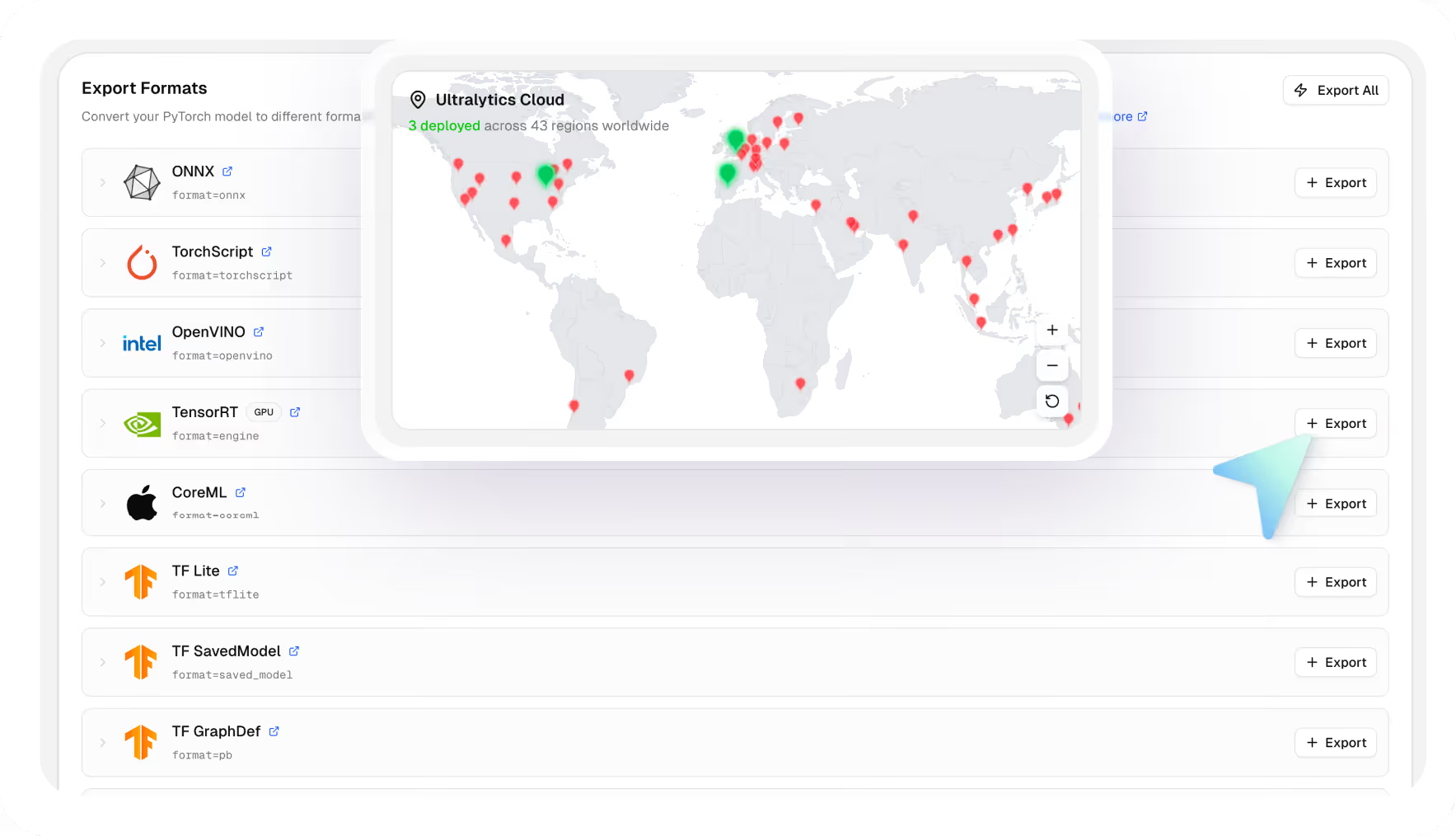
Export nano and small models to Core ML, TFLite, ONNX, TensorRT, and more for offline results in the aisle, on robots, or on a store server.
Shelves, not shoppers
Point cameras at products. Blur or drop people on the device, and keep per-worker metrics out of the product.
Your model, your weights
Train on your catalog and keep the weights, so no vendor roadmap or retired API can take the model away.
Two ways to start
Train and deploy on Ultralytics Platform, or add YOLO to your own pipeline.
Ultralytics Platform
Upload shelf and warehouse images, label dense shelves with AI-assisted annotation, train a custom YOLO model, and export it for phones, cameras, and robots, all in one place.
Python
Train a dense-shelf product detector on your own shelf photos in a few lines, then count every facing. License YOLO to ship it in your own product.
from ultralytics import YOLO

model = YOLO("yolo26n.pt")
# Train on your own labeled shelf photos
model.train(data="path/to/shelves.yaml", epochs=100)

results = model("shelf.jpg")
print(len(results[0].boxes)) # products on this shelfEnterprise-grade security and compliance
Build and deploy with confidence. ISO 27001 certified, SOC 2 attested, with support for HIPAA compliance.

SOC 2 Type I

ISO 27001:2022

HIPAA

GDPR & CCPA
Frequently asked questions
Any of them. Fixed shelf cameras give frequent views of key bays, robots and drones cover whole stores or warehouses on a schedule, and phones suit field reps. Train one YOLO model and export it to Core ML or TFLite for phones that work offline, or to TensorRT and OpenVINO for cameras and robots.
Not for your catalog. Train a detector for products, gaps, and price tags on your own shelf photos, then identify each product's SKU in a classification stage. New products then need new crops, not a new detector. Ultralytics Platform speeds up labeling dense shelves with AI-assisted annotation.
It depends on your data and capture, so measure it on your own aisles. Fine-tune on your shelves, add a classification or label-reading stage for sizes and flavors, and track per-SKU precision and recall and gap precision against a manual audit.
It counts what the camera can see. To tell an empty facing from a product pushed back, or to count stacked stock, add depth: a depth camera, a side view, or a depth estimation model.
YOLO finds price tags and facings. OCR or a barcode reader then reads each tag, and your software compares the result with the planogram and the POS price. The compliance rules stay yours.
Your software sends gap and count events to your ERP, WMS, or task system. Use shelf images to correct the record too: a Management Science study found 65% of nearly 370,000 inventory records from 37 stores of one retailer were inaccurate.
Keep cameras on the shelf. Blur or drop people on the device with object blurring, identify no one, and keep per-worker productivity metrics out of the product.
Ultralytics YOLO is open source under AGPL-3.0, so you can prototype freely. To ship it in a closed-source app, device, or service, an Enterprise License removes the AGPL obligations. Enter your work email above to get a quote.
More use cases
Retail loss prevention

Queue management
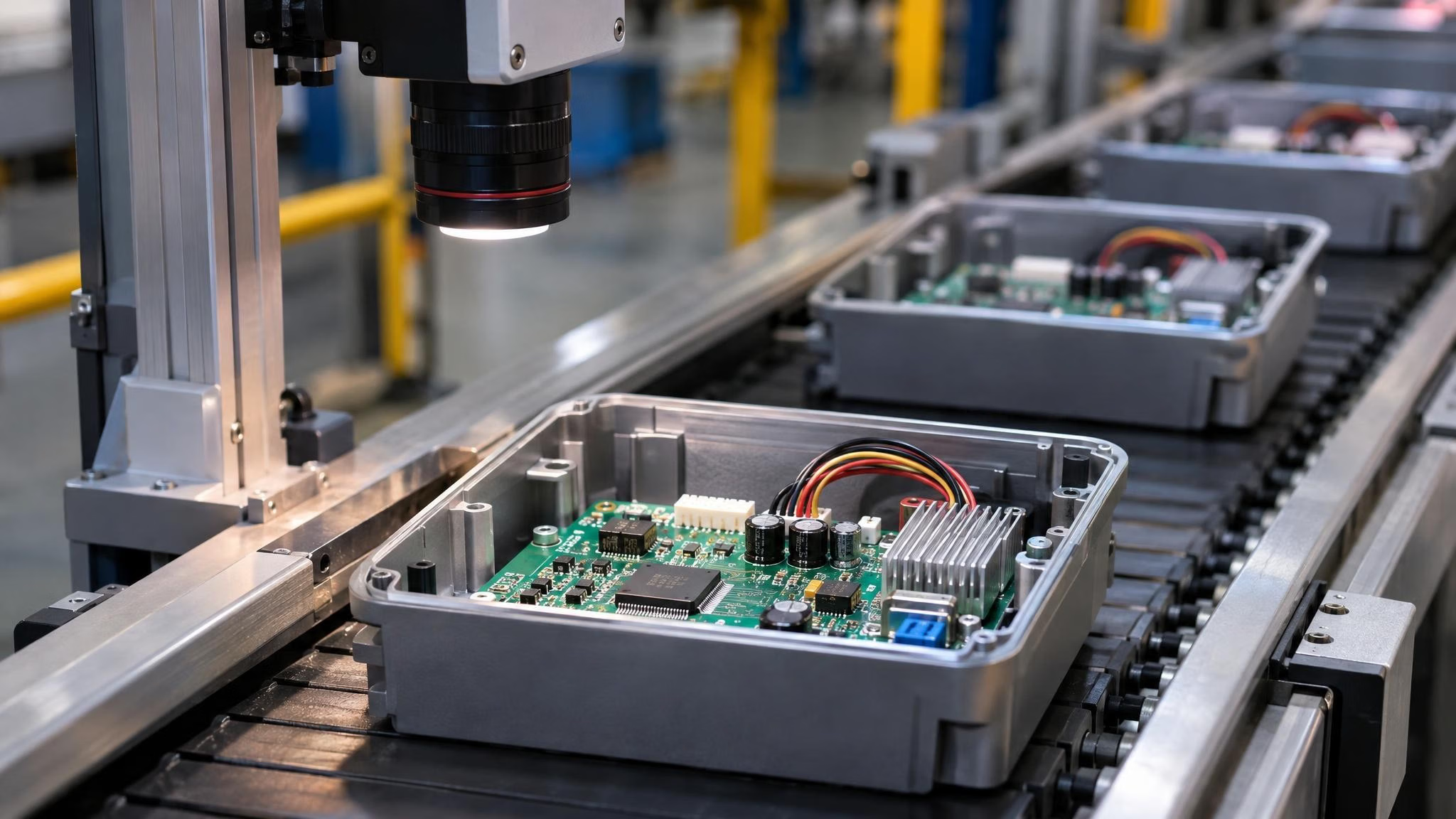
Visual inspection

Driver monitoring

Document processing
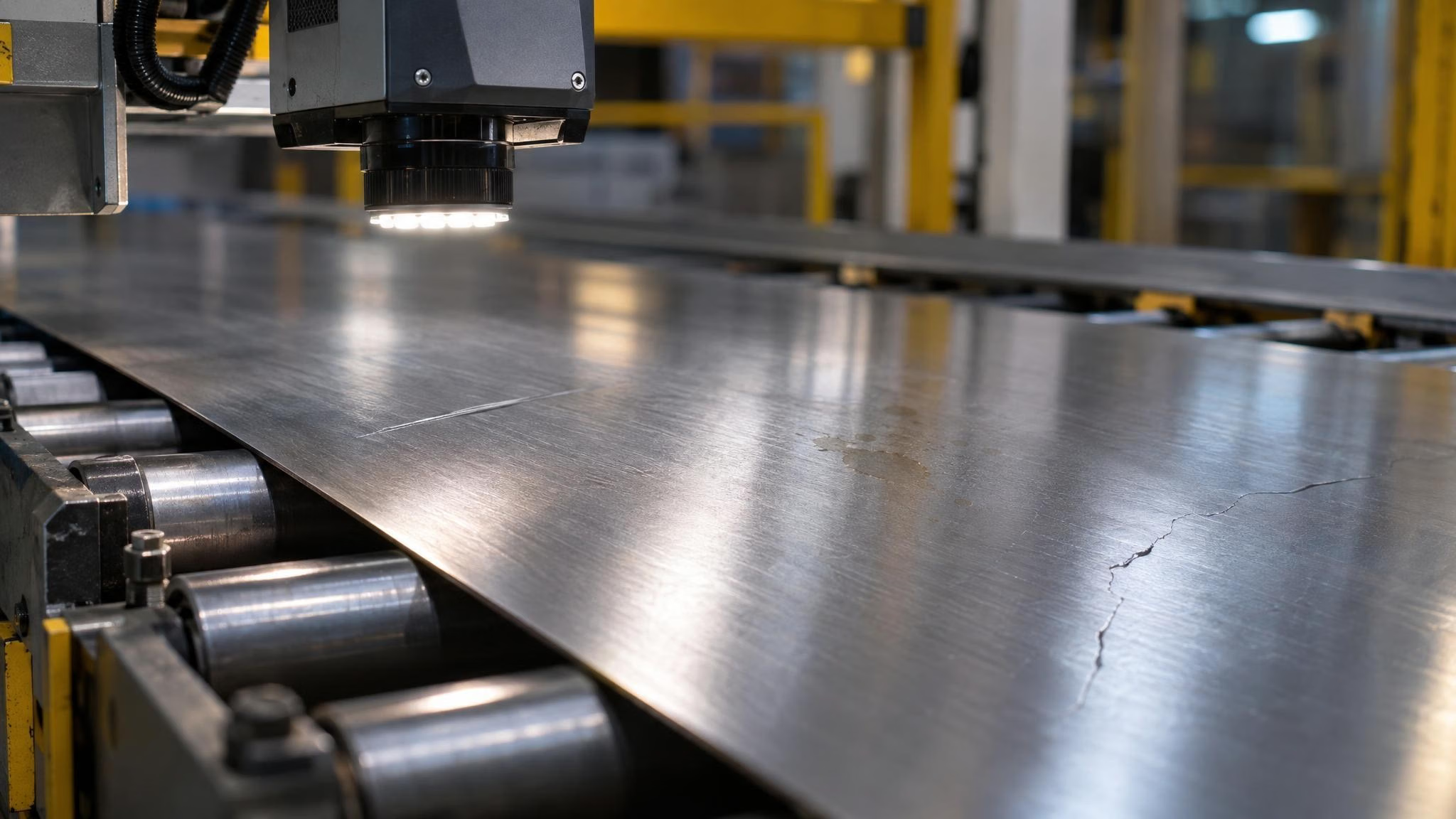
Defect detection
Your vision, realized
Join millions of developers building scalable solutions for smart use cases across industries. Annotate, train, and deploy — all from Ultralytics platform.