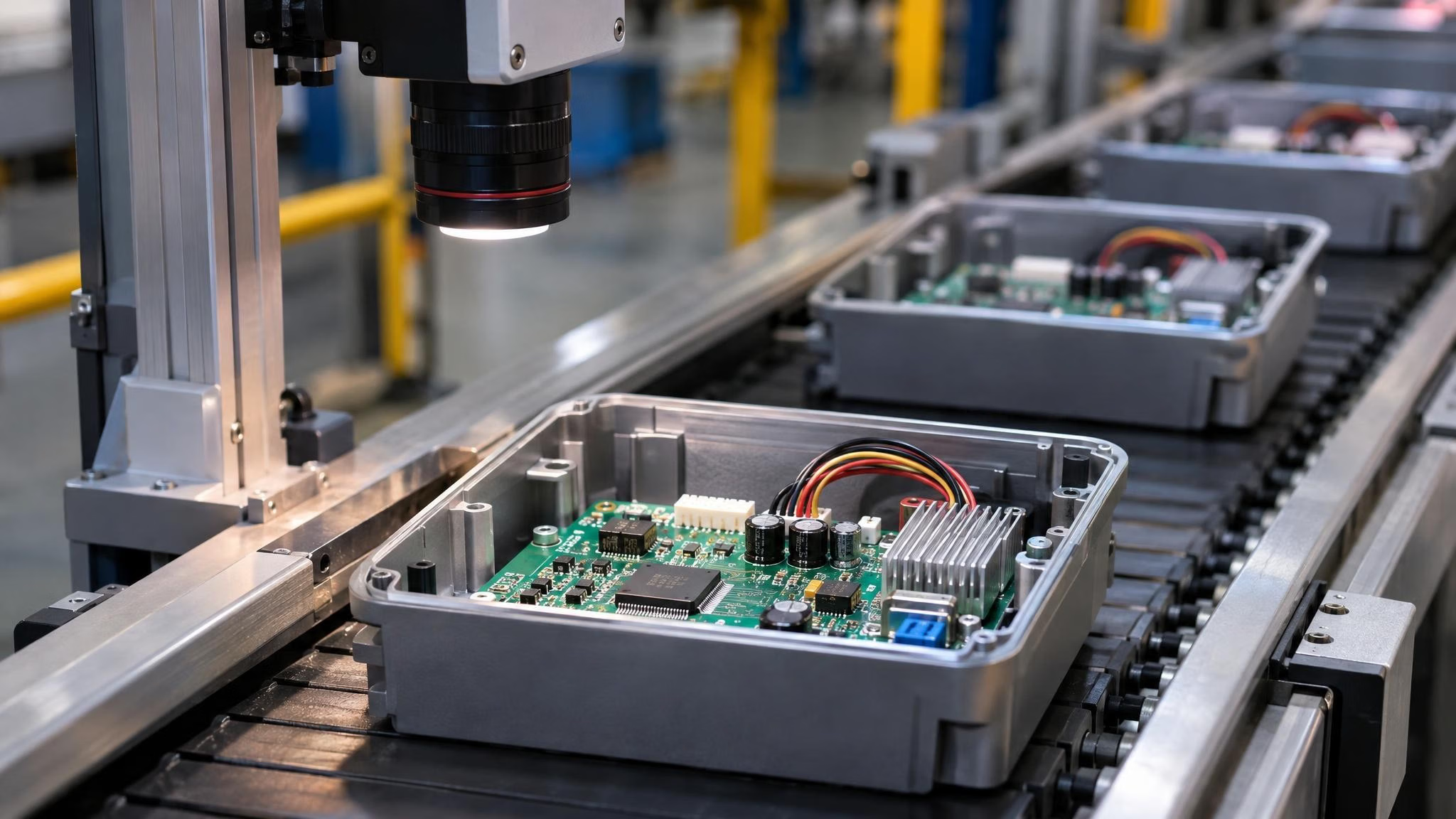
AI visual inspection for assemblies and labels
Check assemblies, kits, and labels at the station with Ultralytics YOLO, trained on your own builds in Ultralytics Platform and licensed for your product.
Trusted by the world's leading organizations










Built for teams that ship AI visual inspection
Ultralytics provides the models, tools, and license. You build your station, from camera to pass or fail signal.
Machine and line builders
Build presence, orientation, and label checks into the assembly, packaging, and filling machines you ship.
Vision integrators and software vendors
Deliver error-proofing and kit-verification stations on standard cameras, training on examples instead of programming a rule for every variant.
Manufacturing engineering teams
Automate manual end-of-line checks across lines and plants with models you train and version.
Specialvideo reaches 99% food inspection accuracy with Ultralytics YOLO
Discover how Specialvideo uses Ultralytics YOLO models to power real-time AI food inspection, ensuring quality, reducing waste, and boosting efficiency.

How it works
From good and bad builds to a green or red light at the station.
Image each station
Mount standard cameras over each check, one or several per station, under fixed lighting so builds look consistent from shot to shot.
Label good and bad builds
Collect correct, missing, and misplaced builds and label them in Ultralytics Platform with AI-assisted annotation.
Train across variants
Train a model across your product family, and keep a versioned model for each recipe.
Signal pass or fail
Run on the station PC, show the operator green or red, have your station software send the result to the PLC or MES, and save an image as evidence.
AI visual inspection tasks for parts, kits, and labels
Five YOLO tasks in one model family, trained on your builds and deployed the same way.
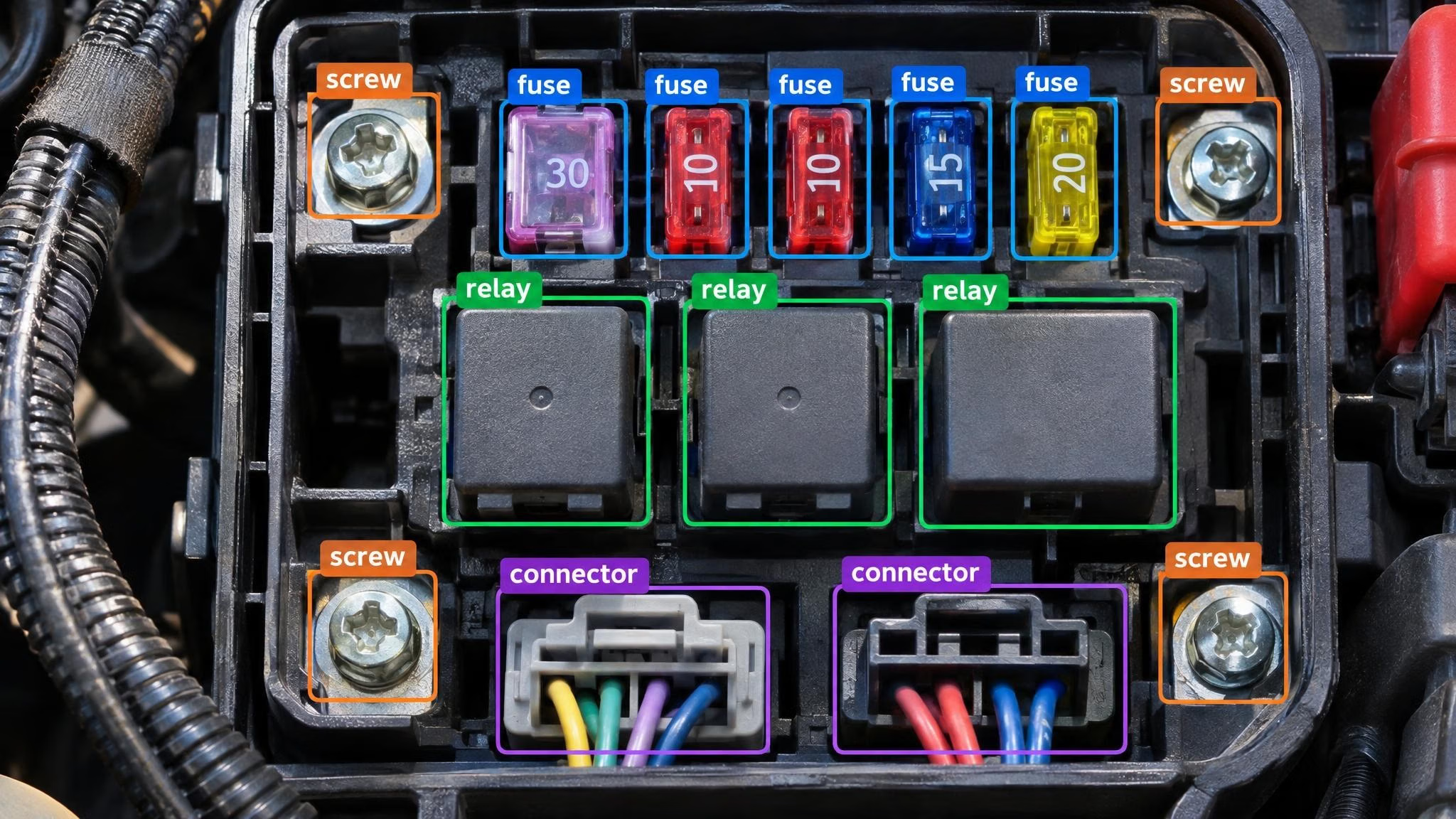
Try YOLO26 inference
Drag and drop an image to see real-time object detection
Why teams build on Ultralytics YOLO
Software on standard cameras, flexible across variants and checks.
Learn from examples
Train on examples instead of programming every kit, SKU, and variant, then retrain when the product changes.
Runs on standard industrial hardware
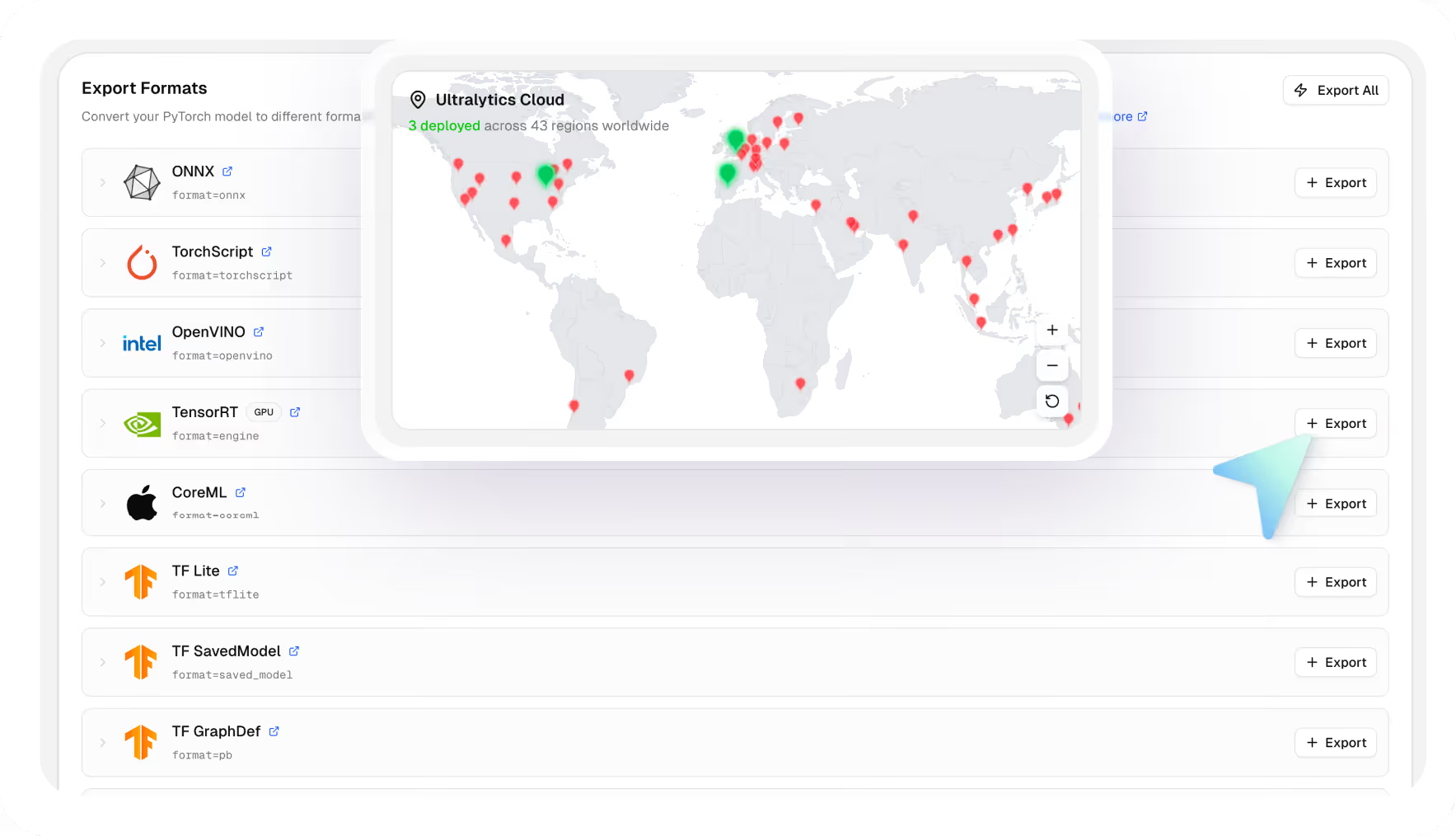
Export to ONNX, OpenVINO, or TensorRT for industrial PCs, NVIDIA Jetson, Raspberry Pi, or CPU-only machine controllers.
Results you can audit
Freeze a versioned model per recipe and report escape and false-reject rates per check on your own golden set.
Two ways to start
Train and deploy on Ultralytics Platform, or add YOLO to your own pipeline.
Ultralytics Platform
Upload images of good and bad builds, label parts with AI-assisted annotation, train a custom YOLO model, and export it for the station PC, all in one place.
UploadLabelTrainDeploy
 Get started
Python package
Train a pass, fail, and rework classifier on folders of station images in a few lines. License YOLO to ship it in your own product.
pip install ultralyticsfrom ultralytics import YOLO
model = YOLO("yolo26n-cls.pt")
# One folder each for pass, fail, and rework images
model.train(data="path/to/inspection", epochs=50)
result = model("assembly.jpg")[0]
print(result.names[result.probs.top1]) # pass, fail or reworkShipping YOLO in a commercial product? An Enterprise License removes AGPL-3.0 obligations.
License YOLOEnterprise-grade security and compliance
Build and deploy with confidence. ISO 27001 certified, SOC 2 attested, with support for HIPAA compliance.
SOC 2 Type I

ISO 27001:2022
HIPAA

GDPR & CCPA
Frequently asked questions
A model can cover multiple variants. Train on representative builds and apply rules such as expected part counts. New variants can require additional examples, retraining, or changes to inspection rules.
Start from pretrained YOLO weights and the images you have. In a peer-reviewed alignment study, YOLOv8n reached 98.1% inspection accuracy from 40 training images per class. Label in Ultralytics Platform with AI-assisted annotation, and add real mistakes as you collect them.
Compare both on the same two numbers. In a Sandia study of 82 inspectors checking precision manufactured parts, inspectors correctly rejected 85% of defective items and incorrectly rejected 35% of acceptable parts. Test YOLO for escapes and false rejects on your own golden set before go-live.
Keep a library of known defects and a fixed golden set, challenge the system at start-up and at set intervals, and report escape and false-reject rates per check. For sterile medicines, EU GMP Annex 1 says automated inspection should be "equal to, or better than, manual inspection methods."
YOLO finds each label and code region and checks that it is present, in place, and straight. Pair it with an OCR engine or barcode reader to read the characters.
You or your integrator build and own the station application, which sends pass or fail and an evidence image to the PLC or MES over digital I/O, OPC UA, or MQTT. Ultralytics provides the YOLO models, Ultralytics Platform, and the commercial license.
Add images of the new build, fine-tune in Ultralytics Platform, and revalidate on the golden set. Keep one model version per recipe, so each changeover loads the right model.
Ultralytics YOLO is open source under AGPL-3.0, so you can prototype freely. To build it into machines you sell, or into your own production systems without open-sourcing them, an Enterprise License removes the AGPL obligations. Enter your work email above to get a quote.
More use cases
Defect detection
Retail loss prevention

Driver monitoring

Document processing
Inventory management

Queue management
Your vision, realized
Join millions of developers building scalable solutions for smart use cases across industries. Annotate, train, and deploy — all from Ultralytics platform.