From data to decisions: Using vision AI for enterprise strategy
Explore how an enterprise vision AI strategy helps organizations turn visual data into faster decisions, scalable operations, and lasting competitive advantage.

Many enterprises already generate large amounts of visual data through everyday operations, using cameras, sensors, and other imaging systems. However, most of this data is stored and forgotten. It becomes untapped potential rather than a source of real-time insights.
Images and videos are often reviewed only after something goes wrong. This reactive approach relies on manual checks or delayed reports. As a result, visual data is rarely used as part of everyday decision-making across teams and systems to create business value.
For example, a warehouse may have cameras covering every aisle. Yet footage is typically reviewed only after inventory goes missing or a safety incident occurs. By the time the data is analyzed, the opportunity to prevent the issue or apply effective mitigation has most likely already passed.
An enterprise vision AI strategy and roadmap help change this pattern. By automatically analyzing images and video using artificial intelligence (AI), business leaders and organizations can turn visual data into timely signals.
In particular, computer vision is the field of AI that enables systems to understand and interpret visual information. Unlike generative AI, which focuses on creating new content, computer vision is designed to extract meaning from existing real-world visual data.
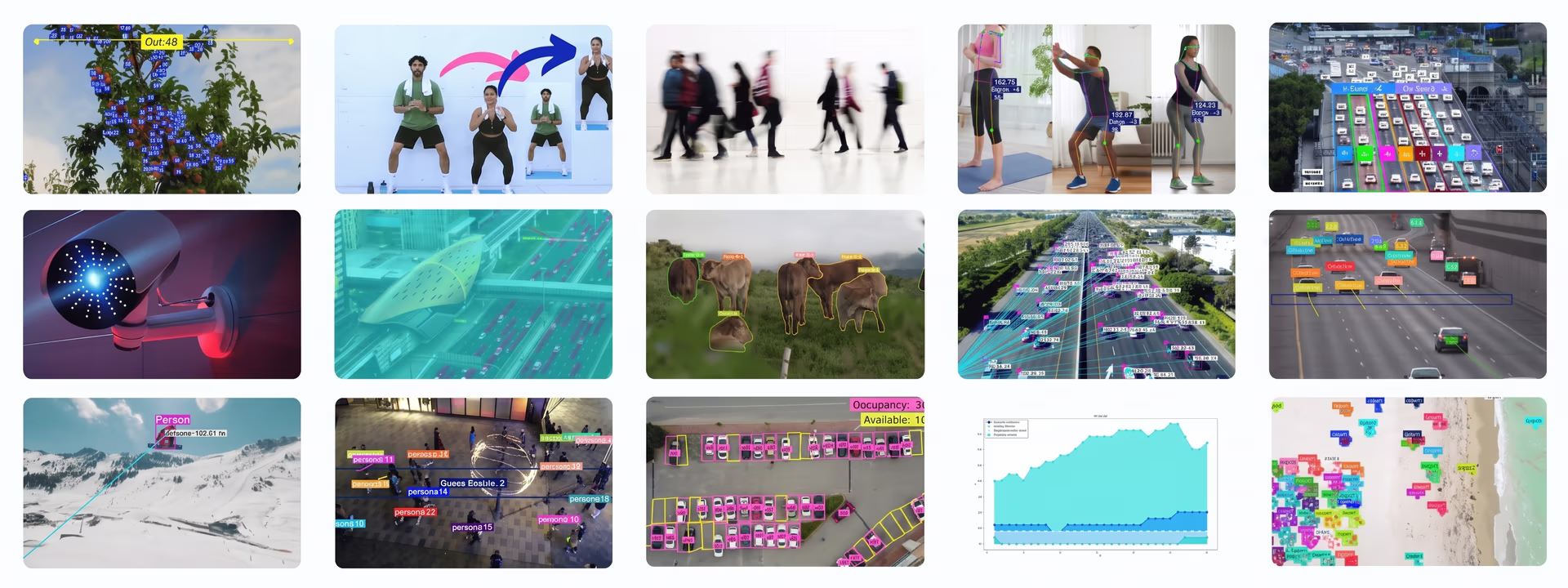
Fig 1. Vision AI can transform images into useful insights (Source)
As AI adoption continues to grow across enterprise systems, Vision AI enables teams to detect issues earlier and respond faster. It also allows visual information to become a practical input to daily operations.
In this article, we'll explore how enterprises can apply vision AI as part of a broader enterprise AI strategy. Let's get started!
The limits of manually processing visual enterprise data#
Despite the rapid growth of image and video data driven by expanded operations, digital transformation, automation, and monitoring systems, most organizations still rely on manual reviews or occasional spot checks. This approach may work for simple scenarios, but it quickly becomes a bottleneck as operations grow more complex.
Simply put, manual processes can’t keep up with the volume and speed of real-world activity. Reviewing thousands of images or monitoring multiple video streams in real time is difficult, especially in environments where conditions change constantly. Even basic automation based on fixed rules or simple algorithms tends to break down at scale.
That’s why organizations that use AI and computer vision to continuously interpret visual data gain a clear advantage. When applied as part of an enterprise vision AI strategy, this approach helps teams identify issues earlier, increase operational efficiency, optimize workflows, enhance customer experience, and reduce their dependence on manual review.
What vision AI-driven solutions mean for enterprise systems#
Next, let’s take a closer look at what vision AI means in an enterprise context. Vision AI, often referred to as computer vision, enables machines to interpret images and video.
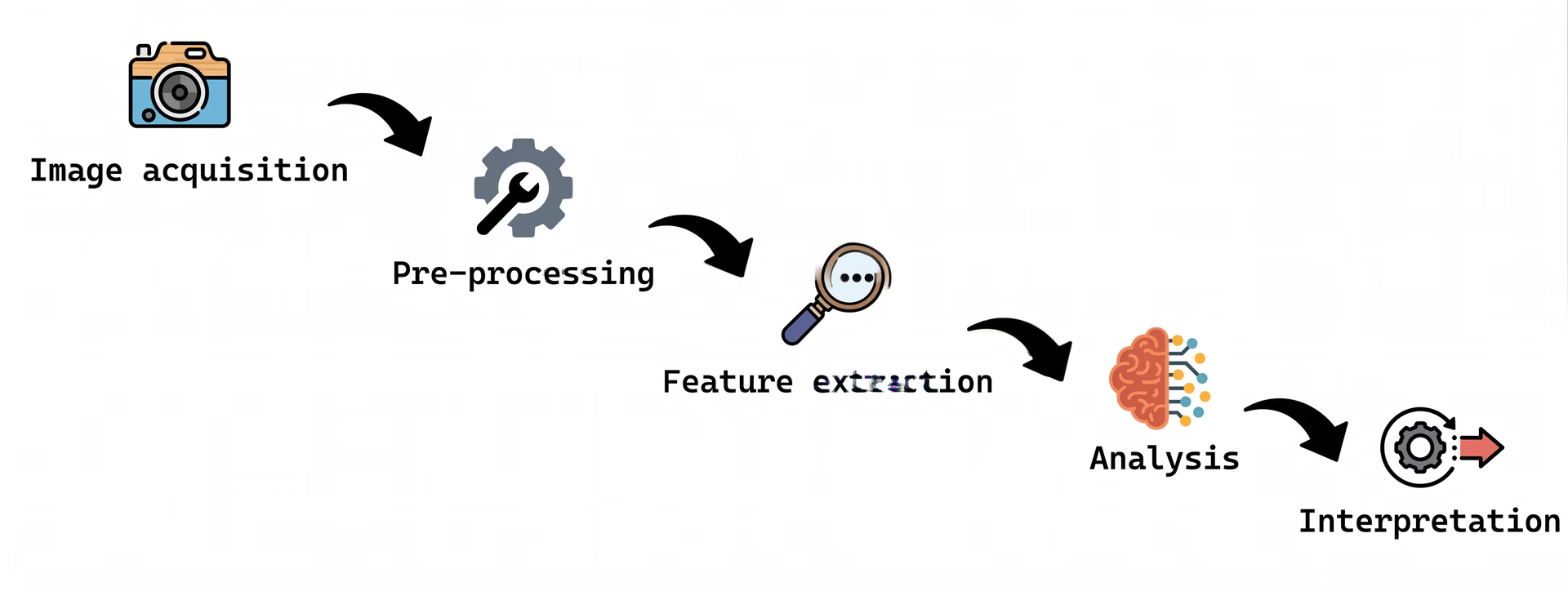
Fig 2. A high-level overview of how computer vision works (Source)
It works by using trained computer vision models, such as Ultralytics YOLO26, to recognize patterns, objects, and events in real-world environments. These models do so by supporting various computer vision tasks like object detection and instance segmentation.
For instance, object detection identifies and locates specific objects within an image or video, such as products, vehicles, or equipment. Meanwhile, instance segmentation goes a step further by outlining the exact shape of each individual object, letting systems distinguish between multiple similar items and understand their boundaries more precisely.
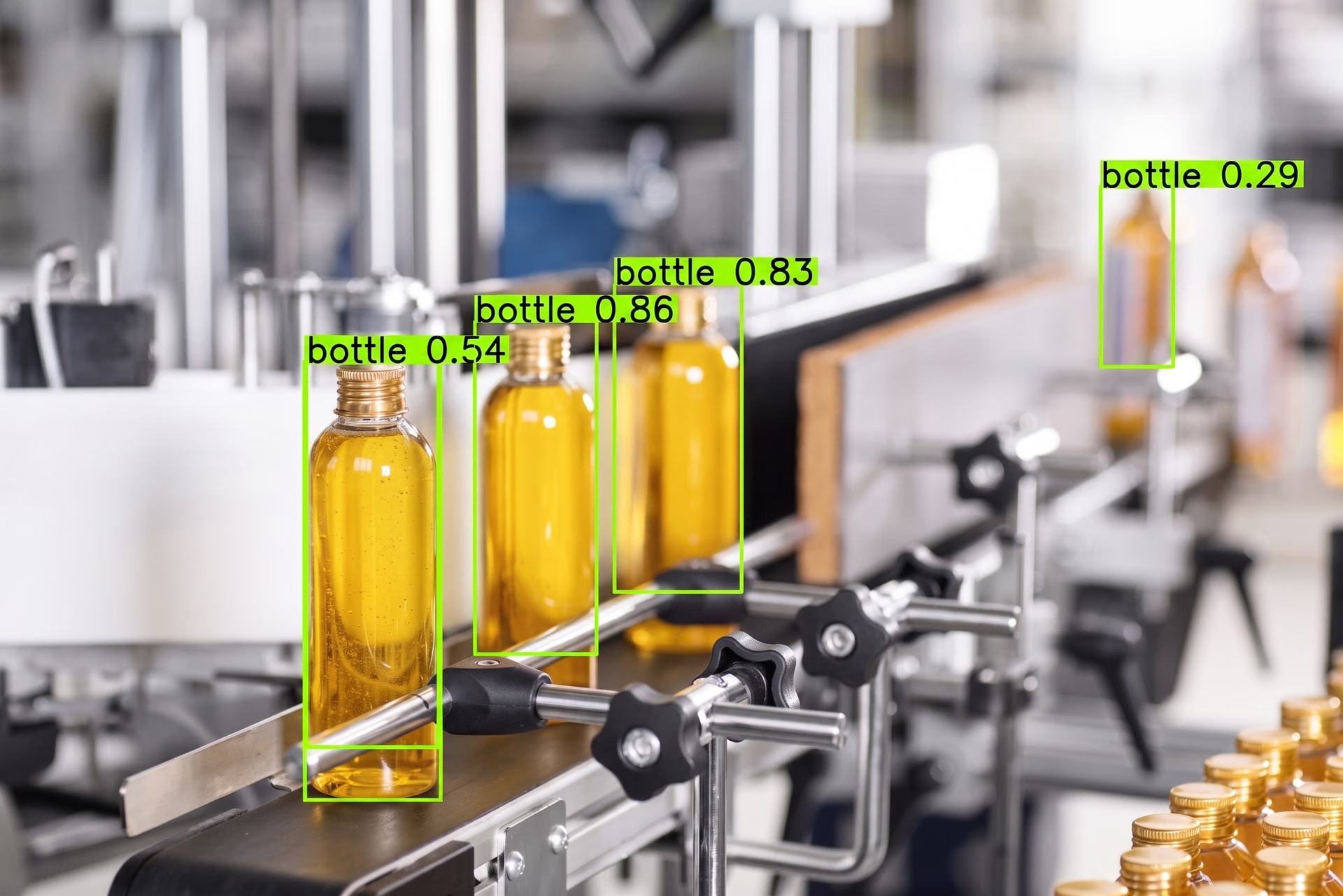
Fig 3. Using YOLO26 to detect objects in an image (Source)
Vision AI solutions can also integrate with existing data platforms, operational tools, and legacy systems that enterprises already use. This makes it possible to deliver visual insights, alerts, and decisions directly into dashboards and workflows in real time.
How AI vision technology can create business opportunities#
Most enterprises already have plenty of visual data. The real challenge is turning that data into something useful, which has traditionally been slow and difficult. Building vision systems from scratch takes time, specialized skills, and large labeled datasets, making it hard for teams to move quickly.
Today, enterprises can start with pre-trained computer vision models and adapt them to their own environments. Vision AI models like Ultralytics YOLO26 are trained on diverse data and built to work in real-world conditions. By fine-tuning these models with a smaller set of domain-specific images, teams can deploy vision AI much faster than before.
This approach makes it easier to test ideas, adjust as operations change, and scale successful use cases without long development cycles. Over time, organizations see better accuracy, faster feedback, and greater confidence in automated decisions.
In practice, the business value of vision AI comes from using existing visual data sooner and more effectively than before. When guided by a clear enterprise vision AI strategy, this approach helps organizations turn unused footage into consistent, measurable business operational outcomes rather than one-off experiments.
Vision AI-powered use cases across key industries#
Next, let’s take a closer look at how different industries are already using vision AI. Enterprises can apply vision AI capabilities to improve visibility across operations, reduce manual effort, and support faster, more reliable decision-making.
Here are a few vision AI use cases that are considered an AI success by many organizations today:
- Retail and logistics: Stores and warehouses use visual insights to track inventory, monitor movement patterns, and keep supply chain operations running smoothly across locations.
- Healthcare: Medical environments rely on image-based analysis to extract insights from scans and visual data that would otherwise require time-consuming manual review.
- Robotics: Robots depend on visual understanding to navigate physical spaces, recognize objects, and interact safely with their surroundings in real time.
- Agriculture: Farms use visual monitoring to track crop health, equipment conditions, and changes in the field, helping teams respond earlier and manage larger areas more effectively.
- Manufacturing: Production environments apply computer vision systems to detect defects early, monitor safety conditions, enable predictive analytics, and maintain consistency across manufacturing processes.
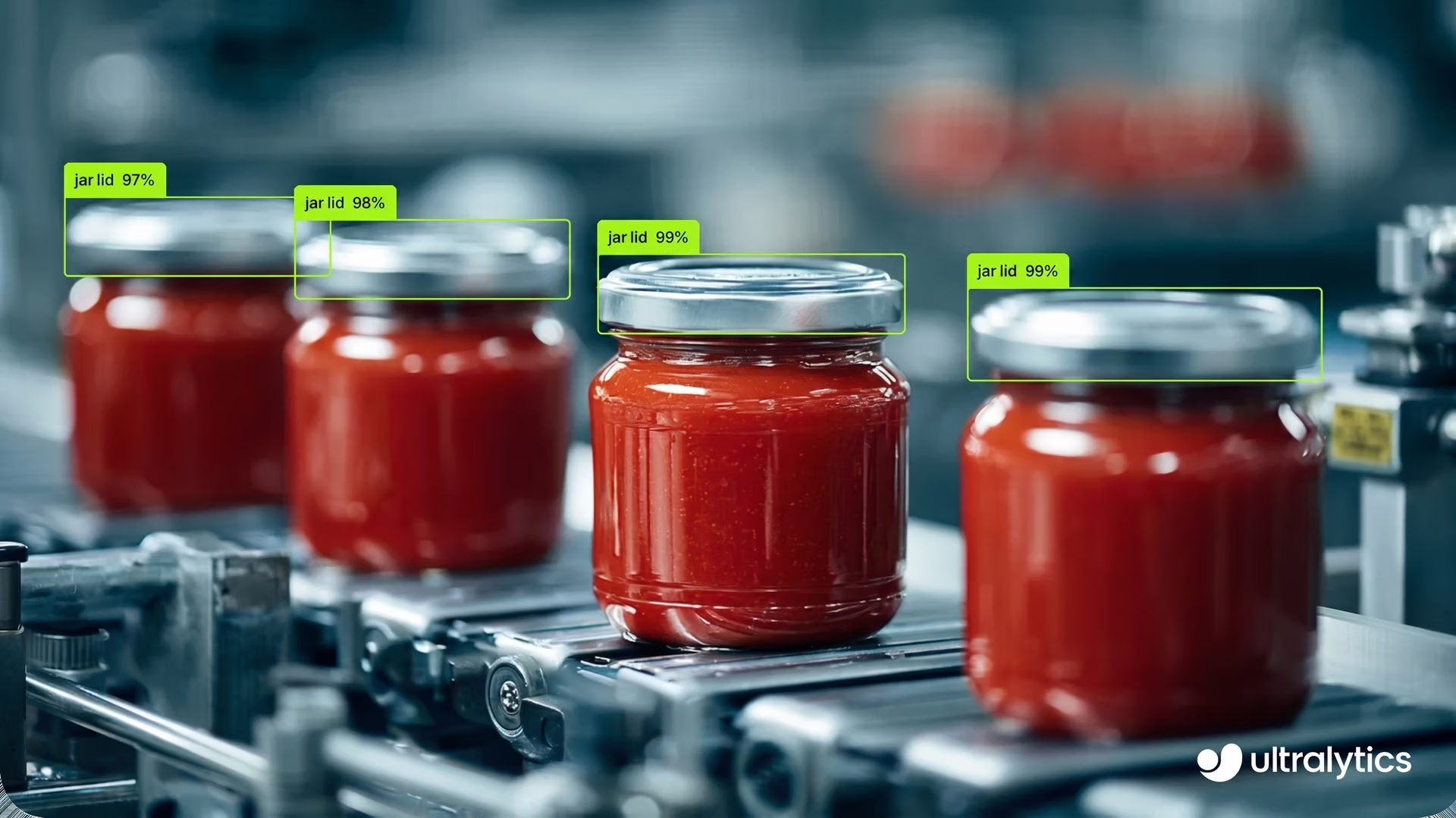
Fig 4. An example of leveraging computer vision to monitor products being manufactured (Source)
Best practices for implementing vision AI at scale#
Now that we have a clearer understanding of vision AI and its role in enterprise systems, let’s look at some practical strategies for putting it into use.
Enterprises tend to see the most reliable results when vision AI initiatives are guided by clear goals and real-world constraints. Here are some best practices to keep in mind when implementing vision AI at scale:
- Start with existing visual workflows: First, identify workflows where images or video are already captured, such as inspections, monitoring, or verification. These workflows provide clear starting points where vision AI can deliver value without requiring additional data collection.
- Prioritize scalable problems: Focus specifically on processes where manual review is slow, inconsistent, or difficult to scale. In such areas, AI can effectively reduce effort while improving reliability under changing business conditions.
- Use proven models and providers: Leverage established AI tools, AI platforms, and pre-trained computer vision models, such as Ultralytics YOLO26, to speed up deployment.
- Deploy with operational constraints in mind: Choose between cloud and edge deployments based on latency requirements, connectivity, and risk management considerations, especially in time-sensitive environments.
- Integrate and measure impact: Connect vision AI outputs to existing analytics and operational systems. Track metrics tied to business outcomes, start with small deployments, and expand gradually as value is demonstrated.
Responsible AI, governance, and trust in vision AI systems#
As vision AI becomes more common in enterprise systems, responsible AI and AI governance naturally become part of the conversation. Visual data often touches people, physical spaces, and safety-critical workflows, which brings questions around oversight, accountability, and risk management into focus.
In many organizations, enterprise vision AI strategies sit within broader governance frameworks that define ownership, decision rights, and how AI-driven outputs are reviewed. These frameworks help align vision AI initiatives with business priorities, regulatory expectations, and existing operating models, while giving stakeholders confidence in how systems are used.
Data quality and transparency are also closely tied to governance. Clear documentation around data sources, model behavior, and limitations makes it easier to understand how visual insights are generated and where human judgment is important.
As AI adoption grows, these considerations are increasingly shaping the vision AI ecosystem and how computer vision solutions should be scaled across business units. Rather than limiting innovation, responsible AI and governance frameworks often help organizations move faster by creating shared expectations and trust around enterprise-wide use.
Why vision AI is becoming an enterprise-wide priority#
With the global vision AI market projected to reach $58.29 billion by 2030, vision AI is becoming a core enterprise capability and business priority for organizations looking to interpret visual data at scale.
Advances in computer vision models and deployment methods are making real-time visual understanding more practical across industries such as manufacturing, retail, healthcare, and infrastructure. In fact, AI investments surrounding such modernization solutions are becoming more common.
Where visual data is processed is also driving this growth. Instead of sending images and video to centralized systems, many organizations now use edge AI to analyze data closer to where it is generated. This approach reduces latency and improves reliability, particularly for use cases where fast decisions are required or connectivity is limited.
Beyond this, vision AI systems are becoming more predictive and adaptive over time. By learning from patterns and integrating into broader enterprise workflows, they can support more proactive decision-making. New approaches, such as vision AI agents, are emerging as well. These systems use visual inputs to understand situations and take action with minimal human intervention.
Operationalizing vision AI in the enterprise#
As you learn more about computer vision, you may wonder why some businesses haven't started using it yet. For many organizations, the challenge isn't getting started, but scaling beyond early pilots and feasibility checks.
Promising computer vision and machine learning use cases often stall or get siloed due to the difficulty of integrating vision AI into existing enterprise systems. Models like Ultralytics YOLO26 help address these challenges by reducing the friction between experimentation and production.
As a pre-trained, production-ready computer vision model, Ultralytics YOLO26 supports core tasks such as object detection and instance segmentation, while remaining flexible enough to adapt to domain-specific needs. Its ability to perform reliably in real-world conditions makes it easier for organizations to move computer vision from isolated pilots to enterprise-wide deployment.
As vision AI scales, operational considerations such as model lifecycle management (the process of monitoring, updating, and retiring models over time), machine learning operations, or MLOps (the practices used to deploy, monitor, and govern models in production), and application programming interfaces, or APIs (the mechanisms that connect vision AI outputs to enterprise systems) come into focus.
These elements help organizations reduce operational disruptions, support change management, and deploy models like Ultralytics YOLO26 consistently across teams, workflows, and systems.
Key takeaways#
An enterprise vision AI strategy is about making better use of the visual data and knowledge base organizations already have. By applying computer vision, data science, and AI across enterprise systems, teams can move away from manual, reactive processes and make faster, more informed decisions. As vision AI becomes more common, organizations that use visual data as part of everyday operations will be better prepared to adapt and scale.
Ready to bring computer vision into your business? Check out our licensing options, join our community, and explore our GitHub repository to learn more about vision AI. Read more about AI in agriculture and computer vision in robotics on our solutions pages.








