Vision AI tools for healthcare diagnostics
Learn how leading AI tools for healthcare diagnostics help doctors detect diseases faster, reduce errors, and improve patient care at scale.
When doctors review X-rays after long shifts or analyze hundreds of medical images, important findings can occasionally be overlooked. It is a common issue when it comes to healthcare diagnostics.
Even minor delays or missed details can impact patient care. To address such concerns, artificial intelligence (AI) systems are being used to support clinicians.
From early disease detection in medical imaging to assisting with diagnostic decisions, they are becoming a core part of how healthcare organizations operate. In fact, AI tools are being integrated into a variety of healthcare technologies.
This includes vision AI models that analyze visual data, diagnostic software that assists clinicians during review, and clinically deployed AI systems that operate in real-world healthcare environments. While each type of AI tool serves a different purpose, they all share the same goal: enabling more accurate, consistent, and reliable diagnoses.
In this article, we’ll take a closer look at some popular AI tools used for healthcare diagnostics in clinical environments. Let's get started!
A look at AI technology and healthcare diagnostics#
AI can be used to support healthcare diagnostics at multiple stages. It can work from the first review of medical data to giving insights during final decisions.
Such capabilities make AI a valuable tool in data-heavy healthcare systems. That’s why many healthcare professionals are starting to use AI-powered tools for various use cases.
For instance, vision AI algorithms can analyze X-rays and CT scans to find patterns in medical imaging that a human might miss during manual review. A computer vision solution can automatically flag suspicious areas and make the diagnostic process faster.
By doing so, it boosts diagnostic accuracy without slowing down existing clinical workflows and also frees up more time for professionals to focus on other work. In fact, the global computer vision in healthcare market is forecast to grow by $10.97 billion between 2025 and 2030, highlighting the increasing adoption of these technologies.
Vision AI tools can even assist with analyzing human tissue at a microscopic scale. Machine learning and deep learning models can be used for microscopic data analysis tasks like counting cells in seconds. This means medical professionals can focus on what matters most: the patient.
In addition to this, some advanced AI clinical systems can combine medical imaging data with patient data from electronic health records (EHRs) and insights from clinical trials. By processing all of this data together using AI, doctors can create a personalized treatment plan for each patient. This is especially useful for complex conditions like breast cancer or cardiovascular disease.
Types of AI tools used by healthcare providers#
Healthcare diagnostics can be performed using various AI tools, each with a specific role. Some focus on medical image analysis, while others support clinical workflows, decision-making, or system-level operations within healthcare environments.
Here are a few key types of AI tools used for healthcare diagnostics:
- Vision AI models: These are foundational AI models focused on visual understanding tasks such as detection, localization, segmentation, and object counting in medical images and pathology slides. They don’t make clinical decisions on their own but provide the core image-level insights that power imaging-based diagnostic applications.
- Diagnostic AI software: Such tools build on foundational models and are designed to support clinical decision-making. They analyze and combine data from multiple sources, such as medical images, electronic health records (EHRs), lab results, and clinical notes, to identify patterns, flag potential abnormalities, prioritize cases, and assist clinicians during diagnostic review.
- Clinically deployed AI systems: They are fully integrated, regulated AI solutions approved for real-world clinical use. They typically combine multiple AI models, clinical rules, validation layers, and monitoring mechanisms to operate safely within defined use cases. Depending on regulatory clearance, these systems may perform autonomous or semi-autonomous diagnostic tasks while meeting strict requirements for performance, safety, and data privacy.
Popular AI-driven tools for healthcare diagnostics#
Now that we have a better understanding of how different AI tools can support diagnostic workflows, let’s explore some of the top AI tools that are currently used in healthcare diagnostics today.
1. Ultralytics YOLO models#
Ultralytics YOLO models are a family of real-time computer vision models designed to perform various vision AI tasks on images and videos. When it comes to healthcare, these models can be used as a foundational building block that helps AI systems analyze and understand medical images.
The Ultralytics YOLO model family includes Ultralytics YOLOv5, Ultralytics YOLOv8, Ultralytics YOLO11, and the latest version, Ultralytics YOLO26. These models don’t detect medical anomalies out of the box.
To identify tumors, lesions, fractures, or other abnormalities, they can be fine-tuned or custom-trained on labeled medical imaging datasets that teach them what objects or anomalies to look for within medical images.
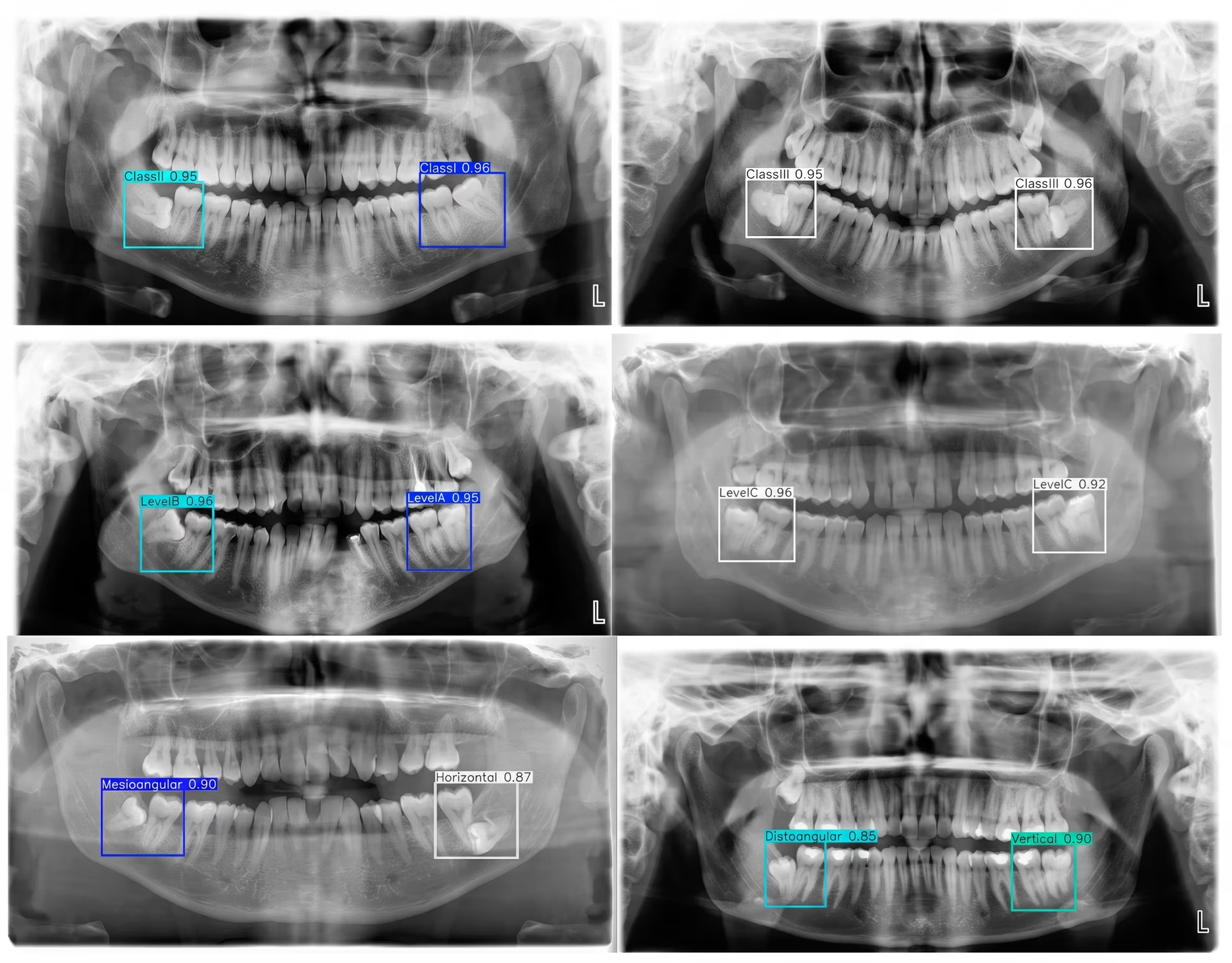
Fig 1. Using YOLO to analyze X-rays (Source)
Once fine-tuned, models like Ultralytics YOLO26 can act as a visual assistant within diagnostic workflows. In particular, its speed makes it useful in busy clinical environments where large volumes of imaging data must be reviewed quickly.
2. Viz.ai#
Viz.ai is an AI diagnostic tool that can analyze medical images. It is used to analyze medical imaging to identify conditions that require immediate clinical attention, such as stroke and vascular conditions.
This AI tool integrates directly into hospital systems, providing an alternative to manual image review processes. Viz.ai enables medical diagnostics teams to respond faster, where treatment timing directly impacts patient outcomes.
One of its key applications is the automatic detection of large vessel occlusions (LVOs) in scans. The AI system is also used to send instant alerts to the surgical team via mobile devices to support rapid intervention.
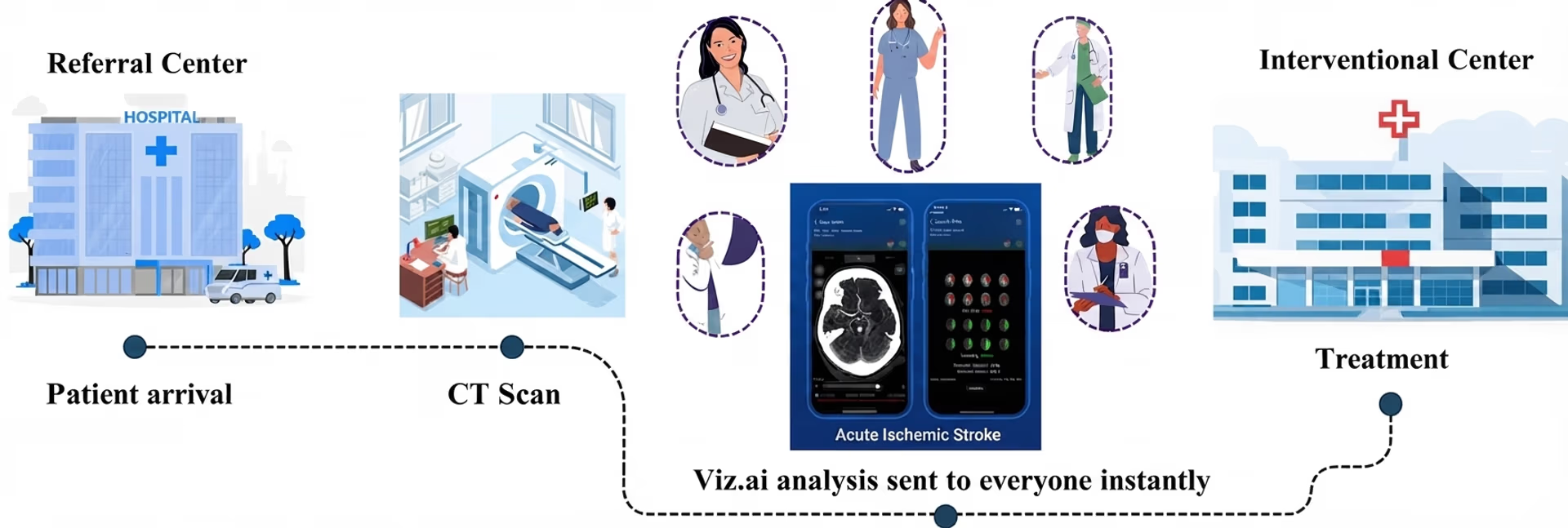
Fig 2. How Viz.ai can be used (Source)
3. PathAI#
Pathology is a crucial part of studying tissue samples and finding signs of disease. AI tools like PathAI use AI algorithms to analyze high-quality slides and spot subtle patterns.
Pathologists use this tool when reviewing biopsies. Some of its applications include counting cells and spotting cancer margins on slides. This makes the diagnostic process more efficient and helps medical professionals feel more confident in their findings.
4. Aidoc#
Aidoc is an AI tool designed primarily for radiology and imaging-based diagnostics, including cardiovascular and neurological conditions. Rather than analyzing written medical reports, Aidoc focuses on medical imaging data to help surface the most urgent and clinically significant findings.
The tool functions as a continuous, background safety monitor for medical imaging workflows. It automatically analyzes scans and flags high-risk cases so they can be prioritized for immediate review by clinicians. This helps reduce diagnostic delays and supports consistent patient care in busy hospital environments.
Aidoc integrates seamlessly into hospital systems and radiologists’ worklists, where it helps identify urgent conditions such as pulmonary embolisms and intracranial hemorrhages. By prioritizing emergency cases, Aidoc supports faster clinical response without disrupting existing workflows.
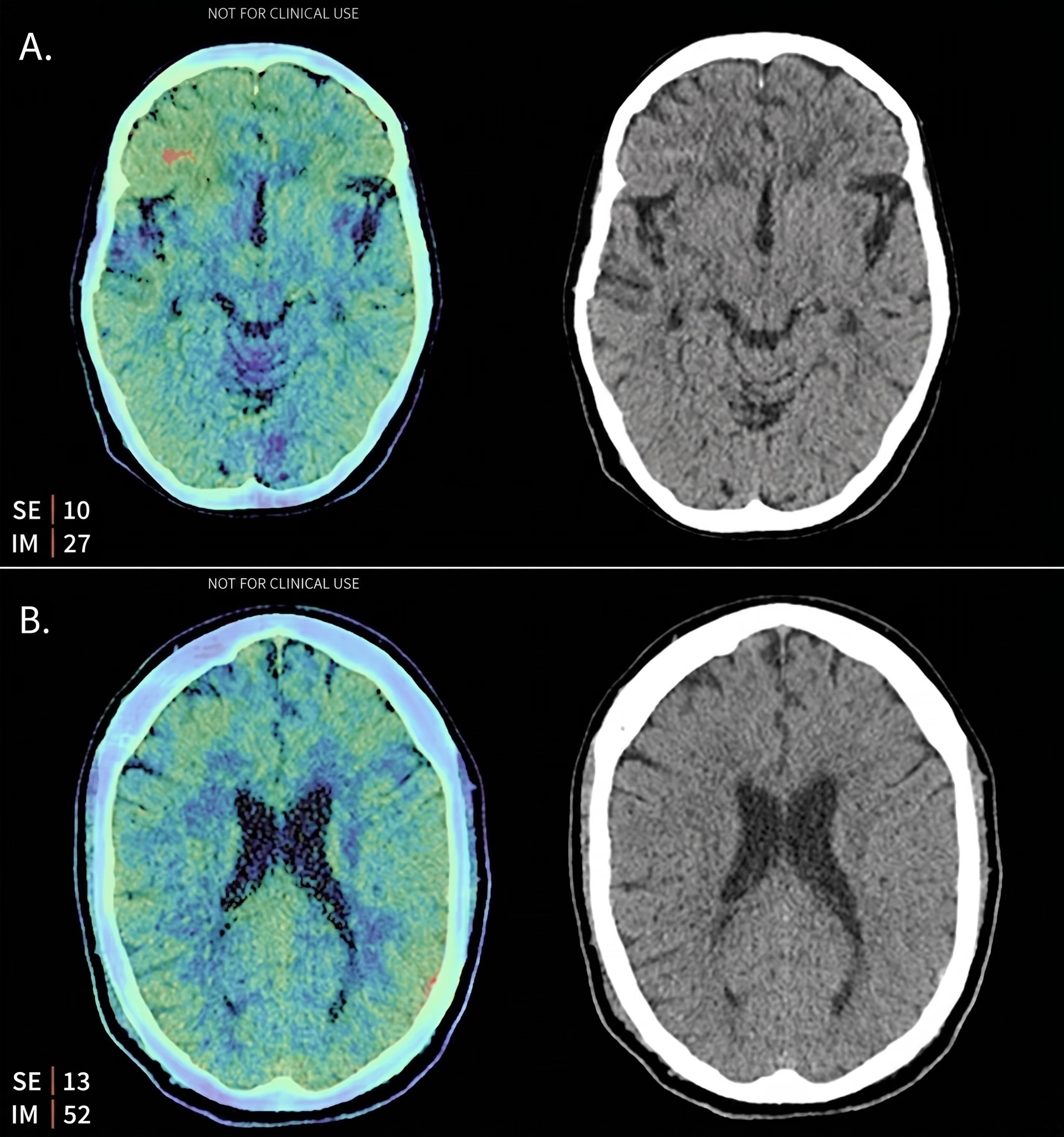
Fig 3. Intracranial hemorrhages detected by Aidoc. (Source)
5. Tempus#
Tempus is an AI-powered tool used in cancer care to help doctors make more informed treatment decisions. It analyzes medical records along with genetic and molecular data from patients.
The platform brings together information such as patient histories, test results, and genomic data to provide useful clinical insights. By looking at this information together, Tempus helps doctors better understand the disease and consider which treatments may be most appropriate for a specific patient.
Tempus is mainly used by oncologists to support treatment selection. It works by comparing a patient’s genetic profile with patterns found in large clinical and molecular datasets, helping guide personalized cancer care.
6. Cleerly#
Cleerly is an AI-assisted diagnostic tool used to analyze cardiac CT scans, specifically coronary CT angiography. It helps doctors see details in heart imaging that may be difficult to identify through standard visual review alone.
The tool analyzes CT scans to assess plaque buildup and narrowing in the coronary arteries, which are key indicators of heart disease. Using this analysis, Cleerly generates a detailed report that helps show a patient’s risk of coronary artery disease.
The evolving role of AI in healthcare#
The progress that AI is making in healthcare is also touching other areas, alongside medical imaging. While AI has become especially impactful for analyzing medical images more efficiently and consistently, newer applications are expanding its role across the broader diagnostic workflow.
Today, AI systems can support automated analysis, case prioritization, and clinical decision support, helping clinicians make faster, more informed decisions while keeping medical imaging at the core of diagnostic care. A well-known example of this broader progress in medical AI is AlphaFold, developed by Google DeepMind.
While AlphaFold isn’t used directly in clinical diagnostics, it demonstrates how AI can analyze complex biomedical data to accurately predict the three-dimensional structure of proteins, an achievement that has significantly accelerated biological research and drug discovery. Such advancements help lay the scientific groundwork for new diagnostic tests and targeted therapies.

Fig 4. Predicting a protein's 3D structure using AlphaFold (Source)
Key takeaways#
AI is rapidly redefining healthcare diagnostics by improving speed, accuracy, and efficiency across clinical workflows. From medical imaging and pathology to personalized treatment planning, AI tools help clinicians make better-informed decisions while reducing manual workloads. As these technologies continue to evolve, they are set to play an increasingly important role in delivering timely, data-driven, and patient-centered care.
Join our community and check out our GitHub repository to read more about AI. Explore our solutions pages to learn about applications of AI in manufacturing and computer vision in logistics. Discover our licensing options and start building vision AI models.








