Wildlife detection for your backyard: Powered by vision AI
Discover how vision AI improves wildlife detection for your backyard, helping protect plants, pets, and people through intelligent visual analysis.
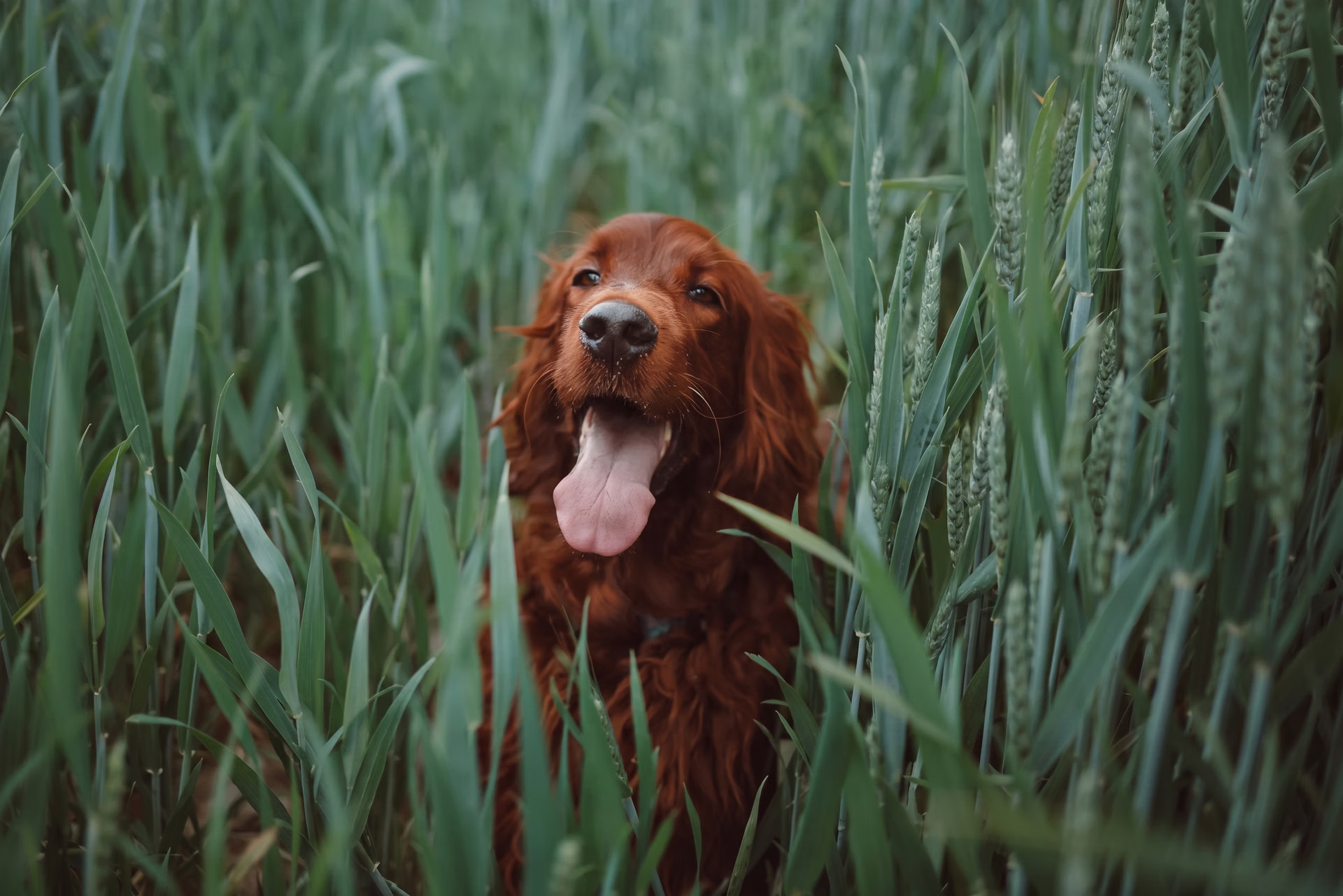
As cities expand and natural habitats shrink, wildlife is showing up more often in residential backyards. Animals searching for food, water, or shelter are being drawn to outdoor spaces around homes.
For homeowners, this can mean damaged plants, disturbed soil, or unexpected visits that raise concerns about pets, children, and garden health. In addition to this, it is often unclear which animals are visiting or how frequently this activity occurs.
Many homeowners use trail cameras or basic wildlife cameras to monitor their yards. While these devices can capture images and videos, they don't provide much insight into what is really happening within the field of view.
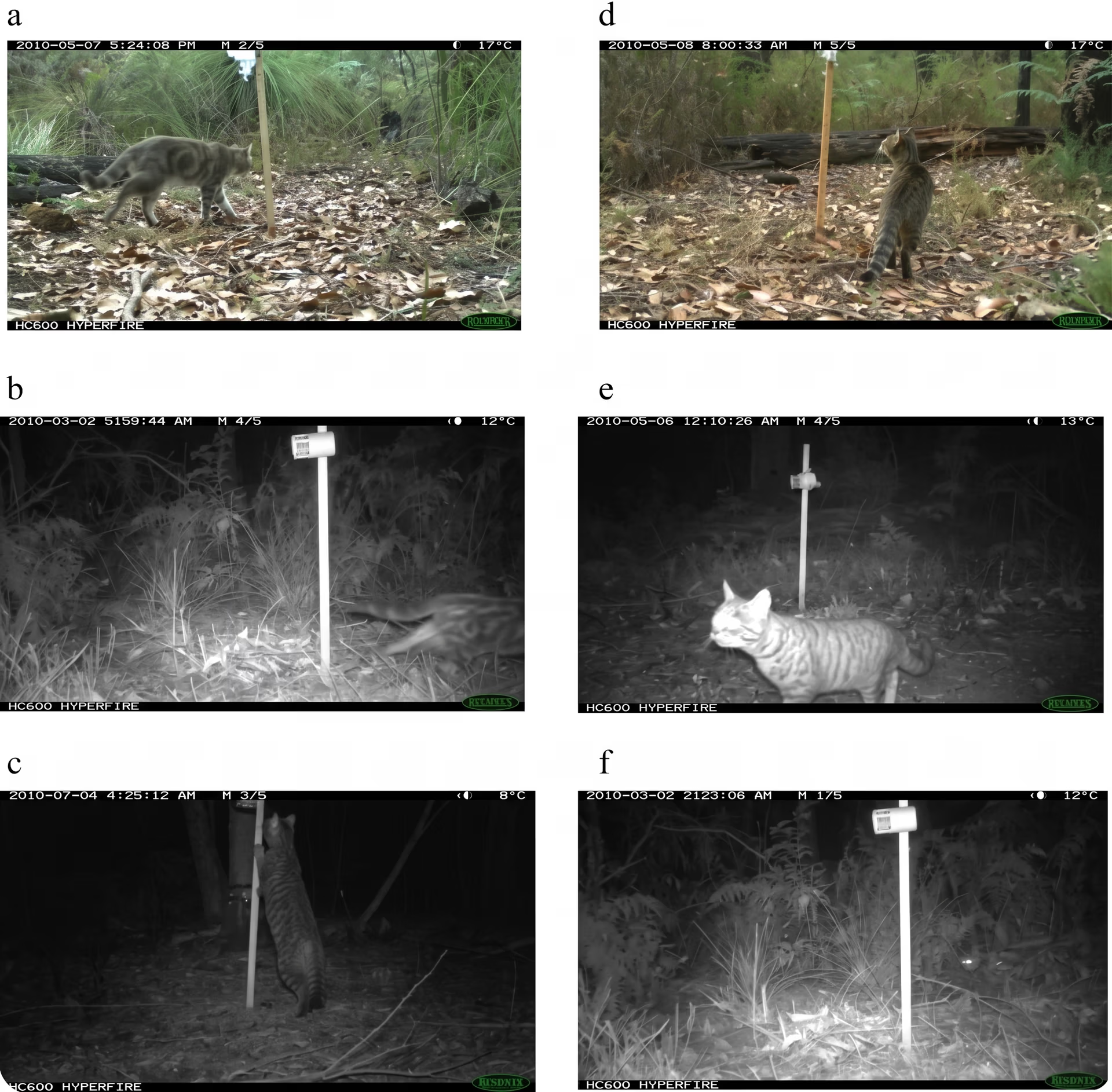
Fig 1. Images of a feral cat captured using trail cams (Source)
Most systems rely on simple motion detection or motion-activated sensors, which are easily triggered by wind, shadows, rain, or pets. At the same time, smaller or nocturnal animals may go unnoticed until signs of damage appear, making these systems unreliable for everyday monitoring.
Fortunately, vision AI is changing how backyard wildlife monitoring works. Also known as computer vision, it is a type of artificial intelligence that allows systems to see and understand images and video rather than simply reacting to movement. Rather than sending an alert every time something moves, it looks at what is actually happening in an image or video.
In a backyard, this means the system can recognize animals while ignoring things like moving leaves, shadows, or rain. It can also tell the difference between wildlife, pets, and people, which helps reduce false alerts.
With this clearer understanding, homeowners can get a better sense of what is happening in their yard. Instead of noticing damage after it occurs, they can see which animals are visiting, how often they appear, and take action as needed.
In this article, we'll take a look at how vision AI supports wildlife detection in backyards. Let's get started!
The need for vision AI-driven backyard wildlife monitoring#
Before we dive into how vision AI can be used for wildlife detection in your backyard, let’s explore why traditional backyard monitoring systems often fall short.
Most backyard cameras and sensors were designed to detect motion, not to understand what is actually happening in an outdoor space. However, backyards are dynamic environments that change throughout the day and across seasons.
Lighting conditions shift from morning to night, weather conditions can introduce rain, fog, or shadows, and plants that move constantly with the wind. Motion sensors can end up treating all of this activity the same, responding to any movement they detect without context.
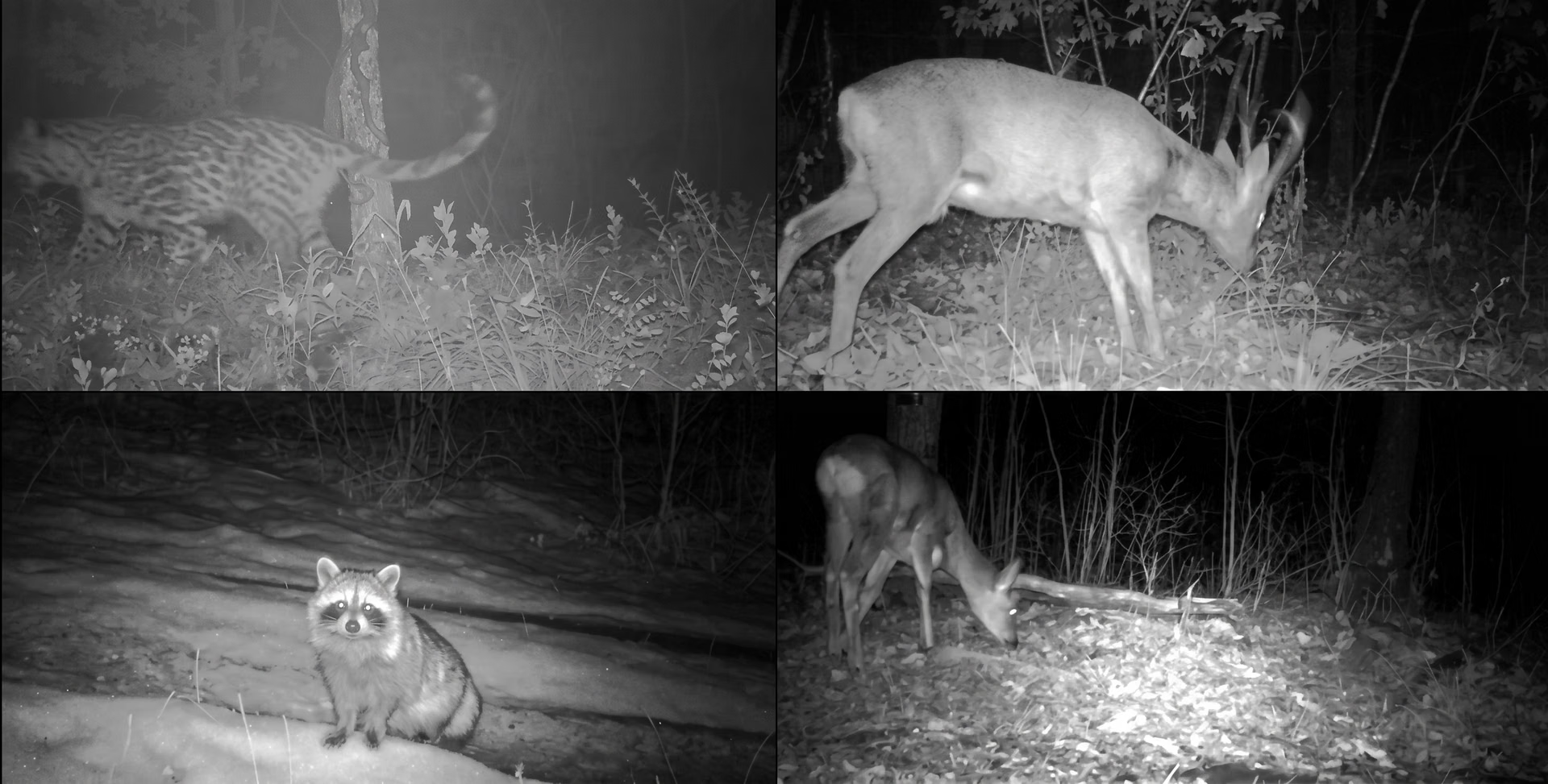
Fig 2. Identifying animals in images taken at night can be challenging. (Source)
Power limitations add another challenge. Many outdoor cameras rely on batteries or small solar panels to operate continuously. Frequent false alerts triggered by irrelevant movement cause these systems to wake up and record unnecessarily, draining power and reducing reliability.
Even solar-powered setups can struggle to keep up when cameras are constantly triggered by non-urgent events. As a result, homeowners are often flooded with alerts caused by blowing leaves, shifting shadows, passing rain, or a family pet moving through the yard.
Over time, these false notifications make it difficult to trust alerts or identify when real wildlife activity is taking place. Instead of providing clarity, traditional systems and trail cams can create confusion, missed activity, and shorter operating life before recharging or maintenance is needed.
What is a vision AI-powered backyard monitoring system?#
A vision AI–powered backyard monitoring system uses cameras and artificial intelligence to understand what is happening in an outdoor space. Instead of simply recording video footage or reacting to motion, it analyzes images and video to identify animals, people, or pets as they appear.
At the heart of these systems are computer vision models trained to recognize visual patterns by performing core vision tasks such as object detection, image classification, and instance segmentation in real time. Specifically, models such as Ultralytics YOLO26 can be custom-trained to identify animals moving through a yard.

Fig 3. A look at using image classification to classify a Persian cat (Source)
In other words, custom training enables the system to learn what local wildlife looks like in that specific environment by training the model on a curated dataset of images and videos captured under similar backyard conditions. These datasets include labeled examples of animals, background elements, lighting variations, and camera angles, which help the model adapt to local species, seasonal changes, and unique visual patterns.
For example, if a deer enters the backyard at night, a security camera equipped with infrared night vision can capture the scene, and a vision AI model can still identify the animal despite low-light conditions. Instead of triggering an alert for every movement, the system focuses on what is actually present in a clear image.
Because the system understands visual context, it can ignore irrelevant motion like swaying plants, shadows, or rain. Alerts are triggered only when meaningful activity occurs, which helps reduce false notifications and makes backyard monitoring more reliable both during the day and at night.
Core vision tasks that improve backyard monitoring#
Here’s a glimpse of how core computer vision tasks make backyard wildlife monitoring more effective and reliable:
- Object detection: This is a computer vision task that identifies and locates objects within images or video. In a backyard, it can be used to spot critters as they enter the space and focus on meaningful activity instead of reacting to every movement.
- Image classification: It can be used to determine what an image represents by assigning it a category or label. For backyard monitoring, it helps identify the type of animal present and distinguish wildlife from pets or people.
- Instance segmentation: This task separates individual objects from the background at a detailed pixel level. It makes it possible to clearly outline animals even in cluttered scenes with plants, fences, or overlapping objects.
- Object tracking: It can follow objects across consecutive video frames over time. In a backyard setting, it can be used to track movement paths, identify entry points, and observe recurring behavior patterns.
Vision AI applications related to monitoring wildlife#
Next, let’s walk through how vision AI can be used for wildlife monitoring in backyard environments.
Vision AI-powered doorstep and entryway cameras#
Vision AI is becoming more common in doorstep and entryway security cameras, where movement happens frequently, and alerts need to be precise. These cameras are typically installed near front doors, driveways, or walkways and monitor short, high-traffic areas throughout the day.
By analyzing visual details such as shape, size, and movement patterns, such systems can tell whether activity involves a person approaching the door, an animal passing through, or something insignificant like shifting shadows or rain. This means alerts can be triggered only when the activity is relevant.
For example, if a raccoon, skunk, or stray animal passes through a driveway late at night, the camera can recognize that an animal briefly entered the scene and record that moment. Instead of generating repeated alerts from unrelated motion, the system highlights the event that actually matters.
Using vision AI systems to prevent leopard attacks#
Vision AI is also being used in real-world situations where wildlife monitoring plays a critical role in public safety. In India, encounters between leopards and people are a known concern in regions where expanding towns are located close to forested areas.
In the western state of Maharashtra, forest authorities have introduced AI-powered camera systems near villages and residential zones to monitor leopard movement. These cameras analyze live video feeds using computer vision to identify leopards as they appear. When a leopard enters a monitored area, alerts are sent to local officials and nearby residents so they can take precautions early.
It’s a good example of how vision AI can turn animal monitoring into a proactive safety measure rather than passive observation. Early and accurate animal detection helps people respond sooner, whether the goal is preventing dangerous encounters or managing wildlife activity around homes and backyards.
Monitoring bird feeders and common feeding areas#
Bird feeders and feeding areas are some of the most active spots in a backyard. While they attract birds, they also draw squirrels, rodents, raccoons, and other wildlife, often creating constant motion throughout the day and night.
Traditional cameras placed near these areas tend to trigger repeatedly, filling storage and draining battery life without providing useful insights. Vision AI makes monitoring these locations more practical by focusing on what is actually visiting the feeder rather than reacting to every movement.
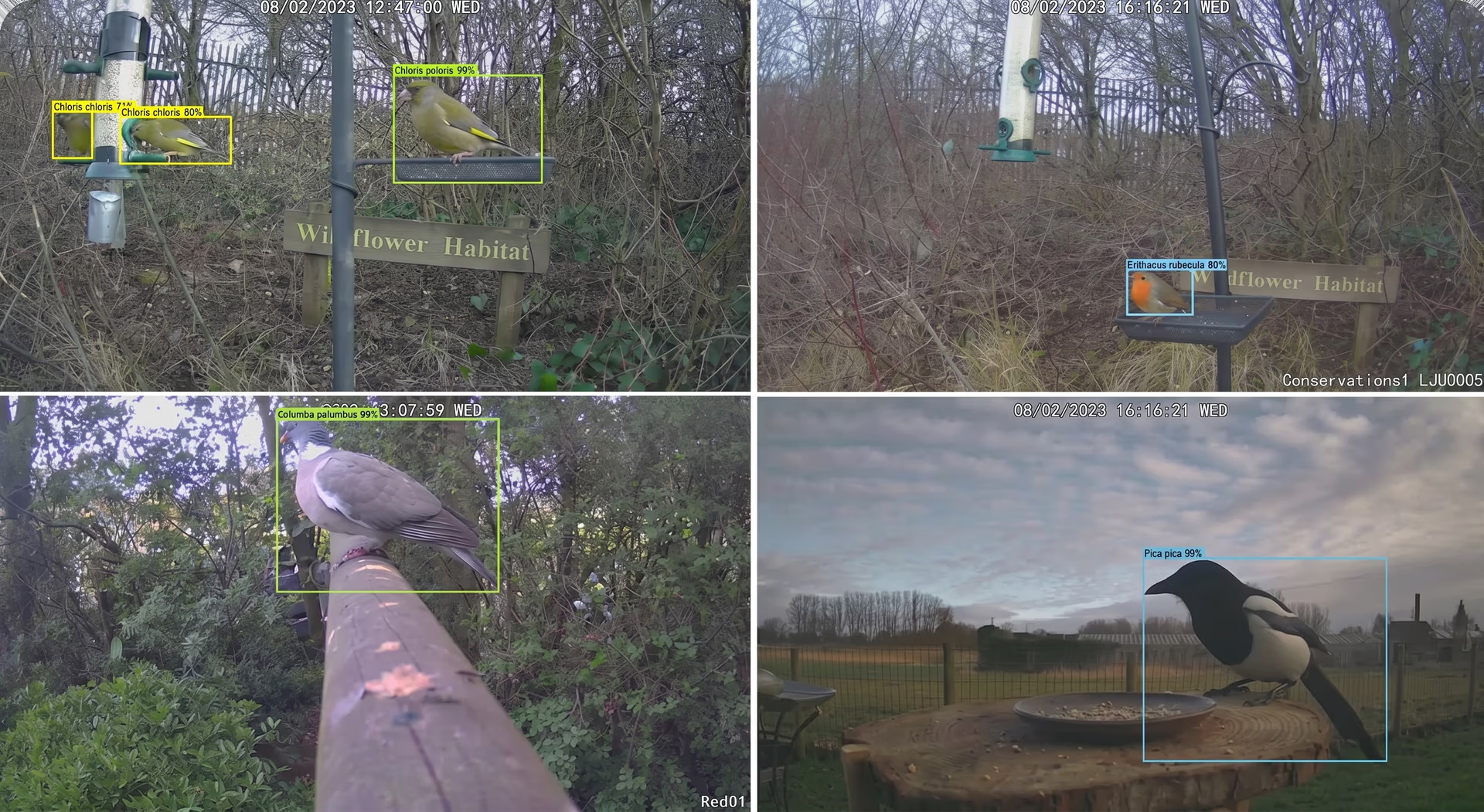
Fig 4. Examples of detecting birds using computer vision (Source)
Instead of recording nonstop activity, the system can identify whether the visitor is a bird, a squirrel, or a larger animal and trigger alerts only when needed. This helps homeowners understand which animals are using feeding areas and how often they appear.
What to consider when using vision AI in your backyard#
Vision AI can be a powerful tool for monitoring wildlife, but its effectiveness depends on more than just the software. Outdoor environments are often unpredictable, and choosing the right camera setup, power source, and connectivity makes a big difference in how well such systems perform over time.
Here are some factors to consider when setting up vision AI solutions in your backyard:
- Camera placement and detection range: Cameras should be positioned to cover key areas such as entry points, fences, and feeding zones without capturing excessive background movement. Selecting an appropriate detection range helps ensure animals are identified early while avoiding alerts triggered by distant or irrelevant motion.
- Lighting and night vision support: Since many animals are active after dark, reliable night vision capabilities are important. A night vision camera with infrared LEDs allows monitoring in low-light conditions, while low-glow or no-glow options help avoid startling animals or drawing attention to the camera.
- Trigger speed and video quality: Fast trigger speed helps capture animals that appear briefly and move quickly through the yard. Cameras that support HD video provide clearer images, which improves how accurately vision AI models can identify animals.
- Weather resistance and durability: Outdoor cameras should be weatherproof and built to handle rain, heat, cold, and dust. Consistent performance across changing weather conditions is essential for long-term use.
- Power and battery considerations: Depending on where cameras are installed, they may rely on a rechargeable battery or solar-assisted power. Systems that reduce unnecessary recordings help conserve battery life and require less frequent maintenance.
- Compatibility with existing camera setups: Vision AI can work with a range of devices, including traditional game cameras, hunting camera setups, and modern home security systems. Choosing compatible hardware makes it easier to integrate wildlife detection without replacing everything at once.
Pros and cons of using vision AI in your backyard#
Here are some of the main advantages of using vision AI for backyard monitoring:
- Supports long-term insights: Activity patterns over time can reveal where animals enter, how often they visit, and which areas are most affected.
- Compatible with modern camera setups: Vision AI can work with high-resolution cameras, wide-angle lenses, and weather-resistant outdoor hardware.
- Scalable and customizable: Detection zones, alert rules, and model behavior can be adapted based on garden size, layout, and local wildlife patterns.
While vision AI offers clear benefits, here are some limitations to keep in mind:
- Requires proper camera placement: Poor angles, occlusion from plants, or incorrect mounting height can reduce detection accuracy.
- Dependence on lighting and weather conditions: Performance may drop during heavy rain, fog, snow, or extreme lighting conditions, especially in outdoor environments.
- Privacy considerations: Outdoor cameras that capture shared spaces may raise privacy concerns and require thoughtful placement and configuration.
Key takeaways#
Vision AI brings a smarter approach to wildlife detection for your backyard. It moves beyond basic motion alerts and helps systems understand what is actually happening on camera. By identifying animals accurately, reducing false notifications, and working across changing light and weather conditions, it gives homeowners clearer insight and more control over their outdoor spaces.
Curious about vision AI? Explore our GitHub repository and connect with our community. Learn more about real-world applications like AI in manufacturing and vision AI in agriculture. Check out our licensing options and get started on a computer vision project today!








