Computer vision is powering smarter birdwatching binoculars
Explore how computer vision can be integrated into birdwatching binoculars for real-time bird detection, tracking, and accurate species identification in the field.

Birdwatching has been a great outdoor activity for generations. In fact, a survey in 2022 found that about 96 million people in the United States take part in birding.
Spotting birds is often the easy part. The real challenge is identifying them accurately from a distance, especially when they are moving fast, partially hidden by foliage, or visible only for a few seconds.
That’s why compact binoculars are so essential to birdwatching. They bring distant birds into clear view, helping birders catch shape, color patterns, and behavior that would be easy to miss with the naked eye. Most birders prefer 10x42 binoculars or 8x42 binoculars, meaning they magnify the view 8 or 10 times and use 42-mm objective lenses to keep the image bright and clear at range.
But even with great optics, birding still depends on quick human judgment. In the moment, it is easy to lose a bird as it darts through branches, miss a subtle field mark, or confuse similar-looking species at long range.
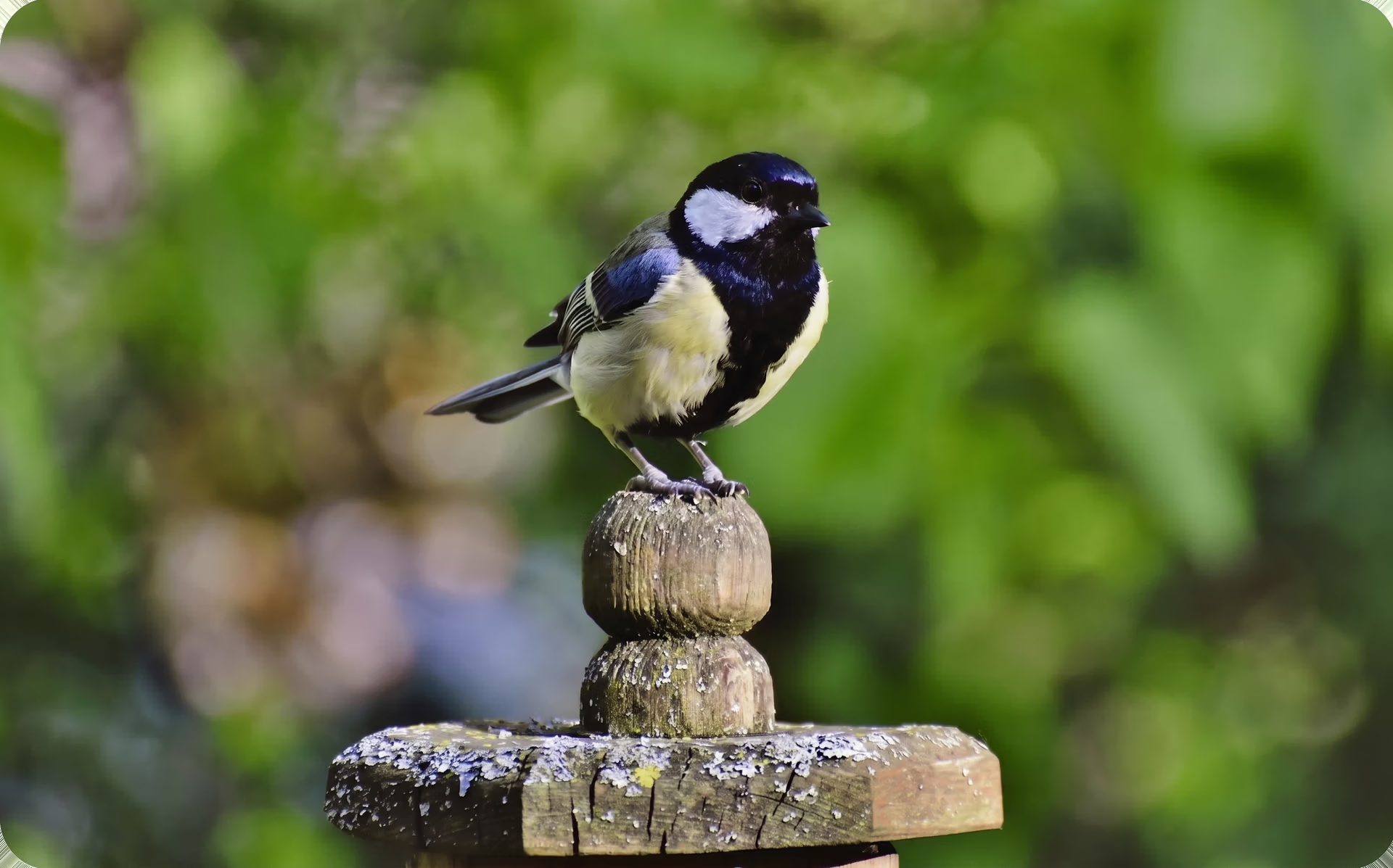
Fig 1. Birdwatching is a key part of ornithology, the study of birds. (Source)
Thanks to recent advancements, binoculars are getting a major upgrade. Smart birdwatching binoculars now pair high-quality optics with artificial intelligence (AI), giving birders real-time support in the field.
Instead of relying only on quick guesses, these devices can detect birds as soon as they enter the frame, track their movement smoothly, and assist with species identification on the spot. The key technology driving this shift is computer vision, which is a branch of AI that handles the processing of visual data.
Vision AI models like Ultralytics YOLO11 and the upcoming Ultralytics YOLO26 are built to support real-time recognition on edge devices. This means they can be integrated into smart binoculars to detect, track, and identify birds instantly on the device, without relying on a phone or internet connection.
In this article, we'll explore how vision AI-powered binoculars work, the computer vision tasks that enable them, and the real-world impact these tools are already having on birdwatching. Let's get started!
The challenges of traditional birdwatching#
Birding looks simple from the outside. You lift your binoculars, find a bird, and enjoy the view. But anyone who has spent time in the field knows the truth. The hardest part is not spotting a bird; it is keeping up with it long enough to identify it correctly.
Birds rarely sit still. They hop between branches, vanish into cover, or flash past for just a second. Combine fast movement with a busy, shadowed backdrop, and accurate identification gets much harder, especially in dense habitats like the Amazon rainforest, where layers of foliage and low light can hide key details.
Think about a classic example. Up close, telling a crow from a raven feels easy. At a longer distance, with only a silhouette slipping through a canopy, the differences blur fast. In moments like these, even a high-quality pair of binoculars can struggle to give you a steady, unobstructed look.
Part of the magic of birding is chasing those details. Every outing is a chance to notice patterns of behavior, flight style, and tiny markings that make each species unique, especially during migration.
However, human vision has limits. Without advanced tools, you can't see everything that is happening. A hummingbird, for instance, beats its wings so quickly that the motion is basically invisible to the naked eye.
Good optics tend to help, and this is true for both beginners and experienced birders. Many birders prefer 8x or 10x binoculars because the magnification delivers a steady, bright image, and a wider field of view (FOV) makes it easier to stay on a moving bird.
But ultimately, traditional binoculars have limits in real-world conditions. Early morning low light, dense vegetation, and quick, unpredictable flight can obscure details. The difference between what you can see and what information you need to confirm the identity of a bird species is why more birders are exploring smarter, more dependable tools for identification in the field.
Understanding how binoculars work#
Before taking a closer look at how Vision AI is being used in smart binoculars, let's revisit the fundamentals of traditional optics. They determine how clearly birders can see a subject and how comfortably they can observe it for longer periods in the field.
Most birders start by looking at two key specifications: magnification and objective lens size. These values influence image brightness and the field of view. For instance, binoculars with 8x magnification are widely preferred for their stability and wide field of view, making it easier to follow fast-moving birds. Meanwhile, 10× models bring distant subjects closer, but the narrower field of view can make tracking more challenging and uncomfortable to view.
Interestingly, comfort matters just as much as crystal-clear clarity. Eye relief and adjustable eyecups and eyepieces help eyeglass wearers maintain a full, strain-free image, which becomes essential during long mornings in the field.
The prism system within the binoculars or binos also shapes both the binocular’s form and visual performance. This system in the binoculars flips and corrects the image so you see it right-side up and not reversed.
Also, there are different types of prism designs used in binoculars, each with its own advantages in size, alignment, and viewing experience. For instance, roof prisms offer a compact, streamlined build, while Porro prisms provide a more pronounced sense of depth and image richness.
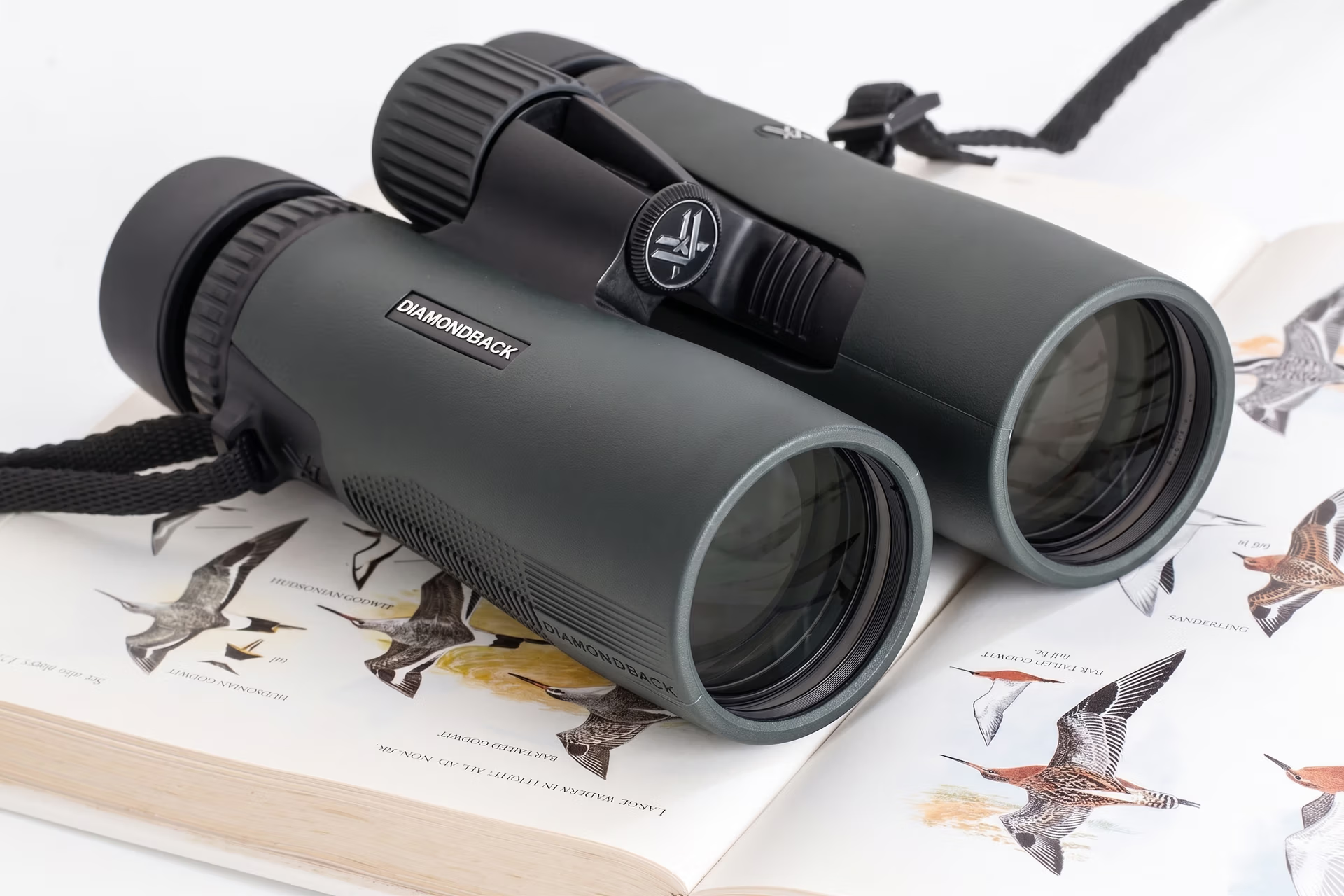
Fig 2. Roof prism binos are one of the best binoculars for birdwatching. (Source)
Traditionally, birders have compared binocular reviews based on specs, optics, build quality, warranty, and price range. Today, though, there’s a new layer to consider. AI smart binoculars build on these foundations and add computer vision capabilities that can detect, track, and help identify species in real time. This brings a powerful upgrade to the classic birdwatching toolkit.
The need for AI-powered birdwatching#
Next, let’s take a closer look at the growing role of AI in birding and how it is becoming increasingly useful for birders.
Traditional binoculars show you only what your eyes can pick out. AI-powered binoculars go further by using computer vision to interpret the scene, analyzing motion, patterns, and subtle visual cues that are easy to miss in the field.
Computer vision models such as Ultralytics YOLO11 and Ultralytics YOLO26 can detect, classify, and track birds in real time. This leads to faster, more confident birding, making it easier to separate similar-looking species, notice behavioral cues, and confirm sightings with higher accuracy.
When these models run on the edge and are integrated into binoculars, all processing happens directly on the device. That offline capability is key because birding often takes place in forests, wetlands, and other remote habitats where internet access is weak or nonexistent. On-device detection and tracking keep working smoothly wherever you are.
This shift is also showing up in the market. For instance, the global smart binoculars market was valued at around $1.2 billion in 2024 and is projected to reach about $2.6 billion by 2034.
How vision AI can be used to analyze birds#
Bird detection with Vision AI depends on a set of computer vision tasks that help the system understand what is appearing in a frame. In particular, computer vision models such as Ultralytics YOLO11 and YOLO26 support multiple vision tasks, including object detection, image classification, and real-time object tracking. Each of these tasks plays a crucial role in interpreting what appears in wildlife.
For instance, object detection forms the foundation by pinpointing where a bird is in each frame, whether it is perched on a branch, flying across the canopy, or partially hidden behind foliage. Image classification can then be used to analyze the detected bird itself, focusing on visual traits like plumage color, markings, shape, and posture, and map those cues to the most likely species the model has been trained to recognize.
Similarly, object tracking follows the bird’s movement from frame to frame, keeping the detection consistent over time. This is especially useful for fast-moving species like warblers or hummingbirds, helping the system stay on the same bird even if it moves rapidly.
These computer vision tasks can work together to help a vision-enabled birdwatching system find birds in images and videos, understand their visual traits, and stay aware of how they move over time. Another crucial factor in how vision AI models perform is the quality and relevance of the data they are trained on. Large, well-labeled bird datasets can teach AI models what different species look like across lighting, angles, distances, and habitats.
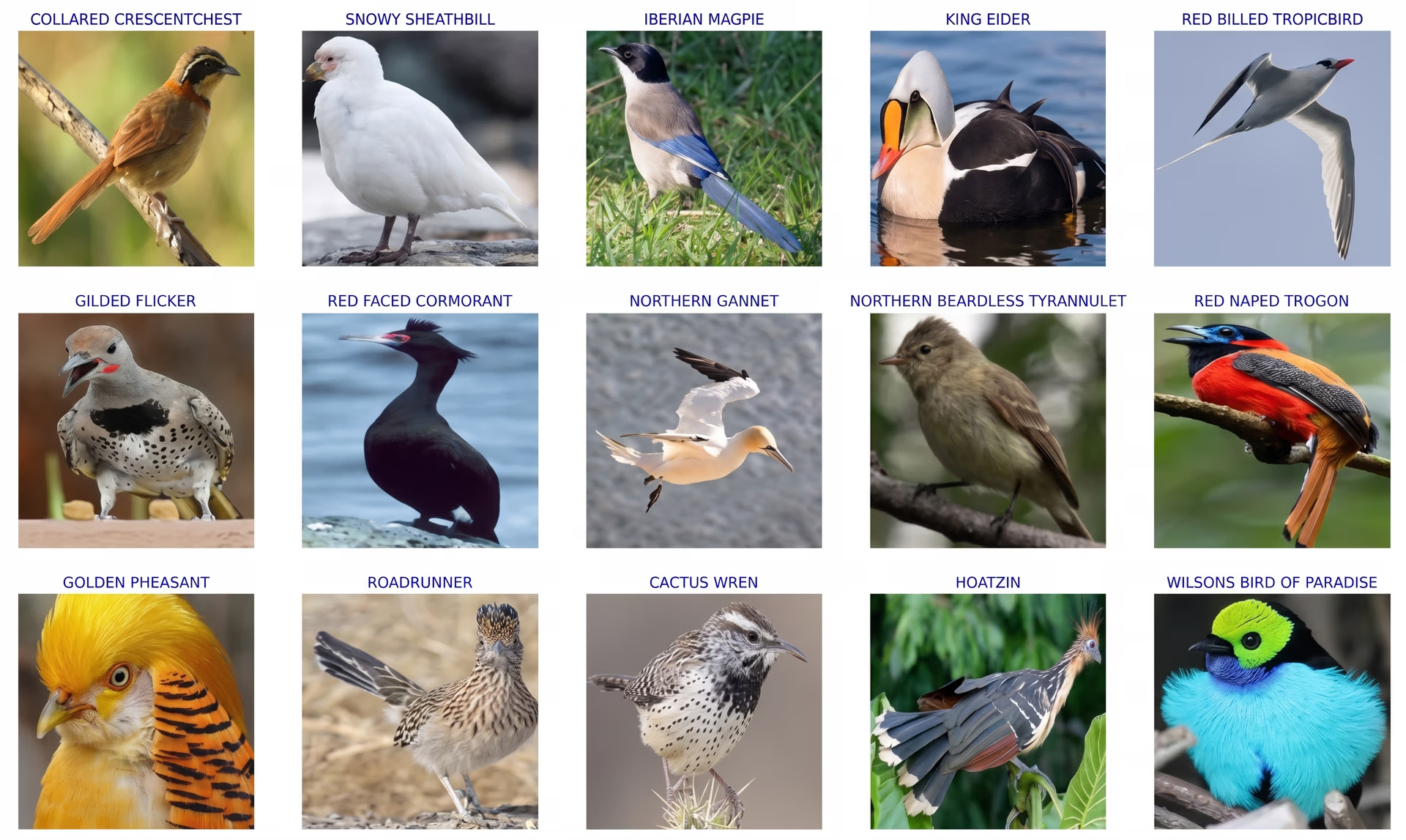
Fig 3. A glimpse of a dataset of different bird species. (Source)
Using vision AI to monitor birds in wetlands#
An interesting example of how computer vision can be used for bird detection comes from wetland monitoring. Wetlands are some of the most challenging environments for bird surveys because they are visually dense and cluttered, with reeds, reflections, and overlapping vegetation that make spotting and identifying birds difficult. Manual surveys can take hours and still lead to missed sightings or misidentifications.
That is exactly where Vision AI can make a difference. When computer vision models are integrated into binoculars or field cameras, they can automatically detect, classify, and track birds even in complex scenes. Each sighting is processed in real time, making it possible for researchers to capture patterns that are easy to overlook during manual observation.
Researchers recently demonstrated this using data collected at Dongting Lake in China. They developed Birds-YOLO, a bird detection model based on Ultralytics YOLO11. Trained on real-world wetland images spanning 47 local bird species, the system was built to handle small targets, heavy background clutter, and frequent occlusion.
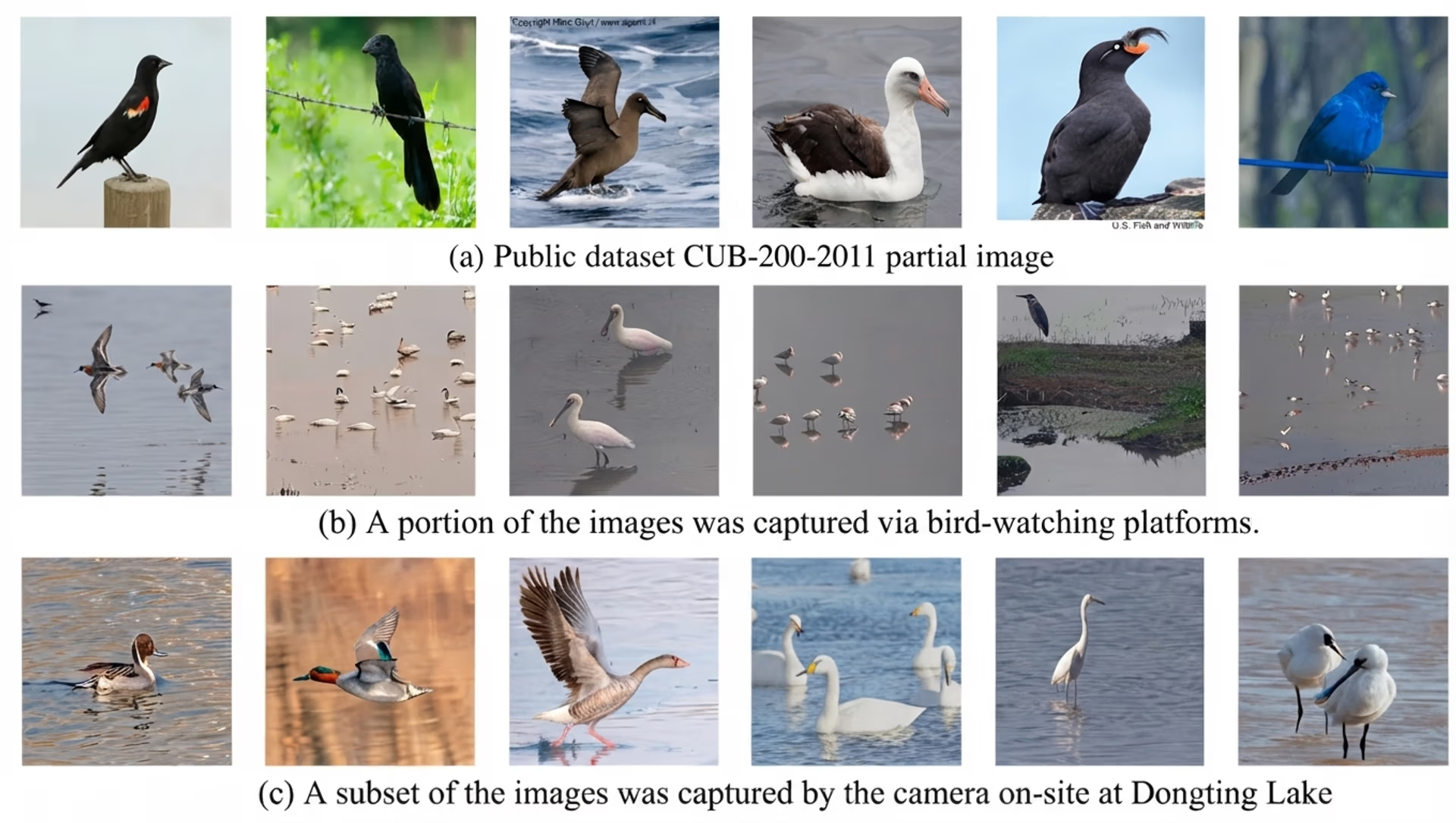
Fig 4. Images from the dataset used to train Birds-YOLO. (Source)
A look at smart birdwatching binoculars#
Now that you have seen how vision AI can help monitor and analyze birds, let’s look at how this technology is being integrated into smart binoculars.
Tracking elusive birds in the wild using AI#
Spotting rare or fast-moving bird species can be tricky. But, AI-powered smart binoculars can help overcome these limitations by combining high-quality optics with vision AI. These high-end devices can automatically detect birds, lock onto moving subjects, track their flight paths, and assist with species identification by analyzing visual patterns, shapes, and contextual data.
For example, Swarovski Optik’s AX Visio smart binoculars integrate AI directly into the viewing workflow through a built-in camera, onboard neural processing, and location sensors. When a birder spots something, the binoculars capture an image through the internal camera, then run an object recognition model on the device to analyze visual cues such as size, plumage color, shape, and posture.
At the same time, the built-in GPS helps narrow down likely species based on where you are, improving identification accuracy in the field. Once the system finds a match, the species name appears in the viewfinder, and the binoculars can also save 13 MP photos or 1080p video that sync to the Swarovski Outdoor app. This combination of optics plus on-device AI processing is what makes the AX Visio a clear example of how vision AI is now being embedded into binoculars for real-time birding support.
Pros and cons of AI-powered birdwatching#
Here are some advantages of using vision AI for smart birdwatching:
- Continuous monitoring: AI-powered systems can watch a bird feeder around the clock, capturing rare or fleeting bird visits that humans often miss.
- Behavioral insights: Beyond identification, these intelligent systems can log when and how often birds visit a feeder or habitat, track feeding duration and patterns, and map seasonal changes in activity over time, revealing deeper ecological trends.
- Data collection: Bird sightings can be automatically logged, organized, and timestamped, creating long-term datasets without any manual work.
- Other applications: The same vision AI features can support broader outdoor use as well, from identifying other wildlife during backpacking trips to assisting with stargazing by recognizing night sky objects, depending on how the system is trained and used.
While vision AI improves the birdwatching experience, here are a few practical limitations to keep in mind:
- Image quality constraints: Identification becomes less reliable when the visual data is low resolution, poorly lit, motion blurred, or partly blocked by vegetation, since these conditions can hide key details.
- Over-reliance risk: Birders may start trusting AI over their own observations, which can weaken skill-building and lead to missed learning moments.
- Privacy and ethics: Cameras and recording features can raise concerns in public or sensitive conservation areas, so adding clear recording indicators and quick disable controls, keeping data local by default, and following site rules and consent norms helps minimize privacy risks.
- Hardware cost: Integrating cameras, onboard AI processors, and larger batteries adds complexity and higher power demands, which pushes smart binoculars into a much higher price point than optical-only models.
Key takeaways#
AI-powered birdwatching is enhancing the birding experience. Smart binoculars combine traditional optics with vision AI, making it easier to track movement, recognize species, and collect accurate data. As adoption grows, these tools will likely play a larger role in conservation by enabling consistent, real-world monitoring across habitats.
Interested in bringing vision AI into your projects? Check out our licensing options and get started with computer vision today. Join our active community and discover innovations like AI in healthcare and Vision AI in robotics. Visit our GitHub repository to learn more.








