The ethical horizon of Artificial Intelligence
Mónica Villas on AI ethics at YOLO VISION 2023: bias, explainability, deepfakes, and how organizations can embed ethics into AI systems from the start.
 Nuvola Ladi3 min read
Listen to this article

At the YOLO VISION 2023 (YV23) event hosted at the Google for Startups Campus in Madrid, attendees saw a series of talks by professionals in the AI community on topics ranging from the origins of Ultralytics YOLOv8 to an exploration of the ethical challenges of Artificial Intelligence (AI) by Mónica Villas, an IT industry veteran with a background at IBM.
Unveiling ethical challenges#
With years of experience at IBM, she has seen firsthand how technology shapes businesses and industries. Her insights into the ethical challenges surrounding AI aim to shed light on critical considerations that are often overlooked in the rush towards technological advancement.
Navigating bias and explainability#
One of the central themes of Mónica’s talk was the ethical challenges posed by AI, including issues of bias, explainability, and the impact of technology on society. She discussed deepfakes, highlighting the need to carefully consider the ethical implications of how AI technology is used, particularly in generating realistic yet deceptive videos.
Bias in AI models and data was another key point of discussion. Mónica emphasized how bias can creep into AI systems through the data used to train them, as well as the parameters chosen to design the algorithms.
Explainability of AI models emerged as a critical issue, especially for high-risk decisions. Mónica underscored the importance of AI systems being explainable, particularly in scenarios where human lives are at stake.
She contrasted white box models like linear regression, which are more explainable, with black box models like neural networks, which present challenges in understanding their decision-making processes.
Promoting positive applications#
Despite the ethical challenges posed by AI, Mónica also highlighted its positive applications when developed and applied ethically. From climate change monitoring to medical research, AI has the potential to make significant contributions to society when wielded responsibly.
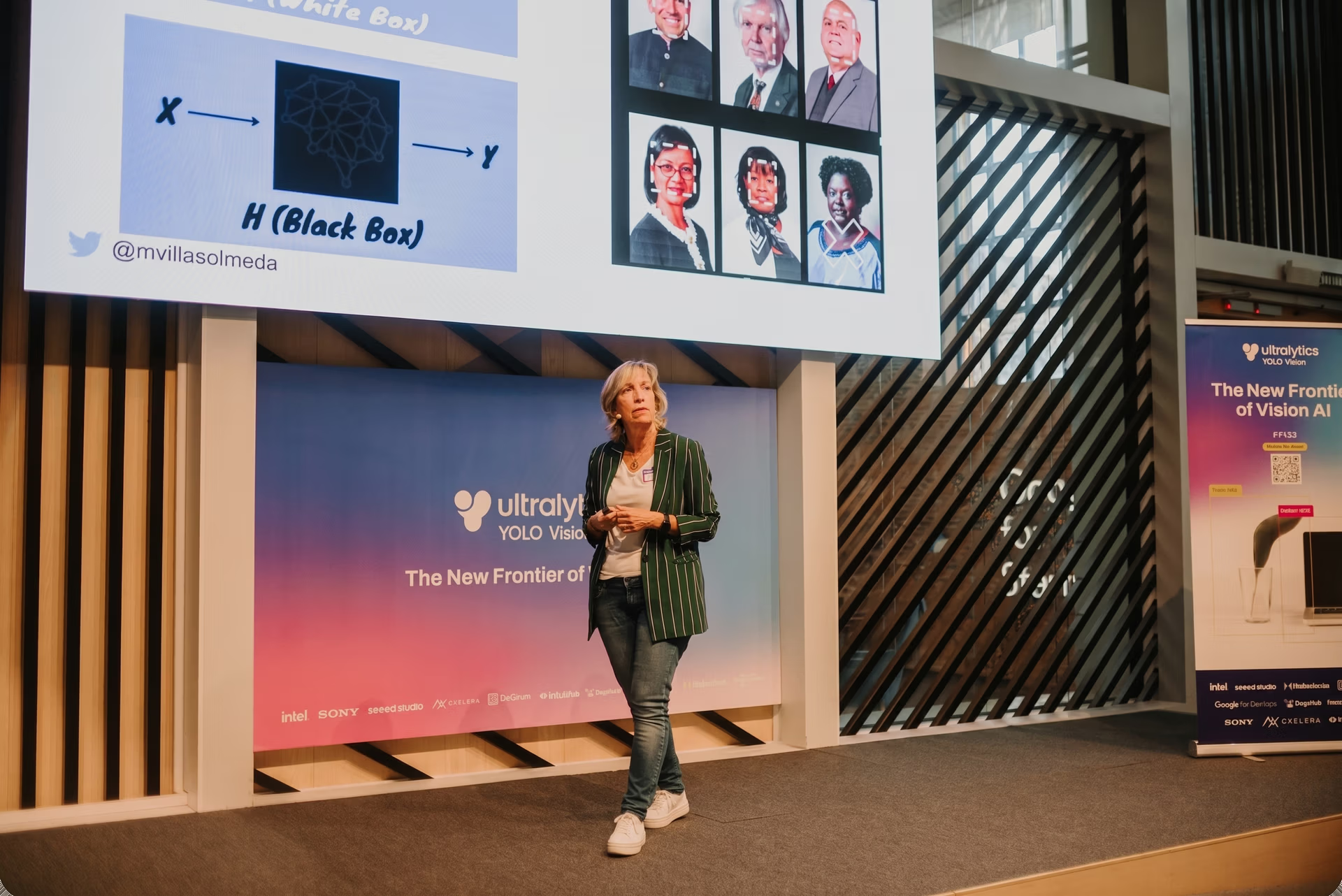
Fig 1. Mónica Villas presenting at YV23 at the Google for Startups Campus in Madrid.
Navigating AI ethics in industry#
Mónica’s talk also touched upon the growing importance of AI ethics for companies, noting that adherence to ethical principles can lead to higher customer satisfaction and Net Promoter Scores (NPS). She highlighted the work of organizations like OdiseIA, an NGO focused on the social impact of AI, in promoting ethical AI practices.
Operationalizing ethics#
Operationalizing AI ethics within organizations presents its own set of challenges, Mónica noted. While ethics principles may be easy to state, translating them into actionable practices within organizational settings requires concerted effort and commitment from all stakeholders involved.
Embedding ethics from design#
Mónica stressed the importance of embedding ethics considerations from the initial design phase of AI systems. By doing so, organizations can ensure that their AI solutions are not only technically robust but also ethically sound, contributing to a more responsible and sustainable AI landscape.
Wrapping up#
As Mónica Villas demonstrated in her talk, navigating the ethical horizon of artificial intelligence requires a nuanced understanding of its complexities and implications. With her insights as a guide, we can strive towards a future where AI serves as a force for good, enriching lives and driving positive change in society.
Interested in learning more? Watch the full AI ethics talk.
Written by
Digital Content Manager · Ultralytics
Comments
Ask a question, share your results, or help someone else.