Computer vision makes motion tracking more reliable
Learn how AI and computer vision make motion tracking smarter, faster, and more reliable across sports, robotics, mobile apps, and other real-world workflows.
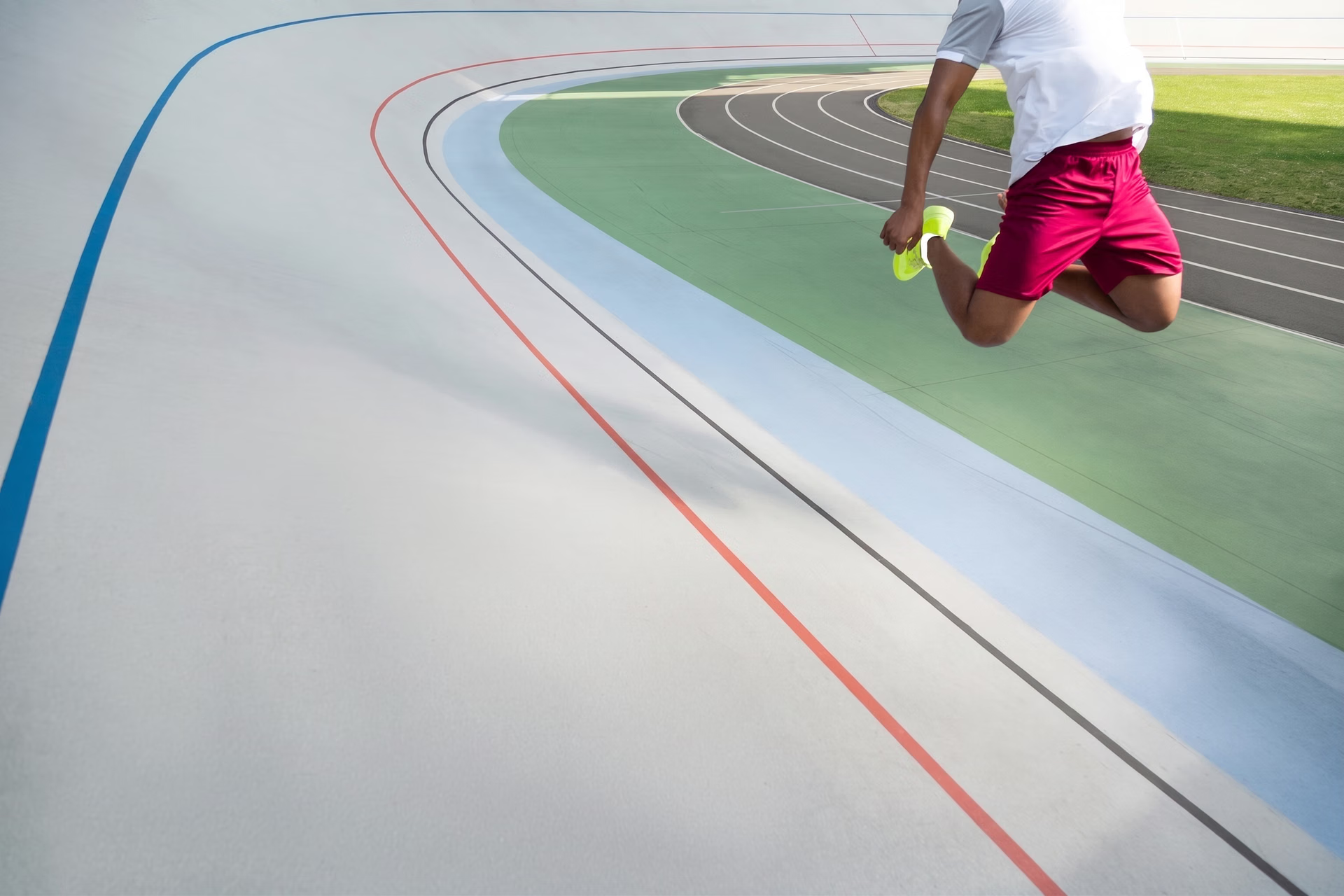
When you are watching a stage play and your favorite actor moves across the stage, your eyes can follow them with very little conscious effort. For humans, this kind of motion tracking feels natural. Your brain automatically connects what you see from one moment to the next, filling in gaps and maintaining a sense of continuity as the scene changes.
When it comes to machines, the same task is far more complex. A camera captures a video as a sequence of individual frames, and a system must repeatedly identify the same object step-by-step to estimate where it has moved, and decide whether it is still the one to follow.
This challenge is at the core of motion tracking. Motion tracking involves tracing an object through a video over time, and it plays an important role in areas such as sports analysis, robotics, and mobile applications.
Traditional motion and camera tracking often depend on manual setup, track points, and keyframes. It can work in simple scenes, but it quickly becomes slow and unreliable when motion is fast or partially blocked.
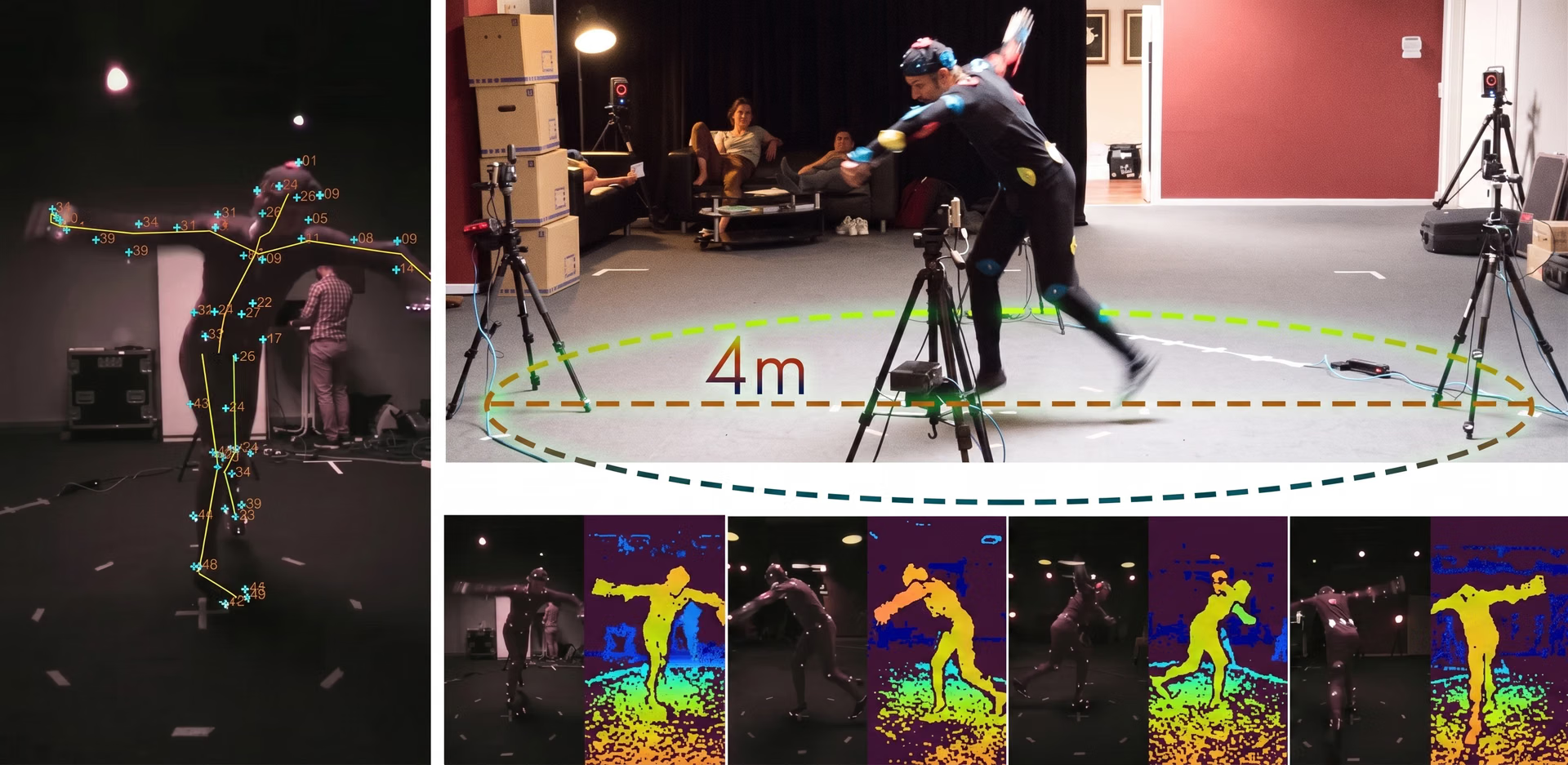
Fig 1. A look at a motion tracking system (Source)
Recent advances in computer vision make this much easier. Computer vision is a branch of AI that helps machines understand images and video, making motion tracking more accurate and less dependent on manual work. By detecting objects in each frame and keeping their identity consistent over time, these systems track movement more reliably in real-world conditions.
In this article, we'll explore how computer vision can make motion tracking more streamlined. Let's get started!
Traditional motion capture and tracking methods and their limitations#
Traditional motion tracking often requires careful manual setup, especially in video editing and VFX workflows, where the goal is to attach graphics, effects, or overlays to moving elements in the footage.
Many workflows start by placing track points on specific parts of a shot, and then the software follows them across frames to map the motion path. This is common in tools like After Effects, and similar workflows show up in Premiere Pro through features like mask tracking, where editors track a mask or region over time.
Match moving is another common method. It helps align digital elements with real camera movement so effects or graphics stay in place within a live shot. These approaches can work well for simpler scenes, but they often struggle when footage gets crowded or when objects move quickly.
Tracking can also fall apart when lighting changes or when subjects get partially blocked, which can cause drift or sudden jumps in the track. That slows the workflow and forces editors to redo sections of the shot. When objects change direction quickly, older motion trackers can struggle to keep up, making results inconsistent and harder to trust.
How computer vision transforms motion tracking#
Cutting-edge computer vision systems use AI models to follow moving objects through a video. Instead of relying on constant manual tweaks or fragile frame-by-frame tracking, the model learns what an object looks like and how it tends to move. This helps motion tracking stay stable even when scenes get busy, lighting changes, or objects briefly disappear.
For instance, computer vision models such as Ultralytics YOLO11 and the upcoming Ultralytics YOLO26 support object tracking by detecting objects in every frame. In simple terms, they identify what is in the frame and where it is by outputting bounding boxes and confidence scores for each detected object.
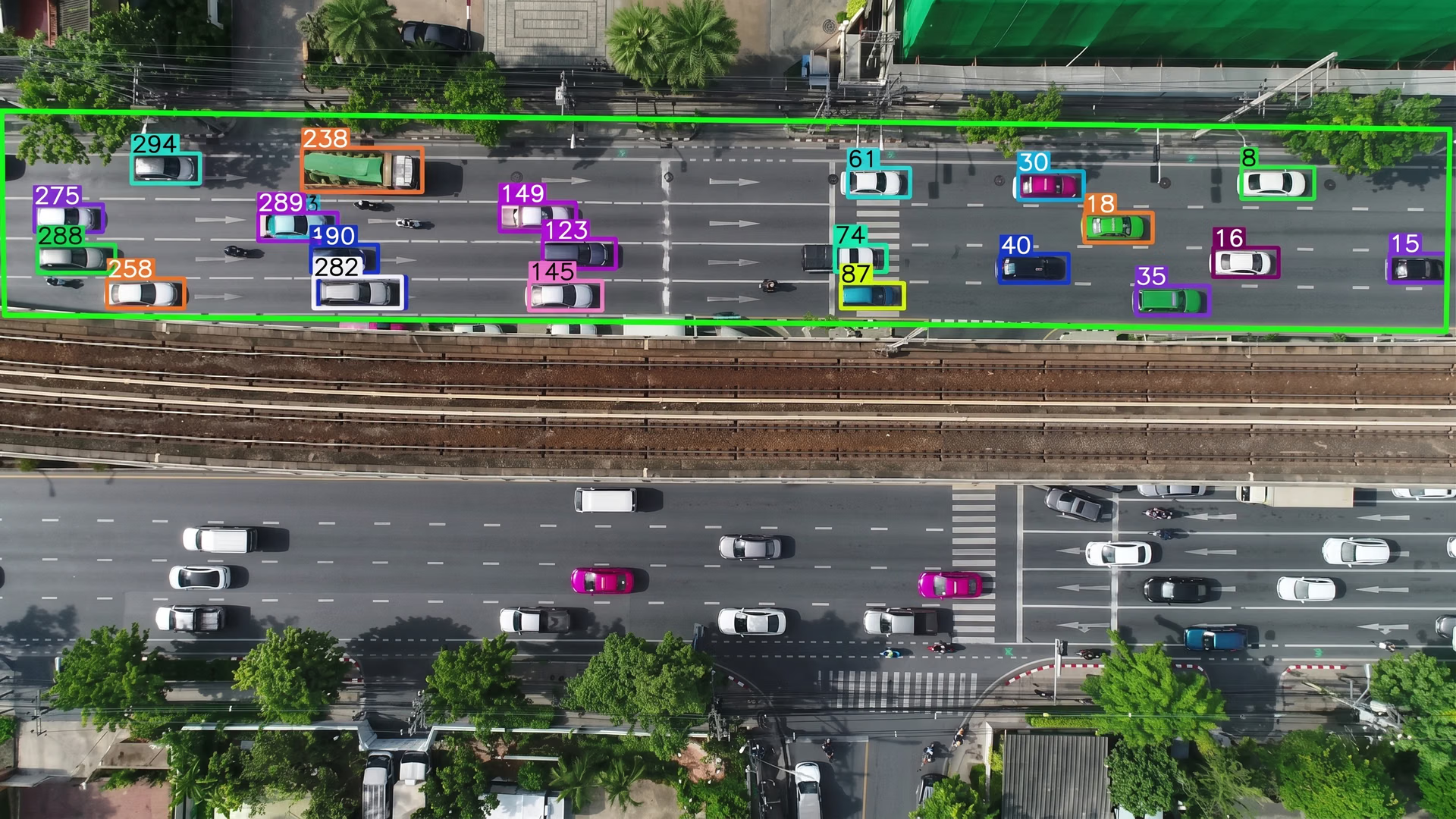
Fig 2. Tracking vehicles using Ultralytics YOLO11 within a zone (Source)
Interestingly, YOLO models don’t actually track objects over time on their own. Instead, tracking is enabled through the Ultralytics Python package, which connects YOLO detections with multi-object tracking algorithms such as ByteTrack and BoT-SORT. In this setup, YOLO detects objects frame by frame, and the tracker links those detections across frames to maintain a consistent ID for each object as it moves.
Real-world applications of AI-powered motion tracking#
Next, let’s take a closer look at a few real-world applications where AI-powered motion tracking is making an impact.
Sports analytics and precise player tracking#
In a soccer match, players are constantly accelerating, stopping, and changing direction, which makes it hard to measure movement accurately across the field. Manual tracking often breaks down in these moments, especially when players overlap, bunch together, or move through crowded areas.
AI-powered motion tracking helps by following each player through the action and keeping their movement paths clear and consistent. For example, in one recent study, researchers used YOLO11 to detect players and the ball from multiple camera angles. YOLO11 identified each player in every frame, while a tracking system linked those detections over time to keep each player’s identity consistent as they moved.
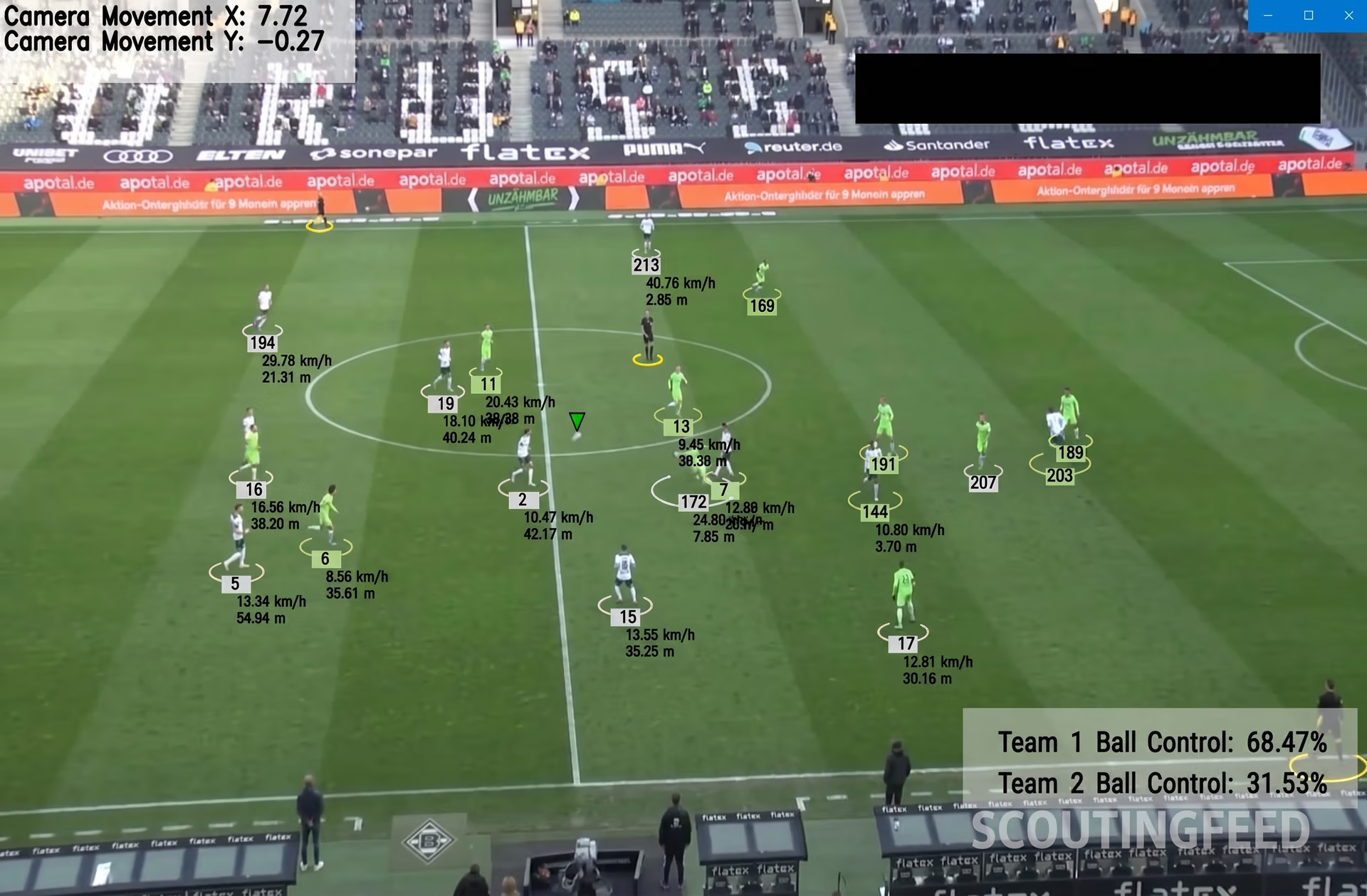
Fig 3. Detecting and tracking multiple soccer players (Source)
Motion tracking in augmented reality and virtual reality#
Augmented reality (AR) is what makes it possible for apps to place digital objects into the real world, like a label on a product, a character on the floor, or an overlay on your foot as you move. For these experiences to feel believable, the virtual content has to stay anchored in the right spot as you walk around, tilt your phone, or move the object itself.
Computer vision plays a key role here because it helps a mobile device understand what it is looking at and how the camera is moving through the scene. In other words, it enables 3D tracking by estimating where an object is in space and how it is oriented, then updating that position as the user moves.
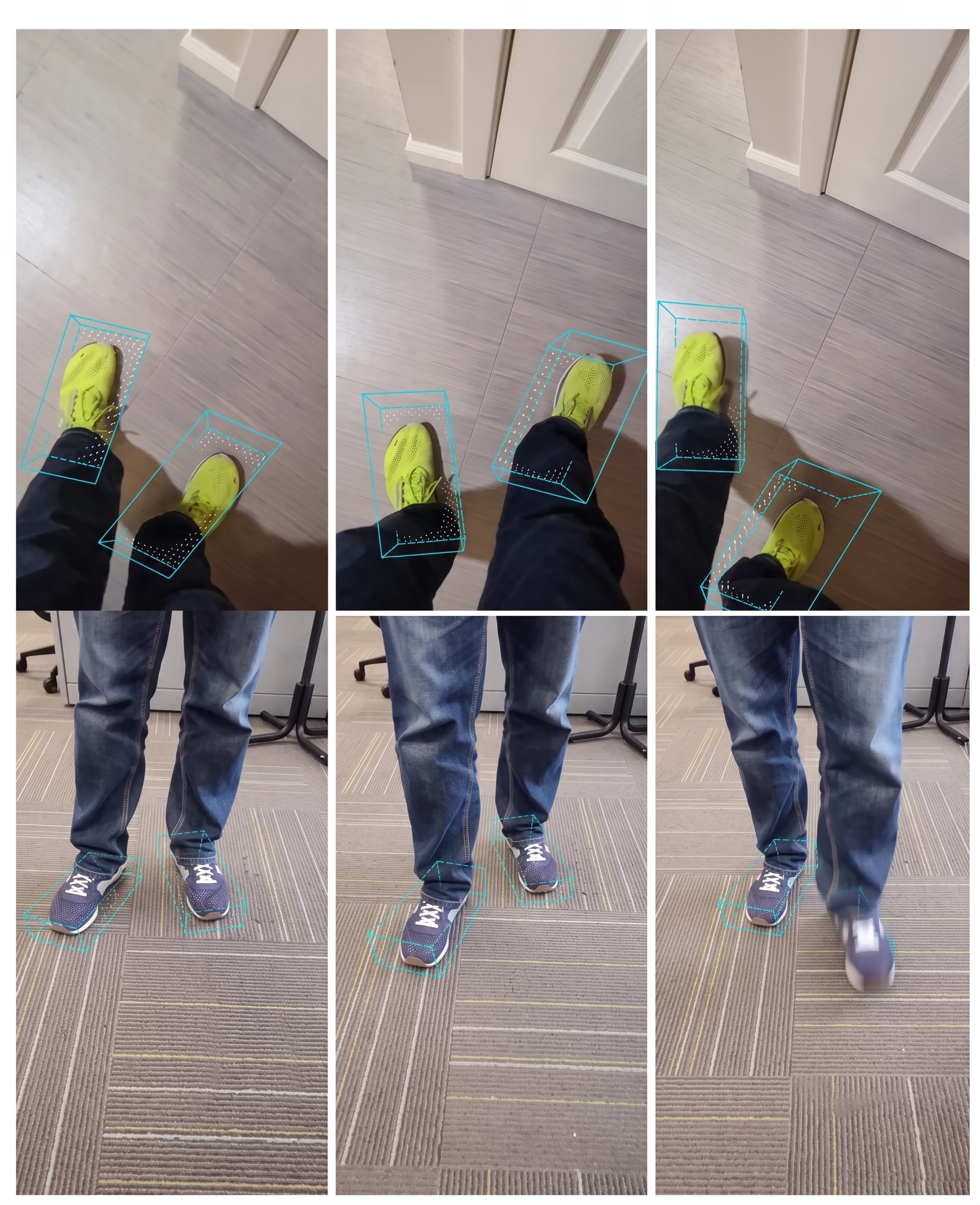
Fig 4. An example of 3D tracking within an AR application (Source)
Virtual reality (VR) relies on similar tracking ideas, but the goal is different. Instead of anchoring digital content to the real world, VR focuses on tracking your head and hands so the virtual world responds naturally as you move.
Tracking moving equipment and process automation#
Industrial environments often have equipment and products moving through multiple stages of a workflow. Each stage depends on accurate timing and coordination. Manual tracking can fall behind because items move at different speeds, overlap with each other, or shift position quickly.
AI-powered motion tracking helps by giving production systems a clearer view of each object as it moves through the line. In an interesting study, a network of connected cameras tracked products across an entire production cycle and updated a digital twin, a virtual copy of the real process, in real time.
The system identified each product, tracked its movement, and kept the digital model aligned with what was happening on the floor. This approach improved monitoring and supported safer operation by giving operators a reliable view at every stage. It also showed how motion tracking can enable more flexible and scalable automation when consistent tracking data is available.
Pros and cons of AI-powered motion tracking#
Here are a few advantages of using AI-powered motion tracking:
- Improved recovery from occlusion: vision AI systems can often maintain or regain tracks when objects overlap or briefly disappear.
- Scalability: Once deployed, AI trackers can process long video clips and multiple camera feeds without repeated per-shot setup.
- Richer motion data: Tracking outputs can be used to measure paths, counts, dwell time, and basic speed estimates for analytics.
AI-powered tracking works well in many cases, but it is not plug-and-play in every setup. Here are some limitations to consider:
- Ongoing maintenance: Performance can change over time as camera angles, environments, or workloads shift, so periodic updates are often needed.
- Integration complexity: Connecting trackers into existing video editors, analytics, or automation systems may require adapters, calibration, and extra testing.
- Edge cases in extreme conditions: Low light, motion blur, heavy occlusion, and very small objects can still cause tracking errors.
Key takeaways#
AI-driven motion tracking features are quickly becoming the more practical choice for real-world video, where movement is fast, scenes are crowded, and manual fixes don’t scale. Computer vision is improving quickly, and that is making tracking systems easier to deploy and more reliable in challenging conditions. As a result, motion tracking is becoming more useful across robotics, mobile apps, analytics, and content creation.
Join our community and explore the latest in vision AI on our GitHub repository. Visit our solution pages to learn how applications like AI in manufacturing and computer vision in healthcare are driving progress, and check out our licensing options to power your next AI solution.








