Key highlights from Ultralytics at CVPR 2026
Look back on the key highlights from Ultralytics' time at CVPR 2026 in Denver, where we exhibited, presented research, and connected with the global computer vision community.
From June 3 to 7, 2026, the Ultralytics team headed to the Colorado Convention Center in Denver for the IEEE/CVF Conference on Computer Vision and Pattern Recognition 2026 (CVPR), the premier annual gathering for computer vision researchers, engineers, and practitioners from around the world. With over 12,000 attendees, CVPR is where the field comes together to share research, explore new ideas, and see where computer vision is heading next.
This was our second year exhibiting at CVPR, and it was our most active yet. Across five days, we introduced two research papers, showcased Ultralytics YOLO26 and Ultralytics Platform to thousands of attendees, and joined Intel and OpenCV for an evening networking event. Here is a look at how the week unfolded.
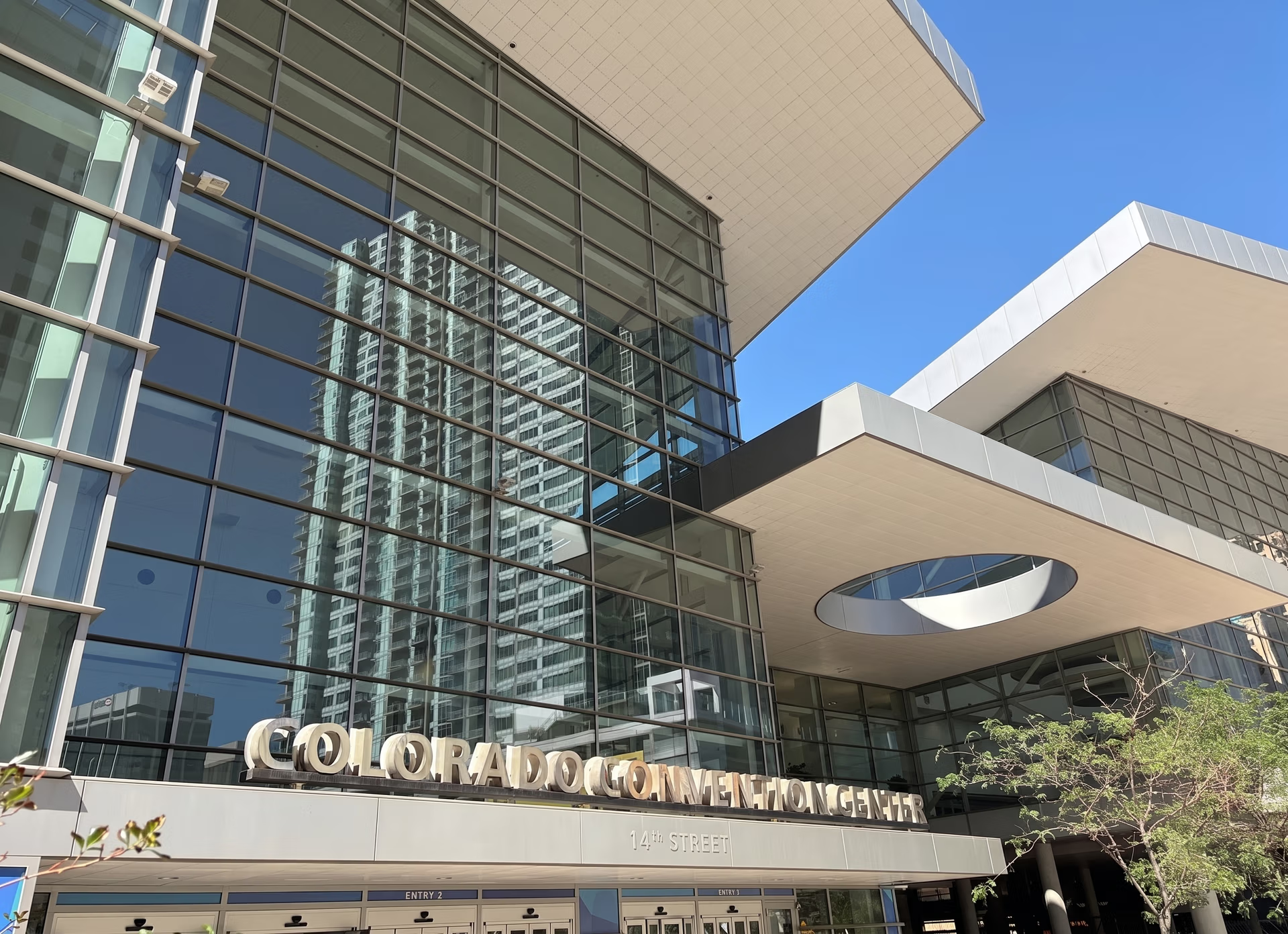
Fig 1. CVPR conference in Denver, Colorado.
An overview of CVPR 2026#
CVPR is the flagship event of the computer vision calendar. Organized jointly by the IEEE and CVF, it brings together academics, industry researchers, and engineers for a week of paper presentations, workshops, tutorials, and an industry exhibition. The 2026 edition in Denver drew more than 12,000 attendees, making it one of the largest CVPR editions to date.
What sets CVPR apart is the breadth of what it covers. In a single week, attendees were able to move between foundational research talks and hands-on technical workshops, from state-of-the-art papers on detection, segmentation, and vision-language models, to applied sessions covering robotics, medical imaging, autonomous driving, and manufacturing. The exhibition floor ran alongside the academic program, giving companies a direct way to engage with the research community and showcase real-world applications of computer vision.
Inside CVPR 2026: a day-by-day look#
CVPR Day 1: Research presentation#
The week kicked off with a research presentation from our AI Engineer, Fatih Akyon, who presented his paper "SenBen: Sensitive Scene Graphs for Explainable Content Moderation" at the conference. The paper introduces a new approach to content moderation using scene graph representations, offering a more explainable alternative to black-box classification methods.
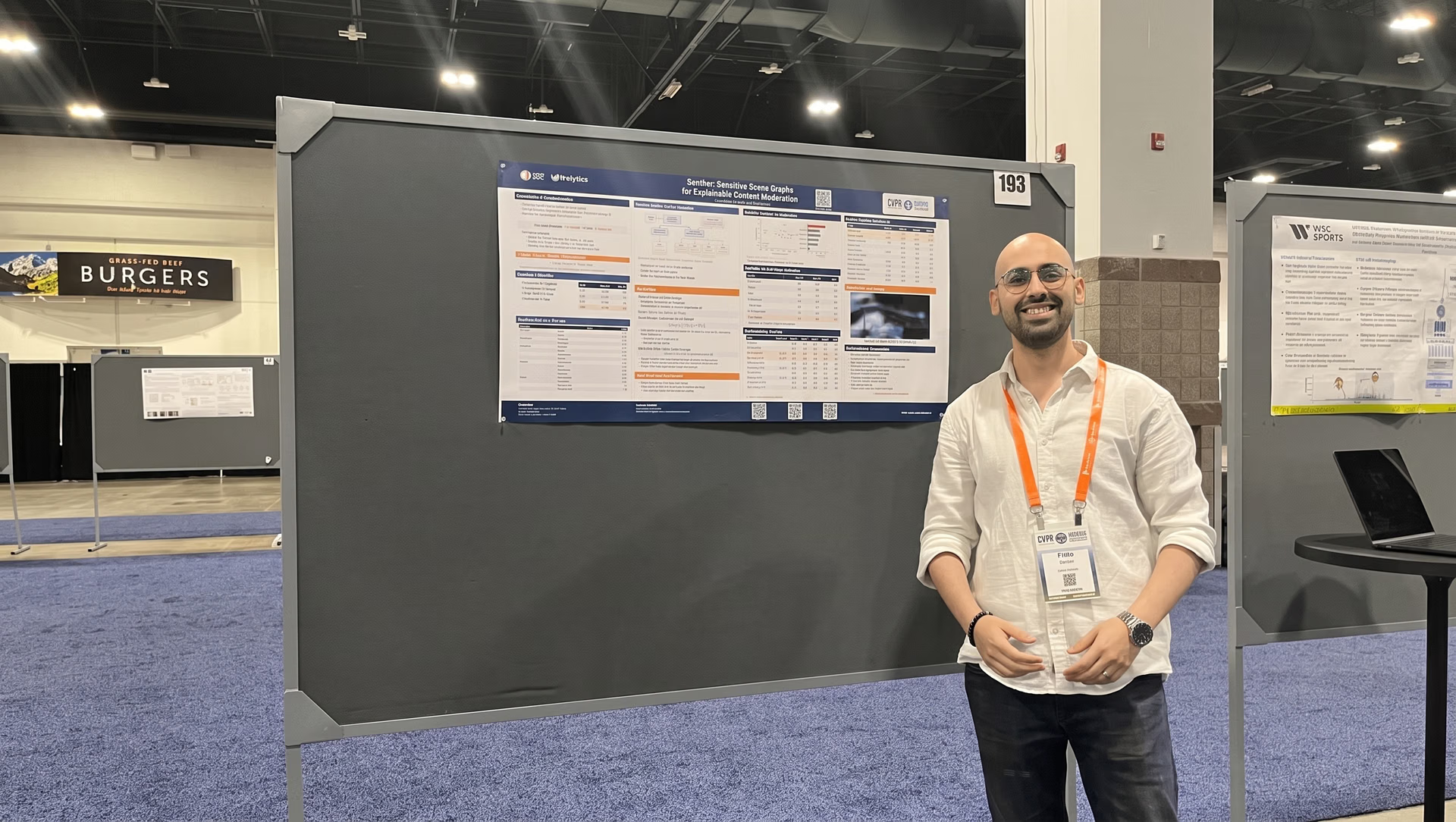
Fig 2. Fatih Akyon presenting his paper at CVPR in Denver, Colorado.
CVPR Day 2: Set-up and sessions#
With the booth taking shape on the exhibition floor, Fatih spent the day attending conference sessions and representing Ultralytics at the NVIDIA Alpamayo Summit, a partner-focused event running alongside CVPR. In the evening, the team gathered for dinner at Union Station, one of Denver's most iconic landmarks, before the conference kicked off.
CVPR Day 3: Exhibition opens and Ultralytics YOLO26 paper#
Day 3 marked the opening of the CVPR exhibition hall and the first full day at our booth. It was also the day we showcased the Ultralytics YOLO26 research paper.
At the booth, we also showcased Ultralytics Platform to the CVPR community, our new end-to-end environment for annotating datasets, training YOLO models, and deploying them to any target hardware.
In the evening, we joined Intel and OpenCV for the After.CVPR() Dev Meetup, a networking event for developers and researchers alike. At the event, Ultralytics demonstrated exporting YOLO models to the Intel OpenVINO™ format, an Intel-optimised runtime that can deliver up to 3x CPU speedup and accelerate YOLO inference on Intel hardware.
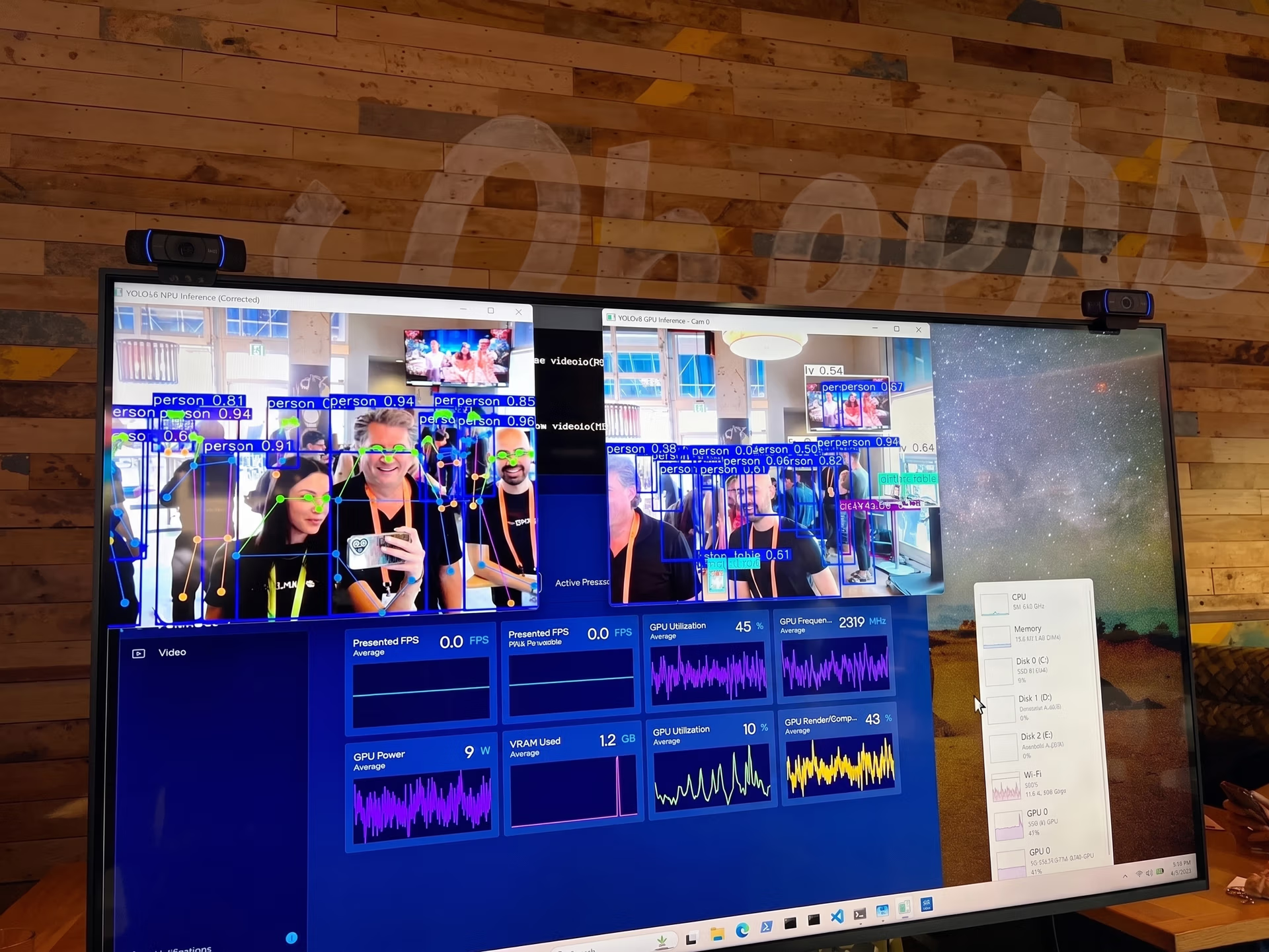
Fig 3. Ultralytics demo exporting on Intel OpenVINO™ at the After.CVPR() Dev Meetup.
CVPR Day 4: YOLOE and a team outing#
On Day 4 we highlighted YOLOE, the open-vocabulary extension to the overall YOLO ecosystem that supports text-prompted, visually-prompted, and prompt-free inference. For researchers working on open-world detection and vision-language applications, YOLOE extends the YOLO pipeline into use cases that fixed-class models cannot address.
After the exhibition hall closed, the team made the most of Denver's surroundings with an outing to Red Rocks Amphitheatre, another of Colorado's most recognizable landmarks.
CVPR Day 5: Vertical applications and research conversations#
The final day of the exhibition brought some of the most engaging conversations of the week. Booth visitors included teams working on computer vision applications across medical imaging, manufacturing, agriculture, and robotics industries, where YOLO models are increasingly central to production systems. We also had strong interest from university research groups and academic teams who are using Ultralytics YOLO for their work to advance and contribute to Computer Vision Research.
These conversations reinforced something we see consistently: the community using our models spans a much wider range of domains than detection benchmarks alone would suggest, and the questions they bring reflect genuinely diverse and demanding deployment environments.
Key themes from CVPR 2026#
Across five days of sessions, presentations, and conversations on the exhibition floor, a few clear themes stood out.
Converging research and production#
CVPR has always been a research-driven conference, but the 2026 edition reflected how much the gap between research and real-world deployment has narrowed. Many of the most active conversations at our booth came from teams who were not just exploring Ultralytics YOLO models academically but deploying them in production and looking for ways to push accuracy and efficiency further.
Open-vocabulary and prompt-based models are gaining traction#
Interest in YOLOE was a consistent theme across the week. As researchers and engineers look beyond closed-set detection, the ability to run inference without a fixed class list, using text prompts, reference images, or no prompts at all, is becoming a practical requirement rather than a research curiosity.
Edge deployment remains a central challenge#
From the networking events to conversations on the exhibition floor, the question of how to run vision AI efficiently on constrained hardware came up repeatedly. The interest in OpenVINO export and CPU-optimised inference reflected a broad need across the community, particularly for teams deploying in environments where cloud connectivity is limited or latency requirements are strict.
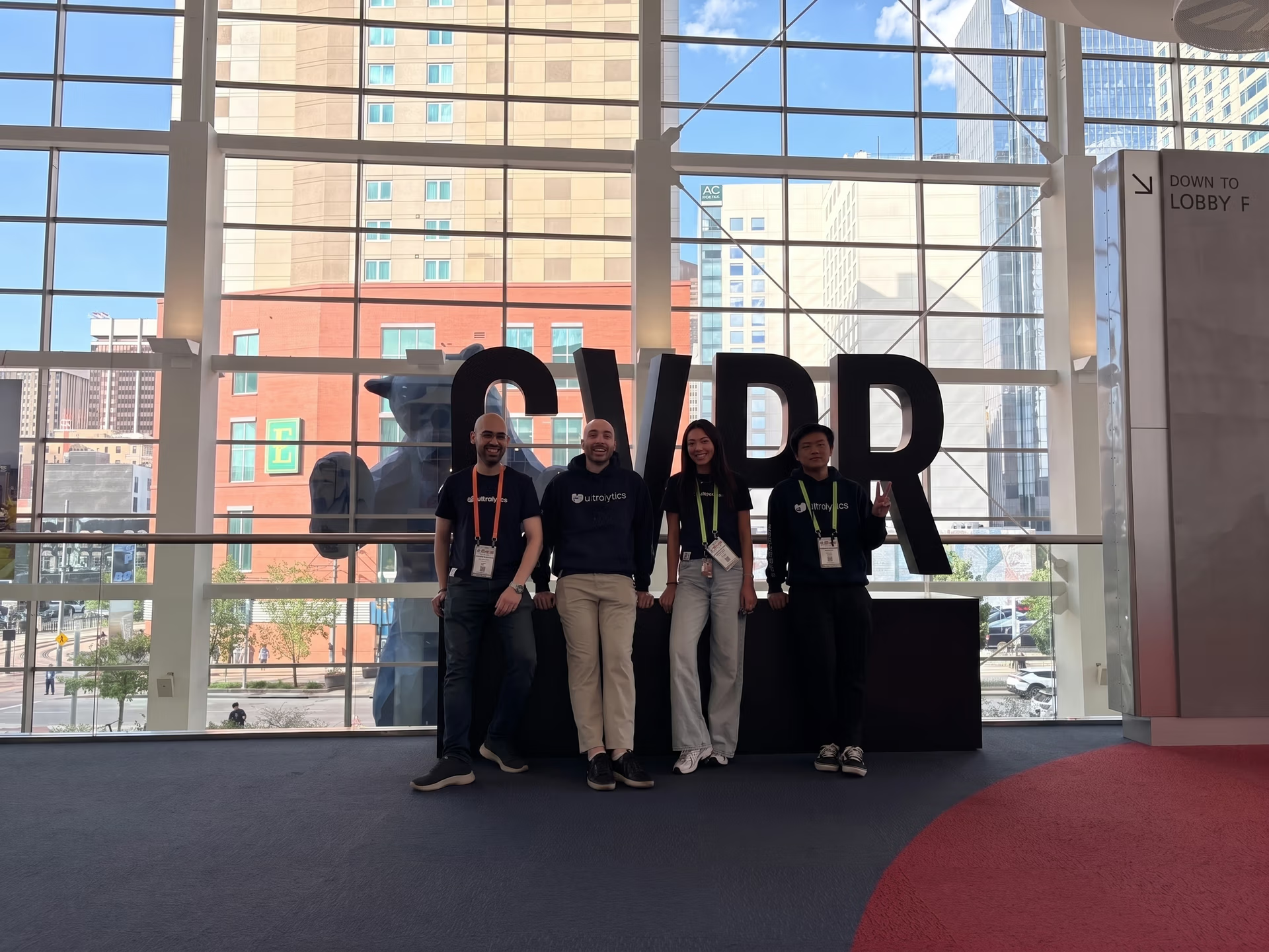
Fig 4. The Ultralytics team at CVPR conference in Denver, Colorado.
Wrapping up#
CVPR 2026 was yet another highlight for the Ultralytics team. Showcasing two papers, opening our booth to over 12,000 attendees, and spending a week in conversation with researchers and practitioners from across the field was a reminder of how much is happening in computer vision right now, and how central Ultralytics YOLO models have become to the work being done across it.
Thank you to everyone who stopped by the booth, attended the talks, or joined us at the AfterCVPR evening event. We'll see you at the next one.
Want to explore what we showcased at CVPR? Visit our YOLO26 page, read our research papers, and explore Ultralytics Platform to start building your own end-to-end vision AI workflows.