Key highlights from Ultralytics at Hannover Messe 2026 in Germany
Join us as we recap Ultralytics’ time at Hannover Messe 2026 in Germany, where we showcased how Ultralytics YOLO models power industrial AI solutions.
Recently, from April 20th to 24th, the Ultralytics team had the opportunity to attend Hannover Messe in Germany, one of the world’s leading industrial trade fairs. The event brings together companies, engineers, and industry leaders working across manufacturing, automation, and industrial technology.
Across the exhibition halls, there was a strong focus on industrial AI and how intelligent systems are being applied in real-world production environments. As part of the event, Ultralytics exhibited within the Siemens booth, where we showcased how Ultralytics YOLO models can support industrial and manufacturing use cases.
Over the two days, our Sales Director, Pablo Karnbaum, connected with teams working across robotics, automation, and enterprise AI. Many of the conversations centered on how computer vision is being used in applications such as defect detection, workplace safety, and production-ready systems.
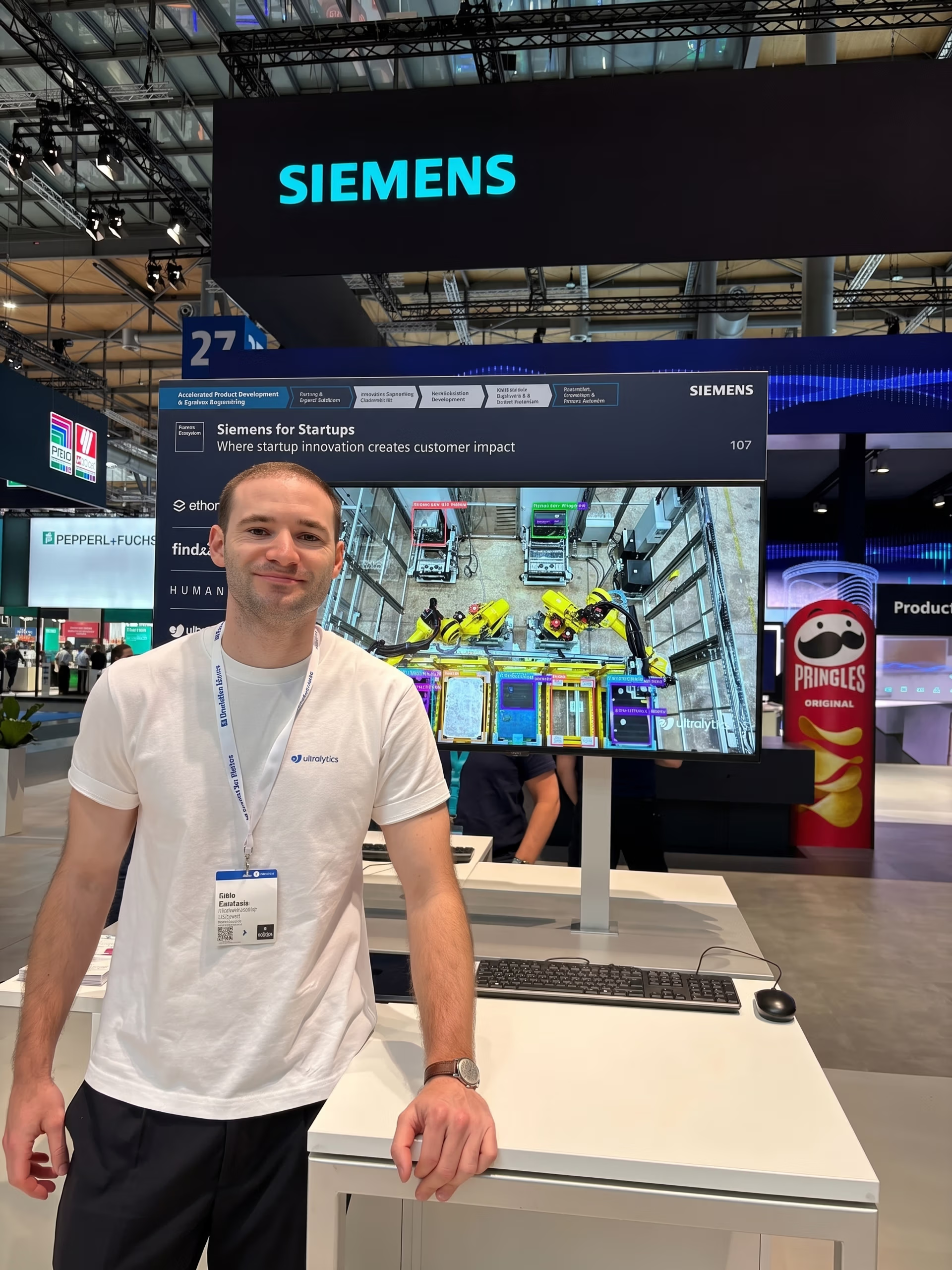
Fig 1. Pablo Karnbaum, our Sales Director, at Hannover Messe 2026 in Germany
In this recap, we’ll walk through highlights from our time at Hannover Messe 2026 and take a closer look at how vision AI is being adopted in industrial environments. Let’s get started!
An overview of Hannover Messe#
Before we dive into Ultralytics’ experience at Hannover Messe, let’s take a closer look at what makes it such a key event for the global industrial community.
Held annually in Hannover, Germany, Hannover Messe is widely recognized as one of the most important platforms for industrial transformation. The event welcomes companies, engineers, policymakers, and technology providers focused on advancing manufacturing, automation, energy systems, and industrial IT.
With more than 3,000 exhibitors, 1,600 speakers, and over 123,000 attendees, the event provides a large-scale environment for exploring new technologies and exchanging ideas. Visitors travel from over 150 countries.
One of the defining aspects of Hannover Messe is its focus on innovation and real industry needs. Attendees come to discover emerging technologies, share ideas, and evaluate solutions that can shape their next steps in industrial innovation.
Key themes at Hannover Messe 2026#
A central theme at Hannover Messe in 2026 was industrial AI. Across the exhibition floor, companies highlighted how artificial intelligence is being integrated across manufacturing processes to improve efficiency and support operational performance.
Many of the demonstrations focused on real-world examples, showing how AI can support areas such as automation, quality assurance, and production workflows. These examples reflected a growing interest in using AI to improve existing systems rather than building entirely new ones.
This direction was also echoed in discussions across the event. Roland Busch, CEO of Siemens, and Friedrich Merz, Federal Chancellor of Germany, both highlighted the importance of industrial AI and its role in the future of industrial processes.
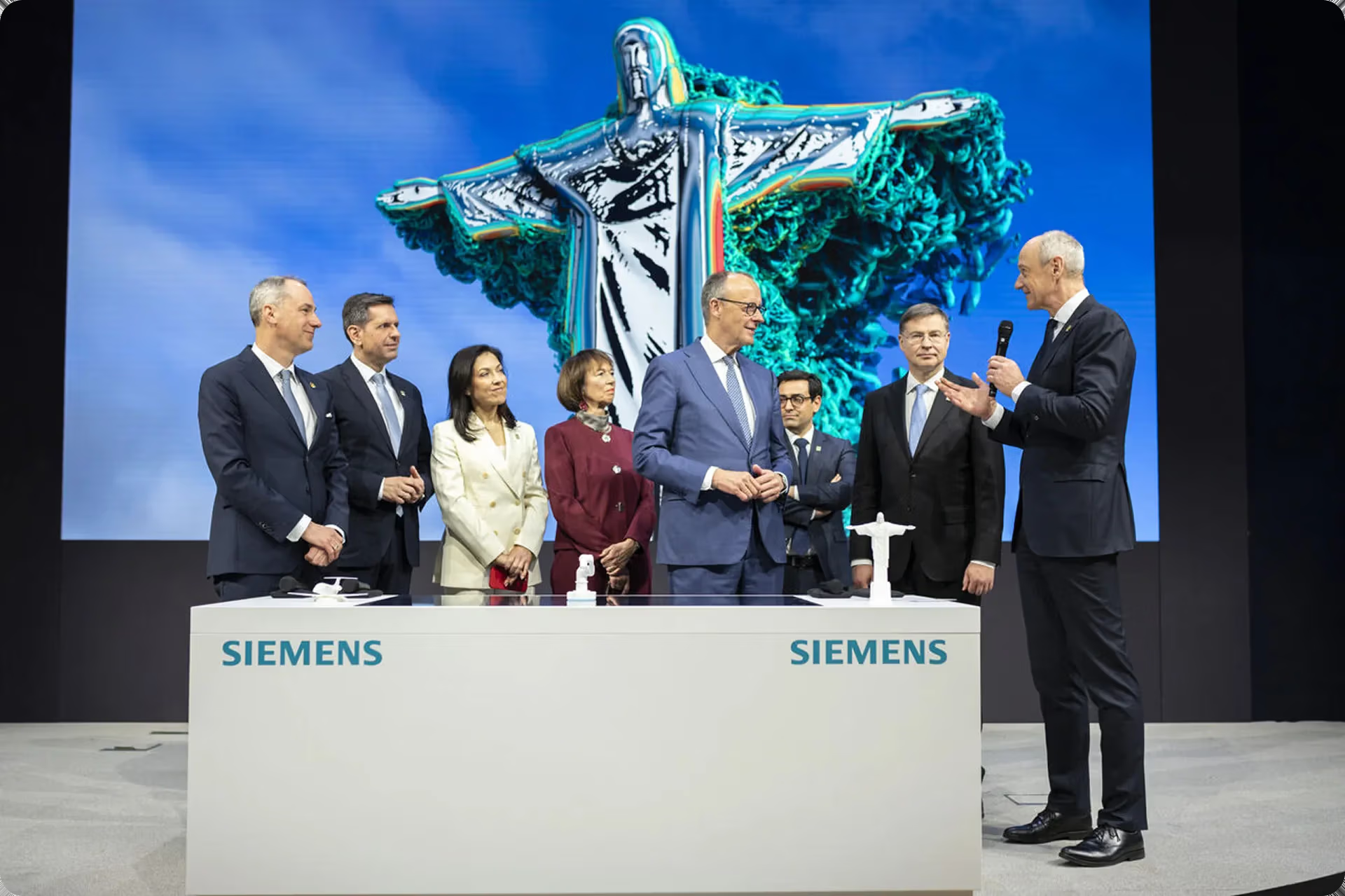
Fig 2. Roland Busch, CEO of Siemens, speaking about the value of industrial AI
Overall, the conversations throughout the event pointed to a clear trend: AI is becoming more closely integrated into industrial operations, with a stronger emphasis on reliability, efficiency, and real-world use.
Ultralytics at Hannover Messe 2026#
Hannover Messe 2026 was a great opportunity for the Ultralytics team to connect with the industrial AI community, explore the latest developments in manufacturing, and showcase how computer vision can support real-world applications.
Let’s take a closer look at some of the key moments from the event.
Day one: Exploring the show floor#
The first day was spent exploring the exhibition halls and getting a closer look at how companies are approaching industrial AI across different sectors. It was an interesting opportunity to see a wide range of technologies in action and understand how they are being applied in manufacturing environments.
Throughout the day, we connected with teams working across robotics, automation, and enterprise systems. Many of the conversations focused on how AI and computer vision are being used to improve efficiency, support quality control, and streamline production processes.
It was also interesting to see how different companies are integrating AI into existing workflows, with a strong emphasis on reliability and performance in real-world settings.
Day two: Showcasing at the Siemens booth#
On the second day, Ultralytics exhibited within the Siemens booth in Hall 27 at Booth A48, Stand 107. From the stand, we showcased how Ultralytics YOLO models, like Ultralytics YOLO26, can be used in industrial settings, with a focus on manufacturing and automation use cases.
The demos highlighted a range of computer vision tasks supported by YOLO models, including object detection, instance segmentation, image classification, pose estimation, and oriented bounding box (OBB) detection. These capabilities can be applied to scenarios such as identifying defects on production lines, monitoring worker safety, and tracking objects in complex environments.
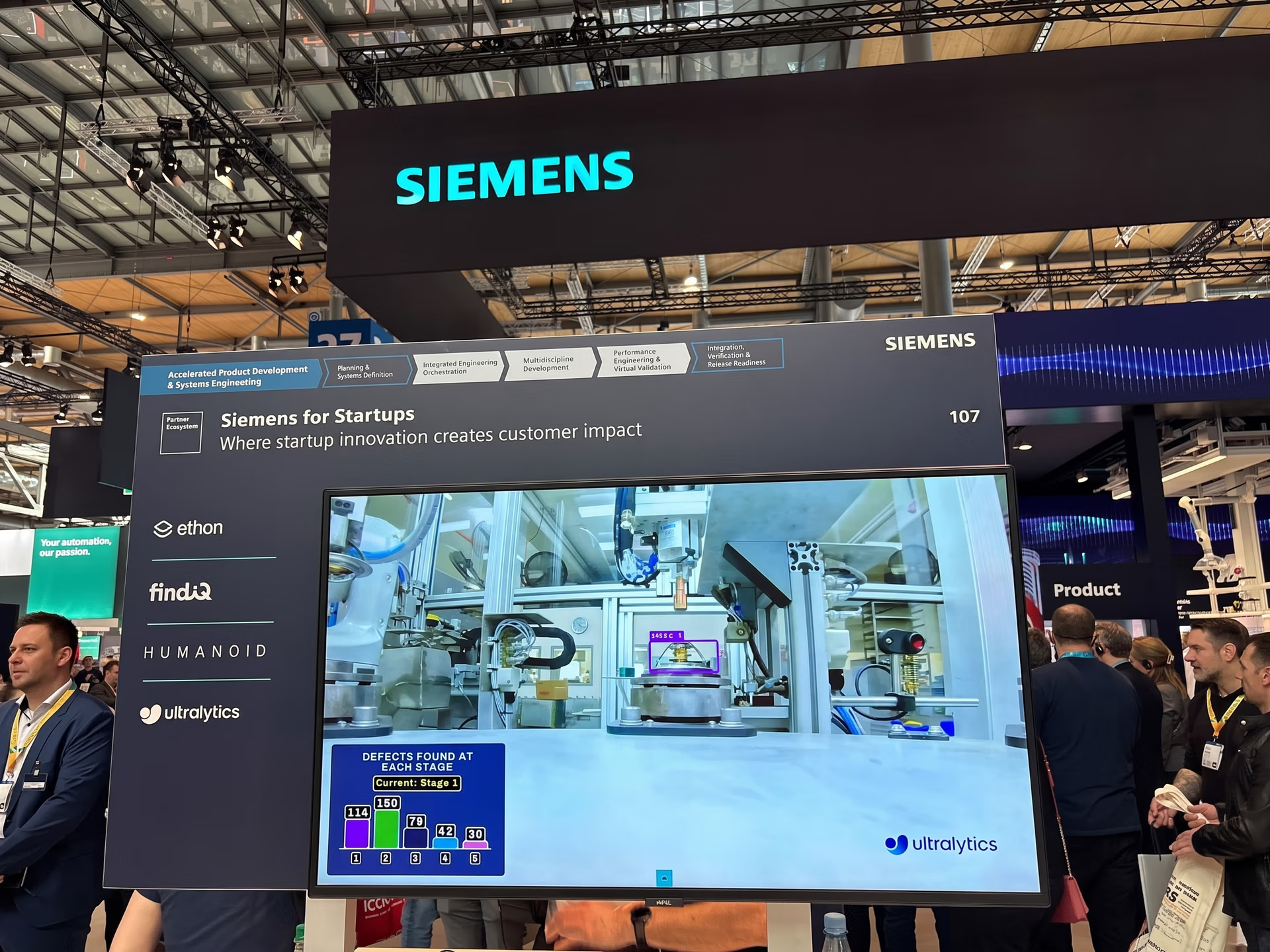
Fig 3. Showcasing how Ultralytics YOLO models can be used at the Siemens booth
Throughout the day, we spoke with attendees interested in applying computer vision in production environments. Many of the conversations focused on how these vision tasks can be integrated into existing systems to support reliable, real-time decision-making.
It was also a great opportunity to spend time with the Siemens team and continue working closely together. The booth saw a steady flow of visitors, making it a good setting for ongoing discussions around vision AI in industrial sectors.
Inside conversations with customers and partners#
Throughout the event, conversations often focused on how computer vision can be deployed in real industrial environments, particularly when running at the edge. Many engineers, developers, and AI enthusiasts we spoke with are working with constraints such as latency, bandwidth, and connectivity, making local processing an important consideration for maintaining consistent performance.
Integration was another recurring topic. Conversations often centered on how vision models can fit into existing systems, whether that’s camera setups on production lines, industrial software platforms, or automation workflows already in place. Rather than building entirely new systems, many were focused on extending what they already have with AI capabilities.
Ease of use also came up frequently. Ultralytics YOLO models can be integrated into different workflows through the Ultralytics Python package, which provides a unified interface for training, inference, and deployment across tasks like detection, segmentation, and classification.
With simple Python or CLI commands, developers can run models, test ideas, and export them for deployment on edge devices or in production environments, making it easier to move from experimentation to real-world use without added complexity.
There was also growing interest in how to maintain performance and reliability over time, particularly in environments where conditions can change. Questions around monitoring, updating models, and ensuring consistent results came up in many of the conversations throughout the event.
What stood out across these conversations was a broader shift toward practical deployment, with a focus on building solutions that are reliable, adaptable, and easy to integrate into existing industrial environments.
Real-world industrial use cases of vision AI#
Across conversations, demos, and discussions at Hannover Messe, it was clear that computer vision is being applied to a growing number of industrial use cases.
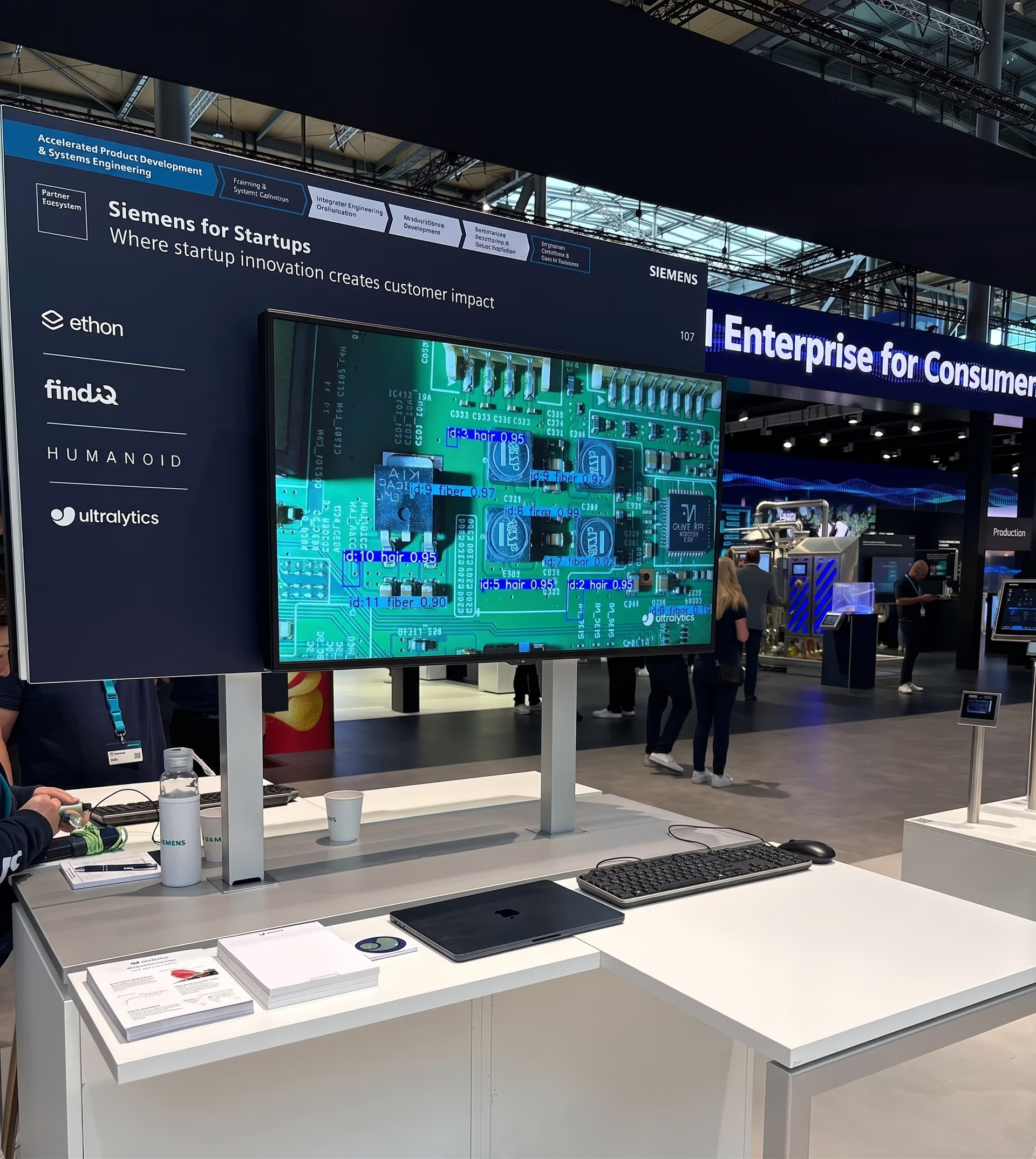
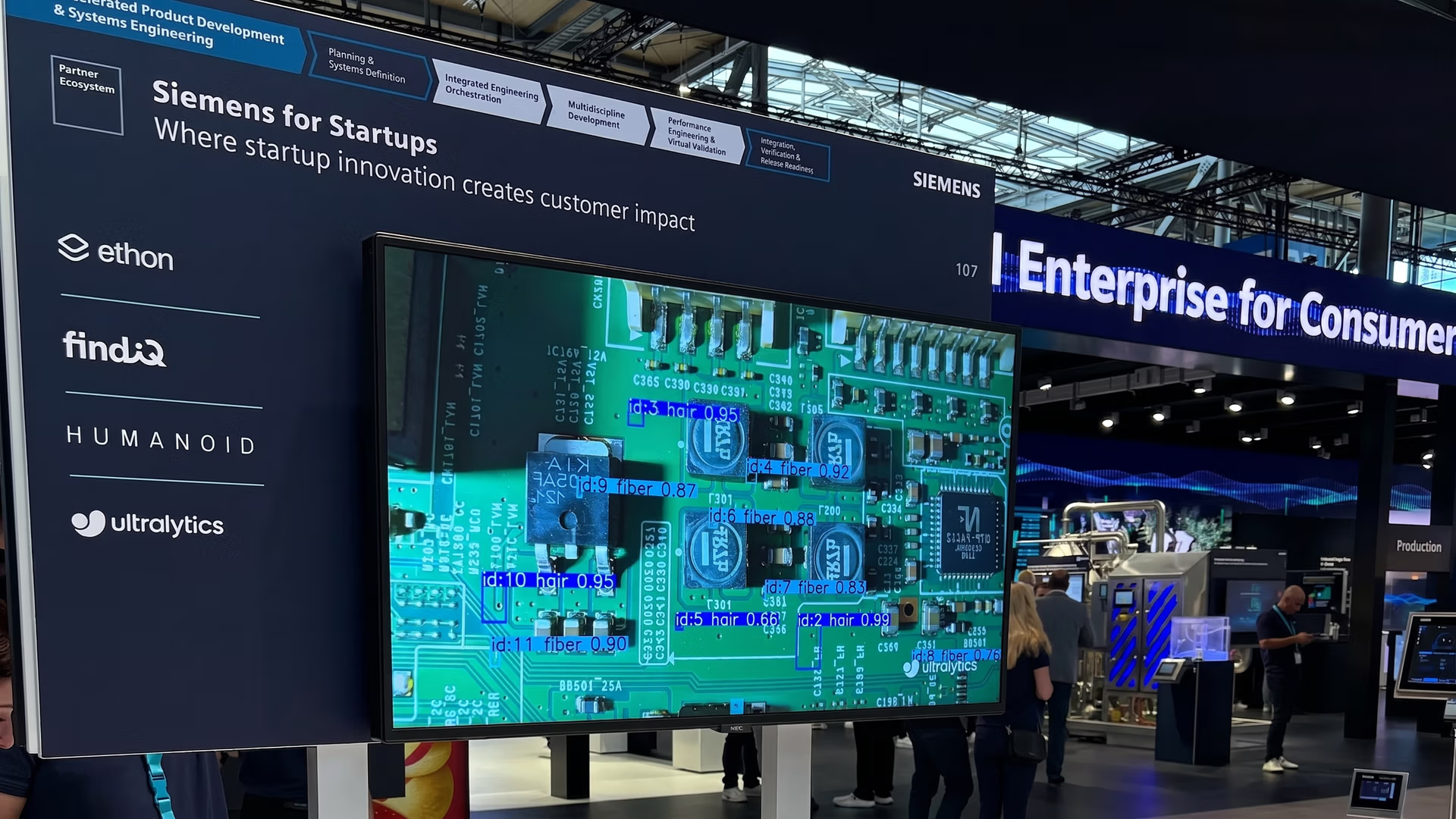
Fig 4. Using YOLO for use cases like defect detection was demoed
Here’s an overview of some of the applications that came up throughout the event:
- Defect detection: Vision models such as Ultralytics YOLO26 can be used to automatically identify defects on production lines, helping improve quality control and reduce reliance on manual inspection. This allows manufacturers to catch issues earlier and maintain more consistent product standards.
- Workplace safety monitoring: Computer vision can be used to detect safety risks and ensure compliance with protocols, such as identifying whether protective equipment is being worn. These systems can create safer environments by providing real-time alerts and visibility.
- Production monitoring: By tracking objects and activity across workflows, companies can gain better visibility into operations. This makes it easier to identify bottlenecks, monitor throughput, and improve overall efficiency.
- Inventory tracking: Vision systems can monitor materials and components in real time, helping maintain accurate inventory levels. This reduces manual tracking and prevents delays caused by missing or misplaced items.
- Robotics and automation support: Computer vision enables robots to better understand their surroundings and interact with objects. This supports tasks such as picking, sorting, and assembly in dynamic environments.
Key takeaways#
Hannover Messe 2026 highlighted the growing role of AI in industrial systems and the shift toward practical deployment. It was great to connect with the community and share how Ultralytics YOLO models can support real-world applications.
Thanks to everyone who stopped by. We’re excited to keep building what’s next together.
Join our growing community and explore our GitHub repository for AI resources. To build with vision AI today, check out our licensing options. Learn how AI in agriculture is transforming farming and how vision AI in manufacturing is shaping the future by visiting our solutions pages.