Top 8 benefits of using computer vision in retail!
Explore computer vision benefits in retail, including automated checkout, real-time shelf monitoring, improved staff efficiency, demand forecasting, and safer stores.
Remember when a trip to the grocery store meant dodging restock carts and waiting at the back of a long checkout queue? That world is changing fast.
Today, retail environments are becoming more streamlined. It’s no longer unusual to see an AI-powered robot moving through aisles and scanning shelves for out-of-stock items before customers even notice.
A key driver behind this shift is computer vision, a branch of artificial intelligence (AI) that enables systems to analyze visual data from images and video. In retail, computer vision turns in-store visuals into real-time insights, helping retailers understand what’s happening on the sales floor as it happens without disrupting the customer experience.
By analyzing videos from existing in-store cameras, these systems can identify issues like empty shelves, long checkout lines, or crowded aisles in real time. This makes it possible for store teams to respond quickly instead of relying on delayed reports or manual checks.
In this article, we’ll explore the eight key benefits of using computer vision in retail and explain how vision-based systems are becoming a practical part of everyday store operations. Let’s get started!
Implementing computer vision in retail#
Computer vision enables machines to see and interpret visual information from images and video. In a retail setting, this means analyzing in-store camera feeds to understand what’s happening on the sales floor in real time.
For instance, computer vision models such as Ultralytics YOLO26 can detect and identify products on shelves, recognize items placed in shopping carts, and track how customers move through different areas of the store. Instead of simply recording footage, cameras become a source of real-time operational insight.
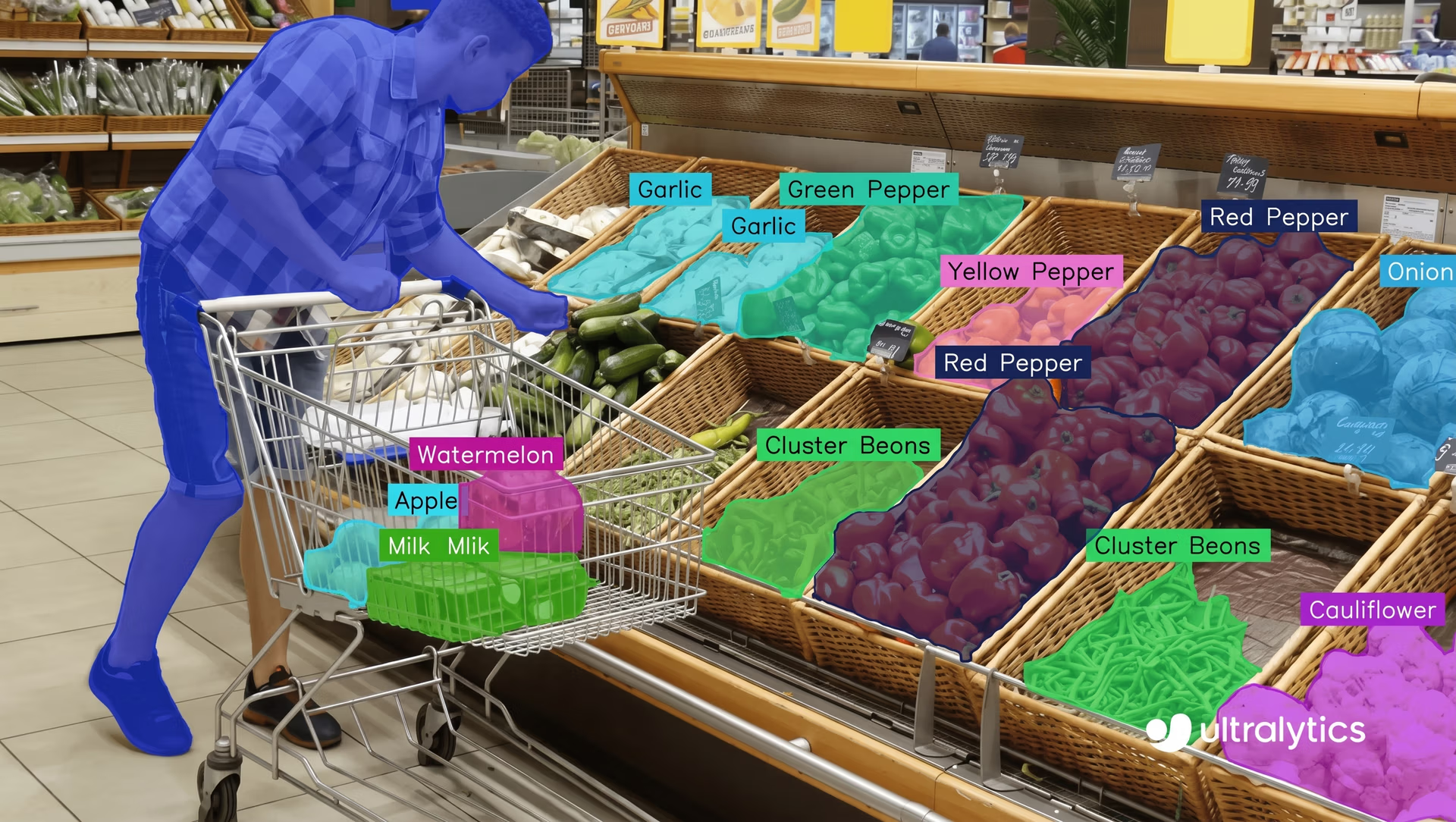
Fig 1. An example of using Ultralytics YOLO26 to detect and segment objects in a grocery store.
By moving beyond the delayed insights of traditional point-of-sale (POS) data and manual audits, computer vision gives retailers immediate visibility into store operations. With recent advancements in edge computing, video data can be processed locally, allowing teams to respond quickly to issues while maintaining data privacy. This shift transforms retail cameras from basic security tools into intelligent systems that help managers identify and resolve problems as they occur.
Eight key benefits of computer vision use cases in retail#
Computer vision is a reliable and scalable tool for improving retail efficiency, streamlining everything from loss prevention and checkout to the overall customer experience. Next, let’s explore 8 key benefits of computer vision in retail.
1. Seamless, accurate, and frictionless checkout#
The checkout process is often the last part of the shopping experience, and it can also be the most frustrating. Scanning errors or long wait times can slow everything down. Computer vision helps reduce these issues by enabling automated, cashierless self-checkout systems that recognize items instantly, removing the need for manual barcode scanning.
With computer vision, retailers can make sure the items in a customer’s cart match what appears on the receipt. Cameras can monitor the checkout area in real time and use computer vision models like YOLO26 to detect and verify each item as it is scanned or bagged. This improves accuracy, reduces human error, and helps customers move through checkout more quickly.
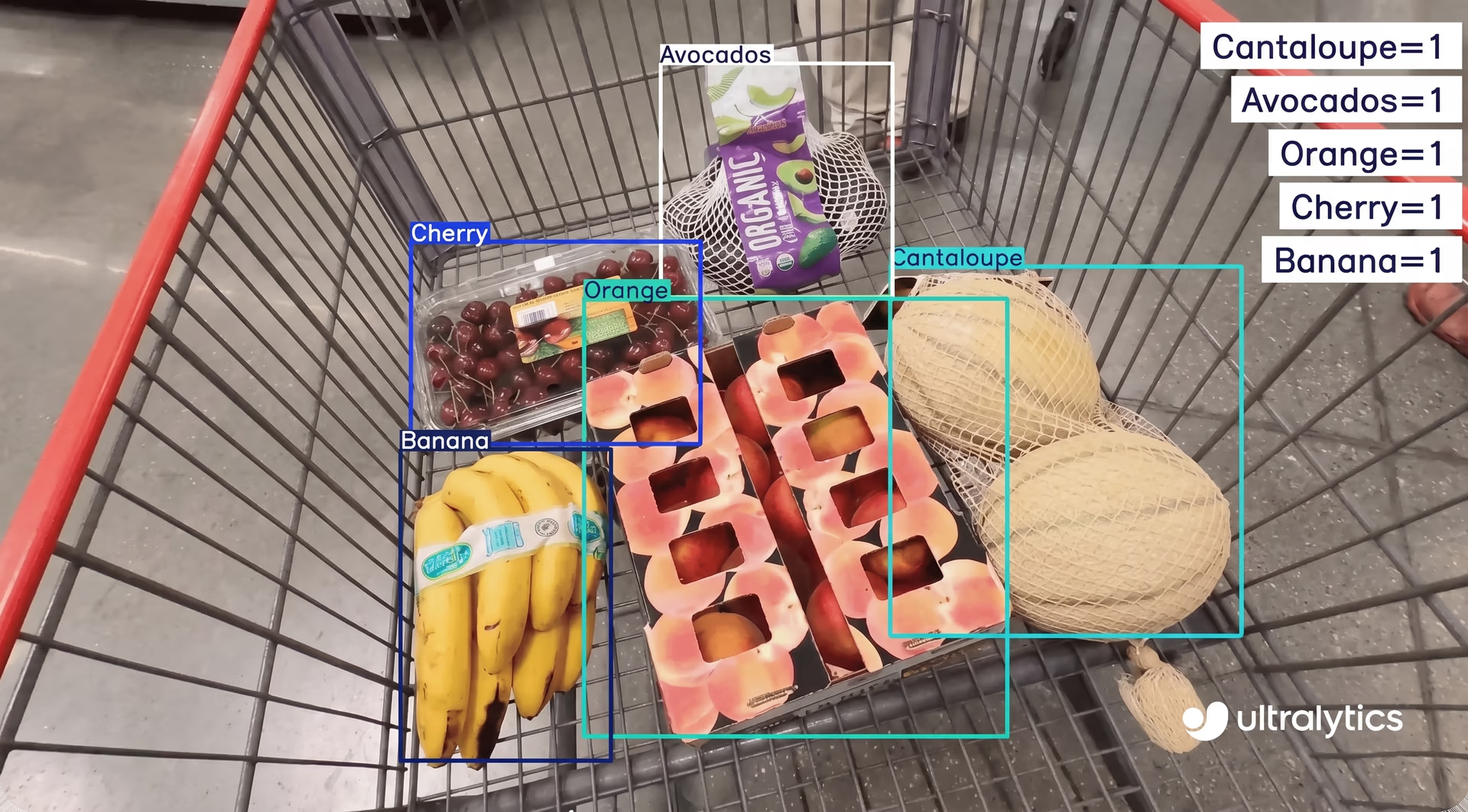
Fig 2. Ultralytics YOLO26 is being used to identify and count items in a cart.
2. Smarter loss prevention and proactive theft detection#
Computer vision lets retailers move beyond standard camera surveillance and toward real-time loss prevention. Vision systems can be used to detect patterns such as suspicious customer behavior, lingering in restricted areas, and carrying products from shelves for too long without checkout.
Computer vision tasks, such as pose estimation, can help retailers monitor the poses and body movement of customers near the shelves. Systems can be designed to detect and identify such behaviors automatically and send immediate alerts to security teams within the retail shops.
One of the key advantages of this approach is that it reduces theft without disrupting the shopping experience. For instance, customers aren’t subjected to additional checks, physical barriers, or intrusive interventions. Loss prevention becomes quieter, non-invasive, and less dependent on constant human observation.
3. Better shelf monitoring and planogram compliance#
Maintaining consistent shelf layouts is a common challenge for many retailers, especially large businesses with multiple stores and locations. Traditionally, planograms have been used to define how products should be placed and grouped on shelves, but creating and maintaining them is often slow and labor-intensive.
Even after shelves are set up, manually checking them for errors or inconsistencies can be time-consuming and may still miss deviations from the original plan.
Recent research shows how computer vision technology can automate this process by continuously monitoring shelves and comparing them against digital planograms. Using in-store cameras, vision models detect products on shelves and reconstruct a complete virtual shelf view from multiple images.
By using this virtual shelf, retailers can accurately identify misplaced items, missing price labels, incorrect groupings, and empty shelf slots. These automated checks can run continuously or at scheduled intervals to give retailers near-real-time insight into shelf conditions.
4. Data-driven store layout optimization#
Understanding how customers move through a store is essential for product placement strategies. In the past, retailers had to guess which aisles were popular based on historic sales data alone. Today, computer vision makes it easier for retailers to convert in-store movement into structured behavioral data that can provide valuable insights.
Computer vision solutions that track customer movement and generate heat maps can help retailers make layout decisions based on real behavior rather than assumptions. By following customer paths across aisles, entrances, and product areas, these systems show where shoppers walk, pause, and return. When this data is collected over time and analyzed, retailers can generate visual heat maps that reveal high-traffic hot spots and quiet dead zones.
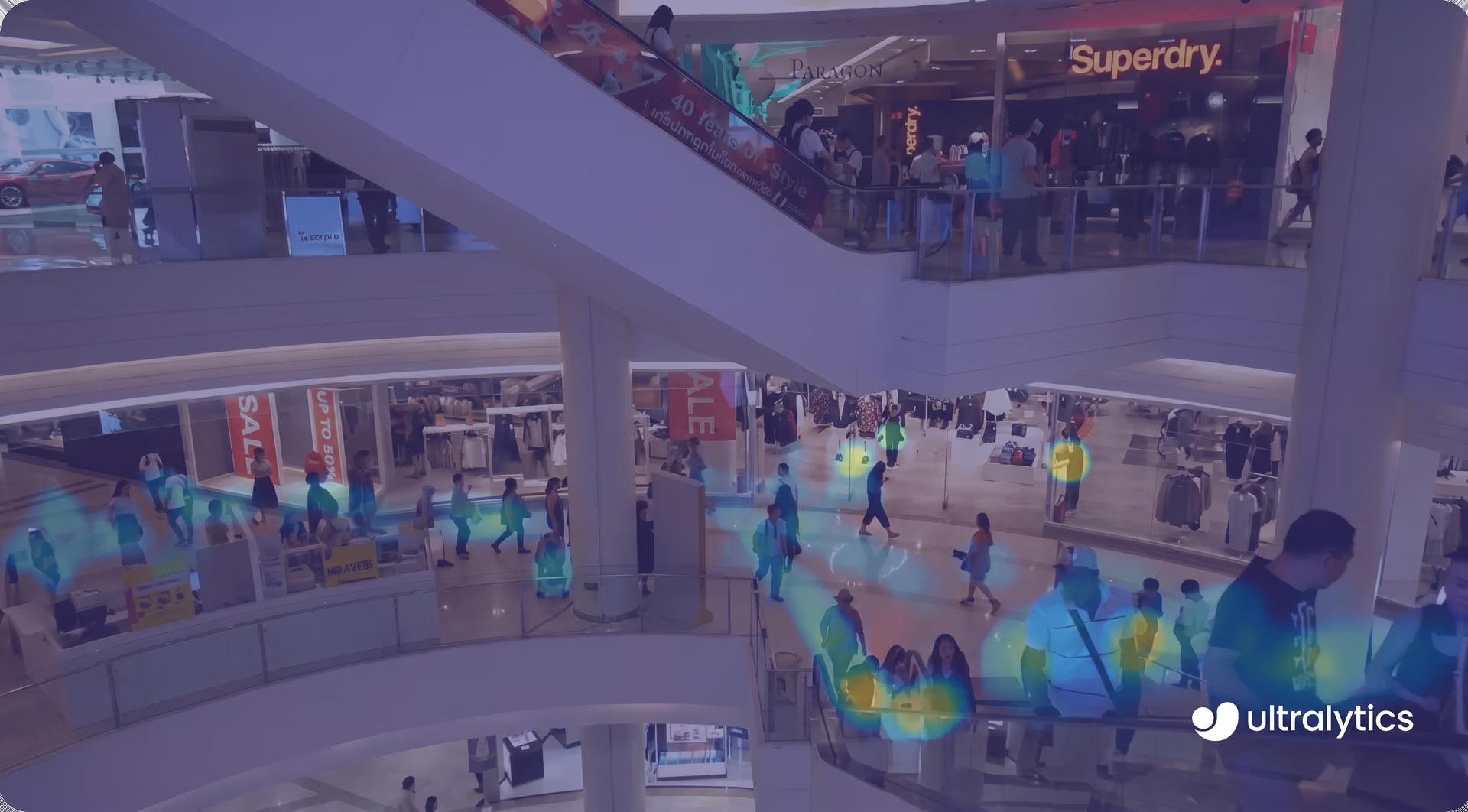
Fig 3. Computer vision can be used to generate customer heat maps.
These insights make it easier to measure true dwell time, identify bottlenecks, and recognize how layout decisions influence customer behavior. This data-driven approach lets retailers optimize floor space, improve customer engagement, and make layout changes that directly support store performance and sales outcomes.
5. Workforce optimization and smarter staff allocation#
Managing staff is one of the toughest parts of running a retail business. Before vision-based systems, staffing was usually planned using past foot traffic trends, manual schedules, and by training employees to handle multiple roles.
Computer vision makes this easier by showing how customers move and gather in the store in real time. Retailers can see where lines are forming, which aisles are getting crowded, and which areas need more attention, then adjust staffing as needed.
This helps avoid having too many employees on the floor during slow periods or too few during busy times. It also makes it simpler to plan staff coverage for promotions, seasonal peaks, and other high-traffic events, keeping both employees and customers better supported.
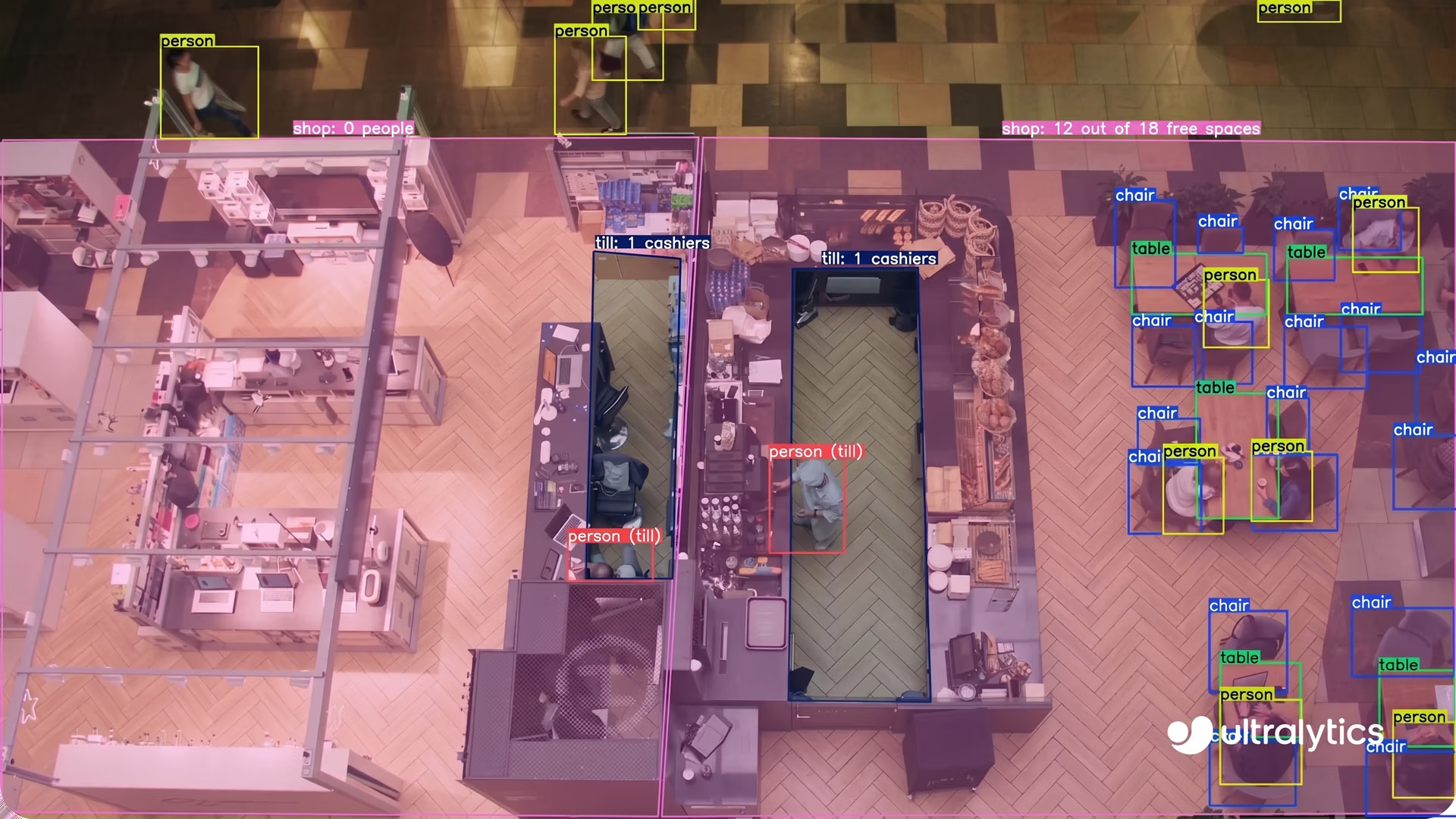
Fig 4. Using Ultralytics YOLO26 to detect people, available spaces, and available tables in mall shops, segment shop and till areas, and detect whether tills are staffed.
6. Enhanced customer experience insights#
Customer experience plays a major role in a retail store’s success. In the past, retailers often relied on surveys and feedback forms to understand how customers felt, but these methods can be inconsistent and incomplete.
Computer vision offers a more reliable approach by measuring customer engagement through real in-store behavior rather than self-reported feedback. By analyzing movement patterns and interactions captured by in-store cameras, vision models such as Ultralytics YOLO26 can be used to identify which areas attract attention and which sections shoppers tend to skip.
Such insights support retailers with pinpointing high-interest zones, evaluating the effectiveness of merchandising strategies and where ads are placed, and understanding how customers naturally navigate the store. As this analysis can run continuously and at scale, retailers can gain consistent, data-backed metrics that reflect actual customer behavior and overall customer satisfaction without interrupting the shopping journey.
7. Continuous, real-time inventory visibility#
Maintaining accurate and precise inventory levels can be complicated, especially across large stores with many moving products. Computer vision technology can assist retailers in keeping an active record of their inventory by continuously monitoring shelves.
A great example is Walmart, a multinational retail corporation with stores and hypermarkets worldwide. The retail giant successfully used computer vision in its Canadian stores to address out-of-stock issues.
By positioning cameras equipped with vision models in high-traffic aisles, the system provides a constant stream of metrics regarding stock levels. When the algorithms detect that a product is running low, they trigger automatic replenishment alerts for store staff.
8. Improved in-store safety and compliance#
In addition to improving sales and inventory management, computer vision supports safety and compliance across retail environments. In busy stores, hazards such as spills, fallen items, or blocked emergency exits can easily go unnoticed.
By combining in-store cameras with automated analysis, computer vision systems can continuously monitor sales floors and back-of-house areas for potential risks. When a safety issue is detected, alerts can be sent immediately so staff can respond quickly and prevent incidents from escalating.
These systems operate quietly in the background, enforcing store policies and protecting both customers and employees. Through continuous and automated monitoring, computer vision can create safer working conditions while still respecting data privacy.
Key takeaways#
Computer vision has become a core part of real-world smart retail operations. It reduces losses, maintains shelf accuracy, and improves overall efficiency, often working quietly in the background without disrupting the customer experience. As real-time and edge-based systems become more widely adopted, computer vision will likely continue to influence how retail workflows operate at scale.
Check our community and GitHub repository to learn more about computer vision. Check out our solutions pages to explore more about applications like AI in logistics and computer vision in agriculture. Discover our licensing options and get started with building your own vision AI model.








