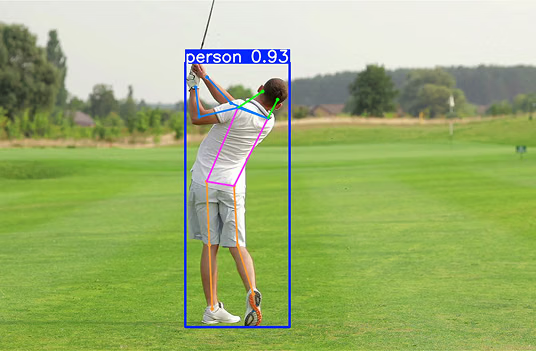
Using Ultralytics YOLO models for pose estimation, ball detection, and court classification, Volley was able to deliver responsive real-time coaching across four sports and has deployed the system to roughly 250 trainers.
Real-time racquet sports training involves a series of moving parts. On a live court, players move quickly, balls travel at high speeds, and the same equipment often has to work across different sports and court types.
Conventional ball machines simply feed balls on a timer without understanding any of this. They have no awareness of where a player is standing, how they are moving, or even which court they are on, which makes it hard to deliver coaching that feels tight, responsive, and tailored to the player.
Volley helps solve these challenges with an AI-powered trainer. Its programmable, on-court machine uses computer vision to see and understand the court in real time. For instance, Ultralytics YOLO models are used for player pose estimation, ball detection, and court classification, allowing the trainer to interact with players responsively as they move and hit.
Building the future of racquet sports with AI#
Volley, based in Lancaster, Pennsylvania, builds AI-powered assessment and training systems for racquet sports. The company was founded on a simple question: what if racquet sports had a training and rating system as engaging and data-driven as golf? Where golf offered simulators, real-time feedback, and objective progress tracking, racquet sports had no equivalent, no objective ratings, and no data-driven development path.
To close that gap, Volley built the world's first AI-enabled racquet sports assessment and rating system. Today, Volley is used at clubs across the United States, giving players and clubs the objective data they had been missing, with every unit designed, built, tested, and shipped domestically.
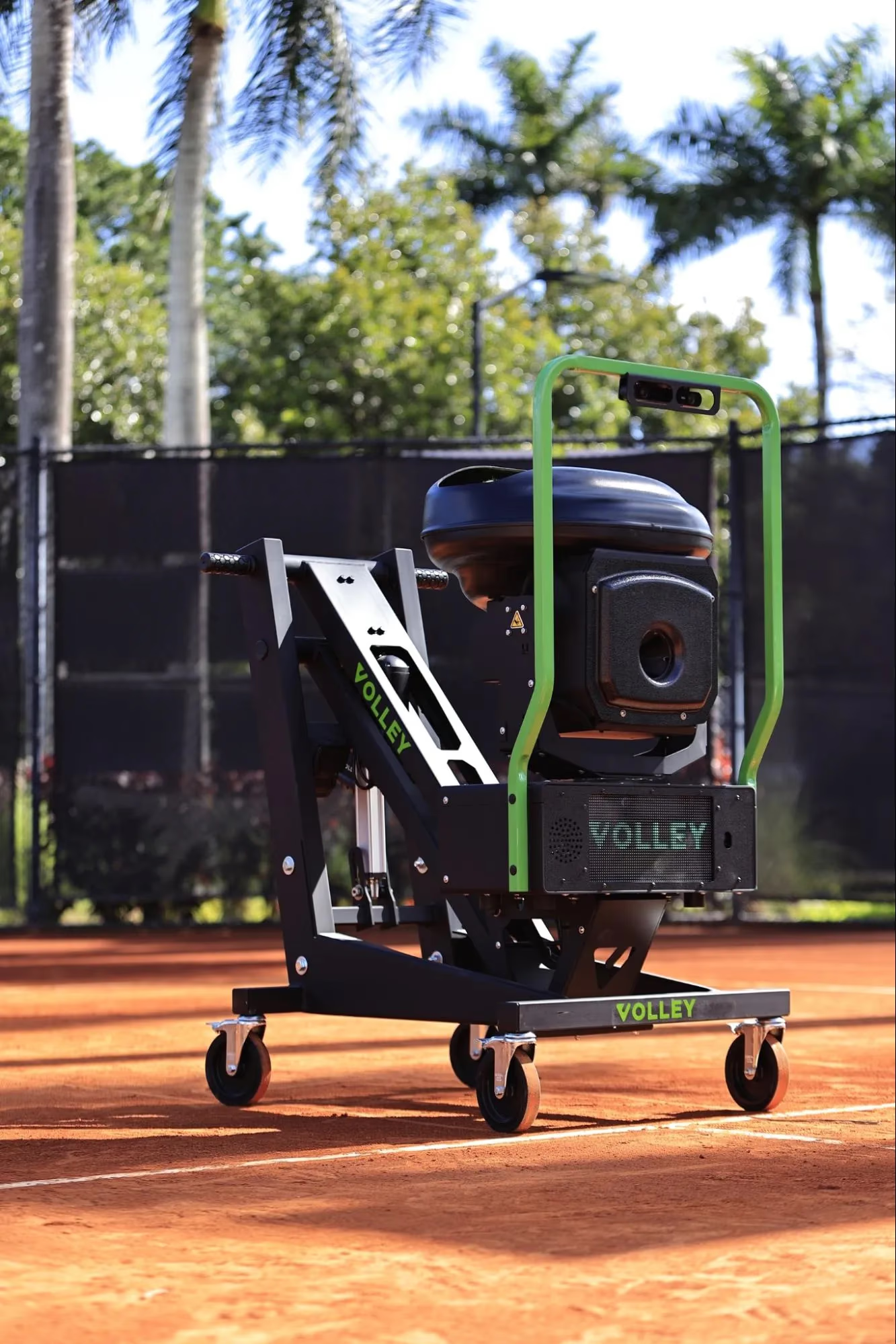
Fig 1. A look at Volley's AI-powered trainer
The Volley trainer works across pickleball, padel, platform tennis, and tennis. Because it is compact and portable, the same machine can roll onto any court, and players and pros can move it between platforms throughout the day.
The lack of real-time, on-court intelligence#
Delivering interactive training requires both accuracy and speed, but real court environments make that difficult. Players appear at varying distances from the camera, balls move quickly and vary in size across sports, and the same trainer may be used on a tennis court one moment and a platform tennis court the next.
Knowing that a person is present in front of the trainer isn't enough. The system needs to know precisely where players are on the court, which depends on accurately locating their hands and, critically, their feet. At a distance, this becomes especially hard, and imprecise tracking breaks down the responsiveness that makes training feel like real play.
Another factor to consider is safety. Since the same machine moves between sports, a trainer accidentally left on a tennis setting could fire an 80-mile-per-hour ball at a player on a platform tennis court, far faster than that game is ever played and fast enough to catch a player off guard. The system needs to understand its environment well enough to prevent that kind of mismatch.
On top of all this, the processing has to happen live. Volley captures and processes video on an NVIDIA Jetson system with an onboard camera, rather than sending footage to the cloud, so detection has to run in real time on compact, embedded hardware as players interact with the trainer.
Using Ultralytics YOLO models to power real-time coaching#
At the center of Volley's system is a vision AI pipeline built on Ultralytics YOLO models that support key computer vision tasks such as object detection, pose estimation, and image classification.
Here are the three ways Volley puts them to work across the coaching experience:
- Detecting players and their positions: Understanding where players are and how they are moving is enabled by YOLO's pose estimation capabilities, which Volley custom-trained for the specific context of players on a court in sport-specific poses. Because precise hand and foot positions are key, the system runs a two-stage approach. It first uses object detection to carefully crop each player, then runs pose estimation on that cropped region. This works well because only a few players are on a court at a time, rather than crowds of hundreds.
- Detecting the ball: Locating the ball in play is made possible by YOLO's support for object detection, which Volley trained to recognize the full range of sports balls used across the supported sports, each with its own size and characteristics.
- Identifying the court: Recognizing which court the trainer is on is enabled by YOLO's image classification capabilities. So even if a trainer is set for tennis but rolled onto a platform tennis court, the system identifies the court type and adjusts accordingly, which adds both a safety and a convenience benefit.
This combination of detection, pose estimation, and classification gives the trainer the real-time awareness it needs to respond to players as they play. Currently, Volley runs this pipeline in production on Ultralytics YOLO11.
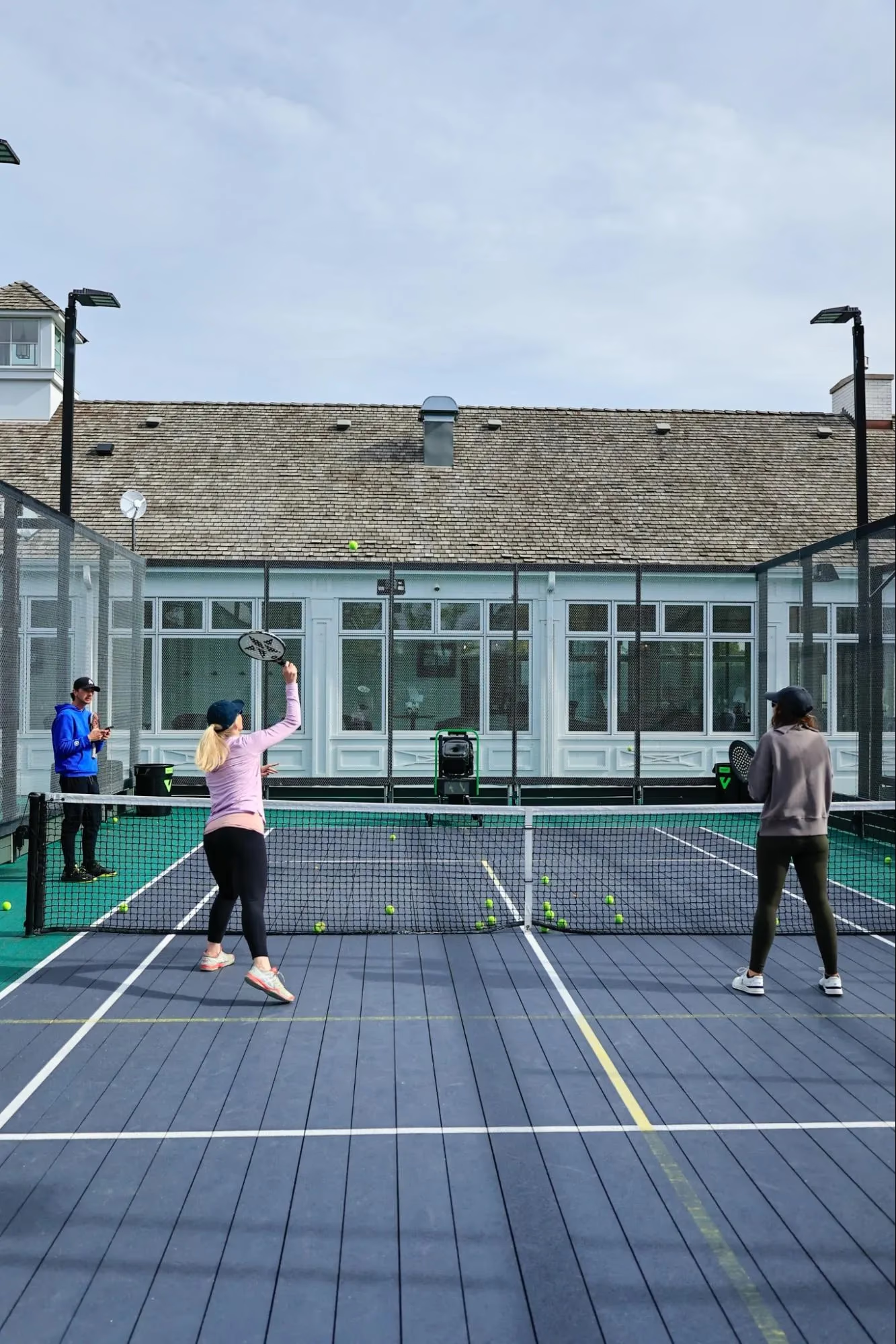
Fig 2. An example of Volley's AI-driven trainer in action
Why choose Ultralytics YOLO models?#
Ultralytics YOLO models give Volley the speed and accuracy needed for real-time coaching on fast-moving courts, while running comfortably on the compact, embedded hardware mounted on each trainer. That same efficiency carries over to the cloud, where Volley can run the exact same model and pipeline, so improvements made in one environment apply to the other.
This performance has also created room to grow. By making better use of its hardware, Volley has freed up headroom that is now being put toward upgraded cameras, giving players an even better experience on court without changing the underlying pipeline.
Just as important is how easily Volley can train and refine these models. Rather than annotating images by hand, Volley records sessions on the court and builds a large clip library of the exact situations it needs to capture.
It then runs that footage through slower, high-end pose models that are far too heavy to run in real time on the trainer, using them to automatically label the data. That knowledge is then transferred to the faster, more agile YOLO models, so the on-court models learn from much heavier ones while still running live.
Volley scales coaching across four sports with Ultralytics YOLO#
The impact of building on Ultralytics YOLO models shows up in how widely Volley can run responsive coaching. The system has been deployed to roughly 250 trainers and cameras overall. Each one captures and processes video live on its onboard hardware.
A single trainer works across tennis, padel, platform tennis, and pickleball. The same machine can move between courts throughout the day, and YOLO's image classification capabilities keep it behaving correctly wherever it is rolled.
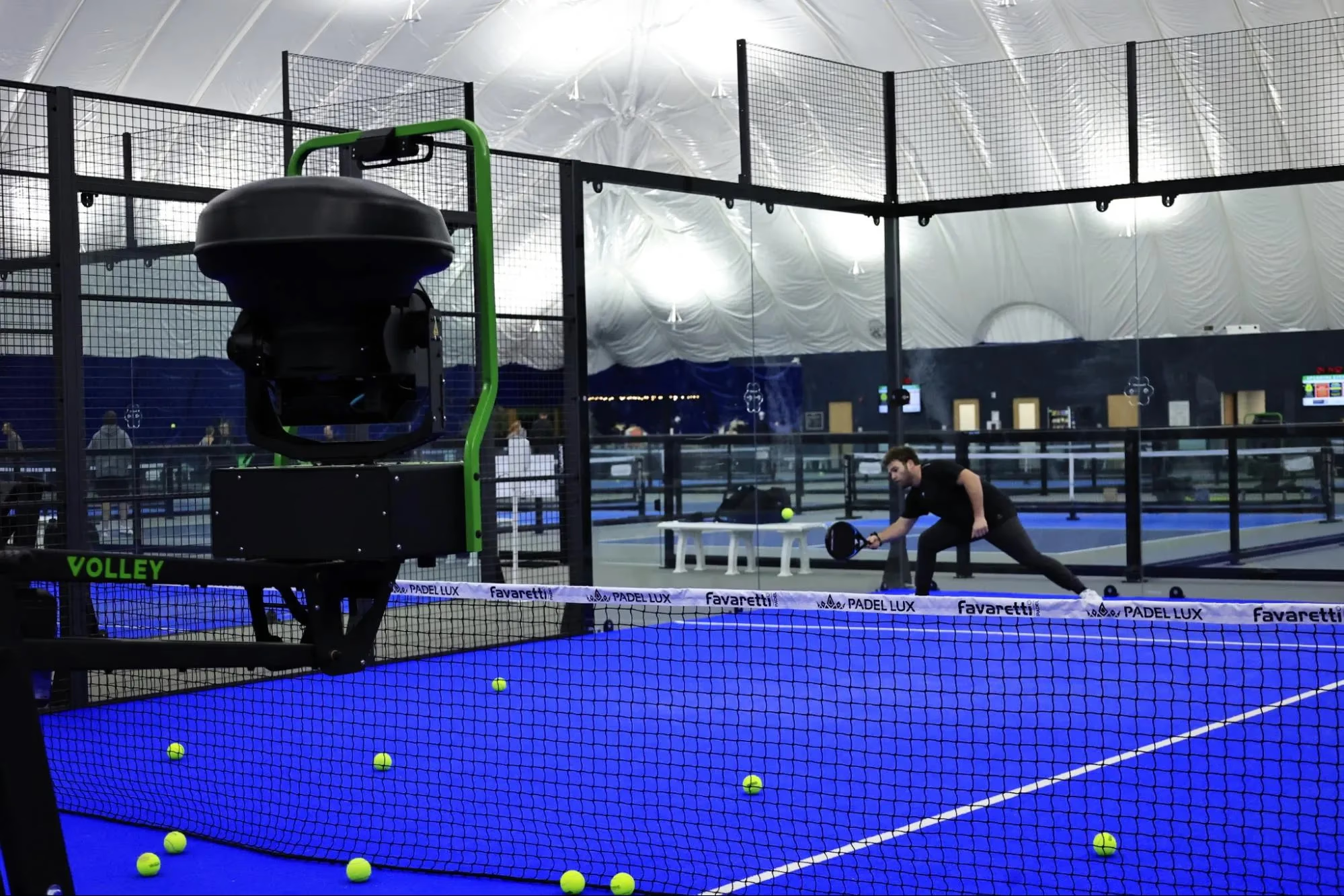
Fig 3. Volley uses Ultralytics YOLO for real-time player and ball tracking across racquet sports.
This real-time awareness powers what players actually see. In a 20-minute session, Volley's AI evaluates a player's strokes, movement, and shot selection. It then produces an objective Volley Skill Rating and a shot-by-shot breakdown of their game.
The same pipeline reshapes how players train. The trainer feeds balls based on where a player stands on the court, so they can drill footwork and patterns like Serve + 1 completely hands-free.
Engineering the next generation of racquet sports#
As Volley expands, the company is focused on making racquet sports training as measurable and data-driven as the systems that transformed golf. By pairing real-time computer vision with objective skill assessments, it is helping clubs move from simply operating courts to actively developing players.
Ultralytics YOLO models continue to drive this work. Volley runs its production pipeline on Ultralytics YOLO11 today and has already begun exploring Ultralytics YOLO26, the next generation of real-time vision models, as it brings responsive, data-rich coaching to more players and clubs.
Curious about vision AI? Discover our licensing options to bring computer vision to your projects. Visit our GitHub repository and join our community. Explore AI in robotics and computer vision in logistics on our solution pages.