Ultralytics at AMD Dev Day Shanghai: local AI meets agentic systems
Ultralytics shares takeaways from AMD Dev Day Shanghai on AMD AI: local AI deployment, agentic systems, ROCm, and the Ryzen AI Max 395.
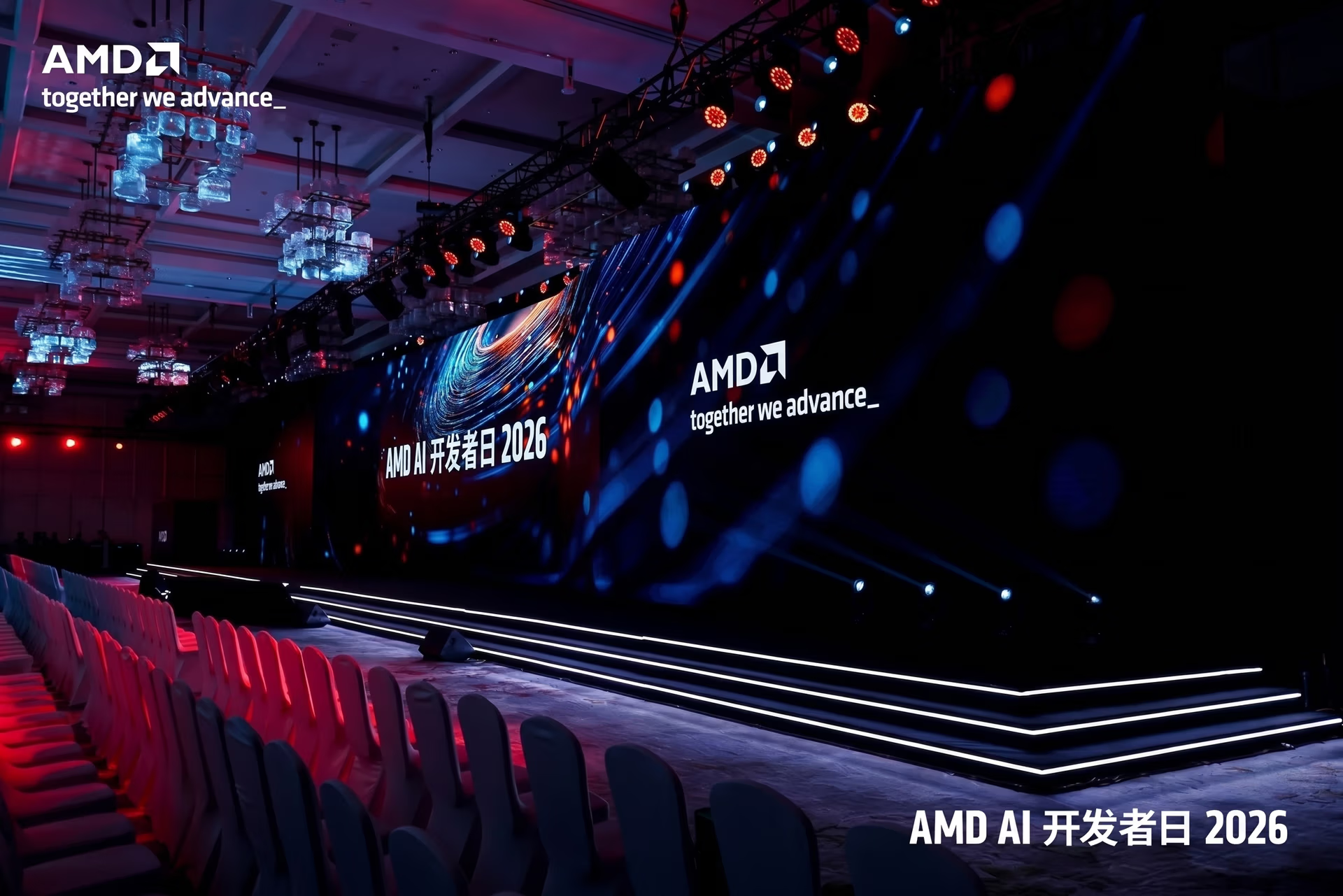
Ultralytics attended AMD Dev Day in Shanghai to hear how AMD and its partners are shaping the next phase of AI infrastructure. The strongest message from the event was clear: The AMD AI conversation is moving beyond standalone models and toward deployable AI systems. Across the talks, product demos, and partner discussions, the biggest themes were agentic AI, local AI deployment, open-source ecosystems, and the developer tools needed to make these systems practical at scale.
As AMD Chair & CEO, Lisa Su, put it, “There’s never been a more exciting time to be in technology than today.”
For teams building real AI products, that shift matters. It suggests that success in the next stage of the market may depend less on access to a single frontier model and more on how well teams can orchestrate workflows, control inference costs, protect sensitive data, and choose the right deployment environment for the job.
AMD’s message: AI needs a full-stack compute strategy#
A major theme throughout AMD Dev Day was AMD’s push to position itself as a full end-to-end compute provider for the AI era. The company framed its approach around supporting AI workloads across cloud, client, and edge environments, while emphasizing an open software ecosystem rather than a closed proprietary stack.
That framing is important because it reflects how AI development is evolving. Building modern AI products is no longer just about training or calling a model API. Teams increasingly need to support local experimentation, multi-agent workflows, inference optimization, workstation-scale testing, and enterprise deployment. AMD’s event messaging consistently tied its hardware story to that broader software-and-systems reality.
That ambition was summarized clearly by Lisa Su during the event: “We want to bring AI everywhere to the ecosystem.”
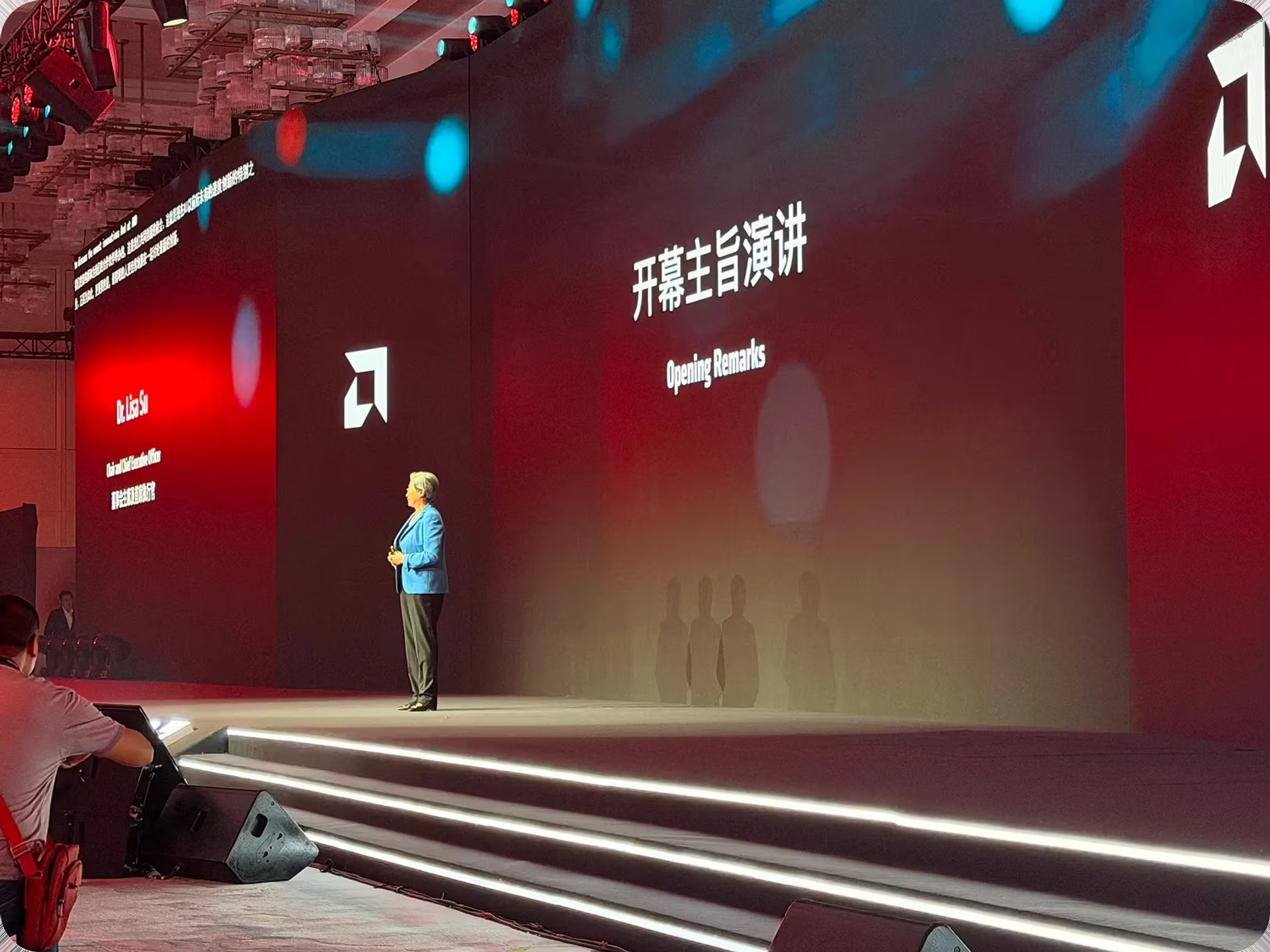
Fig 1. Lisa Su on stage at the AMD Dev Day event in Shanghai.
Agentic AI was the dominant theme of the event#
If there was one idea repeated throughout the day, it was the transition from traditional LLM interactions to agentic AI systems. Speakers described this shift as moving from one-shot prompts and responses toward multi-agent orchestration, where different agents plan, execute, critique, and collaborate across workflows.
That matters because agentic systems place new demands on the AI stack. According to the event’s framing, these systems need not only GPU performance but also significant CPU processing, data flow orchestration, and memory capacity to support repeated inference loops and multi-step execution.
For developers and AI teams, the takeaway is that the competitive edge may come from building effective AI systems, not simply selecting the most capable model. The ability to connect models to workflows, tools, local data, and business processes is becoming a core part of the product itself.
Local AI deployment is becoming more strategic#
Another notable theme at AMD Dev Day was the emphasis on local AI deployment. AMD and its partners repeatedly made the case that advanced AI workloads increasingly need to run closer to where work happens, including on laptops, workstations, and enterprise hardware.
The reasons were consistent throughout the event:
- Lower latency
- Better data privacy
- Stronger control over sensitive workflows
- Reduced dependence on cloud API costs
AMD used Ryzen AI Max 395 as a key proof point in that argument, highlighting configurations with up to 128GB of unified memory and the ability to run large models locally in a single memory pool without sharding. The event also showcased workstation-scale development setups using the Radeon AI Pro R9700 and AMD Threadripper Pro 9000 for testing and local scaling before deployment.
The overall message wasn’t about the cloud disappearing. Instead, the event presented a hybrid model where local and cloud environments work together. More routine, latency-sensitive, or privacy-sensitive tasks can run locally, while more demanding tasks can still be escalated to the cloud when needed.
AI inference cost and token demand are shaping infrastructure choices#
AMD Dev Day also highlighted the economic pressure behind these architecture decisions. Speakers at the event emphasized rapid growth in token demand, rising inference costs, and the pressure this creates for developers and enterprises building AI products.
Within that framing, local AI was presented as a cost-control strategy as much as a technical one. The event’s repeated message was that the next phase of AI will reward teams that use compute more efficiently, not simply those that consume the most of it.
For AI builders, that is a practical signal. Infrastructure decisions are increasingly product decisions. Latency, privacy, memory, and token cost are no longer secondary engineering details.
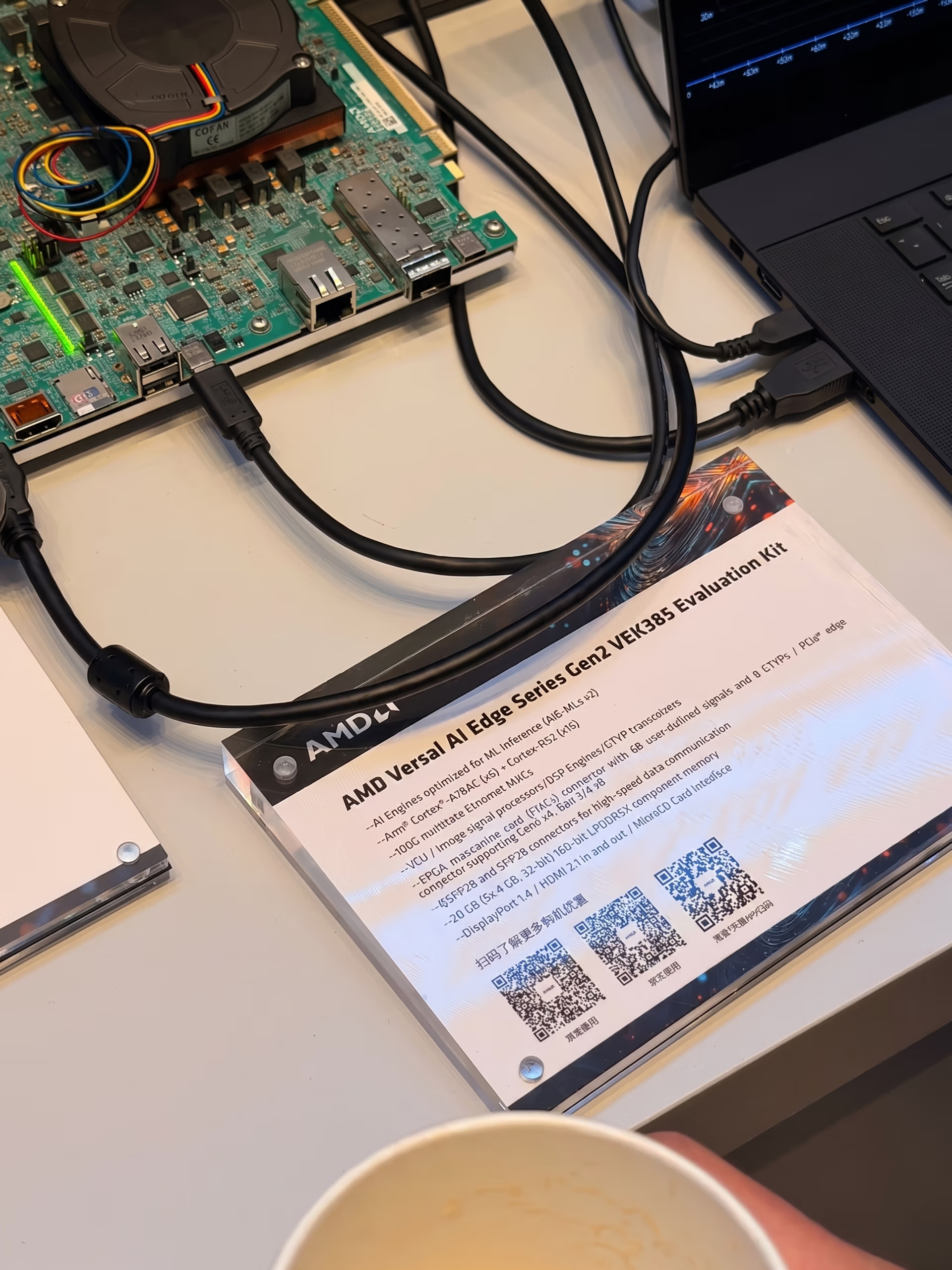
Fig 2. AMD Versal AI Edge Series Gen2 VEK385 Evaluation Kit.
AMD ROCm and the open-source AI ecosystem#
Another major takeaway from AMD Dev Day was the central role of open software ecosystems. AMD emphasized ROCm, zero-code-change support for major frameworks, support for more than 3 million models through Hugging Face and ModelScope, and day-zero support goals for new model releases.
Nick Ni, Sr Director, AI Product Management at AMD, captured that emphasis well: “For most of you in this room, in fact, software is the story.”
The event also highlighted several developer-focused initiatives:
- AMD AI Developer Cloud with free GPU access for developers in China
- ModelScope Studio integration with AMD GPU runtime options
- AMD AI Playbooks with step-by-step guides
- A developer program that added more than 100,000 developers in recent months
This part of the event felt especially important because it underlined a basic truth: Hardware capability alone does not drive adoption. Developers need mature tooling, familiar frameworks, documentation, and frictionless ways to experiment. The ecosystem story is what turns performance claims into usable platforms.
Why China stood out at AMD Dev Day#
China’s role in the AI market was yet another recurring theme. Multiple speakers described China as a leading environment for open-source AI innovation, particularly in areas shaped by efficiency, local deployment, and practical engineering constraints.
Partnerships with Zero One AI and Stepfun were used to reinforce that point. The event notes described a joint enterprise multi-agent all-in-one system with Zero One AI built on Ryzen AI Max architecture for local deployment, and a Stepfun model optimized for AMD hardware and designed for agentic tasks.
The larger implication was that China is not only a major AI market but also an important proving ground for local AI deployment, open-source models, and cost-sensitive infrastructure design.
What Ultralytics took away from AMD Dev Day Shanghai#
From the Ultralytics team's perspective, the most useful signal from AMD Dev Day was the focus on deployable AI systems rather than AI capability in the abstract. The event consistently centered on how developers and enterprises can actually run, integrate, secure, and scale AI in production environments.
That includes questions like:
- What should run locally versus in the cloud?
- How should teams think about latency and privacy?
- How can developers reduce dependence on expensive inference APIs?
- What tools and software layers make AI platforms easier to adopt?
These are practical questions, and they increasingly define how successful AI products get built. There are also questions we think about directly in how we build and ship Ultralytics YOLO models. Deployment flexibility, whether a model runs on a laptop, a workstation, or a cloud instance, has always been a core design constraint for us, not an afterthought.
The push toward open-source ecosystems and inference efficiency at AMD Dev Day reinforced something we already believe: the most useful AI tools are the ones that fit into real workflows, on real hardware, without requiring teams to rebuild their infrastructure around a single vendor or platform.
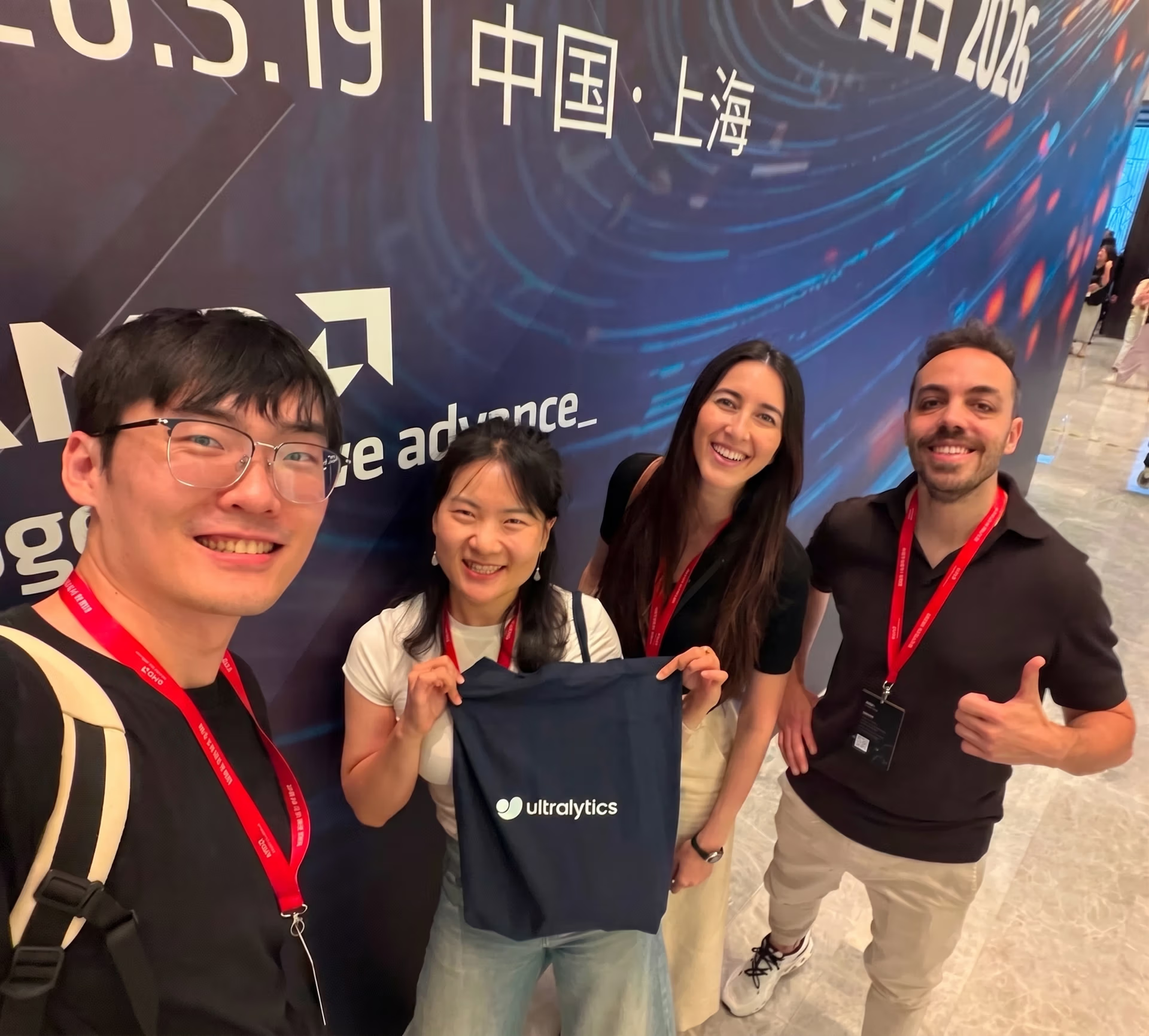
Fig 3. The Ultralytics team at AMD Dev Day in Shanghai.
Final thoughts#
AMD Dev Day Shanghai made one thing clear: The conversation around AI infrastructure is maturing. The focus is shifting from raw model scale alone to the broader systems needed to make AI useful in the real world. Agentic workflows, local AI deployment, open-source tooling, and infrastructure efficiency were the clearest themes throughout the event.
For teams building AI products, that shift is worth paying attention to. The next wave of progress may come from choosing the right architecture, the right deployment model, and the right developer ecosystem, not just the biggest model.
If you're building computer vision systems and thinking about where inference should run, on-device, on-premise, or in the cloud, Ultralytics YOLO models are designed with that flexibility in mind. Explore our GitHub repository to get started, see how computer vision fits into real-world deployments in manufacturing and logistics, or check out our licensing options to start building.








