Understanding why human-in-the-loop annotation is key
See how human-annotated data improves the accuracy of computer vision models, and why human expertise is still essential for reliable vision AI systems.
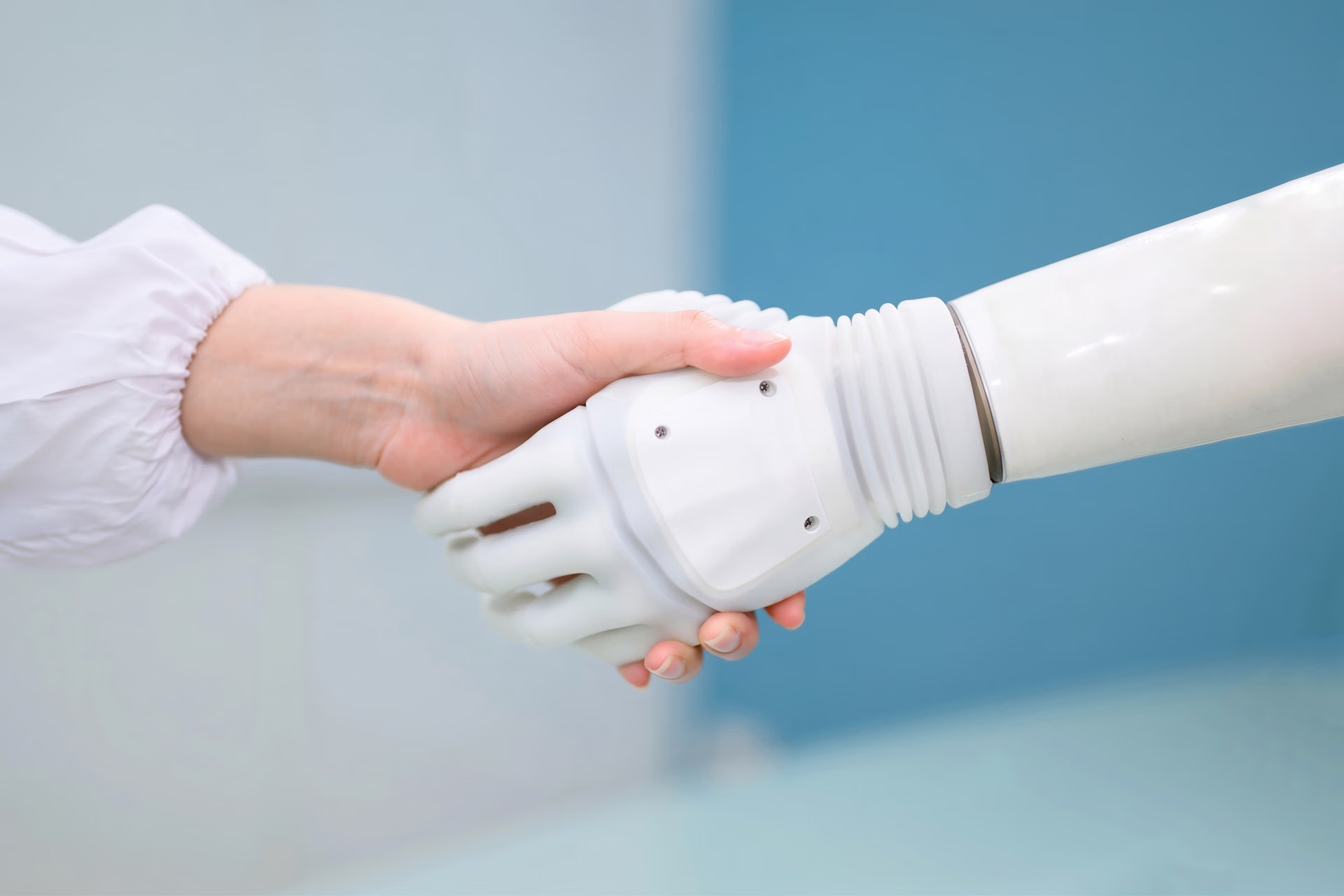
Twenty years ago, if someone said they were thinking about getting a robot to help around the house, it would have sounded really far-fetched. However, we are in the midst of the AI boom, and robots are being tested in similar scenarios.
A key field of AI driving this progress is computer vision, which gives machines the ability to understand images and videos. In other words, computer vision models like Ultralytics YOLO11 and the upcoming Ultralytics YOLO26 can be trained on datasets that consist of visual data and annotations.
These annotations help the model understand the visual data. For instance, object detection datasets use bounding boxes to draw rectangles around objects of interest. This enables the model to detect and locate those objects in new images, even when the scene is cluttered or the object is partly hidden.
Other computer vision tasks depend on different kinds of annotations. Segmentation datasets label the exact outline of an object at the pixel level, while keypoint datasets mark specific landmarks such as joints on a person.
However, across all these formats, one crucial factor is the quality and consistency of the labels. Models learn directly from the data they are trained on, so if the labels are inconsistent or wrong, the model will often carry those mistakes into its predictions.
Even with automation, human-annotated datasets are still crucial, especially in high-stakes areas like medical imaging. Small labeling errors, like an imprecise tumor boundary or a missed abnormality, can teach the model the wrong pattern and lead to unsafe predictions later. Human experts provide the accurate ground truth and judgment that these applications require.
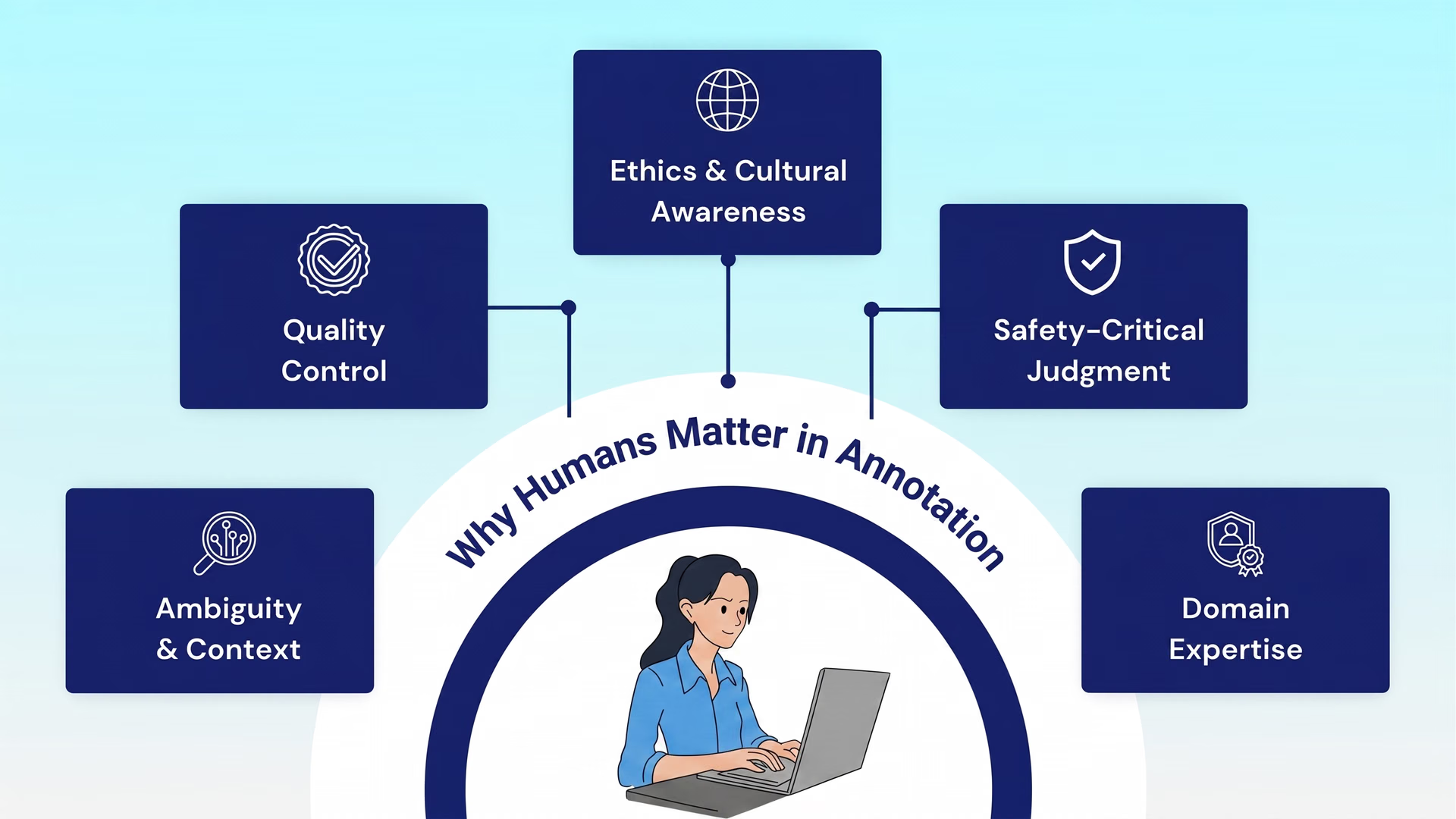
Fig 1. There’s a need for human-annotated datasets. Image by author.
In this article, we’ll take a closer look at why human-annotated data is essential, even as AI keeps advancing.
The need for image and video annotation#
Computer vision models learn a lot like we do, by seeing many examples. The difference is that they learn through training on large datasets of images and videos that humans label ahead of time. Those labels act as ground truth, teaching the model things like this is a pedestrian, here is the boundary of a tumor, or that object is a car.
Real-world visuals are rarely clean or consistent. Lighting can shift and make the same object look different. People and vehicles may overlap or be partly hidden. Backgrounds can be busy and distracting. When datasets include careful, consistent labels across these situations, models are much better prepared for what they will face outside controlled settings.
Data annotation is also more than just drawing boxes or tracing outlines. It involves applying guidelines and making practical calls about what counts as the object, where its boundary should be, and what to do when something is unclear. That human judgment keeps the data accurate and usable.
In the end, a computer vision system performs only as well as the labeled data it learns from. In high-impact applications like spotting cancer in scans or detecting road hazards for self-driving cars, precise labels from skilled people make a real difference in accuracy and safety.
The rise of automation in data annotation#
As computer vision scales and datasets grow, automation is becoming a common way to speed up annotation. Instead of labeling everything by hand, teams use AI models to produce a first pass of labels.
Humans then review the results, fix mistakes, and handle cases the model can't label with confidence. This approach speeds up annotation while keeping quality high.
Here are a few ways automation typically helps with data annotation:
- Auto segmentation: Models can automatically suggest object outlines or pixel-level masks, which reduces the amount of manual tracing that annotators need to do.
- Optical flow tracking: When it comes to videos, tracking methods can follow a moving object across frames and carry its label forward, helping keep annotations consistent over time.
- Frame interpolation: Tools can fill in labels for the frames between two labeled frames by using motion and tracking cues, so annotators don’t have to label every single frame.
- Active learning: Training pipelines can identify examples the model finds uncertain or unusual and send those to humans first, so manual effort goes toward the data that improves performance most.
Why human data annotation is still so crucial#
While automation can speed up labeling, AI models still need human judgment to stay accurate and reliable.
Here are some key areas where human expertise makes an impact in data annotation:
- Understanding context: Real images and videos are often messy. Shadows, reflections, motion blur, and overlapping objects can confuse automated tools. Human annotators can interpret what is actually happening, so labels are more accurate.
- Keeping labels consistent: As datasets grow, automated labels can drift or vary across batches. Humans can audit, correct, and align labels so the dataset stays consistent from start to finish.
- Reducing bias and harm: People are better at spotting sensitive content, cultural nuance, and patterns that could introduce bias. Their oversight helps make datasets fairer and avoids unintended harm.
- Applying subject-matter expertise: Some tasks need domain knowledge, like identifying medical abnormalities or industrial defects. Experts can provide precise labels and resolve ambiguous cases so the model learns the right details.
An overview of human-in-the-loop annotation#
Annotation tools and platforms like Roboflow integrate automation to speed up labeling, often by using foundation models such as Segment Anything Model 3 or SAM3. SAM3 is Meta AI’s promptable segmentation foundation model.
It can detect, segment, and track objects in images and videos from simple prompts like clicks, bounding boxes, or short text phrases, producing segmentation masks for matching objects without needing task-specific training for each new category.
Even with these cutting-edge approaches, human experts are still needed to review and finalize the annotations. When automated tools produce a first draft, and humans verify, correct, and refine it, the workflow is known as human-in-the-loop annotation. This keeps annotation fast while ensuring the final labels are accurate and consistent enough for training reliable models.
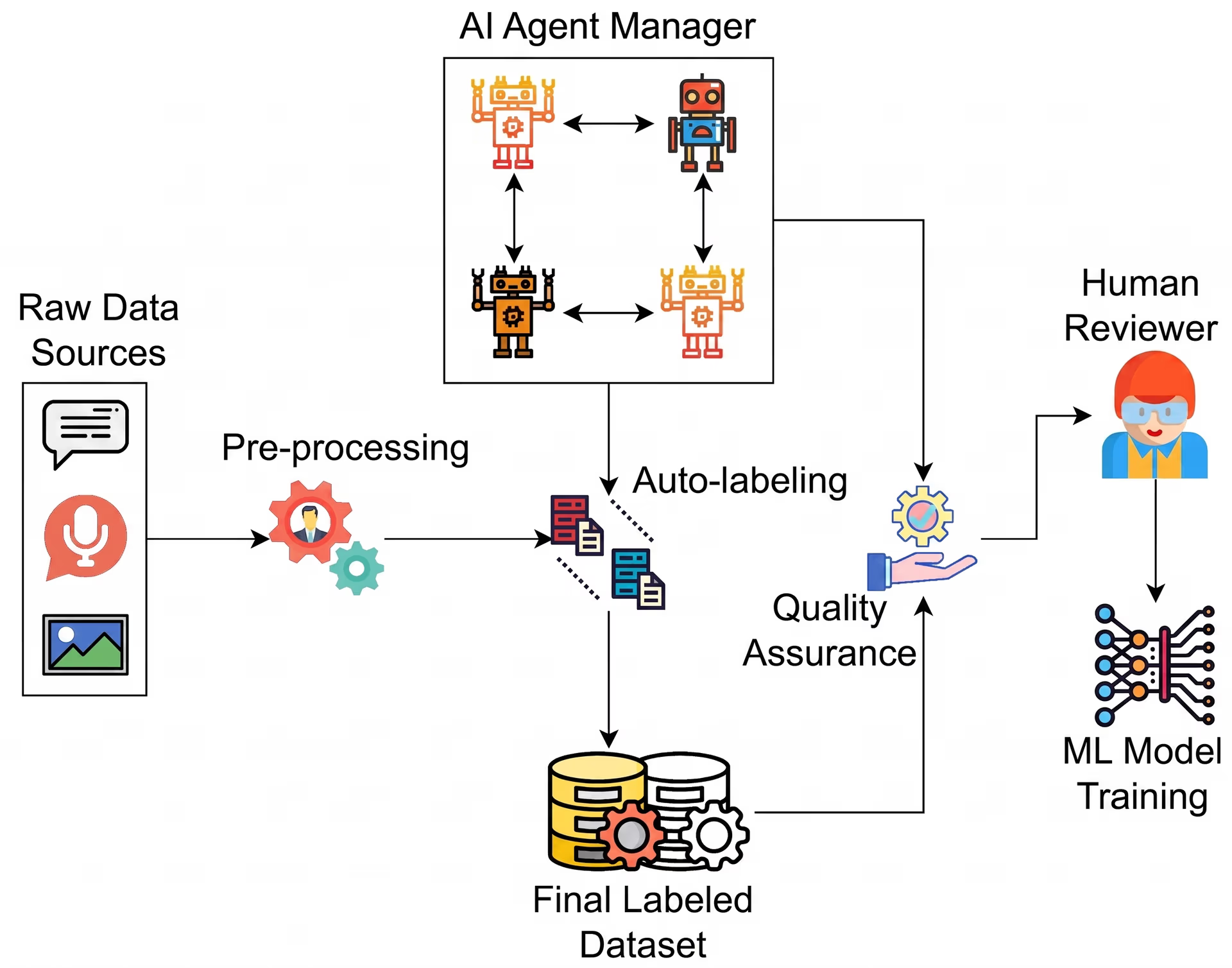
Fig 2. A look at human-in-the-loop annotation. (Source)
When automation for annotation works and when it doesn’t#
Automated annotation works best for data that comes from controlled places. Images collected in factories, warehouses, or retail aisles usually have steady lighting and clear views of objects, so automated tools can label them accurately and help teams scale faster with less manual work.
Data from less controlled places is more complex. Outdoor footage changes with time of day and weather, and scenes from streets or homes often include clutter, motion blur, objects blocking each other, and lots of overlap. Small objects, fine boundaries, or rare situations add even more room for error. A model that performs well on clean indoor data may still struggle on messy real-world visuals.
That is why human input still matters. People can step in when the model is uncertain, interpret tricky context, and fix mistakes before they end up in the final dataset. Human-in-the-loop annotation helps automation stay grounded in real-world conditions and keeps models reliable after deployment.
Where can human-in-the-loop annotation make a difference?#
Now that we have seen where automation works well and where it falls short, let’s explore a few applications where human-in-the-loop annotation plays an important role.
Defect detection in manufacturing#
Consider a factory conveyor belt where hundreds of parts pass under a camera every minute. Most defects are obvious, but once in a while, a hairline crack appears at an odd angle or under glare from a light. An automated system might miss it or label it as harmless surface texture, but a human reviewer can spot the flaw, correct the annotation, and make sure the model learns the difference.
That is the role of human-in-the-loop annotation in industrial inspection. Automation can pre-label common defect types and speed through large volumes of images, but humans still need to verify the results, tighten boundaries, and handle rare failures that don’t show up often in training.
Autonomous vehicles and smart transportation#
Similarly, autonomous vehicles use computer vision to spot pedestrians, read signs, and navigate traffic, but real roads are unpredictable. For example, a pedestrian stepping out from behind a parked car at night can be partly hidden and hard to see under glare.
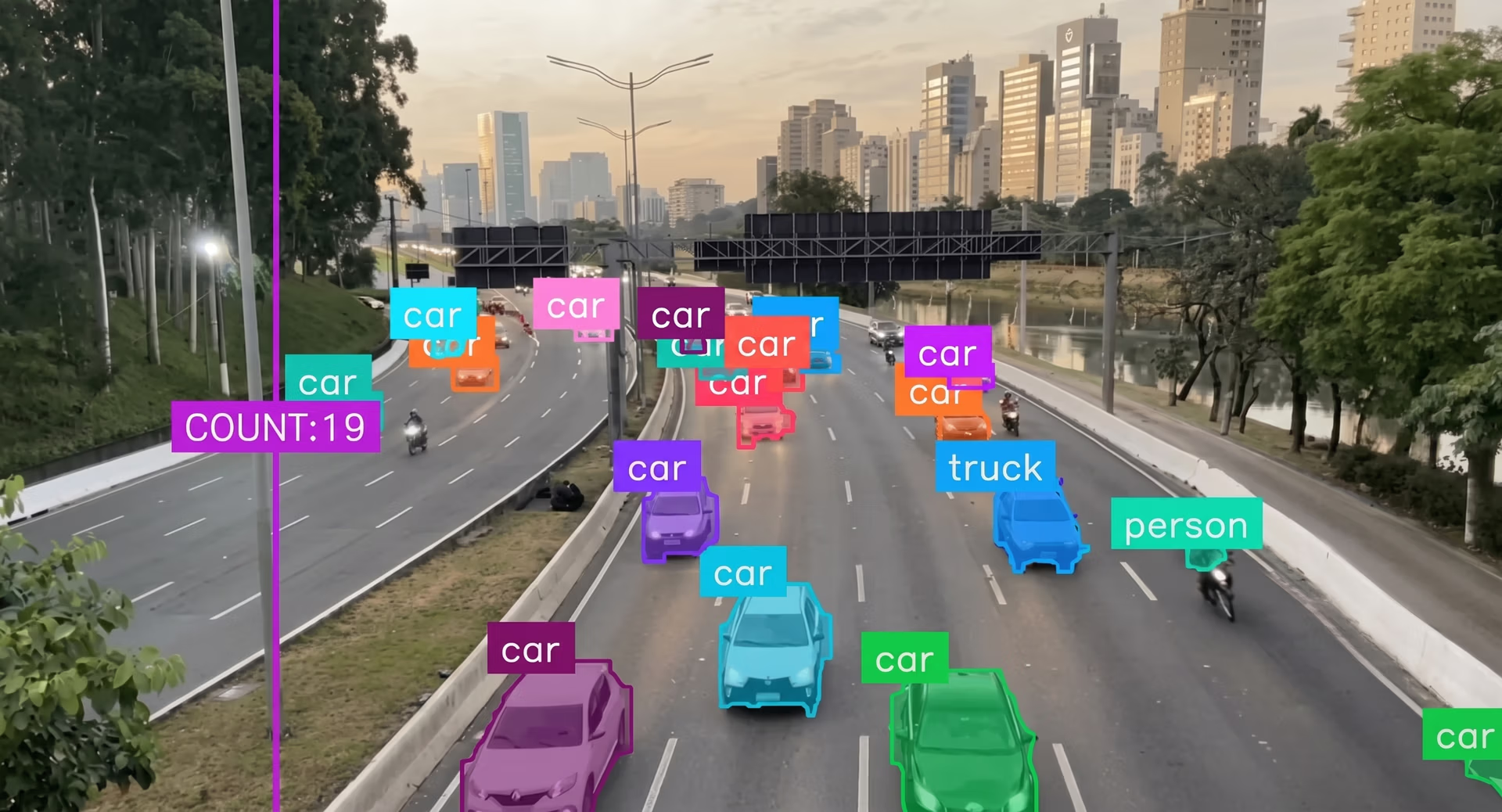
Fig 3. An example of using computer vision to analyze traffic. (Source)
Human annotators can label these rare, safety-critical edge cases during training so models learn the right response, not just in normal conditions but in the moments that matter most. This human-in-the-loop step is key for teaching systems to handle low-frequency events that are hard to capture with automation alone.
The road ahead for human-annotated datasets#
Human-in-the-loop annotation is becoming more collaborative as technology advances. Interestingly, vision language models (VLMs), which learn from both images and text, are now being used to create a first pass of labels and suggest fixes from simple prompts.
So instead of manually scanning every image to decide what to label, an annotator can prompt a VLM with a phrase like “label all pedestrians, cars, and traffic lights” or “segment all defects on this part,” and get a draft set of annotations to review.
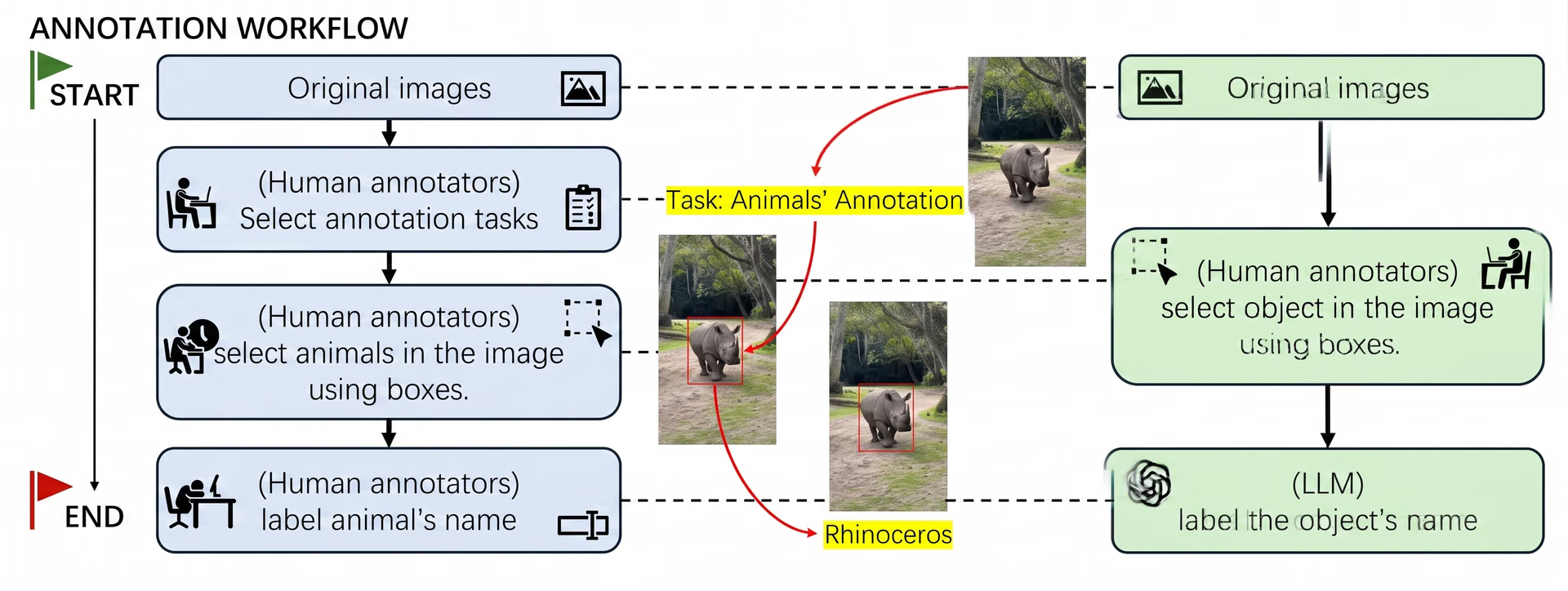
Fig 4. Large multimodal models can work with human annotators (Source)
This reduces annotation time because the model can handle many straightforward cases up front, so humans can focus on reviewing results, correcting tricky examples, and keeping the dataset consistent. Large multimodal models are also starting to guide annotators toward the most uncertain samples, making human effort more targeted and improving overall dataset quality.
Key takeaways#
Computer vision helps machines interpret and react to what they see, but it works best with human expertise in the loop. Human-annotated data keeps models grounded in real-world conditions and improves how reliably they perform. With automation and human judgment working side by side, teams can build impactful vision systems.
Join our active community and explore innovations such as AI in logistics and Vision AI in robotics. Visit our GitHub repository to discover more. To get started with computer vision today, check out our licensing options.








