Key highlights from Ultralytics at EuroShop 2026 in Düsseldorf
Join us as we recap Ultralytics’ time at EuroShop 2026, where we showcased vision AI-powered retail solutions, from smart checkout to edge-deployed vision systems.
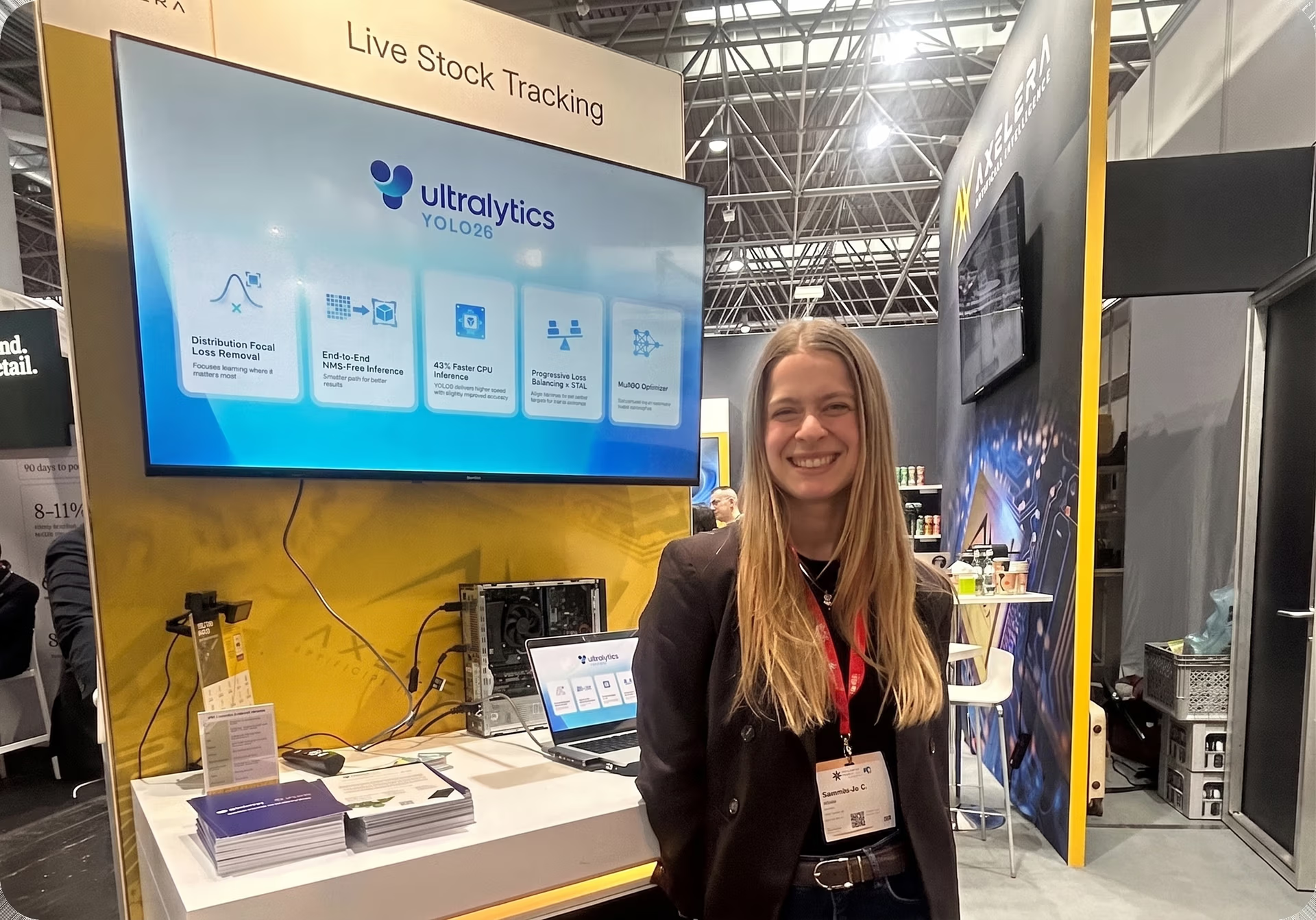
Last week, from February 22 to 26, the global retail community came together in Düsseldorf, Germany, at Messe Düsseldorf for EuroShop 2026. As one of the largest trade fairs dedicated to retail, the event brought together more than 1,800 exhibitors and an international mix of retailers, technology providers, and innovators exploring what comes next for physical stores.
Ultralytics attended on February 23rd and 24th in Hall 5 / A24, where Hannah Streif, our Account Executive and Partnerships Associate, spent two energy-packed days connecting with retail innovation teams, startups, AI solution integrators, and hardware partners.
At our booth with our partner Axelera AI, we showcased how computer vision powered by Ultralytics YOLO models, including Ultralytics YOLO26, can support real-world retail applications, from theft detection and smart checkout to shelf monitoring and in-store analytics.
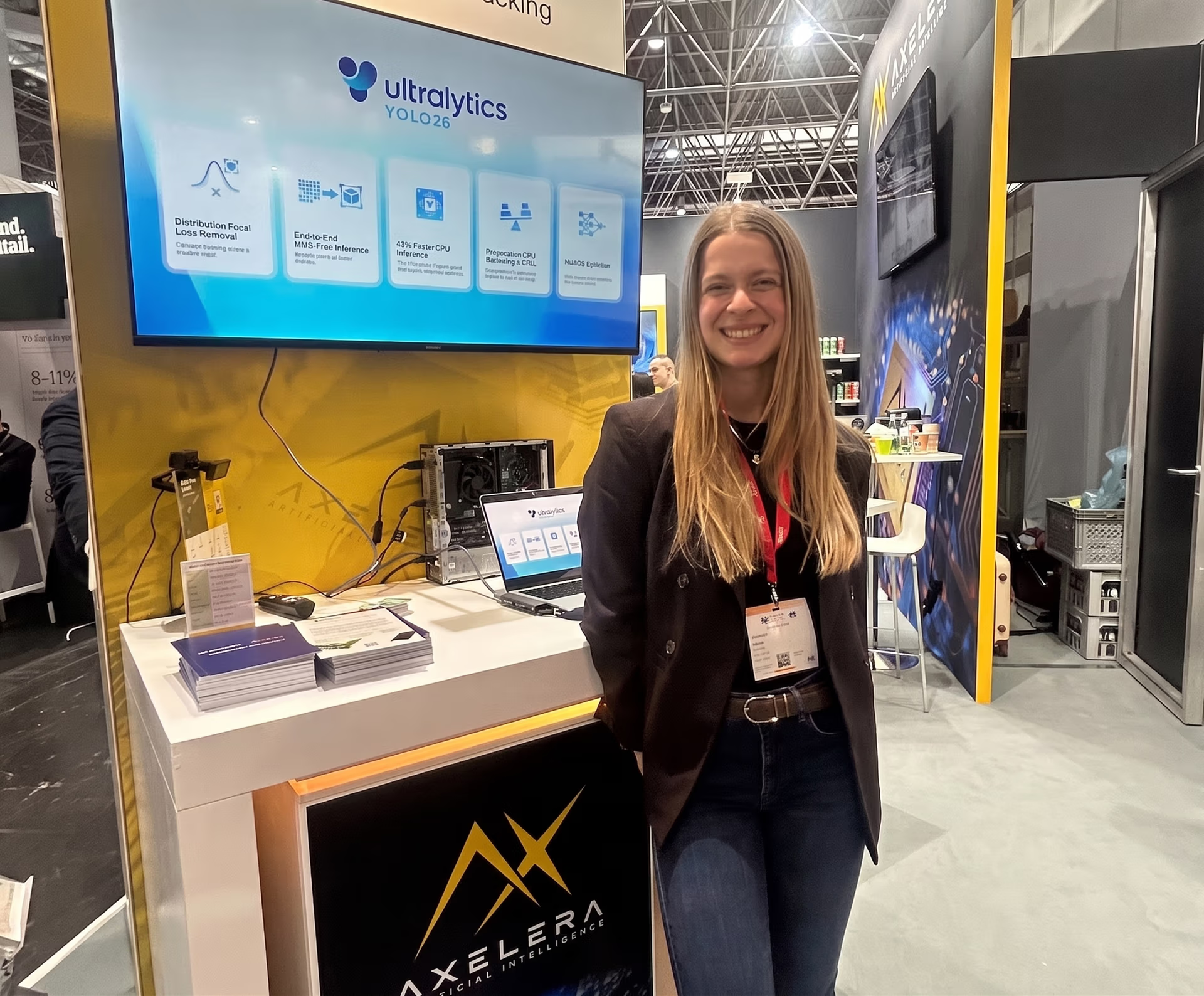
Fig 1. Hannah Streif at EuroShop 2026 in Düsseldorf, Germany
Across the show floor, many of these same use cases kept coming up in conversation. It was clear that retailers are thinking carefully about how to bring greater visibility and intelligence into their store operations.
In this recap, we'll share highlights from our time at EuroShop 2026 and explore the trends redefining AI in retail. Let’s get started!
A look at EuroShop 2026#
Before we dive further in, let’s take a quick look at what makes EuroShop such a key event in the retail world.
First launched in 1966, EuroShop 2026 marks the trade fair’s 60th anniversary and continues to draw retailers, technology providers, designers, and system integrators from across the globe.
This year, attendees from around the world gathered to explore innovations spanning retail technology, store design, visual merchandising, food service equipment, sustainability solutions, and digital infrastructure.
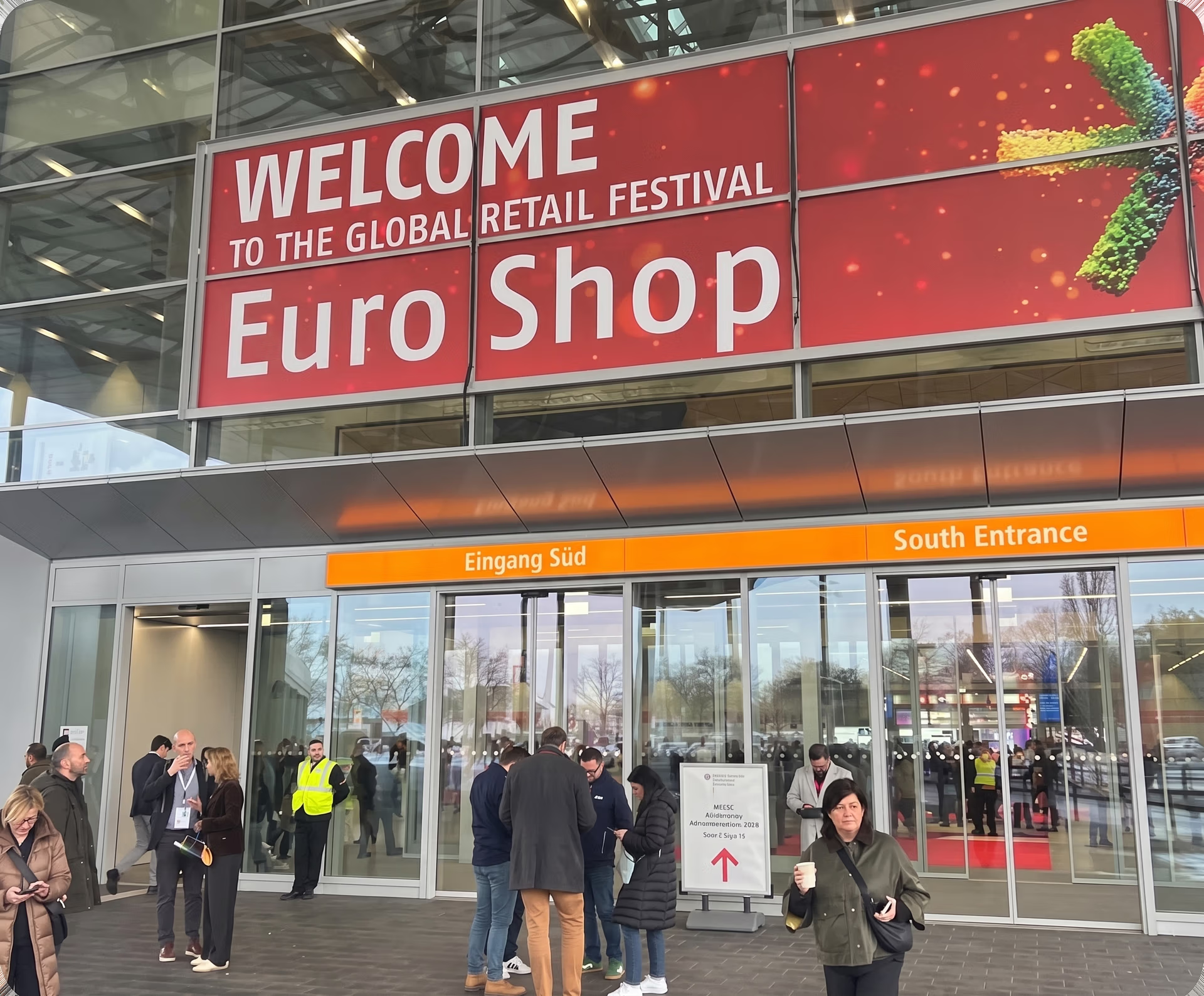
Fig 2. EuroShop 2026 in Düsseldorf, Germany
For many organizations, EuroShop is a great opportunity to evaluate new systems, connect with technology partners, and gain insight into where store operations are headed next. At its core, the trade fair emphasizes practical solutions built for real implementation inside physical retail environments.
Core themes at EuroShop 2026#
Here’s a glimpse of the themes that stood out across this year’s exhibition floor:
- AI and digitalization: Retailers explored computer vision platforms, automated checkout systems, shelf monitoring tools, and analytics solutions designed to operate directly inside stores and support day-to-day operations.
- Emotionalization: Exhibitors highlighted store layouts, immersive digital displays, and interactive environments aimed at creating stronger in-store engagement and reinforcing brand identity.
- Sustainability: Energy management systems, efficient lighting, and waste reduction strategies were presented as practical ways to reduce operating costs while supporting environmental goals.
Vision AI conversations at Hall 5 / A24#
Over two full days at Hall 5 / A24, our booth became a steady hub for conversations about how vision AI is being applied inside real retail environments. We connected with retail innovation teams, AI solution integrators, smart checkout providers, hardware manufacturers, and retailers ranging from regional operators to global brands.
Alongside our partner Axelera AI and collaborator Innowise, we showcased how Ultralytics YOLO models, including Ultralytics YOLO26, can be deployed on Axelera’s Metis hardware platform to power retail use cases at the edge. The live demonstrations sparked practical discussions around real-time theft detection, smart checkout systems, shelf monitoring, and customer flow analytics.
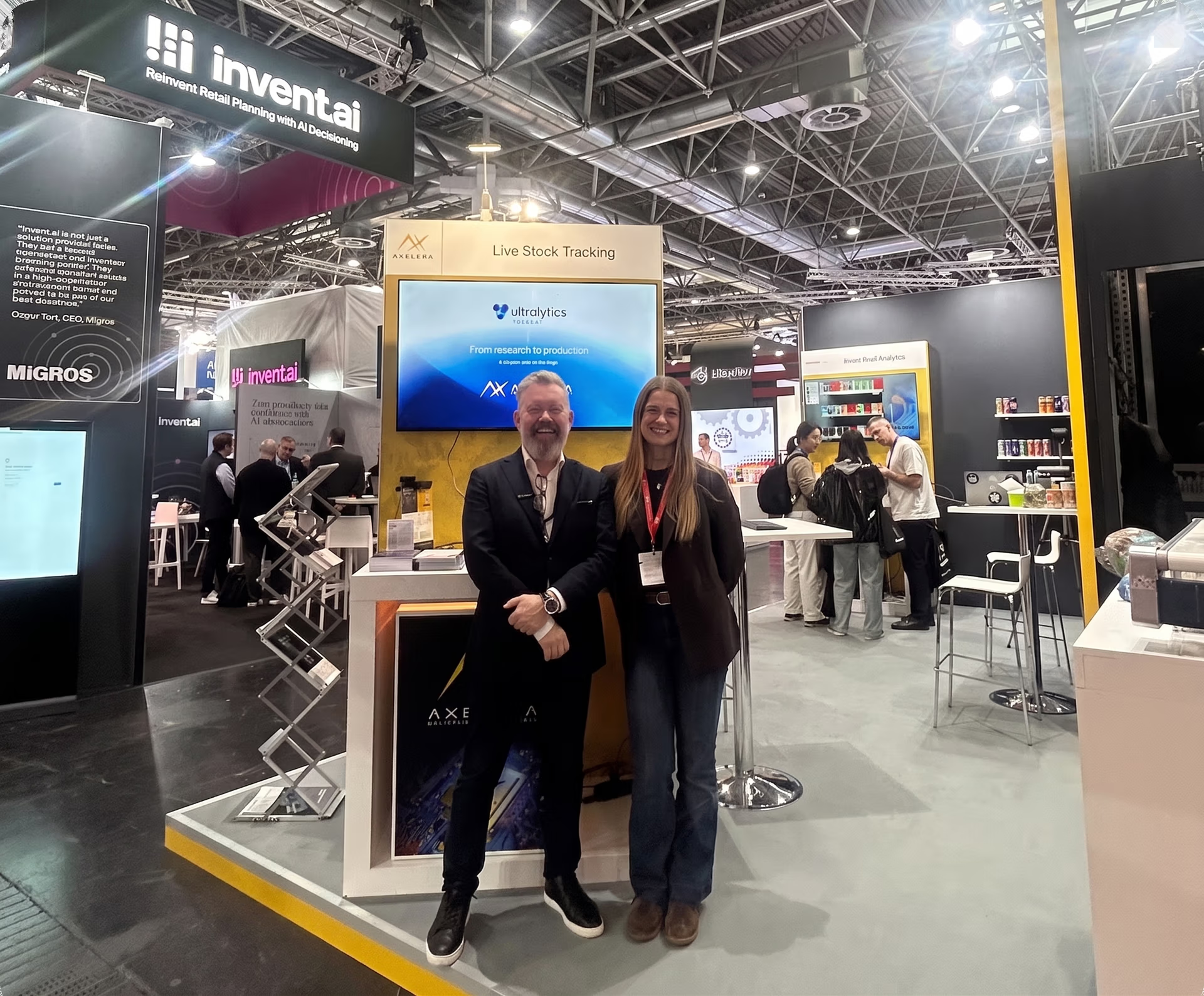
Fig 3. Demoing Ultralytics YOLO models with Axelera AI at Hall 5 / A24.
Many visitors were interested in more than just model performance and wanted to understand what real-world computer vision deployment looks like. Questions centered on infrastructure compatibility, integration with point-of-sale systems, and how to scale solutions reliably across multiple store locations.
What stood out most was the shift in mindset. Beyond exploring AI, retail teams were focused on how to make it work consistently inside day-to-day store operations. This reflects a broader industry trend toward practical deployment, where reliability, scalability, and integration matter just as much as model accuracy.
The push for edge AI in retail environments#
An interesting recurring topic of conversation at the booth was the growing need for edge deployment and the strong push toward running AI directly inside retail environments. For example, by showcasing Ultralytics YOLO26 running on Axelera’s Metis hardware, we illustrated how real-time object detection and instance segmentation tasks can be processed locally within store infrastructure.
So how does this make a difference? In retail environments, edge AI means that video streams from in-store cameras are processed directly on local hardware rather than being sent to the cloud for analysis. This reduces latency, letting systems respond in real time for use cases such as theft detection or automated checkout, while also improving reliability in locations where connectivity may fluctuate.
Running models at the edge also helps retailers maintain consistent performance across multiple stores. Whether monitoring shelves for out-of-stock products, tracking customer movement patterns, or identifying items at checkout, local inference ensures that computer vision systems remain responsive and stable as part of everyday store operations.
The benefits of computer vision at the edge in retail#
Here’s a closer look at why running computer vision at the edge is beneficial for retail environments:
- Enhanced data control: Video streams can be processed locally, reducing the need to transmit sensitive footage externally.
- Reduced bandwidth usage: Only actionable insights, not raw video data, need to be sent across networks.
- Lower cloud dependency: Stores are less reliant on constant internet connectivity.
- Improved system predictability: Performance isn’t affected by cloud service congestion or shared infrastructure variability.
Retail innovation in action at EuroShop 2026#
Next, let’s walk through some of the retail applications that sparked the most interest at EuroShop 2026.
AI-powered security and loss prevention#
Security was one of the most consistent themes across conversations at EuroShop. As self-checkout continues to expand, retailers are reassessing how shrink happens and where better visibility is needed inside the store.
Computer vision models such as Ultralytics YOLO26 make it possible to perform real-time vision AI tasks across the sales floor. This can look like identifying items, monitoring activity patterns, and flagging unusual behavior before loss occurs.
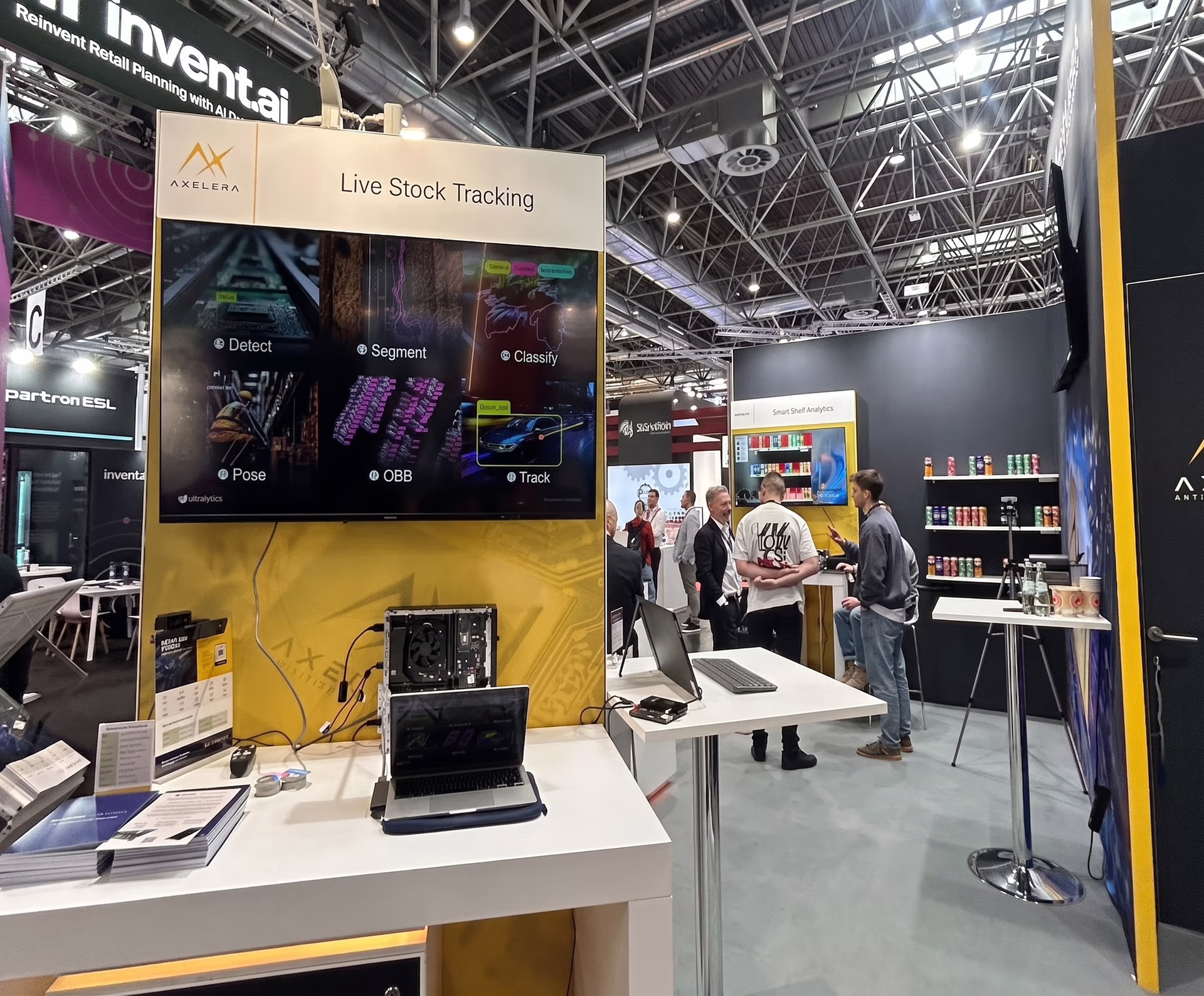
Fig 4. Showcasing vision tasks supported by Ultralytics YOLO26 at Hall 5 / A24.
Planogram intelligence and shelf optimization#
Shelf accuracy also came up repeatedly in discussions with retail teams. Maintaining planogram compliance across multiple locations is often time-consuming, especially when manual checks are required throughout the day.
Using object detection models like Ultralytics YOLO26, stores can automatically identify products on shelves, detect empty spaces, and verify placement against approved layouts. Instead of periodic audits, retailers are looking toward continuous visual monitoring that improves consistency without increasing operational workload.
Customer tracking and store flow analytics#
Understanding how customers move through a store was another strong focus at EuroShop 2026. Many exhibitors demonstrated systems that measure foot traffic, dwell time, and movement patterns to better understand how shoppers interact with layouts, displays, and high-interest zones.
These applications rely on computer vision techniques such as person detection and tracking, which can be supported by models like Ultralytics YOLO26. By turning movement patterns into actionable insights, retailers can refine store layouts, optimize staffing decisions, and improve display placement, all while using privacy-conscious approaches that avoid identifying individuals.
Smart checkout and frictionless retail#
Smart retail checkout systems are evolving as retailers look for ways to make transactions faster and more accurate, particularly in self-checkout environments. Automated product recognition powered by computer vision allows stores to identify items in real time, reducing missed scans and minimizing reliance on manual barcode entry.
Models such as Ultralytics YOLO26 support object detection and classification tasks that enable real-time recognition at checkout. This makes it easier to process transactions more smoothly while maintaining accuracy across a wide range of products and store conditions.
In fact, conversations at EuroShop made one thing clear. Retailers are focused on more than speed.
They want systems that are accurate, stable, and easy to integrate with existing payment and inventory infrastructure. Frictionless checkout only delivers value when it performs consistently across every store location.
Key emerging trends in retail#
Across conversations, live demonstrations, and solution showcases, several tech trends stood out at EuroShop 2026.
Here’s an overview of how AI is becoming embedded into everyday store operations:
- Focus on deployment and measurable ROI: Retailers are prioritizing infrastructure readiness, integration strategy, and clear performance metrics over isolated proof of concept experiments.
- Store-wide shrink monitoring: As self-checkout adoption grows, retailers are shifting toward full floor visibility rather than limiting loss detection to checkout counters alone.
- Greater operational automation: Automated shelf intelligence, real-time alerts, and intelligent checkout systems are helping reduce reliance on manual oversight while improving consistency.
- Edge processing inside stores: Many solutions are designed to run locally to ensure low latency, stable performance, and reduced dependency on continuous cloud connectivity.
Key takeaways#
EuroShop 2026 reflected how quickly computer vision is being adopted across retail stores. From conversations on shelf monitoring to customer analytics, the focus was consistently on practical deployment at scale. It’s likely that this shift toward scalable deployment will continue as retailers prioritize reliability and integration.
Join our community and explore our GitHub repository to learn more about computer vision. Find out more about applications like AI in manufacturing and computer vision in agriculture. Take a look at our licensing options to start building your own vision AI solutions.