The ultimate guide to pose estimation tools
Learn how pose estimation tools can be used to detect body keypoints in images and video, estimate 2D and 3D poses, and power various vision AI applications.

As humans, we read movement instinctively. When someone leans forward, turns their head, or lifts an arm, you can immediately infer what they’re doing. It’s a quiet, almost subconscious skill that shapes how we interact with people and explore the world.
As technology becomes a bigger part of daily life, it’s natural to want our devices to understand movement as smoothly as we do. Recent advances in artificial intelligence, especially deep learning-based advancements, are making that possible. In particular, computer vision helps machines extract meaning from images and video and is driving this progress.
For example, pose estimation is a common computer vision task that predicts the locations of predefined body keypoints (such as the shoulders, elbows, hips, and knees) in an image or video frame. These keypoints can be connected using a fixed skeleton definition to form a simplified pose representation.
Computer vision models such as Ultralytics YOLO11 and the upcoming Ultralytics YOLO26 support tasks like pose estimation and can be used to power real-time applications, including form feedback in fitness and sports, safety monitoring, and interactive augmented reality experiences.
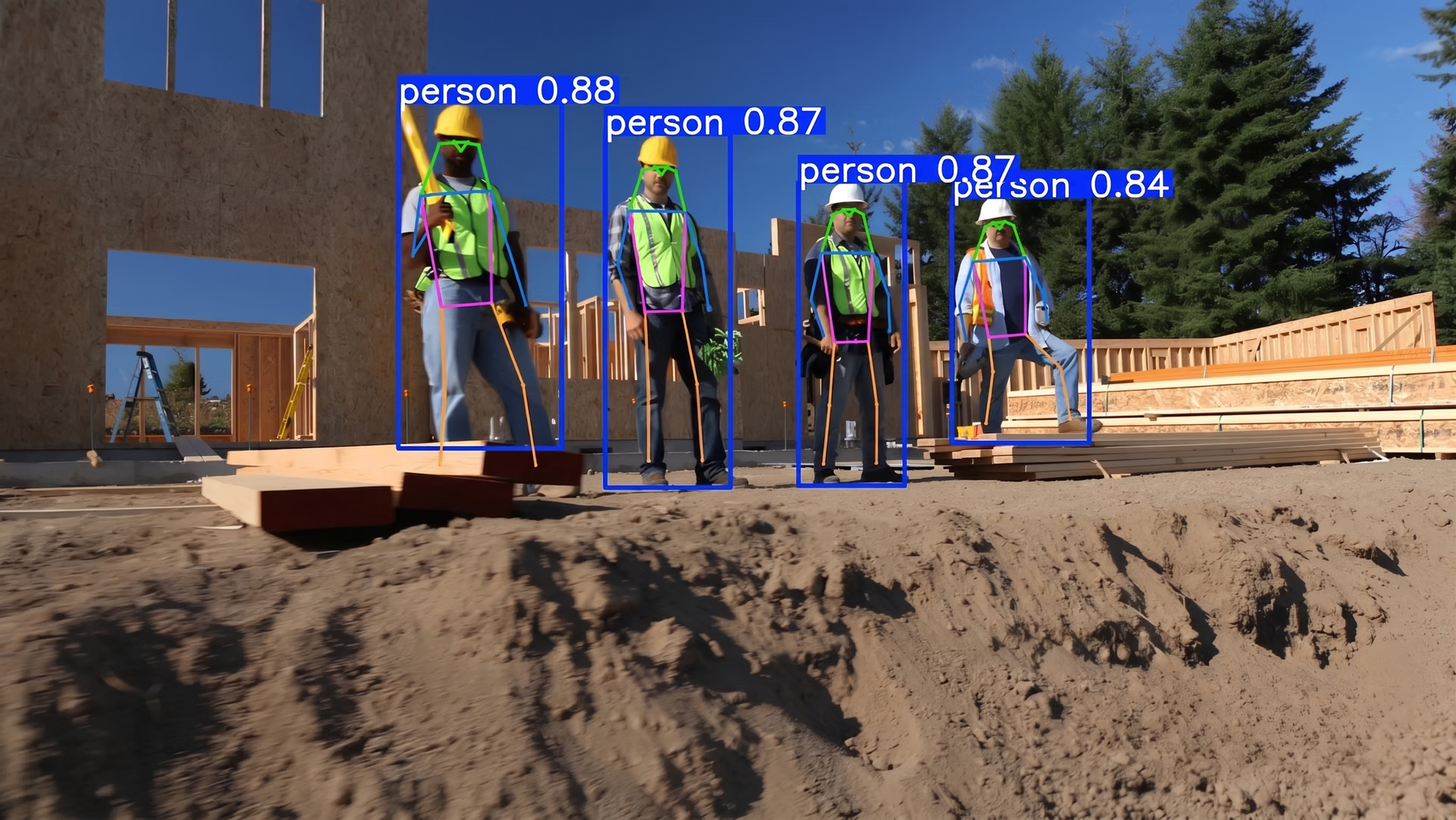
Fig 1. A look at using Ultralytics YOLO11 for pose estimation (Source)
In this article, we’ll take a deep dive into pose estimation tools and see how pose estimation works, where it’s used, and some of the top models and libraries available today. Let’s get started!
What is pose estimation?#
Pose estimation is a computer vision technique that helps a system understand how a person or object is positioned in an image or video. Rather than analyzing every pixel equally, it predicts a set of consistent landmarks, such as the head, shoulders, elbows, hips, knees, and ankles.
Most models output the coordinates of these keypoints and a score that reflects how likely each prediction is to be correct. These keypoints can then be connected using a predefined skeleton layout to form a simple pose representation.
When applied frame by frame in videos, the resulting keypoints can be associated over time to estimate motion. This enables applications like form checks, movement analysis, and gesture-based interaction.
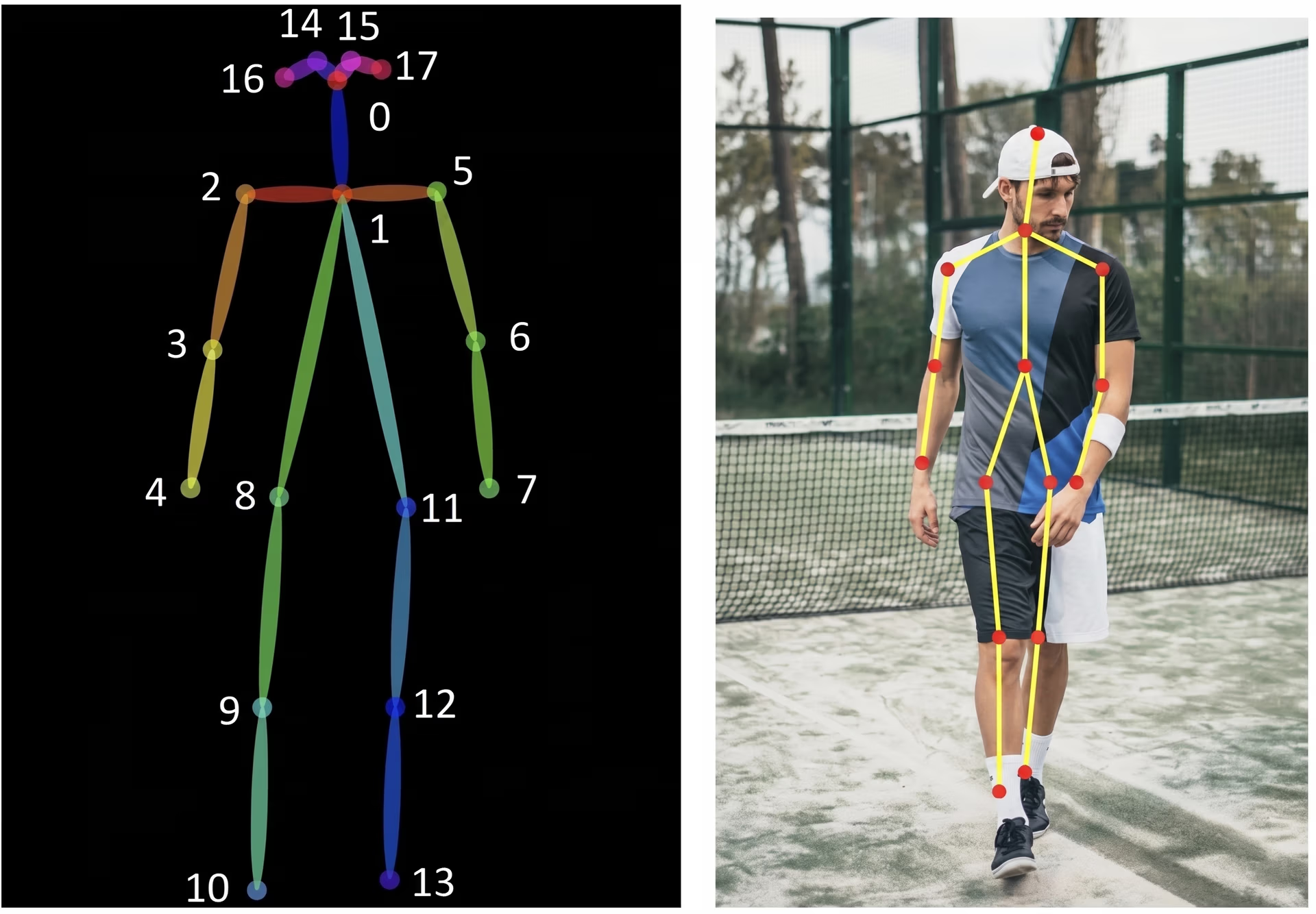
Fig 2. An example of pose estimation (Source)
The need for pose estimation tools#
Human movement carries a lot of information. The way someone bends, reaches, or shifts their weight can reveal intent, effort, fatigue, or even injury risk. Until recently, capturing that level of detail typically required specialized sensors, motion-capture suits, or controlled lab environments.
Pose estimation changes that. Extracting key body landmarks from regular images and video lets computers analyze movement using standard cameras. This makes movement analysis more accessible, scalable, and practical to use in real-world settings.
Here are a few ways pose estimation can create an impact:
- Safer workplaces: vision-driven systems can be used to detect risky postures, repetitive strain, or unsafe lifting techniques before injuries occur.
- Better fitness and sports training: vision AI solutions can evaluate form, balance, and technique in real time, giving users immediate feedback without wearables.
- Healthcare and rehabilitation: Clinicians can track recovery progress, posture, and range of motion remotely using simple video recordings.
- Interactive experiences: Pose estimation makes it easier for digital avatars and immersive environments to follow and reflect human motion accurately.
The evolution of pose estimation algorithms#
The idea of estimating poses has been around for many years. Early approaches used simple geometric models and hand-crafted rules, and they typically worked only in controlled conditions.
For example, a system might perform well when a person stands still in a fixed position, but break down when they start walking, turning, or interacting with objects in real-world scenes. These methods often struggled with natural movement, changing camera angles, cluttered backgrounds, and partial occlusion.
Modern pose estimation relies on deep learning to handle these challenges. By training convolutional neural networks on large labeled datasets, models learn visual patterns that help them detect keypoints more reliably across different poses, people, and environments.
With more examples, the model improves its predictions and becomes better at generalizing to new scenes. Because of this progress, pose estimation now supports a wide range of practical use cases, including workplace monitoring and ergonomics, and sports analytics, where coaches and analysts study how athletes move.
Types of pose estimation techniques#
Pose estimation comes in a few different forms, depending on the setting and what you need to measure. Here are the main types you will come across:
- 2D pose estimation: This approach detects body keypoints in a two-dimensional image or video frame. It works well with standard cameras and is computationally efficient, making it suitable for tasks like basic movement tracking, posture analysis, and real-time form feedback.
- 3D pose estimation: By estimating depth in addition to image coordinates, 3D pose estimation provides a spatial understanding of body movement. This is especially useful when forward and backward motion matters, such as in sports analysis, rehabilitation, biomechanics, and animation. Specifically, 3D human pose estimation captures joint positions and movement in 3D space, reducing the ambiguity that can happen with 2D projections.
- Single-person pose estimation: These systems are designed to track one individual at a time. They tend to perform best in controlled or semi-controlled settings where the subject is clearly visible, such as guided exercise applications, video calls, or motion analysis setups.
- Multi-person pose estimation: Built for scenes with multiple people, this approach detects and tracks poses for several individuals simultaneously. It is particularly useful in busy environments like workplaces, gyms, public spaces, and group activities, where subjects may overlap or occlude one another.
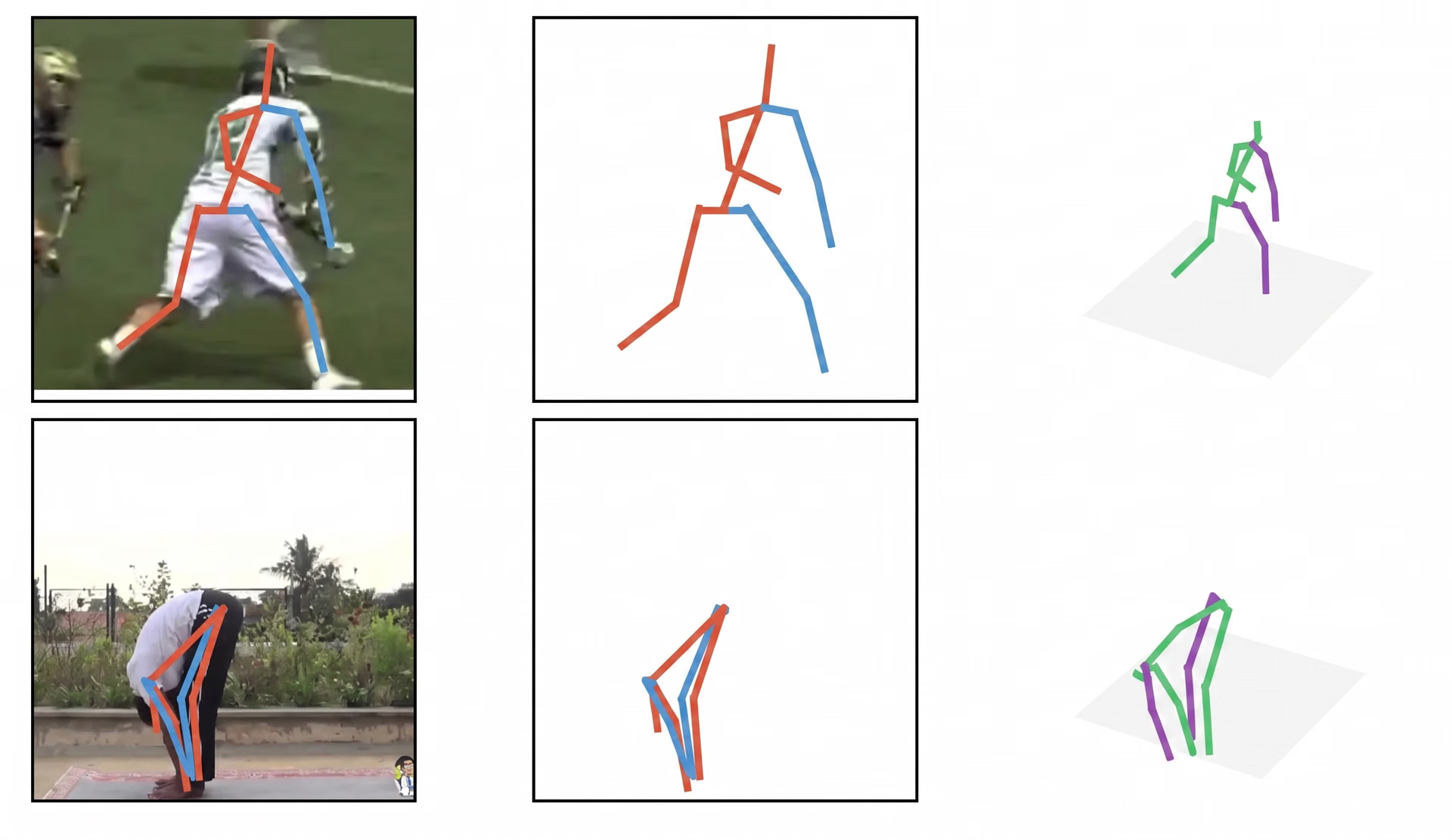
Fig 3. Understanding human motion in 3D space vs. 2D image space (Source)
Understanding how human pose estimation models work#
Pose estimation can be applied to many kinds of objects, but to keep things simple, let’s focus on human pose estimation.
Most human pose estimation systems are trained on annotated datasets where key body parts are labeled across large collections of images and video frames. Using these examples, the model learns visual patterns linked to human body landmarks like the shoulders, elbows, hips, knees, and ankles, so it can predict keypoints accurately in new scenes.
Another key aspect is the model’s inference architecture, which determines how it detects keypoints and assembles them into full poses. Some systems detect each person first and then estimate keypoints within each person’s region, while others detect keypoints across the entire image and then group them into individuals. Newer single-stage designs can predict poses in one pass, balancing speed and accuracy for real-time use.
Next, let’s walk through different pose estimation approaches in detail.
Bottom-up pose estimation#
In a bottom-up approach, the model looks at the whole image and finds body keypoints first, like the head, shoulders, elbows, hips, knees, and ankles. At this stage, it isn’t trying to separate people. It is simply detecting all keypoints or body joints defined by the pose skeleton across the scene.
After that, the system does a second step to connect the dots. It links keypoints that belong together and groups them into complete skeletons, one per person. Since it doesn’t need to detect each person first, bottom-up methods often work well in crowded scenes where people overlap, appear at different sizes, or are partly hidden.
Top-down pose detection#
In contrast, top-down systems start by detecting each person in the image first. They place a bounding box around every individual and treat each box as its own region to analyze.
Once a person is isolated, the model predicts the body keypoints within that region. This step-by-step setup often produces very accurate results, especially when there are only a few people in the scene, and each person is clearly visible.
Single-stage or hybrid pose estimation#
Single-stage, sometimes called hybrid, models predict poses in one pass. Instead of running person detection first and keypoint estimation second, they output the person location and the body keypoints at the same time.
Because everything happens in a single module, these models are often faster and more efficient, which makes them a strong fit for real-time uses like live motion tracking and motion capture. Models such as Ultralytics YOLO11 are built around this idea, aiming to balance speed with reliable keypoint predictions.
Training and evaluating pose estimation models#
Regardless of the approach used, a pose estimation model still needs to be trained and tested carefully before it’s reliable in the real world. It typically learns from large sets of images (and sometimes video) where body keypoints are labeled, helping it handle different poses, camera angles, and environments.
Some well-known pose estimation datasets include COCO Keypoints, MPII Human Pose, CrowdPose, and OCHuman. When these datasets don’t reflect the conditions the model will face in deployment, engineers often collect and label additional images from the target setting, such as a factory floor, gym, or clinic.
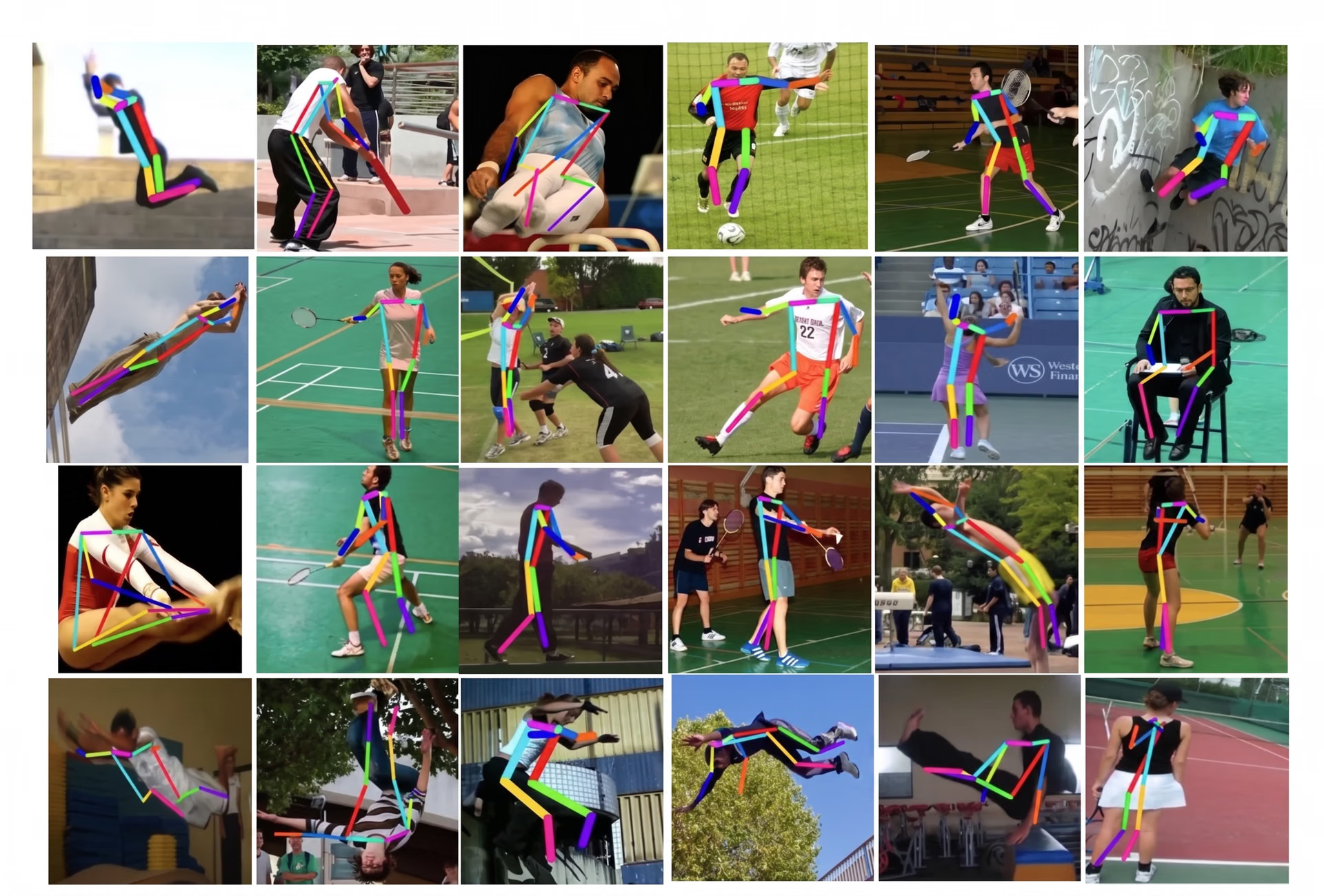
Fig 4. Various poses being estimated using computer vision (Source)
After training, the model’s performance is evaluated on standard benchmarks to measure accuracy and robustness and to guide further tuning for real-world use. Results are often reported using mean average precision, commonly referred to as mAP, which summarizes performance across different confidence thresholds by comparing predicted poses to the labeled ground truth.
In many pose benchmarks, a predicted pose is matched to a ground-truth pose using Object Keypoint Similarity (OKS). OKS measures how close the predicted keypoints are to the annotated keypoints, while accounting for factors like the person’s scale and the typical localization difficulty of each keypoint.
Pose models also output confidence scores for detected people and for individual keypoints. These scores reflect the model’s confidence and are used to rank and filter predictions, which is especially important in challenging conditions such as occlusion, motion blur, or unusual camera angles.
Popular pose estimation tools and libraries#
Many pose estimation tools are available today, each balancing speed, accuracy, and ease of use. Here are some of the most widely used tools and libraries:
- Ultralytics YOLO11: Developed as a state-of-the-art open-source vision AI model, YOLO11 builds on earlier models like Ultralytics YOLOv8. It improves speed, accuracy, and overall efficiency while supporting various computer vision tasks, including pose estimation. With strong performance across platforms, from laptops to edge devices, YOLO11 is a great option for many real-world deployments.
- Ultralytics YOLO26: This upcoming next-generation model is designed to be lighter, smaller, and faster, while still maintaining strong accuracy. It is built for real-time use and easier deployment, and supports tasks like object detection, instance segmentation, and pose estimation across model sizes suited for everything from edge devices to larger systems.
- MediaPipe: It is a cross-platform framework for building vision and machine learning pipelines. It is lightweight and runs efficiently on mobile devices, tablets, and in web apps, and it includes ready-to-use solutions and models for full-body pose, face landmarks, and hand tracking.
- OpenPose: This end-to-end open-source pose estimation system is widely known for multi-person keypoint detection. It can estimate body, hand, and face keypoints together, and it is commonly used in research, animation, and motion analysis.
- MMPose: MMPose is a PyTorch-based pose estimation toolkit from the OpenMMLab ecosystem. It provides many model implementations, training utilities, and configuration options, which make it useful for experimentation and deep customization.
- HRNet and AlphaPose: These are older pose estimation models that are still used in research today. HRNet is a pose model architecture that keeps high-resolution image features throughout the network, which helps it localize keypoints precisely. AlphaPose is a widely used multi-person pose estimation system, commonly used when strong accuracy is needed in crowded or complex scenes.
Real-world applications of pose analysis and estimation#
Pose estimation is increasingly being used to turn ordinary videos into useful movement insights. By tracking body keypoints frame by frame, these systems can infer posture, motion, and physical behavior from camera feeds, making such technology practical in many real-world settings.
For example, in healthcare and rehabilitation, pose tracking can help clinicians see and measure how a patient moves during therapy and recovery. By extracting body landmarks from ordinary video recordings, it can be used to assess posture, range of motion, and overall movement patterns over time. These measurements can support and optimize traditional clinical evaluations and, in some cases, make it easier to track progress without needing wearable sensors or specialized equipment.
Similarly, in sports and broadcasting, pose estimation can analyze how athletes move directly from video feeds. An interesting example is Hawk-Eye, a camera-based tracking system used in professional sports for officiating and broadcast graphics. It also provides skeletal tracking by estimating an athlete’s body keypoints from camera views.
Choosing the right pose estimation tool#
Choosing the right pose estimation tool starts with understanding your computer vision project’s needs. Some applications prioritize real-time speed, while others require higher accuracy and detail.
The target deployment device also makes a difference. Mobile apps and edge devices typically require lightweight, efficient models, while larger models are often a better fit for servers or cloud environments.
In addition to this, ease of use can play a role. Good documentation, smooth deployment, and support for custom training can streamline your project.
Simply put, different tools excel in different areas. For instance, Ultralytics YOLO models provide a practical balance of speed, accuracy, and ease of deployment for many real-world pose estimation applications.
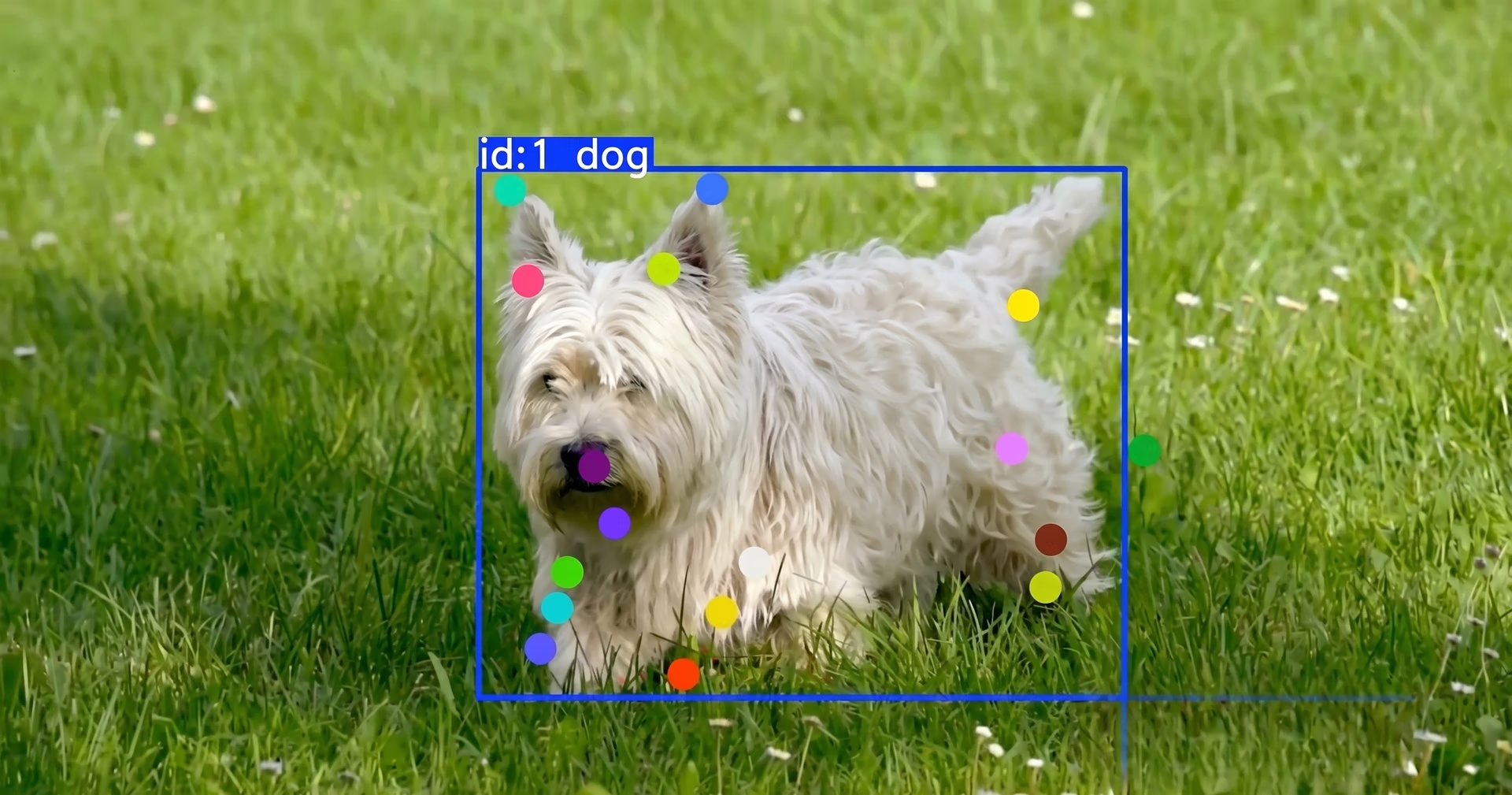
Fig 5. Animal pose estimation using Ultralytics YOLO11 (Source)
Key takeaways#
Pose estimation helps computers understand human movement by detecting body keypoints in images and video. Models like YOLO11 and YOLO26 make it easier to build real-time applications for areas like sports, healthcare, workplace safety, and interactive experiences. As models keep getting faster and more accurate, pose estimation is likely to become a common feature in many vision AI systems.
Want to know more about AI? Check out our community and GitHub repository. Explore our solution pages to learn about AI in robotics and computer vision in manufacturing. Discover our licensing options and start building with computer vision today!








