AI in video games: Shaping the future of gaming
Explore the impact of AI in gaming development on developers and players alike. From creating immersive worlds to enhancing gameplay, AI is shaping the future of gaming.

The integration of artificial intelligence (AI) and gaming is becoming increasingly intertwined. Let's take a look at the impact of AI in gaming development on developers and players alike.
From the days of arcade games to the era of immersive virtual reality (VR), the gaming industry has relentlessly pushed forward at incredible speed. AI in gaming is truly reshaping the industry's very fabric. It elevates the player experience creating more dynamic, complex and immersive virtual worlds.
From simulating human behavior and designing dynamic challenges, machine learning is sustaining intense player involvement.
As AI in game development becomes more widespread it’s also enriching the experience for developers who leverage its capabilities to create more exciting games. As a result, this field is being propelled into uncharted territories of creativity and innovation.
The global AI in video games market is expected to reach $11.4 billion by 2032 from $1.1 billion in 2022.
Crucial drivers of this growth include the emergence of high-bandwidth network connectivity and the surge in smartphone adoption, vastly expanding the user base for mobile games.
The ongoing enhancement in processing power, particularly in graphics processing units (GPUs) and central processing units (CPUs), is also regarded as a significant catalyst.
The impact of AI in gaming on players#
In the past, video gaming relied heavily on manual processes, such as hand-crafted level designs and scripted behaviors of non-player characters (NPCs).
They followed static scripts, leading to predictable and repetitive interactions that diminished player engagement.
By today’s standards, they limited player experiences.
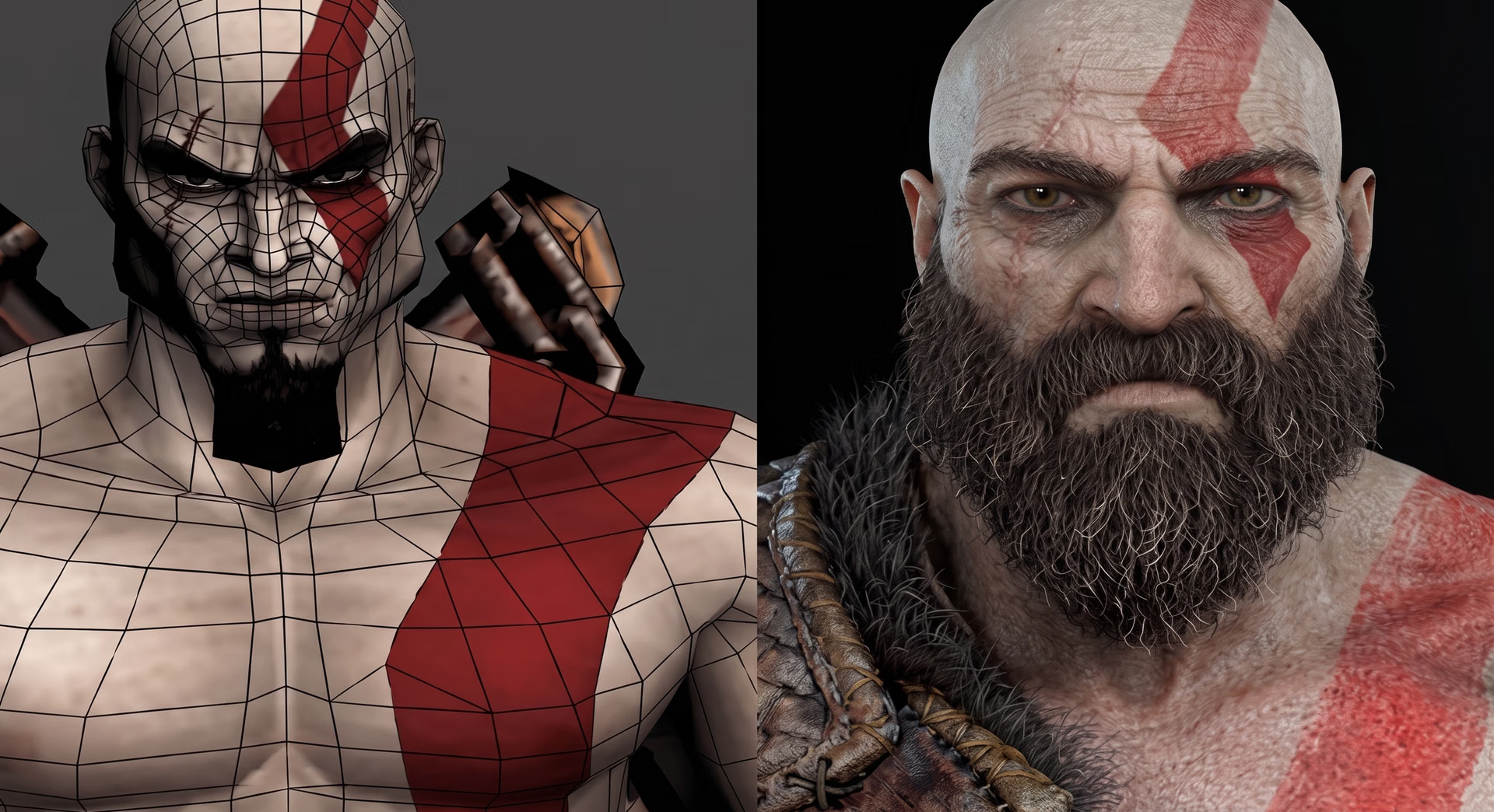
Fig. 1. 3D games are displayed in a three-dimensional space.
For example, in the original Super Mario Bros, the fictional species of Goombas always walked back and forth in a fixed pattern. This made their behavior formulaic, less life-like and, therefore, less exciting for players.
Another example of unvarying NPC actions can be seen in early role-playing games such as The Elder Scrolls: Arena.
This game featured various townspeople such as shopkeepers and guards who always gave the same responses and followed the same routines regardless of the player’s actions.
Now, with the advent of AI tools, NPCs are more realistic, while environments are rendered in 3D with textures that quickly generate intricate and diverse gaming landscapes.
Besides being able to absorb and stimulate players on a deeper level, AI tools also contribute to smoother gameplay.
For instance, AI-powered playtesting can identify issues such as balancing problems or glitches and fine-tune gameplay elements.
Meanwhile, real-time resource optimization results in faster load times and more responsive game performance.
The impact of AI on gaming developers#
AI technologies free up developers’ time to create more immersive and engaging gaming experiences by automating tedious tasks such as level design, character animation, bug testing and quality control.
By leveraging AI algorithms for procedural content generation and data analysis, developers can streamline the game development pipeline, reducing production time and costs while increasing efficiency and creativity.
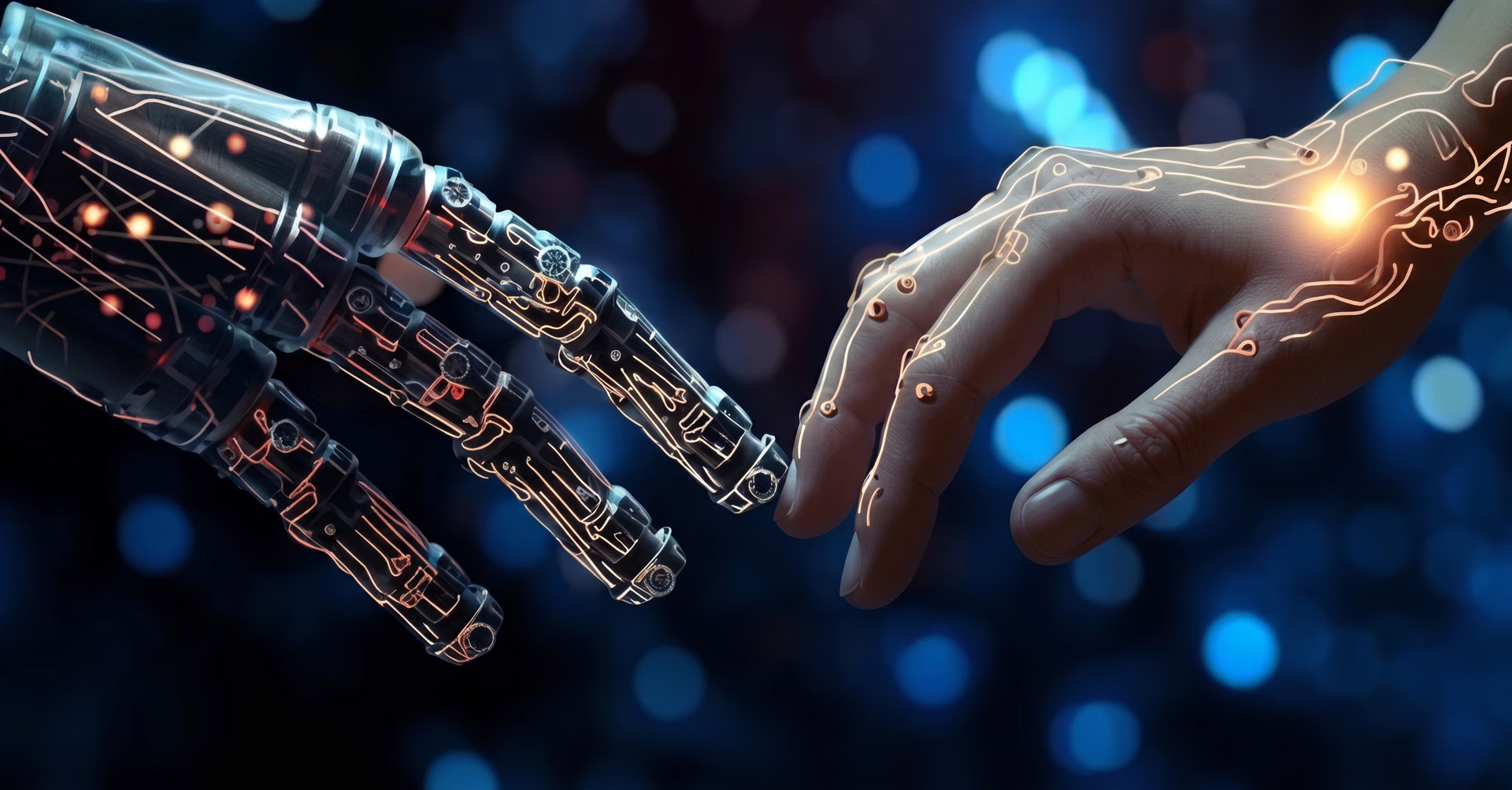
Fig 2. AI is gradually infiltrating the video game industry (Source: kevurugames.com).
This automation allows developers to tackle more challenging and exciting aspects of game development, such as designing unique gameplay mechanics, crafting compelling narratives and creating visually stunning environments.
As a result, developers are able to enjoy their work more, with fewer tedious tasks. This makes them more fulfilled in their roles and more engaged in the creative process.
Advantages of AI in gaming#
Let's delve into how AI advancements are enhancing player engagement by looking at some of the key benefits AI brings:
- Generates diverse and dynamic game worlds. AI creates unique, procedurally generated environments, ensuring each playthrough feels new and original.
- Adjusts difficulty levels to match player skill. Through adaptive difficulty, AI analyzes player performance to provide a balanced and challenging experience tailored to individual skill levels. In Resident Evil 4, the game dynamically adjusts the number of enemies, their aggression and resource availability based on how well the player is performing, ensuring a consistently engaging experience.
- Delivers personalized gaming experiences. By tracking and adapting to player behavior, AI offers customized gameplay and recommendations. For instance, in The Witcher 3: Wild Hunt, AI monitors a player's combat style and quest choices to suggest personalized strategies, gear upgrades and side quests.
- Improves game aesthetics through artificial intelligence in game design. AI insights help developers optimize game mechanics and design for better player engagement. For example, in Destiny 2, AI analytics track player behavior and feedback to adjust weapon balance, mission difficulty and in-game events.
- Adds depth and immersion with AI-driven environmental simulations. AI simulates realistic weather patterns, wildlife behavior and other environmental factors to enhance the game's atmosphere.
Disadvantages of AI in gaming#
Although the pros of AI in gaming are many, the disadvantages need to be carefully considered to ensure a balanced approach to game development and player experience.
Main drawbacks of AI in video games include:
- Privacy concerns. AI-driven data collection may lead to potentially exposing sensitive information through various mechanisms, such as tracking player behavior, recording in-game interactions and analyzing user preferences.
- Biases and inaccuracies. AI algorithms may introduce unfairness or errors into gameplay. An example could be an AI-controlled character consistently favoring one player over others, creating an unfair advantage. Or, an AI system incorrectly identifying certain player actions as violations of the game rules, resulting in unwarranted penalties or punishments.
- Dependency risks. Excessive reliance on AI could hinder player creativity and problem-solving skills.
- Implementation costs. Integrating AI into games can incur significant expenses for developers.
- Reduced human interaction. Overuse of AI may limit opportunities for personalized gaming experiences and human interaction.
- Ethical considerations. Ensuring AI integration aligns with ethical standards so that players aren’t influenced or manipulated by AI systems is a challenge.
The future of AI in gaming#
The push towards AI-driven development raises the question: Will AI replace game developers?
Overall, the answer is no.
Publishers won’t be able to completely replace human resources with AI to develop video games without losing quality and engagement level.
That said, AI is expected to manage over half of production in game development within five to 10 years.
With this in mind, the future of gaming rests on the following key AI-powered technologies:
- Generative Adversarial Networks (GANs). These networks will produce new video game content, implementing style transfer and creating hyper-realistic assets and game mechanics. Doing so, GANs will ensure the development of evergreen games and foster innovation.
- Advanced Procedural Content Generation (PCG). Using PCG, developers can create diverse game content on-the-fly, reducing development time and costs. At the same time, they will ensure creativity and variety, crucial for engaging players in vast, explorable environments.
- Emotion AI. This form of AI analyzes player emotions across various data points such as facial expressions, voice tone and in-game behavior to determine the player’s emotional state. This information is then used to dynamically adjust game elements like difficulty levels, story progression, and NPC interactions, providing a more personalized and immersive gaming experience.
- Natural Language Processing (NLP). With NLP, developers can improve in-game dialog, enabling natural interactions between players and NPCs. NLP can enhance voice recognition for immersive player control, making story-driven games more engaging and responsive.
- Reinforcement Learning (RL). This type of machine learning enables AI to learn and make decisions within the game environment, enhancing NPC behavior. The end result is dynamic and adaptive gameplay experiences, which are vital for engaging players.
AI and gaming overall#
The integration of AI in video games marks a pivotal shift in the gaming landscape, impacting both developers and players alike.
AI-driven advancements are propelling the industry towards unparalleled levels of innovation and engagement.
For players, AI translates to more powerful immersion and personalization, with dynamic gameplay experiences tailored to individual preferences.
However, it's essential to acknowledge the potential drawbacks of AI, such as privacy concerns and dependency risks.
Looking ahead, the future of gaming lies in embracing key AI-powered technologies like GANs, PCG, Emotion AI, NLP and RL, which promise to redefine the frontiers of creativity and engagement in the gaming industry.
While AI may not replace game developers entirely, it's poised to become an indispensable tool in shaping the future of gaming development.
Explore our GitHub repository and join our community to stay up to date on the latest advancements in AI technology. Dive into the transformative impact of AI on autonomous driving, industrial production, healthcare and beyond.








