Deep diving into the aerospace artificial intelligence market
Delve into how AI is changing how we fly and explore space. Discover the latest news on the Aerospace Artificial Intelligence Market.
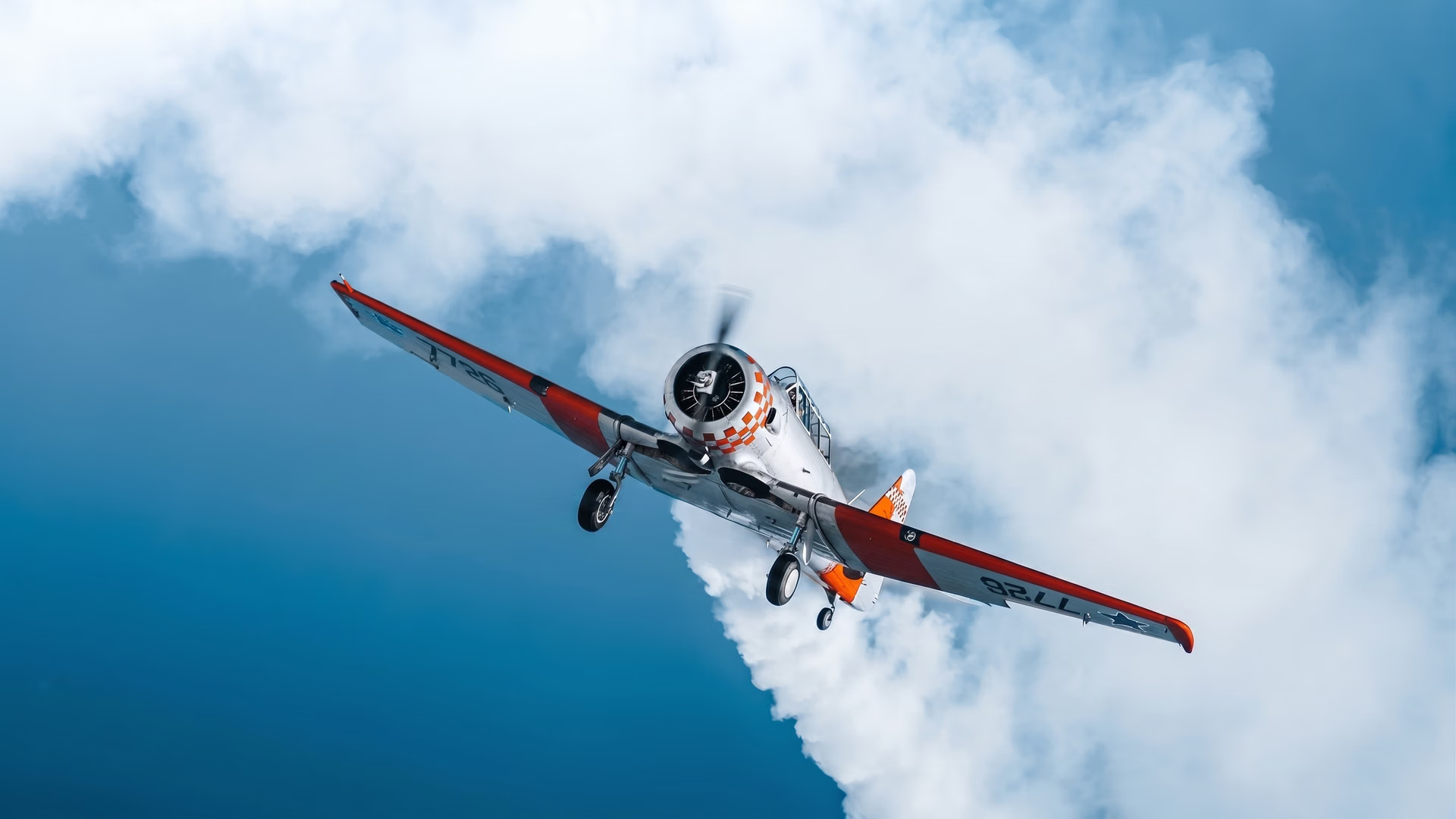
Artificial intelligence (AI) is changing how we fly and explore space. Planes that can navigate autonomously and space missions getting smarter are thanks to AI. Let’s take a deep dive and understand the potential and implications of the aerospace AI market. Put your seatbelts on and get ready to see how AI is taking aerospace to thrilling new heights!
The evolution of AI in aerospace: A journey through time#
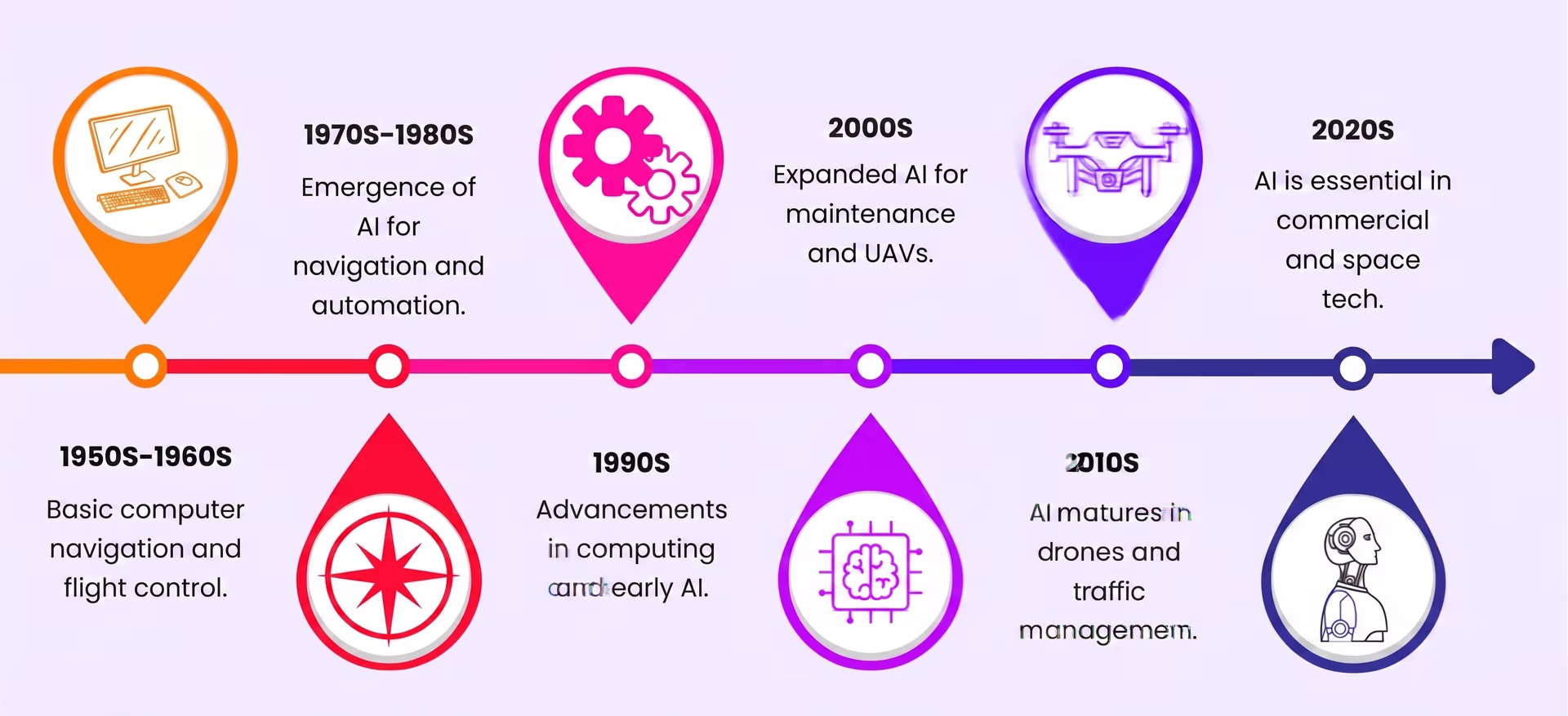
Fig 1. History of AI in Aerospace
We've come a long way from the days of basic automation. Let's hop onto our time machine and see how AI has revolutionized aerospace:
- 1950s-60s: In the early days of aerospace, simple computers were used for basic tasks like navigating and controlling flights.
- 1970s-80s: Smarter algorithms enter the scene. The AI adolescence phase!
- 1990s: More power to computers, more possibilities in data handling.
- 2000s: AI starts becoming the new co-pilot, aiding in maintenance and guidance.
- 2010s: Drones, realistic simulations, and smarter air traffic management.
- 2020s: AI is now a staple in aerospace – from commercial flights to space tech.
Applications of AI in the aerospace industry#
AI is an umbrella term that encompasses a range of cutting-edge technologies like computer vision, generative AI, natural language processing, etc. In recent years, many of these technologies have been applied to different sectors of the aerospace industry to improve operations and increase efficiency and safety. The growth of the aerospace artificial intelligence market is due to the benefits seen by adopting these applications.
For example, generative AI can be used to create and test aircraft designs and structures that are aerodynamically optimized. Companies like Airbus and NASA are actively using generative AI to create more sustainable designs.
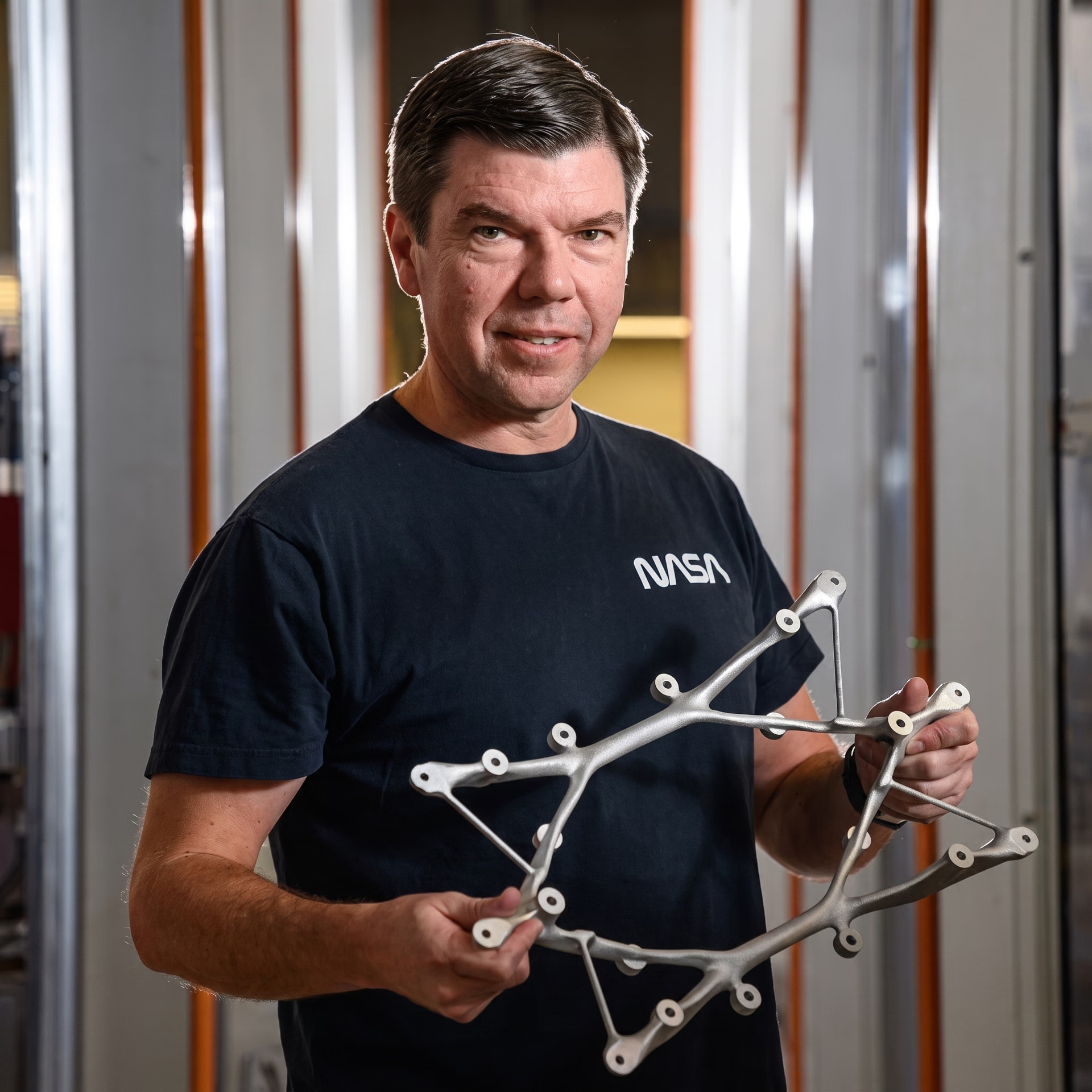
Fig 2. NASA Research Engineer Ryan McClelland holding a 3D-printed titanium structural mount designed with the help of generative AI
If we jump from generating designs to manufacturing aircraft parts, we can see computer vision being used. Computer vision can be used for quality control in manufacturing to detect minute defects in aerospace components. To learn more about AI in manufacturing, check out our solutions page.
Moving from aerospace backend to operations, machine learning algorithms can reduce fuel consumption by optimizing flight trajectories. This is particularly effective during the climbing phase, where small, algorithm-driven adjustments in the flight path can result in substantial fuel savings.
These are just a few examples. AI is being used to solve more and more aerospace-related problems every day. The growth of the aerospace AI market is due to the benefits seen by adopting these applications.
Benefits of AI in aerospace#
Why should we be using AI in aerospace? To put it simply, AI offers a range of benefits that are transforming the aerospace industry. Here's a brief look at some of these key benefits:
- Enhanced Safety - AI helps predict and prevent potential system failures, making flights safer. A great example is how NASA, in partnership with Microsoft and HPE, has used computer vision to inspect spacesuit gloves and increase the safety of astronauts during spacewalks.
- Operational Efficiency - By optimizing flight paths and maintenance, AI cuts down on fuel use and operational costs. For instance, in 2022, Lufthansa Group Airlines teamed up with Google to use AI to forecast winds better and reduce flight delays. They achieved a 40% increase in the accuracy of their wind predictions compared to their previous methods.
- Improved Passenger Experience - AI allows for more personalized services and smoother processes, enhancing travel comfort. This can be seen at the Singapore Changi Airport. They are conducting trials using AI and machine learning to improve security screening. Their aim is to make the screening process 50% more efficient and reduce wait times for travelers.
The current state of the aerospace AI market#
The benefits of applying AI in aerospace are notable and quantifiable. A direct result of this is that the aerospace artificial intelligence market is estimated to increase by 4,694.7 million USD between 2023 and 2028. More people are choosing to travel by air nowadays, and it’s also a significant reason for the growth of the market. Increased global air traffic means that there’s a need for more efficient air traffic management and optimization of flight operations, and AI can provide that.
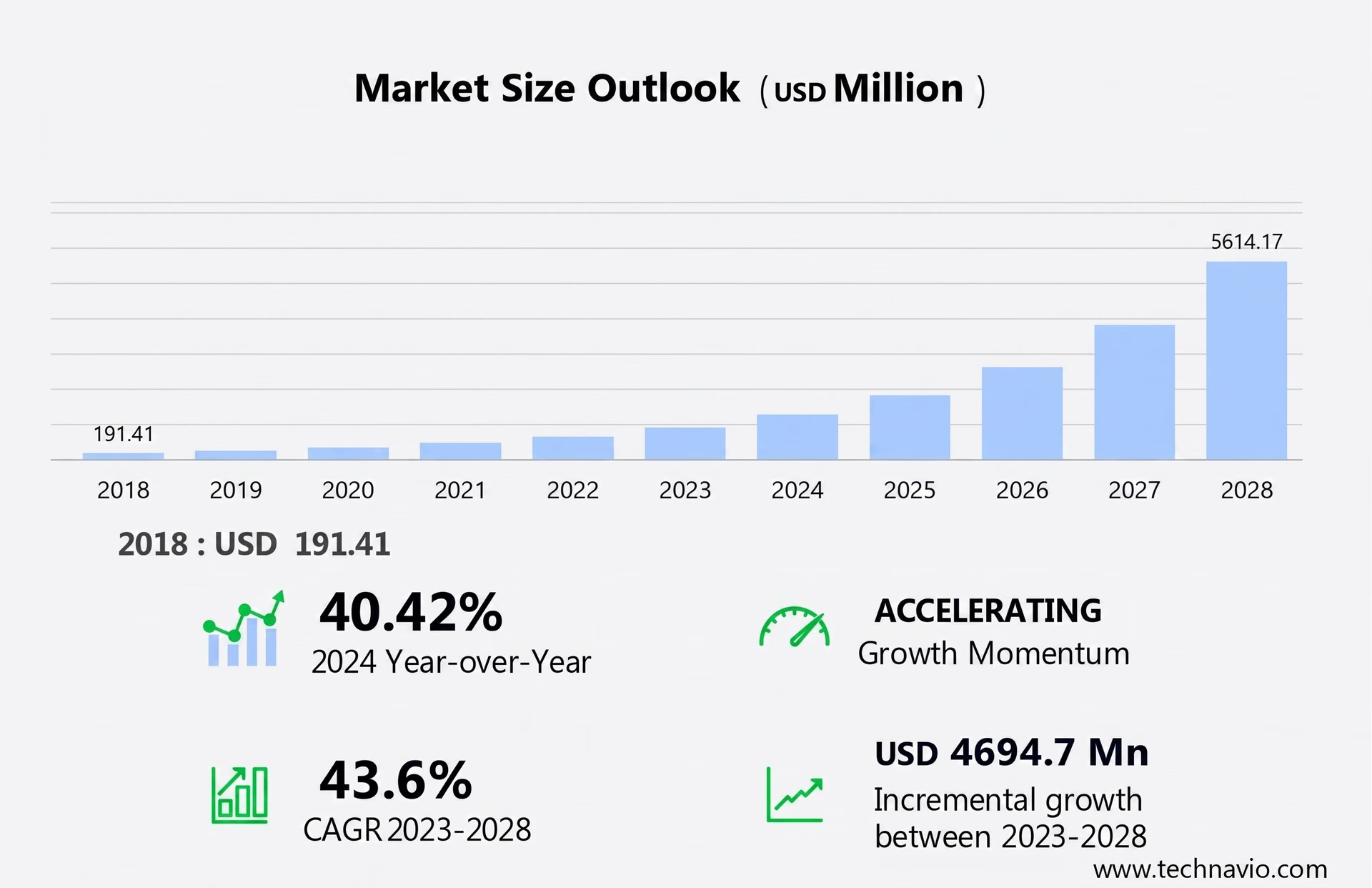
Fig 3. An infographic illustrating the projection of the aerospace AI market.
Some challenges that the aerospace AI market faces are concerns about data security and privacy. The European Union Aviation Safety Agency (EASA) is actively involved in stimulating international discussions and proposing solutions to address these concerns. As the industry evolves, solving these issues will be essential to shaping the future of AI in aerospace.
The future of AI in aerospace#
Whether or not we see self-driving cars in the future, enhanced AI autonomous flight systems are definitely around the corner. The goal of these systems is to reduce reliance on human pilots and make aviation more efficient and safer. While fully autonomous commercial airliners may be years away, the groundwork is being laid for their eventual introduction.
In fact, a Northern California-based startup, Xwing, is working on small self-flying planes. These innovative AI-enabled aircraft are designed to carry passengers autonomously. They’re slated to begin service by the end of this decade.
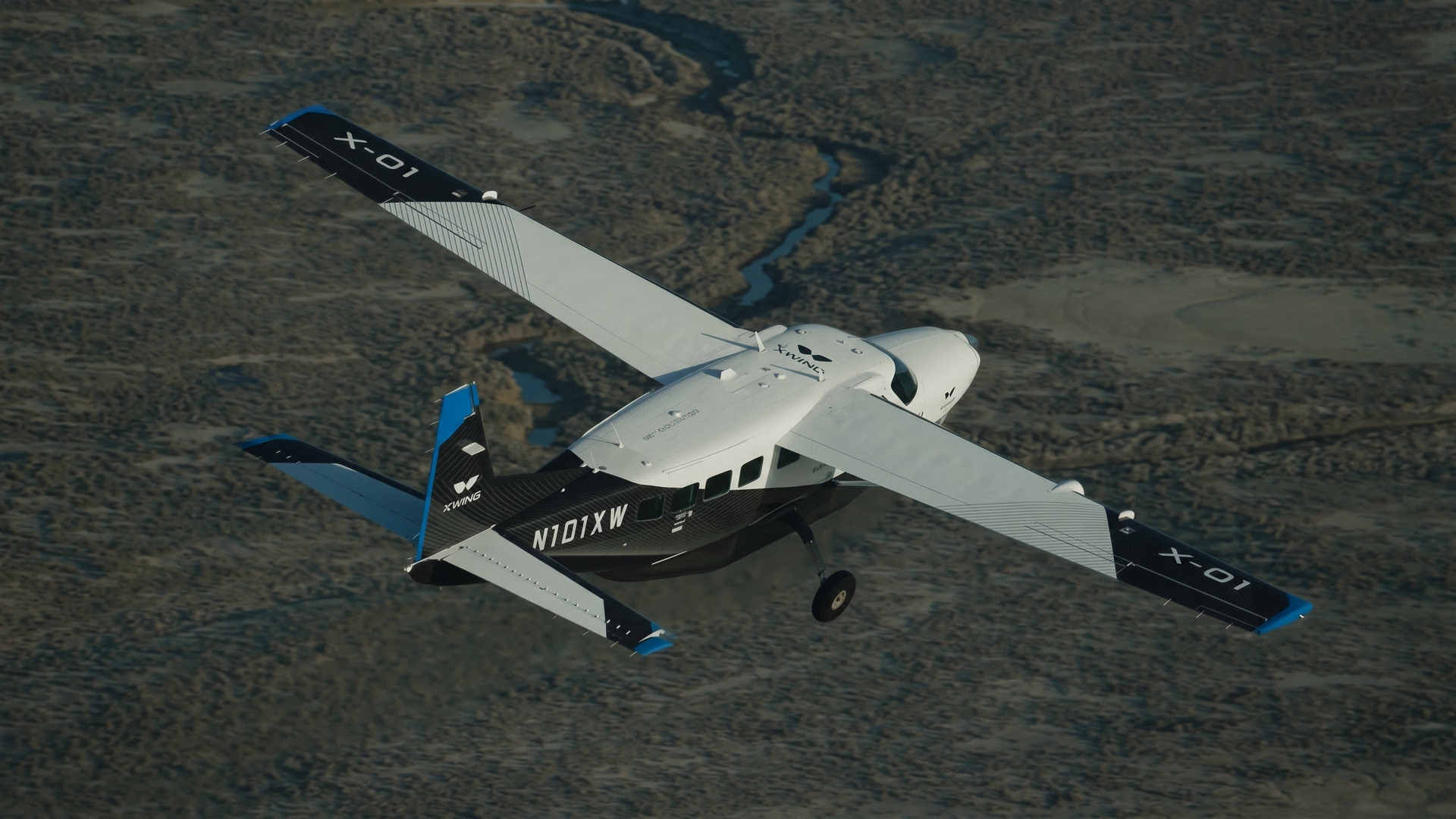
Fig 4. A small self-flying plane by Xwing.
With respect to the future of AI in outer space, AI is being used to land spacecraft autonomously. An example of this is the Terrain Related Navigation (TRN) technology used in NASA’s Mars 2020 mission. TRN assisted the rover during its descent to land accurately on Mars by avoiding dangerous terrain. This system used a combination of real-time image analysis, LIDAR technology, and onboard maps to navigate and adjust the landing trajectory.
Autonomous landings help reduce the cost of space missions and make it more feasible to reuse the rocket. In turn, space exploration becomes more economically viable. This is just a sneak peek at what’s in store for the future of AI in aerospace. With ongoing research and development initiatives around the globe, the possibilities for AI in aerospace are endless.
AI startups shaping the future of flight#
Innovative startups are realizing the potential for AI in aerospace. These startups are making amazing contributions to the field and showcasing how AI can be harnessed to drive advancements in aerospace technology.
Here are some great AI startups in the aerospace industry:
- Slingshot Aerospace - They offer advanced decision intelligence solutions that combine satellite and sensor data to improve mission success and safety.
- Kuva Space - They specialize in using hyperspectral imaging for detailed earth observation to get insights into climate change, food security, and situational awareness.
- NewSpace - They are focused on creating innovative solutions for future aerospace missions, focusing on next-generation technology development.
- Ubotica - They aim to streamline the integration of AI technologies into different aspects of space exploration and aerospace operations.
Join us on this exciting journey!#
Our deep dive into the aerospace artificial intelligence market made it clear that AI is leading a major shift in aerospace. At Ultralytics, we're passionate about pushing AI's boundaries.
Check out our GitHub repository to see how we're contributing to this thrilling field. AI in healthcare, AI in agriculture – you name it, we're there! 🌟🚀








