Monitoring legacy systems with the help of Ultralytics YOLO11
See how Ultralytics YOLO11 can help businesses monitor legacy systems with AI-powered computer vision, improving efficiency and reducing upgrade costs.
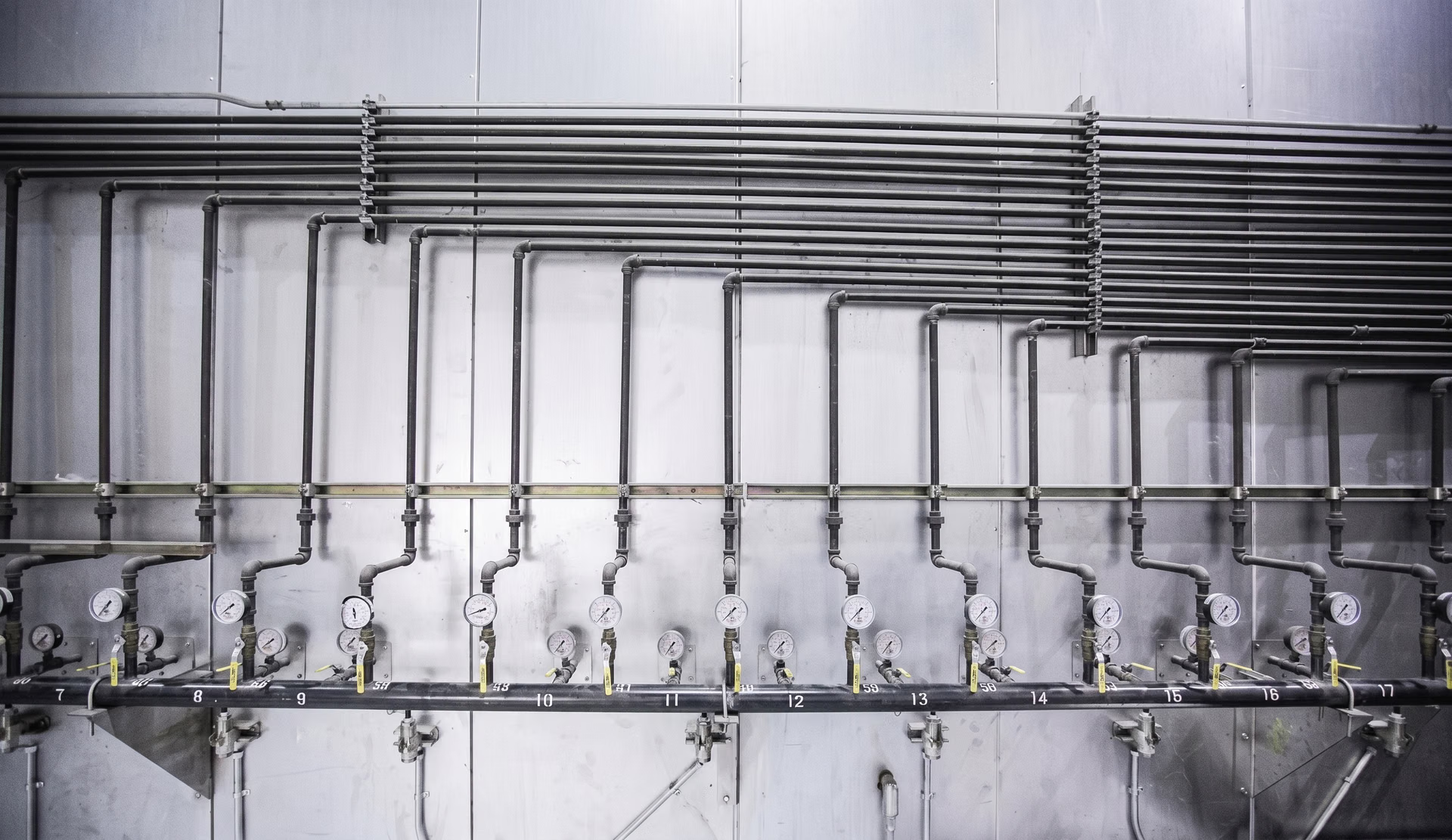
Many businesses, particularly in manufacturing, industrial automation, aerospace, telecommunications, and energy, depend on legacy systems for their daily operations. However, maintaining these older systems often comes with high costs and technical challenges. Despite this, the main reason that companies continue to use legacy systems is that they are deeply embedded in their workflows.
Almost two-thirds of businesses spend over $2 million on maintaining and upgrading legacy systems. These older systems were built for a different time, when automation and real-time analytics were not a priority. Businesses used to rely on manual processes or outdated monitoring tools, which led to inefficiencies and higher operational risks. As a result, many businesses find themselves stuck with these outdated systems, unable to easily transition to more modern solutions without significant disruptions.
This is where AI and computer vision, which enable computers to understand and analyze visual data, can step in and help. Specifically, computer vision models like Ultralytics YOLO11 can be used to detect and monitor legacy systems like meters and gauges.
In this article, we’ll explore how Ultralytics YOLO11 can be used in legacy system monitoring, its benefits, and how businesses can integrate it into their existing workflows easily.
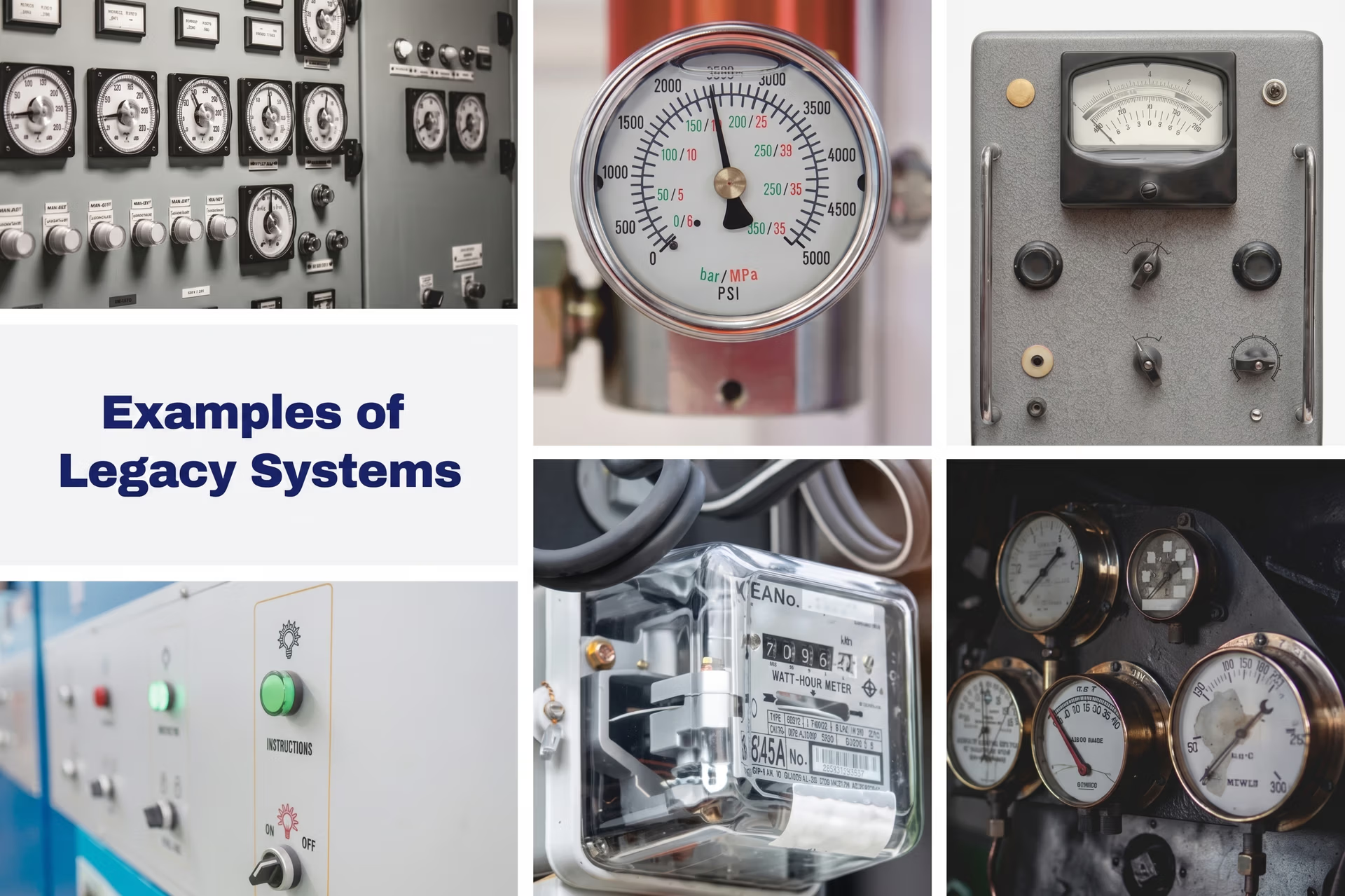
Fig 1. Examples of legacy systems. Image by author.
Challenges related to legacy system modernization#
Legacy systems are vital for many industries, but turning them into digital systems isn’t always simple. Modernizing these systems is important to boost efficiency and reduce risks. Here are some of the technical and environmental challenges businesses face when updating legacy systems:
-
Lack of digital interfaces: Many legacy systems were designed before digital transformation became common. They operate using analog controls, gauges, and mechanical indicators, making direct integration with modern monitoring solutions difficult.
-
High upgrade costs: Replacing or upgrading legacy infrastructure can be expensive and disruptive. Many businesses hesitate to invest in full-scale replacements due to high initial costs and downtime concerns.
-
Inconsistent system designs: Older machinery varies significantly in structure, materials, and functionality. This lack of standardization makes it difficult to apply a uniform digital solution across different systems.
-
Challenges in real-time data capture: Analog displays weren’t designed for automated data collection, making it difficult to extract accurate, real-time readings from dials, meters, or mechanical counters.
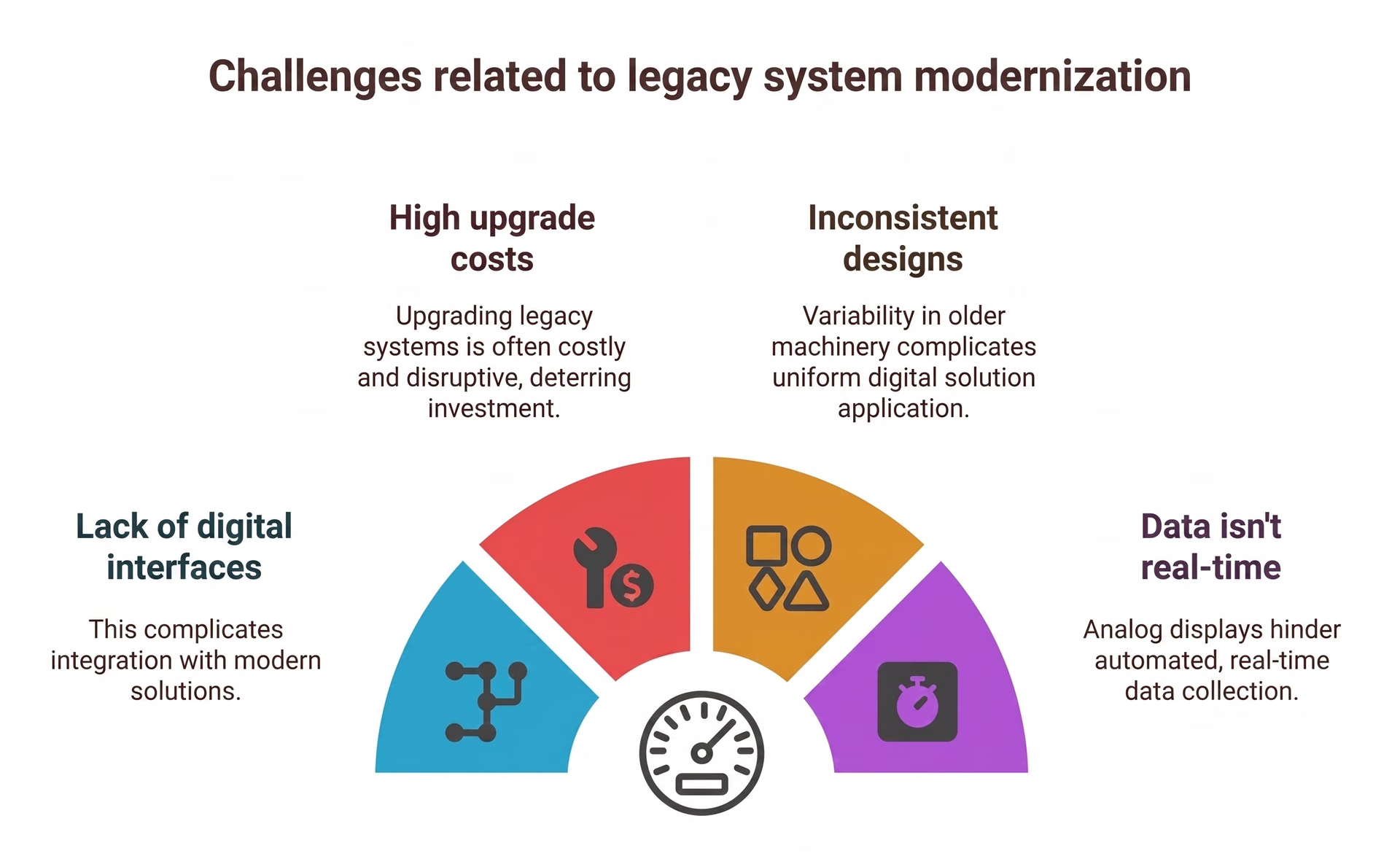
Fig 2. Challenges related to legacy system modernization. Image by author.
How Vision AI can help monitor legacy systems#
Many legacy machines use analog dials, meters, and gauges that can't be connected to digital systems. Vision AI solutions can use cameras to monitor these devices, and the images can be processed in real-time to convert their readings into digital records for easy tracking and reporting.
One of the benefits of using computer vision for this is that operational issues can be spotted almost instantly. In emergencies, automated alerts can notify operators when values exceed safe limits.
Aside from this, computer vision is a more economical option. Setting up cameras and implementing an AI system to analyze these images is cost-effective compared to traditional upgrades or manual monitoring methods. Rather than costly infrastructure upgrades, Vision AI models like YOLO11 can work with existing equipment, making modernization more affordable.
Legacy monitoring systems enabled by Ultralytics YOLO11#
Nowadays, AI is booming, and there are a variety of models and techniques to consider when implementing an AI solution. So, you might be wondering, what makes a model like Ultralytics YOLO11 so special?
Ultralytics YOLO11 supports various computer vision tasks like object detection, instance segmentation, and object tracking, and is ideal for real-time monitoring. One of its key advantages is its ability to run efficiently on edge devices. This means it can process data locally, without relying on a strong network connection or cloud infrastructure.
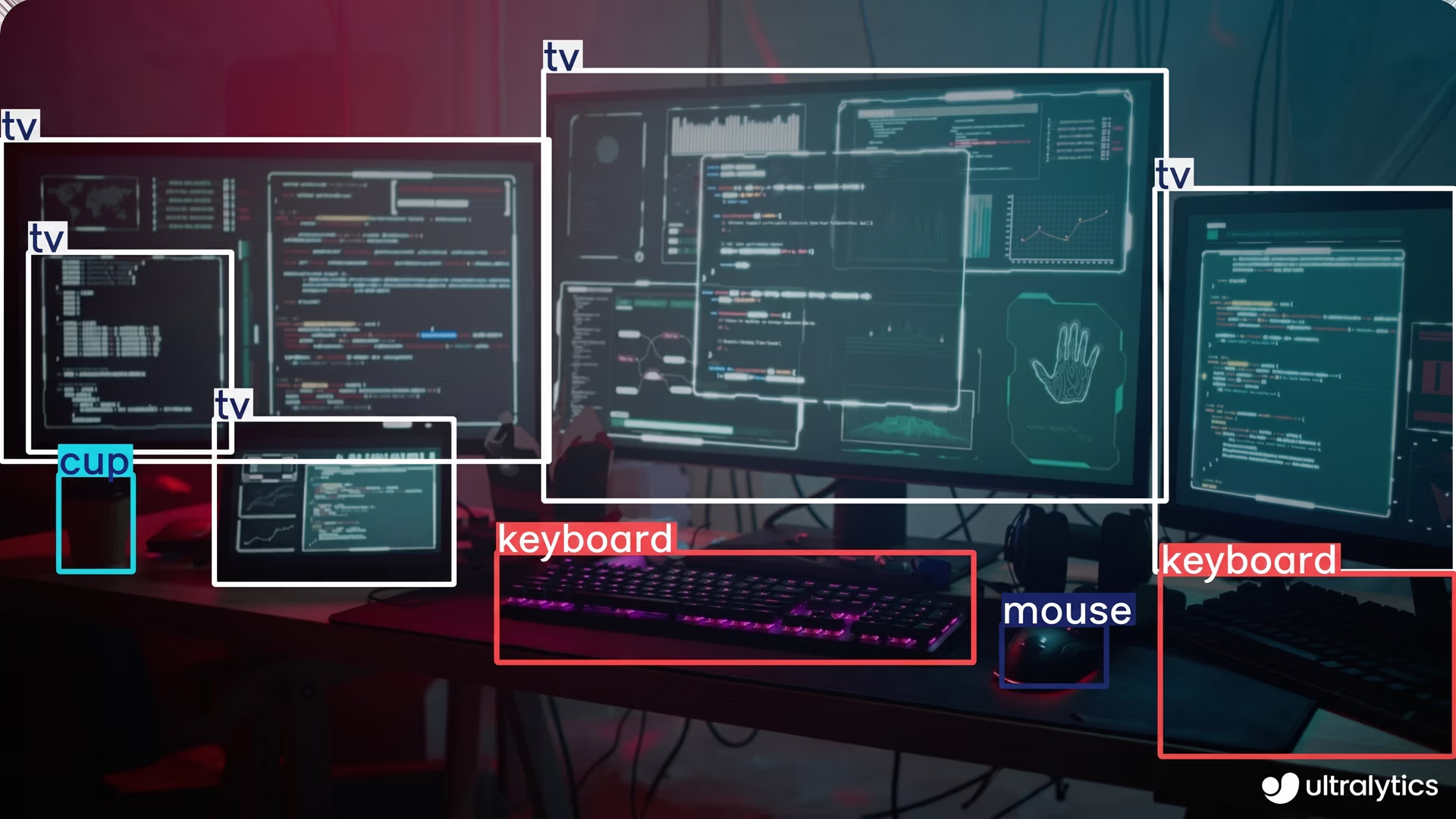
Fig 3. An example of Ultralytics YOLO11 being used for object detection.
On factory floors or in industrial environments with weak or unreliable networks, deploying Ultralytics YOLO11 on edge devices ensures continuous, real-time monitoring without interruptions, reducing the need for costly cloud-based solutions and making it a more affordable and practical choice for businesses.
On top of this, YOLO11 is known for its superior performance in terms of both accuracy and speed compared to its predecessors. With 22% fewer parameters than YOLOv8m, YOLO11m achieves a higher mean average precision (mAP) on the COCO dataset.
Simply put, Ultralytics YOLO11 can detect objects more accurately and faster, even with less processing power. This makes it more efficient at spotting issues and monitoring systems in real-time, while using fewer resources, which is especially useful for legacy systems.
Applications of Ultralytics YOLO11 in legacy monitoring systems#
Next, let's explore some real-world use cases where Ultralytics YOLO11 automates processes by using computer vision to track and analyze readings, all without the need to modify existing equipment.
Analog gauge monitoring using Ultralytics YOLO11#
Various industrial machines leverage analog gauges to measure pressure, temperature, and fluid levels. Manual readings take time and often lead to inconsistencies, especially in large-scale operations. Ultralytics YOLO11 can improve these processes.
Here’s a closer look at how analog gauge monitoring using Ultralytics YOLO11 usually works:
- Object detection: Ultralytics YOLO11 first detects and locates the gauge within an image, ensuring it’s accurately identified, even in complex environments.
- Instance segmentation: Once the gauge is identified, Ultralytics YOLO11 uses instance segmentation to separate key elements like the needle, scale, and numerical markings. This is important because it ensures the system focuses only on the relevant parts of the gauge, removing any background noise or distractions. By isolating these key areas, the next step becomes more accurate and efficient.
- Optical Character Recognition (OCR): Finally, OCR technology can be used to convert the numbers on the gauge into digital data, allowing businesses to track measurements without the need for manual readings.
While this is the general method, the exact steps may vary depending on factors like the type of gauge, environmental conditions, and the angle or quality of the images captured. Adjustments may be made to ensure accurate readings based on these variables.
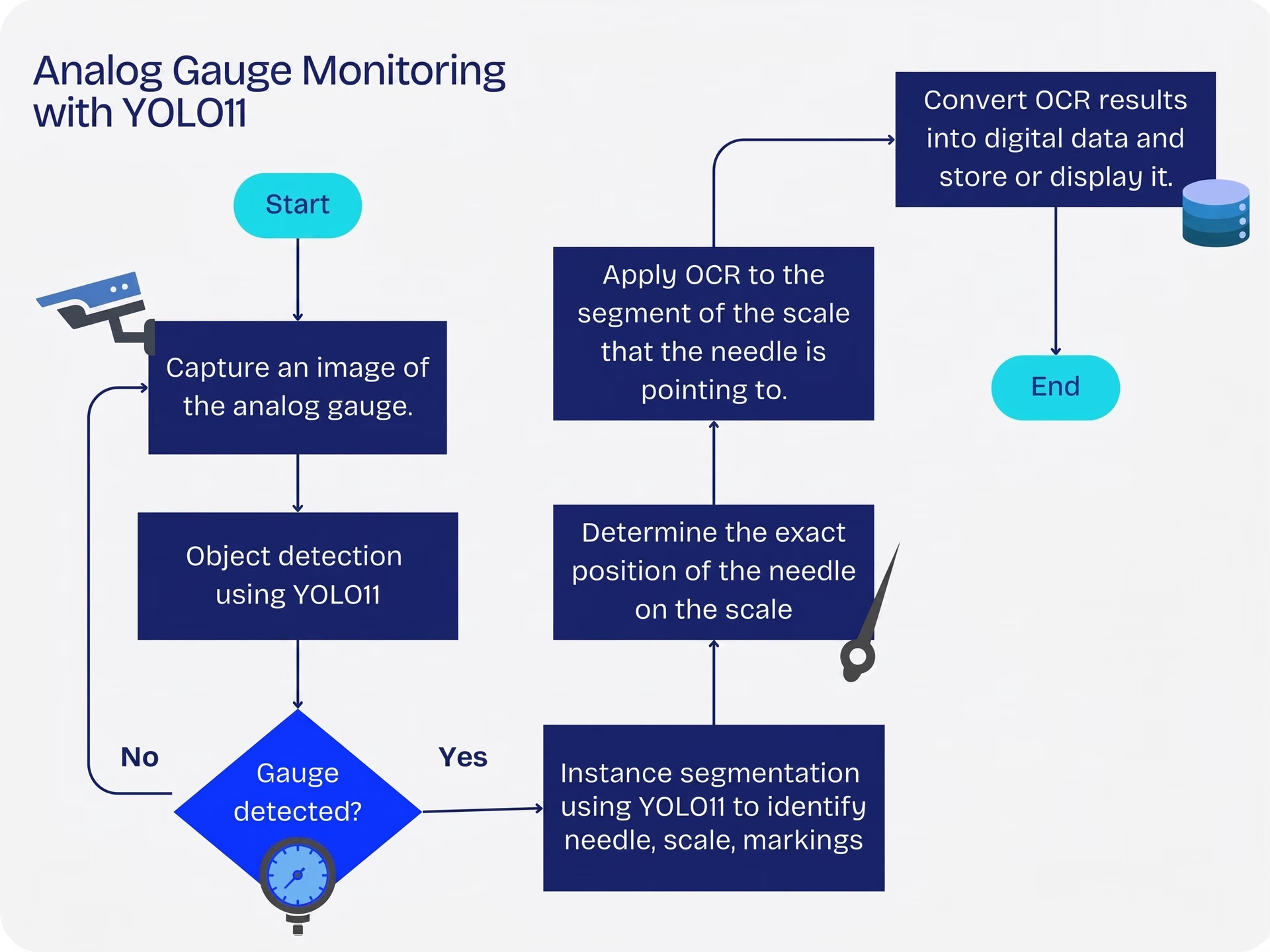
Fig 4. How analog gauge monitoring using Ultralytics YOLO11 works. Image by author.
Ultralytics YOLO11 can simplify utility meter monitoring#
Many utility providers still depend on mechanical meters to track water, gas, and electricity consumption. In some cases, manual site visits are required to collect readings, which takes time and increases costs.
Ultralytics YOLO11 automates the monitoring process by using computer vision to detect and crop the relevant parts of the meter dials. By doing so, the numerical values on the dial can be isolated, and OCR can be used to read them.
With the data collected using computer vision, utility providers can analyze consumption patterns more effectively. Integrating data analytics into the monitoring process helps track historical usage trends, identify anomalies, and detect irregularities such as sudden spikes or drops in consumption, which could indicate issues like leaks or faulty meters.
Analyzing control panels with Ultralytics YOLO11#
Legacy systems like industrial control units, power grid monitors, and factory automation panels rely on analog control panels with switches, buttons, and indicator lights to display machine status and error codes. Generally, operators inspect these panels manually, which is time-consuming and raises the risk of delayed responses.
Ultralytics YOLO11 can optimize this process by accurately identifying and tracking the control panel components. It can detect switches, labels, and indicator lights, and determine their positions and statuses. It can identify whether the indicator lights are showing warnings or normal operation.
For instance, if a warning light is activated, Ultralytics YOLO11 can immediately detect the change, and operators can be alerted, allowing for quicker response times and reducing the risk of missing critical issues.
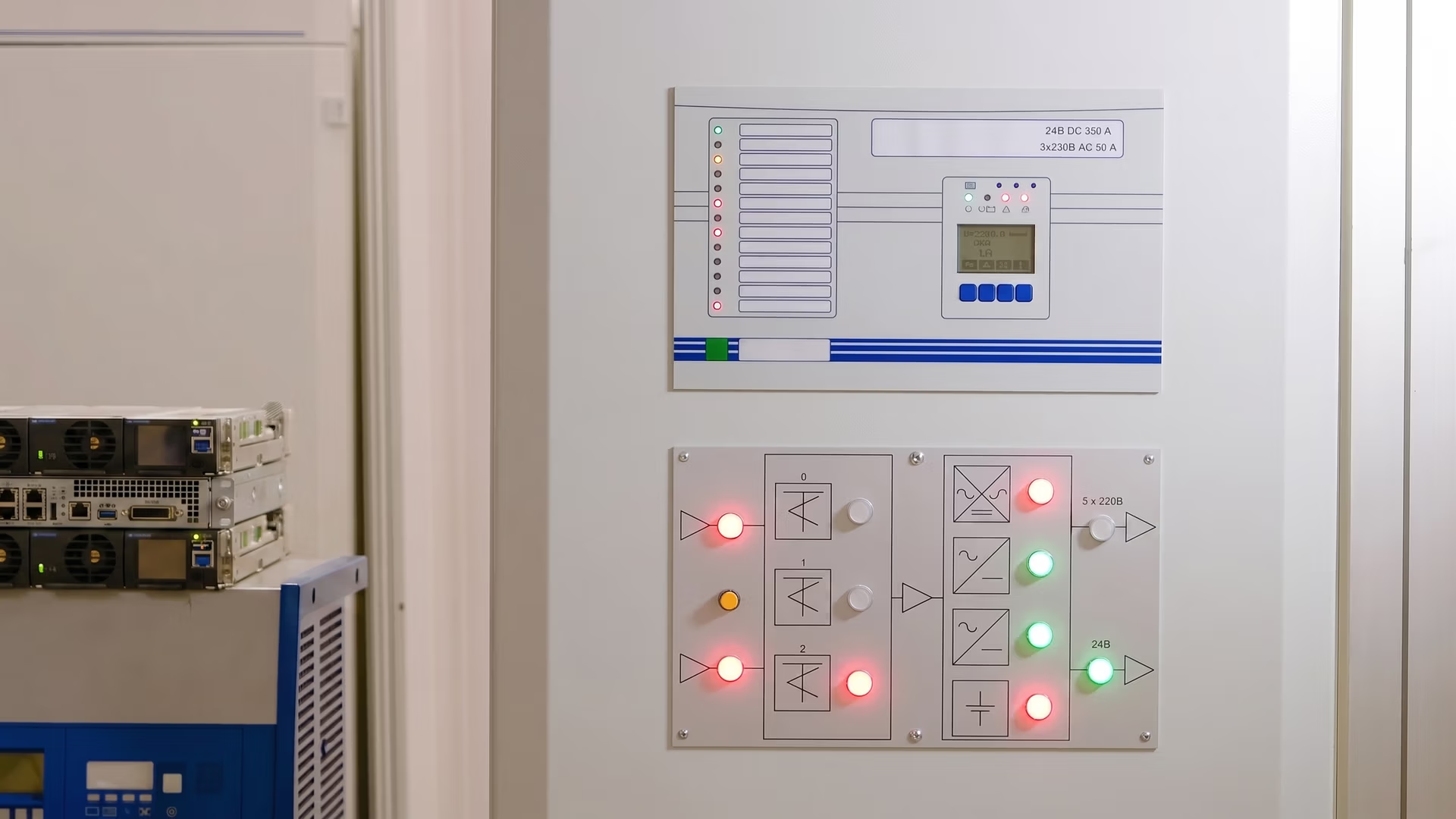
Fig 5. A control panel with indicator lights.
Pros and cons of legacy system modernization#
Computer vision is a practical way to monitor legacy systems without replacing existing hardware. However, like any other technology, it comes with advantages and limitations. Let’s explore both to get a better idea of how it can be applied effectively.
Here are some ways in which Vision AI positively impacts the monitoring of legacy systems:
- Lower long-term costs: While the initial setup may require investment, the automation of monitoring tasks and reduction in human error can lead to significant savings over time.
- Consistency and reliability: Unlike human inspections, which can vary in quality and consistency, Ultralytics YOLO11 offers consistent and reliable performance over time.
- Enhanced decision-making: Real-time data and analysis improve decision-making, allowing operators to make informed choices based on up-to-date information.
Meanwhile, here are some of the considerations that need to be kept in mind:
- Dependence on image quality: Computer vision relies heavily on high-quality images or video feeds. Poor image quality, low resolution, or bad lighting can lead to inaccurate or missed detections.
- Vulnerability to environmental factors: Harsh environments such as extreme temperatures, dust, vibrations, or interference can degrade the performance of computer vision systems.
- Complexity in handling large data volumes: As the system collects large amounts of visual data, managing, storing, and analyzing that data can become challenging without proper infrastructure.
Key takeaways#
Monitoring legacy systems efficiently doesn’t always require replacing existing hardware. Many businesses deal with outdated equipment, but Vision AI offers a way to track performance without making major changes.
Ultralytics YOLO11 makes this possible by using object detection and other computer vision tasks. It can read gauges, meters, and control panels with cameras for real-time monitoring, without the need to modify the system. The model runs smoothly on edge devices, making it a great fit for industries with limited cloud connectivity. This allows businesses to process data on-site and quickly address operational issues.
Join our growing community! Explore our GitHub repository to learn about AI, and check out our licensing options to start your Vision AI projects. Interested in innovations like AI in healthcare and computer vision in agriculture? Visit our solutions pages to discover more!








