Open Compute, Open Vision: AMD at Ultralytics YOLO Vision 2026
See how AMD brought open compute to Ultralytics YOLO Vision 2026 with a ROCm talk, hands-on workshops, and demos running YOLO on AMD Radeon GPUs.
When Ultralytics YOLO Vision 2026 (YV26) opened its doors on September 13, Founder & CEO Glenn Jocher set the tone with a simple idea: vision AI creates the most value when it's open, accessible, and shaped by the people actually deploying it in the field.
YV26 title sponsor AMD showed up ready to put that idea into practice with one of the most hands-on presences between a main-stage talk, a dedicated technical workshop, and demos running all day.
The main stage: Ultralytics YOLO meets ROCm#
The centerpiece of AMD's day was a talk from Alex Zhang, an AI Software Product Engineer and Senior Member of Technical Staff at AMD, where he leads the AMD ROCm Ambassador Program. Zhang's session walked the audience through what it actually takes to run Ultralytics YOLO models on AMD GPUs using PyTorch and ROCm - from early experimentation and training all the way through to real-world inference.
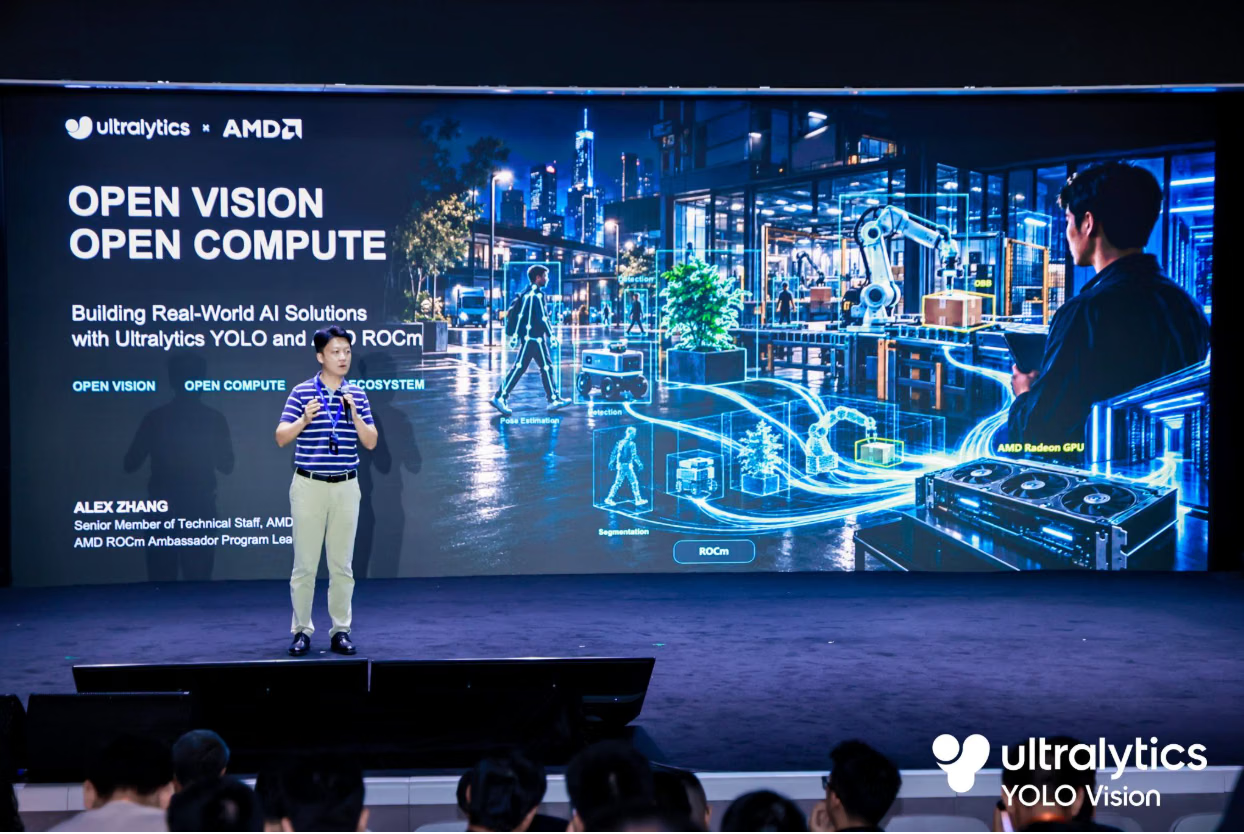
Fig 1. Alex Zhang on stage at Ultralytics YOLO Vision 2026.
It was a session squarely aimed at the day's broader theme, "Open vision, built for the real world." Rather than treating hardware choice as an afterthought, Zhang's talk framed open compute as part of what makes vision AI genuinely deployable - teams shouldn't have to lock themselves into one vendor's stack just to get Ultralytics YOLO running in production.
From the stage to the workshop and demo floor#
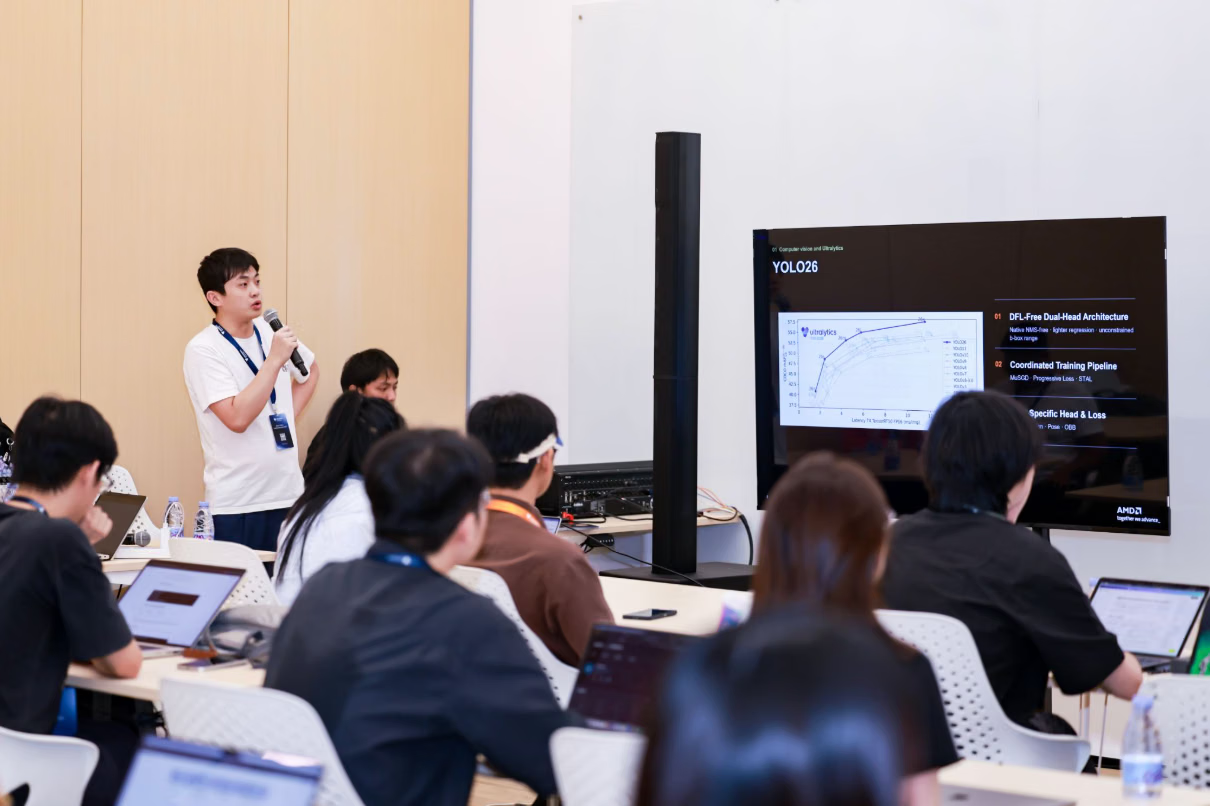 Fig 2. AMD workshop at Ultralytics YOLO Vision 2026.
AMD didn't stop at the keynote. Alongside the demos on the exhibition floor, AMD ran dedicated hands-on workshops that took the main-stage talk a step further, walking small groups through fine-tuning, deploying, and accelerating Ultralytics YOLO on AMD Radeon: building an end-to-end computer vision workflow with Ultralytics YOLO on a single AMD Radeon GPU.
A second workshop, "Ultralytics YOLO26 on AMD Radeon: From an Ultralytics Checkpoint to an End-to-End Video AI Pipeline," walked attendees through how YOLO26x is exported to ONNX, compiled with AMD MIGraphX for FP16 inference, and connected to hardware video decode, OpenCV HIP preprocessing, GPU NMS, and hardware encode.
Both sessions ran on real AMD hardware, giving attendees the opportunity to get hands-on with the workflows rather than simply watch them in action.
Register for the AMD AI Developer Program and enjoy:
- Free Cloud Credit: Receive 100 cloud credits (100 hours) in AMD Developer Cloud credits.
- Early Event Registration: Access exclusive webinars and AMD events before others.
- Win Big Month
- ly: Enter monthly sweepstakes for an AMD Radeon™ GPU or Ryzen™ AI PC.
- Free DeepLearning.AI Courses: 1 month complimentary DeepLearning.AI membership.
- Connect & Collaborate: Access a private Discord channel with AMD engineers and technical peers.
- Monthly Insider Newsletter: Receive curated AI insights and AMD product roadmaps.
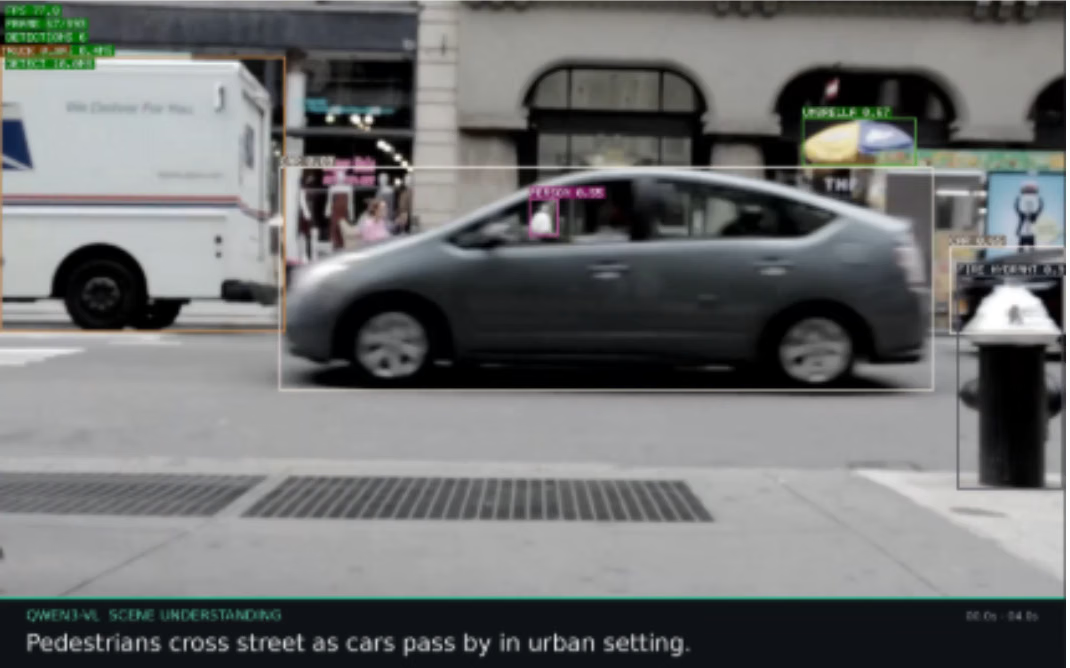 Fig 3. AMD’s second workshop at Ultralytics YOLO Vision 2026.
Why it mattered for the day's bigger story#
Coming on the same day Ultralytics announced the upcoming Ultralytics YOLO27 and rolled out AutoTrain, Agents, and Monitoring on Ultralytics Platform, AMD's talk and workshop were a concrete reminder that the "built for the real world" part of this year's theme isn't just about new model architectures - it's also about making sure those models run wherever teams actually need them to, on the compute they already have.
For anyone at YV26 who stopped by the AMD booth or sat in on the sessions, the message was straightforward: ROCm is a supported path for training and deploying Ultralytics YOLO models, and AMD is investing in real developer-facing effort.
Want to try it yourself? Join the AMD AI Developer Program








