Ultralytics at AMD Embedded AI Working Group in Dublin
Discover how Ultralytics and AMD explored Physical AI, robotics, and computer vision deployment at AMD Embedded AI Working Group 2026 in Dublin.
 Zinnia Pourdad6 min read
Listen to this article
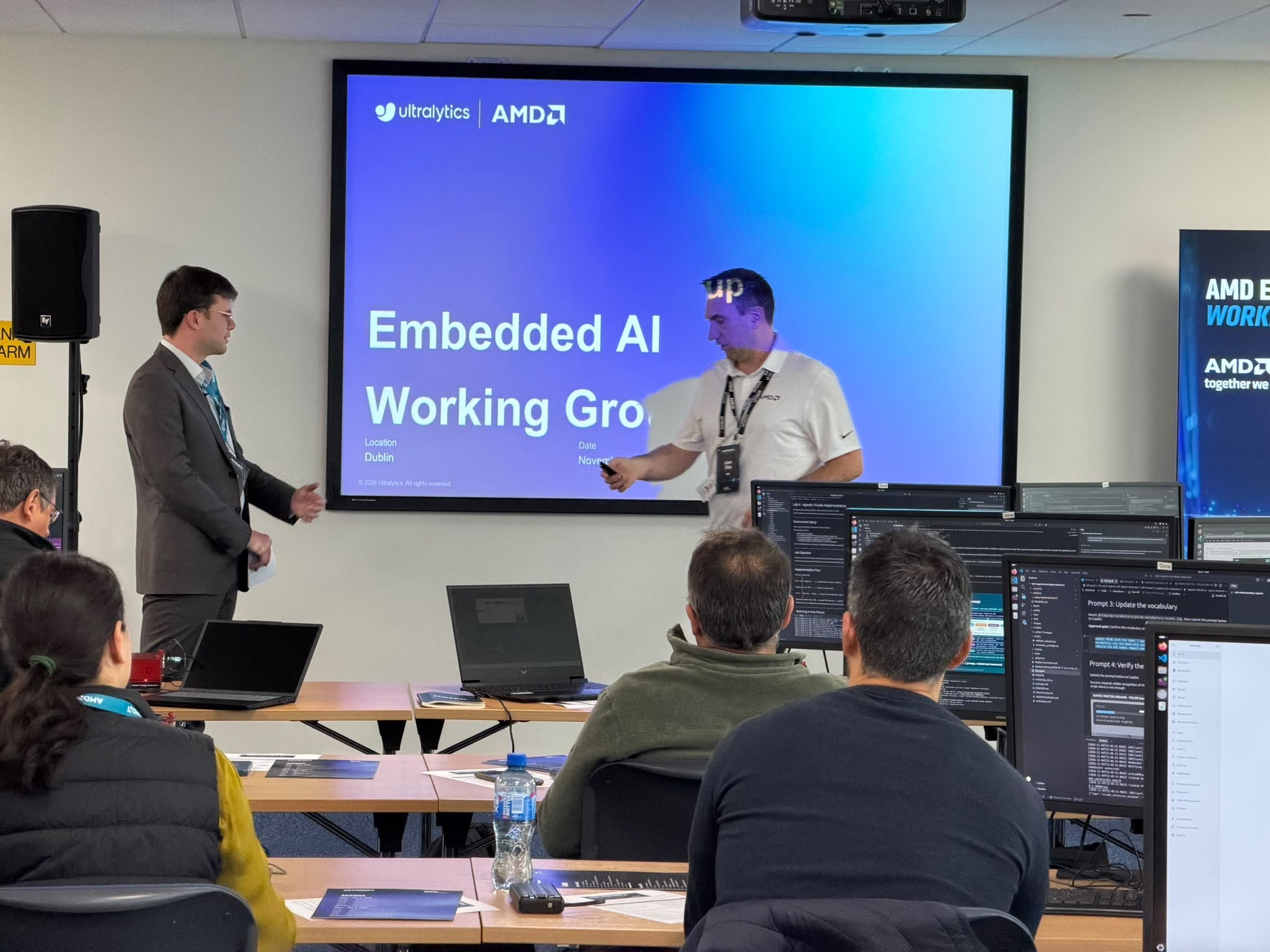
Ultralytics recently joined AMD at its Embedded AI Working Group event in Dublin, Ireland, for two days of technical sessions, hands-on workshops, and live demonstrations exploring embedded AI and Physical AI.
Hosted at AMD's Dublin office on November 3-4, 2026, the event brought together AMD engineers, technology partners, and developers to explore how AI, software, and adaptive computing can help bring real-world applications from concept to deployment.
Representing Ultralytics, Manuel Calve, Head of Ecosystem and Partnerships, and Zinnia Pourdad, Global Events Manager, joined the event to connect with the wider AMD ecosystem, highlight recent developments in Ultralytics YOLO, and showcase how Ultralytics YOLO supports computer vision applications across AMD hardware.
Ultralytics YOLO and AMD: Advancing AI from Cloud to Edge#
The event followed recent developments in the technical collaboration between Ultralytics and AMD, including official support for AMD GPUs in Ultralytics YOLO. The integration supports a range of AMD hardware, including AMD Radeon GPUs, with additional deployment options across AMD Ryzen AI processors and edge devices. Developers can now train Ultralytics YOLO models using AMD ROCm software and deploy exported ONNX models with AMD MIGraphX for accelerated inference. This support extends to supported AMD Radeon GPUs and Ryzen AI integrated GPUs, with further work underway to enable deployment on Ryzen AI NPUs.
Ultralytics YOLO also now supports AMD Xilinx export, enabling developers to prepare models for deployment on AMD Versal AI Edge Series Gen 2 NPUs. Using AMD Quark for INT8 quantization and Vitis AI for compilation, this integration extends Ultralytics YOLO deployment capabilities to edge AI applications.
Together, these capabilities give developers greater flexibility to build and deploy computer vision applications across different computing environments, from industrial inspection and robotics to smart cameras.
Exploring embedded AI and robotics throRworksho#
The first day focused on technical presentations and workshops covering AMD Ryzen AI, ROCm, robotics, and embedded AI development.
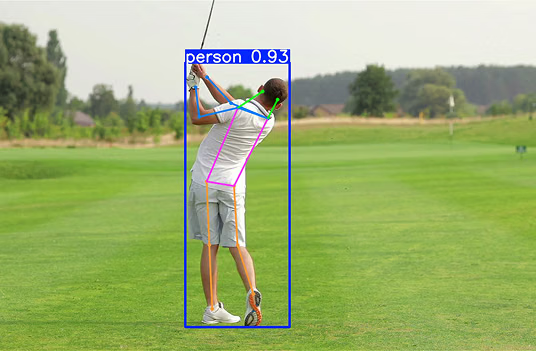
Ultralytics YOLO26 was featured in two AMD-led workshops, where attendees gained practical experience working with Ultralytics YOLO26 pose estimation, demonstrating how computer vision can support applications that need to interpret movement and interact with their physical surroundings.
The second workshop used YOLO26 pose in a ROS 2 robotics context, exploring how pose estimation can support applications such as person-following robots, distance monitoring, and gesture recognition. Developers interested in exploring similar applications can follow our ROS quickstart guide.
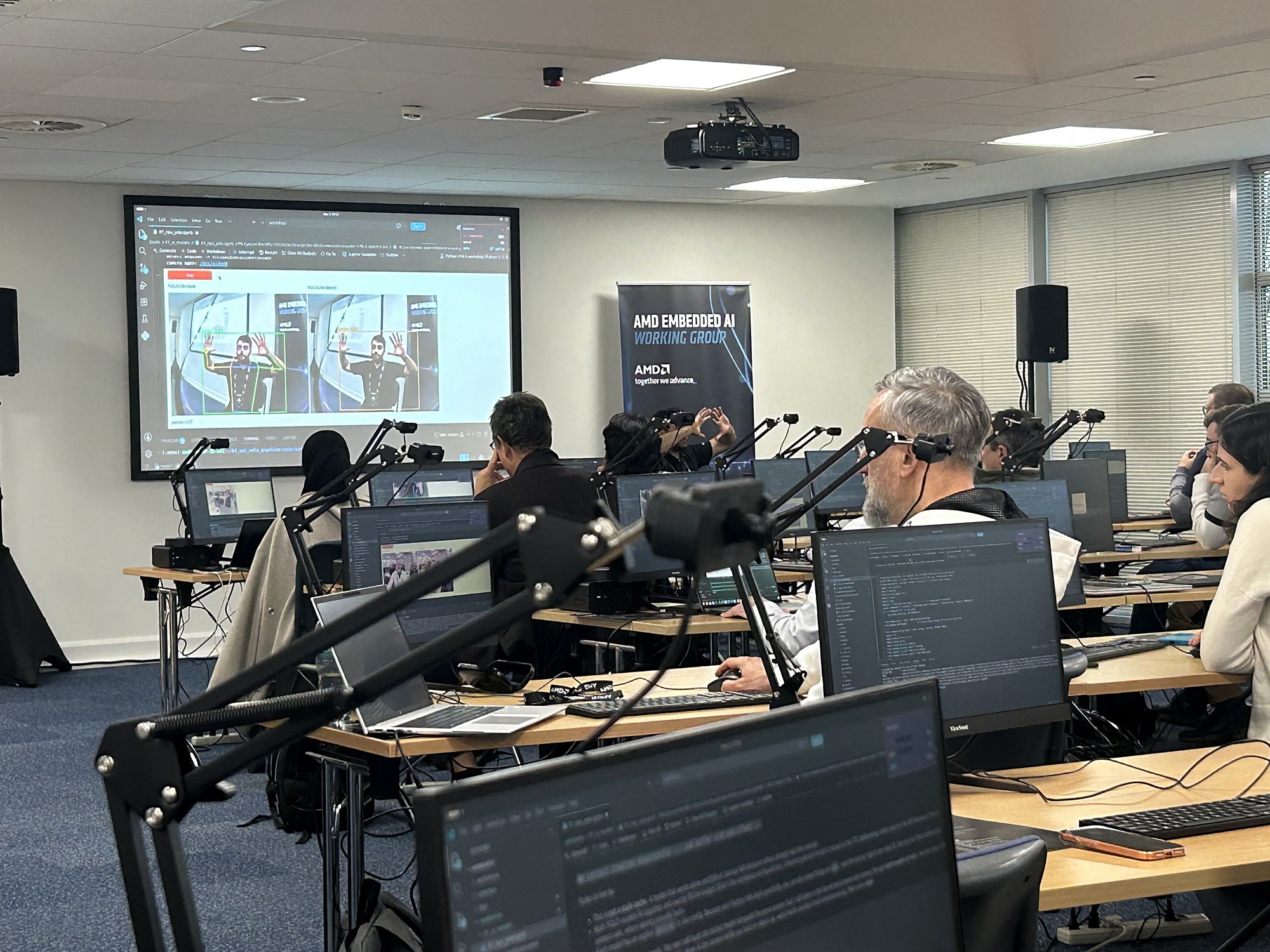
Through these hands-on workshops, attendees explored how Ultralytics YOLO26 can be integrated into robotics and Physical AI workflows, bringing computer vision into practical development environments.
Building real-world AI with Ultralytics YOLO and AMD#
On the second day, Manuel Calve, Head of Ecosystem and Partnerships at Ultralytics, presented a technical session titled Building real-world AI with Ultralytics YOLO and AMD: From Cloud to Edge.
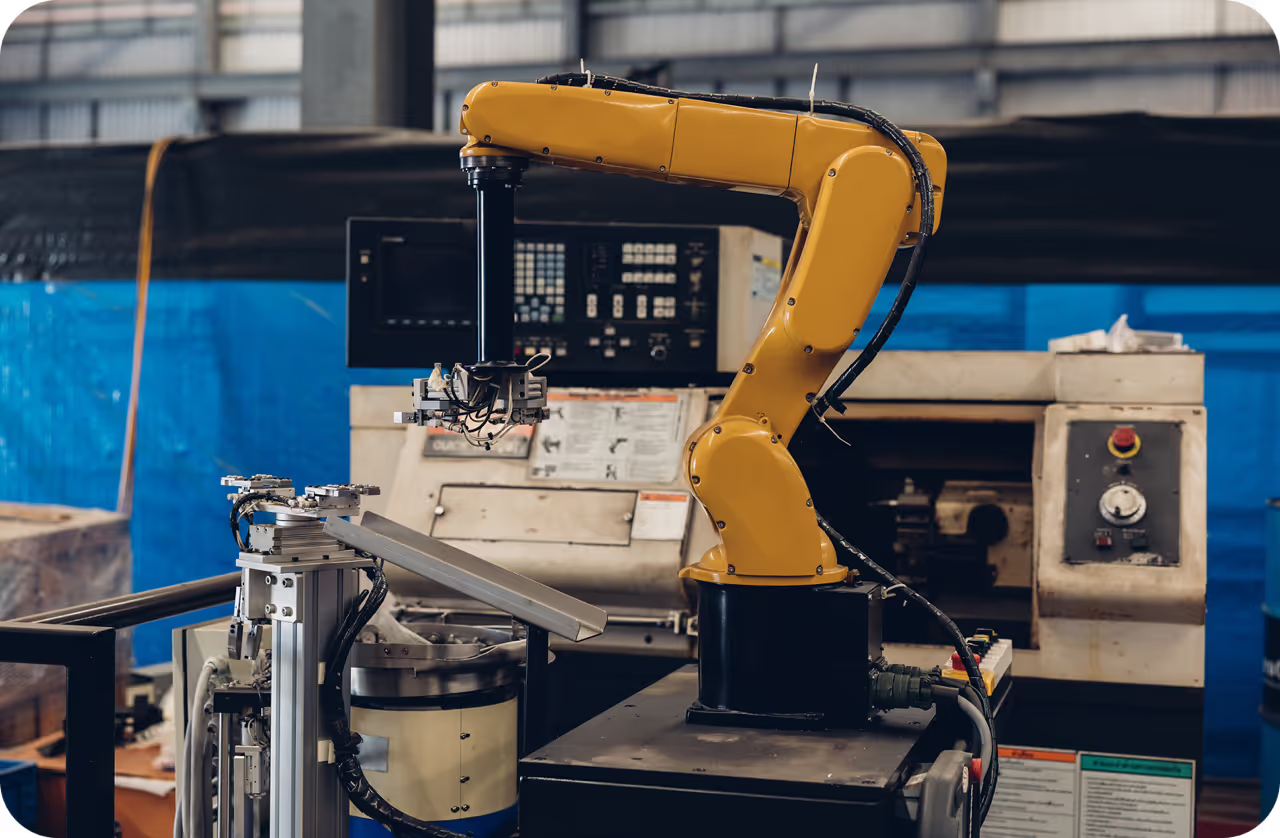
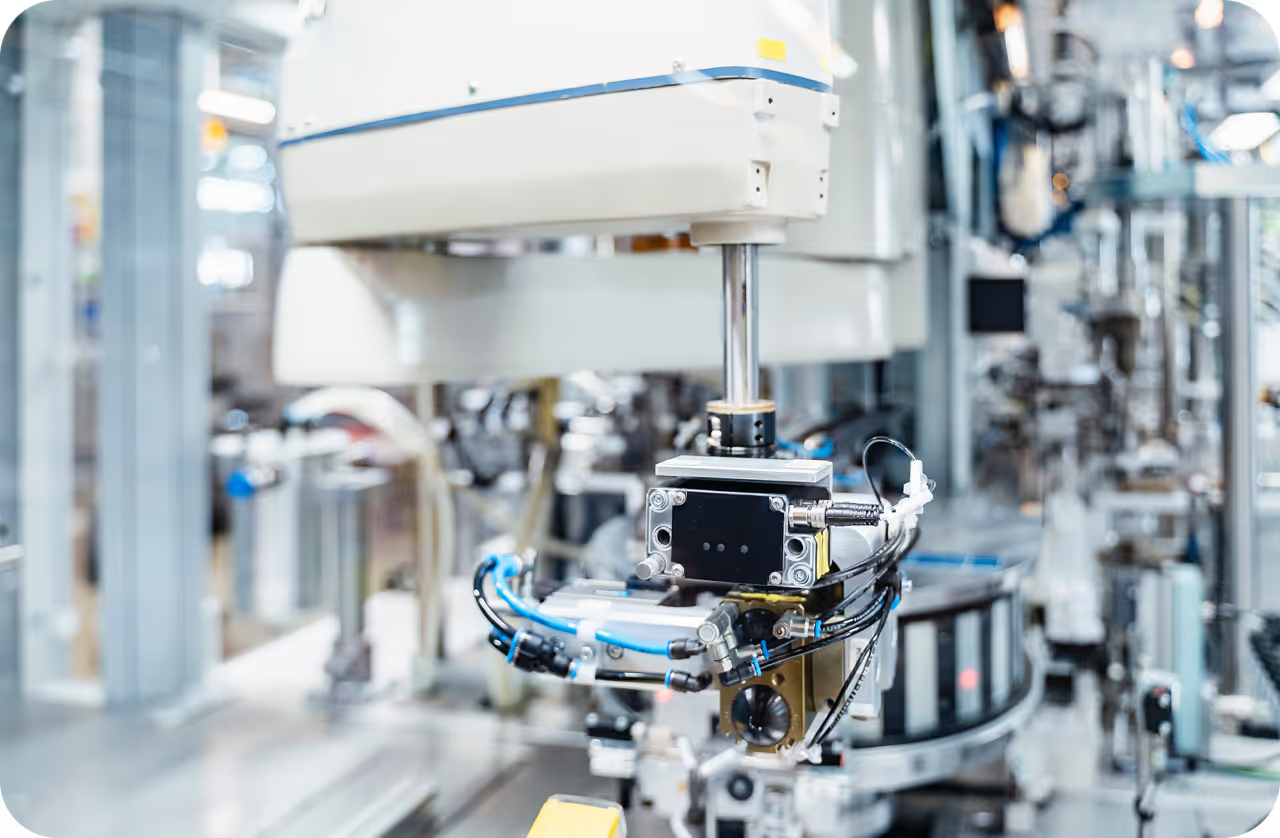
From robotics and industrial inspection to smart cameras, real-world Physical AI applications require computer vision that is fast, accurate, and ready to deploy.
Manuel highlighted how developers can train Ultralytics YOLO models on supported AMD GPUs using ROCm, export models to ONNX, and use MIGraphX for accelerated inference. The session also explored deployment options across AMD's wider hardware ecosystem, demonstrating how computer vision workflows can move from development toward real-world applications.
All seven YOLO26 tasks ran live on AMD ROCm#
Our live demos ran every YOLO26 task on AMD ROCm, side by side:
- Object detection: boxes and labels for detected objects
- Instance segmentation: a pixel mask for each detected object
- Semantic segmentation: a class for every pixel
- Image classification: one label for the whole image
- Pose estimation: 17 keypoints per detected person
- Oriented bounding boxes: rotated boxes for aerial and top-down views
- Depth estimation: distance in meters for every pixel
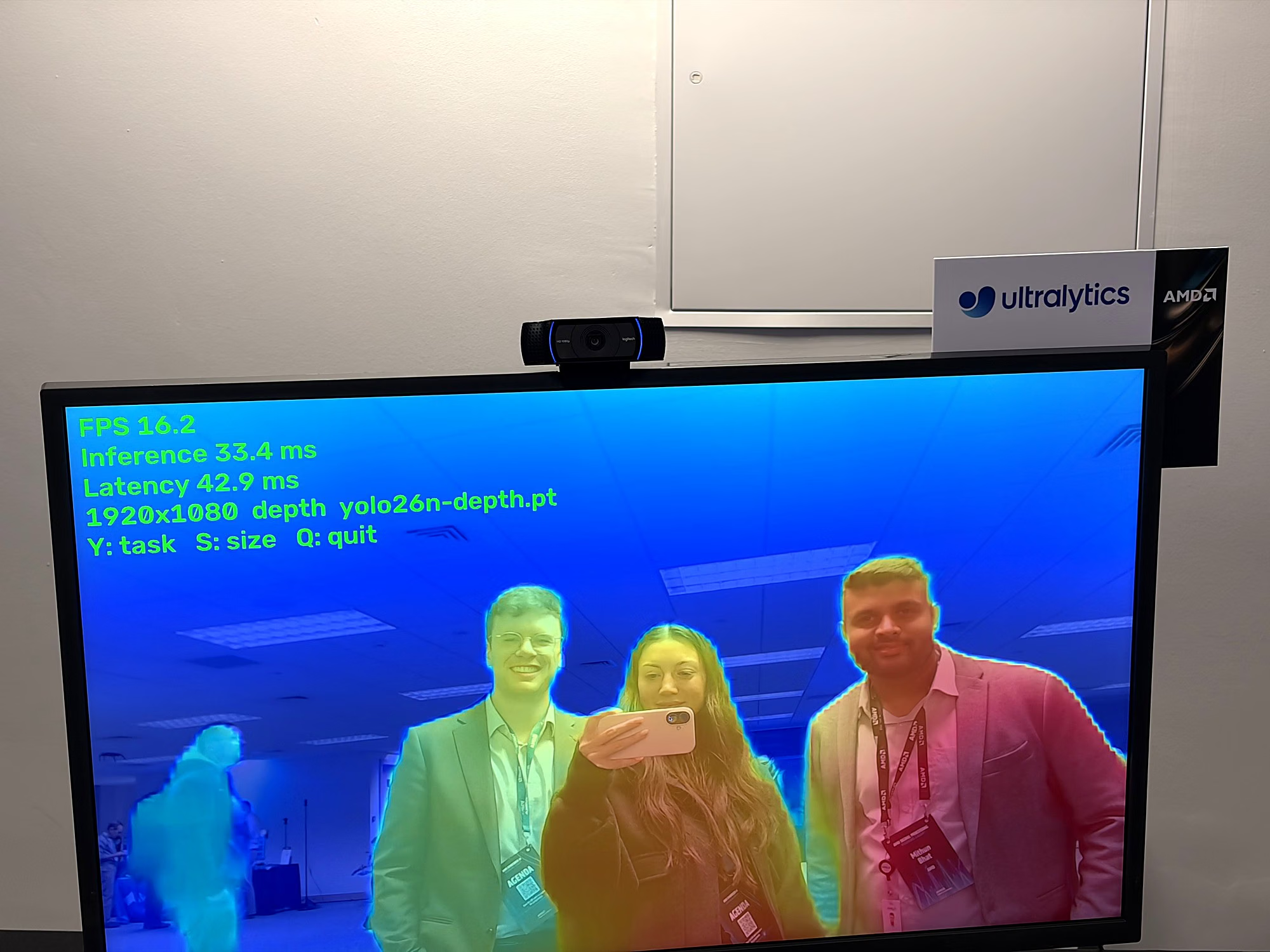
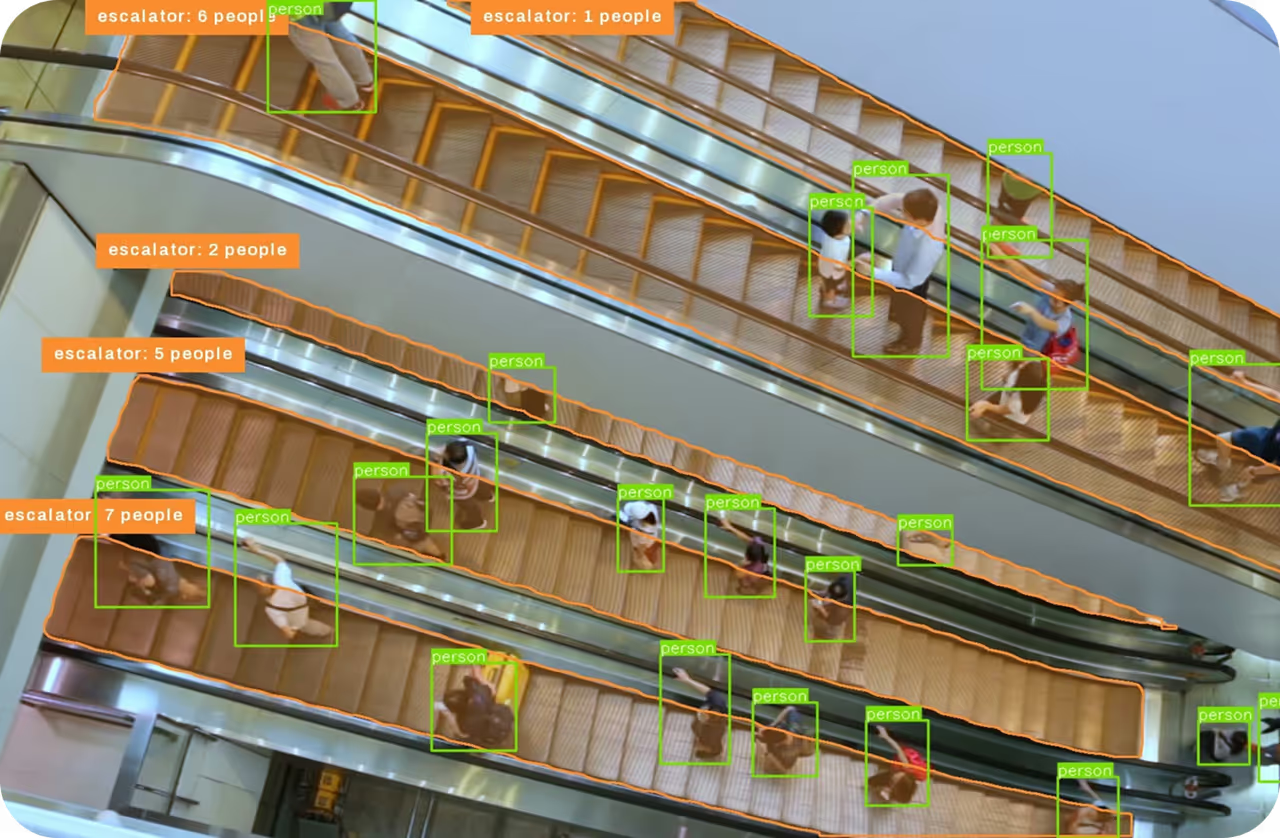
These capabilities are particularly relevant for applications such as manufacturing quality control, autonomous robotics, and intelligent monitoring, where efficient computer vision inference is essential.
Get started with Ultralytics YOLO on AMD#
The AMD Embedded AI Working Group brought together developers and technology partners to explore how embedded AI and Physical AI are moving from development to real-world applications. From hands-on workshops using Ultralytics YOLO26 to discussions around cloud-to-edge deployment, the event highlighted practical ways computer vision can be integrated into AMD-powered systems.
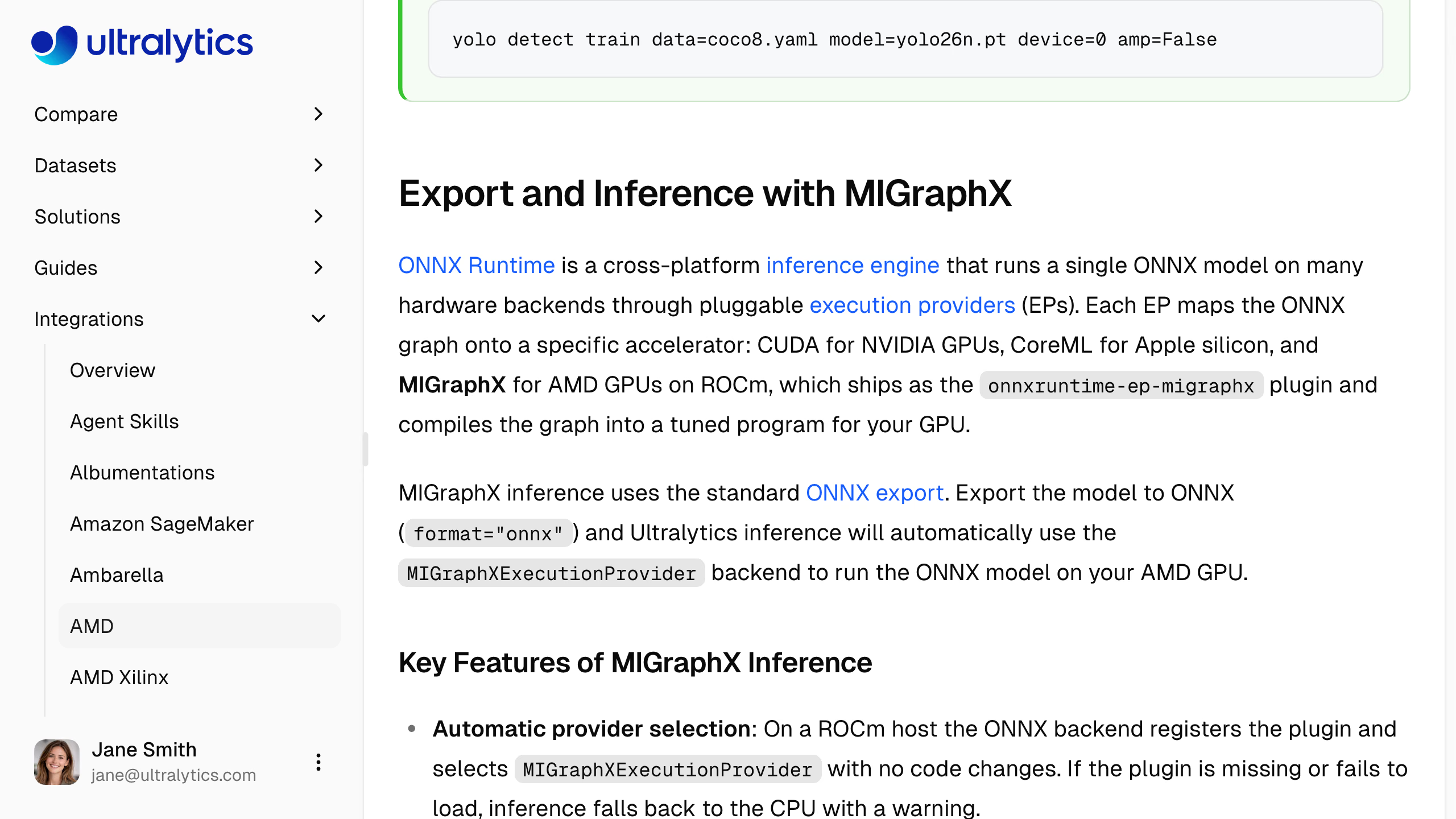
Interested in building with Ultralytics YOLO on AMD hardware? Explore the Ultralytics AMD integration documentation for supported hardware, installation instructions, training workflows, and accelerated inference with MIGraphX and get started on the Ultralytics Platform!
Frequently asked questions
Yes. Since Ultralytics 8.4.171, YOLO trains and runs on AMD Instinct and supported Radeon GPUs through PyTorch on ROCm, and exported ONNX models run through the MIGraphX execution provider. It works on Linux x86_64, and the same
device=0argument used on other GPUs selects the AMD GPU.Yes, on processors with ROCm-supported integrated GPUs. AMD lists the Ryzen AI Max+ PRO 395, Ryzen AI Embedded X100 and Ryzen AI Embedded P185 as tested for running models with PyTorch and deploying with MIGraphX. The Ryzen AI NPU is not a native Ultralytics backend; NPU workflows use AMD's Ryzen AI or Vitis AI tools on an exported ONNX model.
MIGraphX is AMD's graph optimization and inference engine for AMD GPUs. You don't need code changes: export with
format="onnx", load the.onnxfile withYOLO(), and predict withdevice=0. On a ROCm system Ultralytics installs and selects the MIGraphX execution provider automatically.On an AMD Radeon 8060S GPU (Ryzen AI Max+ PRO 395) at FP32, batch size 1 and 640-pixel input, with Ultralytics 8.4.165, YOLO26n-pose runs in 2.5 ms per image on MIGraphX against 4.6 ms with PyTorch on ROCm, with the same 0.566Ro95 on COCO. Times exclude pre- and post-processing and the one-time compile.
Yes. YOLO26 runs through the standard Ultralytics Python API, so it fits in a ROS 2 node like any other Python component. Our ROS quickstart guide shows a node that runs YOLO on camera frames and publishes annotated images; publishing keypoint data takes a few extra lines of node code.
Written by
Global Events Manager · Ultralytics
Comments
Ask a question, share your results, or help someone else.