12 days of OpenAI’s latest innovations
Explore the 12 days of OpenAI releases, featuring tools like o1 models, Sora, and Canvas, shaping AI for creativity, collaboration, and productivity.
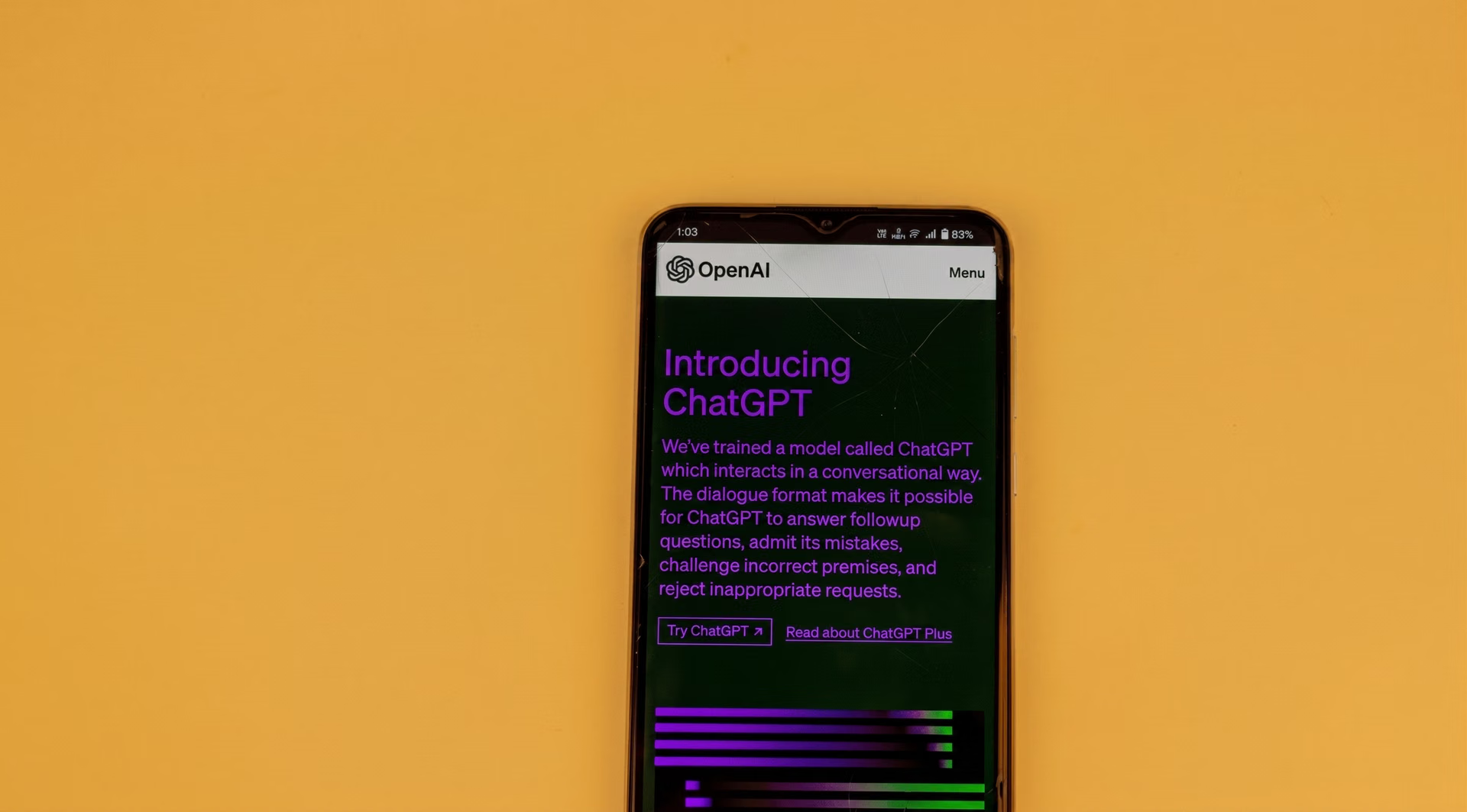
This December, OpenAI celebrated the 12 Days of OpenAI, unveiling exciting announcements and features that redefine how AI can be used across industries. From reasoning models to video generation tools, collaborative workspaces, and more, these updates demonstrate OpenAI’s commitment to enhancing usability, creativity, and responsibility in AI development.
In this article, we’ll take an in-depth look at each day’s announcement and explore how these innovations are shaping the future of AI.
An overview of the 12 days: OpenAI highlights#
Spanning December 5th to 16th, 2024, the 12 days of OpenAI releases delivered a lineup of innovations that cater to a broad spectrum of users, from developers to creatives and businesses. Each announcement showcased how AI can empower productivity, spark creativity, and prioritize responsibility, aligning with OpenAI's mission to make artificial intelligence more accessible and impactful across industries.
Key highlights included tools like Canvas, a collaborative workspace that streamlines long-form writing and coding, and the o1 reasoning model, designed to tackle complex tasks like advanced problem-solving and debugging. For non-technical users, features like Sora, which generates high-quality videos from text prompts, and seamless integrations with Apple tools made AI more intuitive and practical.
The diversity of these updates reflects OpenAI’s commitment to serving a wide range of needs. Developers can leverage advancements such as reinforcement fine-tuning programs and o1 enhancements to refine their applications, while educators and marketers might use tools like ChatGPT search to access reliable, up-to-date information or craft engaging content efficiently. OpenAI also reinforced its dedication to ethical AI practices with initiatives aimed at reducing bias and improving fairness in model responses.
Throughout the 12 days, OpenAI demonstrated not just incremental updates but bold strides toward integrating AI into everyday workflows. Whether it’s improving collaboration with Canvas, enhancing reasoning with the o3 model, or simplifying customer support with 1-800-CHATGPT, these features bring AI closer to fulfilling its potential as a transformative force for innovation and responsibility.
Let’s dive into each day’s announcement and explore how these innovations are shaping the future of AI.
Introducing o1 and ChatGPT Pro#
The 12 days of OpenAI event kicked off on December 5, 2024 with the release of the o1 reasoning model, a significant upgrade for tasks requiring complex problem-solving. Designed to tackle challenges in logic, coding, and advanced mathematics, the o1 model employs a “chain of thought” methodology, breaking down problems into structured, logical steps.
For example, developers can use the o1 model to debug intricate code snippets, while researchers might leverage it for analyzing detailed datasets or conducting high-level computations. The model’s strength lies in its ability to think step-by-step, ensuring accurate and insightful results.
Alongside this, OpenAI introduced ChatGPT Pro, a subscription service aimed at professionals and enterprises. This tier provides unlimited access to o1, faster response times, and priority during peak usage hours. Priced at $200 per month, ChatGPT Pro is tailored for businesses that rely on consistent, high-performance AI for their operations.
Reinforcement of fine-tuning research program#
Day two highlighted OpenAI’s dedication to ethical AI with the Reinforcement Fine-Tuning Research Program. This initiative allows researchers to refine model outputs using reinforcement learning techniques, ensuring that AI systems align more closely with human values and expectations.
Alignment challenges, such as avoiding biases or producing contextually appropriate answers, remain critical in AI. OpenAI’s program invites researchers from diverse disciplines to collaborate, fostering innovation and transparency in the quest for safer AI systems.
By offering tools and datasets to participants, the program supports a hands-on approach to tackling alignment issues, benefiting both developers and end-users.
Sora – AI for video generation#
On the third day, OpenAI introduced Sora, a groundbreaking tool for creating videos from text prompts. This model transforms written descriptions into high-quality, dynamic visuals, offering a simple yet powerful solution for video production.
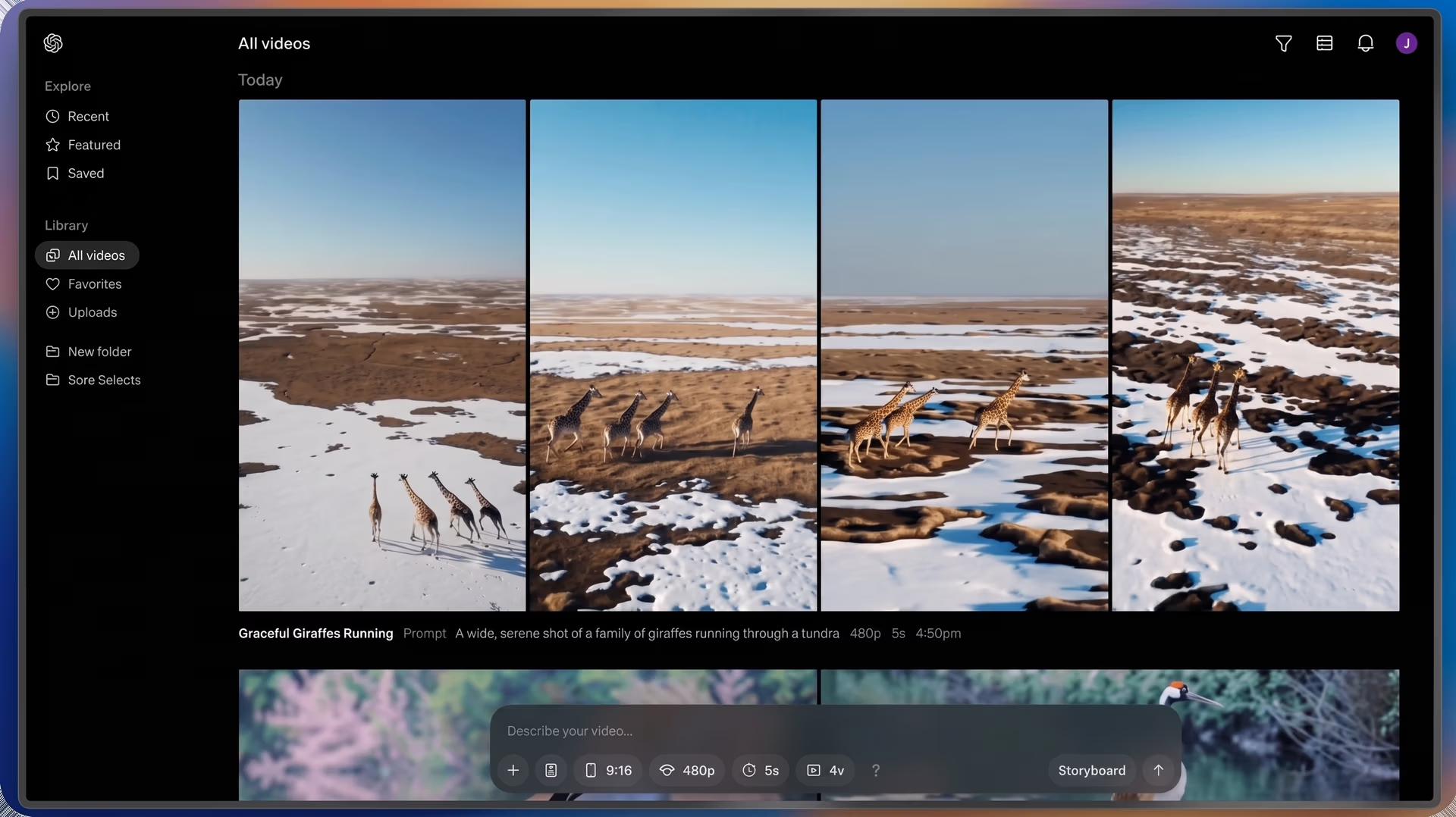
Fig1. Sora generates video scenes from text prompts.
Marketers can use Sora to generate promotional content quickly, while educators might create engaging video lessons tailored to their curriculum. By bridging the gap between text and video, Sora simplifies content creation, making it accessible to users across industries.
For example, a brand could input, “Create a 30-second video showcasing a bustling coffee shop with text overlays,” and Sora would deliver a polished result in minutes.
Canvas – a collaborative workspace#
Collaboration took center stage on Day four with the launch of Canvas, a tool designed to facilitate teamwork in writing, coding, and brainstorming. Canvas introduces a dual-pane interface where users can view prompts and outputs side by side, streamlining the creative process.
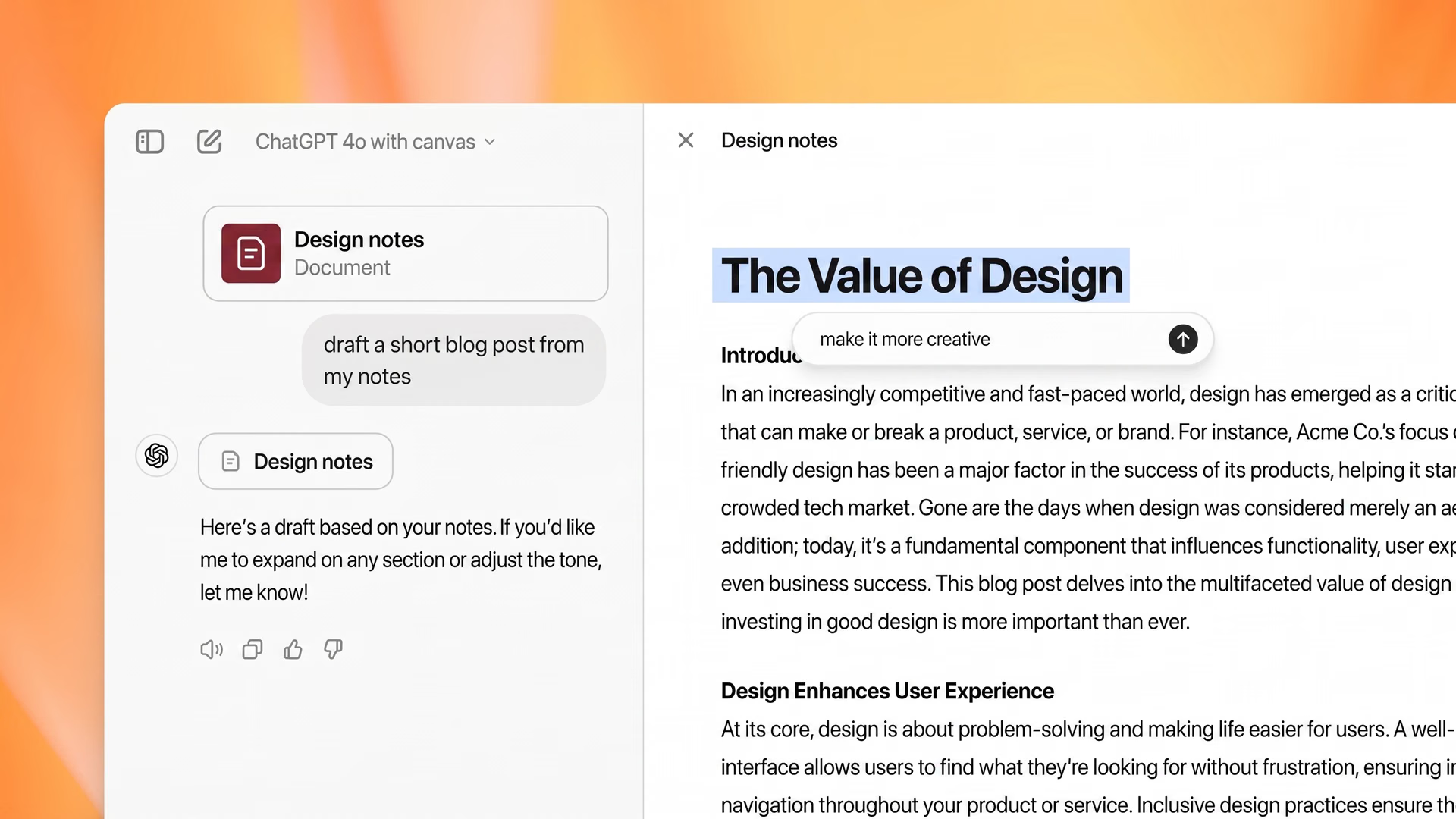
Fig2. OpenAI's Canvas feature with a split-screen interface for efficient document editing and real-time collaboration.
Whether editing long documents, refining code, or collaborating on presentations, Canvas offers flexibility and precision. The ability to edit specific sections without altering the entire document is especially beneficial for teams working on iterative projects.
Currently in beta and available with GPT-4o, Canvas showcases OpenAI’s commitment to enhancing productivity and collaboration through AI.
ChatGPT and Apple integration#
Day five unveiled a major partnership: ChatGPT is now integrated into Apple’s ecosystem. This collaboration enables users to automate tasks, draft documents, and even compose emails using Siri and other Apple tools.
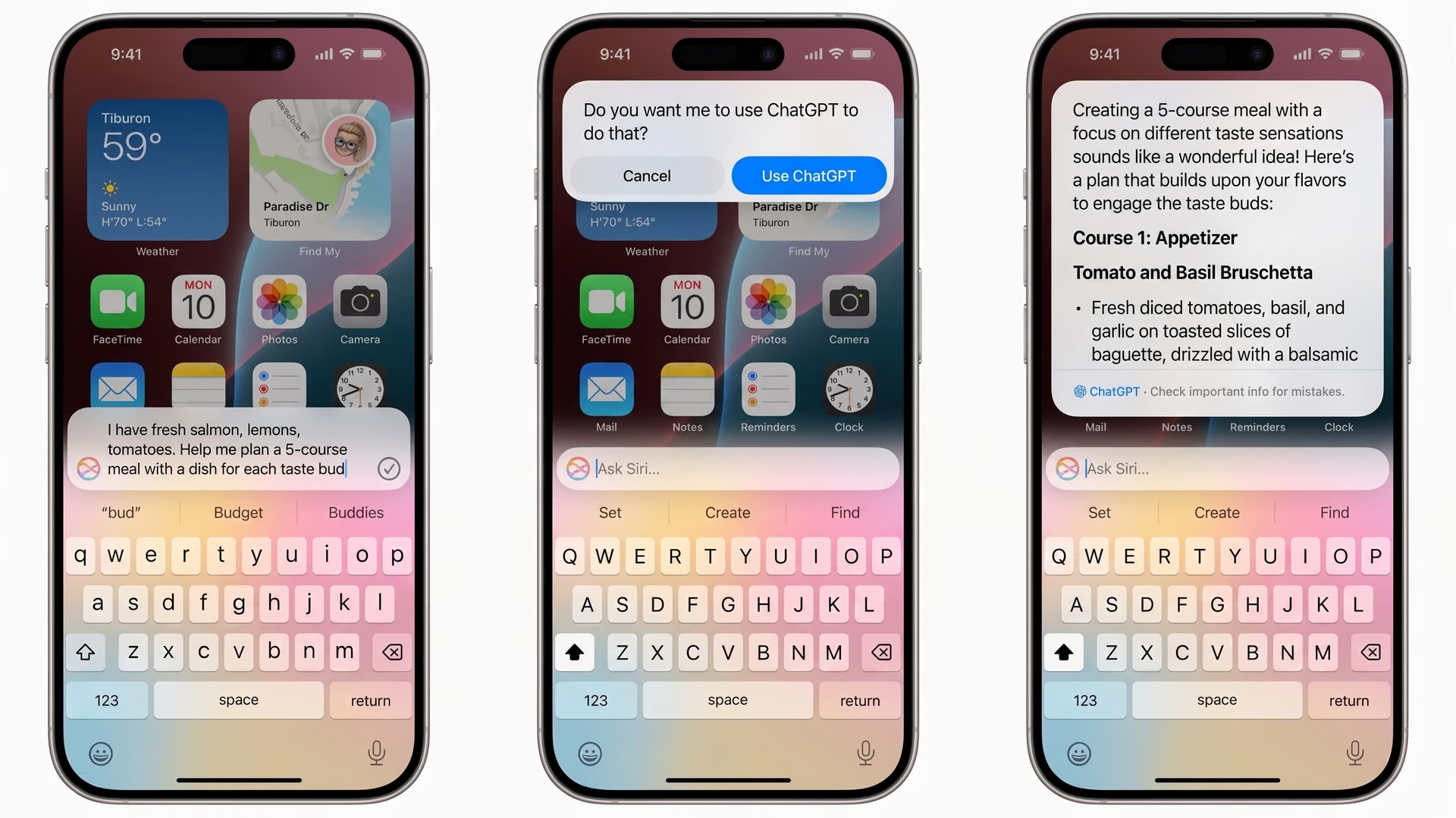
Fig3. Siri integration with ChatGPT allows users to plan a 5-course meal.
This integration streamlines workflows by allowing users to leverage ChatGPT’s AI features directly within Apple’s ecosystem, making everyday workflows smoother and more efficient.
Advanced voice and Santa mode#
On Day six, OpenAI introduced two updates that showcase ChatGPT’s versatility: Advanced Voice Mode and Santa Mode.
Advanced Voice Mode enhances multimodal interactions, allowing users to share real-time visuals or screen content during conversations. This feature is particularly useful for collaborative tasks, such as troubleshooting technical issues or editing presentations.
Meanwhile, Santa Mode added a festive twist, letting users interact with ChatGPT in a holiday-themed format. From composing holiday greetings to generating gift ideas, Santa Mode brought creativity and fun to the platform.
Projects in ChatGPT#
The seventh day saw the launch of Projects, a feature designed to help users organize their workflows. Projects allow users to group related conversations, upload files, and manage multiple threads within a single workspace.
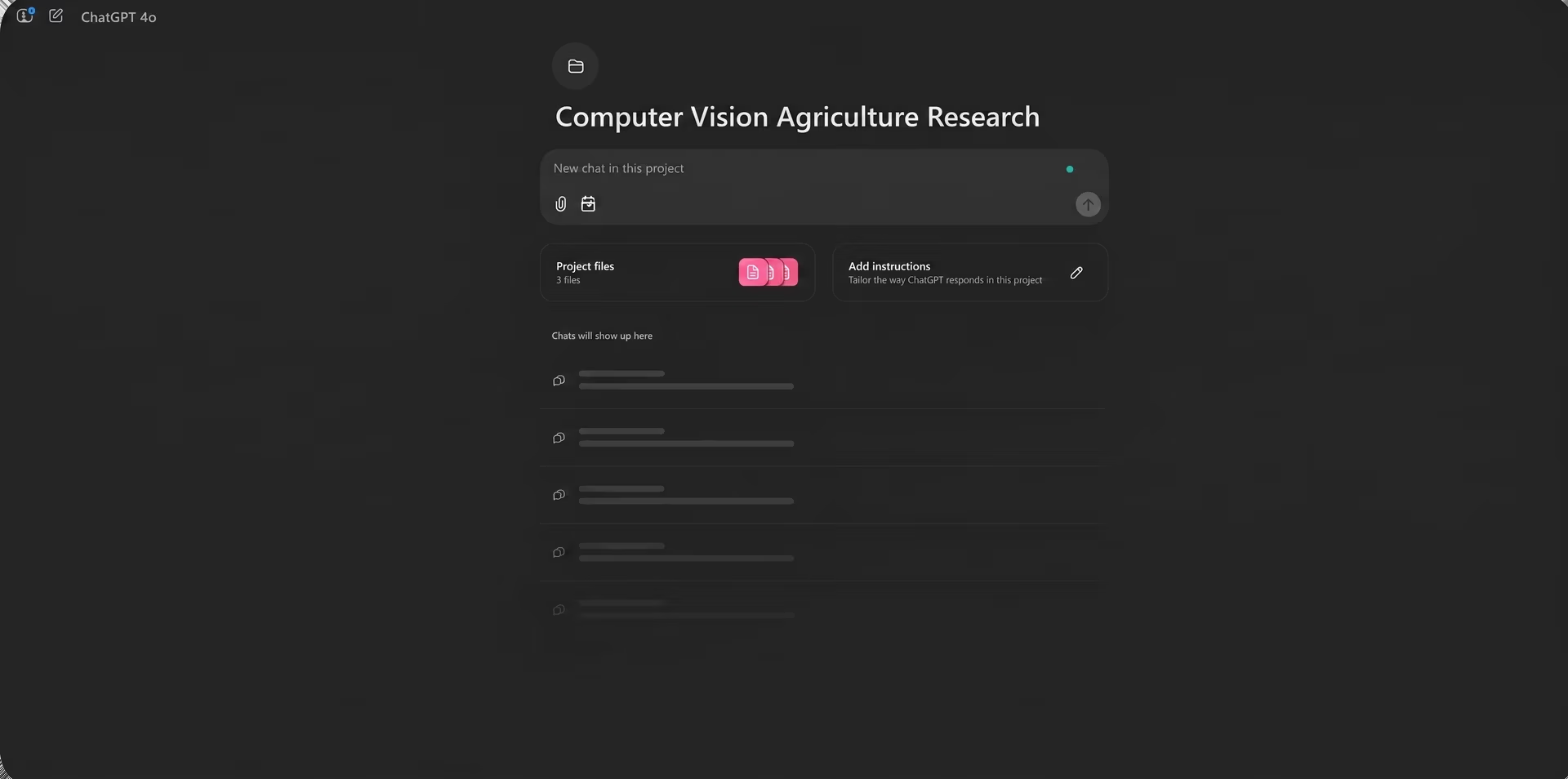
Fig4. An organized project view within ChatGPT 4o, showcasing multiple files and instructions added to it.
For researchers, businesses, and teams, Projects simplify complex tasks by creating a cohesive environment for tracking progress and revisiting previous discussions. This feature underscores OpenAI’s focus on practicality and user-centric design.
ChatGPT search – free for all#
Day eight announced that ChatGPT Search is now available to all users at no cost. This feature transforms ChatGPT into a research assistant, delivering detailed, up-to-date information alongside source links.
For example, students can use Search to explore academic topics, while professionals might rely on it for market research or competitive analysis. By democratizing access to reliable information, ChatGPT Search empowers users to make informed decisions efficiently.
Developer tools and o1 enhancements#
On Day nine, OpenAI introduced updates tailored for developers, including tools to optimize and fine-tune the o1 model. These enhancements simplify debugging and deployment, enabling engineers to create smarter, more reliable applications.
For instance, developers working on AI-driven customer support can use these tools to refine model responses, ensuring accuracy and relevance. OpenAI’s focus on developer needs ensures its technology remains adaptable across industries.
1-800-CHATGPT#
Day ten introduced 1-800-CHATGPT, a service designed to revolutionize customer support. Businesses can integrate this AI-powered system into their workflows to handle queries efficiently, reducing response times and operational costs.
This feature demonstrates how AI can enhance user experiences while scaling support systems for organizations of all sizes.
Work with apps – streamlining productivity#
With only 10 days until Christmas, OpenAI announced Work with Apps, enabling seamless integration between ChatGPT and popular tools like Notion, Warp, and Xcode. These integrations allow users to harness ChatGPT’s capabilities directly within their existing productivity platforms.
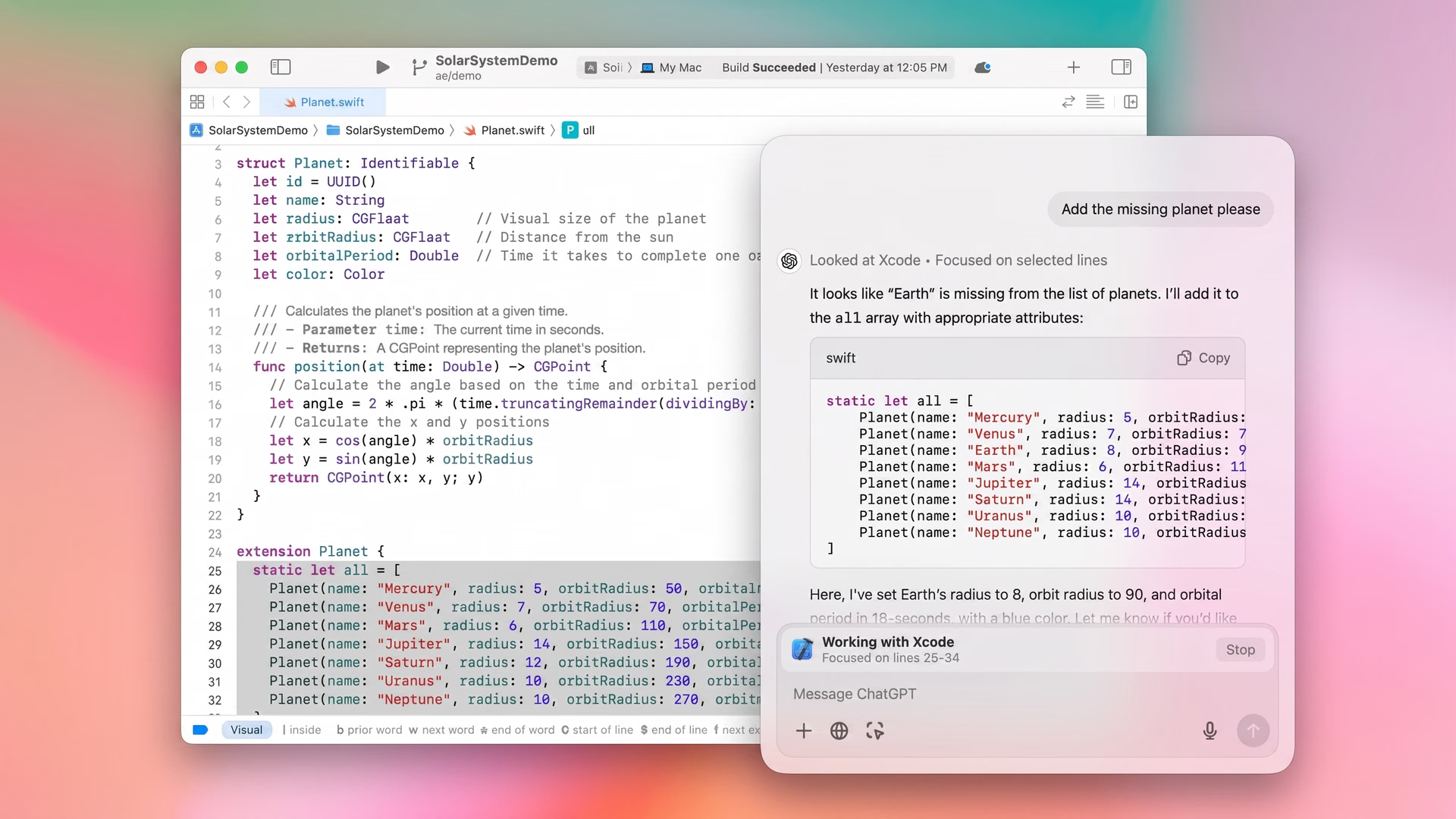
Fig5. ChatGPT integrated into Xcode to assist developers in real time.
By fostering a unified workflow, Work with Apps helps users stay organized and efficient, reflecting OpenAI’s commitment to practical solutions.
o3 model preview and research collaboration#
On the final day OpenAI introduced the o3 model preview, an advanced reasoning system that builds on o1’s strengths. Designed for complex, high-stakes tasks, o3 prioritizes safety, reliability, and ethical use.
OpenAI also issued a call for researchers to test and refine the model, ensuring it meets rigorous standards before its full release. This collaborative approach emphasizes OpenAI’s dedication to responsible AI innovation.
Looking ahead to 2025#
The 12 Days of OpenAI demonstrated practical, user-focused innovations. From reasoning models and collaborative tools to multimodal advancements, these updates showcase how AI can transform workflows, creativity, and learning.
As OpenAI moves into 2025, it aims to refine these offerings while exploring new ways to integrate AI into everyday applications. These developments promise a future where AI becomes an indispensable tool for users across industries.
Explore more about AI by visiting our GitHub repository and joining our community. Learn more about AI applications in manufacturing and healthcare.








