How computer vision is building the smart cities of tomorrow
Discover how computer vision and models like Ultralytics YOLO11 can enhance smart cities with safety, traffic, and sustainability applications.
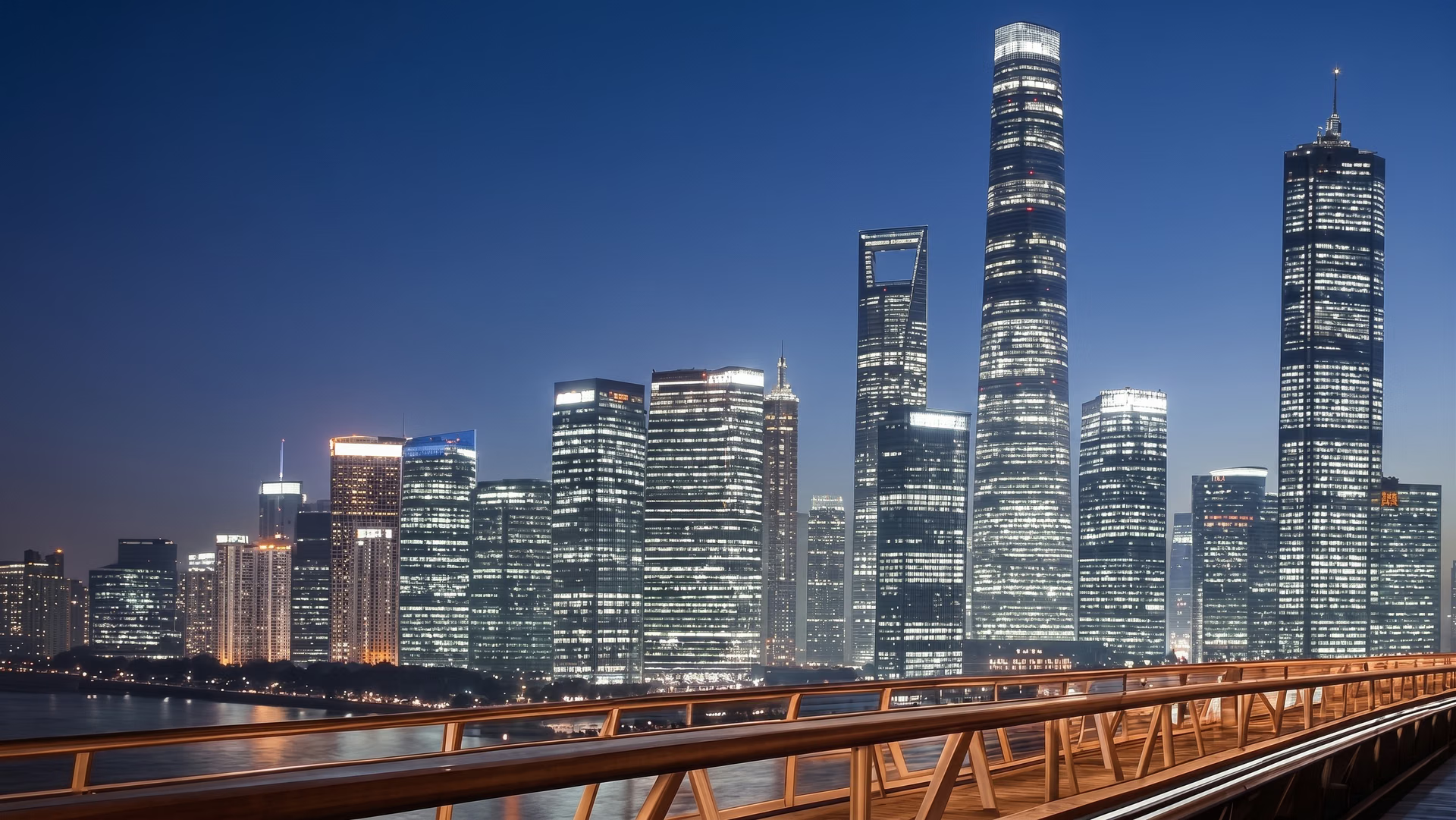
Cities are vibrant hubs of activity where people live, work, and interact with their environments. Managing the diverse challenges of urban life ranging from traffic congestion to environmental sustainability requires innovative solutions.
Smart cities are addressing these challenges with the integration of advanced technologies, reshaping urban environments to be more efficient, livable, and sustainable. One of the key technologies driving this evolution is computer vision (CV). CV systems analyze and interpret visual data, enabling applications that range from traffic monitoring to air quality management. These systems are not just tools; they are helping cities operate more intelligently and responsively.
Let’s explore how computer vision and advanced models like Ultralytics YOLO11 can enhance urban living through impactful applications.
Understanding smart city challenges#
Urban environments are intricate ecosystems where transportation, infrastructure, and public safety must work in harmony to support daily life. Managing these complexities requires addressing a range of challenges, from alleviating traffic congestion to ensuring safety in crowded spaces.
Traffic congestion, for instance, can increase commute times and exacerbate air pollution, affecting both productivity and health. Similarly, public safety in high-density areas demands constant surveillance and swift responses to potential risks. These challenges highlight the need for efficient, scalable solutions.
Computer vision plays a vital role in meeting these demands. By automating the analysis of visual data, CV enables real-time monitoring, pattern recognition, and anomaly detection, allowing city managers to deploy resources effectively and proactively address urban challenges.
Now, let’s dive deeper into how computer vision is being applied to tackle real-world urban challenges.
Applications of computer vision in smart cities#
Computer vision smart city applications can be integrated to help build the infrastructure on which AI smart cities are built making them safer, and more efficient. From monitoring public safety to optimizing infrastructure, here’s how CV can help cities thrive:
Parking management#
Navigating crowded parking lots is a common frustration in urban areas, contributing to traffic congestion and unnecessary emissions. Computer vision models like YOLO11 can analyze photos from parking facilities to detect available and occupied spaces in real time. Using object detection and oriented bounding box techniques, YOLO11 categorizes vehicles and locates parking spots efficiently.
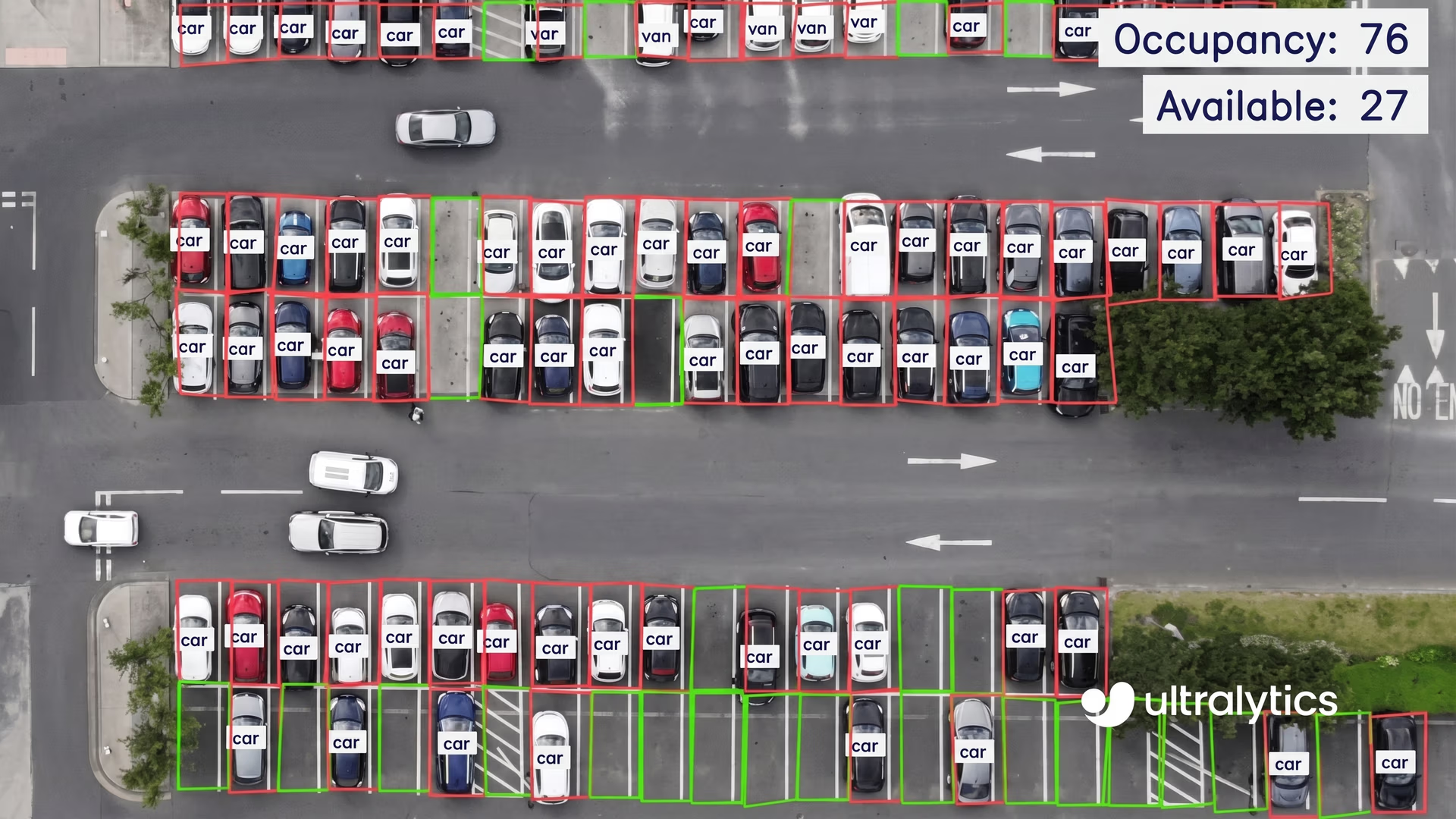
Fig 1. Parking Management using Ultralytics YOLO11.
This application reduces the time drivers spend searching for parking, alleviating congestion and lowering emissions.
YOLO11’s versatility and range of tasks can also help monitor for illegal parking, helping authorities enforce regulations more effectively, for instance. Its speed and accuracy make it a valuable asset overall for streamlining parking management systems.
Automated Number Plate Recognition (ANPR)#
Traffic management and law enforcement often rely on efficient vehicle tracking. Ultralytics YOLO11 helps in ANPR by analyzing video feeds to identify and classify license plates in real time. Its object detection and image classification features enable the model to monitor traffic violations and streamline toll collection processes.
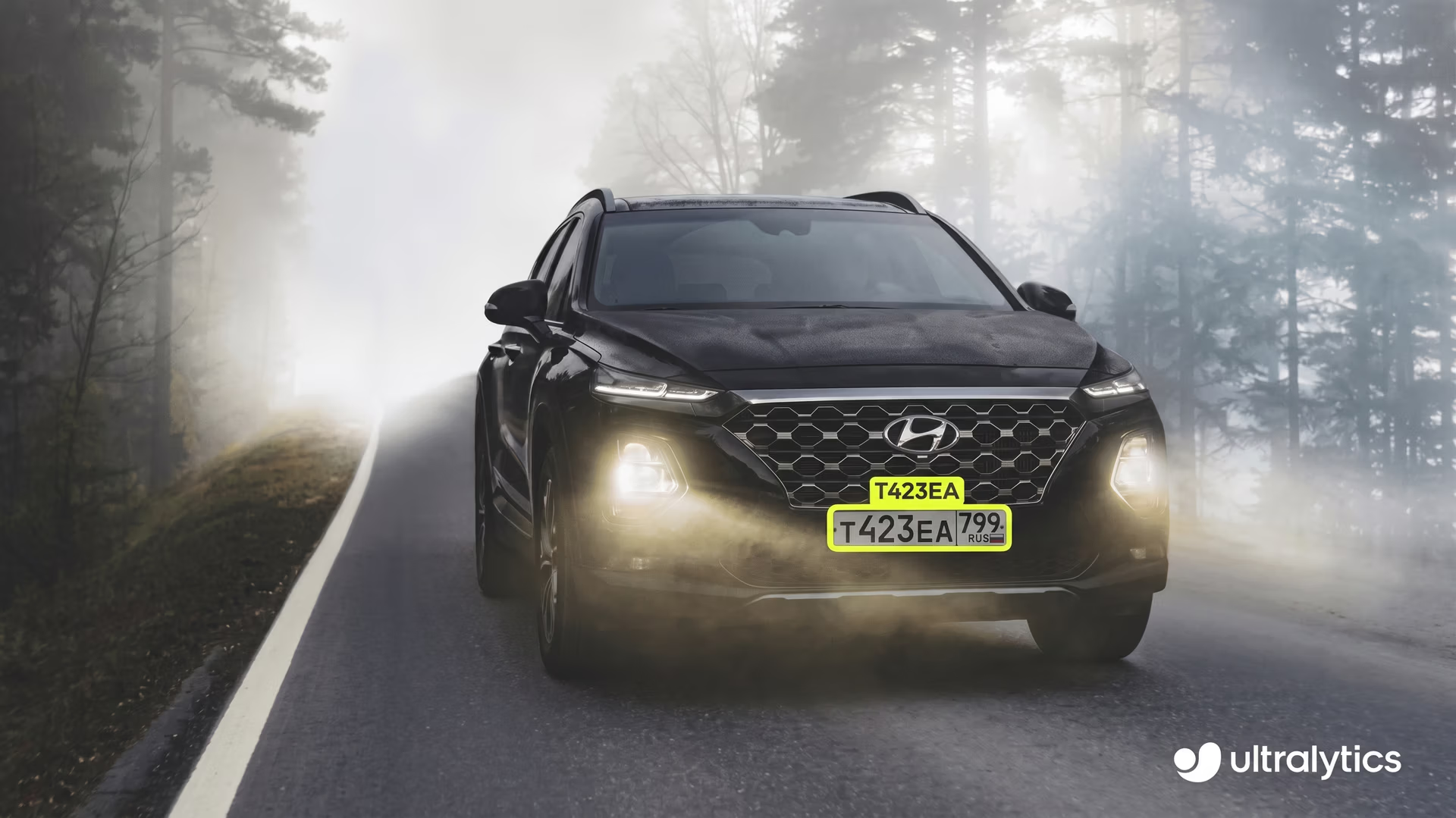
Fig 4. Automated Number Plate Recognition (ANPR) using YOLO model.
The system’s ability to function under diverse conditions such as low lighting or high vehicle speeds makes it highly reliable for urban traffic systems. This enhances both traffic flow and public safety, ensuring smoother operations across city roadways.
Accident detection#
Accidents often pose a significant challenge in urban transportation systems, impacting public safety and contributing to traffic congestion. Computer vision smart city applications can analyze camera feeds from roads and intersections to detect collisions and other traffic incidents.
These systems use action recognition and motion analysis to identify anomalies such as sudden stops, erratic vehicle movements, or crashes. Once an incident is detected, these systems can be connected to automated alerts to be sent to emergency services, enabling faster response times and helping reduce the congestion that accidents often cause.
Smart grocery shops#
Retailers in smart cities can leverage vision AI to enhance customer experiences and operational efficiency. Models like Ultralytics YOLO11, for example, can help streamline inventory management workflows and monitor store shelves to track inventory levels, ensuring timely restocking of popular items. Its instance segmentation capabilities provide a high level of detail, enabling precise identification of misplaced or out-of-stock products.
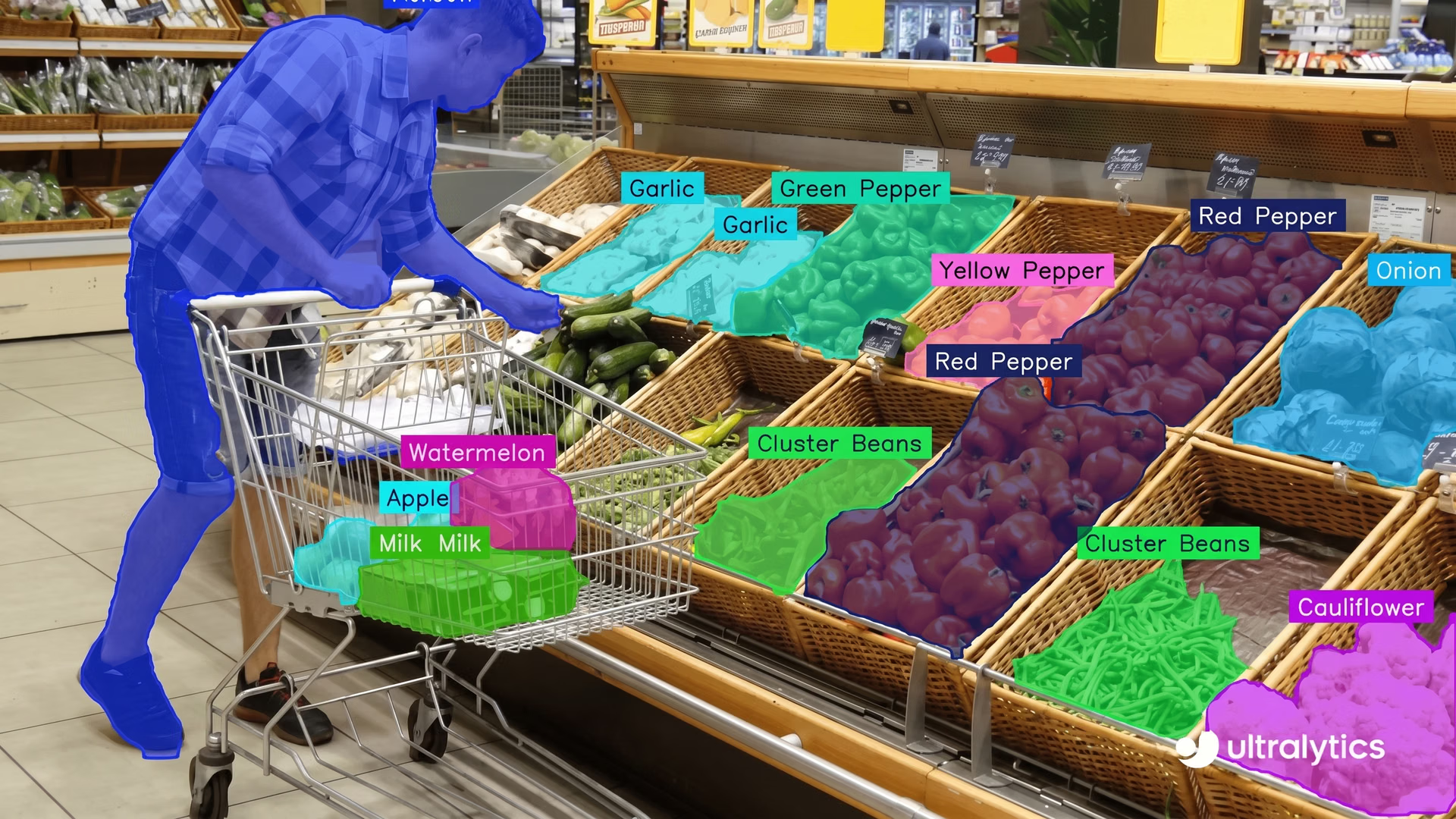
Fig 2. Smart Grocery Shops using Ultralytics YOLO11.
Beyond inventory, computer vision models can analyze customer behavior, offering insights that optimize store layouts and improve product placements. By categorizing shopper movements and interactions, the model helps retailers create efficient shopping environments that minimize waste and enhance customer satisfaction.
Construction site safety#
Safety is paramount in high-risk environments like construction sites. Computer vision systems, like Ultralytics YOLO11, can monitor video feeds to ensure compliance with safety protocols. For instance, YOLO11 can detect whether workers are wearing the required protective gear, such as helmets and vests, by utilizing image classification.
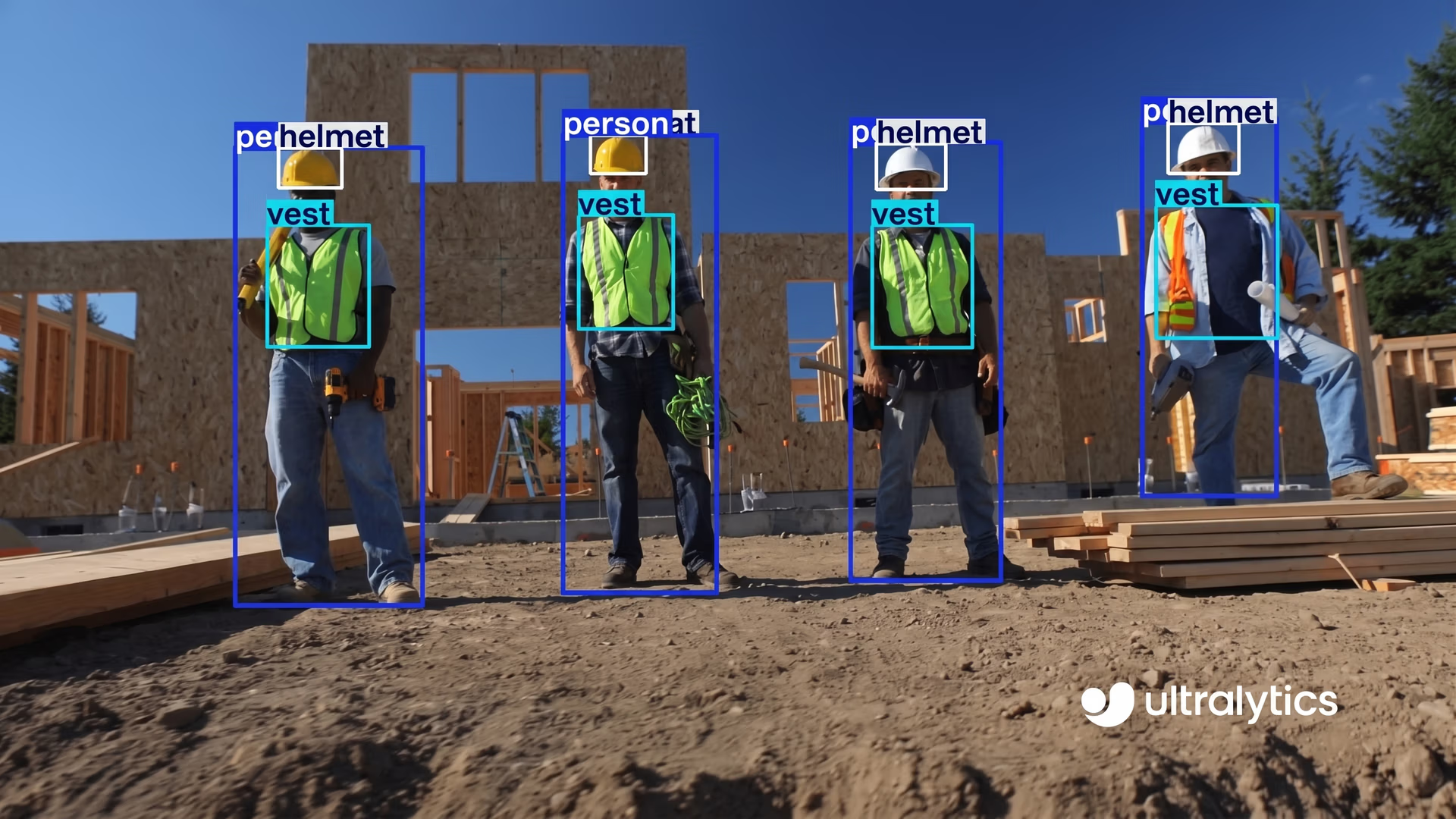
Fig 3. Construction Site Safety using Ultralytics YOLO11.
Its pose estimation capabilities and oriented bounding box (OBB) allow Ultralytics YOLO11 to track adherence to safety practices. Additionally, computer vision models can identify structural risks, such as unstable scaffolding or misplaced machinery, enabling site managers to address potential hazards proactively and reduce accidents.
Detecting abandoned objects#
Safety is a priority in crowded urban spaces like airports, train stations, and public squares. Unattended objects often raise security concerns, but manual monitoring can be both challenging and error-prone.
CV systems can detect abandoned items in real time by analyzing surveillance feeds and identifying irregularities in object movement. These automated alerts ensure swift responses, reducing risks and enhancing public safety.
Pothole detection#
Well-maintained roads are essential for urban mobility. However, identifying potholes can be resource-intensive. Computer vision systems process road imagery to detect surface damage, using oriented bounding box techniques to assess the size and severity of potholes or cracks.
By automating this detection process, CV models help prioritize repairs, ensuring roads are safer and more efficient. This proactive approach minimizes long-term maintenance costs and reduces the risk of accidents caused by neglected road damage.
Air pollution monitoring with computer vision#
Air quality is a pressing concern in urban environments, directly impacting public health and sustainability. CV systems combine satellite imagery with street-level camera feeds to monitor pollution levels and identify hotspots, such as industrial zones or congested traffic areas.
These systems segment visual data to generate actionable insights, allowing city planners to implement targeted measures like traffic rerouting or stricter emission controls. Applications like these contribute to healthier living conditions and support cities’ sustainability goals.
Crowd management#
Large gatherings at concerts, sports events, or during emergencies may present significant safety challenges. Computer vision-based Crowd Disaster Avoidance Systems (CDAS) help mitigate risks by analyzing crowd density, movement patterns, and behavior in real time. Using data from single or multiple cameras, these systems identify structured crowds, like rallies, and unstructured ones, such as those in markets or public spaces.
When crowd density exceeds thresholds such as 8 people per square meter, CV systems can detect turbulence or erratic behavior and trigger early warnings to prevent stampedes. These systems may also provide actionable insights for real-time evacuation and resource deployment, ensuring smooth crowd management during high-risk events.
Additionally, CV algorithms assist in planning and post-event analysis. Simulations in virtual environments help identify potential bottlenecks, guiding venue design and traffic flow improvements. Forensic reviews of past incidents, like the Duisburg Love Parade, use CV to reconstruct events and enhance future safety strategies.
Custom training for smart cities#
Until now, we have taken a look at the various ways in which vision AI models can be implemented in different industries. So how do these models actually work?
As seen above, computer vision models like Ultralytics YOLO11 can be customized to address specific urban challenges and perform different tasks. By training the model on datasets tailored to smart city environments, engineers can fine-tune its capabilities for diverse applications.
- Data Diversity: Datasets can include images from varied lighting conditions, weather scenarios, and camera angles to ensure robust detection across different settings.
- Task-Specific Models: YOLO11 can be optimized for specific tasks, such as detecting road defects, monitoring crowd behavior, or parking management.
This targeted training process enhances Ultralytics YOLO11’s performance, enabling it to deliver accurate results while maintaining high processing speed. Its optimized architecture also ensures that it can be deployed on devices with fewer computational resources, making it an accessible solution for cities of all sizes.
Pros and cons of computer vision in smart cities#
Computer vision can become a cornerstone of smart city applications, offering numerous benefits while posing some challenges. Let’s take a balanced look at its impact.
Pros of computer vision in smart cities#
- Improved Safety: Automated surveillance systems enable faster responses to emergencies and reduce reliance on manual monitoring.
- Operational Efficiency: Automating resource-intensive tasks enhances productivity and minimizes wastage.
- Environmental Gains: Applications like air quality monitoring and traffic optimization align with sustainability goals.
- Cost Savings: Early detection of infrastructure issues reduces maintenance expenses and operational downtime.
Cons of computer vision in smart cities#
- Infrastructure Costs: Deploying high-resolution cameras and computational systems requires significant upfront investment.
- Privacy Concerns: Continuous monitoring raises questions about data security and ethical usage.
- Weather Sensitivity: Factors like rain or low light can affect detection accuracy, requiring adaptive algorithms.
- Integration Barriers: Retrofitting CV systems into existing infrastructure can be time-consuming and costly.
The future of smart cities#
As urban centers continue to grow and evolve, the future of smart cities will increasingly rely on computer vision technology. These solutions are paving the way for smarter, safer, and more sustainable urban environments by enabling efficient management of complex systems. From enhancing traffic flow to improving public safety, CV technologies promise to make urban living more seamless and enjoyable.
By adopting these solutions thoughtfully, cities can address the challenges of urbanization while improving the quality of life for their residents. Discover how Ultralytics YOLO11 and other computer vision innovations are shaping the future of smart cities today. 🌆








