How SOWIT Uses Ultralytics YOLO for Smarter Farming
See how SOWIT applies Ultralytics YOLO to citrus yield estimation and how Ultralytics Platform supports modern agriculture vision workflows.
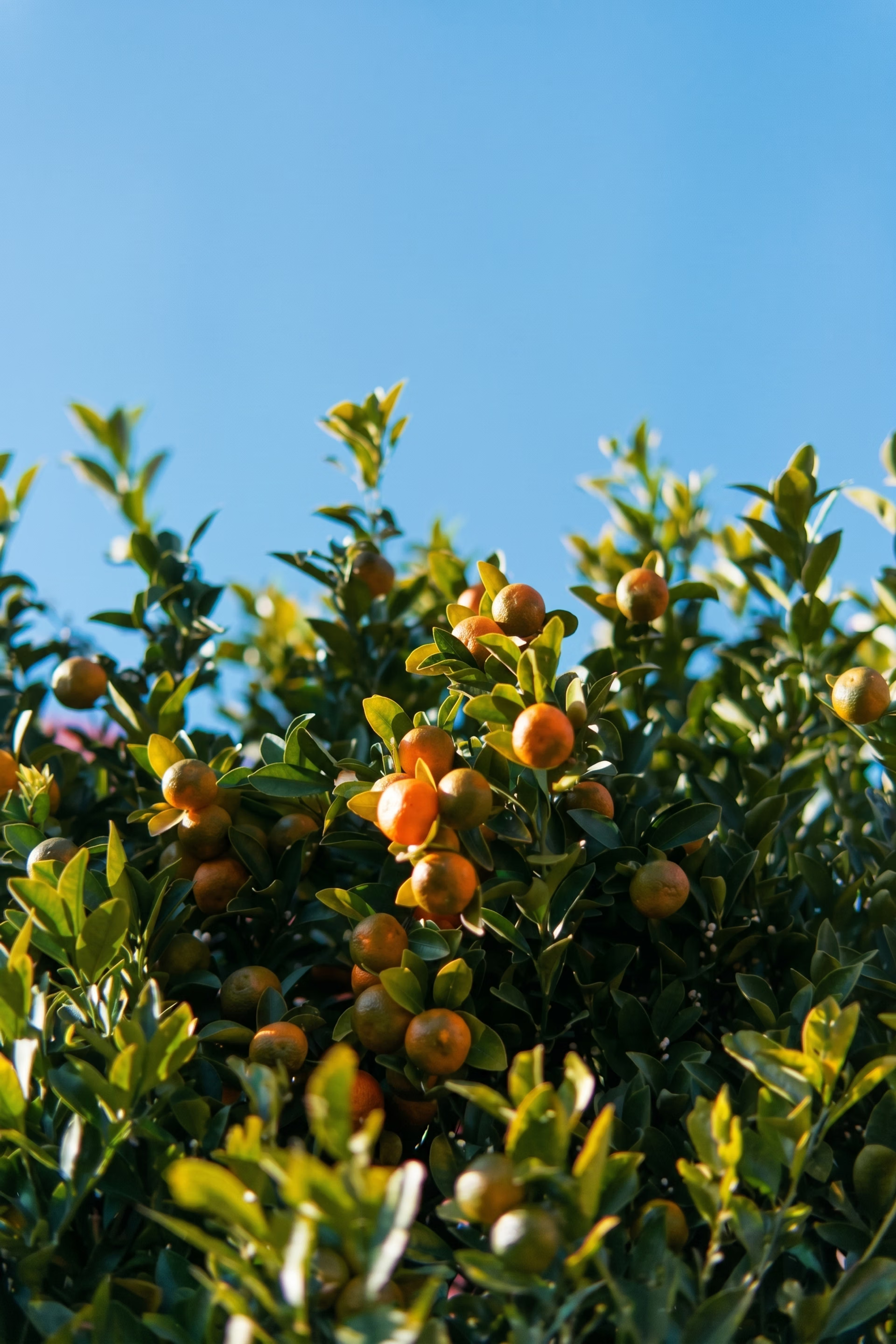
SOWIT brings together agronomy, engineering, and software to help farms make better decisions from field data. One of its practical applications uses Ultralytics YOLO object detection to estimate citrus yields from images, replacing a slow manual process with a repeatable computer vision workflow.
The project shows how vision AI can support agriculture when it is designed around a specific operational problem: collect representative images, detect fruit consistently, and turn those detections into information that farm teams can use for planning.

The challenge: estimating yields across a large orchard#
SOWIT worked with a citrus farm between Marrakech and Imintanout, Morocco. Across approximately 180 hectares, estimating the number of fruit on trees was essential for harvest planning, labor allocation, sales, and logistics.
Traditional yield estimation depends on people manually counting fruit from sampled trees and extrapolating the results across the orchard. That approach can be costly and time-consuming, and results may vary between observers. When estimates are late or inconsistent, farms have less reliable information for negotiating with buyers and preparing the resources required for harvest.
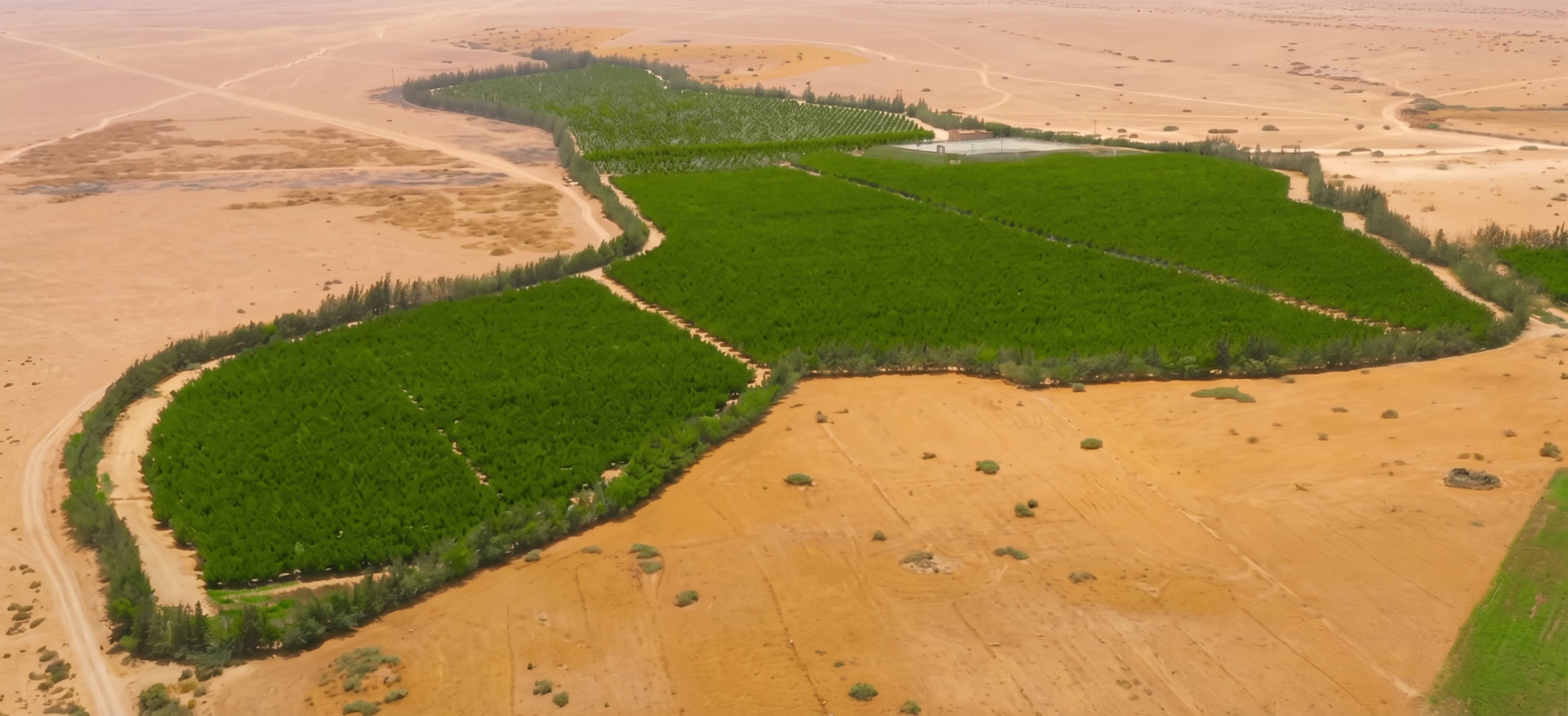
SOWIT needed a method that could work with equipment farmers already had, fit into field operations, and produce consistent results without requiring every fruit to be counted by hand.
Why SOWIT selected Ultralytics YOLO#
SOWIT built the original solution with Ultralytics YOLOv5. YOLO models process an image in a single inference pass and return the location and class of each detected object. For this use case, the objects are individual pieces of fruit on a tree.
Object detection is well suited to the problem because the system must do more than decide whether fruit is present. It must locate multiple fruit in the same image so the detections can be counted. Efficient inference also makes it practical to process many field images without introducing a lengthy delay into the workflow.
The model is one part of a broader system. Reliable yield estimation also depends on representative training data, consistent image capture, appropriate sampling, and validation under the conditions found in the orchard. Lighting, foliage, occlusion, fruit size, camera angle, and crop variety can all affect performance.
How the SOWIT workflow operates#
SOWIT integrated the model into its SOYFIELD application, giving farmers a guided process for collecting the information required for an estimate.
1. Define the plot#
The user selects the farm plot, maps its boundaries, and records relevant information such as crop type, tree count, and cultivation practices. This context connects each image sample to the correct part of the farm.
2. Select representative trees#
The application determines how many trees should be sampled to meet the target margin of error. A structured sampling plan helps reduce bias and makes results more comparable across plots and seasons.
3. Capture images#
The user photographs the front and back of each sampled tree. Capturing both sides improves coverage where leaves, branches, or other fruit obscure parts of the canopy.
4. Detect and count fruit#
The images are sent for inference. The YOLO model identifies individual fruit, and the application converts those detections into counts for the sampled trees.
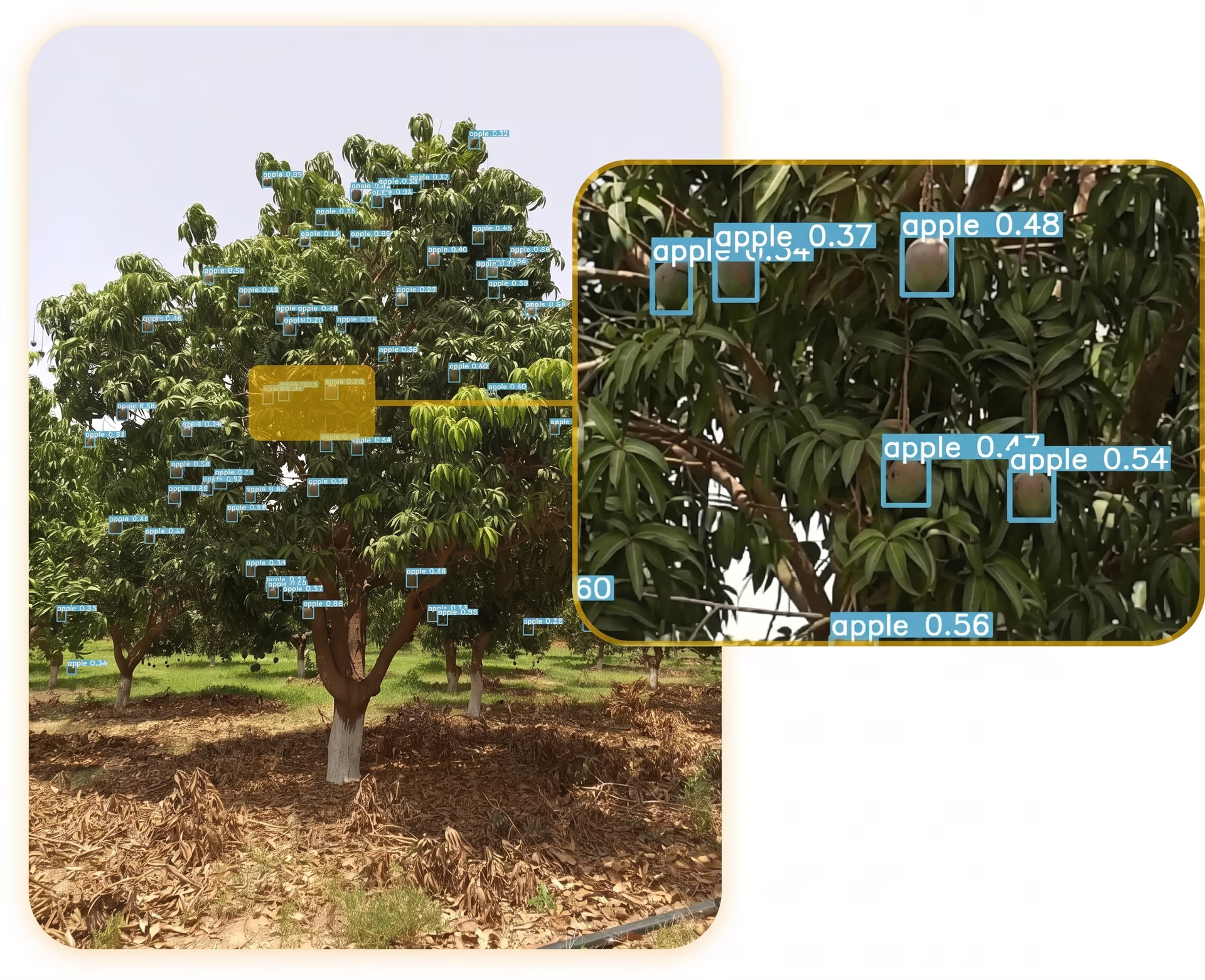
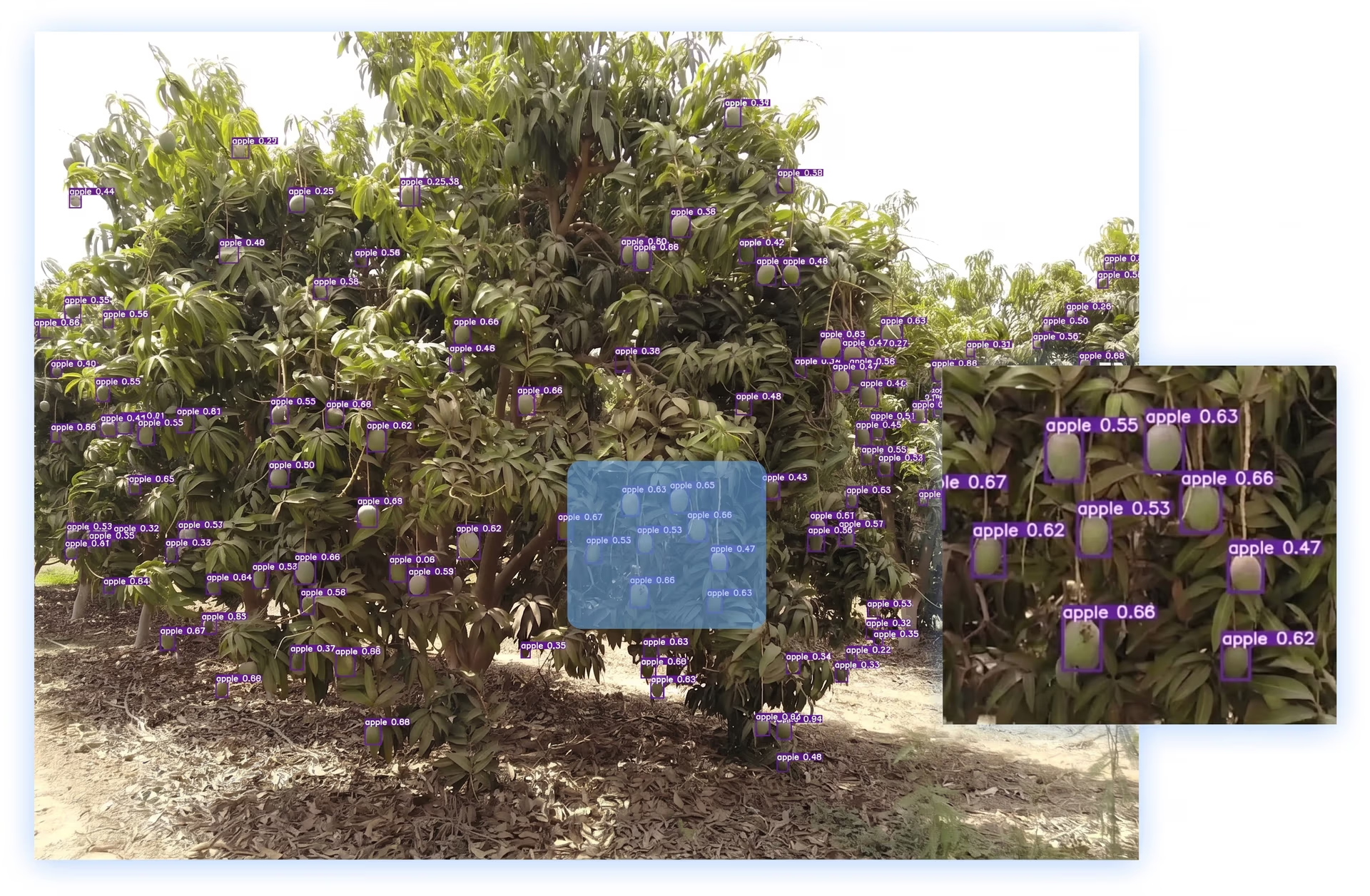
5. Estimate yield#
The sampled counts are combined with plot information to estimate yield across the orchard. Farm teams can then use the result to inform commercial and operational planning.
Youssef Sridi, technical director of Mfruits farm, described the practical value of the application: “Using SOWIT's application helped us accurately estimate our yields, in a timely manner with great precision, while saving field resources.”
Operational value for farm teams#
Computer vision does not remove the need for agronomic expertise. It gives that expertise a faster and more consistent measurement tool.
- More repeatable estimates: A defined image and sampling workflow reduces variation between individual counters.
- Less manual counting: Teams can spend less time inspecting every tree and more time acting on the resulting information.
- Earlier planning: Timely estimates can support harvest scheduling, staffing, transport, storage, and sales discussions.
- A reusable data process: Images and model results create a foundation for evaluating performance over time and improving the system as field conditions change.
These benefits depend on maintaining model quality. Teams should evaluate accuracy on data from the farms where the system will operate, review failure cases, and retrain when crops, seasons, cameras, or operating conditions change.
From YOLOv5 to today's Ultralytics YOLO models#
SOWIT's project was developed with YOLOv5, an important model in the evolution of the Ultralytics YOLO family. The underlying workflow remains relevant: prepare a representative dataset, train an object detection model, validate it against real operating conditions, and deploy it inside an application that solves a clear user problem.
For new projects, Ultralytics YOLO26 is the latest stable model and the recommended starting point. Teams can compare model sizes and export formats to choose the balance of accuracy, latency, and hardware compatibility that best fits a field, edge, or cloud deployment.
Managing the computer vision lifecycle with Ultralytics Platform#
Ultralytics Platform provides one workspace for moving a vision AI project from data to production. A team building an agricultural application can use the Platform to:
- Source and organize image datasets.
- Annotate data and accelerate labeling with auto-annotation.
- Train Ultralytics YOLO models in the cloud or on local infrastructure.
- Review model metrics and compare experiments.
- Deploy models for inference across supported targets.
- Monitor production workflows and continue improving the model with new field data.
This lifecycle matters because agricultural environments are not static. A model trained on one orchard or season may encounter different varieties, weather, lighting, growth stages, or camera devices later. Keeping datasets, experiments, deployments, and monitoring connected makes those changes easier to manage.
Building practical vision AI for agriculture#
The strongest computer vision projects begin with the operational decision they need to improve. In SOWIT's case, the objective was not simply to detect fruit in an image; it was to produce a timely yield estimate that farmers could use.
Teams planning similar systems should define the sampling method, success metrics, inference environment, and human review process before scaling. They should also test under realistic field conditions, including difficult lighting and partially occluded fruit, and confirm that the deployment works with available connectivity and hardware.
SOWIT's work demonstrates how Ultralytics YOLO can translate field images into useful agricultural information. With modern YOLO models and Ultralytics Platform supporting the full computer vision lifecycle, teams can build on that pattern to develop maintainable vision AI systems for farms and other real-world environments.
Explore Ultralytics Platform to start building and managing your own computer vision workflow.








