Ultralytics YOLO27:
September 17, 2026

SK Godelius detects 3,400 defects on mining conveyors with Ultralytics YOLO

Learn how SK Godelius uses Ultralytics YOLO to automate defect and anomaly detection, helping mining plants boost safety and streamline workflow.

SK Godelius detects 3,400 defects on mining conveyors with Ultralytics YOLO
Industry
Manufacturing & Industrial
95%
Average weekly coverage of mining conveyors
3400+
Detected anomalies out of which 900 were classified as "critical"

Inspecting mining conveyor belts is a hazardous, slow, and inconsistent job. These belts can stretch for kilometers through open-pit and underground mines, exposing inspection crews to acid dust, extreme heat, UV light, and uncomfortable working positions.

Traditionally, a worker has to walk the entire length of the belt and judge the condition of thousands of components by eye, a process made even harder by harsh conditions and the difficulty of remembering exactly which part was failing and where.

SK Godelius helps mining operators monitor and maintain these critical assets using robotics, computer vision, and multimodal sensing. For instance, using Ultralytics YOLO models, the company's robots can walk alongside conveyor belts and automatically detect components like rollers, flagging which ones are missing, stalled, or overheating.

Bringing robotics and AI to the world's toughest mines#

SK Godelius is an engineering and robotics company that has been operating since 2011, with offices across Chile, Canada, and Australia. It combines robotics, artificial intelligence, engineering, and deep mining domain expertise to build technology for difficult conditions, and over the years, that technology has changed how mines approach safety and efficiency.

Crucially, the company does more than write code; it designs and builds the machines itself: robots that carry their own sensors, cameras, processors, and onboard intelligence, capable of operating with little or no human supervision in open-pit and underground mines.

A central goal behind this work is to take people out of harm's way. Mining inspections often put workers in close contact with hazardous conditions, and SK Godelius aims to replace those high-risk manual tasks with autonomous systems that can do the job more safely and more consistently.

By pairing robotics with AI, the company gives mining operators a reliable, repeatable way to understand the condition of their equipment, turning what was once a dangerous manual chore into a standardized, data-driven process.

The hidden cost of manual conveyor inspections#

Conveyor belts are the backbone of a mine, moving ore continuously across distances that can stretch for kilometers. Keeping them running means inspecting them regularly, and traditionally, that has meant workers walking the full length of the line by hand.

In open-pit mines, that work happens under strong sun, dust, airborne acid, and long stretches in awkward positions. Underground, inspectors face different conditions such as confined spaces, low light, poor ventilation, and limited visibility.

In both settings, inspections place workers close to demanding and sometimes hazardous environments. The manual approach is also difficult to keep consistent.

A single person walking kilometers of belt can’t easily catch and recall every fault, which roller was overheating, which one had stopped, and where exactly the problem was. Different shifts may report different things, so the same belt can be assessed differently from one day to the next, making it hard to track issues or spot patterns over time.

That inconsistency carries a real cost. In a large mine, a failed conveyor can cost up to $100,000 an hour in lost production, and repairing a torn belt can take one or two full shifts. Without complete, consistent data, operators are often left responding to failures after they occur rather than preventing them.

Inspecting conveyor belts with Ultralytics YOLO#

To automate conveyor inspections, SK Godelius uses a robotic platform that travels alongside the line, capturing visual, thermal, and acoustic data as it moves.

Each sensor has a role: the acoustic analysis listens for trouble in the rollers before it surfaces as heat, the thermal cameras reveal which components are running hot, and a vision AI pipeline leveraging Ultralytics YOLO models interprets the visual data in real time.
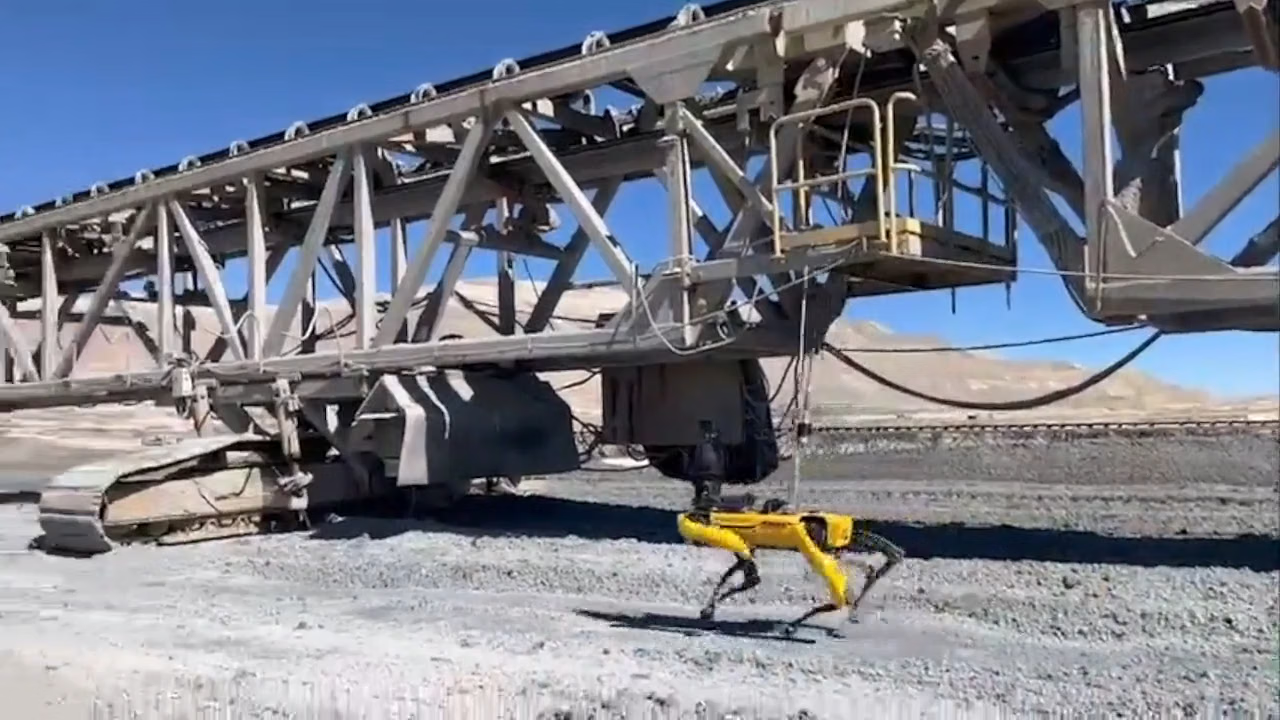
Fig1 Fig 1. An SK Godelius robot inspects a conveyor belt using Ultralytics YOLO (Source)

Of the more than 50 conveyor failure modes SK Godelius tracks, around 20 are visual (the ones addressed through the computer vision pipeline), while the remaining failure modes are caught through complementary sensing technologies. Since Ultralytics YOLO models support computer vision tasks like object detection, the system can identify the components and conditions that matter most on a conveyor line, making YOLO one core piece of a broader, multimodal inspection solution.

That means picking out individual rollers and flagging the ones that are missing or no longer turning, spotting material building up beneath the belt, and catching anything that falls outside the normal state of the line, such as a fence left open or an object or vehicle sitting where it shouldn’t be.

To keep detections reliable in these demanding conditions, SK Godelius began with Ultralytics YOLOv8 and has since moved to Ultralytics YOLO11. They leverage the medium-sized model variant, which offers a strong balance of speed and accuracy, and run it on the robot's onboard hardware at the edge rather than in the cloud. This means detection happens right there on the line.

Why choose Ultralytics YOLO models?#

For SK Godelius, the main advantage of Ultralytics YOLO models is accuracy. On a conveyor line, the system has to identify exactly which component is failing and where it is located, and YOLO provides the precise detections needed to pinpoint a specific part as the inspection moves along the line.
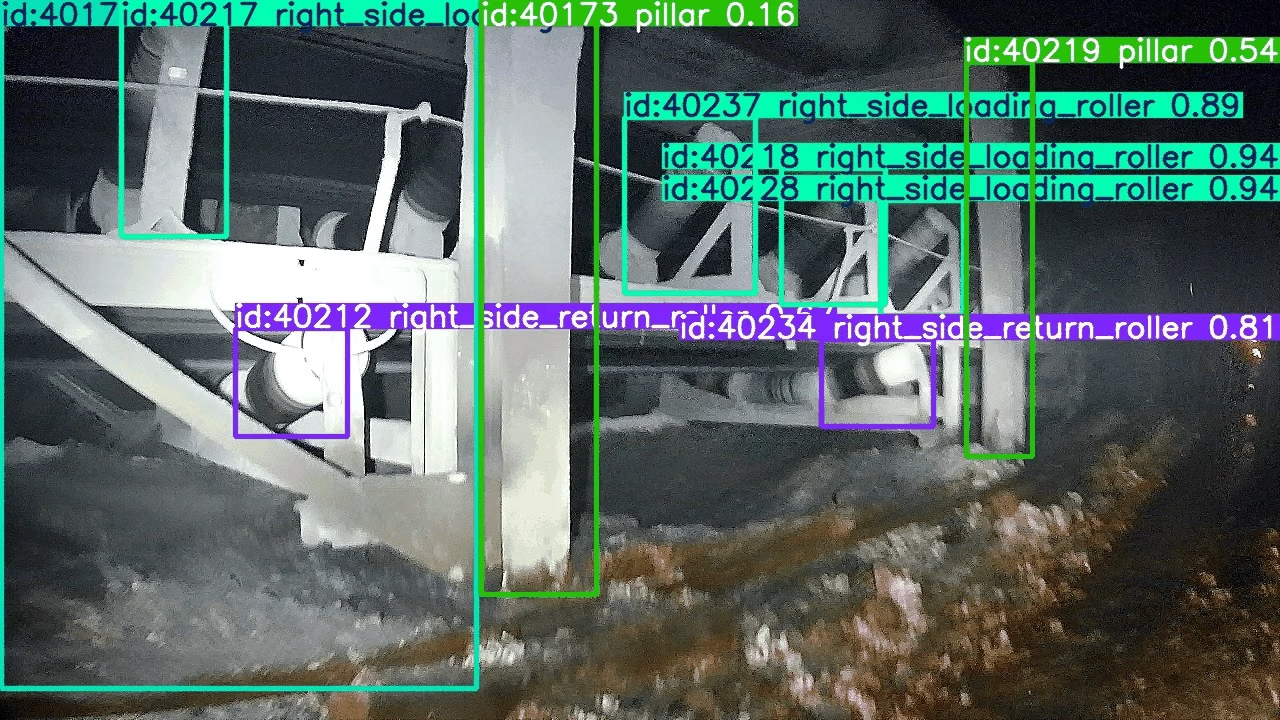
Fig2 Fig 2. Ultralytics YOLO in deployment on mining conveyors. Image source: Godelius

Just as important is consistency. A single worker walking kilometers of belt can't reliably catch and remember every fault, but a YOLO-based vision model assesses the line the same way every time. That consistent detection feeds into SK Godelius's broader inspection platform, which turns it into standardized reporting, traceability, and maintenance workflows that support more dependable decisions.

The models also run efficiently at the edge, directly on the robot rather than in the cloud. This keeps detection fast and reliable at remote mine sites, where connectivity is limited and conditions are demanding, with heat, dust, and acid in the air.

Maintaining over 95% average weekly coverage with Ultralytics YOLO#

By automating conveyor inspections with an autonomous inspection solution powered by Ultralytics YOLO, SK Godelius has made them faster, safer, and far more consistent. When the system detects an issue, it ties the finding to a precise GPS location and sends the maintenance team a report that pinpoints where the problem sits, often within a meter, along with supporting data.

Replacing manual walks of the line also reduces how often personnel are exposed to hazardous environments, and standardized, repeatable detection means teams can act on problems before they escalate rather than responding to failures after they happen, helping avoid the costly downtime a stopped conveyor can cause in a large mine.
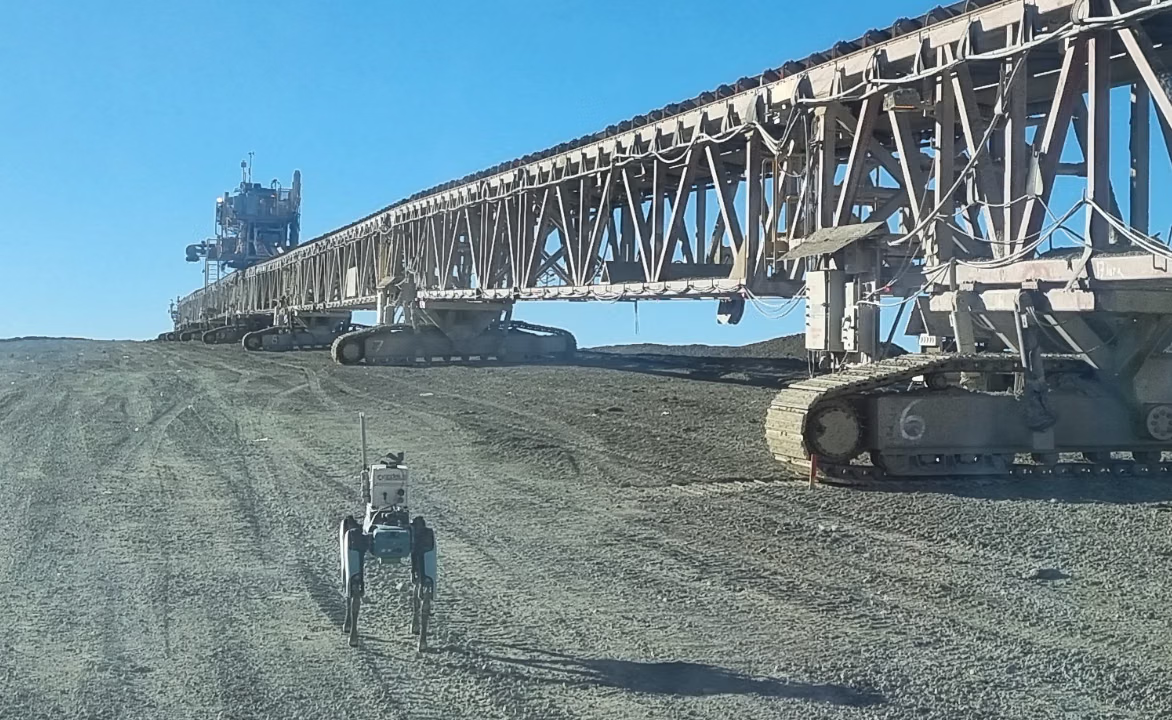
Fig3 Fig 3. Monitoring a mining conveyor belt for defects and anomalies (Source)

These benefits are clear in one of SK Godelius's mining operations, where the autonomous conveyor belt inspection system has been deployed at more than 10 mine sites, both open-pit and underground, and has assessed more than 16 conveyors across operational campaigns, maintaining over 95% average weekly coverage.

Over that period, it has detected more than 3,400 anomalies, of which over 900 were classified as critical, giving teams early warning of the problems most likely to lead to failures. Overall, the result is an inspection process that is traceable, repeatable, and data-driven, helping mines improve maintenance prioritization, identify risks earlier, and keep critical assets running.

Building safer, smarter mining inspections#

As SK Godelius expands, the company is working to broaden what its systems can detect and the conditions they can handle. It is exploring ideas such as using 3D imaging and vibration analysis to gauge belt wear, X-rays to inspect belt components, and robots to clean beneath the belts, and it is keen to use the latest Ultralytics YOLO26 models to push detection accuracy and efficiency further.

By combining robotics, multimodal sensing, and Ultralytics YOLO, SK Godelius is turning conveyor inspection from a hazardous manual task into a standardized, predictive process that keeps critical assets running and people out of harm's way.

Interested in how computer vision can reshape your business? Explore our GitHub repository to see how Ultralytics YOLO models are transforming innovations like AI in manufacturing and computer vision in robotics. Find out more about our licensing options and start your journey toward smarter, more efficient automation today.

Our solution to your industry

Computer vision for aerial imagery

Computer vision for aerial imagery

Transform drone and aerial imagery into real-time insights for agriculture, aquaculture, environmental monitoring, conservation, and geospatial analysis with Ultralytics YOLO.
Learn more
Computer vision in aerospace

Computer vision in aerospace

Bring vision AI to aerial monitoring with Ultralytics YOLO models. Power drones, aerospace workflows, environmental conservation & geospatial industries with computer vision solutions.
Learn more
Computer vision in security

Computer vision in security

Protect every site with Ultralytics YOLO models. Vision AI powers perimeter monitoring, threat detection, license-plate recognition, and workplace safety.
Learn more
Computer vision in robotics

Computer vision in robotics

Power smarter machines with Ultralytics YOLO models. Vision AI in robotics drives autonomous navigation, perception, object tracking, and real-time control.
Learn more
Computer vision in logistics

Computer vision in logistics

Streamline logistics with Ultralytics YOLO models. Vision AI enables package inspection, sorting, vehicle tracking, and real-time warehouse safety monitoring.
Learn more
Computer vision in retail

Computer vision in retail

Reimagine retail with Ultralytics YOLO models. Vision AI powers inventory tracking, shelf monitoring, queue management, and smarter customer insights.
Learn more
Computer vision in healthcare

Computer vision in healthcare

Build healthcare solutions with Ultralytics YOLO models. Vision AI in healthcare powers faster medical imaging, smarter diagnostics, and patient monitoring.
Learn more
Computer vision in manufacturing

Computer vision in manufacturing

Optimize manufacturing with Ultralytics YOLO models. Vision AI drives quality control, defect detection, PPE compliance, and assembly line automation.
Learn more
Computer vision in automotive

Computer vision in automotive

Apply computer vision in automotive with Ultralytics YOLO models. Vision AI elevates road safety, driver assistance, and vehicle automation for smarter roads.
Learn more
Computer vision in agriculture

Computer vision in agriculture

Bring vision AI to smart agriculture with Ultralytics YOLO models. Power crop monitoring, livestock tracking, and precision farming for higher, smarter yields.
Learn more
Computer vision for aerial imagery

Computer vision for aerial imagery

Transform drone and aerial imagery into real-time insights for agriculture, aquaculture, environmental monitoring, conservation, and geospatial analysis with Ultralytics YOLO.
Learn more
Computer vision in aerospace

Computer vision in aerospace

Bring vision AI to aerial monitoring with Ultralytics YOLO models. Power drones, aerospace workflows, environmental conservation & geospatial industries with computer vision solutions.
Learn more
Computer vision in security

Computer vision in security

Protect every site with Ultralytics YOLO models. Vision AI powers perimeter monitoring, threat detection, license-plate recognition, and workplace safety.
Learn more
Computer vision in robotics

Computer vision in robotics

Power smarter machines with Ultralytics YOLO models. Vision AI in robotics drives autonomous navigation, perception, object tracking, and real-time control.
Learn more
Computer vision in logistics

Computer vision in logistics

Streamline logistics with Ultralytics YOLO models. Vision AI enables package inspection, sorting, vehicle tracking, and real-time warehouse safety monitoring.
Learn more
Computer vision in retail

Computer vision in retail

Reimagine retail with Ultralytics YOLO models. Vision AI powers inventory tracking, shelf monitoring, queue management, and smarter customer insights.
Learn more
Computer vision in healthcare

Computer vision in healthcare

Build healthcare solutions with Ultralytics YOLO models. Vision AI in healthcare powers faster medical imaging, smarter diagnostics, and patient monitoring.
Learn more
Computer vision in manufacturing

Computer vision in manufacturing

Optimize manufacturing with Ultralytics YOLO models. Vision AI drives quality control, defect detection, PPE compliance, and assembly line automation.
Learn more
Computer vision in automotive

Computer vision in automotive

Apply computer vision in automotive with Ultralytics YOLO models. Vision AI elevates road safety, driver assistance, and vehicle automation for smarter roads.
Learn more
Computer vision in agriculture

Computer vision in agriculture

Bring vision AI to smart agriculture with Ultralytics YOLO models. Power crop monitoring, livestock tracking, and precision farming for higher, smarter yields.
Learn more
Computer vision for aerial imagery

Computer vision for aerial imagery

Transform drone and aerial imagery into real-time insights for agriculture, aquaculture, environmental monitoring, conservation, and geospatial analysis with Ultralytics YOLO.
Learn more
Computer vision in aerospace

Computer vision in aerospace

Bring vision AI to aerial monitoring with Ultralytics YOLO models. Power drones, aerospace workflows, environmental conservation & geospatial industries with computer vision solutions.
Learn more
Computer vision in security

Computer vision in security

Protect every site with Ultralytics YOLO models. Vision AI powers perimeter monitoring, threat detection, license-plate recognition, and workplace safety.
Learn more
Computer vision in robotics

Computer vision in robotics

Power smarter machines with Ultralytics YOLO models. Vision AI in robotics drives autonomous navigation, perception, object tracking, and real-time control.
Learn more
Computer vision in logistics

Computer vision in logistics

Streamline logistics with Ultralytics YOLO models. Vision AI enables package inspection, sorting, vehicle tracking, and real-time warehouse safety monitoring.
Learn more
Computer vision in retail

Computer vision in retail

Reimagine retail with Ultralytics YOLO models. Vision AI powers inventory tracking, shelf monitoring, queue management, and smarter customer insights.
Learn more
Computer vision in healthcare

Computer vision in healthcare

Build healthcare solutions with Ultralytics YOLO models. Vision AI in healthcare powers faster medical imaging, smarter diagnostics, and patient monitoring.
Learn more
Computer vision in manufacturing

Computer vision in manufacturing

Optimize manufacturing with Ultralytics YOLO models. Vision AI drives quality control, defect detection, PPE compliance, and assembly line automation.
Learn more
Computer vision in automotive

Computer vision in automotive

Apply computer vision in automotive with Ultralytics YOLO models. Vision AI elevates road safety, driver assistance, and vehicle automation for smarter roads.
Learn more
Computer vision in agriculture

Computer vision in agriculture

Bring vision AI to smart agriculture with Ultralytics YOLO models. Power crop monitoring, livestock tracking, and precision farming for higher, smarter yields.
Learn more

Frequently asked questions

  • Ultralytics YOLO repositories are distributed under the AGPL-3.0 License by default. This OSI-approved license is designed for students, researchers, and enthusiasts, promoting open collaboration and requiring that any software using AGPL-3.0 components also be open-sourced. While this ensures transparency and fosters innovation, it may not align with commercial use cases.

    If your project involves embedding Ultralytics software and AI models into commercial products or services and you wish to bypass the open-source requirements of AGPL-3.0, an Enterprise License is ideal.

    Benefits of the Enterprise License include:

    • Commercial flexibility: Modify and embed Ultralytics YOLO source code and models into proprietary products without adhering to the AGPL-3.0 requirement to open-source your project.
    • Proprietary development: Gain full freedom to develop and distribute commercial applications that include Ultralytics YOLO code and models.

    To ensure seamless integration and avoid AGPL-3.0 constraints, request an Ultralytics Enterprise License using the form provided. Our team will assist you in tailoring the license to your specific needs.

  • The model you choose depends on your project requirements, including performance, accuracy, deployment target, and hardware constraints. For most new projects, Ultralytics YOLO26 is the recommended starting point because it offers the latest improvements in speed, accuracy, exportability, and multi-task support.

    Earlier YOLO model families remain available for teams with existing workflows or compatibility requirements.

    If you are starting fresh, choose YOLO26 first, then benchmark smaller or larger variants to find the right balance of speed and accuracy for your deployment environment.

  • Ultralytics YOLO models are a family of computer vision models for tasks such as object detection, segmentation, classification, pose estimation, and oriented object detection. YOLO26 is the latest stable version and is recommended for most new projects. Earlier YOLO versions remain available for teams with existing workflows or compatibility requirements.

  • Ultralytics YOLO models are computer vision architectures developed to analyze visual data from images and video. These models can be trained for tasks including object detection, classification, pose estimation, tracking, instance segmentation, and oriented object detection.

    The latest Ultralytics YOLO model family is YOLO26, with earlier YOLO versions available for existing workflows.

Let's build the future of AI together!

Begin your journey with the future of machine learning






