Tesla’s autonomous cybercab and the future of AI in robotics
Explore Tesla's latest AI-driven inventions, including the autonomous Cybercab and Robovan, and see how they could change transportation as we know it.
Tesla's "We, Robot" event on October 10, 2024, offered a look at how the future of urban mobility could become smarter and more sustainable. During the event, Tesla unveiled two major self-driving vehicle innovations: the Cybercab and the Robovan. The Cybercab is a compact, affordable two-seater designed to make city travel more efficient and accessible. The Robovan, with its capacity for up to 20 passengers, is an option for group-friendly, high-capacity transportation.
Tesla also introduced Optimus, a humanoid robot that interacted with attendees by serving drinks and performing simple tasks. It exhibited how robots could soon become a part of our daily routines, not only in factories but also in homes and public spaces. Beyond revealing new products, the event painted a vision of a future where AI and robotics play an integral role in our day-to-day routines.
In this article, we’ll take a closer look at these AI robotics innovations and explore how they might impact different industries.
New Tesla AI robotics innovations were unveiled at We, Robot#
Before we explore the broader impact of robotics, let's first take a closer look at the new Tesla innovations from the "We, Robot" event and see how they are paving the way for a more connected future.
Reimagining the future with Tesla's Robotaxi services#
The Cybercab, also called the Robotaxi, was engineered to reimagine transportation. Tesla’s CEO, Elon Musk, described the Robotaxi as a solution to two key challenges: the fact that Tesla's current “Full Self-Driving” system still requires a human driver to monitor and take control if necessary and the high cost of car ownership. The goal of the Robotaxi is to make transportation safer, more affordable, and more efficient. Unlike traditional vehicles, the Cybercab is built without a steering wheel or pedals.
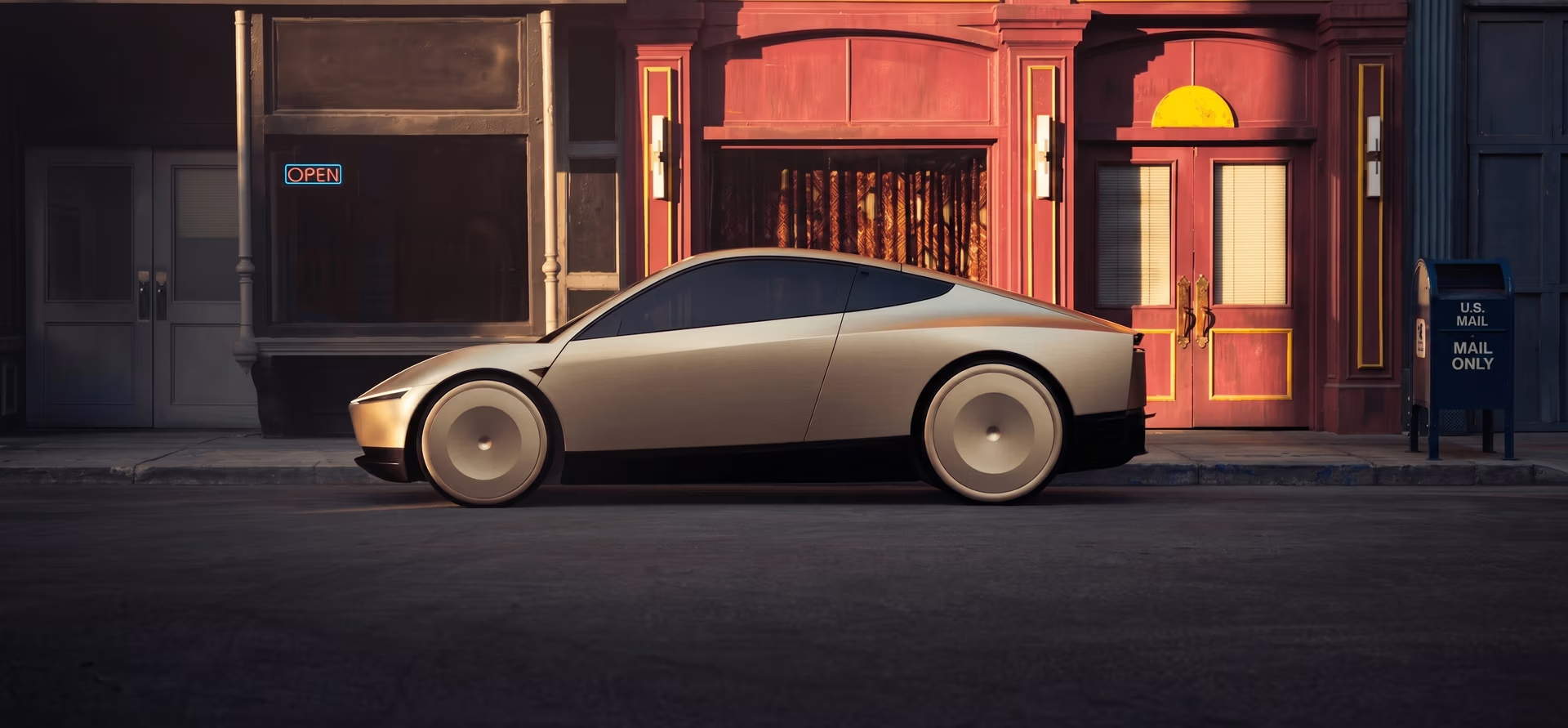
Fig 1. A Rendering of Tesla’s Cybercab.
The Cybercab will use Tesla’s camera-based vision system and a powerful new chip, the AI5 processor, set to be released in 2025. This advanced chip is designed to handle complex calculations for applications like autonomous driving, optimizing real-time data processing and decision-making. The Cybercab’s design is intended to create a fully autonomous experience, where passengers have no role in navigating or controlling the vehicle. The AI5 processor handles all decision-making processes in real time, relying on a network of cameras to interpret the vehicle's surroundings. By eliminating more expensive sensors like LiDAR, Tesla aims to reduce costs and simplify the technology, making it more accessible for mass adoption.
The Cybercab also features wireless inductive charging. It makes it possible for the vehicle to recharge just by parking over a charging pad. With no need for a physical plug or cable, charging can become much more convenient. Tesla plans to begin offering unsupervised, full self-driving taxi rides in California and Texas as early as next year, with full production of the Cybercab expected by 2026.
The Robovan and the impact of Tesla AI on transportation#
The Robovan, intended to carry up to 20 passengers, is Tesla's answer to practical, multi-passenger transportation. It aims to ease congestion and is a convenient way for people to move around busy cities. Elon Musk emphasized that it is a transit option that could replace traditional parking lots with green areas. By reducing the number of individual cars on the road and promoting shared transportation, the Robovan could make better use of existing infrastructure, turning what used to be parking lots into more vibrant community spaces like parks. Just like the Cybercab, the Robovan will also use inductive charging. Another interesting feature of the Robovan is that it can be reconfigured to haul cargo, making it versatile for both passenger and goods transport.
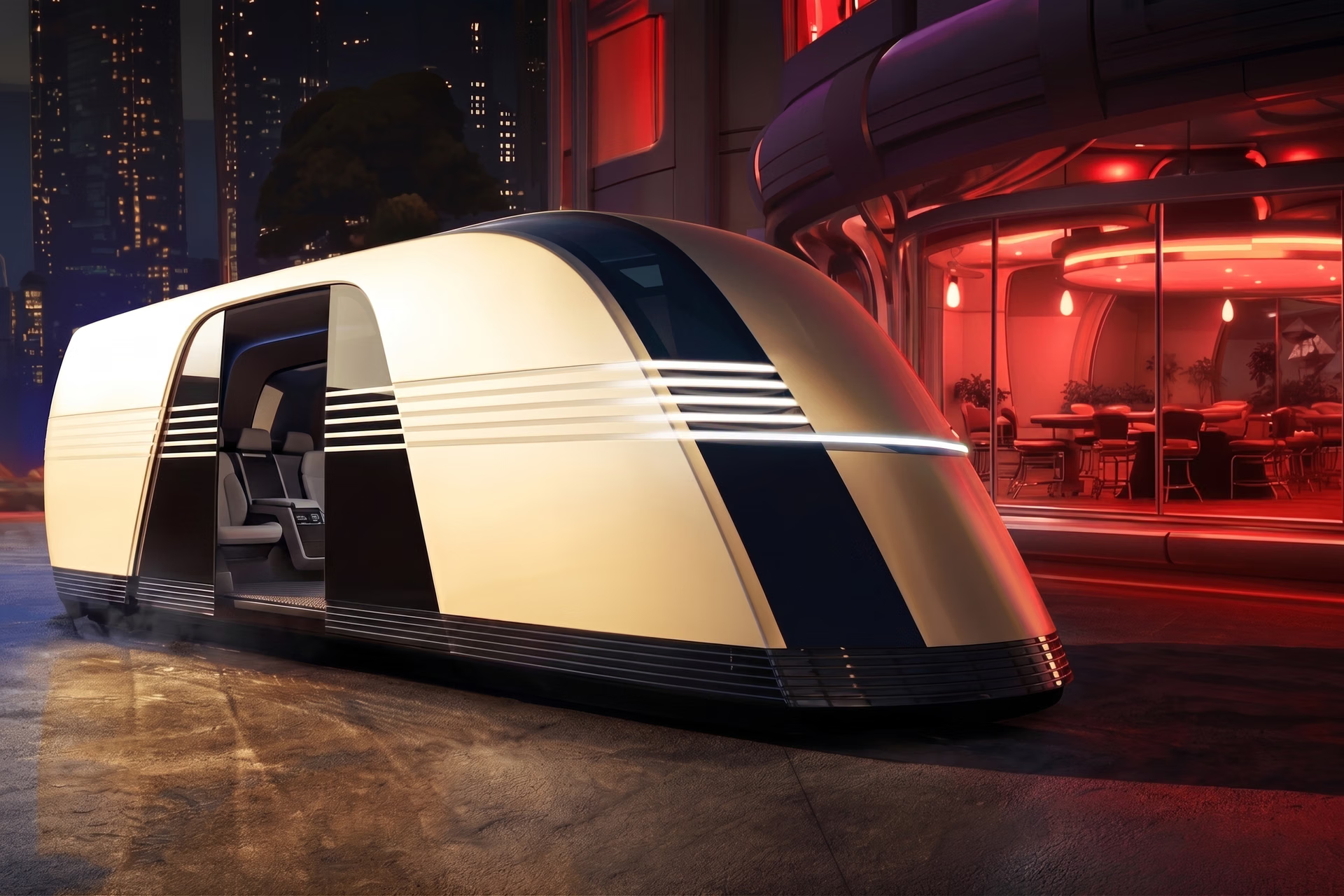
Fig 2. A rendering of Tesla’s Robovan.
Tesla showcased their AI-powered robotics innovations#
At the "We, Robot" event, Optimus humanoid robots made an entrance alongside the Robovan. A video demo showed the Optimus bot doing tasks like bringing in a package and watering plants - simple examples that hint at its potential as a household assistant. Elon Musk explained that Optimus could eventually handle more complex activities, such as walking the dog, babysitting, or mowing the lawn.
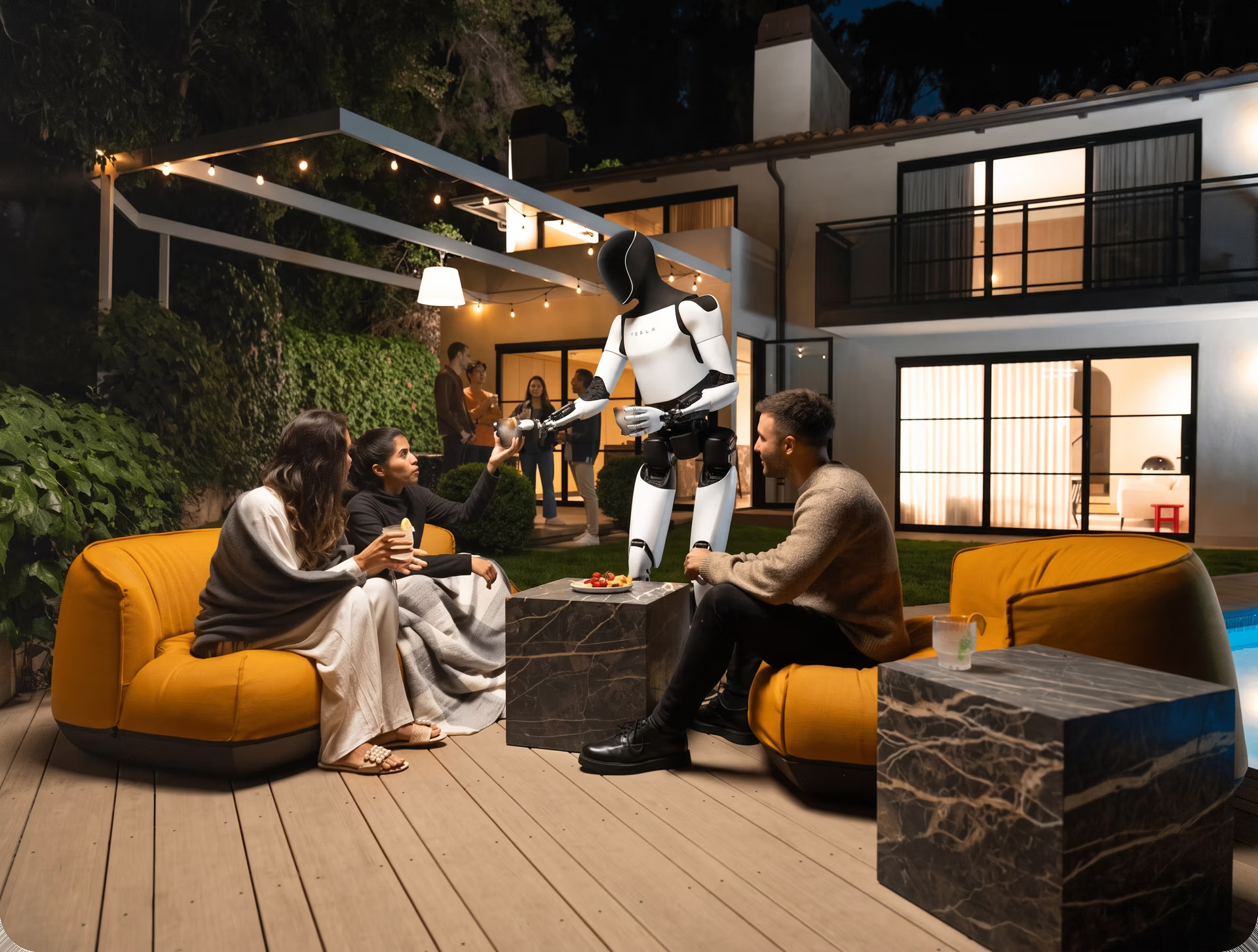
Fig 3. Tesla’s Optimus bot interacting with humans.
During the event, Optimus robots interacted with attendees by handing out small gift bags, holding cups, and playing games like rock, paper, scissors. According to Musk, Optimus could represent a major shift for society, with ambitions to produce millions of units, potentially paving the way for a future with increased automation. Though the demonstrations were limited, they provided a glimpse into Tesla's vision of making AI-driven robots practical tools for everyday use.
The pros and cons of Tesla's autonomous taxis#
After the event, there was a lot of interest and feedback from the AI community and consumers alike. There were also speculations about the potential pros and cons of these innovations.
Here are some examples of possible benefits:
- Environmental benefits: With an all-electric fleet, Tesla's autonomous taxis could reduce emissions and provide a cleaner alternative to traditional transit.
- Improved accessibility: Autonomous fleets can help people with mobility issues by offering more dependable and flexible transport options.
- Increased efficiency: Wireless charging enhances fleet efficiency, allowing vehicles to recharge automatically and frequently without human intervention.
While the benefits are clear, it's also important to acknowledge some potential challenges that have been raised:
- Safety limitations: Tesla’s vision-only Full Self-Driving (FSD) software, without sensors like LiDAR, raises concerns about its ability to handle complex traffic scenarios.
- Infrastructure challenges: To make wireless inductive charging practical and accessible, charging pads in different locations will need to be installed. This requires significant infrastructure investment, which could be a barrier to large-scale deployment.
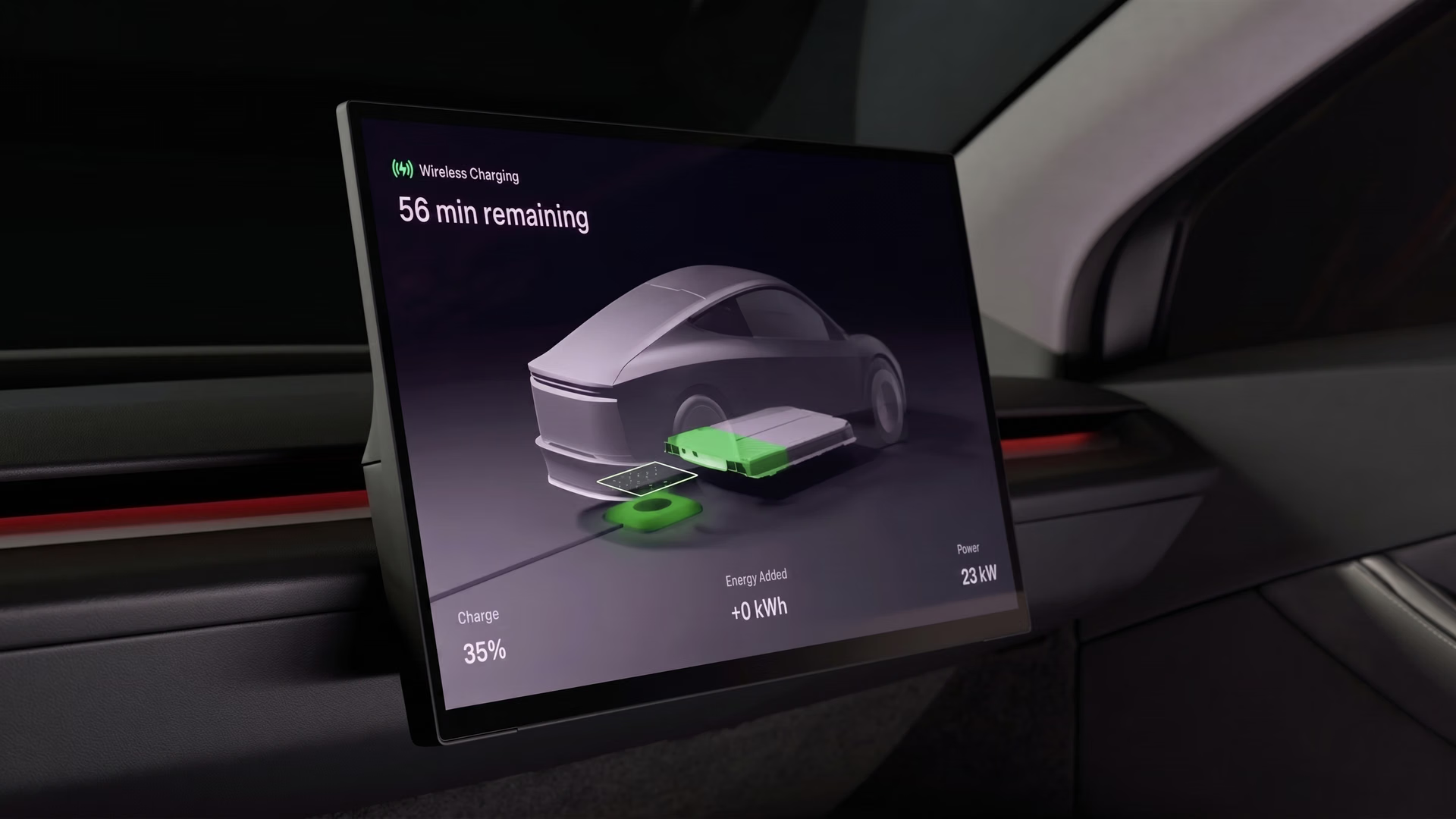
Fig 4. Wireless charging for self-driving cars.
The impact of AI-driven robotics applications#
Now that we've explored some of the latest innovations in robotics, let's take a closer look at how recent trends are impacting different industries and creating real-world change. The same AI technologies behind Tesla's innovations are also being used in various other robotics applications, expanding the potential and practical use of robotics in many meaningful ways.
Human-robot collaboration#
Collaborative robots, or cobots, are becoming more widely used across different industries, working alongside human workers to enhance both safety and productivity. Unlike traditional industrial robots that need to be isolated from people, cobots are designed to safely interact with humans.
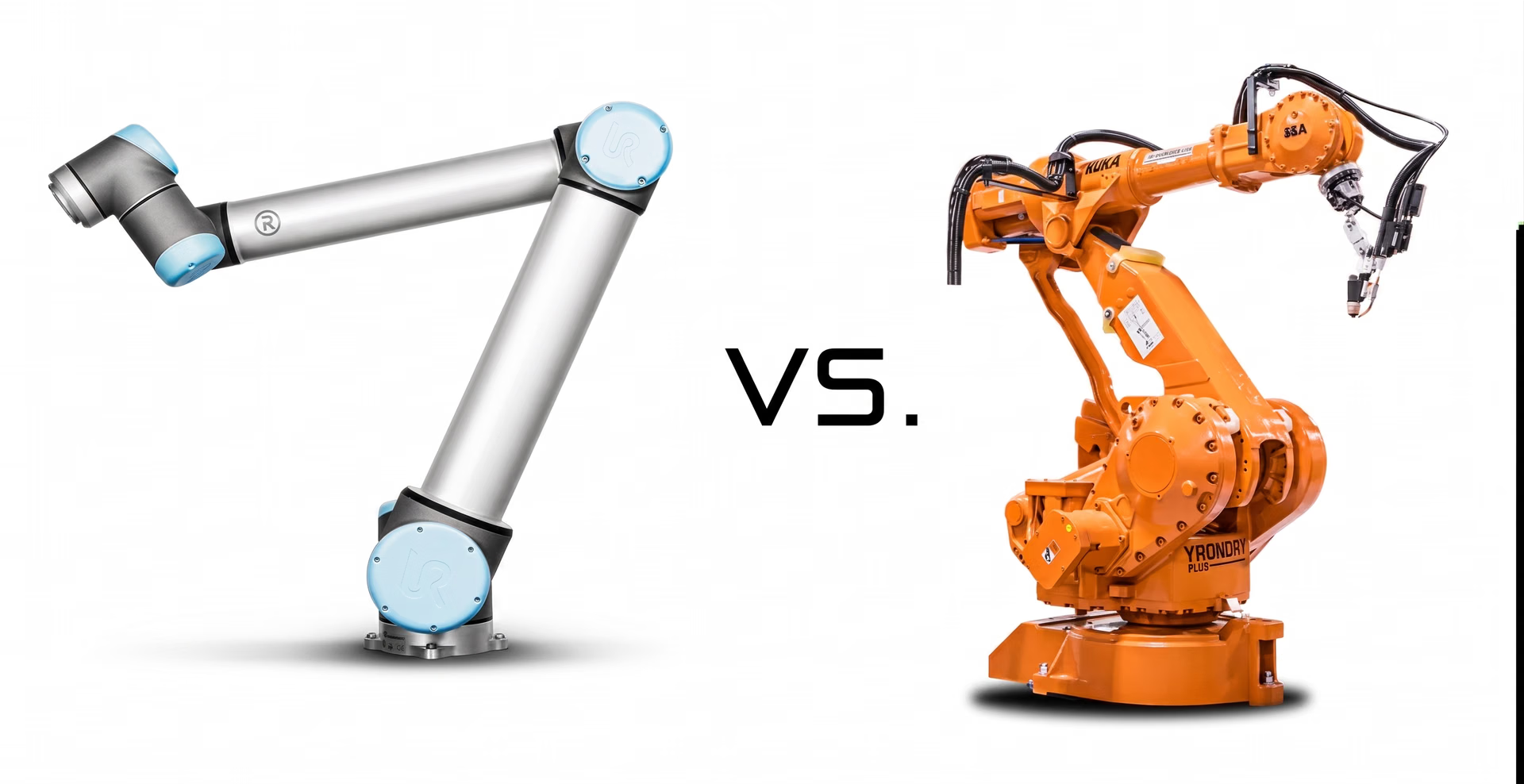
Fig 5. Comparing a Cobot and Robot Side By Side.
They take on repetitive and physically demanding tasks, making it possible for human workers to focus on more detailed and creative aspects of the work. With advanced sensors and AI, cobots can detect human presence and adjust their actions to minimize risks, making workplaces safer and more efficient. This collaboration allows industries to harness the strengths of both humans and robots, leading to more flexible and productive environments.
For example, in manufacturing, they assist with tasks like assembly, welding, and quality inspection, making processes faster and reducing the strain on workers. Similarly, in logistics, cobots work in warehouses to help with picking, packing, and sorting, which helps streamline the supply chain.
Edge computing in robotics#
Edge computing is becoming a crucial component of AI-driven robotics. It lets robots process data locally instead of relying on cloud servers. By reducing latency and enabling real-time decision-making, robots can react quickly to their environment, making them more effective in dynamic or safety-critical situations.
For instance, in autonomous vehicles, edge computing allows data from sensors and cameras to be processed immediately. Faster processing ensures quicker responses to obstacles or changes in conditions. Edge AI makes robotics systems more responsive, efficient, and reliable across a range of applications.
Another good example can be seen in agriculture. Edge computing enables drones and robotic systems to analyze soil conditions, monitor crop health, and detect pests directly in the field. Local processing provides farmers with immediate insights and allows them to take quick action, such as adjusting irrigation or targeting pest control, ultimately increasing efficiency and boosting crop yields. It also helps reduce reliance on constant internet connectivity, which is crucial in remote or rural areas where agricultural operations often take place.
Key takeaways#
AI-enhanced robotics solutions are becoming more advanced. Tesla’s "We, Robot" event was a great showcase of this. With the debut of the Cybercab and Robovan, Tesla highlighted a future where autonomous vehicles bring more accessible and efficient urban transportation. Meanwhile, Tesla’s Optimus robots demonstrated how humanoid robots could easily become a part of our society, helping with industrial automation and even home assistance. As AI continues to drive robotics forward, Tesla’s innovations are a glimpse into how these technologies are poised to reshape both everyday life and various sectors.
Dive into the future with us and join our community! 🚀 Explore our GitHub repository to see our contributions to AI. Learn how we are redefining industries like manufacturing and agriculture with AI.








