The new AI regulations in California: A focus on ethical AI
Discover how California's new AI laws balance innovation with accountability, covering privacy, deepfakes, healthcare, education, and security.

From self-driving cars to healthcare, artificial intelligence (AI) innovations and next-gen tech companies are starting to play a key role in reshaping our daily lives. Consequently, the global market size of AI was $196.63 billion in 2023 and is expected to grow by an average of 36% annually from 2024 to 2030. These numbers showcase how quickly AI is growing.
On one hand, the rapid development of AI is creating solutions to various problems across different industries. On the other hand, this speed brings to light the need for responsible AI development to make sure that improvements are ethical and beneficial for society.
For instance, in 2016, Microsoft launched a chatbot, Tay, on X (formerly Twitter). It was designed to learn from conversations with users. However, shortly after its release, Tay began generating responses with unprofessional language as it picked up on a range of interactions. While Microsoft swiftly took the bot offline, it’s a good example of the importance of ensuring that data used for AI training is reliable and that the public is aware of how companies are using such data for AI products.
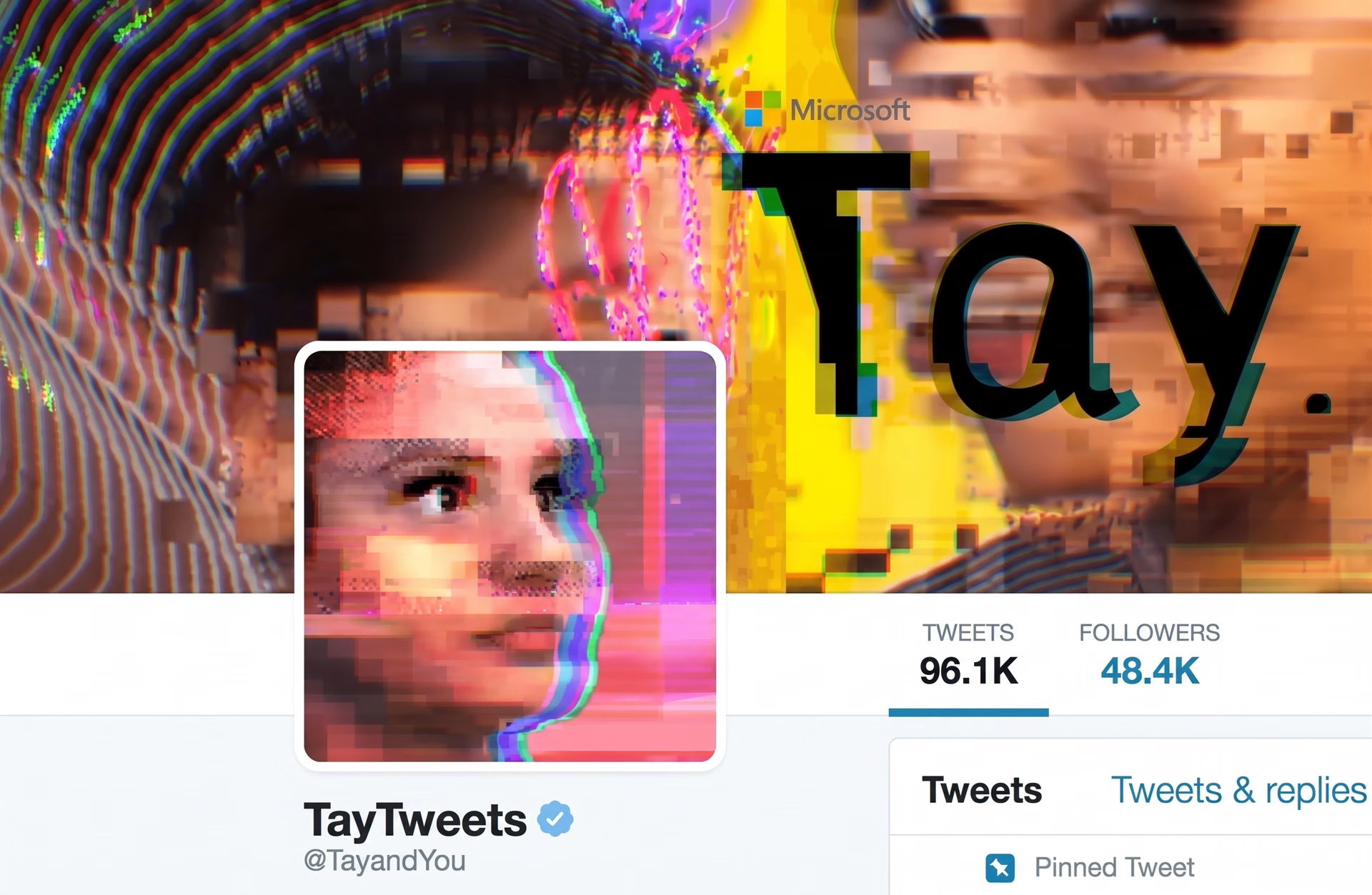
Fig 1. Microsoft’s Twitter Chatbot, Tay.
Addressing this concern, California’s Governor, Gavin Newsom, signed more than a dozen AI-related bills into law this September. These laws address everything from disclosing details on training data to handling deepfakes. In this article, we’ll explore California’s AI laws and what it entails. Let’s get started!
California AI legislation 2024: Ensuring accountability#
Three major bills were signed into law to support AI development becoming more secure and reliable. The Assembly Bill (AB) 2013, which goes into effect in 2026, requires generative AI providers to publish details regarding their training datasets. These details include the sources of the datasets, details on how the data is used, the number of data points in the set, whether copyrighted or licensed data is included, the time period the data was collected, etc. Sharing this information will help AI companies build public trust.
Another important bill that was signed was AB 1008. It extends California’s existing privacy laws to generative AI solutions. AB 1008 was introduced to address concerns and improve public confidence in how AI systems handle personal information. A survey found that over 81% of consumers are concerned that AI companies might use their information in ways they didn’t intend. By setting clear limits on how businesses can use and profit from personal information, like names, addresses, and biometric data, this law helps AI companies reassure users that their data will be handled responsibly, even if exposed by an AI system.
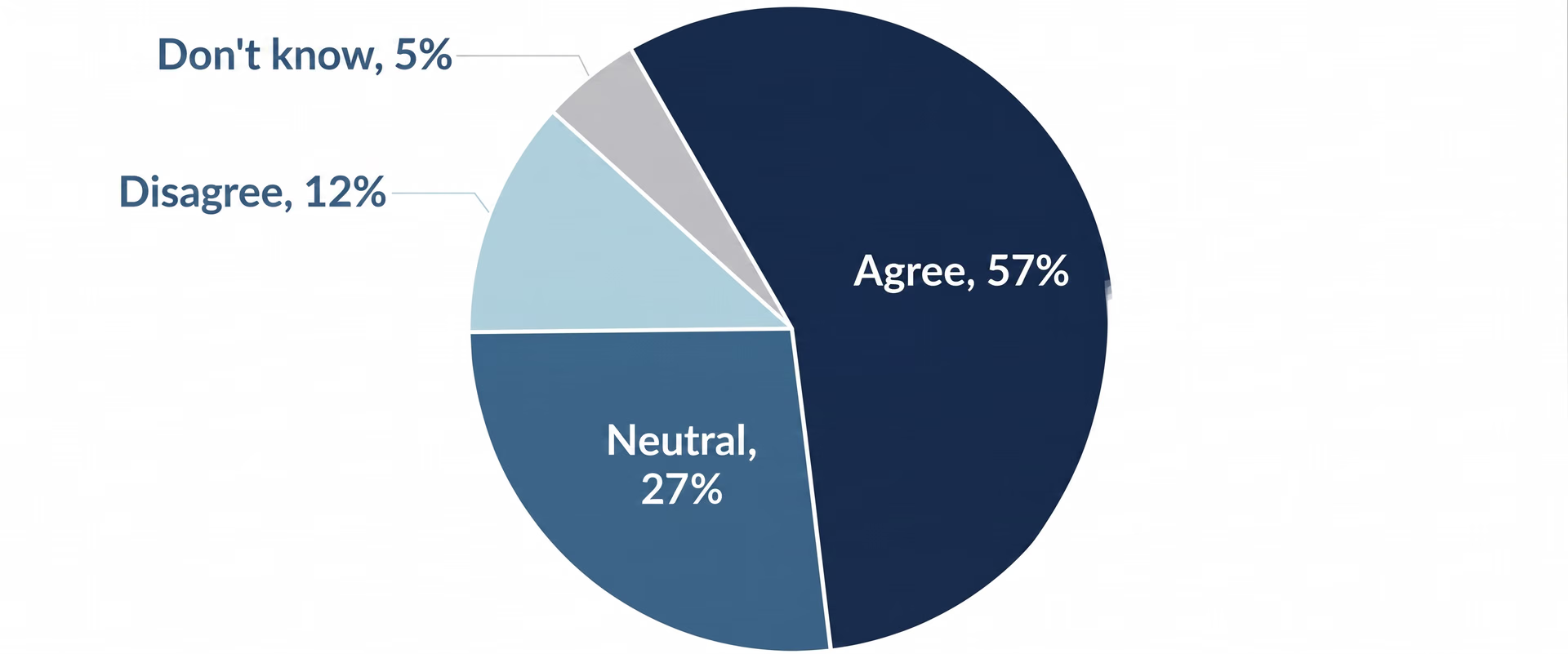
Fig 2. An infographic showing that many people believe AI solutions can improve with respect to privacy.
Similarly, Senate Bill (SB) 896, or the Generative AI Accountability Act, requires California’s Office of Emergency Services (CalOES) to perform risk analyses on potential threats posed by generative AI systems. CalOES will work with pioneering AI firms, such as OpenAI and Anthropic, to discuss and analyze AI’s potential threats to critical state infrastructure.
AI adoption and regulation at educational institutions#
We’ve previously explored how AI in education can personalize learning experiences, redefine teaching practices, offer real-time feedback, and support educators with advanced tools and insights. In fact, AI innovations can create a more effective and engaging studying environment for students. Educators and teachers all over the world are using AI more regularly, with successful pilot projects and broader implementations underway. Studies show that more than 50% of teachers feel AI in classrooms has positively impacted the teaching and learning process.
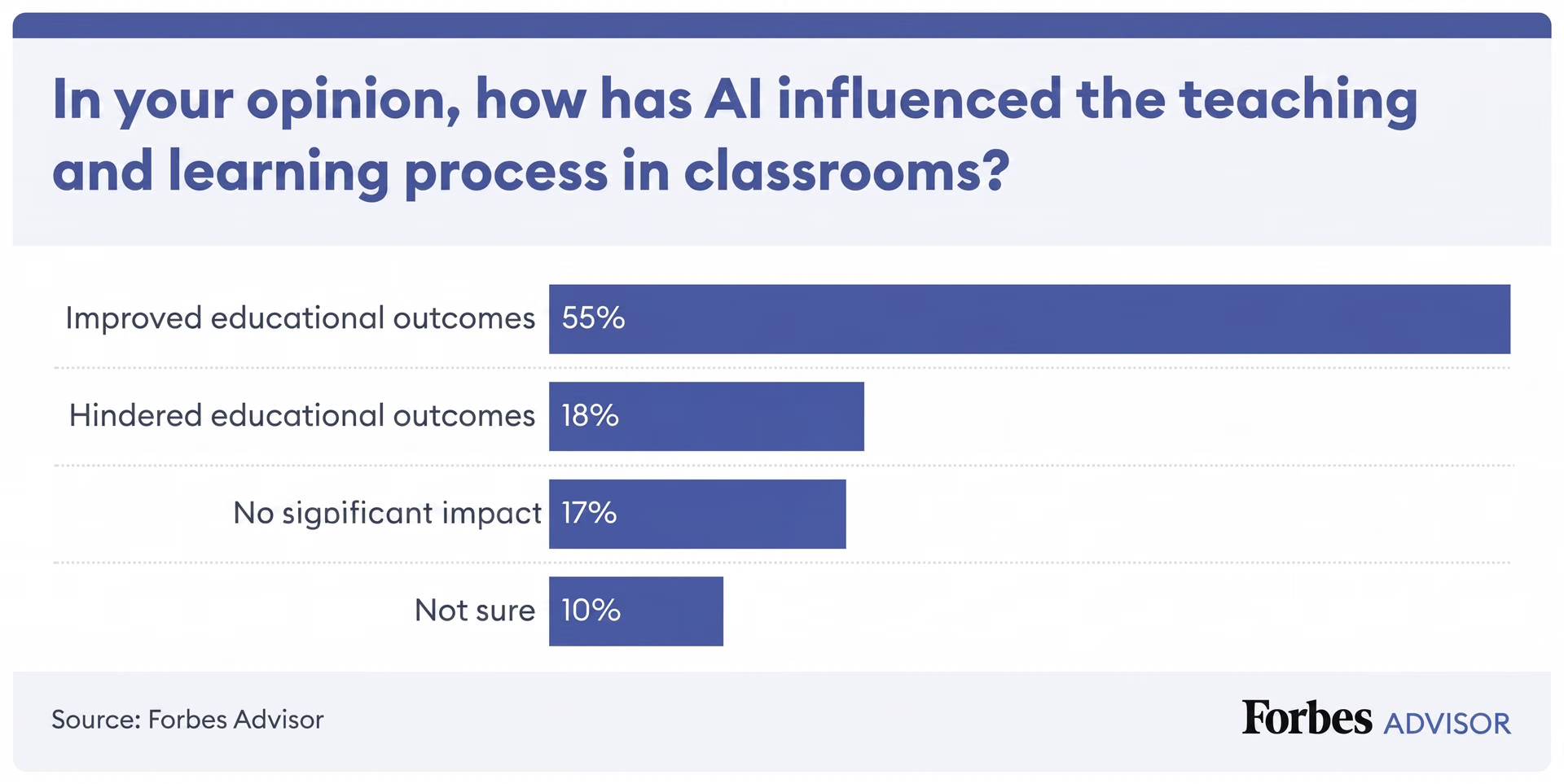
Fig 3. Survey showing how teachers feel about the use of AI in schools.
California has introduced two laws regarding the use of AI in educational institutions. AB 2876 mandates California’s State Board of Education to consider AI literacy (after January 1st, 2025) in its math, science, and history curriculum frameworks and instructional materials. The aim of this law is to make sure that California’s schools educate students on the basics of how artificial intelligence works, as well as the limitations, impacts, and ethical considerations of using the technology.
In addition to this, SB 1288 requires California superintendents to create working groups (on or before January 1st, 2026) to explore how AI is being used in public schools. These working groups will need to submit their findings and recommendations to the relevant policy and fiscal committees of the Legislature by January 1, 2027. After the report is submitted, the working group will be disbanded, and the provisions will be repealed on January 1, 2031.
Regulations surrounding generative AI in healthcare#
Generative AI is improving the healthcare industry by enabling innovations for discovering new drugs, diagnosing diseases, planning treatments, and medical chatbots. These applications can provide benefits like real-time monitoring, advice, and support to improve patient outcomes. Other AI technologies, like augmented reality (AR), can also be used to plan and simulate surgical procedures.
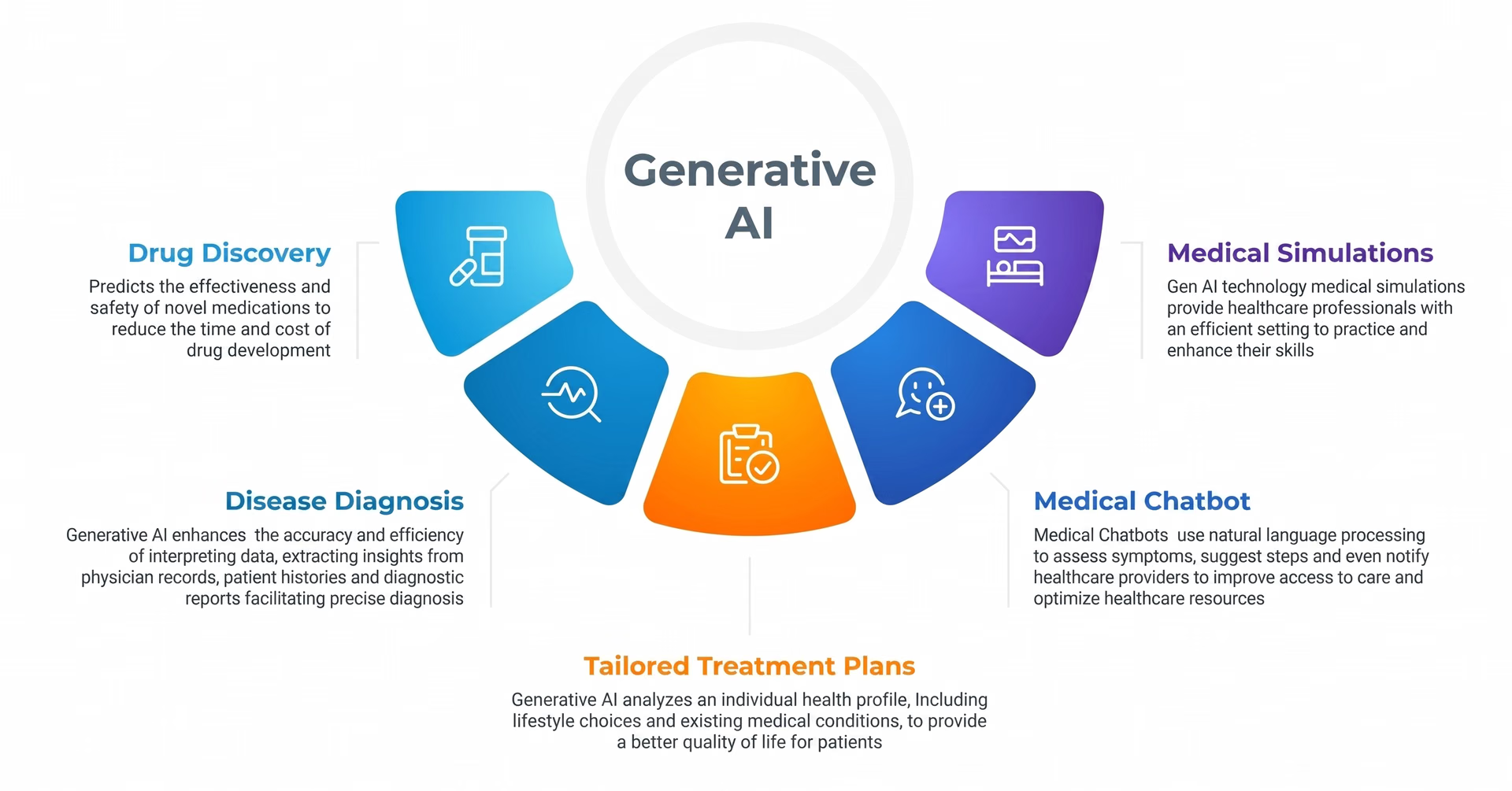
Fig 4. Use Cases of Generative AI in Healthcare.
Integrating generative AI into healthcare comes with certain caveats related to data privacy, and regulations. Prioritizing the accuracy, reliability, and fairness of outcomes generated by AI while also safeguarding the privacy of health information is crucial.
To address these challenges, California has passed two laws about the use of generative AI in healthcare. AB 3030 calls for healthcare providers to disclose when they use generative AI to communicate with a patient, specifically when those messages contain a patient’s clinical information. SB 1120 puts limitations on how healthcare service providers and health insurers can automate their services. These new laws also ensure that licensed physicians supervise the use of AI tools in these settings.
California’s AI regulatory frameworks for deepfakes#
The state of California has also passed laws related to curbing the use of AI for spreading misleading or inaccurate information. SB 942 requires popular generative AI systems to clearly indicate in their source data that the content was created by AI. Many AI companies already do this, and several free tools out there (ZeroGPT, Winston AI, GLTR, etc.) can help people read this source data and detect AI-generated content.
Three new laws (AB 1831, SB 926, SB 981) were passed in California to address issues related to deepfakes. These laws expand existing protections, criminalize the misuse of AI-generated content, and require social media platforms to create reporting channels for deepfake content. The laws are set to be implemented by January 2025.
California’s AI laws on the definition of AI and its use in film#
One of the bills that was passed into law focused on giving a proper definition to AI. AB 2885 states that AI is defined as “an engineered or machine-based system that varies in its level of autonomy and that can, for explicit or implicit objectives, infer from the input it receives how to generate outputs that can influence physical or virtual environments.”
There were also two interesting laws put in place for the entertainment industry. America’s largest film and broadcast actors union (SAG-AFTRA) played a crucial role in pushing these laws into effect. AB 2602 requires film studios to obtain permission from an actor before using AI to create a replica of their voice and likeness. Meanwhile, AB 1836 prohibits studios from creating digital replicas of deceased performers (similar to Peter Cushing’s character in Star Wars: Rogue One) without consent from their estates.

Fig 5. The character, Grand Moff Tarkin, was created using late actor Peter Cushing’s likeness.
The driving factor behind California’s AI laws#
As we caught insight of each of these laws, you might have wondered why they are really needed. AI regulations have been a popular topic of discussion for some time now, but they've gained significant momentum with the rise of deepfake content, which has impacted various areas, including media and politics. The use of AI-generated content online has prompted concerns about misinformation and its potential impact on election outcomes, for instance. There are also growing apprehensions about privacy and the misuse of personal data by AI innovations. These issues have been a factor in why several new laws are now in place to address these issues.
For example, AB 2905, enforces robocalls to disclose whether they’re AI-generated voices. Furthermore, AB 2655 calls for large online platforms like Facebook and X to remove or label deepfakes related to elections and to create reporting channels for such content. Candidates and elected officials can also seek injunctive relief if platforms fail to comply.
Another law, AB 2839, targets social media users who post or repost deepfakes that could mislead voters. Similarly, AB 2355 stipulates clear disclosures for political ads made using AI tools.
Key takeaways from California’s new AI laws#
California’s new AI laws reflect a growing commitment to balancing innovation with accountability. By addressing key concerns in areas like data transparency, privacy, deepfakes, and AI’s use in healthcare and education, these laws aim to safeguard individuals and society while promoting responsible AI development. As AI continues to evolve, these regulations will help ensure that its growth is accompanied by ethical practices and public trust. These laws may also encourage other regions around the world to follow suit.
To learn more, visit our GitHub repository, and engage with our community. Explore AI applications in manufacturing and agriculture on our solutions pages. 🚀








