Ultralytics’ China community meetup: the country with the highest global interest in machine learning
Highlights from Ultralytics' first Shenzhen meetup: YOLO's evolution into a full computer vision platform and what's next for China's AI community.

As computer vision technology continues to evolve, the industry’s focus is also shifting. In the past, people cared more about whether SOTA models from the lab were advanced enough. Today, however, a more important question has emerged:
How can these models truly be applied in real-world scenarios? How can vision AI projects move from demos to practical applications, continue to iterate, and create real value?
With these questions in mind, Ultralytics came to Shenzhen to host its first offline community Meetup in China. Through this event, we hoped to connect face-to-face with Chinese developers, industry partners, and computer vision enthusiasts, to talk about where Ultralytics YOLO is today and where Ultralytics is headed next.
 Fig 1. Ultralytics’ Founder & CEO, Glenn Jocher, presenting at our first community event in Shenzhen.
From Ultralytics YOLO to Ultralytics Platform#
In the past, Ultralytics YOLO was best known for being fast, practical, and easy to deploy. Whether for object detection, industrial inspection, security monitoring, or real-time vision tasks on edge devices, YOLO has become one of the go-to tools for many developers starting their computer vision projects.
Today, Ultralytics is moving beyond a single model toward a complete computer vision platform that covers dataset management, training, deployment, monitoring, and a feedback loop for continuous improvement.
People used to ask: Is the model accurate? Is it fast?
Now, we are more focused on solving a broader question: How can a vision AI project actually get up and running, be used in real scenarios, and keep improving over time?
This is what Ultralytics Platform aims to achieve: making data annotation more efficient, model training easier, multi-platform deployment smoother, and enabling developers to continuously iterate on their vision AI applications.
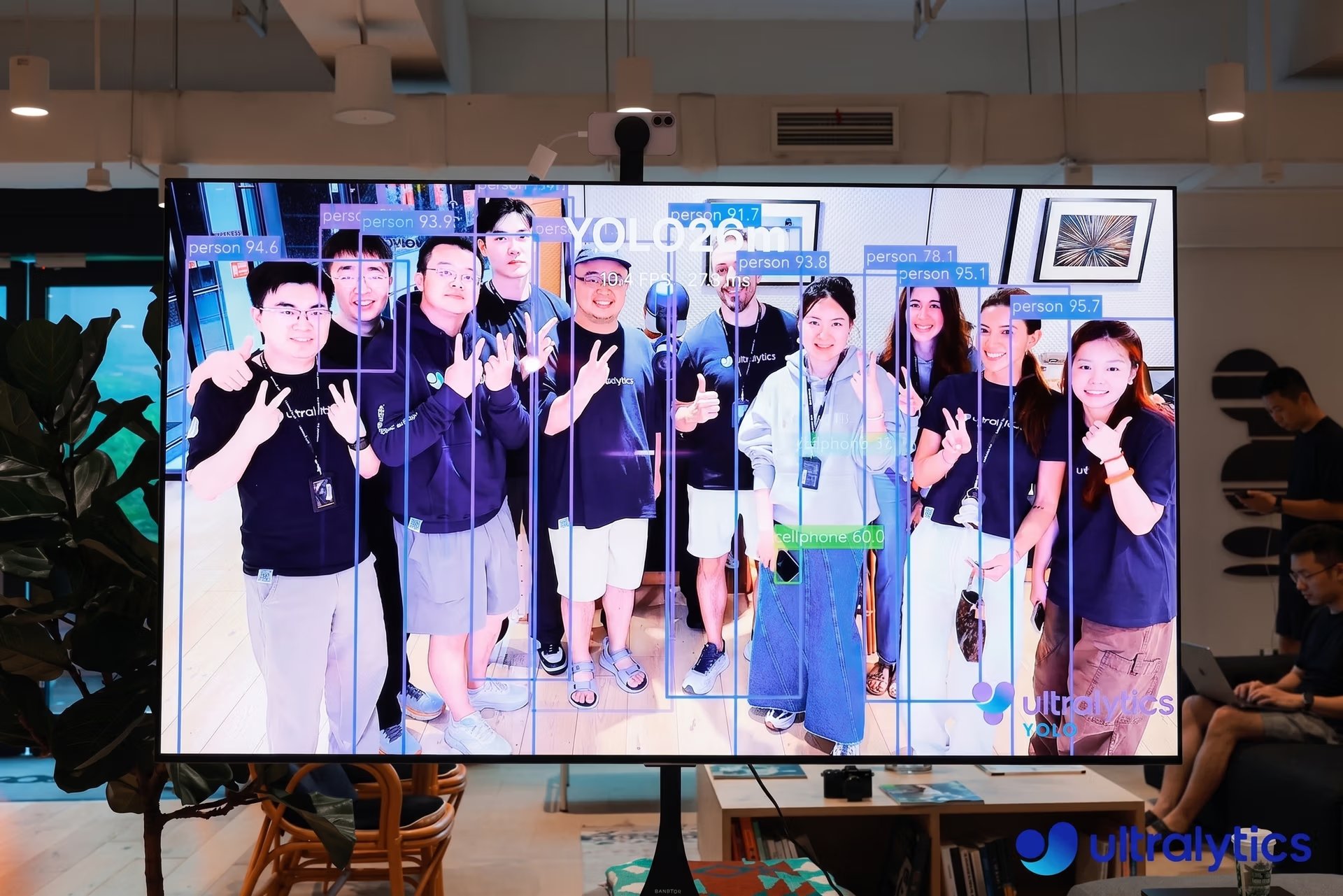
 Fig 2. Ultralytics’ first community event in Shenzhen, China.
Ultralytics Platform: Making the vision AI workflow more complete#
During the session, Glenn also introduced several core capabilities of Ultralytics Platform, including automatic annotation, one-click training, multi-format deployment, and the ability to continuously improve models through feedback data.
Fig 3. Ultralytics’ Founder & CEO, Glenn Jocher presenting at our first community event in Shenzhen.
For many teams, building a vision AI project is not just about choosing a model. The real complexity often lies in questions such as where the data comes from, how it should be annotated, how the model should be trained and deployed, and how it can continue to improve after launch. If these steps are disconnected, it becomes difficult for a project to truly enter production.
Ultralytics Platform connects these steps, allowing developers to complete the full workflow more smoothly, from data to model, from training to deployment, and from launch to feedback, without constantly switching between different tools.
Today, the platform has already seen over 100 million uploaded images, more than 600 million annotations, and approximately 40,000 to 50,000 datasets.
Behind these numbers is a clear signal: the demand for computer vision is real, and it is moving beyond research and experimentation into large-scale practical deployment. The Ultralytics Platform scales to meet these varying user needs - from plans suited to individual developers and research teams, to enterprise licensing for large-scale organizations.
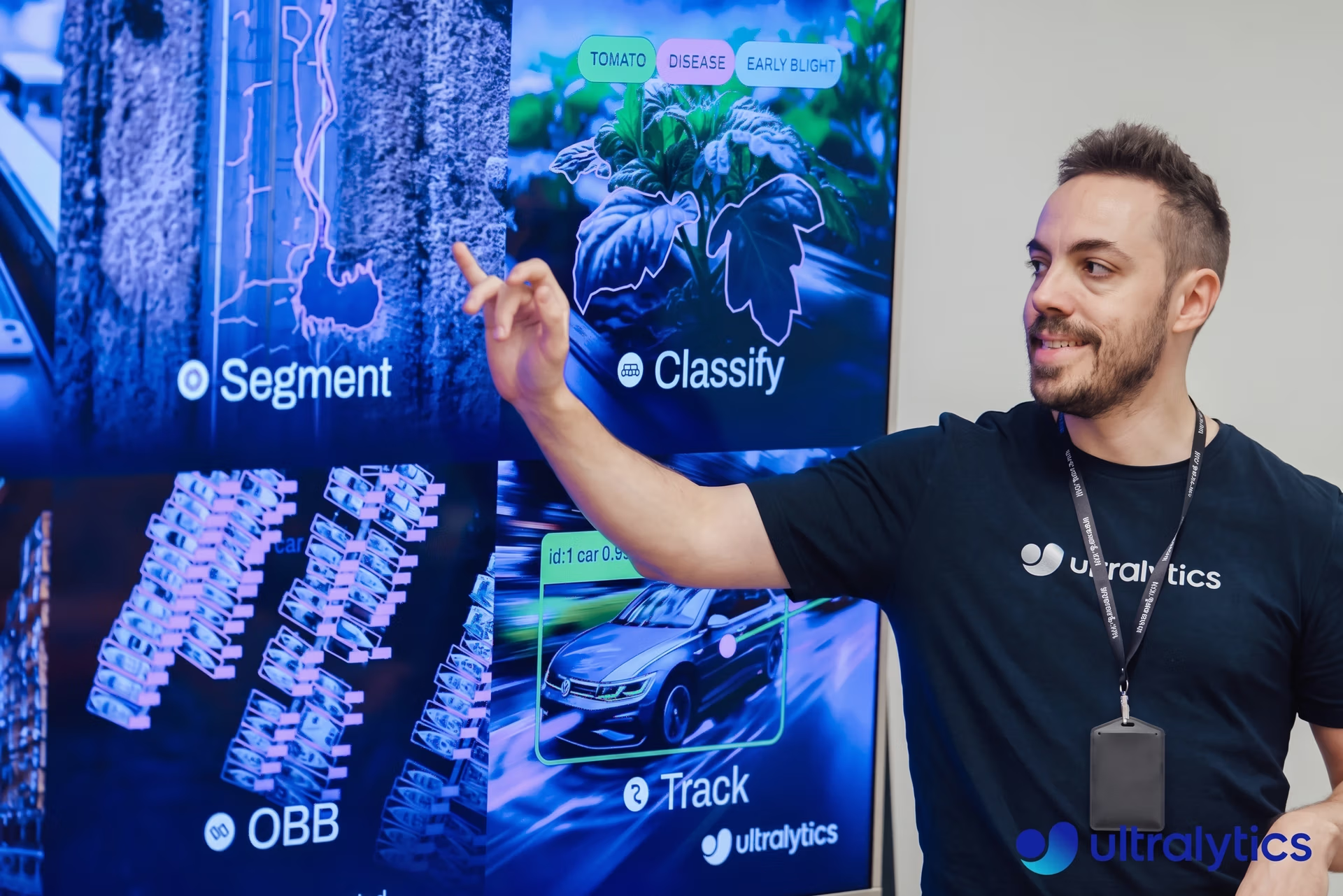
Fig 4. Glenn Jocher outlining the key detection tasks supported by Ultralytics YOLO.
The Chinese community is an essential part of the Ultralytics global ecosystem#
Glenn mentioned that China is a very important part of the Ultralytics user community, and may be one of the countries with the largest number of people learning machine learning and interested in machine learning.
For Ultralytics, China is not only a region with a large user base but also a highly active community with a strong developer presence, diverse application scenarios, and valuable technical feedback.
For a tool to be widely adopted, strong technology alone is not enough. Documentation, community, accessibility, deployment experience, and local support all need to be smooth and reliable.

Seeing developers’ real focus on vision AI deployment#
During the Q&A session, participants raised many thoughtful questions, giving us a clearer view of what Chinese developers truly care about when it comes to bringing computer vision into real-world applications.
One attendee from AMD asked whether Ultralytics Platform supports private or local training environments. This is also a key concern for many companies and teams. When projects involve sensitive data, industry-specific data, or internal business data, privacy, security, and local deployment capabilities become especially important.
Glenn shared that this is a direction the team is actively discussing. As vision AI runs on more devices and chip environments, hardware ecosystem support will become a critical part of the model deployment experience.
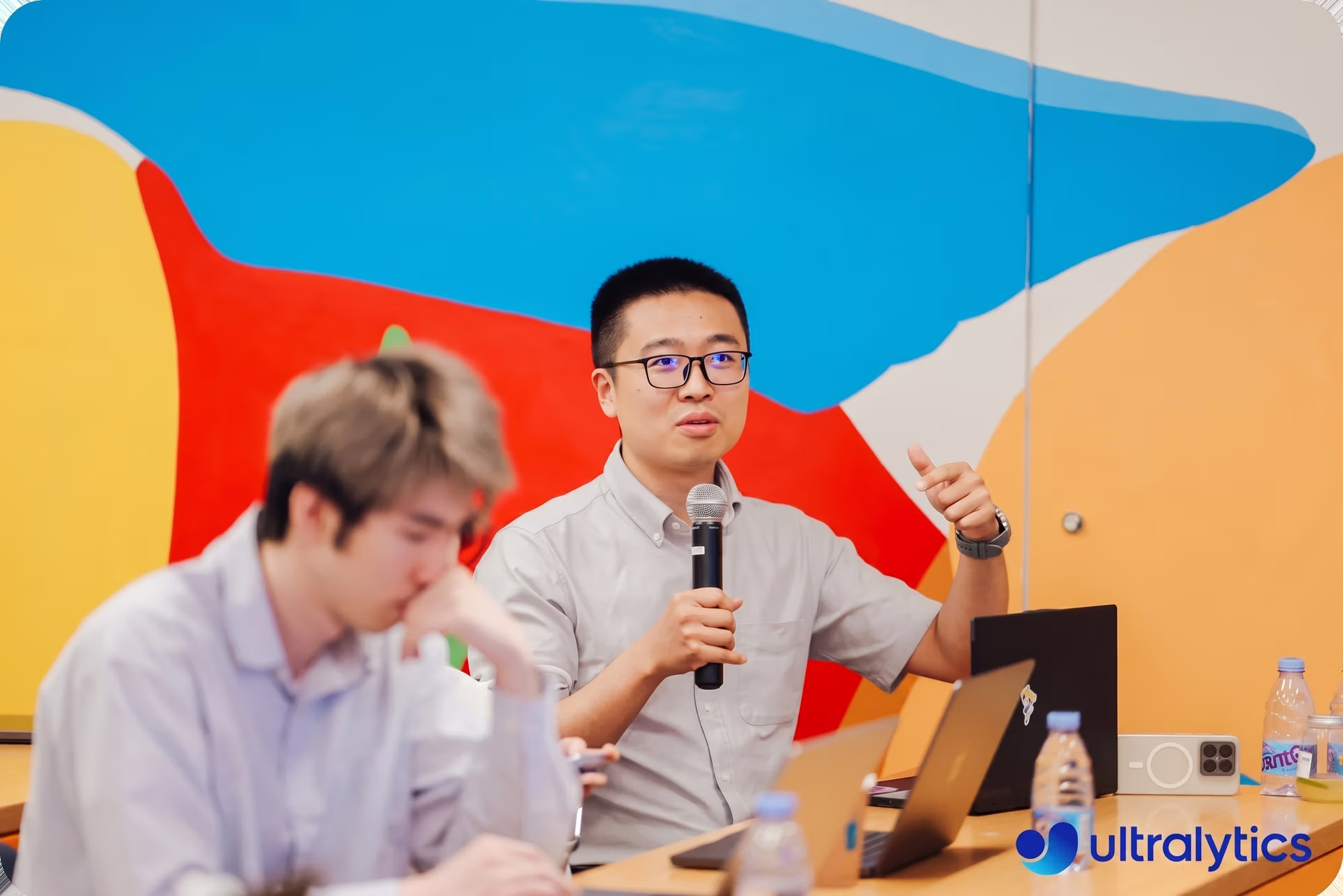
Beyond industrial use cases, hardware, and deployment, some attendees also asked whether YOLO could be used for artistic style recognition or whether it could support visual understanding with IP awareness.
These questions were inspiring. They show that the imagination around YOLO applications is no longer limited to traditional industrial inspection, object detection, and security scenarios. It is now expanding into broader areas such as content creation, media understanding, and creative production.
In addition, topics such as small edge devices, offline deployment, and quantization optimization were also key areas of interest. It is clear that developers care not only about model performance itself, but also about the overall practical experience of using vision AI.
These are exactly the questions computer vision must address as it moves from research into real-world applications.
Computer Vision is entering a new stage#
This event gave us a strong sense of a clear trend:
Computer vision is moving beyond model competition and entering a new stage of platformization, productization, and ecosystem development.
YOLO’s core strengths have always been speed, practicality, and ease of deployment. Today, Ultralytics hopes to extend these strengths across the entire workflow, so that developers can not only access strong models, but also manage data, train models, deploy applications, and continuously optimize their vision AI systems more easily.
The Chinese AI community is also becoming an increasingly important part of this journey. It has a large developer base, rich application scenarios, and a strong passion for learning and hands-on practice. Looking ahead, we are excited to work with more Chinese developers, enterprise partners, and community members to bring computer vision into a wider range of real-world applications.
As Glenn said:
“We want everyone to be able to use computer vision.”
This may be the best explanation of Ultralytics’ move toward a more platform-driven future.