Ultralytics في مؤتمر Arm Create 2026: الذكاء الاصطناعي للرؤية في الوقت الفعلي على الحافة
Ultralytics في مؤتمر Arm Create 2026: نشر Ultralytics YOLO للذكاء الاصطناعي على الحافة في الوقت الفعلي، ورؤى من لجنة النماذج، وبوابة Arm AI Portal الجديدة.
On September 11, 2026, our Marketing Associate, Ziyue Wang, and Senior Machine Learning Engineer, Rick Hou, joined Arm Create, Arm's developer event on building, optimizing, and deploying AI across cloud, edge, mobile, and physical AI. Our focus was Ultralytics YOLO edge deployment: how to take a trained computer vision model and run it in real time on Arm-based devices.
The event in Shenzhen followed an earlier stop in Shanghai, and both explored a question every AI developer faces sooner or later: how do you turn a capable model into software that performs reliably in the real world?
Here's a recap of our session, the model panel, and how Arm and Ultralytics are working together to make Ultralytics YOLO more accessible to developers building on Arm.
Deploying Ultralytics YOLO for real-time edge AI#
Our Senior Machine Learning Engineer, Rick Hou, presented “Deploying Ultralytics YOLO: Real-Time Vision AI at the Edge,” a practical session on optimizing and deploying Ultralytics YOLO models on edge devices. The talk walked through the full deployment path and shared lessons from Ultralytics YOLO in production edge AI applications.
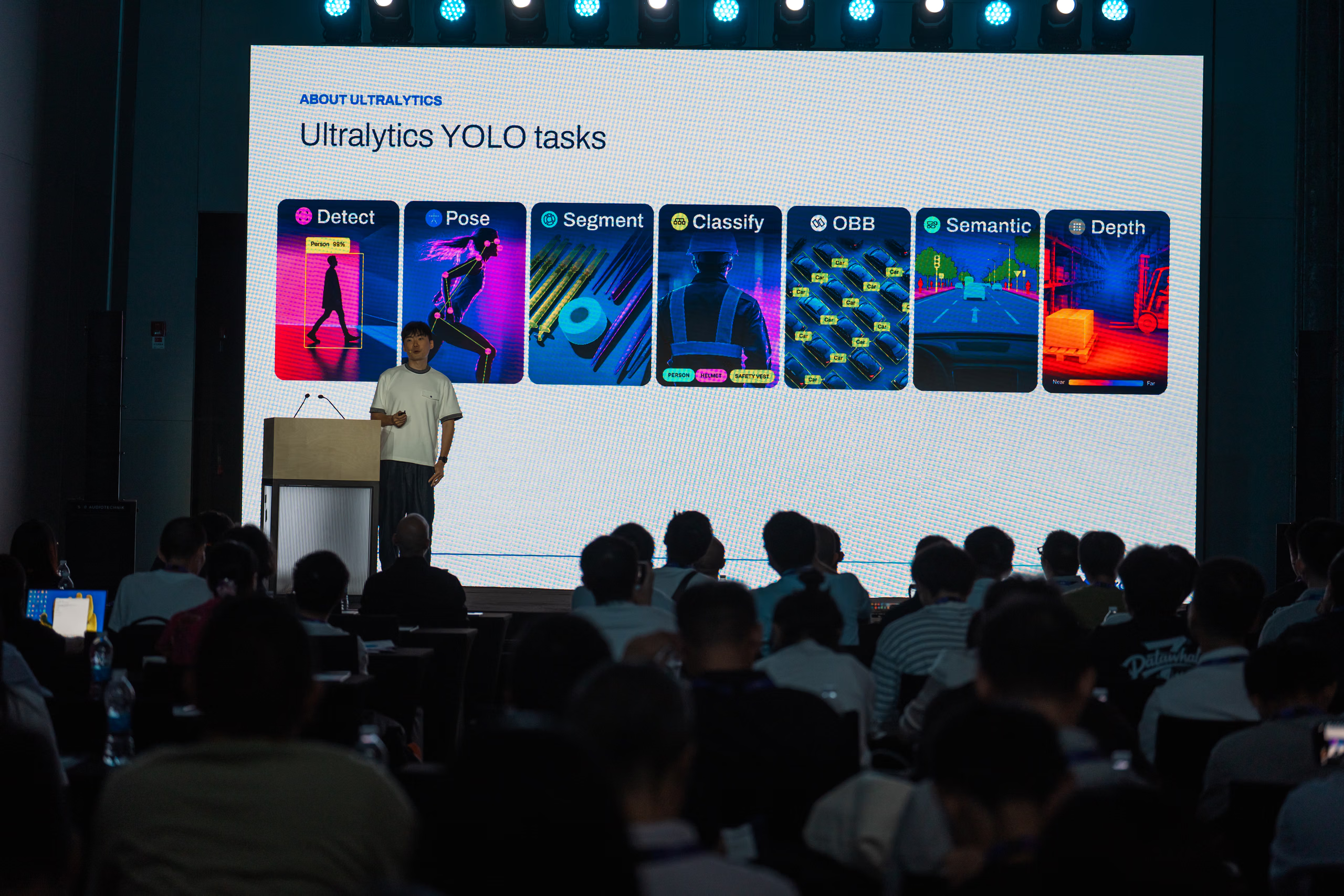
Fig 1. Rick from Ultralytics presenting Ultralytics YOLO edge deployment at Arm Create.
Exporting Ultralytics YOLO models for edge runtimes#
The first step in edge deployment is exporting a trained model into a format that the target runtime supports. Rick covered how the right export format depends on the device, the inference engine, and the performance goals of the application.
Model quantization for faster on-device inference#
Quantization reduces a model's numerical precision, for example from FP32 to FP16 or INT8, which shrinks model size and speeds up inference with minimal accuracy loss. The session explained how to balance speed and accuracy when compute, memory, and power budgets are tight.
Achieving real-time computer vision performance on edge devices#
Real-time computer vision at the edge depends on more than the model. Preprocessing, runtime choice, and hardware acceleration all affect latency and throughput. Rick shared how to identify bottlenecks and optimize the full inference pipeline.
Lessons from production edge AI deployments#
Benchmarks are a starting point, but the real test is how a model performs on the device it will ship on, under real operating conditions. Validating on the actual target hardware was a key lesson from the session, and a theme that came up throughout Arm Create.
Model panel with Arm, Alibaba Qwen, Tencent, and ModelBest#
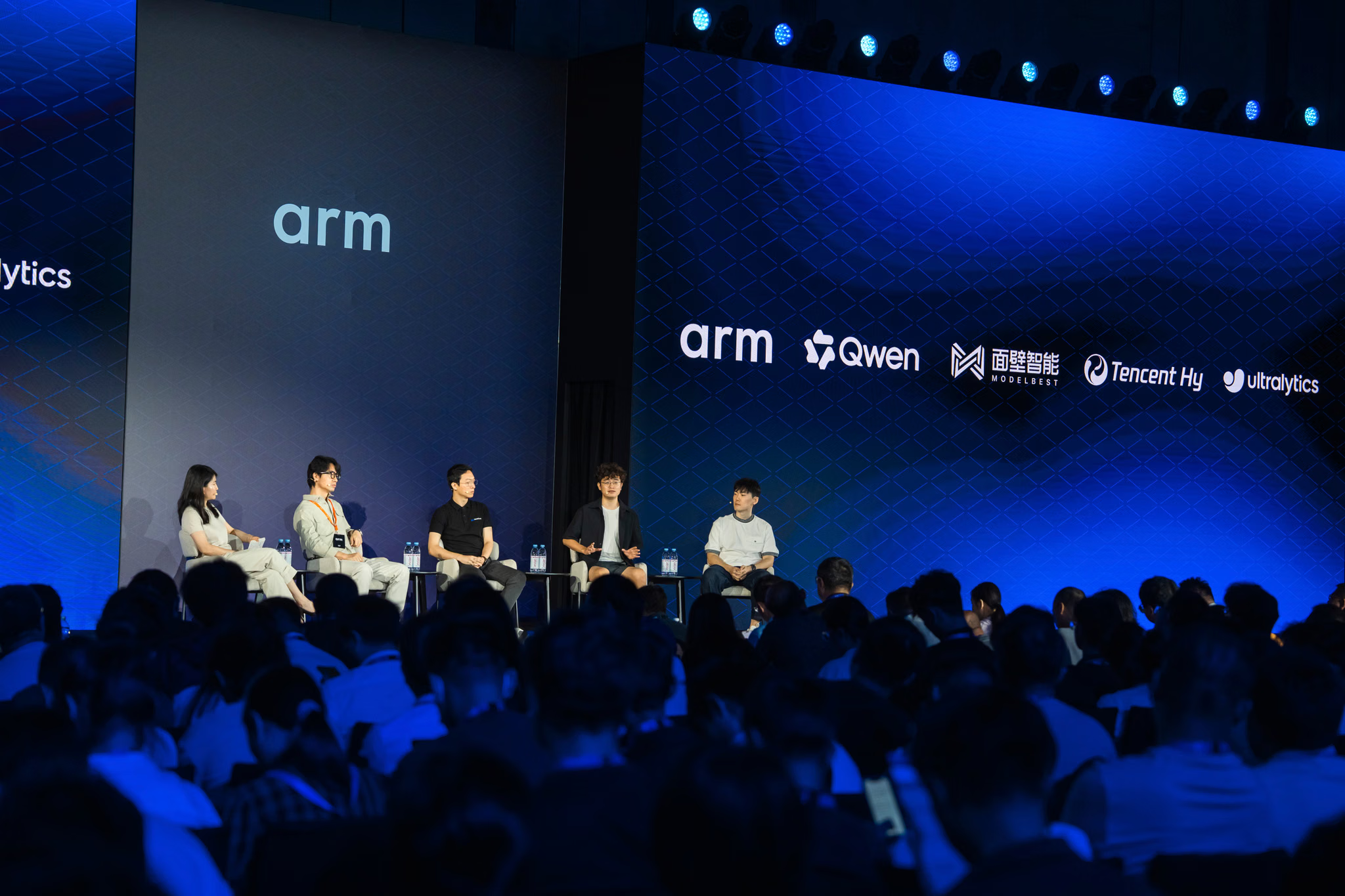
Rick also joined a model panel discussion with Arm, Alibaba Qwen, Tencent, and ModelBest. Instead of comparing models head to head, the panel focused on application fit: what a workload needs, where it should run, and how it behaves once deployed.
Fig 2. Model panel with Arm, Alibaba Qwen, Tencent, ModelBest, and Ultralytics at Arm Create.
Choosing the right model for the workload#
A quick-reply feature in a mobile app, a cloud agent reasoning over large document sets, and an edge vision pipeline all call for very different models. As the vision AI voice on the panel, Rick brought the edge perspective, where latency, efficiency, and on-device reliability often matter more than model size.
Arm AI Portal: Making Ultralytics YOLO more accessible on Arm#
Arm Create Shenzhen came just days after Arm launched the Arm AI Portal, a hub that helps developers and AI agents discover, optimize, and deploy AI software across the Arm compute platform. Developers can find task-specific, pre-optimized models with performance and accuracy data, compare latency, memory, and model size, and access code examples and deployment workflows.
Pre-optimized Ultralytics YOLO models at launch#
Ultralytics YOLO is among the pre-optimized models available at launch, alongside Alibaba Qwen and Google Gemma, with Ultralytics supporting the portal as an ecosystem partner.
Ultralytics YOLO26n performance gains on Arm#
Early results are promising. Ultralytics YOLO26n achieved more than a 40% performance improvement with single-thread execution in two setups:
- FP16 versus FP32 on a vivo X300 smartphone with SME2
- FP16 and INT8 mixed quantization versus FP32 on a Raspberry Pi 5 with NEON
What this means for edge AI developers#
The Arm AI Portal cuts down the time developers spend searching, benchmarking, and hand-tuning models, creating a faster path from model selection to deployment on Arm-based hardware. It supports our mission to make state-of-the-art vision AI simple and accessible for everyone. Explore Ultralytics YOLO on the Arm AI Portal.
أهم النقاط المستخلصة#
Thank you to the Arm team for hosting us, and to everyone who stopped by to talk about edge deployment, quantization, and real-world vision AI. The conversations in Shenzhen showed how quickly the edge AI ecosystem is maturing when models, tools, and hardware are designed to work together.
The next Arm Create heads to the US, and we look forward to continuing the conversation. In the meantime, visit the Ultralytics docs to start deploying Ultralytics YOLO on your own edge devices.








