AI and the evolution of AI in consumer electronics
Explore how AI-driven consumer electronics and geopolitics are reshaping industries, with key players like Huawei and NVIDIA adapting to export controls.

From Apple’s iPhone 16 to Google's Pixel 9, many of the latest tech gadgets are integrated with artificial intelligence (AI), driving a growing demand for faster, more powerful hardware. Fascinatingly, this shift is impacting more than just technological innovations; it's even influencing geopolitics - the way countries interact, compete, and form policies based on global power dynamics. Many countries are now prioritizing AI development, and several are racing to explore its full potential.
For example, a key moment in this tech race was in 2022 when the U.S. introduced new export controls to manage China’s access to advanced semiconductor technology. Semiconductors form the basis of hardware crucial for the advanced computing needed in AI algorithms and data processing. As a result, various approaches, such as using cloud services for AI computing power and developing alternative AI chips, have emerged as companies seek ways to adapt to these restrictions.
Understanding AI geopolitics is vital because it directly influences how AI technology is developed, shared, and implemented around the world. As countries compete to lead in AI, their policies and strategies affect innovation, research funding, and access to critical hardware. In this article, we’ll explore how these geopolitical factors shape AI development, the roles of major players like the U.S. and China, and what this means for the future of technology and global progress.
Understanding the global AI race#
Tech giants like Apple, Huawei, and Google are leading the way in AI development, pushing the boundaries of both hardware and software. Recently, tech organizations have been focusing on creating advanced hardware, like AI chips and GPUs, which are essential for handling the massive datasets that AI innovations require for tasks such as deep learning, data processing, and real-time analytics. This widespread interest in AI stems from its potential to impact various industries positively.
AI's ability to process large datasets, automate complex tasks, and provide actionable insights makes it possible for businesses to operate more efficiently and innovate at a faster pace. As these technologies advance, they present opportunities for countries to gain substantial economic benefits, directly affecting global economies. Given AI's applications in critical areas such as defense, healthcare, and finance, it has become a strategic priority for many nations. In fact, the race for AI leadership has become an important aspect of geopolitics, with different countries competing for technological expertise, control over essential resources, and dominance in AI capabilities.
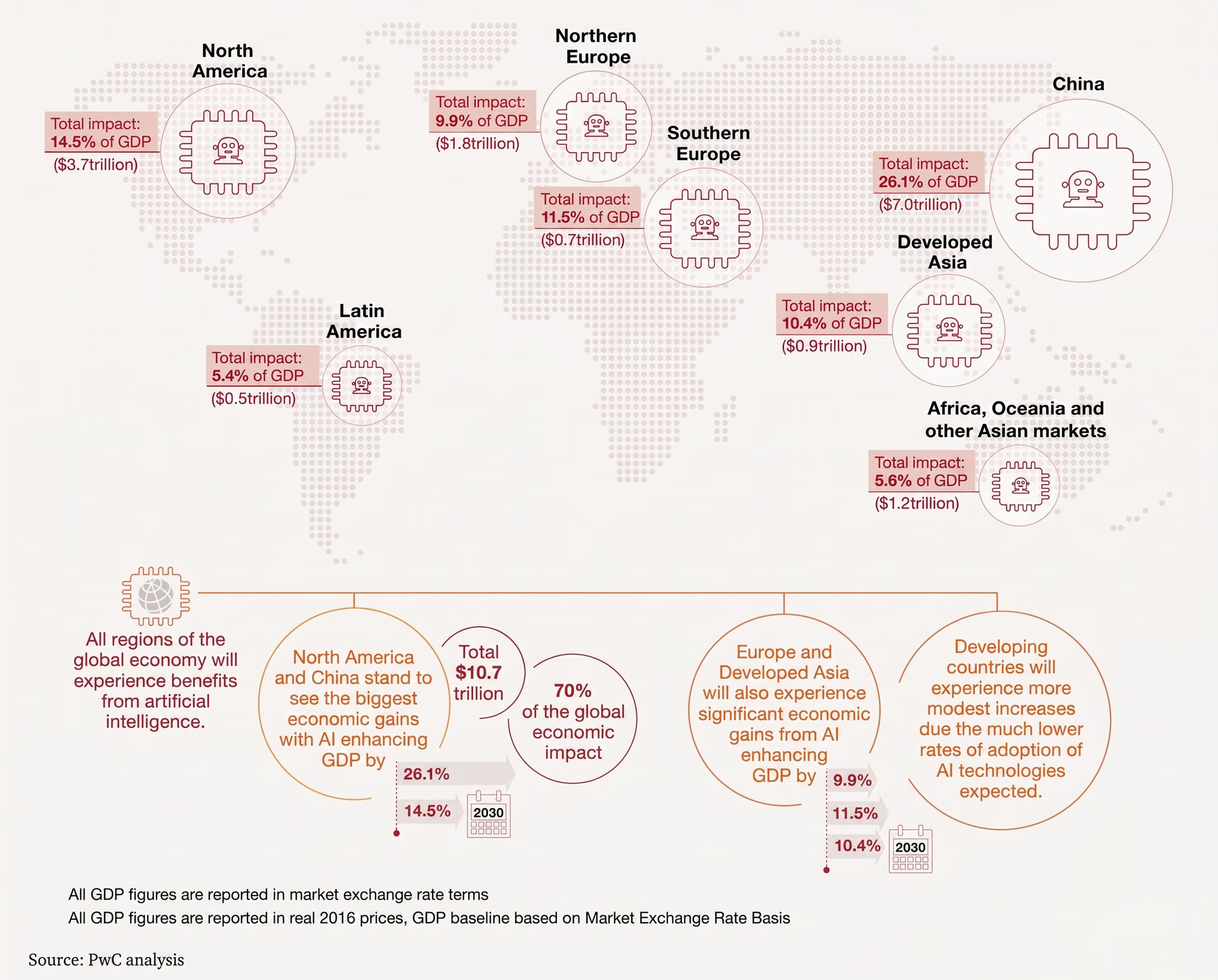
Fig 1. The Impact of AI on the Global Economy.
Implications of AI in consumer electronics#
The rapid growth of AI is having a major impact on the tech industry, reshaping supply chains, driving innovation, and influencing international relationships. Next, we’ll explore how AI is transforming industries, altering market competition, and impacting technological alliances. We'll also take a look at how the rise of generative AI is creating economic opportunities, boosting productivity, and influencing global cooperation and policies around AI development.
The role of advanced AI hardware#
Experts estimate that generative AI could add up to 4.4 trillion dollars to the global economy every year. Recent advancements in generative AI are among the leading factors driving the demand for more advanced AI hardware. As we unlock new levels of AI, hardware components are being designed to support such AI applications and redefining global supply chains. A major element of AI hardware is semiconductors, which form the foundation of AI chips and processors.
Semiconductors are a fundamental part of hardware used for AI applications because they handle the high-speed data processing and complex calculations that AI requires. As AI models become more complex and data-intensive, the demand for specialized semiconductors is increasing. AI-related semiconductors are projected to grow at an annual rate of about 18% over the next few years, significantly outpacing the growth of traditional semiconductors. In line with this, semiconductor companies now hold a larger share of the value in the AI technology stack than ever before, potentially up to 40–50%.
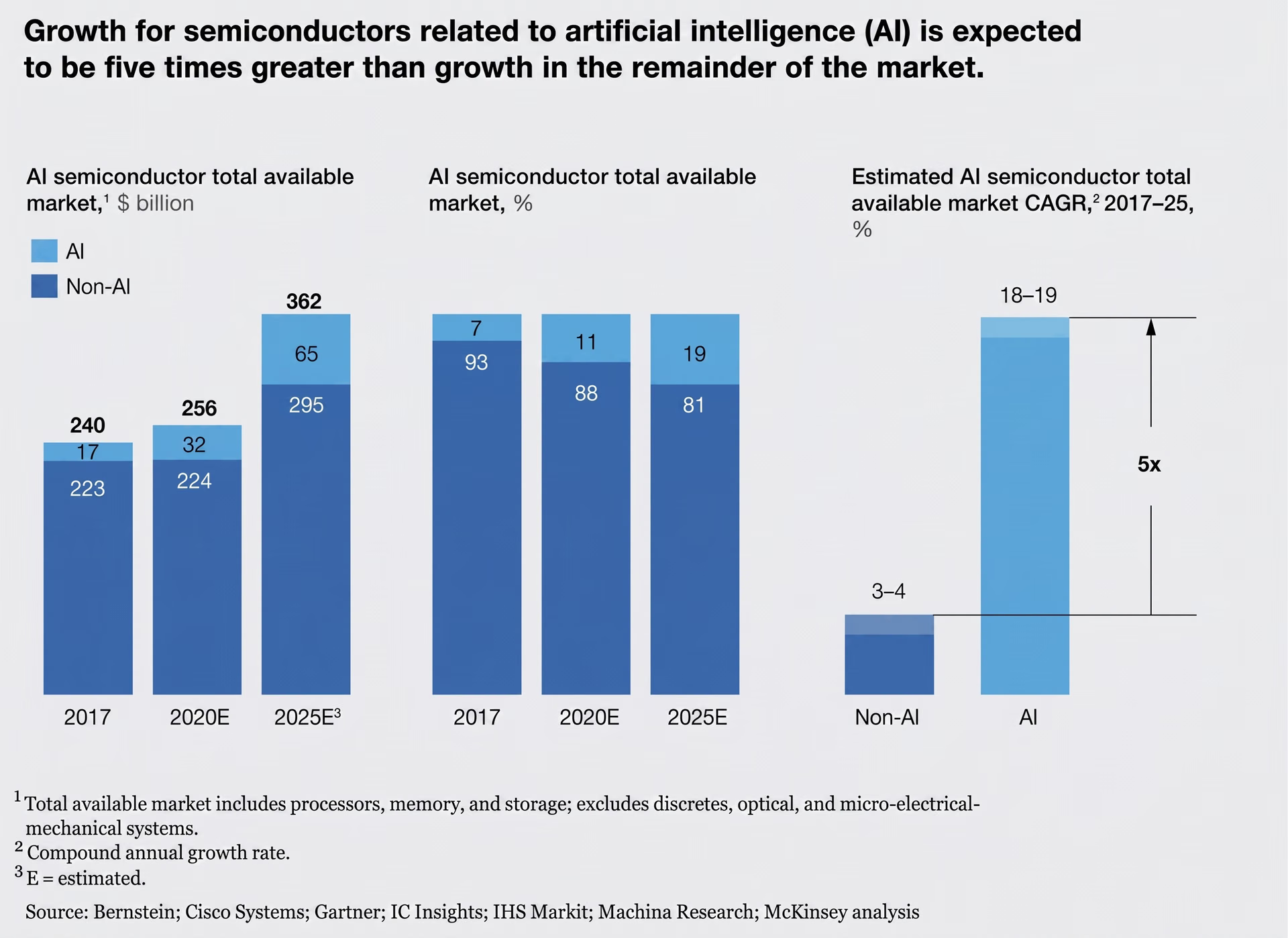
Fig 2. AI is driving the growth of the semiconductor market.
Shifts in tech collaborations and partnerships#
A global interest in AI development is bringing changes to international collaborations and impacting geopolitics. On the one hand, countries actively focusing on AI research are working together to set industry standards, share expertise, and form regional partnerships. Initiatives like the Global Partnership on Artificial Intelligence (GPAI) aim to create shared guidelines for responsible AI development, fostering collaboration while managing the risks associated with AI growth. This new partnership brings together 44 countries across six continents to promote human-centric, safe, and secure AI development while welcoming new members committed to these principles.
On the other hand, geopolitical dynamics between the United States and China are influencing new global trends related to AI technology. The U.S. has implemented export controls on advanced semiconductor technology to limit China's access to critical components used in AI applications, further intensifying the competition.
U.S. export controls on AI technology#
Export controls are government regulations that limit the export of certain technologies, goods, and information to other countries for reasons such as national security and foreign policy. Companies like ASML and NVIDIA have faced challenges due to U.S. export controls. ASML, a Dutch company that produces essential equipment for semiconductor manufacturing, particularly advanced lithography machines like extreme ultraviolet (EUV) lithography systems, has been restricted by U.S. policies from selling its most advanced equipment to China.
These EUV lithography machines are critical because they help with the production of semiconductors with extremely small feature sizes. By using EUV light, which has a much shorter wavelength than traditional lithography methods, manufacturers can etch finer circuits onto silicon wafers. More transistors can be packed onto a single chip, resulting in faster, more powerful, and energy-efficient processors. ASML has focused on strengthening partnerships in regions like Europe and North America, where these controls do not apply, helping to mitigate the impact of reduced access to the Chinese market.
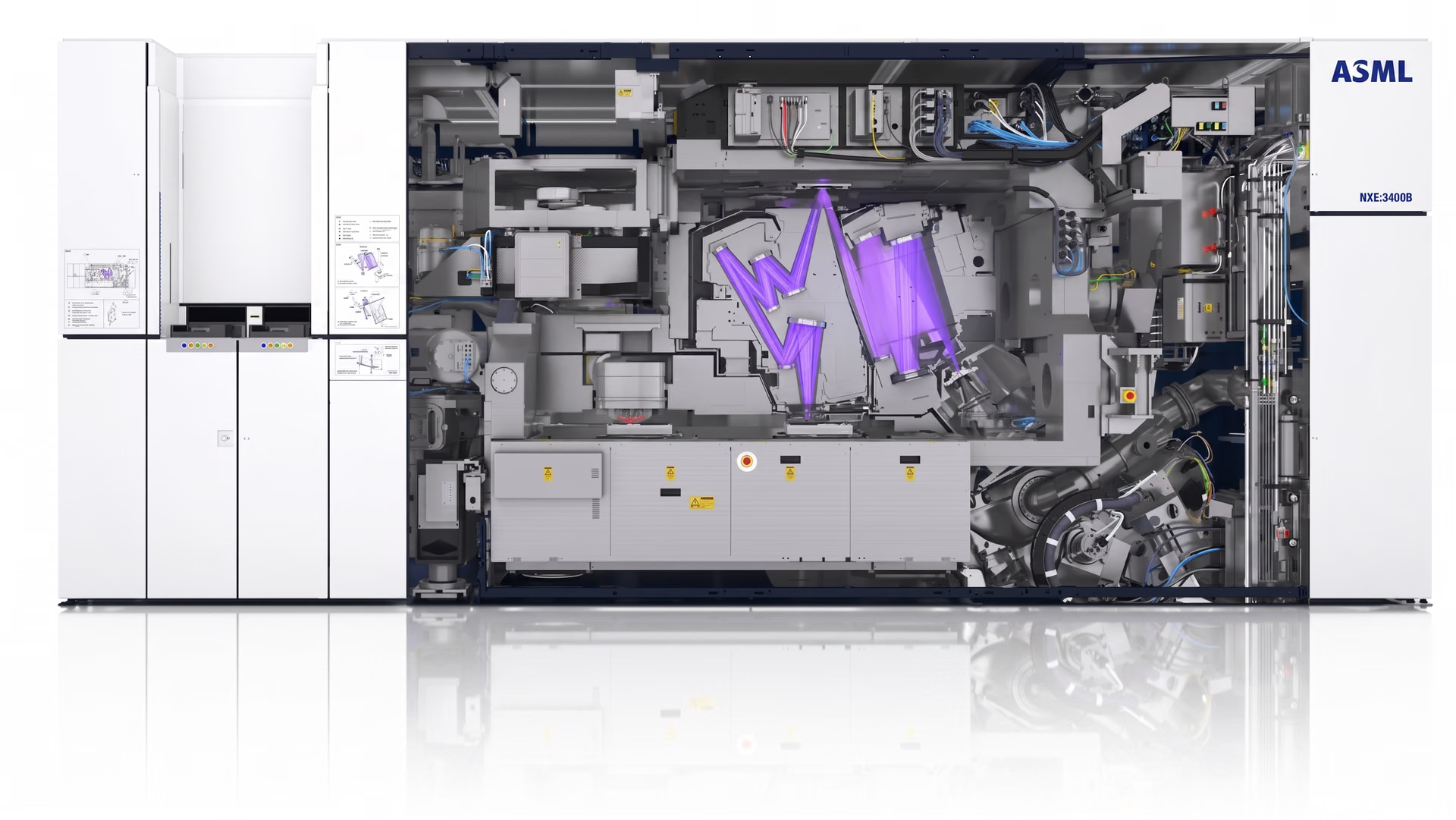
Fig 3. ASML’s EUV Lithography System.
Similarly, NVIDIA has adapted to U.S. export controls by creating modified GPUs like the A800 and H800 models, which have reduced performance to meet regulatory requirements while still serving Chinese customers. However, in October 2023, the U.S. tightened these controls, expanding restrictions and potentially affecting NVIDIA's modified chips. To this effect, NVIDIA is developing new chip variants to comply with the updated regulations and maintain its presence in China. U.S. officials have warned that attempts to circumvent export controls could lead to further action, placing NVIDIA in a challenging position as it balances compliance with U.S. policies and access to the Chinese market.
Huawei's new AI products and market positioning#
Huawei is a leading global technology company based in China, known for its telecommunications equipment, consumer electronics, and smartphones. It offers a wide range of products, including smartphones like the Mate XT and high-performance computing solutions like Ascend GPUs, designed for AI and data processing tasks. Huawei’s new products show China’s strategy to reduce reliance on foreign technology. It encourages global competition further by offering consumers more options and pushing other tech giants to innovate.
The Huawei Mate XT is the world’s first tri-fold smartphone, featuring three flexible screens. When fully opened, it offers a massive 10.2-inch display with ultra-high-definition resolution. The phone also has a 50MP camera with AI-powered photography tools, such as an AI photo editor, and other smart features like text translation and voice editing. These AI capabilities make everyday tasks easier and more efficient.
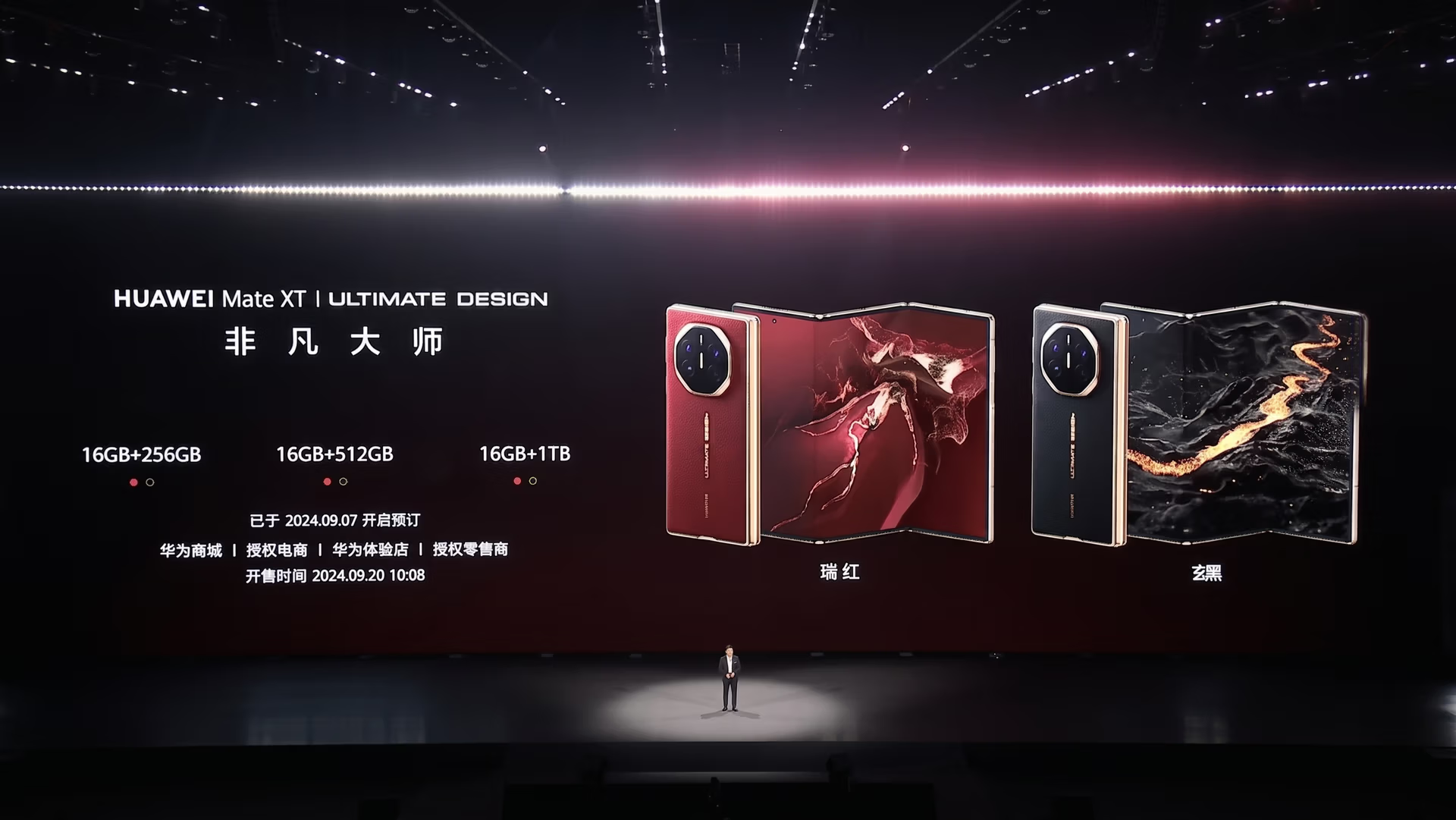
Fig 4. Huawei launches the trifold phone hours after Apple debuts iPhone 16.
On the hardware side, Huawei’s Ascend GPUs, like the Ascend 910B chip, are designed to compete with NVIDIA’s top products. These GPUs provide powerful computational abilities for AI and machine learning, performing at 80% of the level of NVIDIA’s A100 GPU.
AI's role in shaping tomorrow#
As AI continues to evolve rapidly, its influence extends far beyond the tech industry, reshaping global strategies and economic priorities. The global race for AI dominance is becoming more intense, with countries and companies adapting to changing regulations and market demands. As tech giants like NVIDIA and Huawei navigate export controls and innovate to stay competitive, this race is shaping the future of AI technology and its impact on our daily lives. With these changes, it's more important than ever before to keep up with the latest AI geopolitics since high-level decisions can influence the entire AI industry!
Stay engaged with our community to stay updated on the future of AI! Explore our GitHub repository to discover how we're using AI to develop solutions for industries like healthcare and manufacturing. 🚀








