Choosing between PyTorch vs TensorFlow for computer vision projects
Find out how PyTorch vs TensorFlow compare for computer vision projects and which framework suits your vision workflow best.
Despite how fast AI technologies like computer vision and image analytics, which are used to analyze and understand visual data, are evolving, some basics still stay the same. Developers still need simple, reliable ways to build, train, and deploy models.
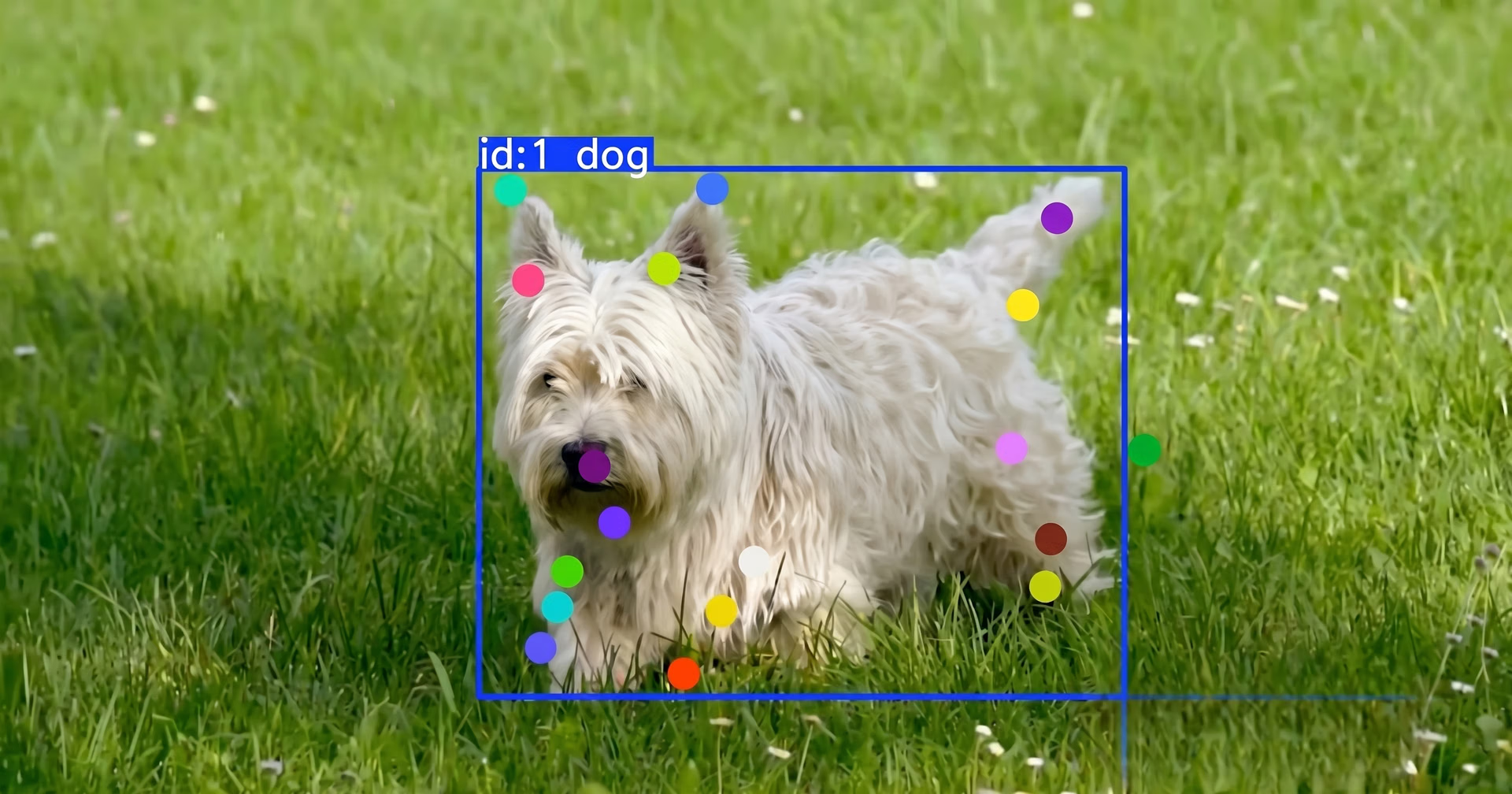
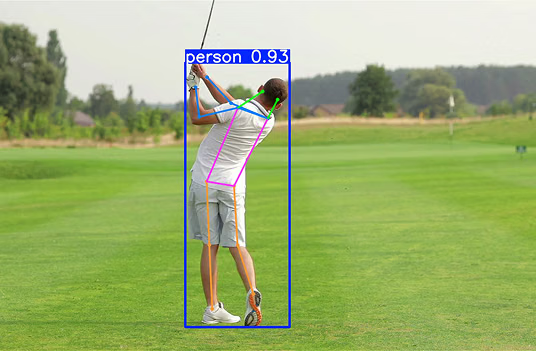
Fig 1. Computer vision can help with various vision tasks. (Source)
That’s why AI frameworks are such a big part of AI development. Simply put, an AI framework is a foundational system for building and training machine learning models.
It provides core functionality like tensor operations (for working with multi-dimensional data such as images), automatic differentiation (automatically calculating how a model should adjust during training), and hardware acceleration (using GPUs and specialized hardware like TPUs to speed up computation).
Among the many frameworks available today, PyTorch and TensorFlow are two of the most widely used for building computer vision solutions. Both provide the core tools needed to train and run deep learning models, but they take slightly different approaches.
PyTorch and TensorFlow both provide the tools needed to build, train, and deploy deep learning models, but they differ in how they approach development workflows. PyTorch emphasizes flexibility and a more intuitive, Python-native experience, while TensorFlow offers a more structured ecosystem with a wide range of integrated tools.
In this article, we'll compare PyTorch vs TensorFlow across key areas like usability, flexibility, and deployment to help you choose what fits your vision AI project best. Let's get started!
An overview of deep learning frameworks in computer vision#
Before diving into PyTorch and TensorFlow, let’s take a closer look at deep learning frameworks and the role they play in computer vision.
Deep learning frameworks are tools that simplify how machine learning models are built and trained. Instead of implementing low-level mathematical operations from scratch, developers can use high-level libraries and interfaces (often referred to as high-level APIs) to design, train, and evaluate models more efficiently.
They take care of all the heavy lifting behind neural networks, which are models that learn patterns from data to make predictions. Frameworks handle key tasks like data processing, model building, training, execution at runtime, and hardware acceleration, allowing developers to focus more on improving models and solving real-world problems.
They also act as the foundation for higher-level libraries. For example, tools like the Ultralytics Python package make it easier to train and run computer vision models that support tasks like object detection, image classification, and instance segmentation, and are built on top of frameworks like PyTorch.
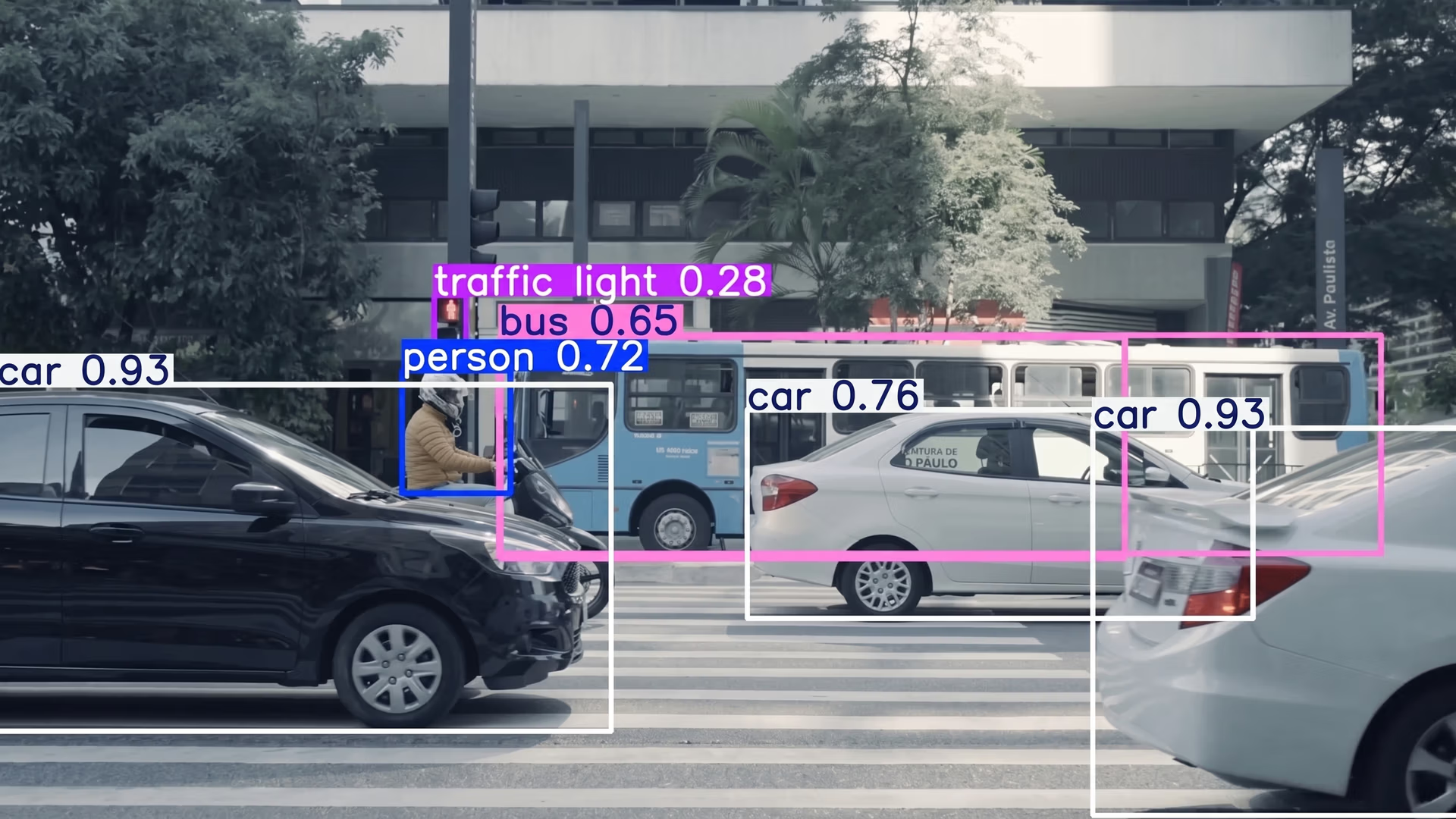
Fig 2. An example of object detection (Source)
In other words, frameworks act as the backend, handling the core computations and training process, while higher-level libraries focus on simplifying how these capabilities are used. In computer vision, this helps manage complex tasks, work with large datasets, and build models that perform reliably in real-world applications.
Exploring popular deep learning frameworks#
Now that we have a better understanding of deep learning frameworks, let’s dive into PyTorch and TensorFlow. Both are widely used frameworks in computer vision.
Understanding the PyTorch ecosystem#
PyTorch is an open-source deep learning framework originally developed by Meta’s AI research team and released in 2017. Today, it is maintained by the PyTorch Foundation, part of the Linux Foundation, which supports its ongoing development and community contributions.
It is widely used for building AI and computer vision models and works seamlessly with Python, making it easy for developers to write, test, and update neural networks in a flexible and intuitive way.
One of the main reasons PyTorch is so popular is its dynamic computation graph (also known as eager execution). This allows models to be built and modified as they run, making it easier to debug and experiment. This is especially useful in computer vision projects, where models often need frequent adjustments during training.
PyTorch is commonly used for tasks like object detection, image classification, and video analysis. It also includes built-in tools for handling datasets, training models, evaluating performance metrics, optimizing results, and fine-tuning models.
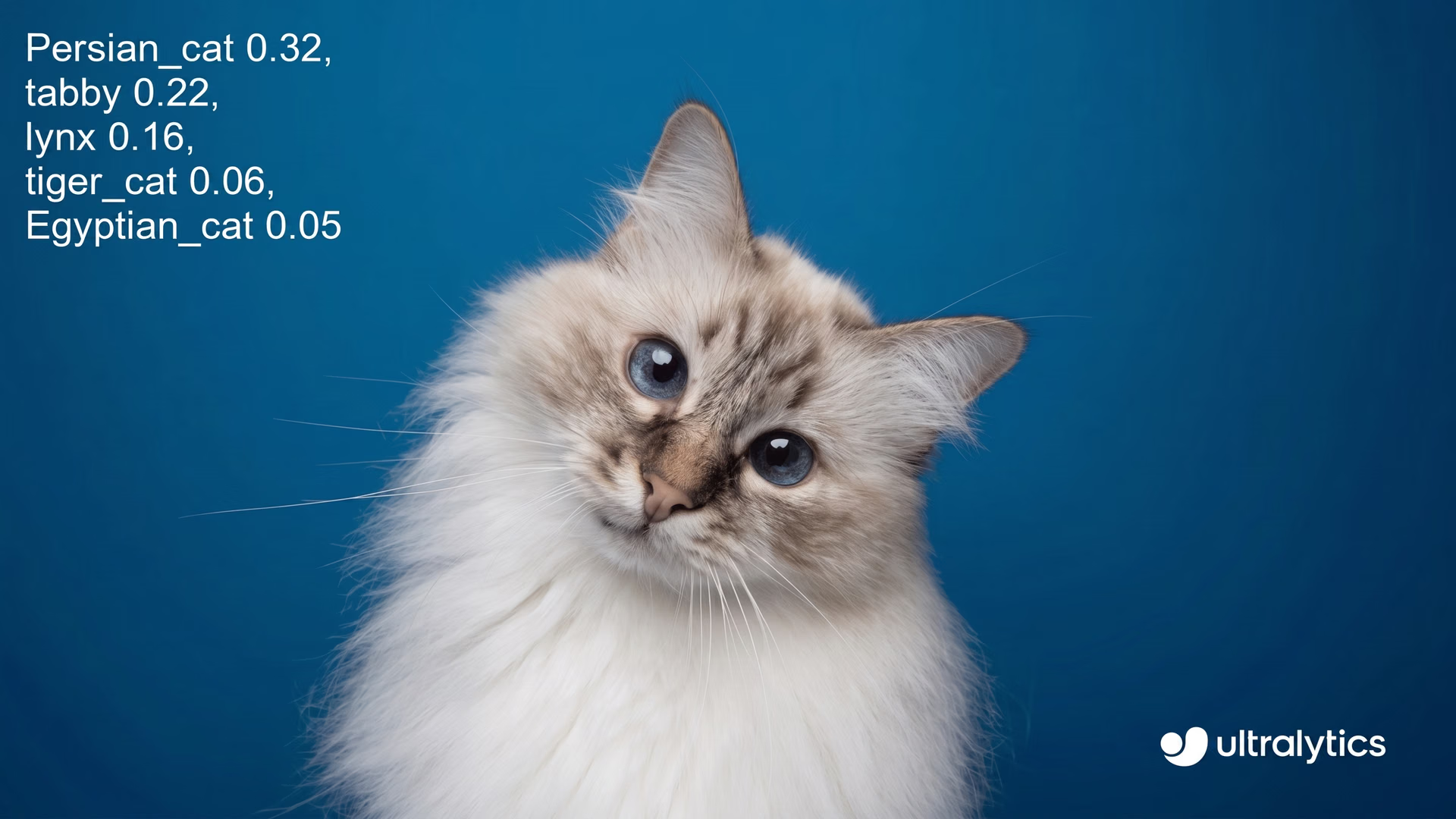
Fig 3. A look at image classification (Source)
Its growing ecosystem and strong community support make it straightforward to build consistent workflows across different environments. Many cutting-edge computer vision tools, including Ultralytics YOLO models, are trained using PyTorch.
What is TensorFlow?#
Similar to PyTorch, TensorFlow is an open-source deep learning framework developed and primarily maintained by Google. It is used for building and deploying AI systems and primarily uses Python, with support for other programming languages such as C++ and JavaScript. It supports the full development process, from creating models to running them in real-world applications.
One of TensorFlow’s biggest strengths is its ecosystem. It includes tools like Keras for building models, LiteRT (previously referred to as TensorFlow Lite or TFLite) for running models on edge devices, TensorFlow Serving for production, and TensorFlow.js for web applications.
It also includes tools like TensorBoard for visualization of model performance and training progress. This makes it easier for teams to move from experimentation to deployment within a single framework.
When it comes to computer vision, TensorFlow supports building and managing complex, production-ready workflows across cloud platforms, edge devices, and enterprise systems. For example, trained models can be converted into formats that run efficiently on mobile and embedded devices, such as Android systems and edge hardware, enabling real-time inference in practical use cases.
In addition to this, TensorFlow supports distributed training and optimization across central processing units (CPUs), GPUs, tensor processing units (TPUs), and cloud infrastructure, making it well-suited for large-scale machine learning workloads.
PyTorch vs TensorFlow: Key differences#
Next, let’s compare PyTorch and TensorFlow across key areas in computer vision, including usability, flexibility, and deployment.
Considering the ease of use of PyTorch and TensorFlow#
PyTorch is often considered easy to pick up, especially for beginners and researchers. Its Python-first design and simple syntax make it straightforward to build and test deep learning models without much setup. You can quickly write code, run experiments, and make changes during training, which speeds up development.
TensorFlow takes a more structured approach. With tools like Keras, it’s become much more seamless to build models, but working with the full ecosystem can still take some time to get used to. That structure can be helpful, especially when working on larger or more complex projects.
Overall, both frameworks are user-friendly, but their learning curves differ slightly. PyTorch tends to feel more flexible early on, while TensorFlow provides a more organized setup as projects grow.
Flexibility vs structured workflows in PyTorch and TensorFlow#
PyTorch is widely known for its flexibility when building AI algorithms. Developers can easily change architectures, try different training approaches, and adjust workflows without strict limitations. This makes it well-suited for projects where experimentation, rapid prototyping, and quick iteration are important.
Another advantage of PyTorch is how easy it is to debug. Since it runs in a dynamic, Python-based environment, developers can inspect what’s happening inside the model during training and quickly fix issues, which helps speed up development.
TensorFlow, on the other hand, emphasizes more structured workflows. It encourages the use of standardized pipelines and tools, which can enable users to maintain consistency across larger projects. This is especially useful when managing complex systems that require stable and repeatable processes.
In practice, both frameworks support flexible development and structured workflows, but PyTorch tends to feel more flexible during experimentation, while TensorFlow provides a more structured approach for organizing workflows.
Analyzing production deployment support#
When building computer vision systems, deployment and production support are key factors to consider. TensorFlow has a strong ecosystem for deployment, with tools that support running models on mobile devices, web applications, and cloud platforms, making it well-suited for real-world use at scale.
PyTorch also supports deployment and has expanded its production capabilities in recent years. It offers tools for serving models and exporting them to different formats, allowing models to run across different environments with strong compatibility.
Simply put, both frameworks can be used for deployment, but TensorFlow provides a more integrated set of tools, while PyTorch offers a more flexible approach depending on the workflow.
Performance and scalability of both frameworks#
When working with large datasets and complex models, performance and scalability become important considerations. They influence how efficiently models train and how well they scale across hardware and distributed systems.
PyTorch is known for its flexibility during development, letting developers quickly test ideas, iterate on models, and refine performance. It also supports distributed training through tools like Distributed Data Parallel (DDP), allowing scaling across multiple GPUs, including CUDA-enabled systems, and can also be used with TPU acceleration.
Similarly, TensorFlow provides strong support for scaling workloads, with tools for distributed training, cloud-based workflows, and specialized hardware like TPUs. Its ecosystem can manage large-scale training and deployment across different environments.
In general, both frameworks can handle demanding high-performance computer vision workloads. The main difference lies in how they approach scaling and workflow management.
Community and industry adoption of PyTorch and TensorFlow#
Both PyTorch and TensorFlow are widely used across research and industry, with strong communities and ecosystems. They also include extensive documentation, tutorials, and learning resources that support developers as they build and improve their skills.
PyTorch is especially popular in open-source and research communities. Its flexibility and ease of experimentation have made it a common choice for academic work and new model development, leading to many recent innovations being built with PyTorch.
TensorFlow also has broad adoption, particularly in large-scale and production-focused environments. Its ecosystem and tooling support teams and individuals working on complex systems that require consistency and long-term maintenance.
How PyTorch and TensorFlow fit into the Ultralytics YOLO ecosystem#
As you learn about PyTorch and TensorFlow, you might wonder how to choose between them based on your project requirements. Ultimately, the decision can vary depending on your workflow, goals, and deployment needs.
Let’s look at a real-world example to make this distinction clearer. Consider working with Ultralytics YOLO models.
When training a model like Ultralytics YOLO26, PyTorch is used as the underlying framework. This enables developers to experiment with model architectures, adjust training settings, and iterate quickly while working with datasets.
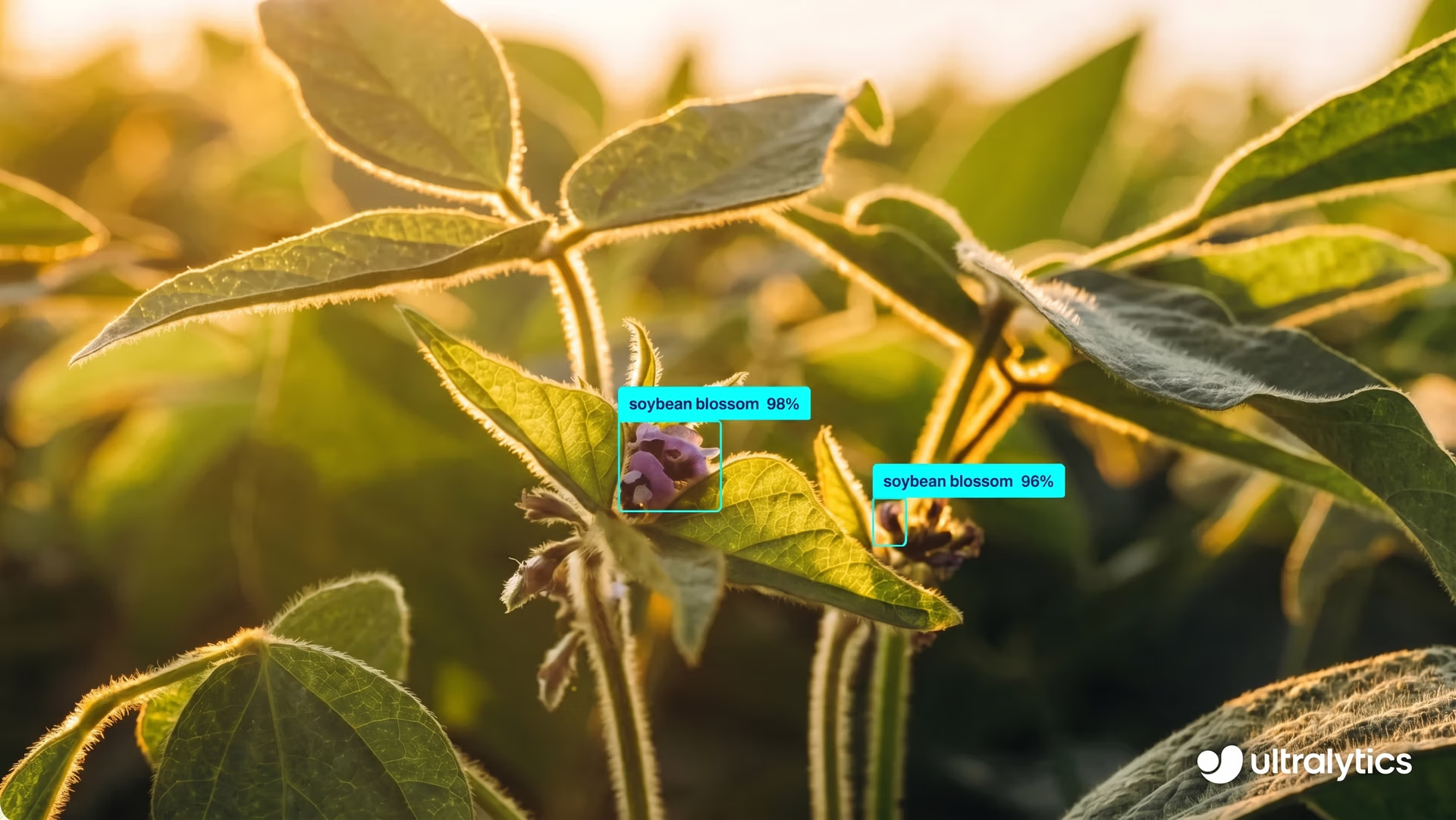
Fig 4. Using YOLO26 to detect objects in an image (Source)
Once the model is trained, it can be exported into different formats, including TensorFlow.js and LiteRT (previously TensorFlow Lite), making it possible to deploy the same model across various environments such as mobile devices, edge hardware, and cloud systems.
In this workflow, PyTorch is used during the development and training stage, while TensorFlow-related tools can be used during deployment in production environments, depending on the target platform. However, this can differ based on the specific workflow and project requirements.
In some cases, a single framework can be used throughout the entire pipeline, from training to deployment. In others, multiple tools and formats can be combined to meet different deployment needs.
Key takeaways#
PyTorch and TensorFlow are machine learning frameworks that are widely used in data science and computer vision, and each has its own strengths. Instead of choosing one over the other, it often comes down to what fits your workflow and project needs. In many cases, using them together can help build more efficient and scalable AI systems.
Check out our community and GitHub repository to learn more about AI. Explore applications like AI in healthcare and computer vision in manufacturing on our solution pages. Discover our licensing options and start building today!