The role of computer vision in AI identity verification
Explore how AI and computer vision are changing online digital identity verification and e-KYC verification by enhancing security across industries.
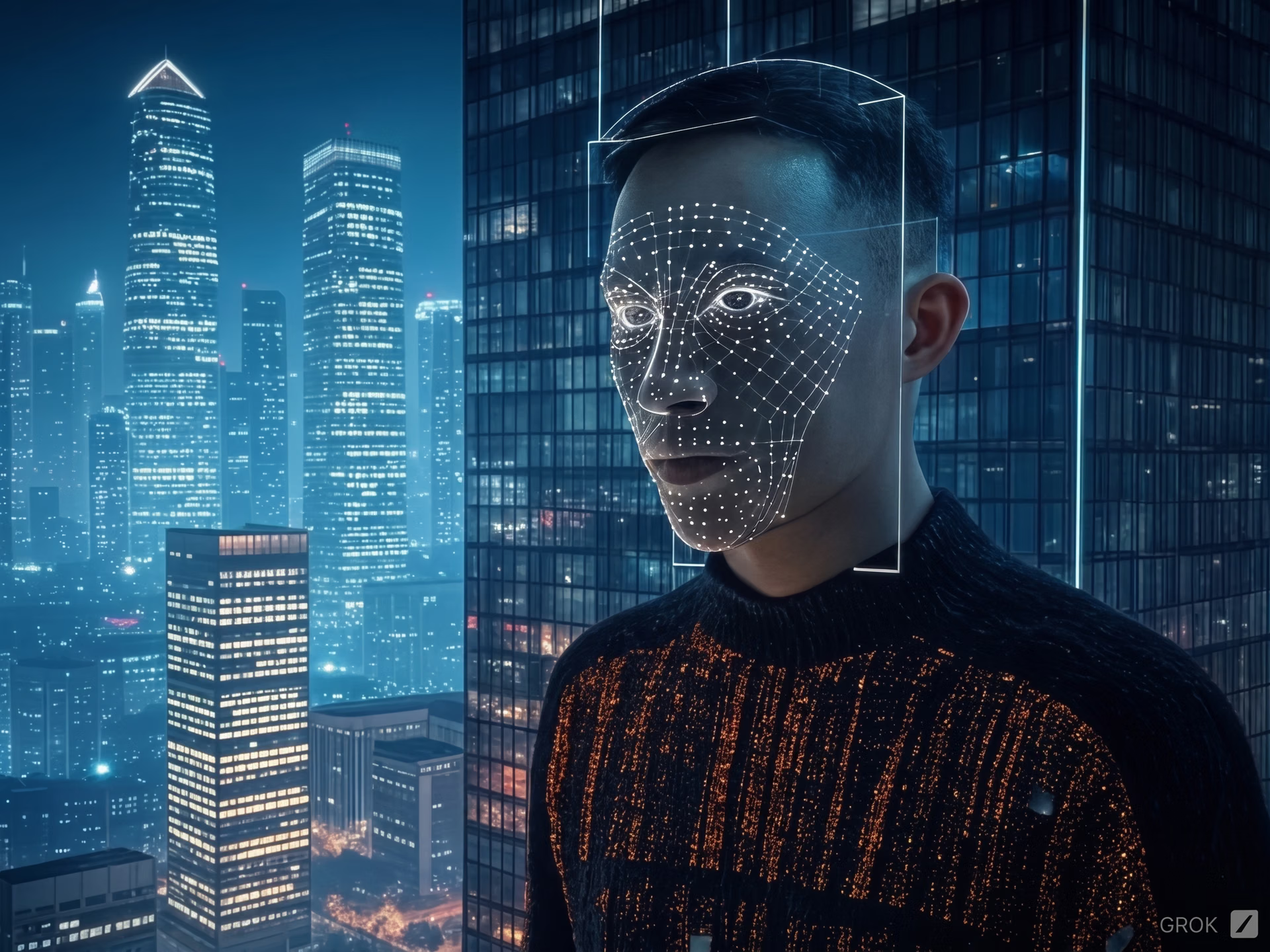
Thanks to advances in artificial intelligence (AI), verifying your identity online has never been easier or more secure. We live in an age where cutting-edge technology makes it possible for you to unlock your bank account, access services, or verify transactions with just a quick scan of your face.
As a result, digital identity verification is being widely adopted across industries. AI identity verification helps businesses enhance security, prevent fraud, and provide a smoother, more reliable customer experience. Given these benefits, the global digital identity verification market is expected to reach $38.8 billion by 2032.
In particular, computer vision (CV), a branch of AI that allows machines to process visual data, is helping make identity verification faster and more accurate. Vision AI-enabled tools can help ensure compliance with Know Your Customer (KYC) processes and Anti-Money Laundering (AML) regulations. These tools are also a reliable way to build a layer of trust in remote business relationships, helping companies safely deliver services and handle transactions for customers around the world.
In this article, we’ll explore how AI and computer vision improve digital identity verification. We’ll also walk through some use cases of AI identity verification. Let’s get started!
Understanding vision-enabled identity verification#
Vision-enabled identity verification leverages computer vision to analyze images and videos to confirm a person’s identity. It works by training models on data like selfies, scanned IDs, and liveness videos (which capture small movements to ensure the person is real and not a static image). Computer vision techniques like facial recognition and optical character recognition (OCR) are central to this process.
For example, object detection models like Ultralytics YOLO11 can be used to detect a person’s face in an image. AI algorithms designed for facial identification can then be used to analyze key features, like the shape of the eyes or nose, to create a unique "fingerprint" for that face. This digital faceprint is compared to stored records to verify if the person matches the claimed identity.
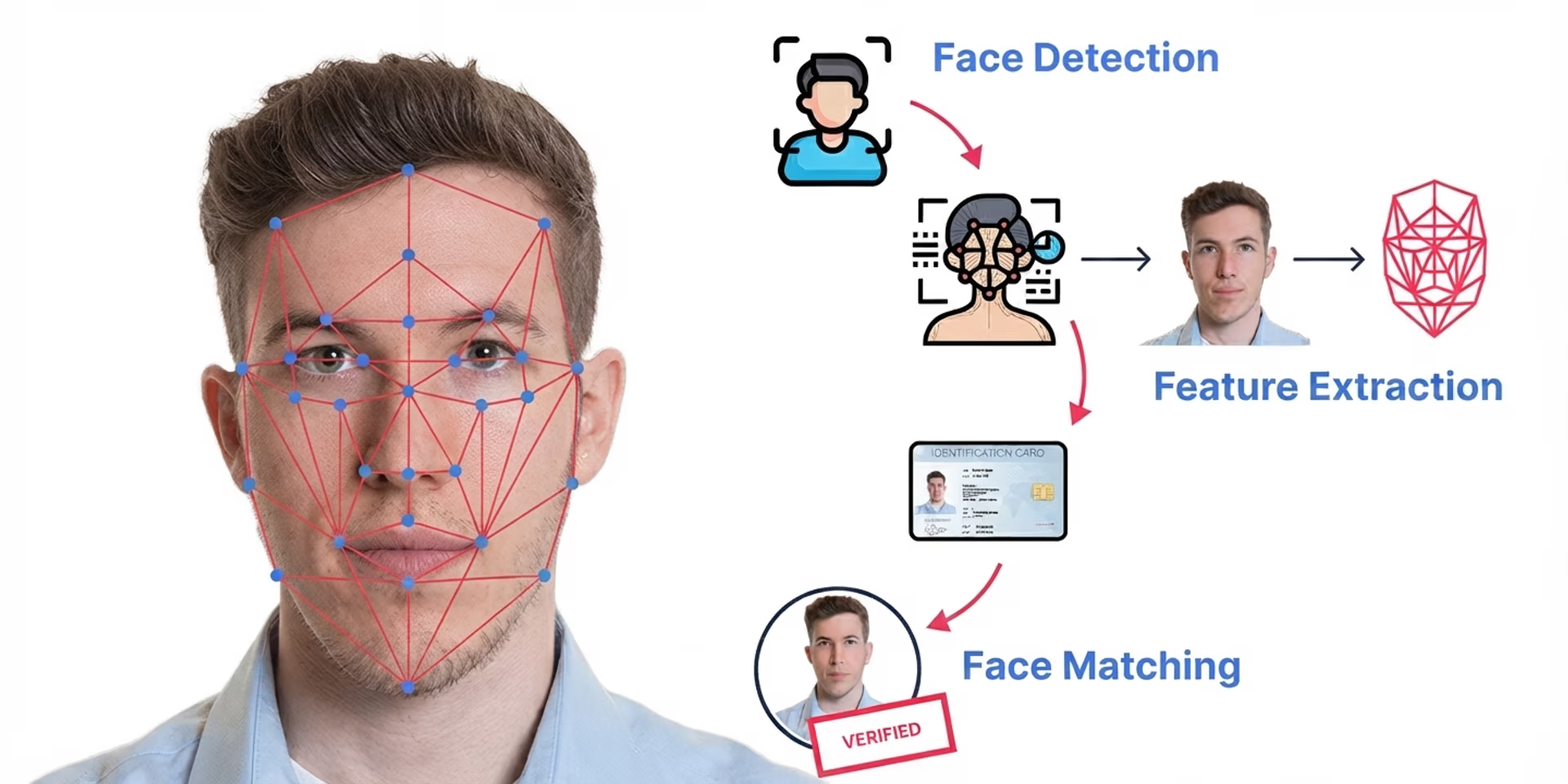
Fig 1. Using facial recognition to verify a person’s identity.
Similarly, OCR plays a big role in smoothing the process, especially in KYC checks. It works by reading text from images, like a driver’s license or passport, and turning it into data a computer can understand. For instance, OCR can extract details such as a name, date of birth, or ID number and cross-check them with official databases, like the National Driver Register in the USA.
Here’s a closer look at how this works:
- Document capture: The system captures an image of a document, such as a passport or driver’s license, using a scanner or computer vision camera.
- Text recognition: OCR identifies and extracts key text fields like names, dates of birth, and ID numbers from the document.
- Data formatting: The extracted text is converted into a structured format that computers can process.
- Validation: The extracted data is cross-referenced with trusted databases or records to verify its accuracy and authenticity.
- Fraud detection: Advanced algorithms check for inconsistencies or signs of tampering, ensuring the document is legitimate.
By combining facial recognition, OCR, and advanced AI, vision AI solutions can make identity verification faster, more reliable, and easier for everyone involved.
The use of AI in KYC: Transforming digital ID verification#
Now that we’ve explored how computer vision can be used in digital ID verification, let’s take a closer look at some of its key applications.
Advancing banking KYC processes through fintech innovations#
Computer vision in finance encompasses many applications, particularly in areas such as banking. One exciting use is improving the in-branch customer experience. Vision-based models, such as those supporting object detection models like Ultralytics YOLO11, can detect when people walk into the building, helping monitor foot traffic and manage resources. Meanwhile, facial recognition systems can extract facial features to identify customers. Combined with insights from AI analytics, these technologies enable banks to predict the reason for a customer’s visit, helping branches deliver a more personalized and efficient service.
Beyond enhancing customer experiences, computer vision also plays a critical role in improving security and combating fraud. With identity fraud affecting 95% of businesses in recent years, tools like facial recognition and biometric checks help boost security and prevent fraud. For example, CaixaBank uses facial recognition at its ATMs to detect unauthorized access. It lets customers withdraw cash quickly and safely while improving convenience.
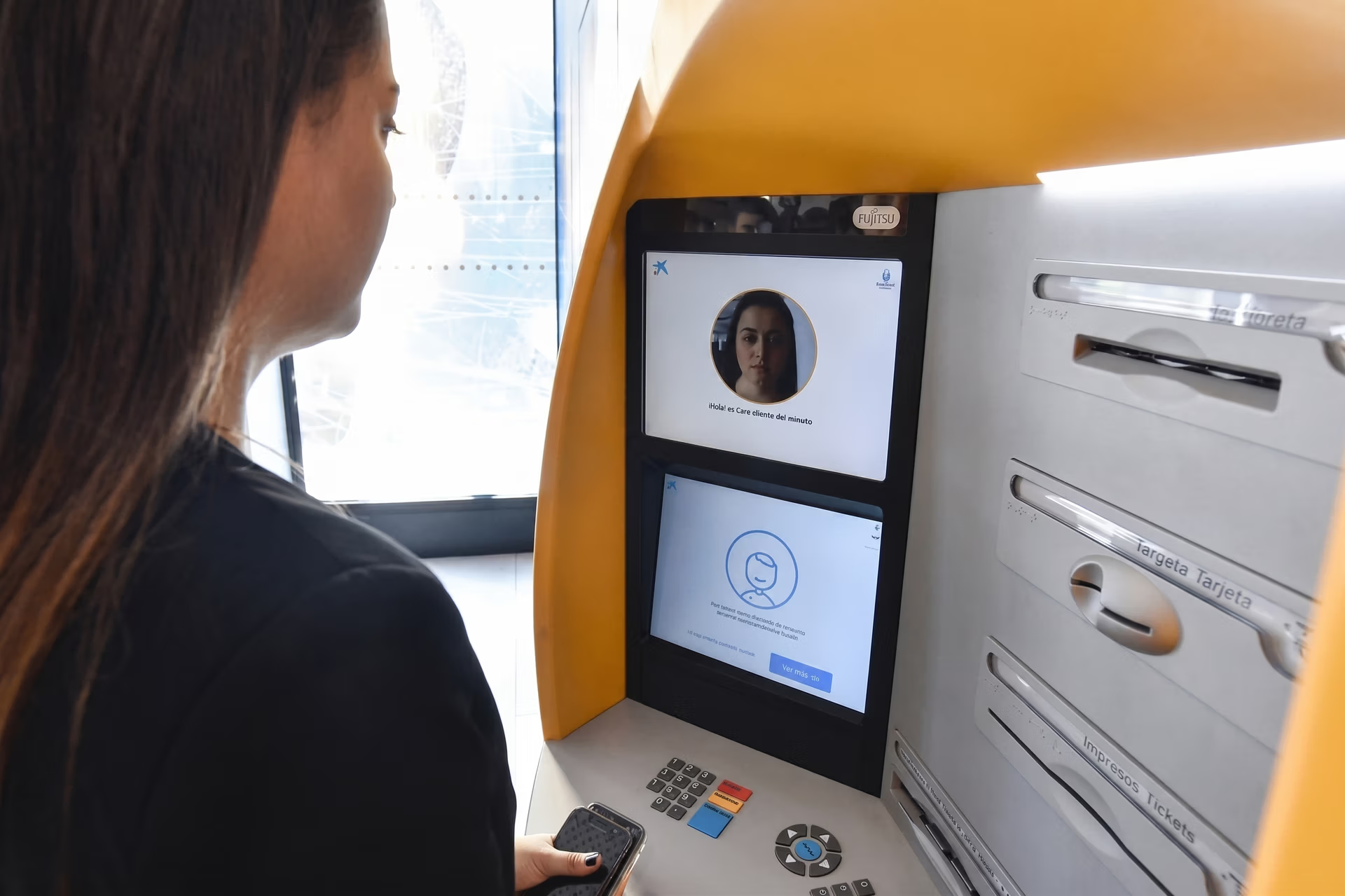
Fig 2. CaixaBank’s ATM is integrated with facial recognition technology.
Digital ID verification in travel and immigration processes#
Did you know that nearly half of adults in the US (aged 18-25) reported knowing someone who has successfully used a fake ID? Such statistics showcase the need for better security measures, especially in today’s digital era. With the growing reliance on digital tools for managing cross-border travel and migration, AI and computer vision applications have become increasingly relevant.
In fact, governments are collecting and using vast amounts of data to improve migration and travel systems, indirectly leading to greater investment in AI-powered automation. This expansion in automation touches nearly every aspect of migration management, from streamlining visa processing to strengthening security protocols.
A great example of AI in airports is the use of facial recognition technology to identify passengers. These systems can also be integrated with other AI technologies to ensure that only verified passengers board their designated flights, further enhancing security.
OCR technology is another key tool that is applied in cases such as passport verification and baggage handling. OCR systems can automatically read the contents of passports or baggage labels to determine their proper destination. These technologies improve the efficiency of baggage handling and reduce the likelihood of lost luggage.

Fig 3. An example of using computer vision-based OCR for passport verification.
Safeguarding E-commerce services with AI ID verification#
Many e-commerce platforms, such as Shopify, restrict users based on age from creating online stores using their services. According to reports, one out of three internet users are under the age of 18. This makes accurate age verification important to meet legal requirements and protect minors from accessing services meant for adults. A fascinating question that comes up related to this is how e-commerce platforms verify the age of users accurately.
Computer vision and facial recognition are great tools for verifying a person's age online. A computer vision model, trained on datasets of images of people of all ages, can extract patterns and facial features to estimate the user's age.
Apart from age verification, platforms can also use vision AI to prevent fraud and guarantee the security of online transactions. User-provided documents can be analyzed in real time, verifying their authenticity, and detecting potential risks. The process typically includes scanning the document, running it through a document image processing system for operations like classification, transcription, and fraud detection, and securely storing the verification results in a database.
An interesting example of this is the ride-sharing app Uber. Uber uses computer vision for ID verification by scanning users' IDs during the sign-up process or when they first request a ride. It helps ensure the safety of both riders and drivers while streamlining the onboarding process.
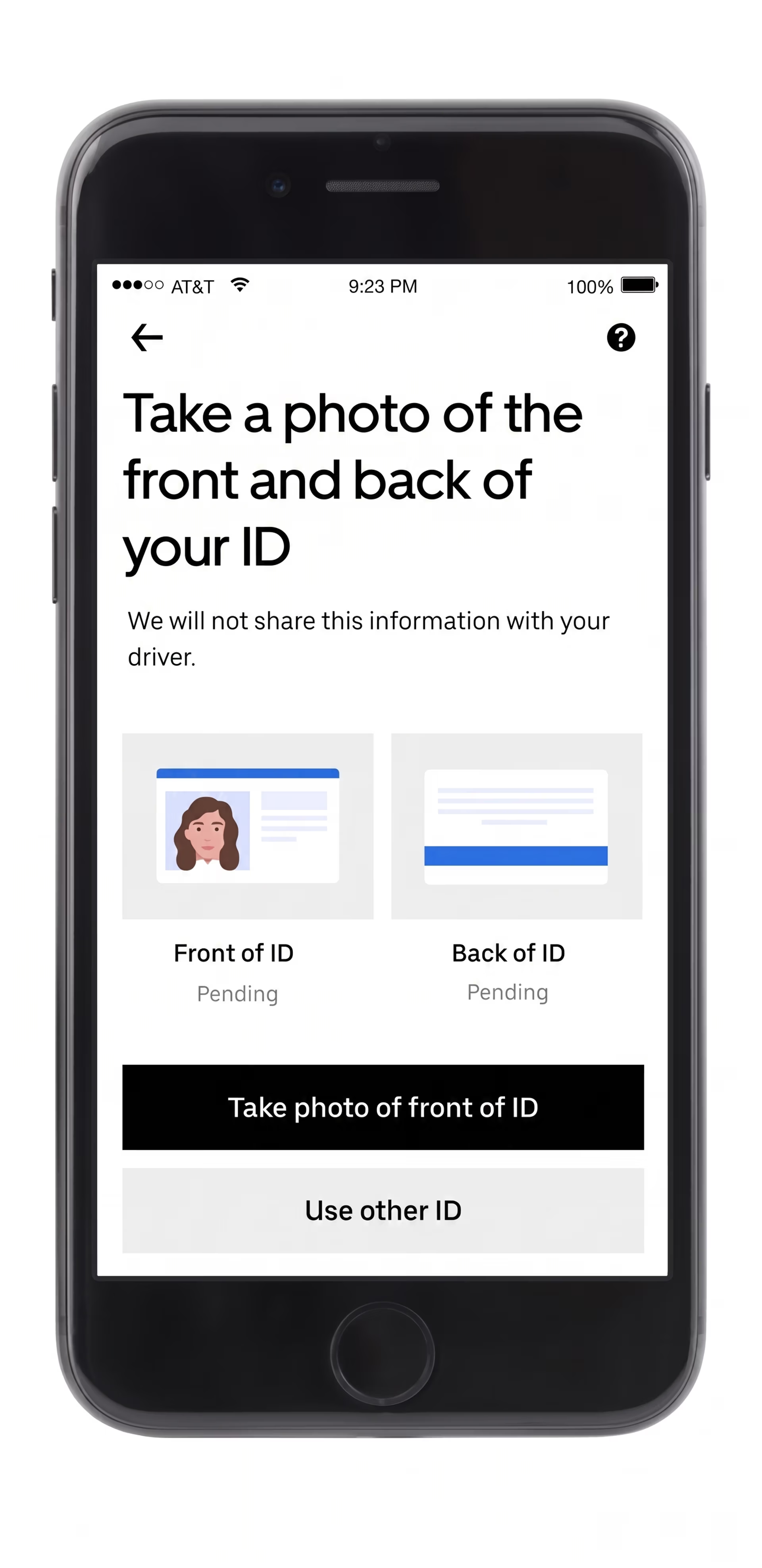
Fig 4. Uber’s ID Verification System.
Pros and cons of computer vision in digital identity verification#
We’ve explored several ways AI and computer vision are used in digital identity verification. Now, let’s look at some of the key benefits these technologies offer across different industries:
-
Eliminates manual data entry: Electronic KYC software using OCR technology eliminates manual data entry, freeing employees to focus on other tasks.
-
Cost efficiency: Automating identity verification reduces reliance on manual checks, saving labor costs and operational expenses.
-
Global accessibility: These technologies support a wide range of documents and languages, enabling businesses to cater to international customers.
However, implementing computer vision systems for digital identity verification also has some limitations, which are important to keep in mind:
-
Technical limitations: Poor lighting, low-quality images, or different facial angles can affect the accuracy of computer vision systems, leading to false negatives or errors in identity verification.
-
Spoofing and adversarial attacks: While computer vision technologies have liveness detection, they are still vulnerable to spoofing techniques (e.g., deepfakes, or high-quality photos) unless they are combined with additional security layers.
-
Staying up to date with regulations: KYC and AML regulations are well-defined by national regulators. However, these regulations are largely technology-neutral. Fintech companies, like banks, need to be aware of this and be prepared to justify the AI technologies they use.
Balancing innovation and practicality#
Computer vision is reshaping digital identity verification by making it faster, more accurate, and more secure. It plays a crucial role in various industries, from improving safety and convenience in banking to streamlining immigration processes and ensuring secure online transactions in e-commerce.
Despite its many benefits, such as reducing human error and enhancing customer experience, some challenges still remain. These concerns include issues with low quality images, varying facial angles, and risks like spoofing attempts. However, innovations like liveness detection are addressing these limitations.
As the demand for efficient and reliable digital ID verification continues to grow, computer vision is becoming an essential tool for preventing fraud, boosting compliance, and fostering trust in the digital age.
To learn more, visit our GitHub repository and engage with our community. Explore AI applications in self-driving cars and agriculture on our solutions pages. 🚀








