From eye care to fiber optics: The role of AI in optics
Dive in to learn how AI is transforming optics by enhancing eye care, streamlining eyeglasses manufacturing, and advancing fiber optic communication.

Optics is the study of light and its interactions with different materials. It may sound like just another science-related topic, but it's actually very important and very present in our daily lives. Over the years, many industries have incorporated optics-based technologies to create innovative solutions. For example, in ophthalmology, optics are used to develop corrective lenses, contact lenses, and surgical procedures like LASIK. In manufacturing, optics plays an important role in the development of cameras, telescopes, binoculars, and fiber optic networks for faster communication.
Artificial intelligence (AI) is being used to improve many of these optics-based solutions. For example, predictive analytics can help determine which patients would benefit the most from complex surgeries like LASIK. In this article, we'll explore how AI is being used in optics, and understand the benefits it offers and challenges it presents. Let’s get started!
How is AI used in the field of optics?#
First, let’s understand some of AI's applications in optics, such as ophthalmology, manufacturing optical devices, and network communication through fiber optics.
AI in ophthalmology and optometry#
Nowadays, AI in healthcare is becoming more common. Specifically in optics, AI is redefining fields such as ophthalmology and optometry. Ophthalmology entails the diagnosis and treatment of eye disorders, while optometry involves assessing eyes for vision problems and prescribing corrective lenses. AI is being used for diagnosis, personalized treatment, and improving efficiency in eye care.
For instance, AI systems can help find early signs of diseases like glaucoma and diabetic retinopathy. According to the Glaucoma Research Foundation, over three million people have glaucoma in the US alone, but only half of them are aware that they have it. These systems can detect such eye diseases early and start treatment sooner to prevent blindness.
Google's Automated Retinal Disease Assessment (ARDA) is a great example of how vision AI can improve eye care. Google teamed up with a large group of ophthalmologists to train an AI model using over 100,000 retinal scans. The goal was to create a system that could detect diabetic retinopathy using image classification. One of the biggest advantages of ARDA is that it can be used in developing countries where access to eye care may be limited.
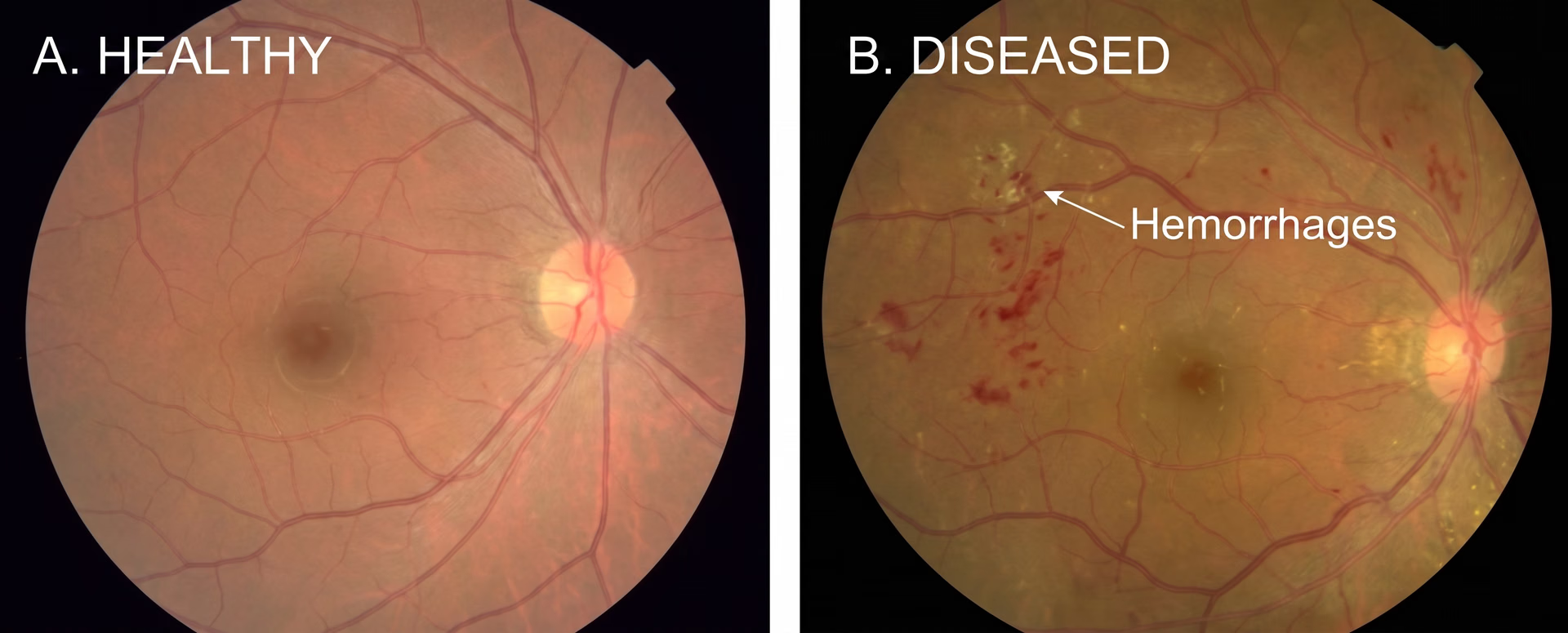
Fig 1. Using AI to detect diabetic retinopathy.
AI-driven manufacturing and design of optical devices#
AI is also making waves in the design and manufacturing of various optical devices. With respect to the design aspect, generative AI can come in handy for quickly designing optical devices. AI systems can then step in to monitor manufacturing processes and help cut costs. Finally, AI and computer vision can be used to inspect and detect any flaws in manufactured products like optical fiber cables or lenses that the human eye might miss.
To this effect, many companies are looking into using AI to design and manufacture state-of-the-art lenses. A leader in the ophthalmic lens industry, EssilorLuxottica has collected vast amounts of anonymized data from lens orders, test data, and internal studies. They are using AI to extract knowledge from this data, such as consumer lifestyle insights and lens performance metrics, and using it to improve lens designs. They are also using behavioral AI to design their latest generation of varifocal lenses. This takes into account the patient's spatial behavior (how they move their head and eyes to view their surrounding environment) to design more comfortable lenses.
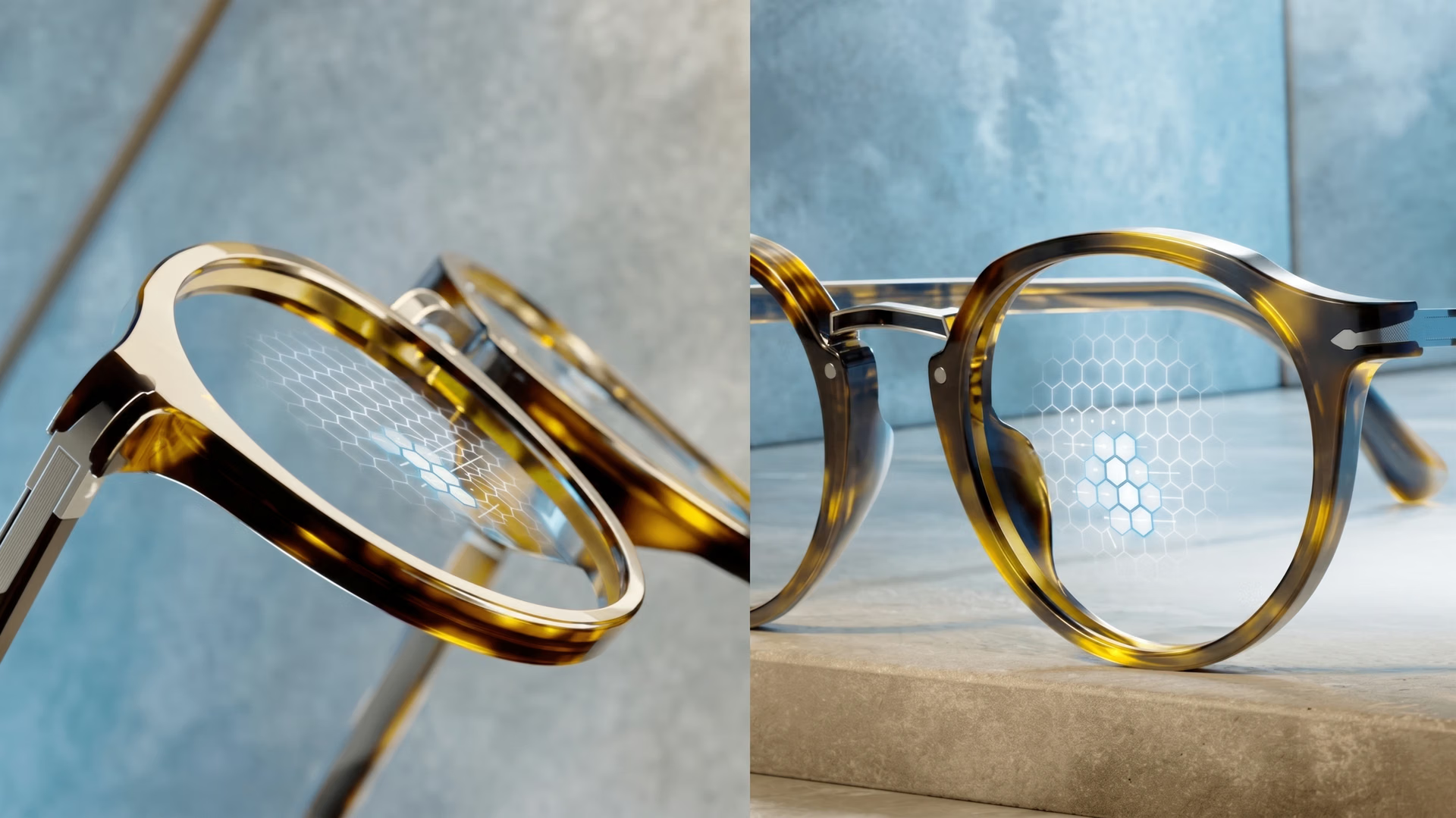
Fig 2. Essilor’s new progressive lens line, the Varilux® XR series™, is designed using AI.
Here are some of the benefits of using AI to design eyewear:
- Personalization: AI can help create customized eyewear that is tailored to each patient's specific needs, enhancing both comfort and effectiveness.
- Behavior modeling: By predicting visual behavior and eye movements, AI can be used to develop lenses that are more intuitive and high-performing.
- Better patient outcomes: AI-designed eyewear can provide optimal vision correction, reducing issues like eye strain, headaches, and the "swim effect."
- Adaptability to modern needs: Using AI to design glasses makes it possible to meet the visual demands of modern life, such as frequent switching between digital devices and other tasks.
Computer vision powers virtual try-ons for eyewear#
Once you've visited your eye doctor, got a prescription, and decided on the type of lenses you need, the next step is usually to go to a store and try on glasses. However, computer vision technology has reimagined the retail process through virtual try-ons for eyewear from the comfort of your home. Companies like Lenskart have started using this innovation to improve the customer experience.
Using advanced algorithms and augmented reality (AR), computer vision can map your facial features in real time. By doing so, 3D models of eyeglasses can be overlaid seamlessly onto your live video feed. The virtual glasses can appear to move naturally with your head and adjust to angles and lighting to provide a realistic view of how different frames will look. With the addition of machine learning, these systems can even offer personalized frame recommendations based on your facial structure and style preferences.
Optical network communication with AI and fiber optics#
What if your super-fast internet connection could be even faster? That's exactly what AI algorithms can do for fiber optic cables. These cables are like high-speed highways for digital information, and AI can help deploy, manage, and improve their performance.
By optimizing Outside Plant (OSP) designs, AI makes the expansion of broadband networks more efficient and effective. OSP refers to all the physical cabling and infrastructure required to deliver internet services, including fiber optic cables, conduits, and related equipment that are installed outside of buildings. AI can help simulate various design scenarios to identify the most efficient and cost-effective solutions. Tasks like managing bandwidth capacity based on demand become simpler. Overall, design tasks that used to take 45-60 days due to rework, repeated follow-ups, and manual processes can now be completed in just 25 days with AI.

Fig 3. An image of an OSP engineer working.
AI can also improve fiber route planning by analyzing historical data and predicting future demand using advanced machine learning algorithms. Computer vision techniques like segmentation can be used to inspect the quality of the fiber and detect faults. By discovering issues sooner, these problems can be solved faster, minimizing downtime and maintenance costs. By making these processes more efficient, AI not only speeds up broadband deployment but also improves the reliability and quality of internet services, ultimately benefiting both urban and remote communities.
Pros and cons of using AI in optics#
With the global market of advanced optics expected to grow to approximately $628.80 billion by 2032, AI offers several benefits in the field of optics. Here are some of the key advantages:
- Rapid prototyping: AI can accelerate the prototyping process allowing designers to quickly test and iterate on new eyewear designs.
- Enhanced durability: Optimization techniques that use AI can help select materials to produce more durable and long-lasting eyewear.
- Sustainability: AI-driven manufacturing can reduce waste and improve the sustainability of the production process by optimizing resource use.
- Integration with smart technology: Technologies like AI can facilitate the integration of smart features into eyewear, such as augmented reality (AR) and fitness tracking.
While it’s true that AI brings many benefits to optics, we need to keep in mind the challenges and ethical considerations that need to be addressed when using AI technologies.
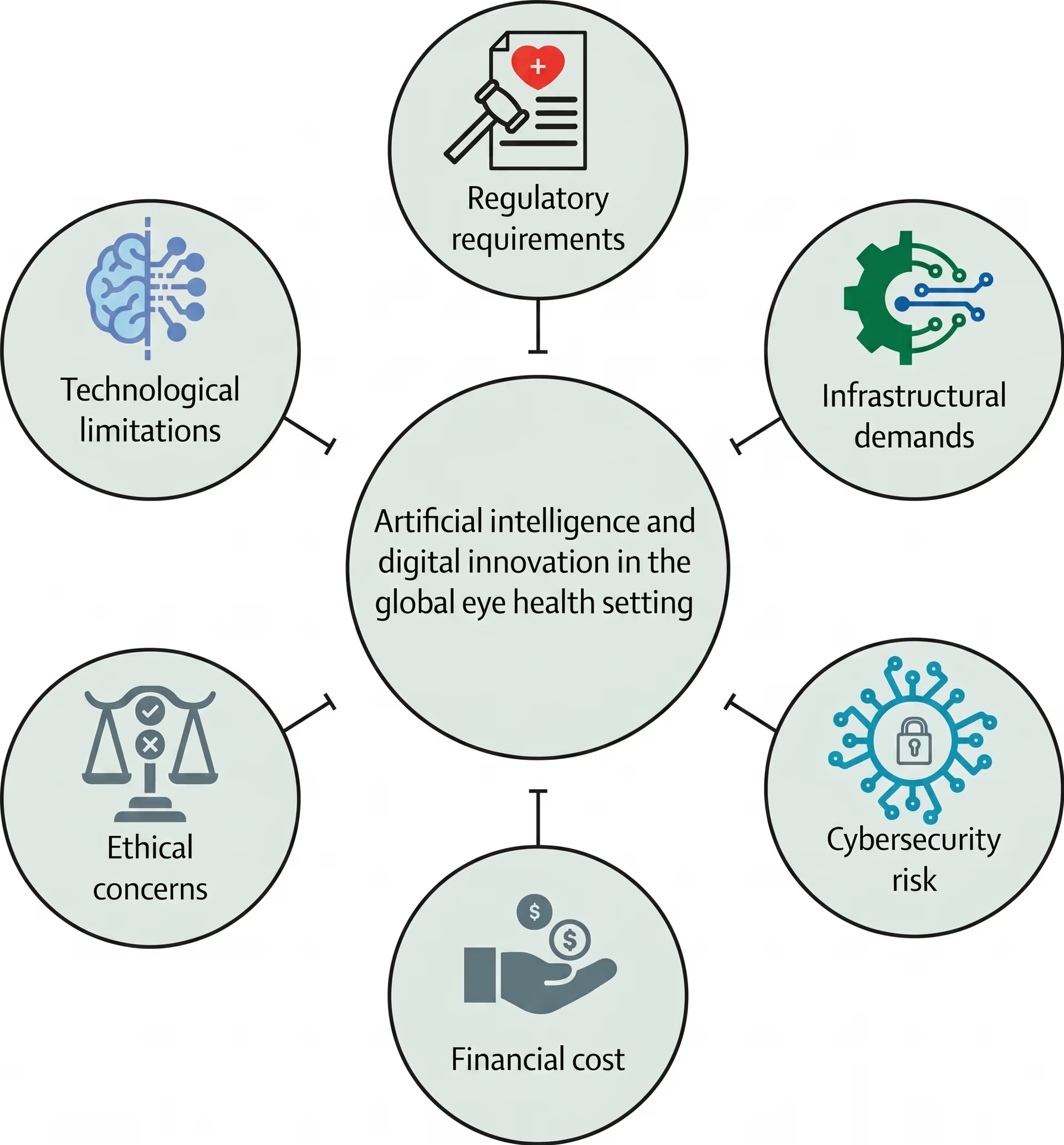
Fig 4. Challenges Related to Adopting AI in Eye Care (Source: thelancet.com).
Here are some of the challenges with using AI in optics:
- High implementation costs: Implementing AI technology may require significant financial investment for development, integration, and training.
- Need for technical skills: Using AI solutions requires specialized knowledge and skills, which might mean extra training and hiring.
- Regulatory challenges: Complying with regulations for AI in healthcare can be complex and requires staying updated with evolving standards.
- Integration challenges: Adding AI to existing systems can be complex and time-consuming, requiring significant changes to current workflows.
The future and regulations of AI in optical technologies#
According to the National Institute of Health (USA), AI systems have performed equally or even better than experienced ophthalmologists in tasks like detecting and grading diabetic retinopathy. However, despite these promising results, very few AI systems have been deployed in real-world clinical settings. This is due to challenges like data bias and privacy.
To address these challenges, new rules and regulations for using AI in optics are required. In countries like the US, state governments are already beginning to regulate AI in healthcare to prevent discrimination and protect patient privacy. It’s likely that we start seeing personalized vision correction, with AI creating custom solutions for each patient. It would result in glasses and treatments that are designed to fit each person's needs better.
Another optics field that may become popular in the future due to AI is teleophthalmology. Teleophthalmology is the use of telemedicine to provide eye care services remotely. Imagine taking a picture of your eye and an AI model analyzing it to inform you about your eye health. AI can bring eye care directly to a person’s doorstep and play a key role in providing remote diagnosis and treatment options. It is especially beneficial for people in remote or underserved areas and can help make sure they receive timely and effective care.
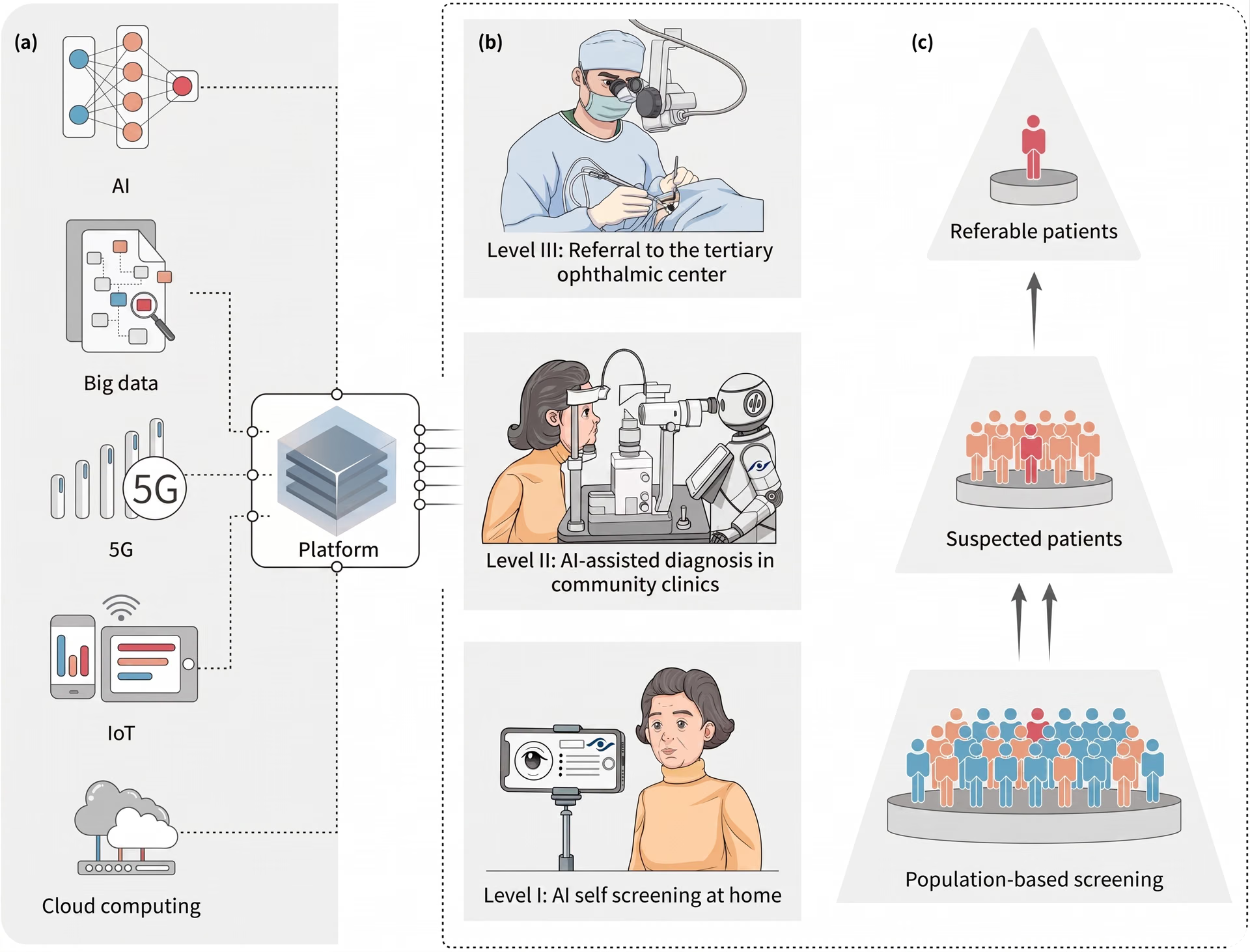
Fig 5. AI can be integrated into workflows to screen patients for eye care concerns.
A bright outlook for AI and optics#
AI is rapidly changing the field of optics, from healthcare to manufacturing. It's enhancing medical diagnoses, personalizing treatments, and optimizing production processes. While challenges like regulatory compliance and data privacy exist, the potential benefits are immense. AI is poised to transform how we see and interact with the world through advancements in optics.
Let’s learn and grow together! Explore our GitHub repository to see our contributions to AI. Check out how we are redefining industries like self-driving cars and agriculture with AI. 🚀








