Gemini 4 Argon is now available for auto-annotation in Ultralytics Platform
Gemini 4 Argon ranked first of 26 auto-annotation models in Ultralytics Platform, ahead of GPT-6.1 Sol, Gemini 3.8 Flash, Claude Opus 5.5, and GPT-6 Astra.
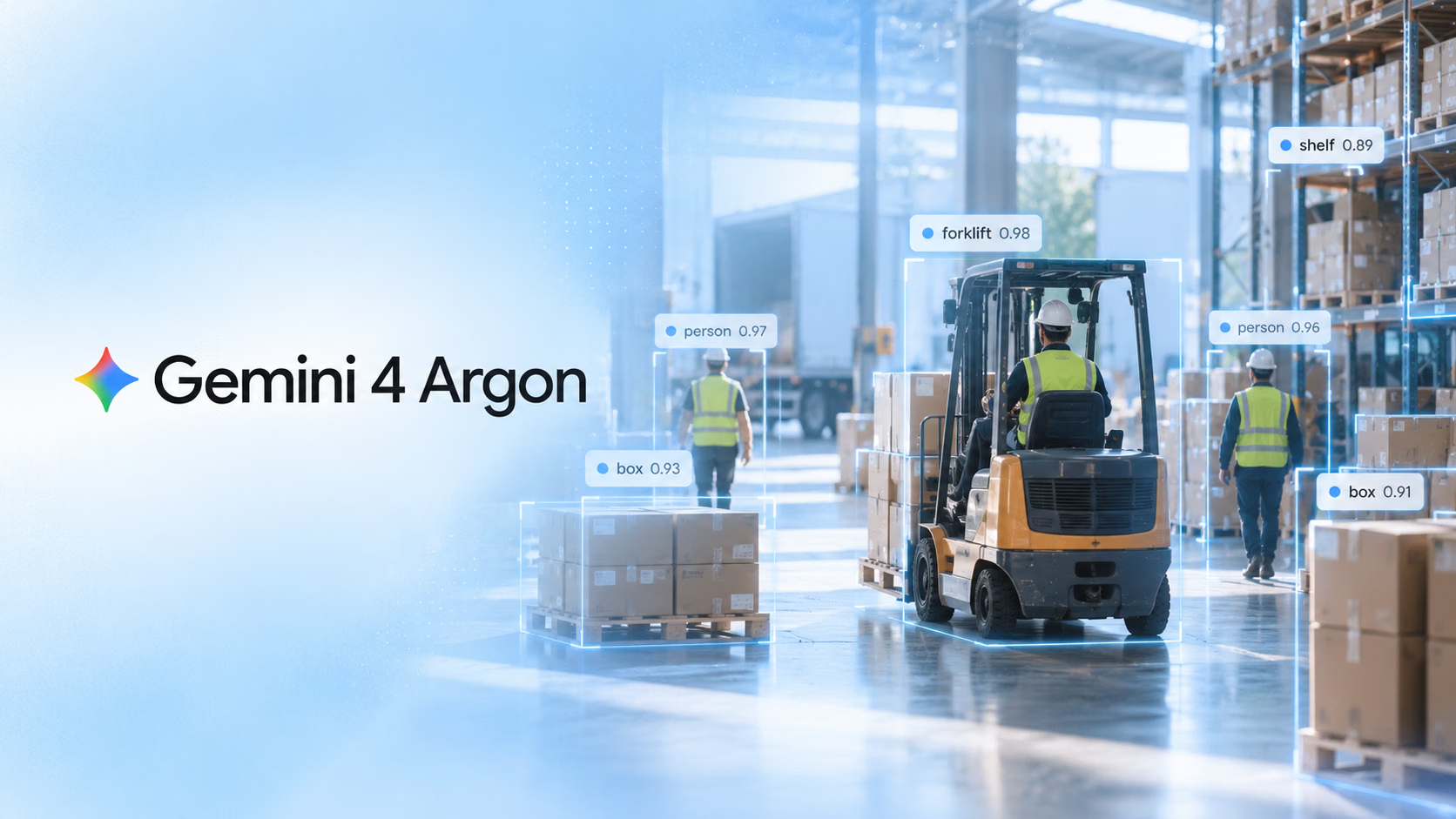
Data labeling is still the slowest part of most computer vision projects. Auto-annotation speeds it up by letting a model draft the bounding boxes, so your team reviews and corrects instead of drawing every object by hand. But a draft is only as useful as the model behind it.
Today, Gemini 4 Argon is available for auto-annotation in Ultralytics Platform. In our benchmark of all 26 class-prompted auto-annotation models in Ultralytics Platform, including GPT-6.1 Sol, GPT-6 Astra, Claude Opus 5.5, and Claude Fable 5.1, Gemini 4 Argon was the most accurate by a wide margin.
What's new: Gemini 4 Argon for auto-annotation#
Gemini 4 Argon joins the class-prompted vision language models in the Ultralytics Platform annotation editor. On an object detection dataset with 1–200 classes, it looks at each image and returns boxes for the instances of your dataset's classes it finds, which you review and save like any other prediction.
You can use it in two ways:
- One image at a time: In the annotation editor, switch to Smart mode, select
gemini-4-argonunder Google in the model picker, and click Predict (or pressP). - A whole dataset: Run Batch Annotation from More actions > Batch Annotation on the dataset page to label every unlabeled image in a single run.
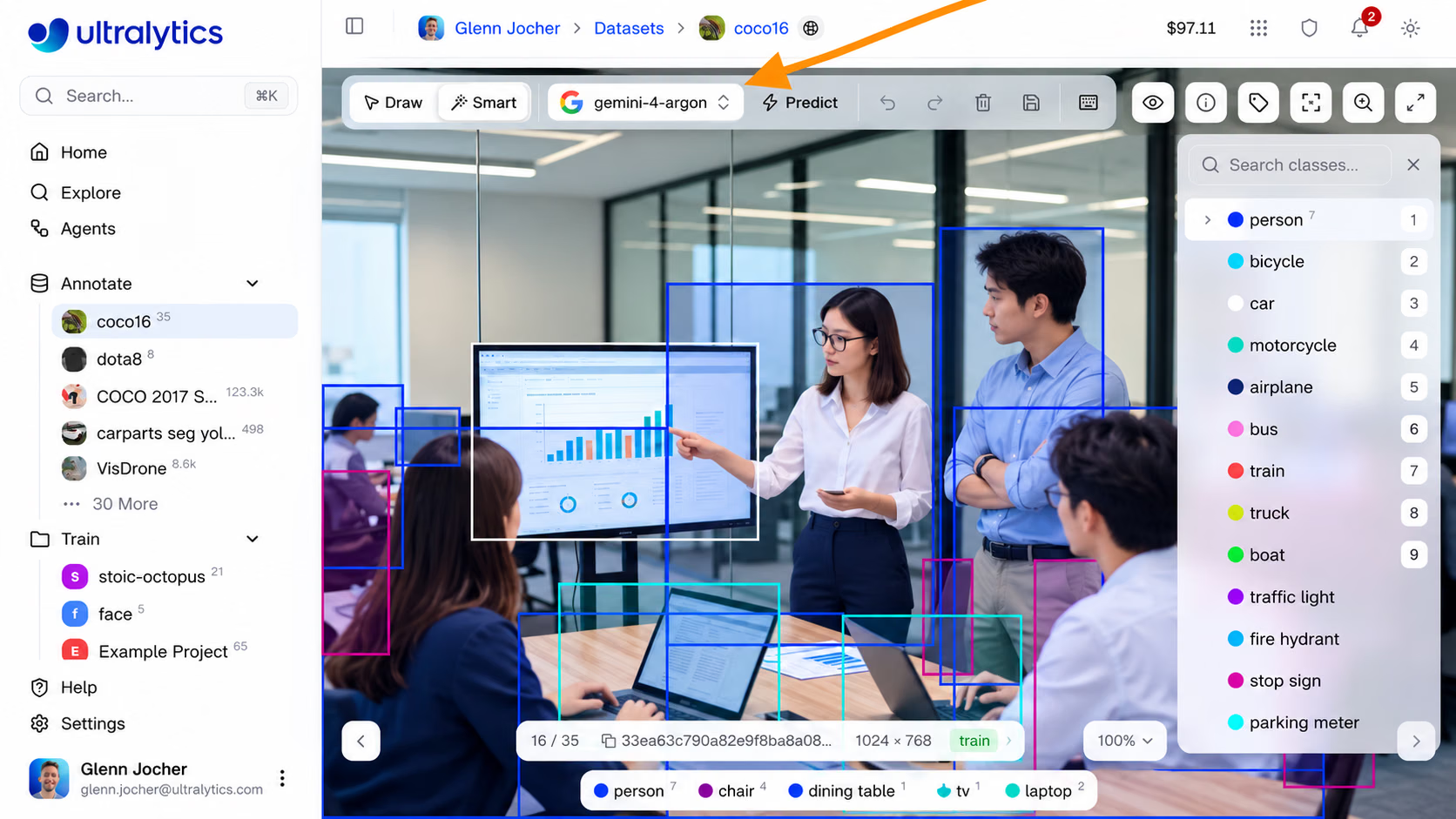
Gemini 4 Argon sits alongside the other auto-annotation options in Ultralytics Platform, from SAM 3.1 point prompts to your own fine-tuned Ultralytics YOLO models. For the bigger picture, see how Ultralytics Platform uses AI to automate annotation.
How we benchmarked 26 auto-annotation models#
A model that finds nearly every object in everyday photos can still miss most of them in a medical scan or a circuit board. So instead of everyday photos alone, we tested on UL37, a set of real-world benchmark datasets Ultralytics uses for evaluation, and took its 36 detection datasets. They span medical imaging, aerial and satellite imagery, PCB inspection, security X-ray, retail shelves, traffic, sports, underwater scenes, thermal footage, and more.
We sent 108 labeled images (three per dataset) to every class-prompted model in Ultralytics Platform through the same detection code the annotation editor uses, with each dataset's full class list, and scored the returned boxes against the ground truth with mAP50. Every provider ran at its own default reasoning effort, and repeat runs moved scores by only about 0.005 mAP50.
Gemini 4 Argon vs. GPT-6.1 Sol, Claude Opus 5.5, and GPT-6 Astra#
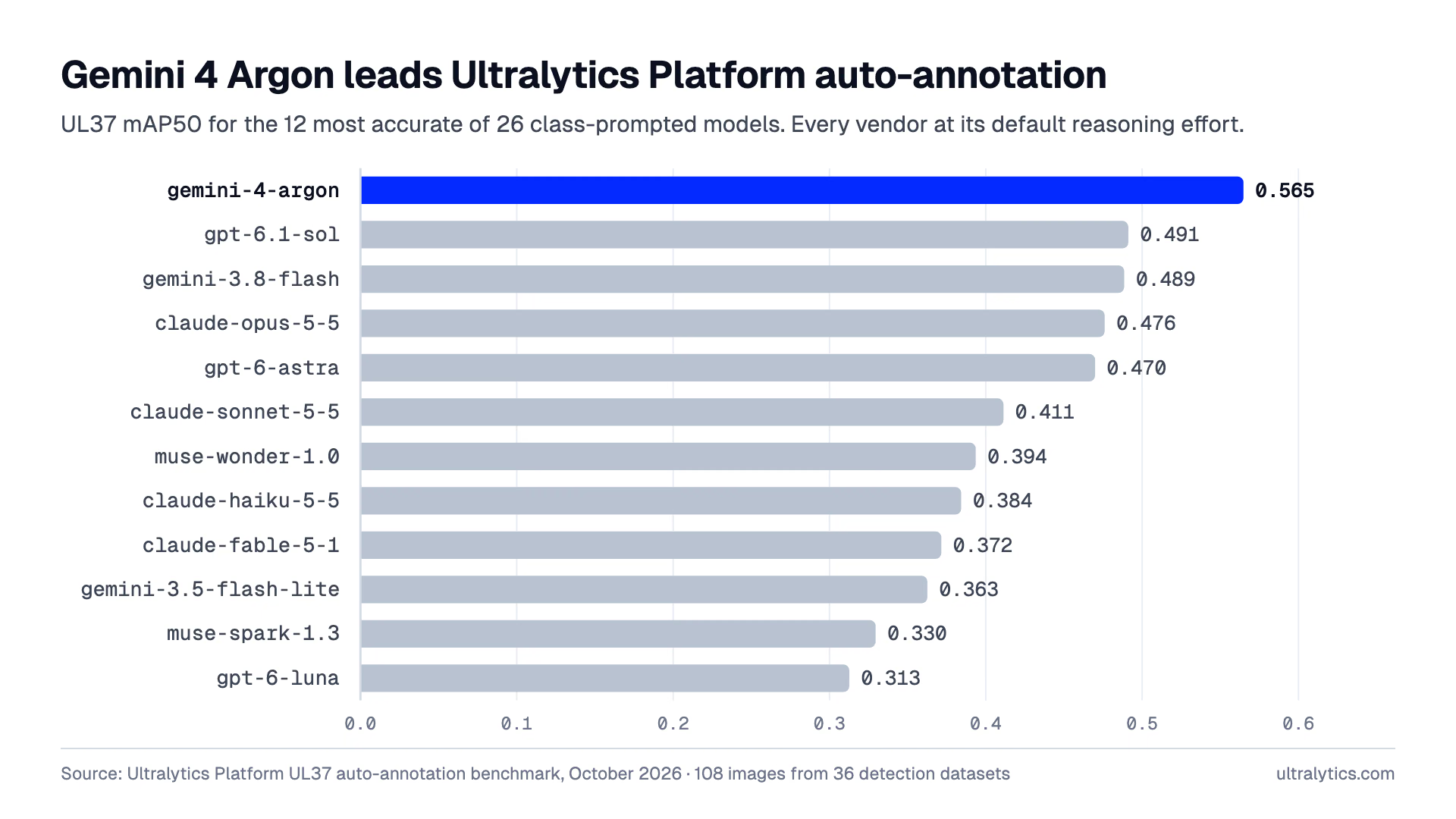
Gemini 4 Argon reached 0.565 mAP50, well ahead of GPT-6.1 Sol (0.491), Gemini 3.8 Flash (0.489), Claude Opus 5.5 (0.476), and GPT-6 Astra (0.470). It completed every request, with a median of about five seconds per image.
Its lead doesn't come from thinking longer. At its default thinking level, Gemini 4 Argon used a median of about 150 output tokens per image, about the same as Claude Opus 5.5 and well below GPT-6.1 Sol or Gemini 3.8 Flash.
Accuracy vs. cost: Gemini 4 Argon, Claude Haiku 5.5, and premium models#
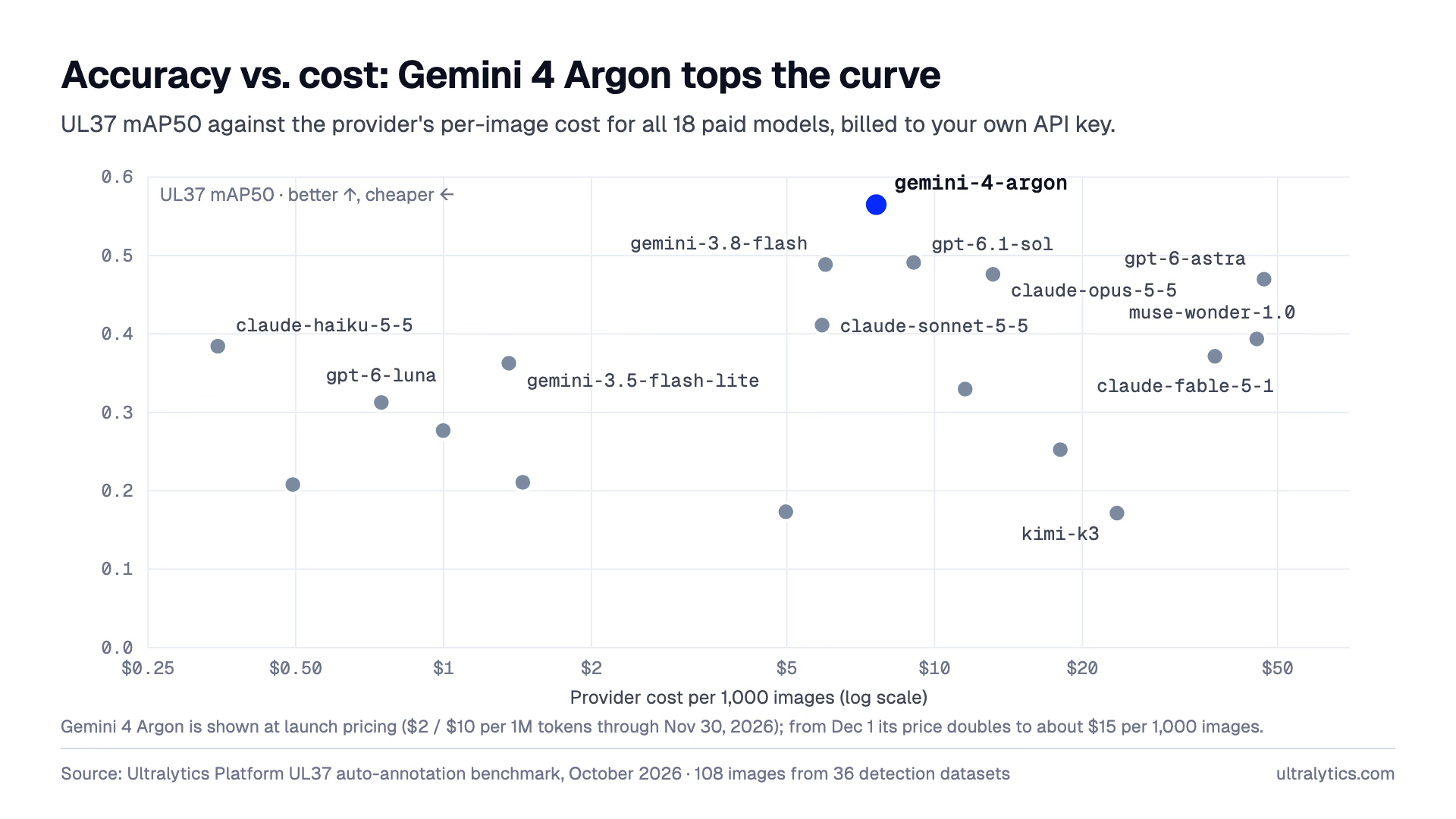
Paid models run on your own provider API key, so the provider bills each prediction directly. At Google's launch pricing, which runs through November 30, 2026, Gemini 4 Argon cost about $7.60 per 1,000 images in our benchmark. After that, its price doubles to about $15 per 1,000 images at the same usage.
Premium models cost more without scoring higher. GPT-6 Astra and Claude Fable 5.1 cost about $47 and $37 per 1,000 images and scored 0.470 and 0.372. If cost matters more than peak accuracy, Claude Haiku 5.5 (0.384 mAP50 at about $0.35 per 1,000 images) and Gemini 3.5 Flash-Lite (0.363 at about $1.36) were the most accurate low-cost models. And if you'd rather not use a provider key at all, Qwen3.8 27B was the most accurate model hosted on Ultralytics Platform.
Gemini 4 Argon across 12 real-world domains#
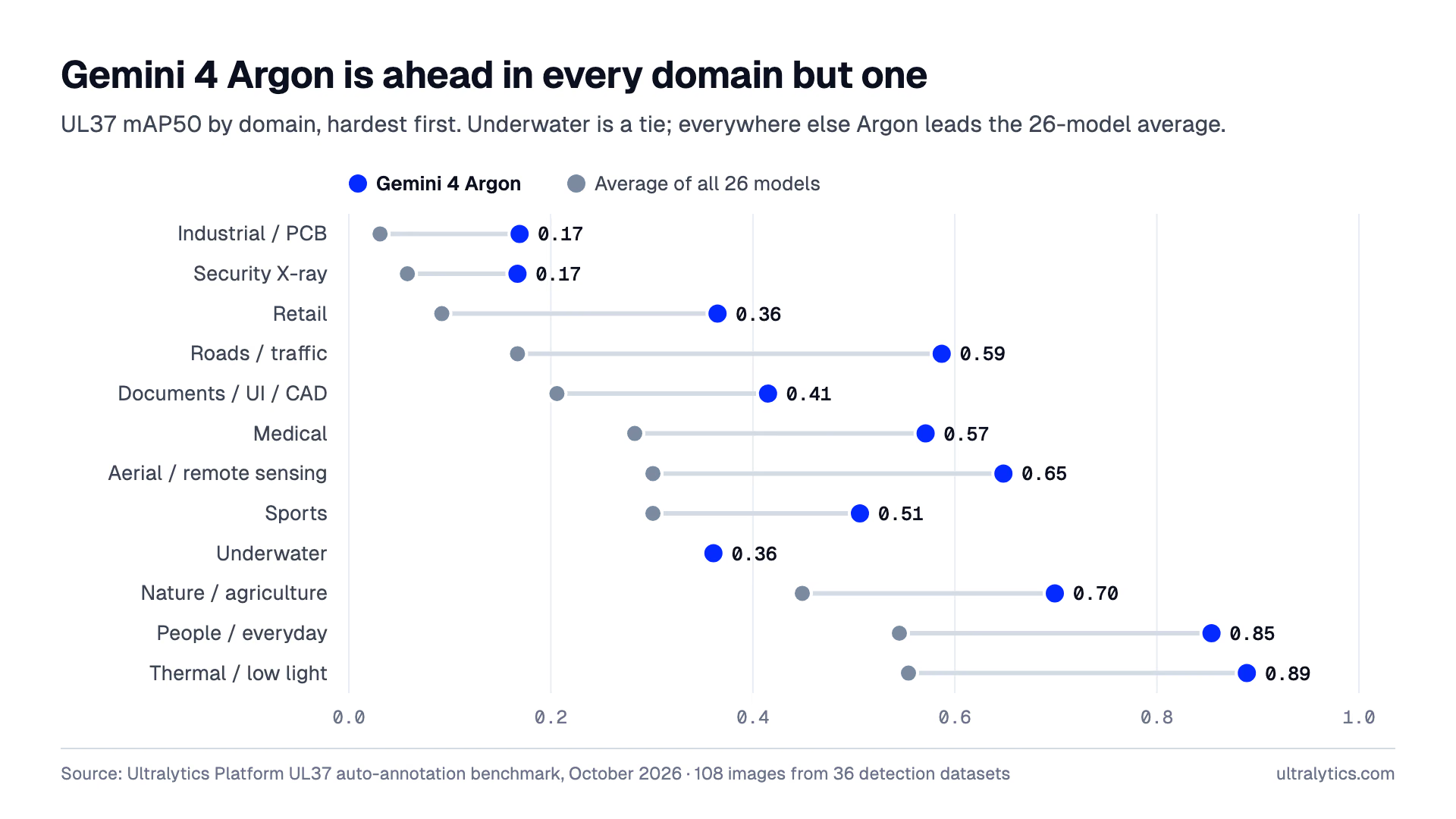
Gemini 4 Argon beat the average of all 26 models in 11 of 12 domains and tied in underwater imagery. Its biggest gains came in roads and traffic (0.59 vs. 0.17) and aerial imagery (0.65 vs. 0.30), and it doubled the average on medical imaging (0.57 vs. 0.28).
Specialized imagery is still hard for every model. Industrial PCB and security X-ray images stayed below 0.2 mAP50 even for Gemini 4 Argon. Treat its boxes as a first draft for human-in-the-loop review, and check a few predictions on your own images before you annotate a full dataset.
Get started with Gemini 4 Argon in Ultralytics Platform#
- Add a Google API key in Settings > API Keys of the workspace that owns your dataset, or ask the workspace owner to add one (see how).
- Open a detection dataset in Ultralytics Platform, switch the annotation editor to Smart mode, and select
gemini-4-argonunder Google. - Click Predict to label the current image, then review, adjust, and save the boxes.
- When the results look right, run Batch Annotation to label the rest of the dataset.
Batch Annotation adds the standard Ultralytics Platform processing fee of $1.00 per 1,000 images, separate from what Google bills your API key. Each run saves a dataset version first, so you can always roll back.
Once your dataset is labeled, train an Ultralytics YOLO26 model on it in the same workspace (see the training docs). Comparing annotation tools? Read our guides to the best image annotation platforms and auto-labeling and active-learning tools. Then sign in to Ultralytics Platform to try Gemini 4 Argon on your own data.
Frequently asked questions
Gemini 4 Argon is a Gemini model from Google that can read images and locate objects in them. In Ultralytics Platform, it's available as a class-prompted auto-annotation model that draws bounding boxes for your dataset's classes.
In our October 2026 benchmark on 36 real-world detection datasets, Gemini 4 Argon scored 0.565 mAP50, ahead of GPT-6.1 Sol (0.491), Gemini 3.8 Flash (0.489), Claude Opus 5.5 (0.476), GPT-6 Astra (0.470), and Claude Fable 5.1 (0.372), with every provider at its default reasoning effort.
Google bills your own API key for each prediction: about $7.60 per 1,000 images in our benchmark at launch pricing through November 30, 2026, and about $15 per 1,000 images after that. Batch Annotation also adds the Ultralytics Platform processing fee of $1.00 per 1,000 images.
Yes. Hosted models such as Qwen3.8 27B, Moondream 3.1, and SAM 3.1 Text run on Ultralytics Platform with no provider key, and you can also auto-annotate with pretrained or your own fine-tuned Ultralytics YOLO models.