Motion Deblurring
Motion deblurring reconstructs sharp images from movement-smeared photos and video, improving detail for computer vision and object detection.
Motion deblurring is the process of reconstructing a sharper image from a photograph or video frame smeared by movement during exposure. Camera shake or a moving subject spreads visual detail across neighboring pixels, turning edges into streaks. Deblurring estimates how that spreading occurred and recovers underlying structures, making images more useful for computer vision, including object detection and optical character recognition. "Motion deblur" is another name for the same operation.
How Motion Blur Forms#
A camera accumulates light throughout an exposure. Movement during that interval blends different positions of the scene into one image. A blur kernel, also called a point spread function (PSF), describes how a single point spreads. Straight, constant-speed movement produces an approximately line-shaped kernel; camera rotation and independently moving objects produce spatially varying blur. A common mathematical model represents the blurred image as a sharp image combined with a kernel through convolution, plus noise.
Motion deblurring belongs to image restoration. Sharpening increases local edge contrast, while deblurring estimates the image before the spreading occurred. Defocus deblurring addresses blur caused by incorrect focus; super-resolution reconstructs an image at higher spatial resolution. These tasks can appear together in restoration pipelines.
Classical and Neural Approaches#
Non-blind deblurring uses a supplied blur kernel. Blind deblurring estimates the unknown blur together with the sharp image. Classical methods use deconvolution to reverse the spreading. Wiener filtering balances detail recovery against noise amplification, using regularization—a constraint that favors stable image estimates.
A neural network can learn restoration from blurred and sharp image pairs through supervised learning. In 2016, Ayan Chakrabarti introduced A Neural Approach to Blind Motion Deblurring, which predicts restoration filters for overlapping image patches, combines their outputs, estimates a global blur kernel, and performs non-blind deconvolution. This connects learned image structure with an explicit model of motion blur.
A Runnable Deconvolution Example#
Install scikit-image and scipy with pip install scikit-image scipy. This example applies horizontal motion blur to a bundled image, then uses Wiener–Hunt deconvolution with the known kernel.
import numpy as np
from scipy.signal import convolve2d
from skimage import data, img_as_float, restoration
from skimage.metrics import peak_signal_noise_ratio

image = img_as_float(data.camera())

# Model uniform horizontal movement over 15 pixels.
psf = np.zeros((15, 15))
psf[7, :] = 1 / 15
blurred = convolve2d(image, psf, mode="same", boundary="wrap")

restored = restoration.wiener(blurred, psf, balance=0.005)
before = peak_signal_noise_ratio(image, blurred, data_range=1)
after = peak_signal_noise_ratio(image, restored, data_range=1)
print(f"PSNR: {before:.2f} dB blurred -> {after:.2f} dB restored")
The output compares reconstruction quality before and after deblurring. Peak signal-to-noise ratio (PSNR) measures pixel agreement with the original image; higher values indicate lower reconstruction error.
Applications and Training Data#
- Document Processing: Deblurring reconstructs character strokes in photographed text. Jinshan Pan, Zhe Hu, Zhixun Su, and Ming-Hsuan Yang introduced a text-specific deblurring method in 2014 that uses intensity and edge properties to estimate blur and recover text boundaries.
- Dynamic Scene Photography: The GoPro deblurring dataset, introduced by Seungjun Nah, Tae Hyun Kim, and Kyoung Mu Lee in 2017, pairs sharp frames with blurred images generated by averaging high-speed video frames. These pairs provide training data for learning camera and object motion restoration.
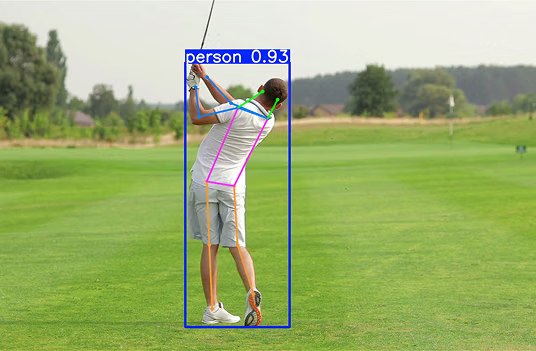
Motion blur also affects Ultralytics YOLO26 detection: smeared input can cause missed objects in predict mode, which accepts externally restored images as inputs. In an Ultralytics blur stress test, strong motion blur reduced the detected people from four to two.
Reconstruction Quality and Artifacts#
Deblurring quality includes faithful edges, preserved texture, and stable results across video frames. Temporal consistency describes that frame-to-frame stability. Video methods can use neighboring frames as additional restoration evidence.
Deconvolution can amplify noise or introduce ringing, visible as alternating bright and dark bands near edges. In Fourier-based restoration, an abrupt mismatch between opposite image boundaries creates artificial high-frequency content and produces boundary ringing; edge tapering reduces this discontinuity before deconvolution.