Temporal Consistency
Temporal consistency is the stability of AI predictions across video frames, preserving object identity, appearance, and motion while reducing flicker.
Temporal consistency is the agreement of an AI system's outputs across time as the underlying scene changes. In video, it means that objects retain coherent identities, appearances, and predicted properties across frames while their motion remains faithful to the scene. A temporally consistent sequence preserves both continuity and real change. The term temporal coherence is commonly used as a synonym in computer vision.
Outside AI, temporal consistency also describes agreement among time-dependent database records or the stability of repeated psychological measurements.
How Temporal Consistency Works#
A video frame captures one instant; neighboring frames provide evidence about how the same scene evolves. Processing frames independently can produce flickering colors, unstable depth estimates, or changing segmentation boundaries. Nicolas Bonneel and colleagues' Blind Video Temporal Consistency, published in 2015, stabilizes processed video using temporal information from the original sequence, including applications to enhancement, stylization, and depth prediction.
Establishing correspondence—determining which locations represent the same scene content—is central to consistency. Optical flow estimates pixel motion between frames. Warping moves an earlier prediction into the current frame's coordinates, enabling comparison at corresponding locations. Occlusion masks identify regions hidden by another surface, where direct correspondence is unavailable. Manuel Ruder, Alexey Dosovitskiy, and Thomas Brox combined these mechanisms with short- and long-term constraints in their 2016 video style-transfer method.
Spatial consistency concerns relationships within one frame. Temporal consistency concerns relationships across frames. Identity preservation is one component: an object can retain its identity while its texture still flickers.
Temporal Consistency Loss and Training#
A temporal consistency loss penalizes disagreement between corresponding predictions at different times. It acts as regularization, encouraging a model to preserve information supported by neighboring frames. In video stylization, a motion-aligned squared-error loss function compares visible corresponding pixels, alongside objectives that preserve content and artistic style. Long-term comparisons help maintain appearance when previously hidden regions reappear.
For already aligned pixel values, the squared-error component can be expressed using PyTorch's mean-squared-error operation:
import torch
import torch.nn.functional as F

previous_aligned = torch.tensor([[0.2, 0.4], [0.6, 0.8]])
current = torch.tensor([[0.3, 0.5], [0.7, 0.1]])
visible = torch.tensor([[True, True], [True, False]])

# Compare only corresponding pixels visible in both frames.
pixel_errors = F.mse_loss(current, previous_aligned, reduction="none")
temporal_loss = pixel_errors[visible].mean()
print(f"Temporal consistency loss: {temporal_loss.item():.4f}")
The output is 0.0100: the average squared disagreement across three visible correspondences. The masked location contributes nothing to the loss.
Other mechanisms retain information through a recurrent neural network or propagate it through temporal attention. These approaches carry context across frames during processing, as used in recurrent video stabilization networks.
Applications in Video AI#
Temporal consistency affects both video interpretation and image synthesis:
- Video editing: Frame-independent neural style transfer produces changing textures that appear as flicker during playback. Motion-guided constraints stabilize the stylized appearance as objects move.
- Video segmentation: Consistent masks follow object boundaries over time. The DAVIS benchmark provides densely annotated video sequences for evaluating segmentation across motion and occlusion.
- Video generation: Temporal coherence includes stable subjects and backgrounds, reduced flicker, and smooth motion. These properties are evaluated separately within VBench.
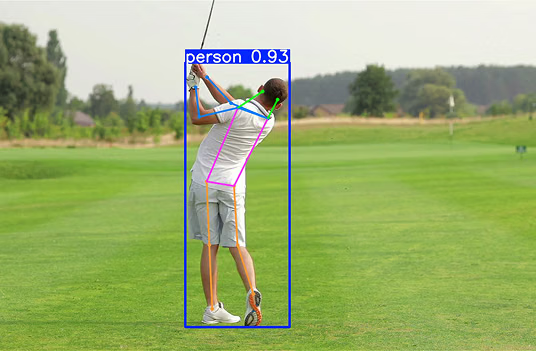
In multi-object tracking, consistency centers on associating detections with persistent identities. Ultralytics YOLO track mode applies trackers such as ByteTrack to associate YOLO26 detections across frames; its second association stage uses lower-confidence detections to recover tracks through partial occlusion.
Measuring Temporal Consistency#
Evaluation follows the output type. For processed video, motion-compensated warping error measures disagreement between aligned outputs; lower error indicates stronger local agreement. For tracking, identity switches count changes in an object's assigned ID. HOTA combines detection and association accuracy and evaluates identity associations across the sequence.
Generated-video evaluation separates appearance stability from movement. VBench measures subject consistency, background consistency, temporal flickering, motion smoothness, and dynamic degree. Measuring motion alongside stability distinguishes coherent movement from a nearly static sequence: its motion-smoothness score uses a frame interpolation model, while dynamic degree uses optical flow to estimate how much movement occurs.