Ultralytics Meetup: New York
Discover the highlights of the Ultralytics New York Meetup, from exploring physical AI and robotics with General Intuition to connecting with the local AI community.
 Zinnia Pourdad5 min read
Listen to this article
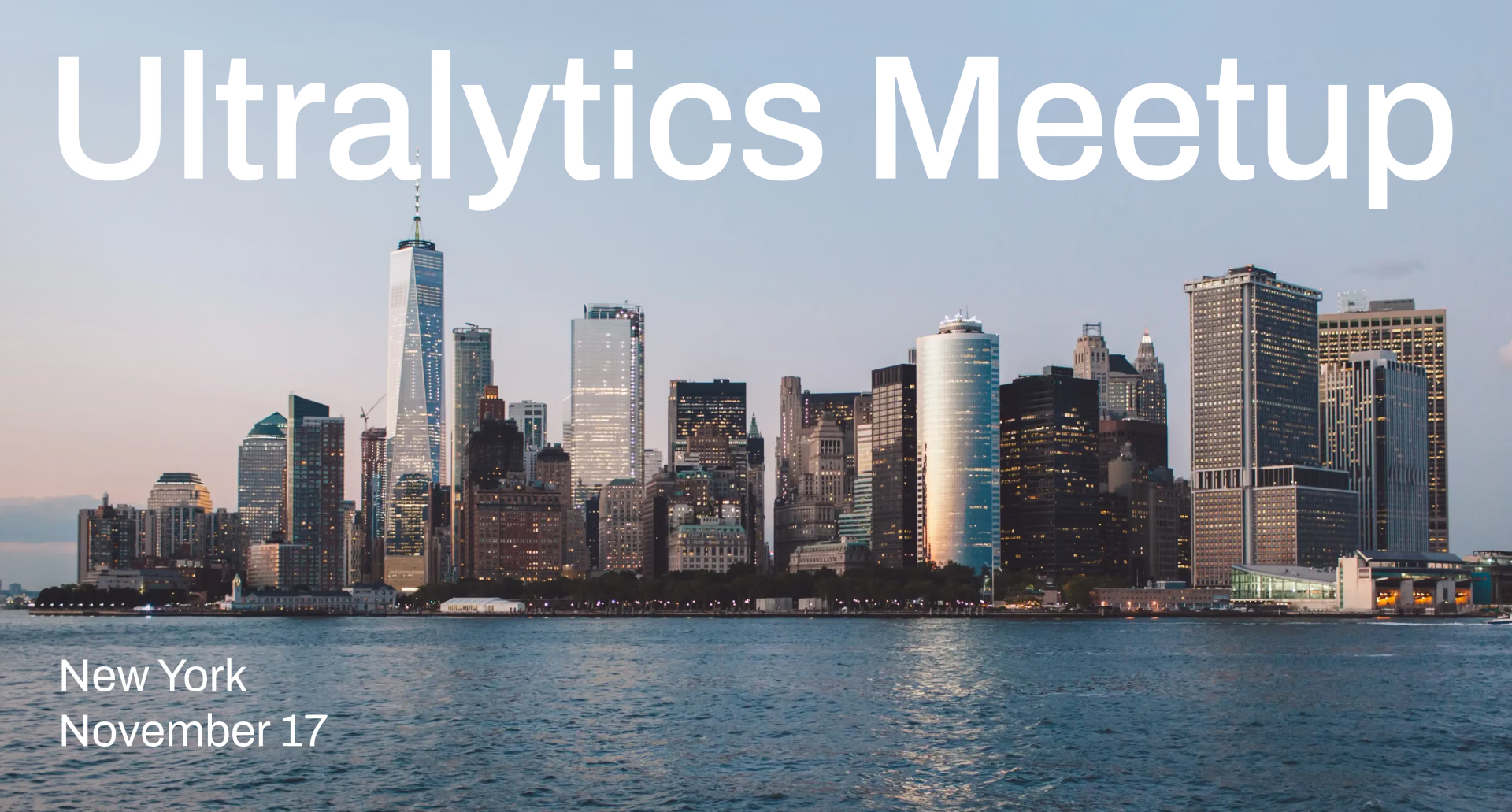
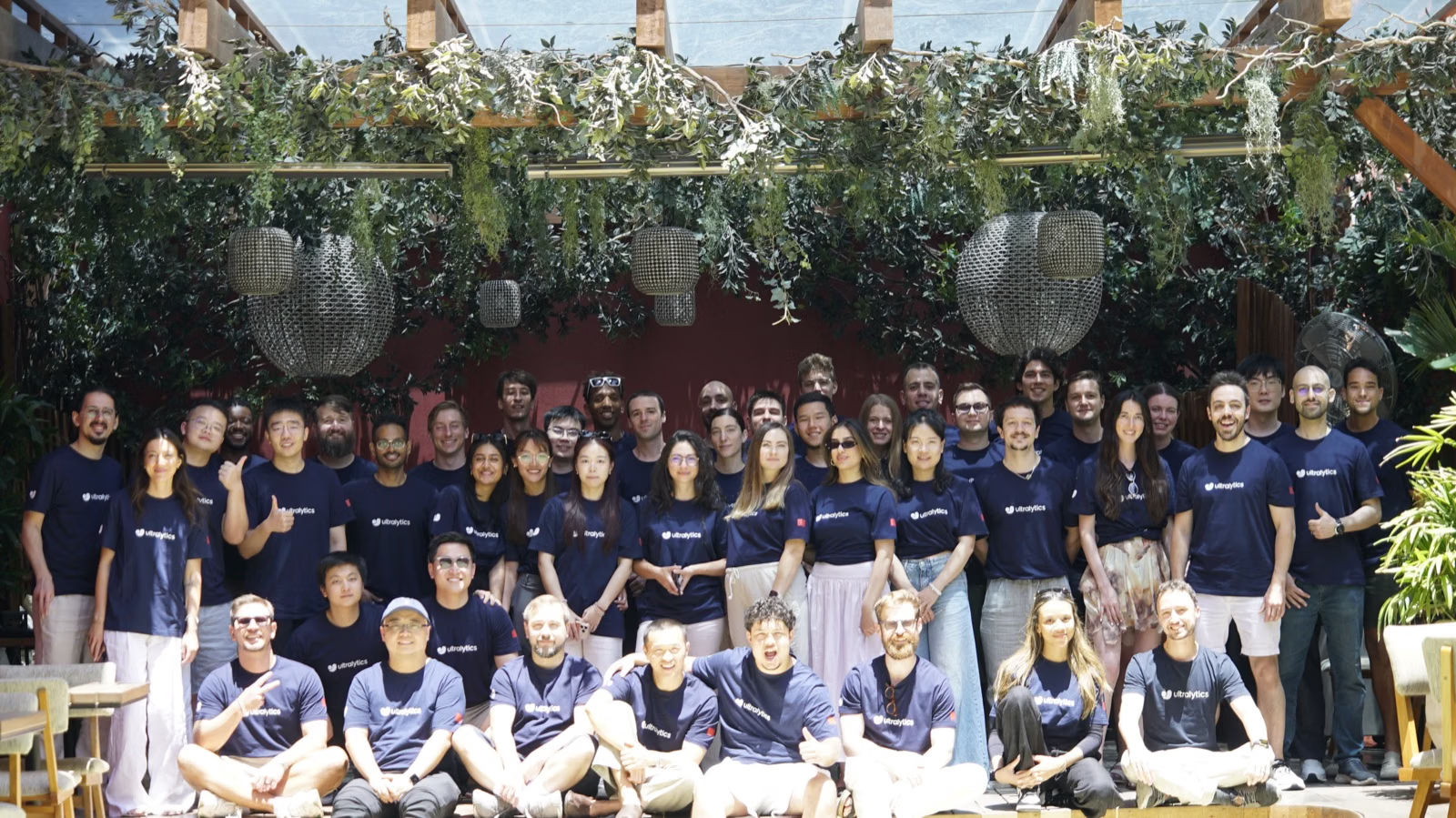
On November 17, the Ultralytics team welcomed the local AI community for an evening of live demos, networking, and discussions on the future of physical AI. The meetup also marked the opening of our fourth office, located in New York City.
The after-work meetup brought together AI leaders, developers, engineers, researchers, customers, and people building with computer vision in the real world. It was an opportunity to connect with our growing community in New York and explore how AI is moving beyond perception and into the physical world.
Bringing the New York AI community together#
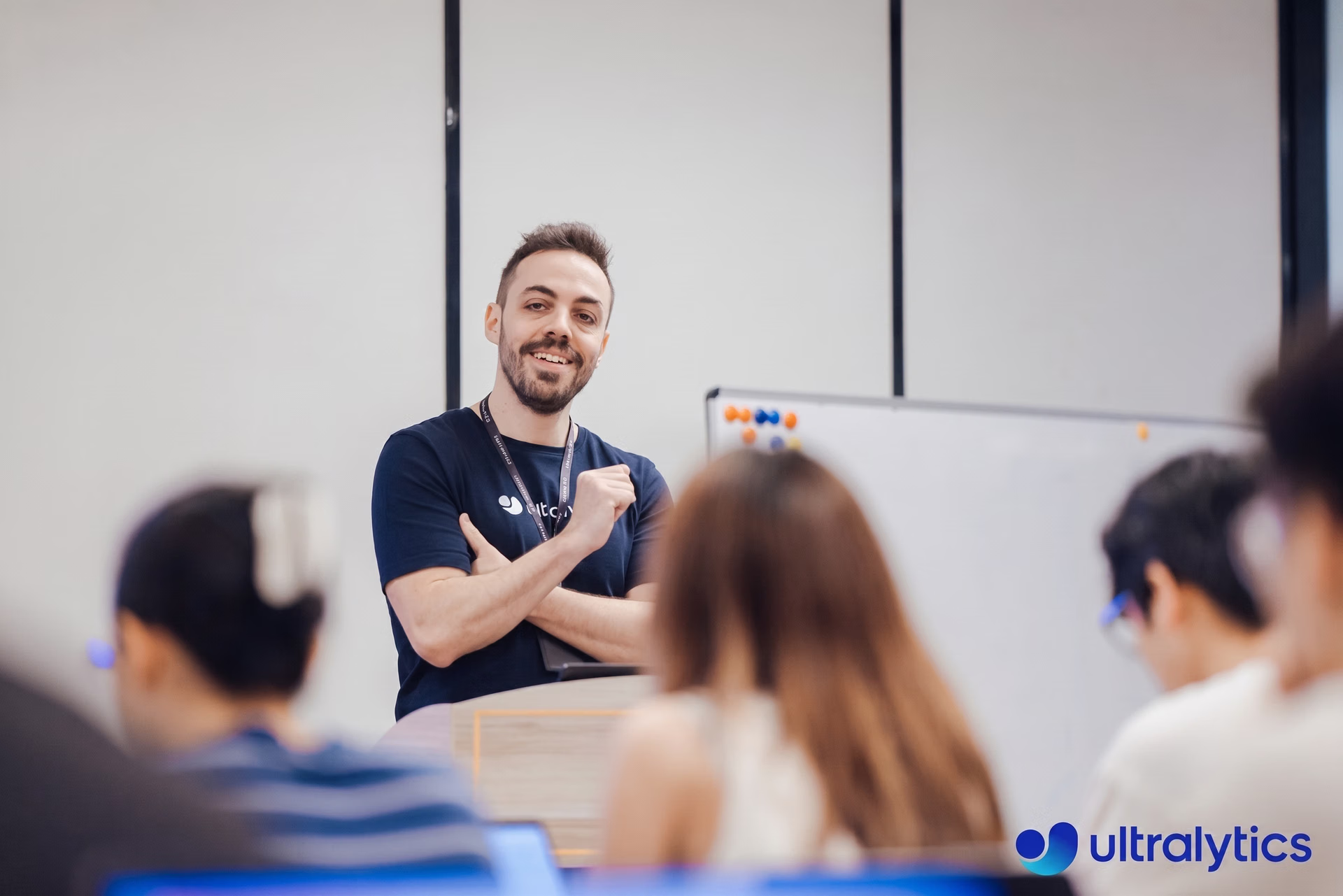
Pablo Karnbaum from the Ultralytics team opened the evening by welcoming attendees and introducing the focus of the meetup: exploring the opportunities and challenges of building AI for the physical world.
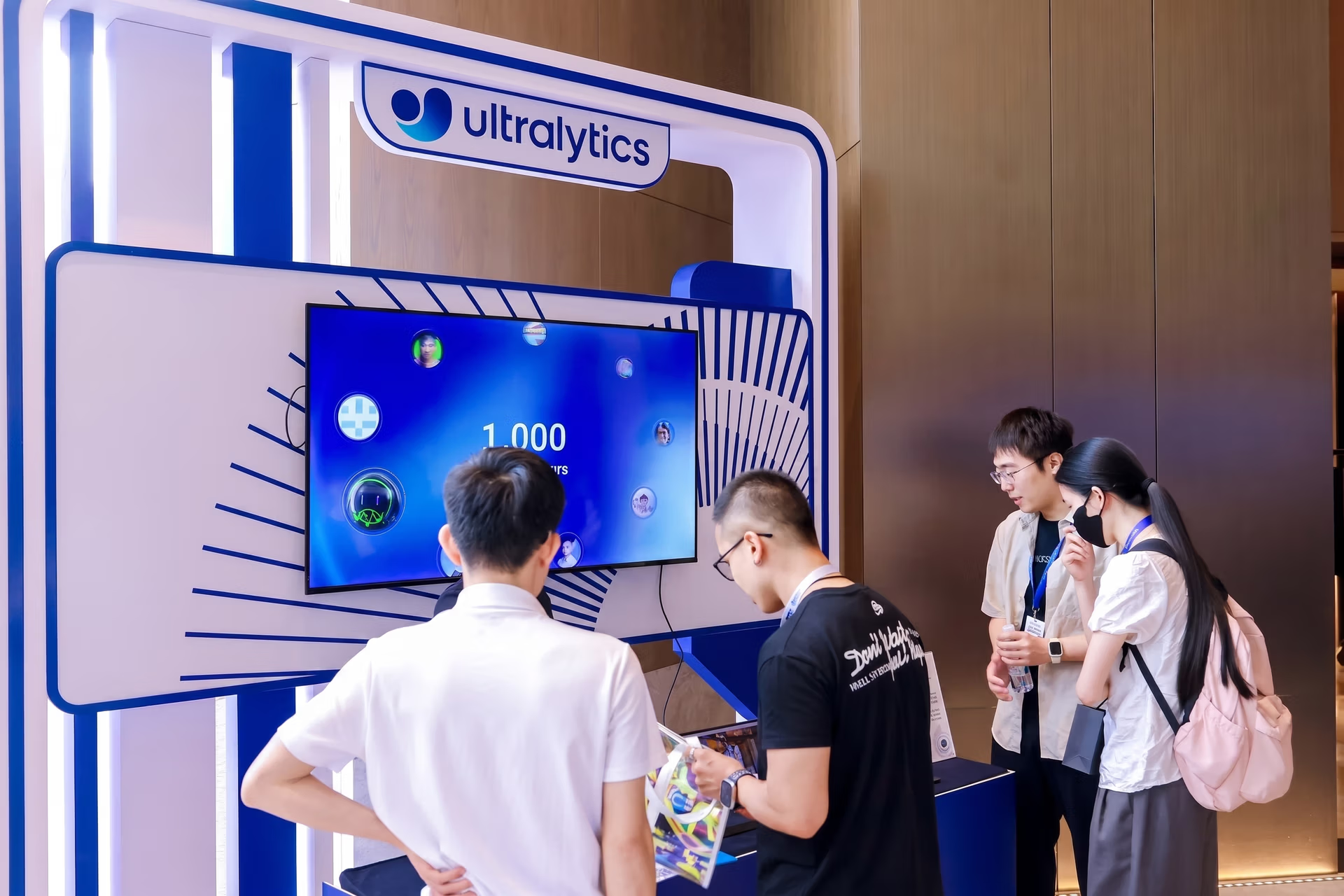
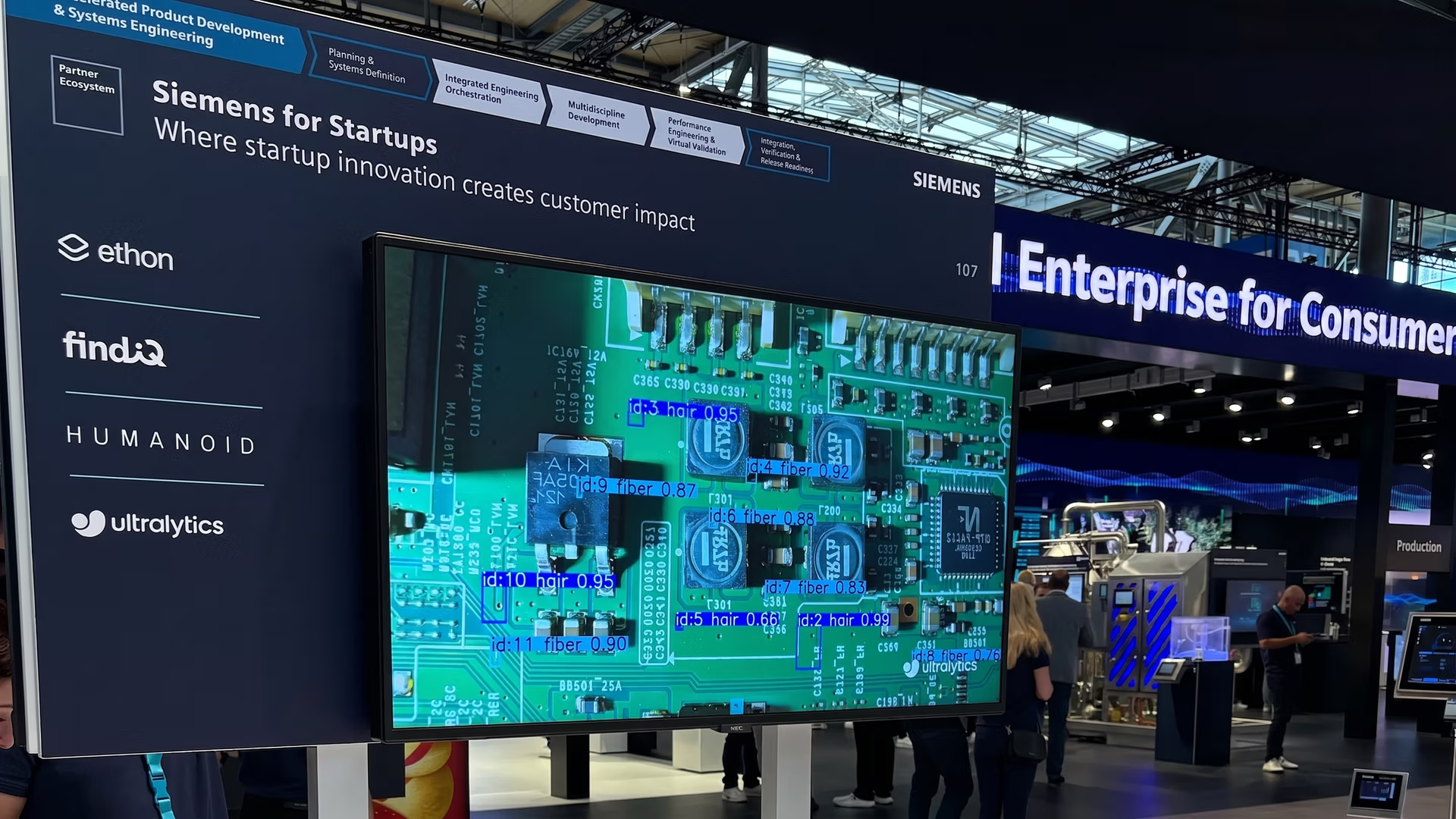
Attendees also had the opportunity to experience Ultralytics YOLO through a live demo, showcasing how computer vision models can run in real time on everyday devices.
The evening brought together different perspectives from across the AI ecosystem, setting the stage for a conversation on how advances in computer vision and physical intelligence are shaping the next generation of real-world applications.
Exploring the future of physical AI#
The evening featured a fireside chat between Ultralytics Founder & CEO Glenn Jocher and James Swingos, COO of General Intuition and former investor at General Catalyst.
Moderated by Pablo Karnbaum, the conversation brought together two complementary perspectives on physical AI: developing models that help machines perceive the world and building intelligent systems that enable them to act within it.
The discussion began by exploring what physical AI actually means and where the technology stands today. In Glenn Jocher’s own words, “Physical AI is any type of AI that has an impact on the physical world, that moves something, that sees something, that takes an action.”
From robotics and drones to automated quality inspection on manufacturing lines, the conversation highlighted how physical AI encompasses a wide range of real-world applications.
James expanded on this perspective, discussing the importance of developing intelligent systems capable of understanding diverse environments, processing multiple sensory inputs, and taking actions independently.
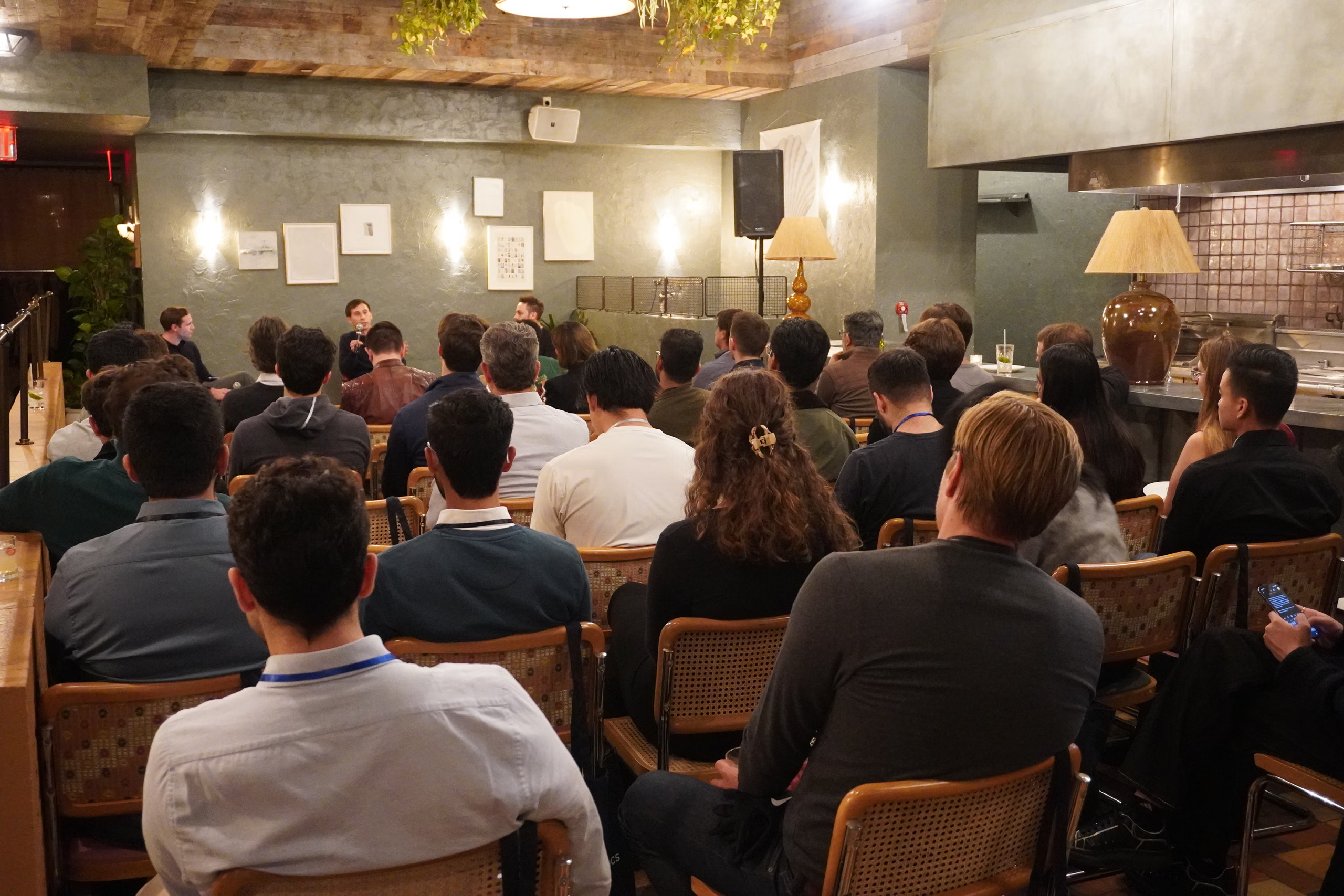
Fig 1. Ultralytics New York Meetup. Glenn Jocher and James Swingos discussing the future of physical AI. (Image source: Ultralytics)
From data to real-world deployment#
A recurring theme throughout the fireside chat was the role of data in advancing physical AI.
James shared how General Intuition leverages large-scale video game datasets to train intelligent systems, using diverse 3D environments and human actions to develop capabilities such as spatial planning, navigation, and decision-making.
On the potential of gaming data, James Swingos explained: “We believe that gaming data is not the route to the finish line, but is the fastest way to build the initiation of intelligence in the physical world.”
Glenn echoed this perspective, explaining that collecting thousands of images from a single video does not necessarily provide the diversity needed to train an effective computer vision model.
The conversation also explored the importance of supporting developers beyond the model itself, from collecting and annotating data to training models and deploying them in real-world environments.
As Glenn explained, “It’s not enough to make amazing models for people to actually get value from them. We really need to provide them much more of a pipeline, an on-ramp to the model and then an off-ramp from the model.”
This is reflected in the development of the Ultralytics Platform, which brings the vision AI workflow together and helps developers move from an initial idea to a real-world application.
Making physical AI more accessible#
The conversation looked at how advances in model efficiency and hardware have transformed what’s possible with computer vision over the past five years.
Glenn reflected on the early days of running Ultralytics YOLO on mobile devices, when models could only run at a few frames per second before devices began to overheat. Today, real-time inference is possible across a wide range of edge devices, from smartphones to embedded systems.
Beyond performance improvements, these developments are lowering the barrier to entry for developers, researchers, students, and businesses looking to build with computer vision.
James shared a similar perspective on the future of robotics, discussing how programmable robotic systems could enable individuals and small businesses to build applications tailored to their own needs.
Looking ahead, the speakers explored what could become possible over the next three to five years, from more accessible robotics applications to a world where intelligent cameras become commonplace.
On the future of computer vision, Glenn Jocher said: “I think it’s going to be in every camera, and we’re probably not even going to call it AI anymore. It’s just going to be a camera.”
The fireside chat concluded with an audience Q&A, covering topics including embodied AI, reinforcement learning, robotic operating systems, and the challenges of deploying physical AI in complex industrial environments.
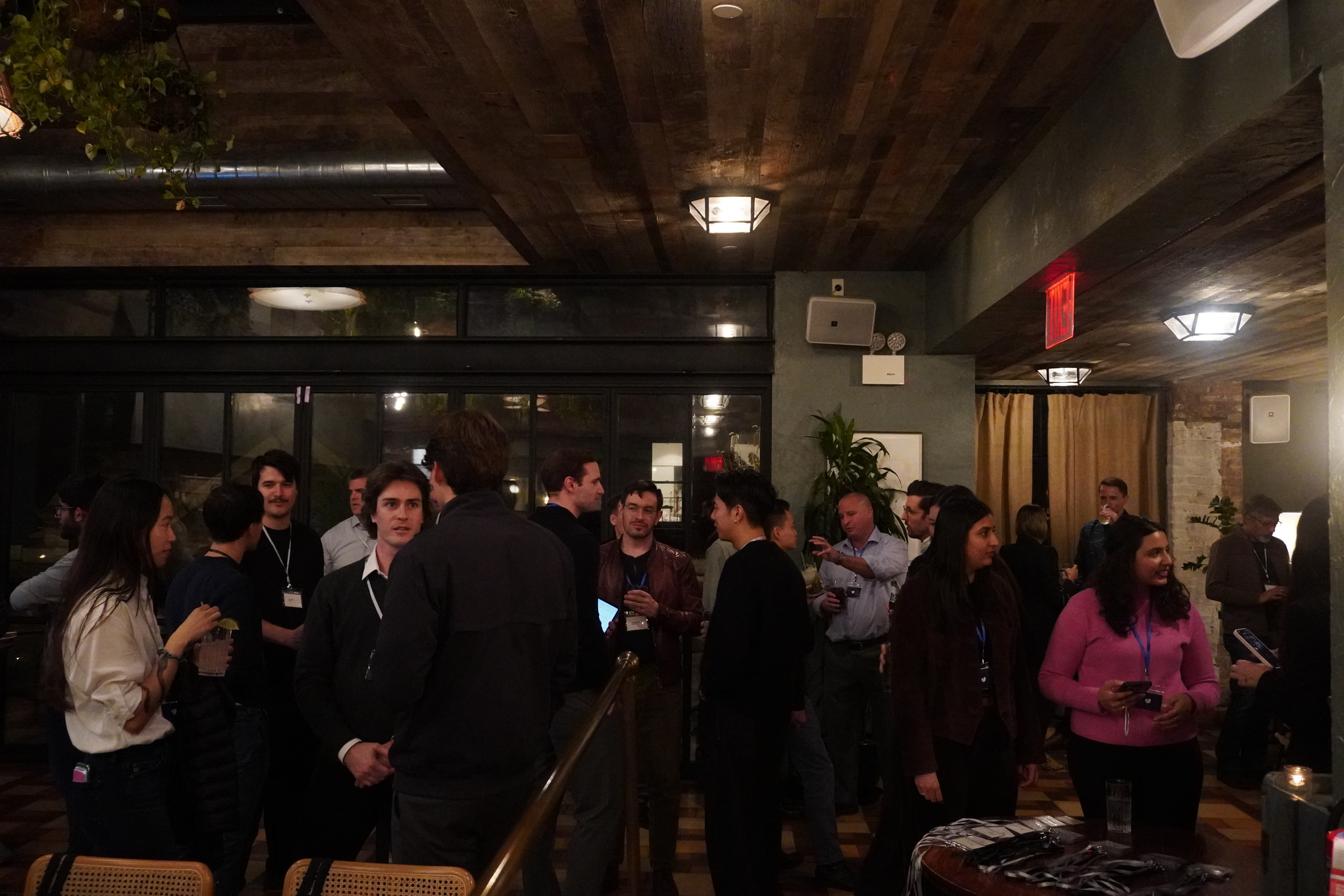
Fig 2. Ultralytics New York Meetup. Connecting with the local AI community. (Image source: Ultralytics)
Connecting the New York AI community#
Beyond the fireside chat, the meetup was about bringing the community together.
Over food and drinks, attendees had the opportunity to meet the Ultralytics team, connect with developers, customers, researchers, founders, and others working across AI and computer vision. There were live demos to explore, Ultralytics merchandise, and plenty of time to exchange ideas and share what people are building.
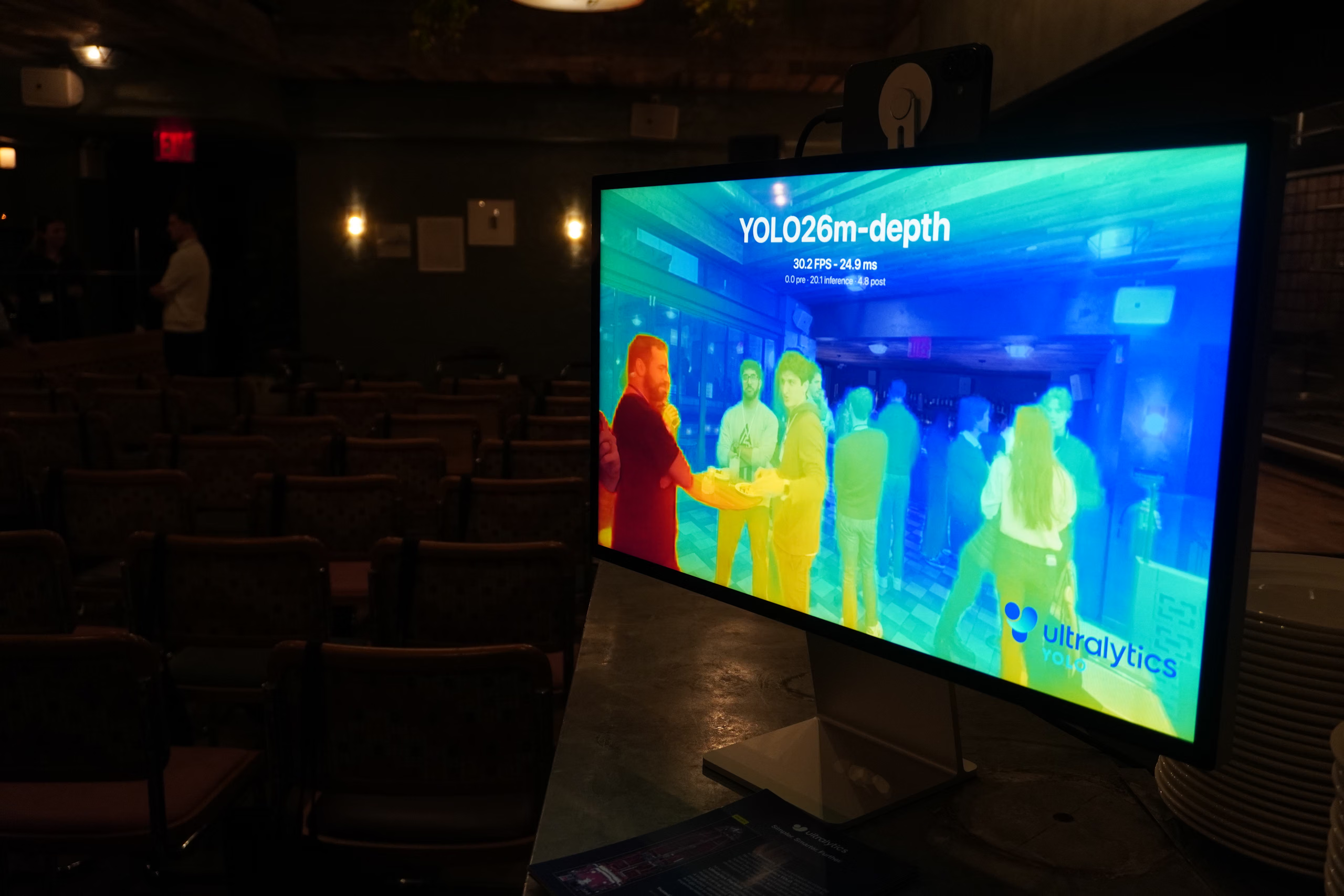
Fig 3. Ultralytics New York Meetup. Exploring Ultralytics YOLO demos. (Image source: Ultralytics)
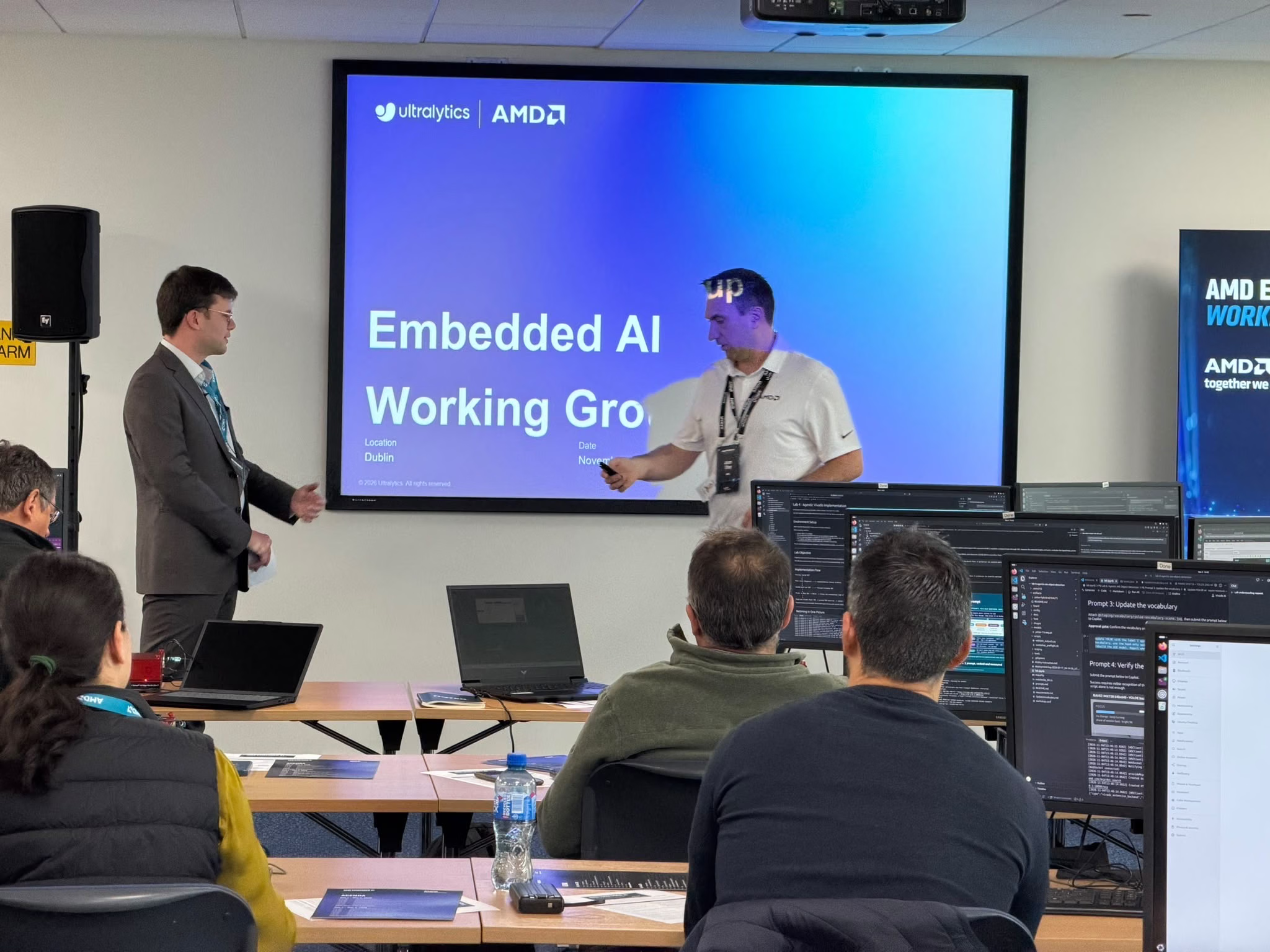
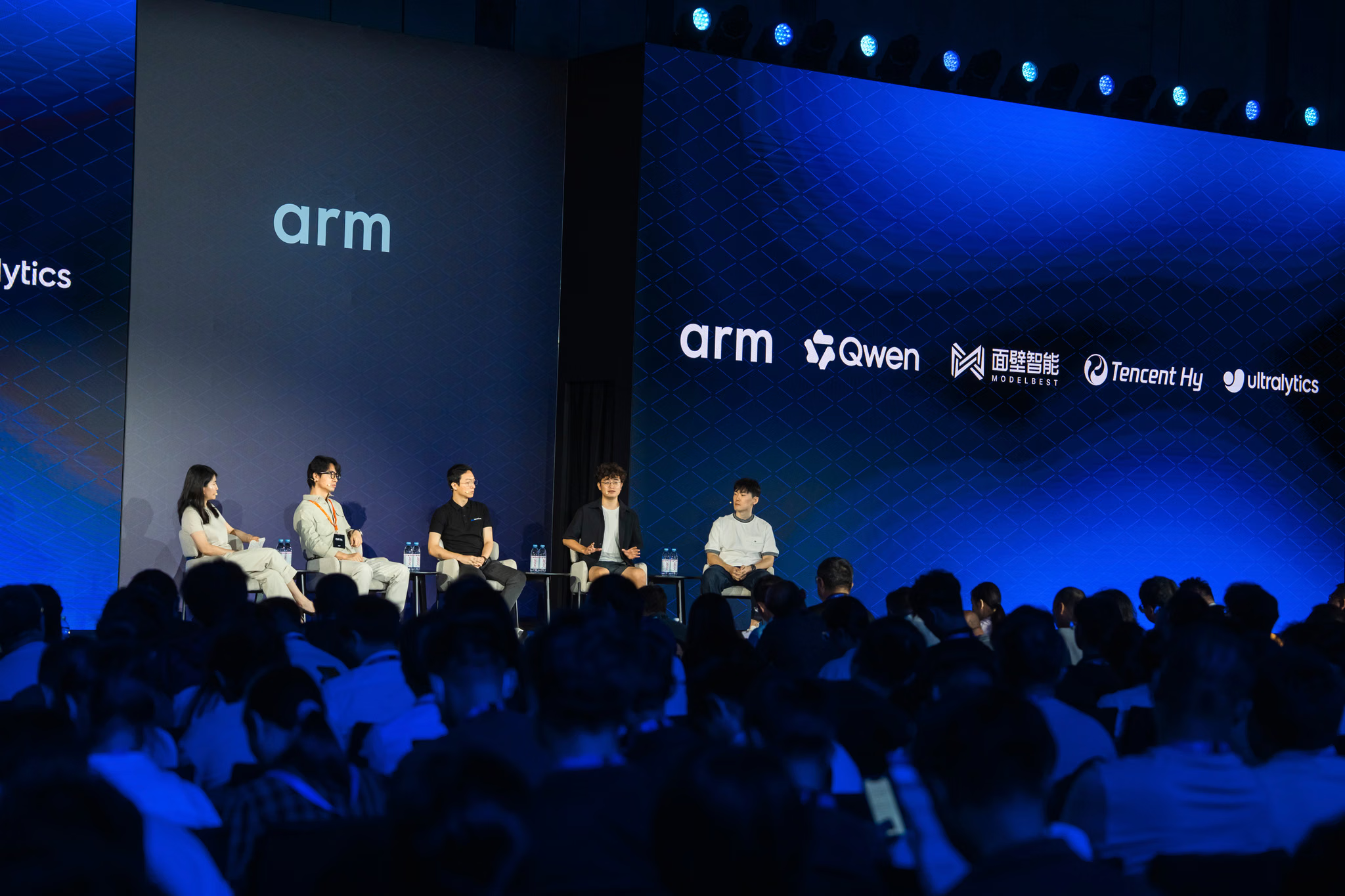
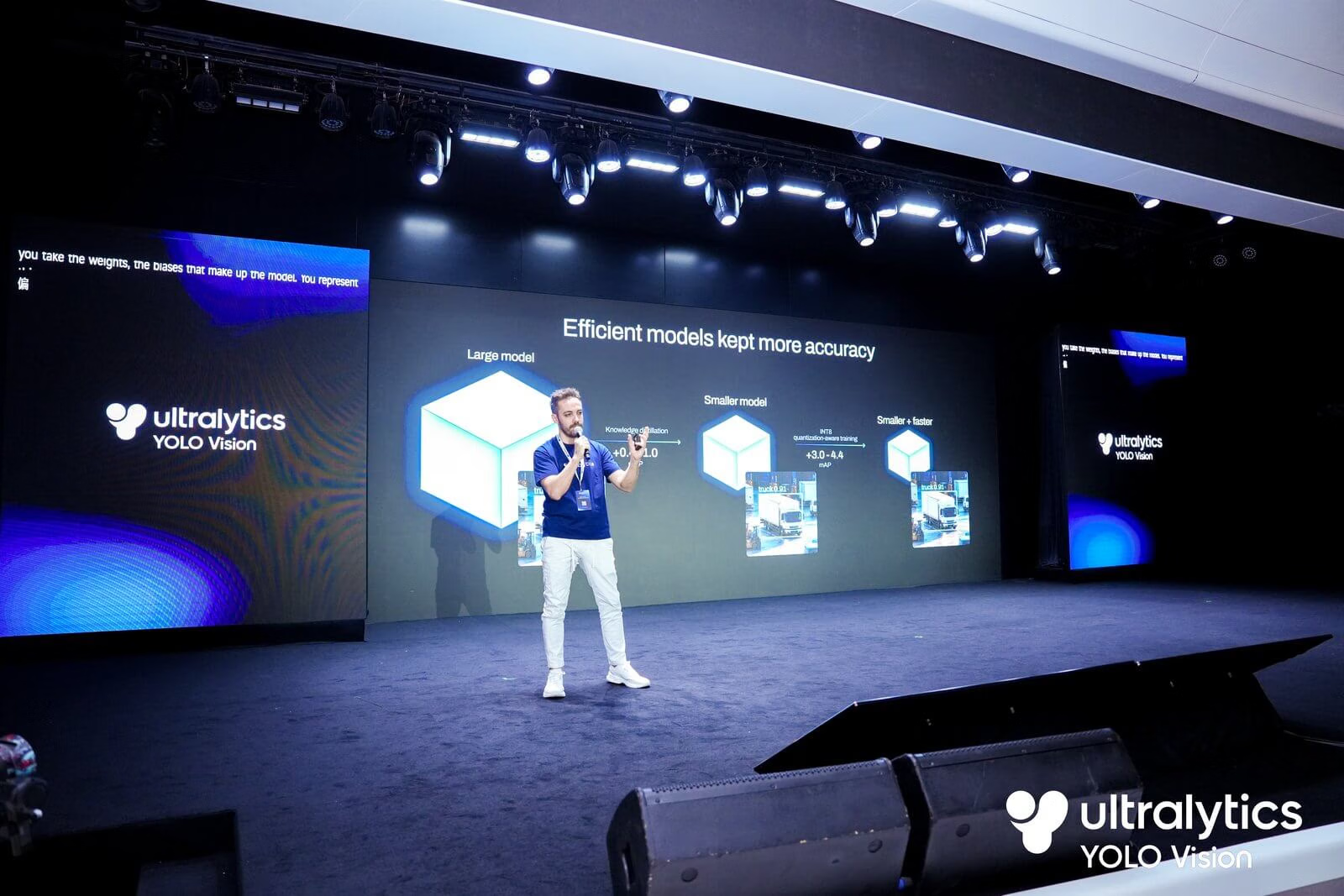
From Ultralytics YOLO Vision 2026 to our London meetup and now New York, we’re continuing to create opportunities for the vision AI community to connect, share knowledge, and explore what’s next for computer vision.
Thank you to everyone who joined us to celebrate this milestone. We look forward to continuing to grow our community in New York and beyond.
Ready to go from idea to real-world application? Get started with Ultralytics Platform and annotate, train, and deploy your vision AI models in one place.
Written by
Global Events Manager · Ultralytics
Comments
Ask a question, share your results, or help someone else.