YOLO Vision 2026:
Press release

Ultralytics YOLO26 to Bring Real-Time Computer Vision to Intel Processors

Ultralytics YOLO26 models are now optimized for Intel OpenVINO, delivering up to 10x faster inference and sub-5 millisecond latency on Intel processors already running the world's factories, stores, and cities.
3
Ultralytics YOLO26 to Bring Real-Time Computer Vision to Intel Processors

SANTA CLARA, Calif. – July 14, 2026 – Ultralytics, the company behind the YOLO family of object detection models, today announced collaboration with Intel to bring production-ready YOLO (You Only Look Once) computer vision models to Intel hardware, making real-time vision AI faster, easier, and more cost-effective to deploy across industries from robotics to manufacturing, logistics, and security.

Most real-world vision AI technologies run on existing, CPU-based infrastructures including industrial PCs, laptops and edge devices. By pairing Ultralytics YOLO models with OpenVINO Toolkit, developers can deploy YOLO models across various platforms powered by any Intel processor, putting the compute where appropriate: CPU, GPU, or NPU.

The result is faster, more cost-effective, and more accessible computer vision for the industries that need it most. The collaboration meets AI where it actually ships, resulting in faster inference in supported CPU/GPU scenarios, with sub-5-millisecond inference reported across YOLO tasks on Intel hardware, reducing latency and deployment costs.

"Enterprises train in the data center, but the real work of vision AI happens at the edge, on factory floors, in retail, in robotics-running on Intel CPUs and NPUs," said Glenn Jocher, Founder and CEO of Ultralytics. "This collaboration means developers get state-of-the-art models like YOLO26 running production-ready on the hardware they already own, eliminating the need for a discrete GPU."

The collaboration also cuts friction for developers, who can train and export their applications to OpenVINO and deploy them with the same familiar Ultralytics Platform or Python package and command line interface, often with a single command. This single workflow supports use cases in a variety of industries, including:

  • Manufacturing: quality inspection, defect detection and process monitoring on factory-floor industrial PCs
  • Logistics: parcel/asset detection, counting and tracking
  • Security: monitoring analytics (people/object detection) plus privacy/compliance monitoring
  • Retail: Shelf availability and inventory intelligence, including detecting SKUs, labels and shelf stock to monitor availability, planogram compliance and stock movement; real-time product recognition, including detecting, segmenting or tracking retail products for mobile applications, smart stores and e-commerce.
  • Healthcare: internal imaging workflow improvement, annotation workflow, model validation and internal research-to-production workflows.
  • Robotics: real-time perception on compact, power-efficient Intel hardware
  • Smart cities: scalable vision on distributed edge infrastructure
  • Edge AI broadly: bringing advanced vision to devices that use integrated AI acceleration already available on the SoC

“Extending Intel's AI PC and physical AI platforms with leading open vision models helps developers deploy applications with real-world efficient AI inferencing on processors with AI acceleration built right in. This ensures that some of the industry’s top models are optimized for the latest Intel Core Ultra processors and beyond,” said Matthew Formica, Intel Senior Director & Global Head of Edge Technical Marketing. “We are excited to partner with Ultralytics to build on this momentum.”

About Ultralytics#

Founded by Glenn Jocher, Ultralytics is the leading force in vision AI, best known for its Ultralytics YOLO (You Only Look Once) models. With over 135K GitHub stars, 300 million Pip downloads, and 3.3+ billion model usages, Ultralytics YOLOv5, YOLOv8, YOLO11, and now YOLO26 have become the most widely recognized object detection models globally. Ultralytics empowers users with easy-to-use, cutting-edge AI technology. Our mission is to simplify and democratize the use of AI, making it accessible and impactful across industries ranging from manufacturing to healthcare and more.

©Intel, the Intel logo, and other Intel marks are trademarks of Intel Corporation or its subsidiaries.

Media Contact: Altaïr Kabunda-Margalet - altair@ultralytics.com

From the blog

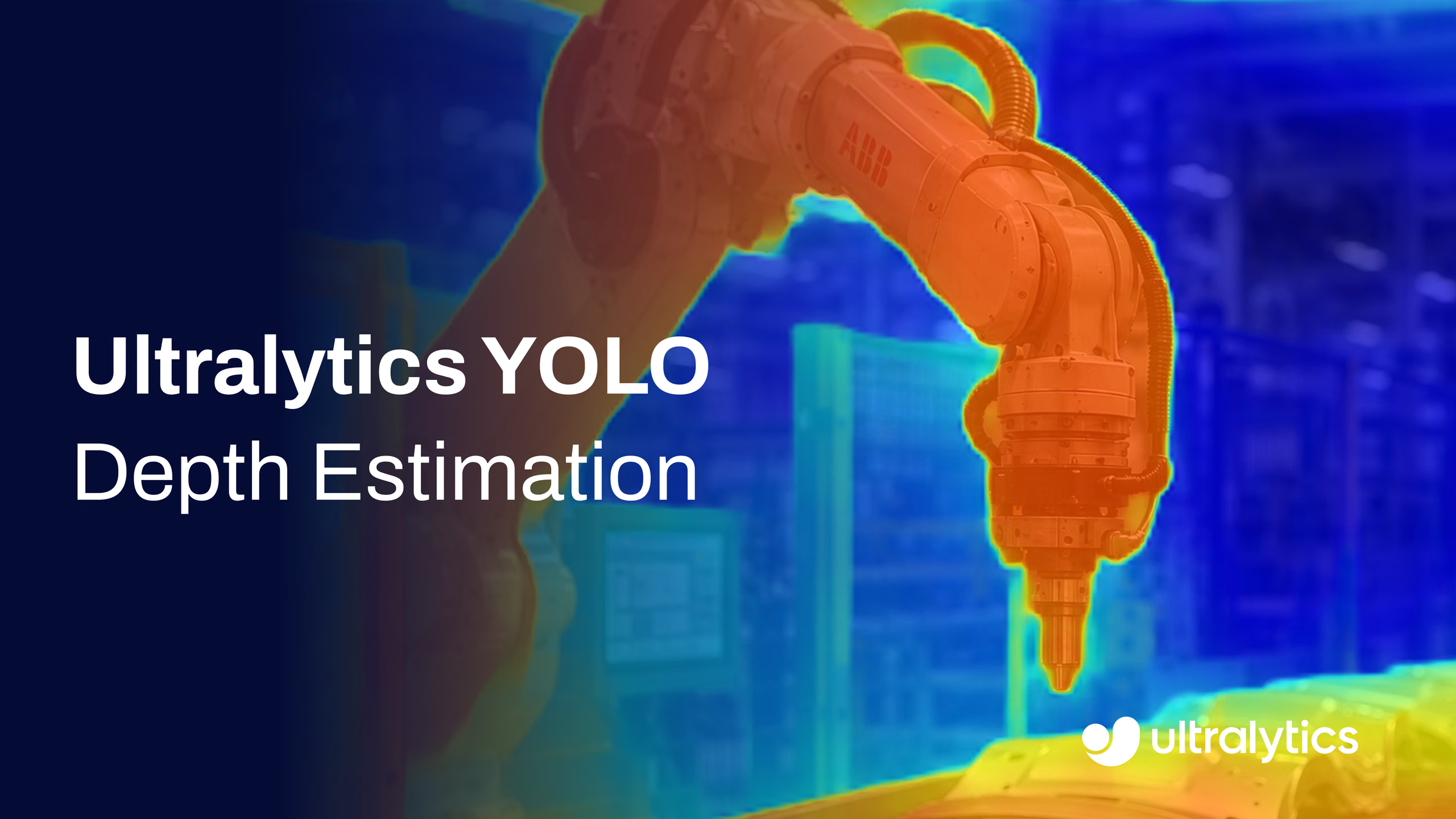
Ultralytics YOLO26 now supports monocular depth estimation

Ultralytics YOLO26 now supports monocular depth estimation

Learn how the new depth estimation task in Ultralytics YOLO26 predicts per-pixel, metric-scale depth from a single RGB image, no stereo rig or LiDAR required.
Learn more
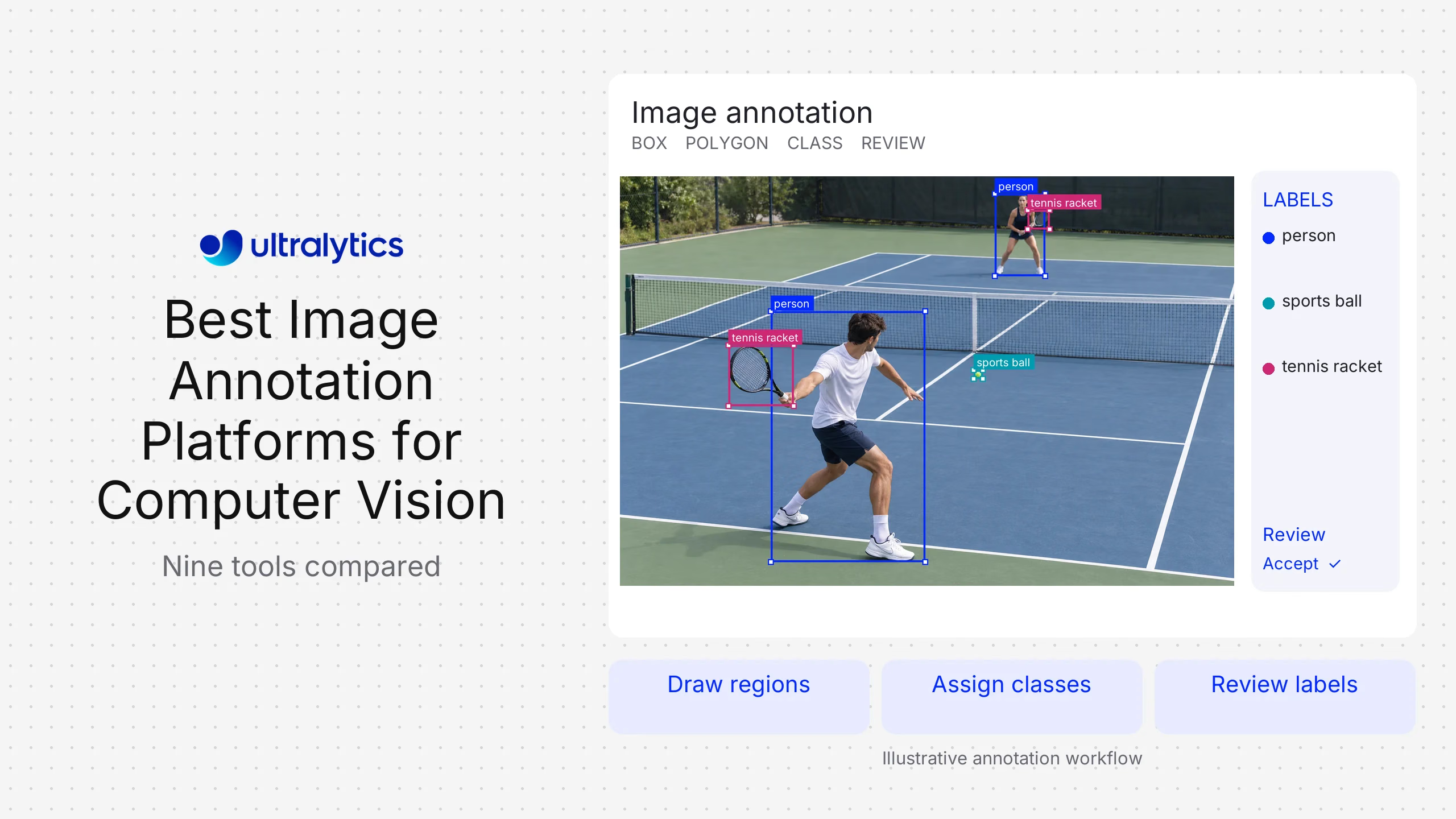
Best Image Annotation Platforms for Computer Vision

Best Image Annotation Platforms for Computer Vision

Compare nine image annotation platforms for computer vision: CVAT, Encord, Label Studio, Labelbox, Roboflow, Scale AI, SuperAnnotate, Ultralytics and V7.
Learn more
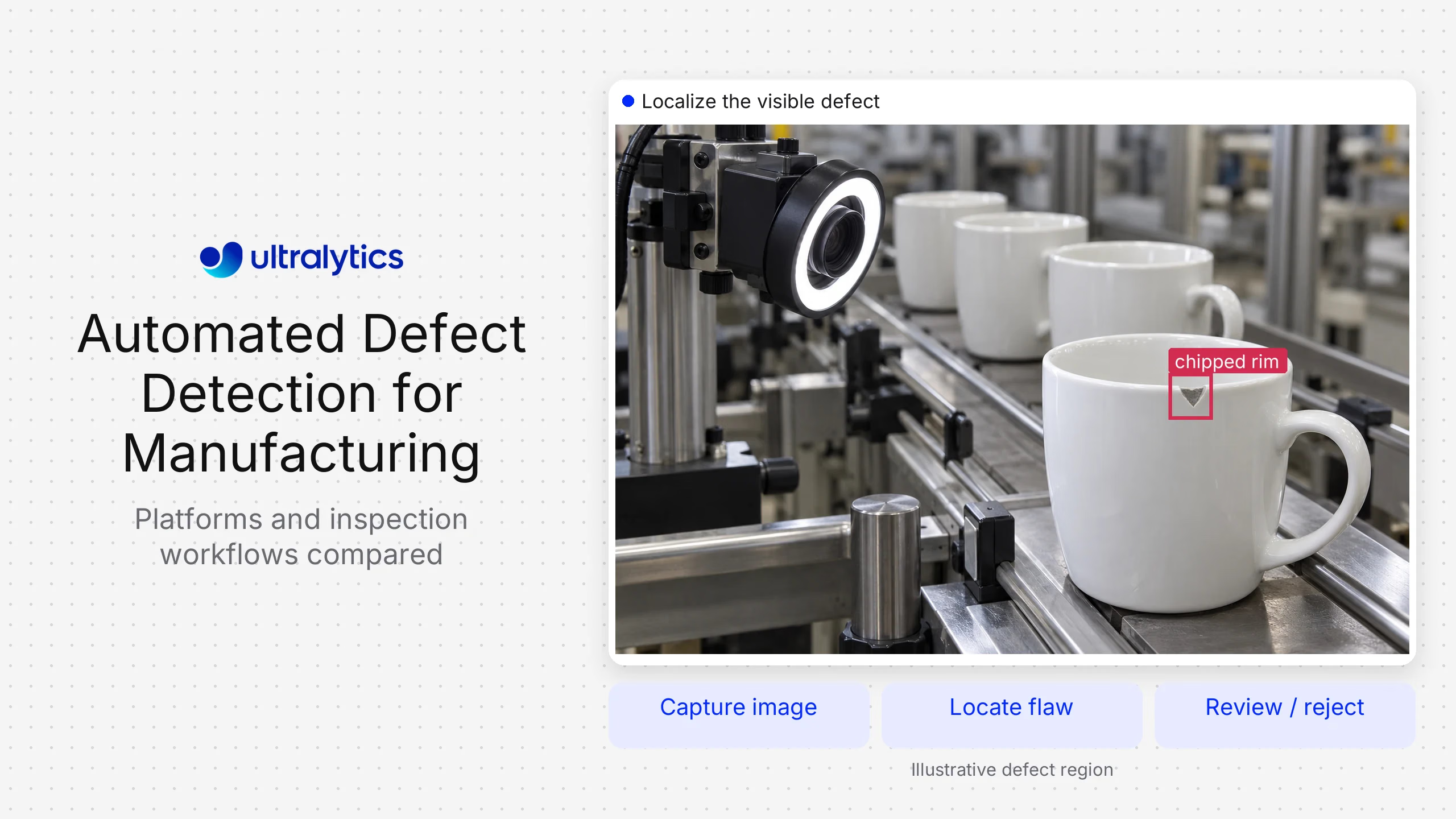
Automated Defect Detection for Manufacturing: Platforms Compared

Automated Defect Detection for Manufacturing: Platforms Compared

Compare automated defect-detection platforms: Cognex, Instrumental, Keyence, Landing AI, Overview and Ultralytics, plus how to match model task to defect.
Learn more
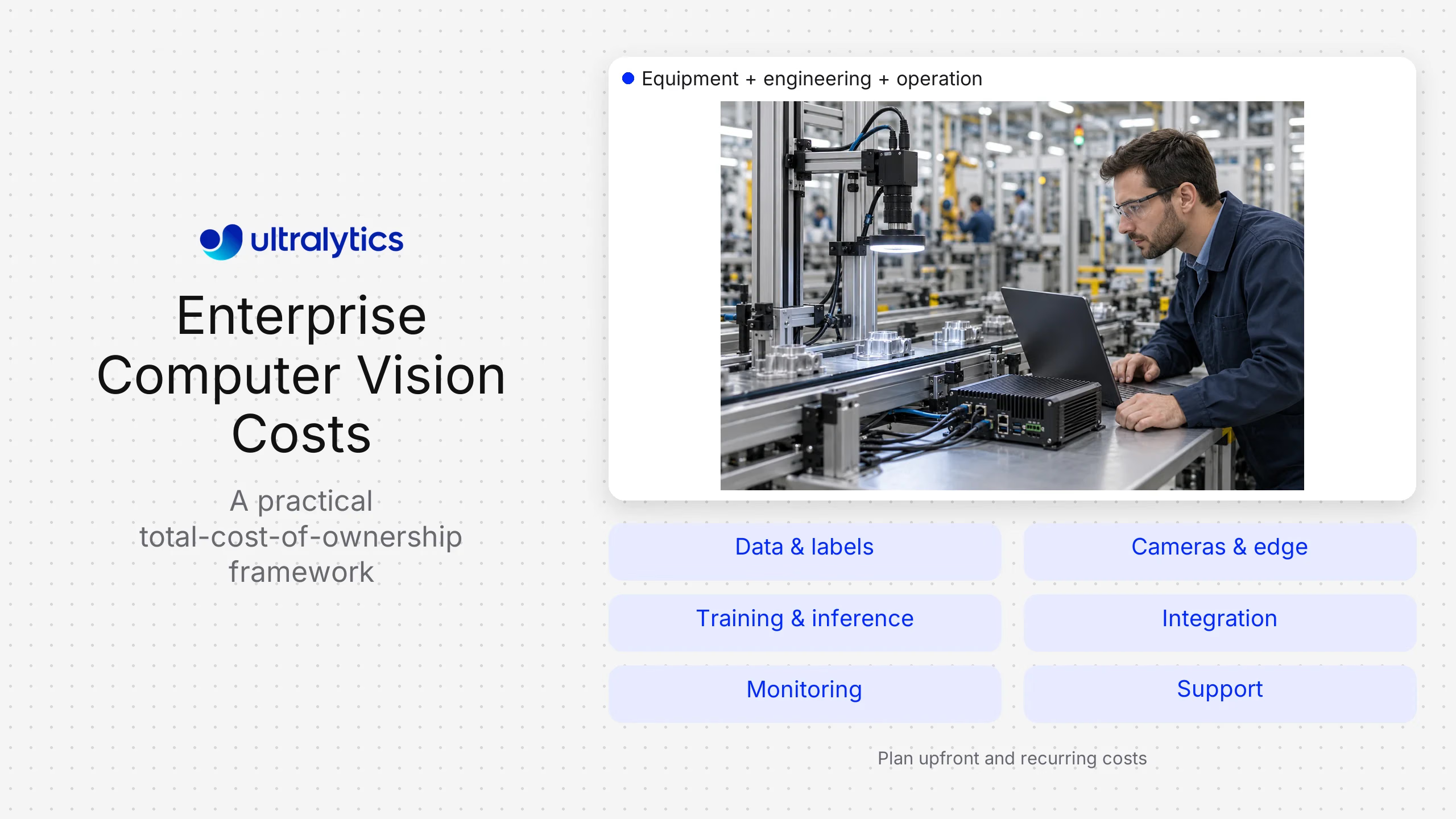
What Enterprise Computer Vision Costs: A TCO Framework

What Enterprise Computer Vision Costs: A TCO Framework

A total-cost framework for enterprise computer vision covering data, annotation, cameras, edge hardware, training, inference, integration and retraining.
Learn more
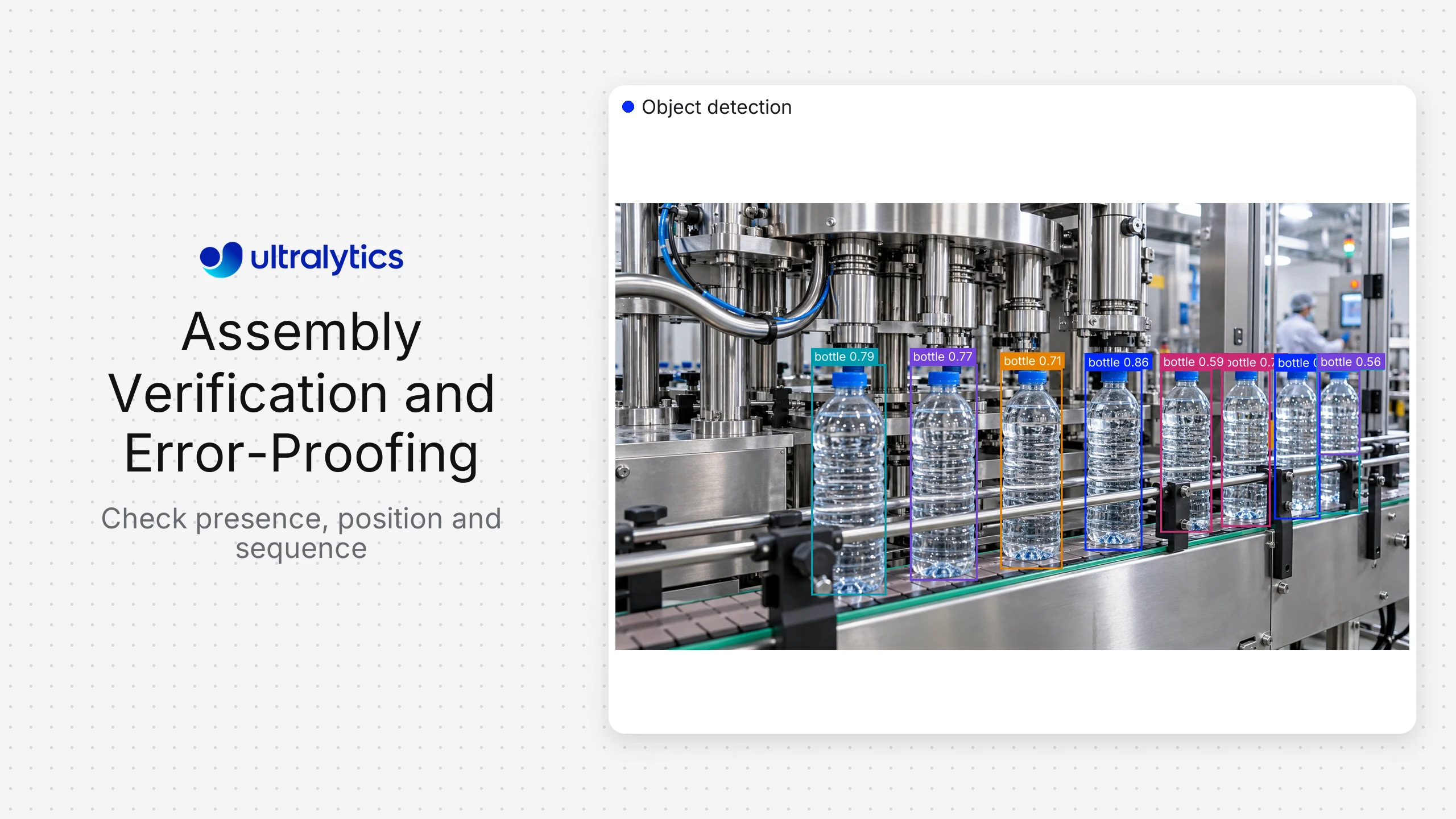
Assembly Verification and Error-Proofing with Computer Vision

Assembly Verification and Error-Proofing with Computer Vision

How computer vision verifies assembly completeness, correctness and sequence: imaging station design, model task choice, PLC integration and validation.
Learn more
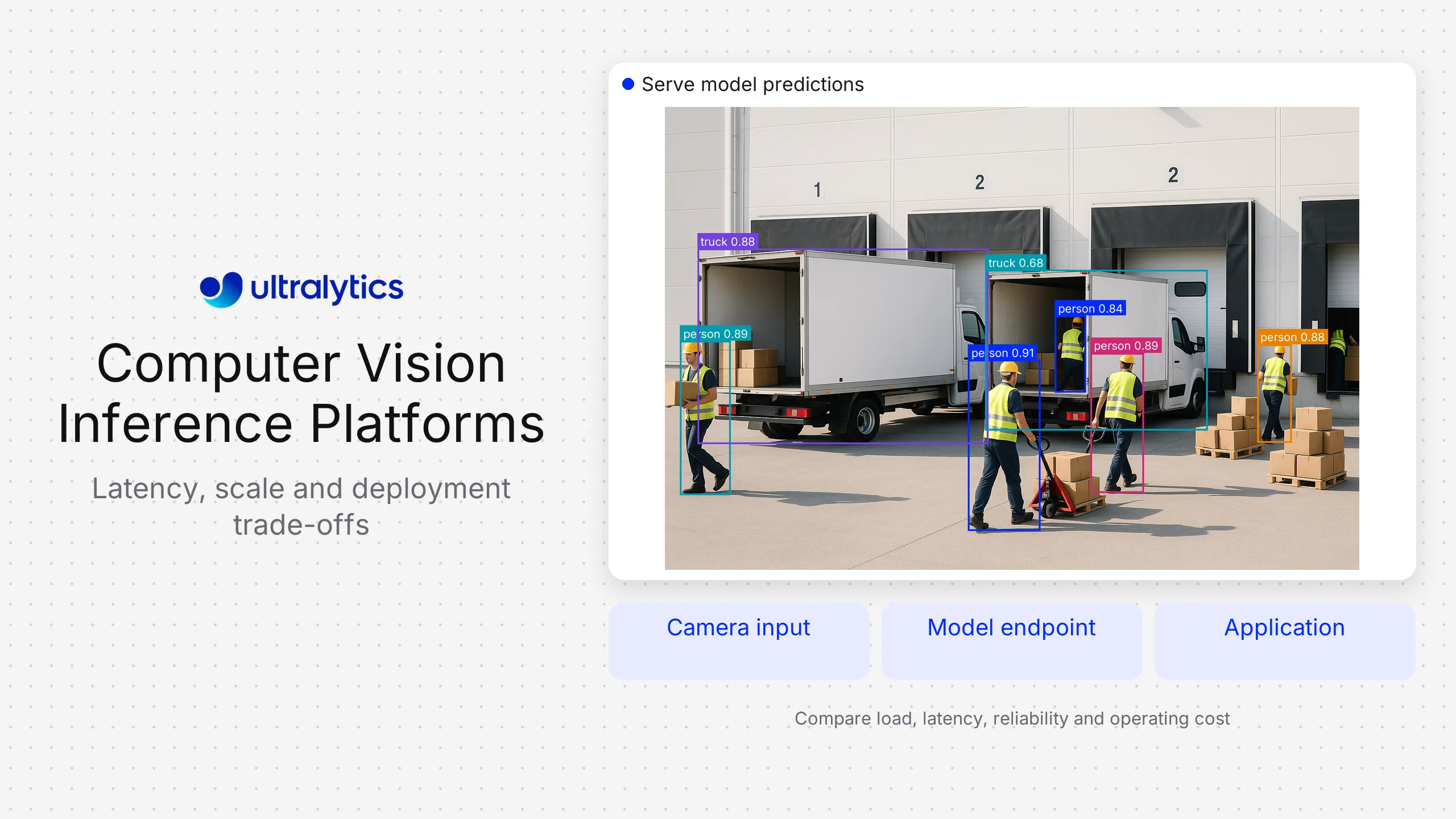
Computer Vision Inference at Scale: Seven Platforms Compared

Computer Vision Inference at Scale: Seven Platforms Compared

Seven computer vision inference platforms compared: Azure ML, KServe, NVIDIA Triton, Roboflow, SageMaker AI, Ultralytics and Vertex AI, on latency and scale.
Learn more
Ultralytics YOLO Vision 2026: Everything you need to know

Ultralytics YOLO Vision 2026: Everything you need to know

Join Ultralytics YOLO Vision 2026 on September 13 in Shenzhen or online for new YOLO models, product launches, live demos, and real-world vision AI.
Learn more
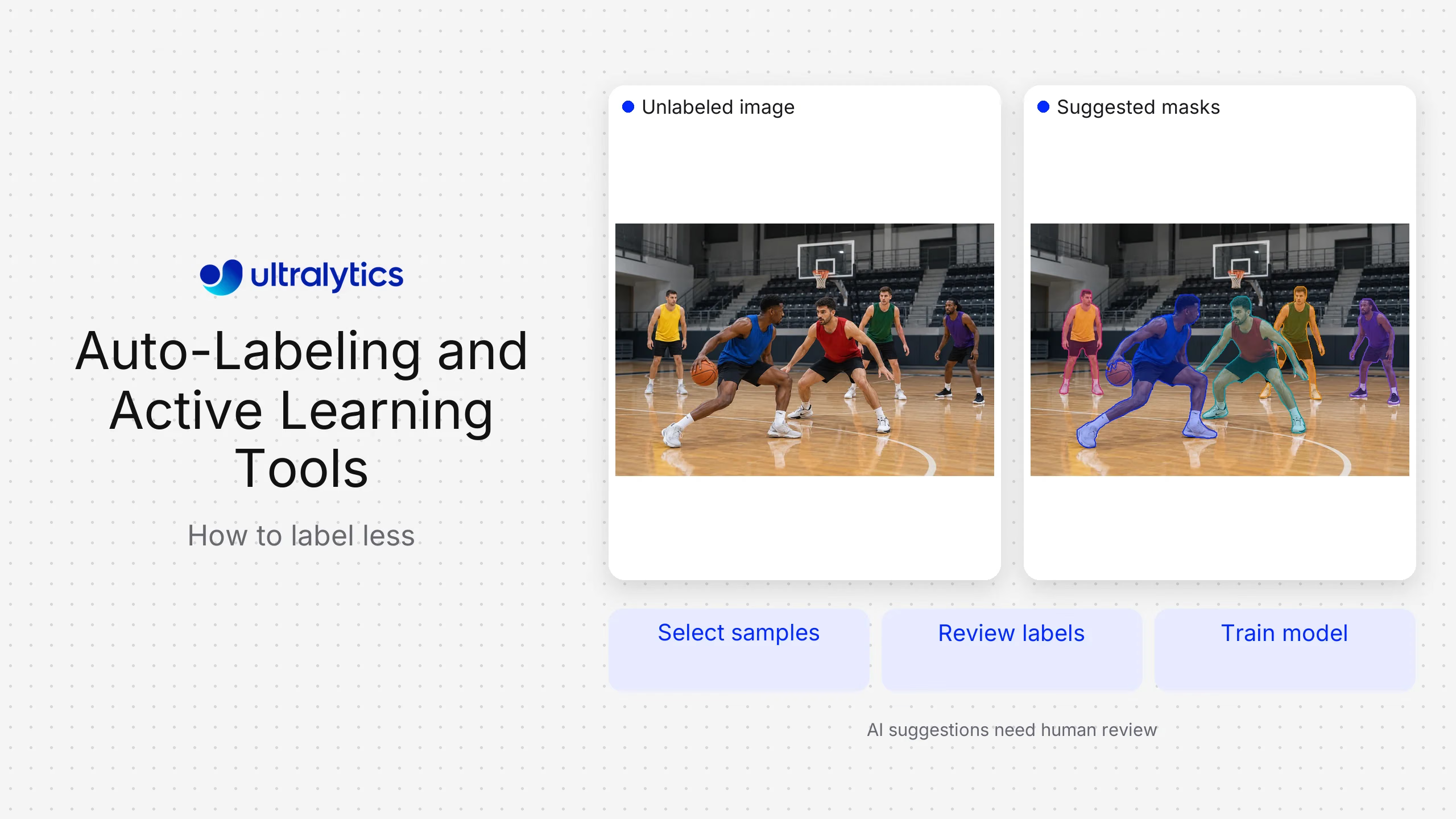
How to Label Less: Auto-Labeling and Active-Learning Tools Compared

How to Label Less: Auto-Labeling and Active-Learning Tools Compared

Ten auto-labeling and active-learning tools compared: CVAT, Encord, Labelbox, Lightly, Roboflow, SuperAnnotate, Ultralytics, V7 and Voxel51 FiftyOne.
Learn more
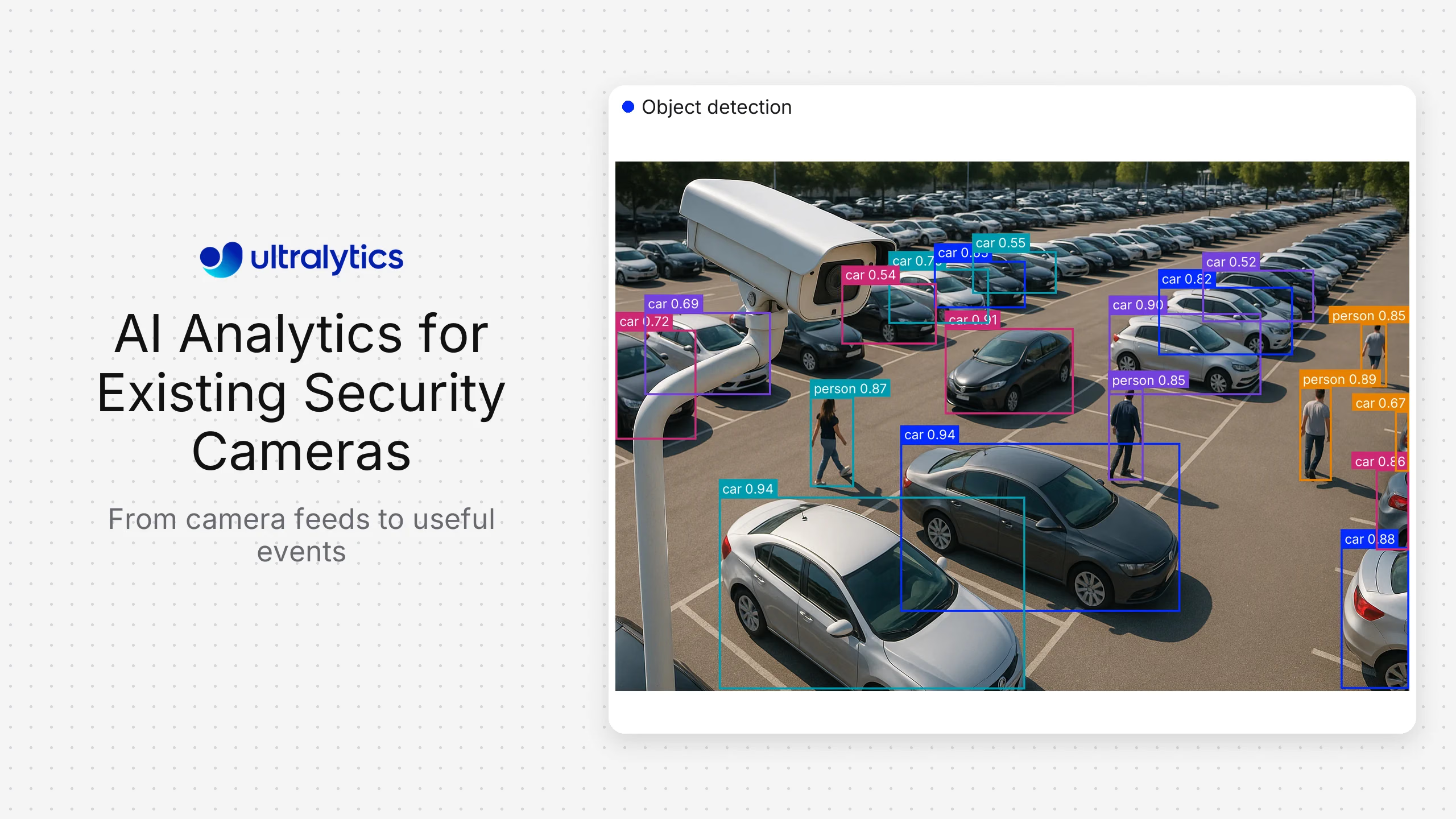
How to Add AI Analytics to Existing Security Cameras

How to Add AI Analytics to Existing Security Cameras

Three routes to adding AI analytics to an existing camera estate: analytics layers, VMS upgrades and self-hosted models, and the constraints that decide.
Learn more
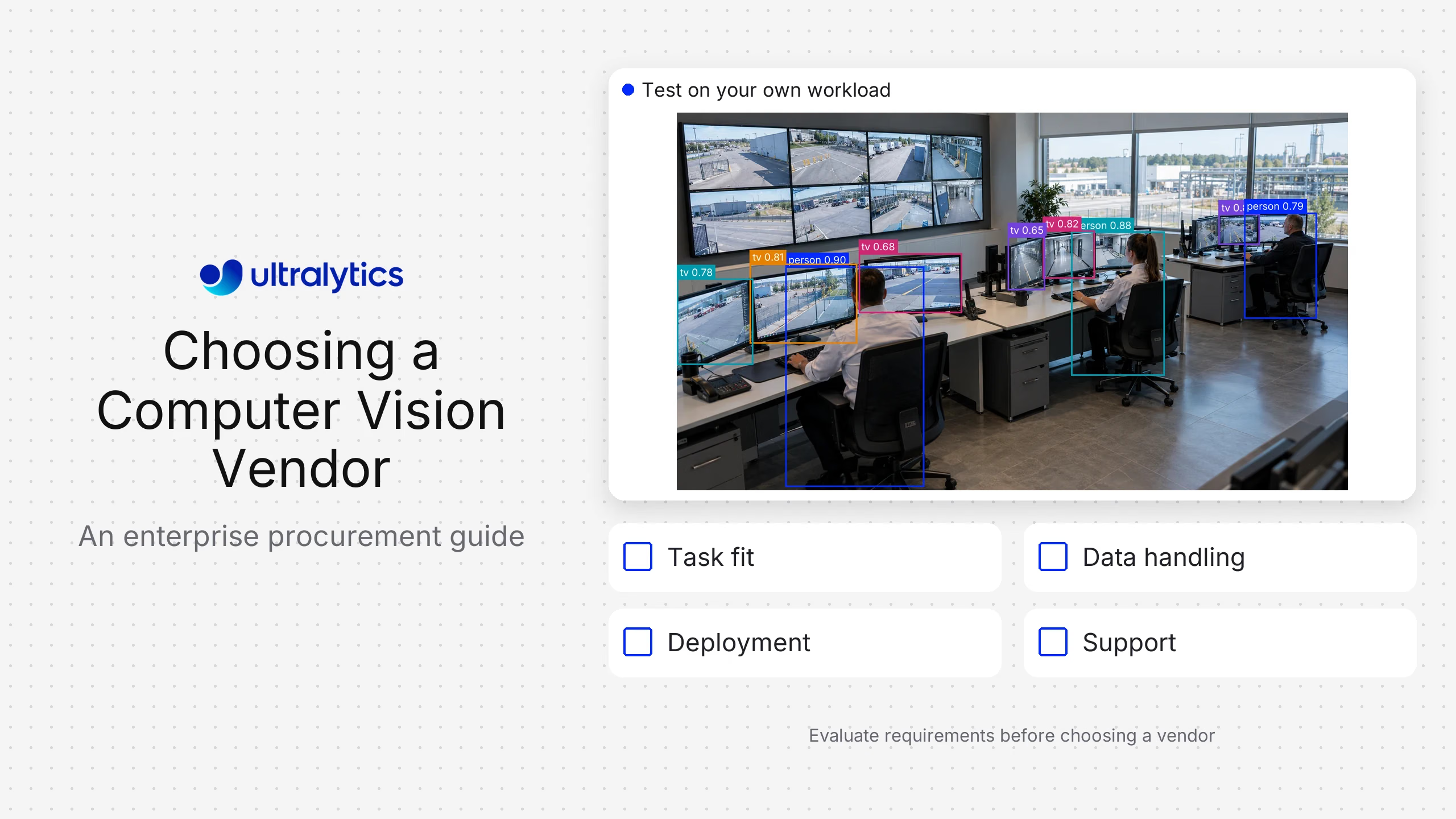
Choosing a Computer Vision Vendor: An Enterprise Procurement Guide

Choosing a Computer Vision Vendor: An Enterprise Procurement Guide

A procurement view of eight computer vision vendors: AWS, Azure, Cognex, Encord, Landing AI, NVIDIA, Roboflow and Ultralytics, with licensing checks.
Learn more
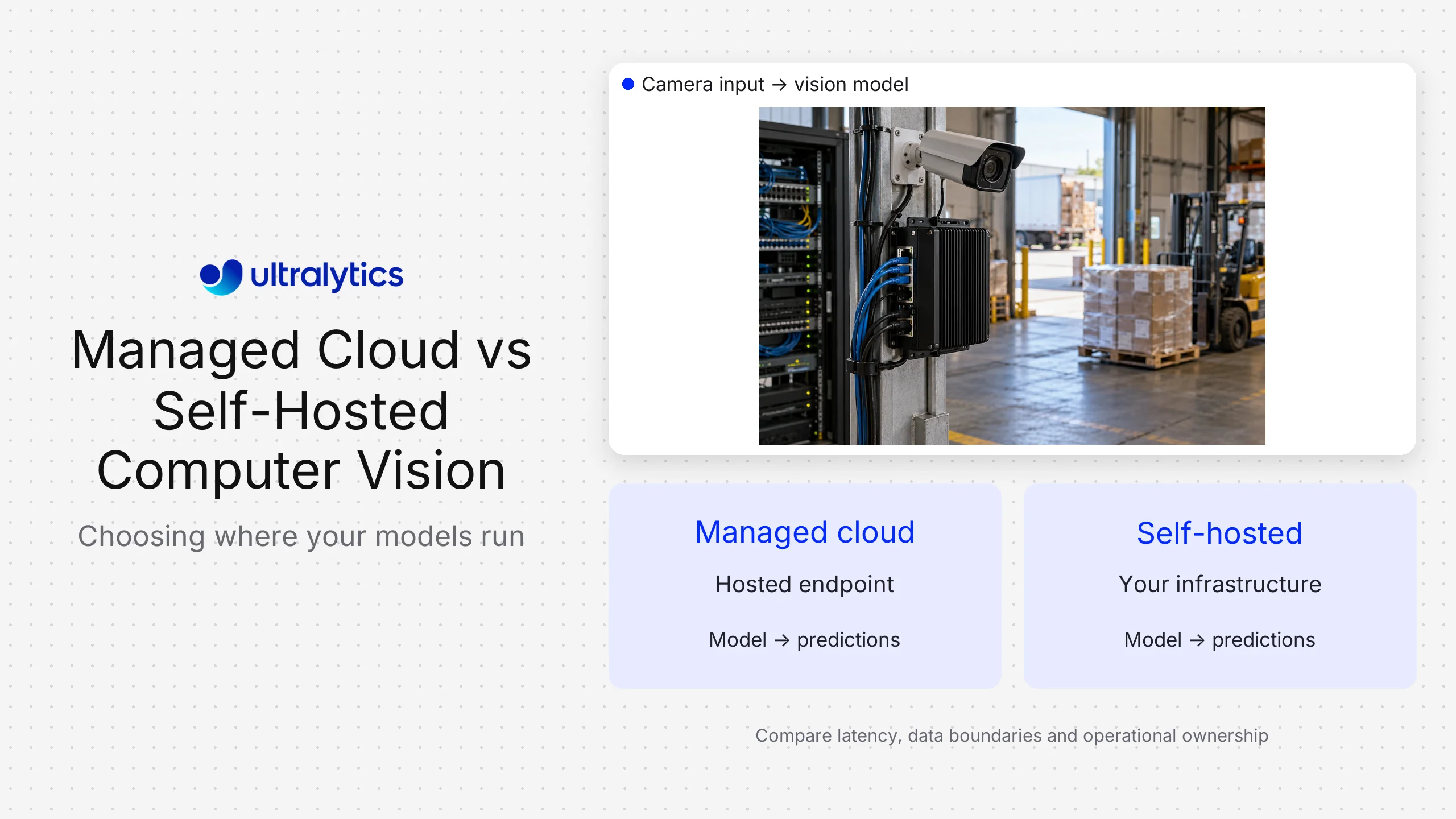
Managed Cloud vs Self-Hosted Computer Vision Deployment

Managed Cloud vs Self-Hosted Computer Vision Deployment

Compare managed cloud and self-hosted computer vision deployment on cost, latency, data boundaries, scaling and exit risk, with three deployment patterns.
Learn more
Exporting Ultralytics YOLO on LiteRT

Exporting Ultralytics YOLO on LiteRT

Learn how the new LiteRT export integration brings Ultralytics YOLO inference to mobile, embedded, edge, and browser environments in a single, unified format.
Learn more
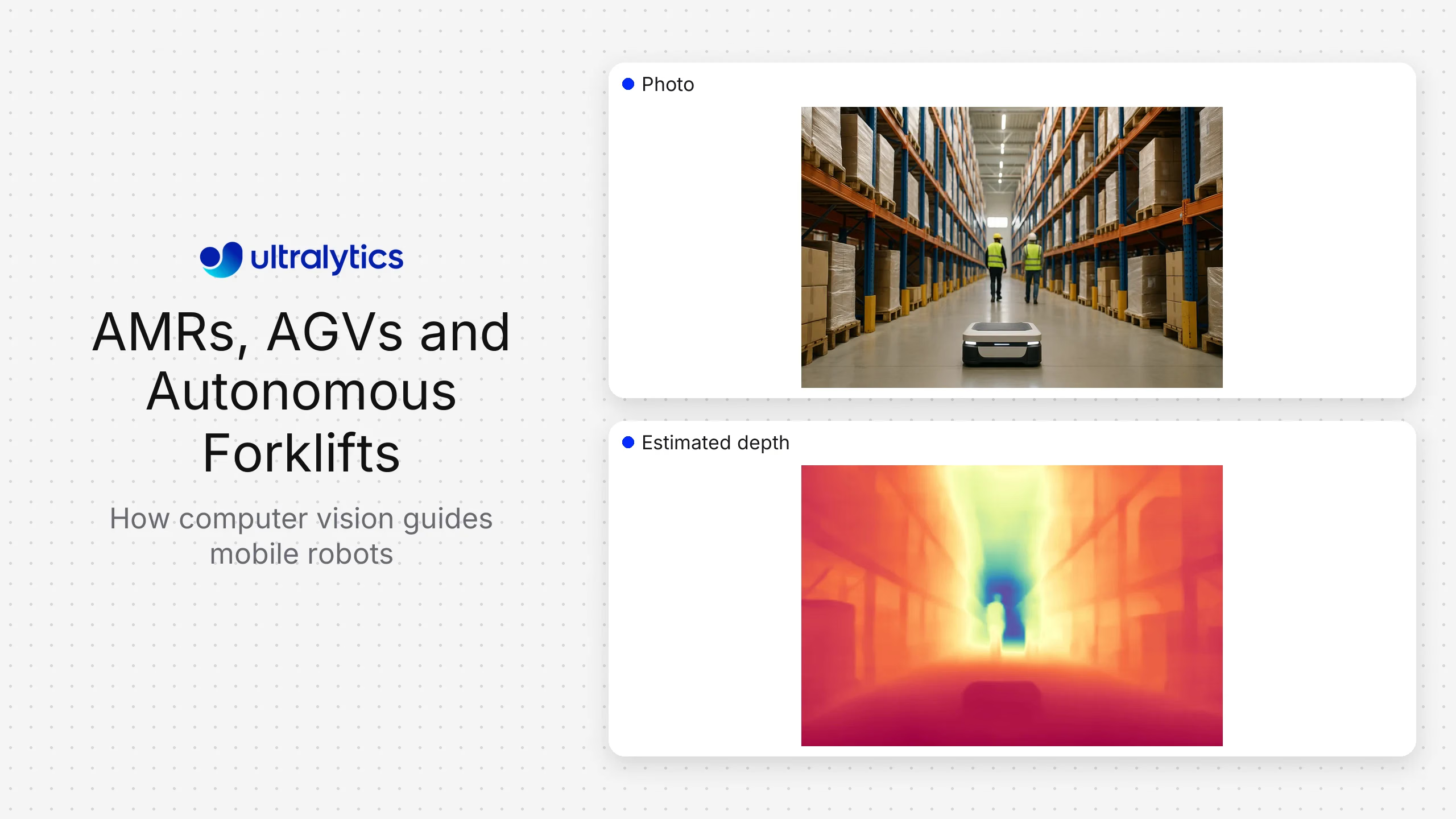
How Computer Vision Guides AMRs, AGVs and Autonomous Forklifts

How Computer Vision Guides AMRs, AGVs and Autonomous Forklifts

What computer vision contributes to AMR, AGV and autonomous forklift navigation, how camera, lidar and depth complement each other, and where safety sits.
Learn more
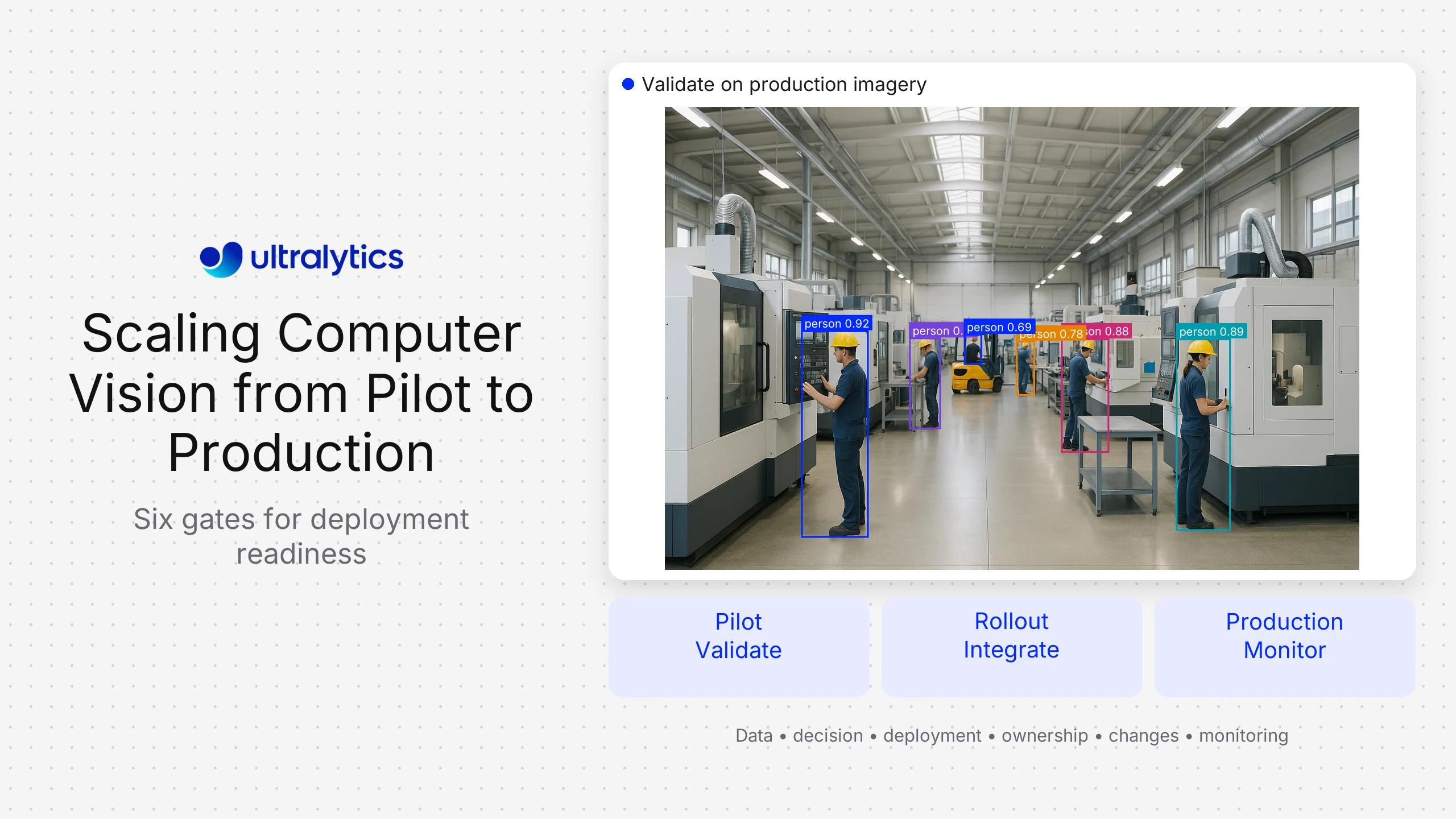
Scaling Computer Vision from Pilot to Production

Scaling Computer Vision from Pilot to Production

Six stage gates for taking computer vision from pilot to production, covering coverage matrices, workflow validation, model operations and site readiness.
Learn more
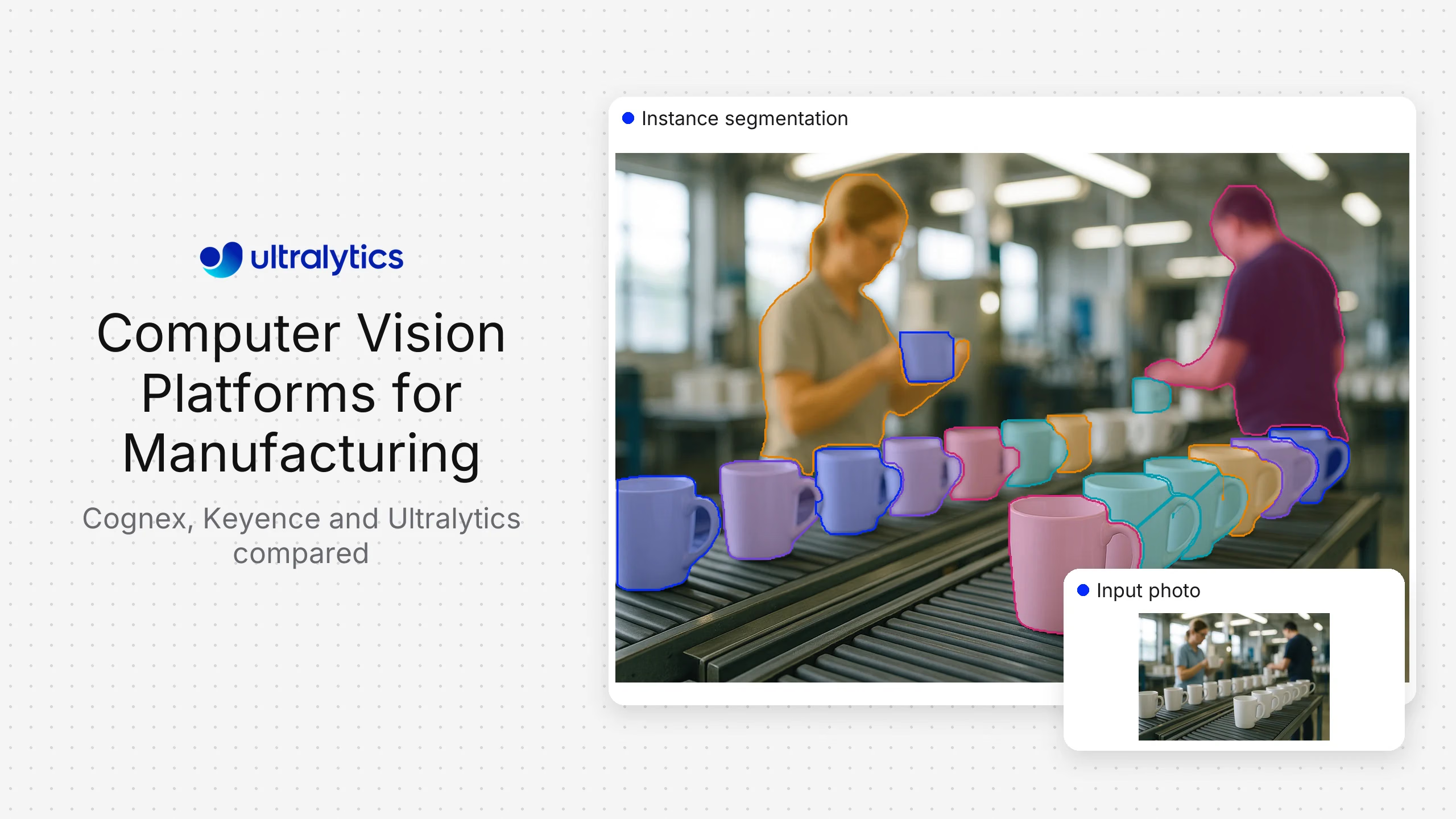
Computer Vision Platforms for Manufacturing: YOLO, Cognex and Keyence Compared

Computer Vision Platforms for Manufacturing: YOLO, Cognex and Keyence Compared

Compare computer vision platforms for manufacturing: Cognex, Edge Impulse, Keyence, Landing AI, Roboflow and Ultralytics YOLO, on inspection and MES fit.
Learn more
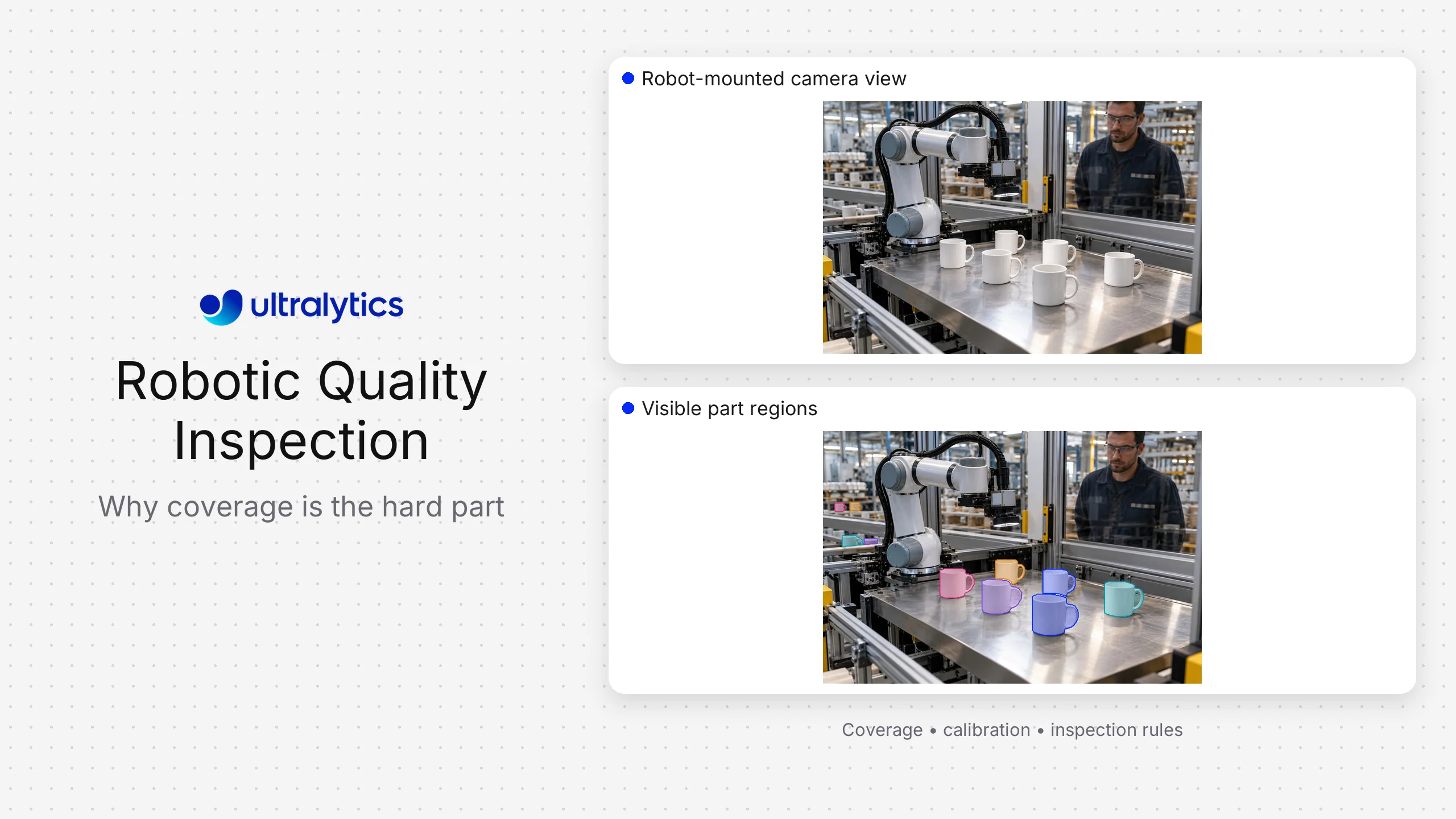
Robotic Quality Inspection: Why Coverage Is the Hard Part

Robotic Quality Inspection: Why Coverage Is the Hard Part

How robotic quality inspection works: scan planning, calibration, robot and vision synchronization, multi-view fusion, coverage proof and quality records.
Learn more
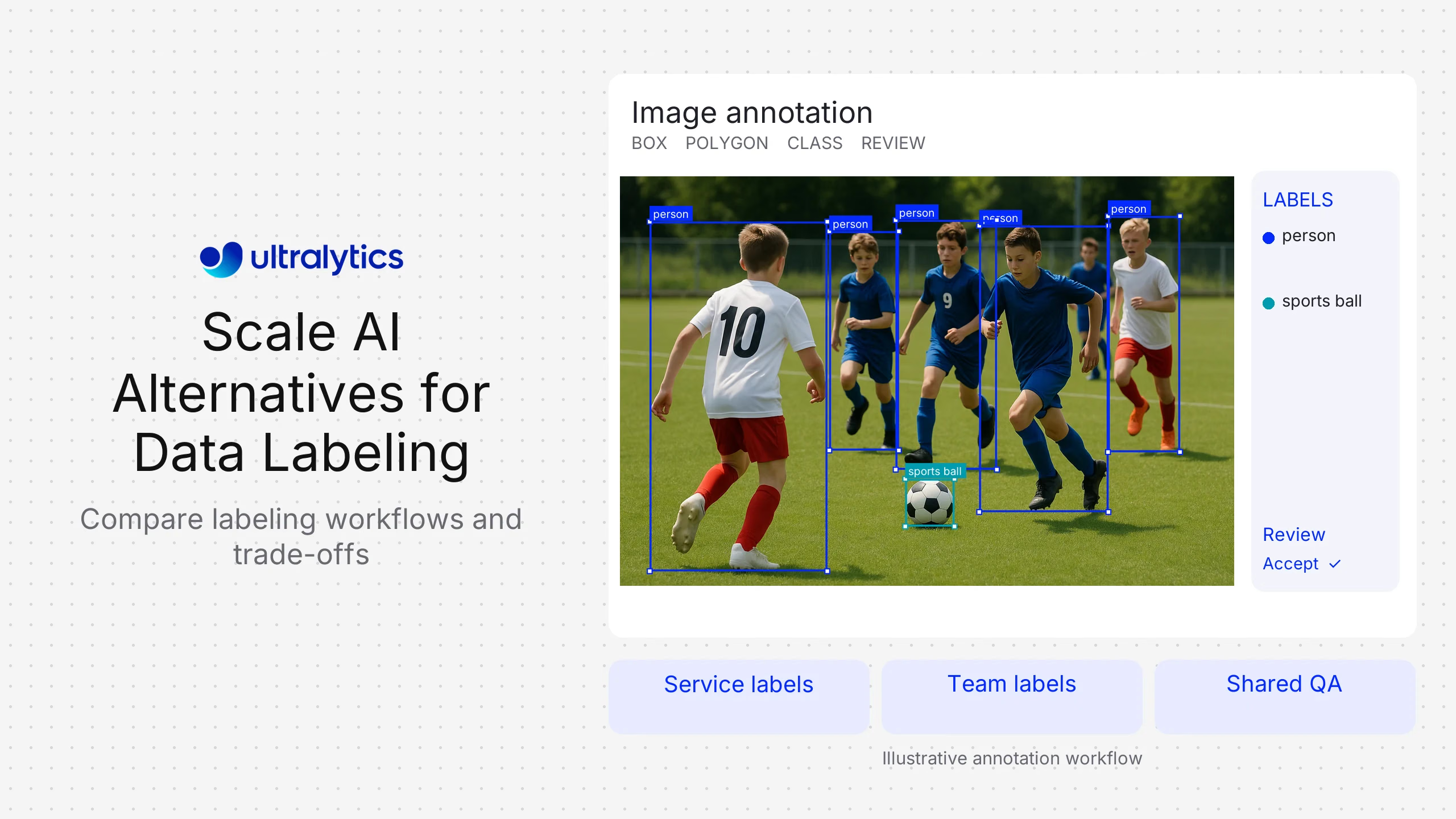
Scale AI Alternatives for Data Labeling

Scale AI Alternatives for Data Labeling

Alternatives to Scale AI for vision data labeling: iMerit, SuperAnnotate and Ultralytics Platform, compared on cost, control, ramp time and data handling.
Learn more
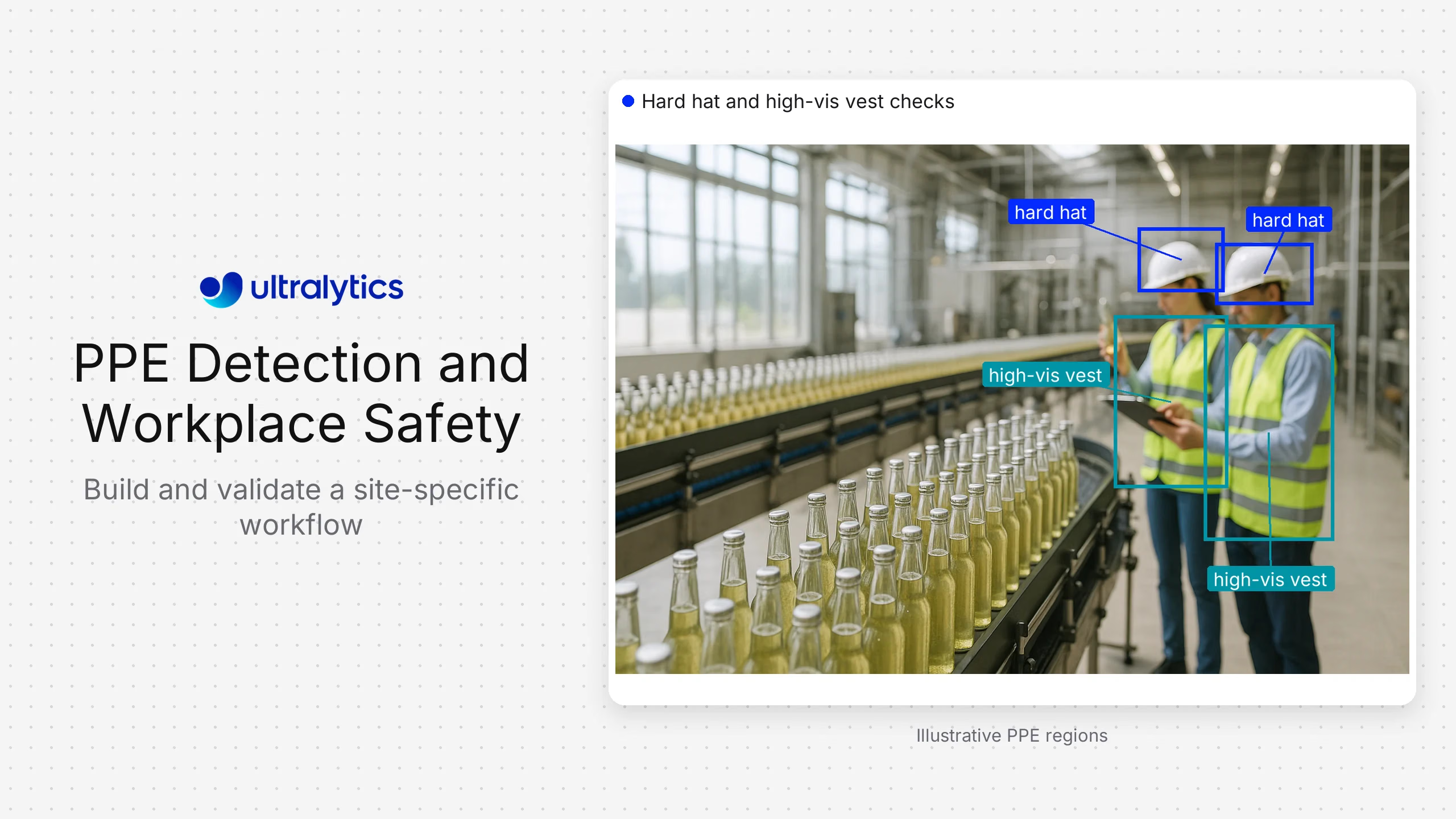
Computer Vision for Workplace Safety and PPE Compliance

Computer Vision for Workplace Safety and PPE Compliance

How computer vision detects PPE, restricted-zone entry and crowd density on worksites, when to buy a safety platform, and how to build monitoring yourself.
Learn more
How People Counting and Occupancy Analytics Actually Work

How People Counting and Occupancy Analytics Actually Work

How people counting and occupancy analytics work: comparing WiFi, ToF, thermal and camera-based vision methods, the products available, and how to build it.
Learn more
Vision-Guided Robotics for Assembly and Pick-and-Place

Vision-Guided Robotics for Assembly and Pick-and-Place

How vision-guided pick-and-place works across sensing, perception, calibration, grasp planning, motion and recovery, with a 2D versus 3D decision guide.
Learn more
Annotation Outsourcing vs In-House: The Real Trade-offs

Annotation Outsourcing vs In-House: The Real Trade-offs

Compare outsourced and in-house computer vision annotation on cost per usable label, ramp time, quality, security and the hybrid model most teams reach.
Learn more
Ultralytics Morocco offsite: Team highlights 2026

Ultralytics Morocco offsite: Team highlights 2026

A look inside the Ultralytics company offsite in Morocco. Workshops, cultural experiences, and the moments that bring our global team together.
Learn more
Ultralytics’ key highlights from the 2026 Qualcomm × Extreme Vision Edge AI Developer Technology Day

Ultralytics’ key highlights from the 2026 Qualcomm × Extreme Vision Edge AI Developer Technology Day

A recap of Ultralytics at the 2026 Qualcomm x Extreme Vision Edge AI Developer Day 2026: Demos, highlights, and conversations from the event.
Learn more
Accelerating Ultralytics YOLO26 with OpenVINO on Intel Core Ultra Series 3 (Panther Lake)

Accelerating Ultralytics YOLO26 with OpenVINO on Intel Core Ultra Series 3 (Panther Lake)

Find out how to export Ultralytics YOLO26 models to OpenVINO format and accelerate inference across Intel hardware, including CPU, GPU, and NPU.
Learn more
Key highlights from Ultralytics at CVPR 2026

Key highlights from Ultralytics at CVPR 2026

Look back on the key highlights from Ultralytics' time at CVPR 2026 in Denver, where we exhibited, presented research, and connected with the global computer vision community.
Learn more
Ultralytics’ first community meetup in Shenzhen, China

Ultralytics’ China community meetup: the country with the highest global interest in machine learning

Highlights from Ultralytics' first Shenzhen meetup: YOLO's evolution into a full computer vision platform and what's next for China's AI community.
Learn more
Alexis Schnitger and Abi Anderson at Embedded Vision Summit 2026

Key highlights from Ultralytics at Embedded Vision Summit 2026

Join us as we recap Ultralytics' time at Embedded Vision Summit 2026, where we showcased Ultralytics YOLO26 and connected with the AI community in Santa Clara.
Learn more
Lisa Su on stage at the AMD Dev Day event in Shanghai

Ultralytics at AMD Dev Day Shanghai: local AI meets agentic systems

Ultralytics shares takeaways from AMD Dev Day Shanghai on AMD AI: local AI deployment, agentic systems, ROCm, and the Ryzen AI Max 395.
Learn more
Ultralytics YOLO and DEEPX edge AI inference for Physical AI

Ultralytics YOLO partners with DEEPX: Edge AI inference for Physical AI

Learn how the new DEEPX export integration brings Ultralytics YOLO inference to NPU-powered edge AI hardware.
Learn more
Exporting Ultralytics YOLO models on Ultralytics Platform

How to export Ultralytics YOLO models using Ultralytics Platform

Export vision AI models with ease using the Ultralytics Platform. Explore how to prepare models in a few clicks for edge, mobile, and cloud deployment.
Learn more
Ultralytics YOLO26 now supports monocular depth estimation

Ultralytics YOLO26 now supports monocular depth estimation

Learn how the new depth estimation task in Ultralytics YOLO26 predicts per-pixel, metric-scale depth from a single RGB image, no stereo rig or LiDAR required.
Learn more
Best Image Annotation Platforms for Computer Vision

Best Image Annotation Platforms for Computer Vision

Compare nine image annotation platforms for computer vision: CVAT, Encord, Label Studio, Labelbox, Roboflow, Scale AI, SuperAnnotate, Ultralytics and V7.
Learn more
Automated Defect Detection for Manufacturing: Platforms Compared

Automated Defect Detection for Manufacturing: Platforms Compared

Compare automated defect-detection platforms: Cognex, Instrumental, Keyence, Landing AI, Overview and Ultralytics, plus how to match model task to defect.
Learn more
What Enterprise Computer Vision Costs: A TCO Framework

What Enterprise Computer Vision Costs: A TCO Framework

A total-cost framework for enterprise computer vision covering data, annotation, cameras, edge hardware, training, inference, integration and retraining.
Learn more
Assembly Verification and Error-Proofing with Computer Vision

Assembly Verification and Error-Proofing with Computer Vision

How computer vision verifies assembly completeness, correctness and sequence: imaging station design, model task choice, PLC integration and validation.
Learn more
Computer Vision Inference at Scale: Seven Platforms Compared

Computer Vision Inference at Scale: Seven Platforms Compared

Seven computer vision inference platforms compared: Azure ML, KServe, NVIDIA Triton, Roboflow, SageMaker AI, Ultralytics and Vertex AI, on latency and scale.
Learn more
Ultralytics YOLO Vision 2026: Everything you need to know

Ultralytics YOLO Vision 2026: Everything you need to know

Join Ultralytics YOLO Vision 2026 on September 13 in Shenzhen or online for new YOLO models, product launches, live demos, and real-world vision AI.
Learn more
How to Label Less: Auto-Labeling and Active-Learning Tools Compared

How to Label Less: Auto-Labeling and Active-Learning Tools Compared

Ten auto-labeling and active-learning tools compared: CVAT, Encord, Labelbox, Lightly, Roboflow, SuperAnnotate, Ultralytics, V7 and Voxel51 FiftyOne.
Learn more
How to Add AI Analytics to Existing Security Cameras

How to Add AI Analytics to Existing Security Cameras

Three routes to adding AI analytics to an existing camera estate: analytics layers, VMS upgrades and self-hosted models, and the constraints that decide.
Learn more
Choosing a Computer Vision Vendor: An Enterprise Procurement Guide

Choosing a Computer Vision Vendor: An Enterprise Procurement Guide

A procurement view of eight computer vision vendors: AWS, Azure, Cognex, Encord, Landing AI, NVIDIA, Roboflow and Ultralytics, with licensing checks.
Learn more
Managed Cloud vs Self-Hosted Computer Vision Deployment

Managed Cloud vs Self-Hosted Computer Vision Deployment

Compare managed cloud and self-hosted computer vision deployment on cost, latency, data boundaries, scaling and exit risk, with three deployment patterns.
Learn more
Exporting Ultralytics YOLO on LiteRT

Exporting Ultralytics YOLO on LiteRT

Learn how the new LiteRT export integration brings Ultralytics YOLO inference to mobile, embedded, edge, and browser environments in a single, unified format.
Learn more
How Computer Vision Guides AMRs, AGVs and Autonomous Forklifts

How Computer Vision Guides AMRs, AGVs and Autonomous Forklifts

What computer vision contributes to AMR, AGV and autonomous forklift navigation, how camera, lidar and depth complement each other, and where safety sits.
Learn more
Scaling Computer Vision from Pilot to Production

Scaling Computer Vision from Pilot to Production

Six stage gates for taking computer vision from pilot to production, covering coverage matrices, workflow validation, model operations and site readiness.
Learn more
Computer Vision Platforms for Manufacturing: YOLO, Cognex and Keyence Compared

Computer Vision Platforms for Manufacturing: YOLO, Cognex and Keyence Compared

Compare computer vision platforms for manufacturing: Cognex, Edge Impulse, Keyence, Landing AI, Roboflow and Ultralytics YOLO, on inspection and MES fit.
Learn more
Robotic Quality Inspection: Why Coverage Is the Hard Part

Robotic Quality Inspection: Why Coverage Is the Hard Part

How robotic quality inspection works: scan planning, calibration, robot and vision synchronization, multi-view fusion, coverage proof and quality records.
Learn more
Scale AI Alternatives for Data Labeling

Scale AI Alternatives for Data Labeling

Alternatives to Scale AI for vision data labeling: iMerit, SuperAnnotate and Ultralytics Platform, compared on cost, control, ramp time and data handling.
Learn more
Computer Vision for Workplace Safety and PPE Compliance

Computer Vision for Workplace Safety and PPE Compliance

How computer vision detects PPE, restricted-zone entry and crowd density on worksites, when to buy a safety platform, and how to build monitoring yourself.
Learn more
How People Counting and Occupancy Analytics Actually Work

How People Counting and Occupancy Analytics Actually Work

How people counting and occupancy analytics work: comparing WiFi, ToF, thermal and camera-based vision methods, the products available, and how to build it.
Learn more
Vision-Guided Robotics for Assembly and Pick-and-Place

Vision-Guided Robotics for Assembly and Pick-and-Place

How vision-guided pick-and-place works across sensing, perception, calibration, grasp planning, motion and recovery, with a 2D versus 3D decision guide.
Learn more
Annotation Outsourcing vs In-House: The Real Trade-offs

Annotation Outsourcing vs In-House: The Real Trade-offs

Compare outsourced and in-house computer vision annotation on cost per usable label, ramp time, quality, security and the hybrid model most teams reach.
Learn more
Ultralytics Morocco offsite: Team highlights 2026

Ultralytics Morocco offsite: Team highlights 2026

A look inside the Ultralytics company offsite in Morocco. Workshops, cultural experiences, and the moments that bring our global team together.
Learn more
Ultralytics’ key highlights from the 2026 Qualcomm × Extreme Vision Edge AI Developer Technology Day

Ultralytics’ key highlights from the 2026 Qualcomm × Extreme Vision Edge AI Developer Technology Day

A recap of Ultralytics at the 2026 Qualcomm x Extreme Vision Edge AI Developer Day 2026: Demos, highlights, and conversations from the event.
Learn more
Accelerating Ultralytics YOLO26 with OpenVINO on Intel Core Ultra Series 3 (Panther Lake)

Accelerating Ultralytics YOLO26 with OpenVINO on Intel Core Ultra Series 3 (Panther Lake)

Find out how to export Ultralytics YOLO26 models to OpenVINO format and accelerate inference across Intel hardware, including CPU, GPU, and NPU.
Learn more
Key highlights from Ultralytics at CVPR 2026

Key highlights from Ultralytics at CVPR 2026

Look back on the key highlights from Ultralytics' time at CVPR 2026 in Denver, where we exhibited, presented research, and connected with the global computer vision community.
Learn more
Ultralytics’ first community meetup in Shenzhen, China

Ultralytics’ China community meetup: the country with the highest global interest in machine learning

Highlights from Ultralytics' first Shenzhen meetup: YOLO's evolution into a full computer vision platform and what's next for China's AI community.
Learn more
Alexis Schnitger and Abi Anderson at Embedded Vision Summit 2026

Key highlights from Ultralytics at Embedded Vision Summit 2026

Join us as we recap Ultralytics' time at Embedded Vision Summit 2026, where we showcased Ultralytics YOLO26 and connected with the AI community in Santa Clara.
Learn more
Lisa Su on stage at the AMD Dev Day event in Shanghai

Ultralytics at AMD Dev Day Shanghai: local AI meets agentic systems

Ultralytics shares takeaways from AMD Dev Day Shanghai on AMD AI: local AI deployment, agentic systems, ROCm, and the Ryzen AI Max 395.
Learn more
Ultralytics YOLO and DEEPX edge AI inference for Physical AI

Ultralytics YOLO partners with DEEPX: Edge AI inference for Physical AI

Learn how the new DEEPX export integration brings Ultralytics YOLO inference to NPU-powered edge AI hardware.
Learn more
Exporting Ultralytics YOLO models on Ultralytics Platform

How to export Ultralytics YOLO models using Ultralytics Platform

Export vision AI models with ease using the Ultralytics Platform. Explore how to prepare models in a few clicks for edge, mobile, and cloud deployment.
Learn more
Ultralytics YOLO26 now supports monocular depth estimation

Ultralytics YOLO26 now supports monocular depth estimation

Learn how the new depth estimation task in Ultralytics YOLO26 predicts per-pixel, metric-scale depth from a single RGB image, no stereo rig or LiDAR required.
Learn more
Best Image Annotation Platforms for Computer Vision

Best Image Annotation Platforms for Computer Vision

Compare nine image annotation platforms for computer vision: CVAT, Encord, Label Studio, Labelbox, Roboflow, Scale AI, SuperAnnotate, Ultralytics and V7.
Learn more
Automated Defect Detection for Manufacturing: Platforms Compared

Automated Defect Detection for Manufacturing: Platforms Compared

Compare automated defect-detection platforms: Cognex, Instrumental, Keyence, Landing AI, Overview and Ultralytics, plus how to match model task to defect.
Learn more
What Enterprise Computer Vision Costs: A TCO Framework

What Enterprise Computer Vision Costs: A TCO Framework

A total-cost framework for enterprise computer vision covering data, annotation, cameras, edge hardware, training, inference, integration and retraining.
Learn more
Assembly Verification and Error-Proofing with Computer Vision

Assembly Verification and Error-Proofing with Computer Vision

How computer vision verifies assembly completeness, correctness and sequence: imaging station design, model task choice, PLC integration and validation.
Learn more
Computer Vision Inference at Scale: Seven Platforms Compared

Computer Vision Inference at Scale: Seven Platforms Compared

Seven computer vision inference platforms compared: Azure ML, KServe, NVIDIA Triton, Roboflow, SageMaker AI, Ultralytics and Vertex AI, on latency and scale.
Learn more
Ultralytics YOLO Vision 2026: Everything you need to know

Ultralytics YOLO Vision 2026: Everything you need to know

Join Ultralytics YOLO Vision 2026 on September 13 in Shenzhen or online for new YOLO models, product launches, live demos, and real-world vision AI.
Learn more
How to Label Less: Auto-Labeling and Active-Learning Tools Compared

How to Label Less: Auto-Labeling and Active-Learning Tools Compared

Ten auto-labeling and active-learning tools compared: CVAT, Encord, Labelbox, Lightly, Roboflow, SuperAnnotate, Ultralytics, V7 and Voxel51 FiftyOne.
Learn more
How to Add AI Analytics to Existing Security Cameras

How to Add AI Analytics to Existing Security Cameras

Three routes to adding AI analytics to an existing camera estate: analytics layers, VMS upgrades and self-hosted models, and the constraints that decide.
Learn more
Choosing a Computer Vision Vendor: An Enterprise Procurement Guide

Choosing a Computer Vision Vendor: An Enterprise Procurement Guide

A procurement view of eight computer vision vendors: AWS, Azure, Cognex, Encord, Landing AI, NVIDIA, Roboflow and Ultralytics, with licensing checks.
Learn more
Managed Cloud vs Self-Hosted Computer Vision Deployment

Managed Cloud vs Self-Hosted Computer Vision Deployment

Compare managed cloud and self-hosted computer vision deployment on cost, latency, data boundaries, scaling and exit risk, with three deployment patterns.
Learn more
Exporting Ultralytics YOLO on LiteRT

Exporting Ultralytics YOLO on LiteRT

Learn how the new LiteRT export integration brings Ultralytics YOLO inference to mobile, embedded, edge, and browser environments in a single, unified format.
Learn more
How Computer Vision Guides AMRs, AGVs and Autonomous Forklifts

How Computer Vision Guides AMRs, AGVs and Autonomous Forklifts

What computer vision contributes to AMR, AGV and autonomous forklift navigation, how camera, lidar and depth complement each other, and where safety sits.
Learn more
Scaling Computer Vision from Pilot to Production

Scaling Computer Vision from Pilot to Production

Six stage gates for taking computer vision from pilot to production, covering coverage matrices, workflow validation, model operations and site readiness.
Learn more
Computer Vision Platforms for Manufacturing: YOLO, Cognex and Keyence Compared

Computer Vision Platforms for Manufacturing: YOLO, Cognex and Keyence Compared

Compare computer vision platforms for manufacturing: Cognex, Edge Impulse, Keyence, Landing AI, Roboflow and Ultralytics YOLO, on inspection and MES fit.
Learn more
Robotic Quality Inspection: Why Coverage Is the Hard Part

Robotic Quality Inspection: Why Coverage Is the Hard Part

How robotic quality inspection works: scan planning, calibration, robot and vision synchronization, multi-view fusion, coverage proof and quality records.
Learn more
Scale AI Alternatives for Data Labeling

Scale AI Alternatives for Data Labeling

Alternatives to Scale AI for vision data labeling: iMerit, SuperAnnotate and Ultralytics Platform, compared on cost, control, ramp time and data handling.
Learn more
Computer Vision for Workplace Safety and PPE Compliance

Computer Vision for Workplace Safety and PPE Compliance

How computer vision detects PPE, restricted-zone entry and crowd density on worksites, when to buy a safety platform, and how to build monitoring yourself.
Learn more
How People Counting and Occupancy Analytics Actually Work

How People Counting and Occupancy Analytics Actually Work

How people counting and occupancy analytics work: comparing WiFi, ToF, thermal and camera-based vision methods, the products available, and how to build it.
Learn more
Vision-Guided Robotics for Assembly and Pick-and-Place

Vision-Guided Robotics for Assembly and Pick-and-Place

How vision-guided pick-and-place works across sensing, perception, calibration, grasp planning, motion and recovery, with a 2D versus 3D decision guide.
Learn more
Annotation Outsourcing vs In-House: The Real Trade-offs

Annotation Outsourcing vs In-House: The Real Trade-offs

Compare outsourced and in-house computer vision annotation on cost per usable label, ramp time, quality, security and the hybrid model most teams reach.
Learn more
Ultralytics Morocco offsite: Team highlights 2026

Ultralytics Morocco offsite: Team highlights 2026

A look inside the Ultralytics company offsite in Morocco. Workshops, cultural experiences, and the moments that bring our global team together.
Learn more
Ultralytics’ key highlights from the 2026 Qualcomm × Extreme Vision Edge AI Developer Technology Day

Ultralytics’ key highlights from the 2026 Qualcomm × Extreme Vision Edge AI Developer Technology Day

A recap of Ultralytics at the 2026 Qualcomm x Extreme Vision Edge AI Developer Day 2026: Demos, highlights, and conversations from the event.
Learn more
Accelerating Ultralytics YOLO26 with OpenVINO on Intel Core Ultra Series 3 (Panther Lake)

Accelerating Ultralytics YOLO26 with OpenVINO on Intel Core Ultra Series 3 (Panther Lake)

Find out how to export Ultralytics YOLO26 models to OpenVINO format and accelerate inference across Intel hardware, including CPU, GPU, and NPU.
Learn more
Key highlights from Ultralytics at CVPR 2026

Key highlights from Ultralytics at CVPR 2026

Look back on the key highlights from Ultralytics' time at CVPR 2026 in Denver, where we exhibited, presented research, and connected with the global computer vision community.
Learn more
Ultralytics’ first community meetup in Shenzhen, China

Ultralytics’ China community meetup: the country with the highest global interest in machine learning

Highlights from Ultralytics' first Shenzhen meetup: YOLO's evolution into a full computer vision platform and what's next for China's AI community.
Learn more
Alexis Schnitger and Abi Anderson at Embedded Vision Summit 2026

Key highlights from Ultralytics at Embedded Vision Summit 2026

Join us as we recap Ultralytics' time at Embedded Vision Summit 2026, where we showcased Ultralytics YOLO26 and connected with the AI community in Santa Clara.
Learn more
Lisa Su on stage at the AMD Dev Day event in Shanghai

Ultralytics at AMD Dev Day Shanghai: local AI meets agentic systems

Ultralytics shares takeaways from AMD Dev Day Shanghai on AMD AI: local AI deployment, agentic systems, ROCm, and the Ryzen AI Max 395.
Learn more
Ultralytics YOLO and DEEPX edge AI inference for Physical AI

Ultralytics YOLO partners with DEEPX: Edge AI inference for Physical AI

Learn how the new DEEPX export integration brings Ultralytics YOLO inference to NPU-powered edge AI hardware.
Learn more
Exporting Ultralytics YOLO models on Ultralytics Platform

How to export Ultralytics YOLO models using Ultralytics Platform

Export vision AI models with ease using the Ultralytics Platform. Explore how to prepare models in a few clicks for edge, mobile, and cloud deployment.
Learn more

Let's build the future of AI together!

Begin your journey with the future of machine learning